

10 Questions with Ziwen Li
Ziwen Li is an artist based between London and China, working across painting, drawing, sculpture and installation. She completed her BA in Oil Painting at Sichuan Fine Arts Institute and is currently studying for her MA in Drawing at the University of the Arts London (UAL).
Her recent exhibitions include Soft Power at Sol de Paris, Paris (2026); My Body is Dust at Asylum Chapel, London (2026); and the Ambition! Young Artists Exhibition at West Bund Art Center, Shanghai (2025), where she was interviewed by Art Contemporary. She has also taken part in the 4th New Urban Public Art Season in Chongqing, contributing to the collaborative installation Three Rooms to the art therapy project Multiple Quadrants.
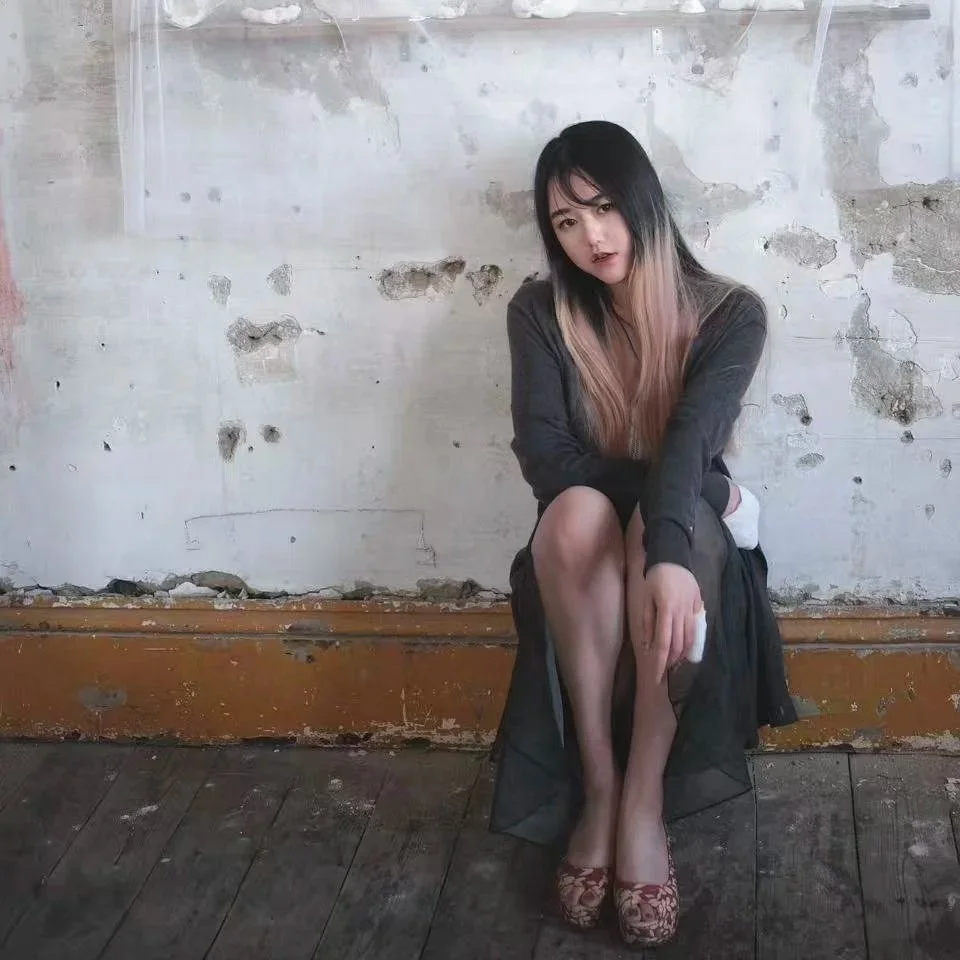
Ziwen Li - Portrait
ARTIST STATEMENT
Ziwen Li is a contemporary artist working with intuitive painting, nature-based sculpture, and installations that embrace fragility. She is deeply interested in fluid energies that circulate between the subconscious and nature.
Her work reflects on memory, authenticity, transience, psychological vulnerability, kindness, and the human search for meaning. It is also informed by her long-term engagement with experiences of separation anxiety, exploring how desire, attachment, and care shape inner landscapes.
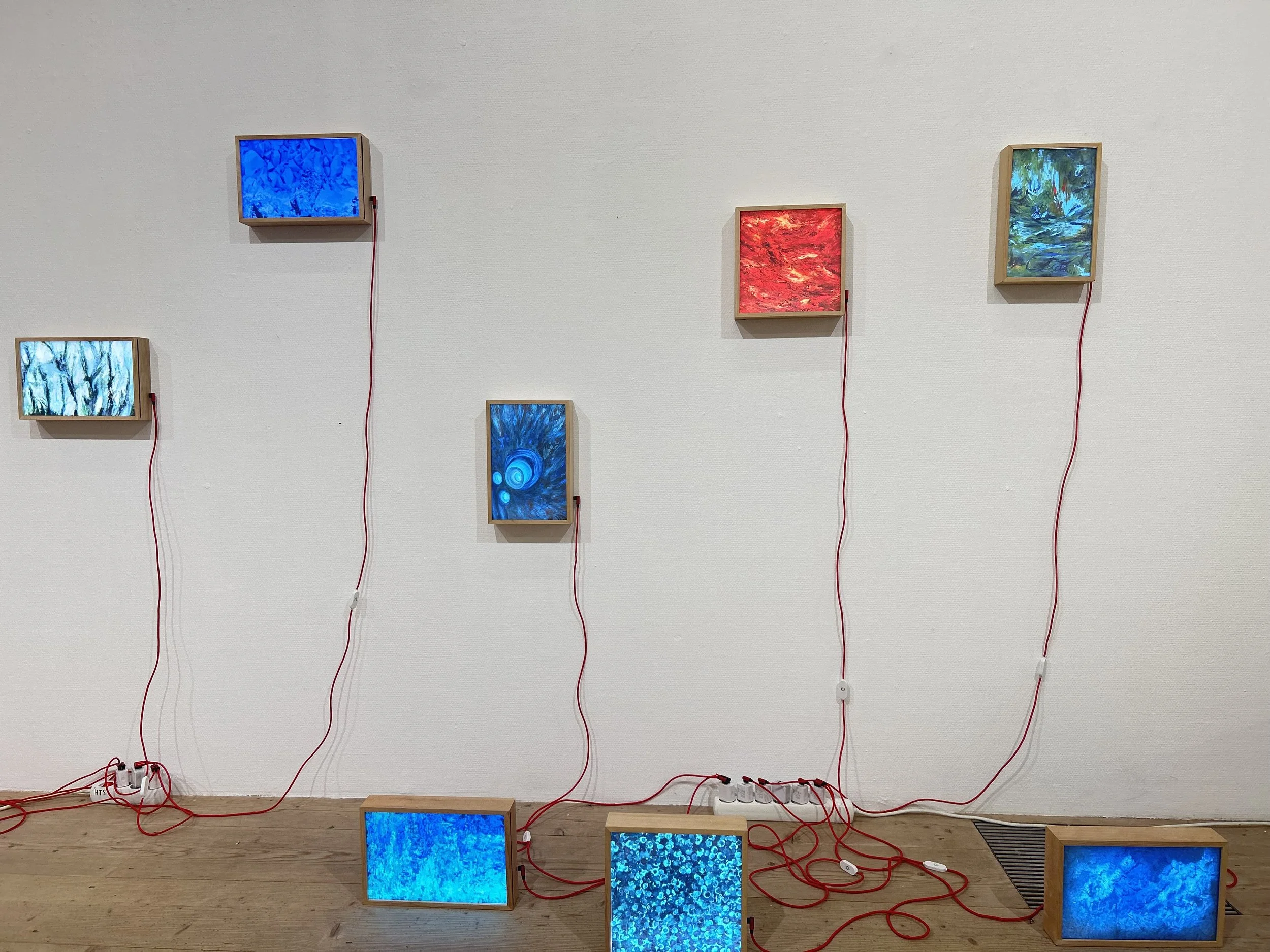
Rivers of Air, Mountains of Light, Oil painting, 130×90 cm, 2025 © Ziwen Li
INTERVIEW
You studied oil painting in China and are now pursuing drawing in London. How has this shift influenced your artistic thinking?
Painting for me has a stronger sense of construction; it feels closer to a novel. Drawing is more like poetry or a diary. What attracts me is its immediacy, which is a kind of life-drawing-like transience.
When I was studying oil painting, I realised that the most exciting moments in my process were always the more expressive ones; it is perhaps just a few lines, a patch of colour, or a stroke that hasn’t been fully blended. These moments are brief but intense enough. So, one of my desires to pursue drawing is that I wish to stay closer to that kind of immediacy.
At the same time, my exploration of drawing had also made my oil painting more mature. Whether it is oil-based oil painting or water-based ink drawing, even mixed media, when looseness and control coexist, and when intuition and logic are in balance, I find that I can move more freely within rhythm.
Your practice moves between painting, sculpture, and installation. How do you decide which medium best serves an idea?
What is enacted with the body is real. Keep working, and the answer will reveal itself. When the idea of using a certain medium to express a feeling appears, your subconscious has already proceeded and reorganised past experiences. For example, I chose oil painting on wood, mixed ink on rice paper and literature in the installation Fidelity; it was not only a choice of intuition, but also an emergence of past recognition, a response to the needs of the current moment. Each method and material carries something I already understand. I know the weight of a brush loaded with oil or water, and I also know how it feels when it touches a wood panel or a piece of paper.
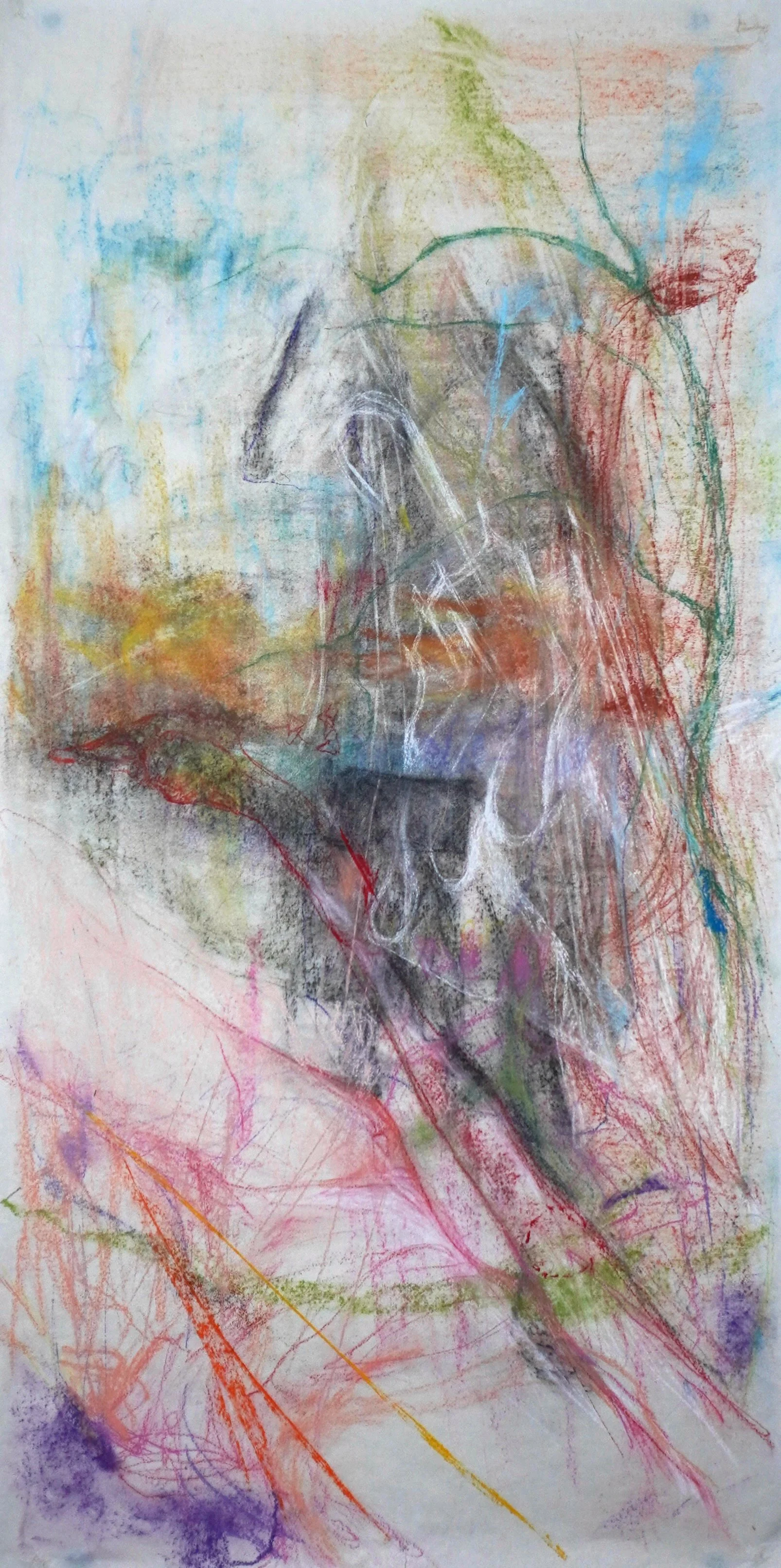
First Sight, Pastel, 100×50 cm, 2025 © Ziwen Li

The River of Parting, Pastel, 100×50 cm, 2025 © Ziwen Li
Intuition seems central to your work. What does intuitive painting mean to you in practical terms?
I rely a lot on intuition; I always believe that intuition is an ability, an additional sense organ. It is an organ that can observe the surroundings sensitively, that can truly see; it is an organ that can imagine in an absurd way, connecting all of the fragments of scenes you have seen before. The perspective of intuition can move closer and further away. Moving closer allows me to see the details of how things unfold, and truly feel the current moment; moving further away allows me to perceive parallel worlds, and to dilute the attachment of the individual.
Nature appears as an important presence in your sculptures and installations. What kind of relationship do you seek between the natural world and inner experience?
Firstly, I consciously practice a non-anthropocentric perspective. I respect the difference between human and non-human ways of perceiving and narrating the world, and I recognise it as non-dual. Secondly, within this understanding, I return to human-centred narratives. Each individual has a single universe, yet without relationships, individuality loses its meaning. This kind of philosophy is more like a monism, where everything is interconnected. Like when you look at clouds, you may think of someone’s face. The clouds turn into rain, the face dissolves. Like the long hair, the rivers, and the time, flow in analogy with one another. There is a shared innocence in life, before the carnival of sorrow and joy.
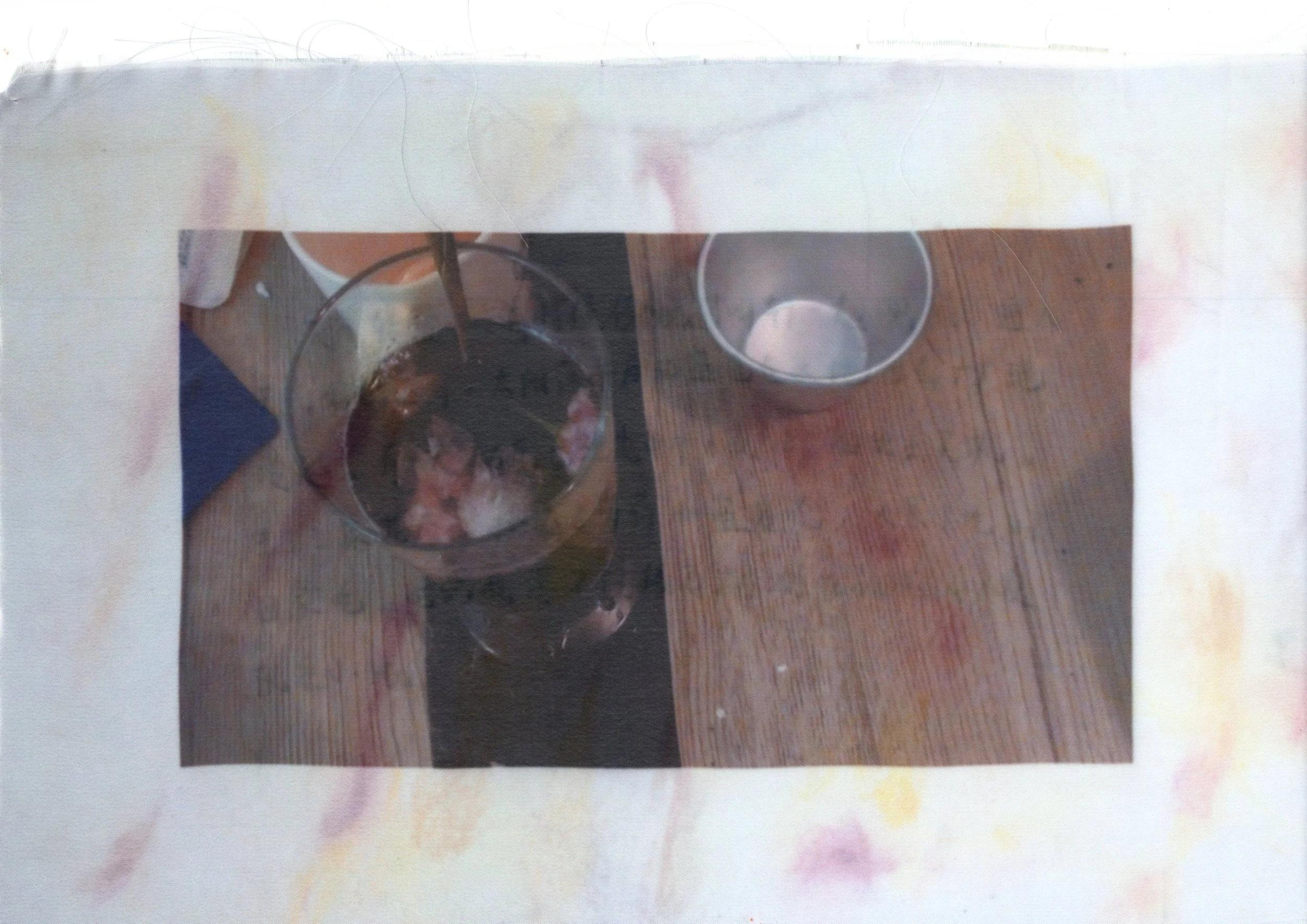
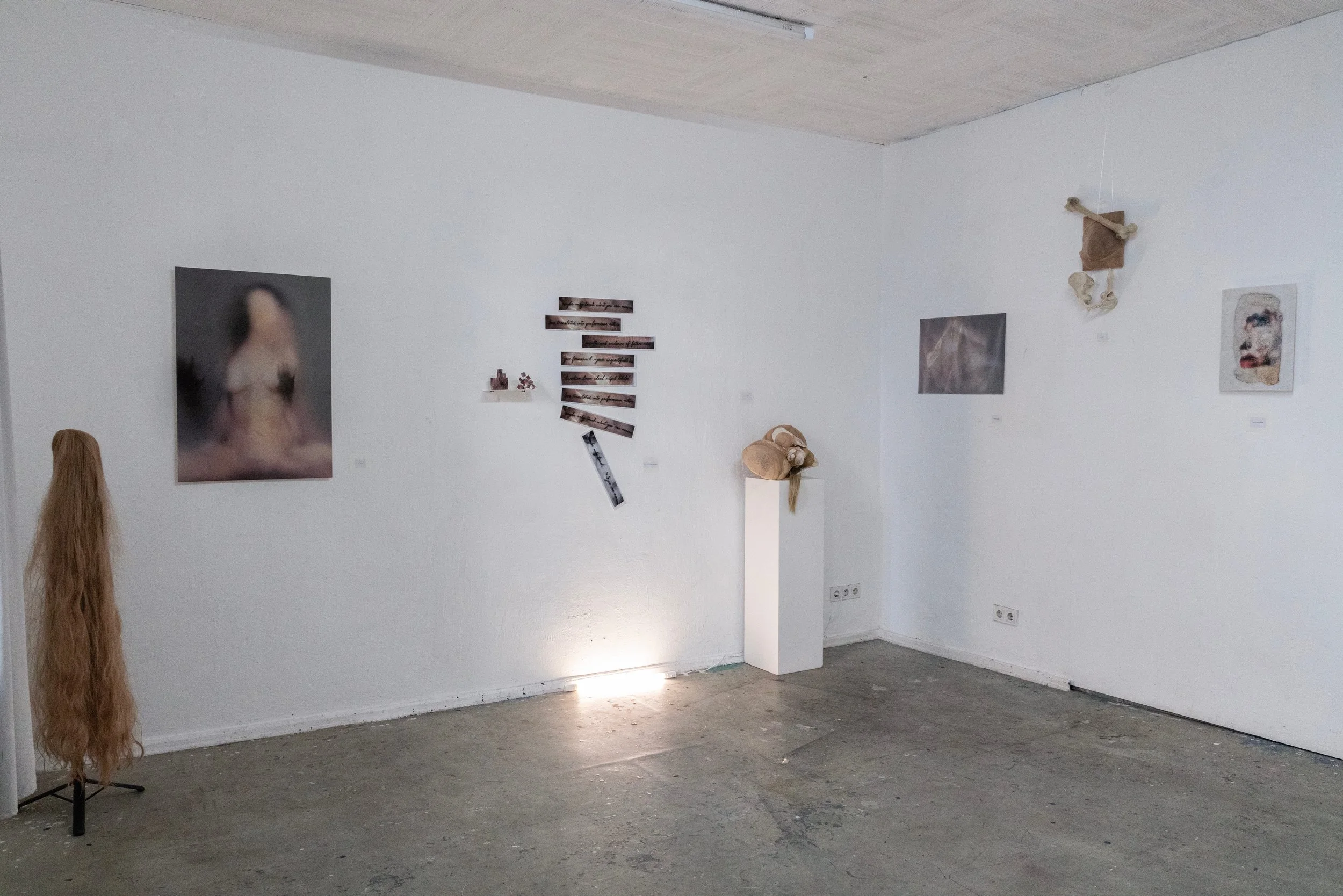
April’s Eyes 2, Print on chiffon, 20×30 cm, 2024 © Ziwen Li
Your work often reflects fragility and vulnerability. How do you translate these emotional states into material form?
Fragility and natural elements carry a sense of immediacy. I prefer materials that hold a sense of time. I think all tangible things will break eventually. The urgency of action in human nature can produce a lot of fragments, which can accumulate into a temporary constellation. For me, to present work through such collections is a meaningful way to exchange between time, material, perception and interaction.
Memory and transience are recurring themes in your practice. Are your works rooted in specific memories or more in emotional impressions?
The autumn wind always seems to come from previous years. My work is rooted in the present moment. Even past memories are re-formed through present understanding. I see time as something layered and overlapping; the past melts into patterns of self-perception and expression, while what feels most real only exists in the present. Specific narratives often involve experiences such as relocation, inter-generational trauma, situational identity, sexuality, and illness. Meanwhile, emotional impressions accumulate through the repetition of these stories.
You explore ideas of attachment, desire, and care. How do these psychological themes emerge during your creative process?
In my work, there are often gestures of the human body and plants, embedded within layered colours and materials, concealed partially and covered naturally. They remain figurative, but not explicit. I am really drawn to this kind of open-ended expression, where meaning is not fixed, and interpretation remains fluid. When figurative forms appear in a non-realist way, they can extend toward multiple directions of desire. By transforming specific imagery into metaphor, the space for breathing becomes wider.
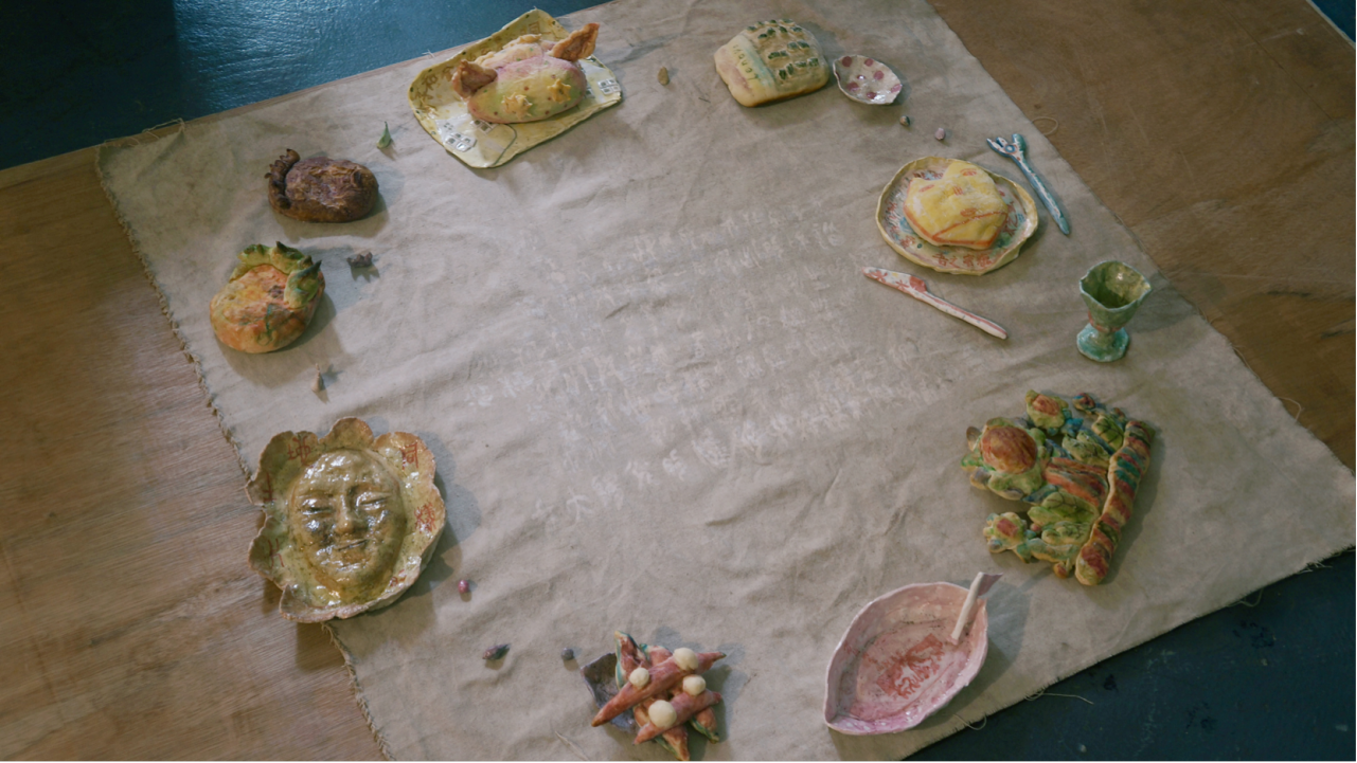
The Cycle, Bread, clay, 100×100×10 cm, 2025 © Ziwen Li
How does working between London and China shape your sense of identity as an artist?
At the beginning of this year, I travelled back and forth between China and London several times for medical treatment, moving through different cities and temporary homes, and the sense of re-entry shock was so strong. Absorbing, dissolving, repeatedly encountering separation, it felt like the pain of a needle entering and leaving the body, a way of becoming aware of my own existence. The aura of language and culture constantly shifts. Moving between environments feels like being a modern fish, facing two distant bodies of water, suddenly carried into another condition by the speed and convenience of the present time. Places seem to suspend themselves in time. When I return to them, they often feel fragmented or altered, while I remain. Only by truly leaving can one truly enter. These layered, fluid environments shape me, allowing my way of perceiving and expressing to continuously shift and flow. A fluid environment brings a fluid identity. I think this kind of fluid identity influences the themes and directions of my work more, while my choice of materials tends to remain relatively consistent.
Viewers often encounter a quiet, reflective atmosphere in your work. What kind of emotional experience do you hope they leave with?
I hope viewers could feel a slight sense of exposure, as if they are losing time, as if it is the time between dreaming and waking, or it is the time when they have a fever. It seems related to sorrow, yet this sorrow is beautiful. It is not a wish towards strength and length, it is a wish towards the ephemeral yet wispy.

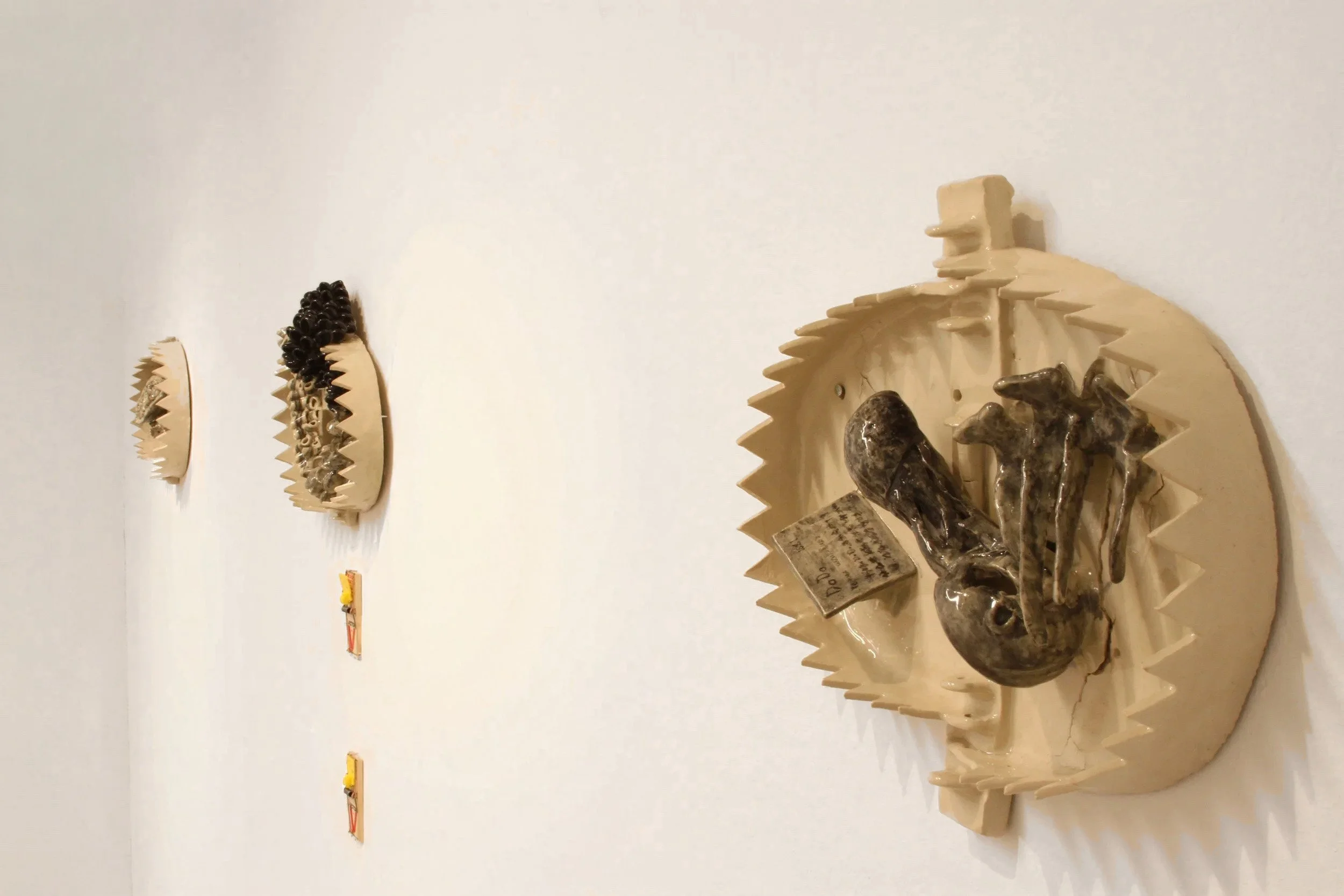
Upstream 1, Ceramic, tissue, 20×5×5 cm, 2026 © Ziwen Li

Upstream 2, Ceramic, tissue, 20×5×5 cm, 2026 © Ziwen Li
Lastly, what questions or directions are currently guiding your practice as you continue your MA studies?
The specific focus in my work is always anxiety separation, which includes the innocence before separation, the immediacy of the moment of separation, the spiritual hunger after separation, and the atmosphere that surrounds separation. The wounds of anxiety, the beauty of anxiety, the necessity of anxiety. And this specific focus exists within a larger framework: time. Time is expansive, the four-dimensional time covers the whole body and soul, everything flows and flows, the same water remains, while new water flows in and out, evaporates and returns again.
Artist’s Talk
Al-Tiba9 Interviews is a curated promotional platform that offers artists the opportunity to articulate their vision and engage with our diverse international readership through insightful, published dialogues. Conducted by Mohamed Benhadj, founder and curator of Al-Tiba9, these interviews spotlight the artists’ creative journeys and introduce their work to the global contemporary art scene.
Through our extensive network of museums, galleries, art professionals, collectors, and art enthusiasts worldwide, Al-Tiba9 Interviews provides a meaningful stage for artists to expand their reach and strengthen their presence in the international art discourse.



Lim Won Ji (Oneg) is a South Korean artist based in Chicago. Working across sculpture, installation, performance, and process-based experimentation, Lim investigates hypervigilance as a bodily condition shaped by anxiety, uncertainty, anticipation, and the desire for control, constructing unstable situations in which order is continually negotiated through gravity, time, repetition, and chance.