

10 Questions with Bin Fang
Bin Fang is a multimedia artist working across language, video, installation, image, sound, and drawings. The work engages with labour, fragmented memory, and performance, often tracing ideas and materials that resist or are misread in translation in daily life. Through a poetic approach to space, Bin explores how body, identity, culture, and perception are deferred, reframed, or misunderstood, revealing rhythmic shifts in how shaping experiences that unfold in the space of the viewer’s attention.
Bin Fang (b.1998) was born in Ningbo, China. He earned a BFA from the Otis College of Art and Design in 2020 and an MFA from ArtCenter College of Design in 2025, and now lives and works in Los Angeles. His works have been exhibited at Bolsky Gallery, Human Resources, Printed Matter, Wolford House, Sasse Museum of Art, and 4C Gallery.
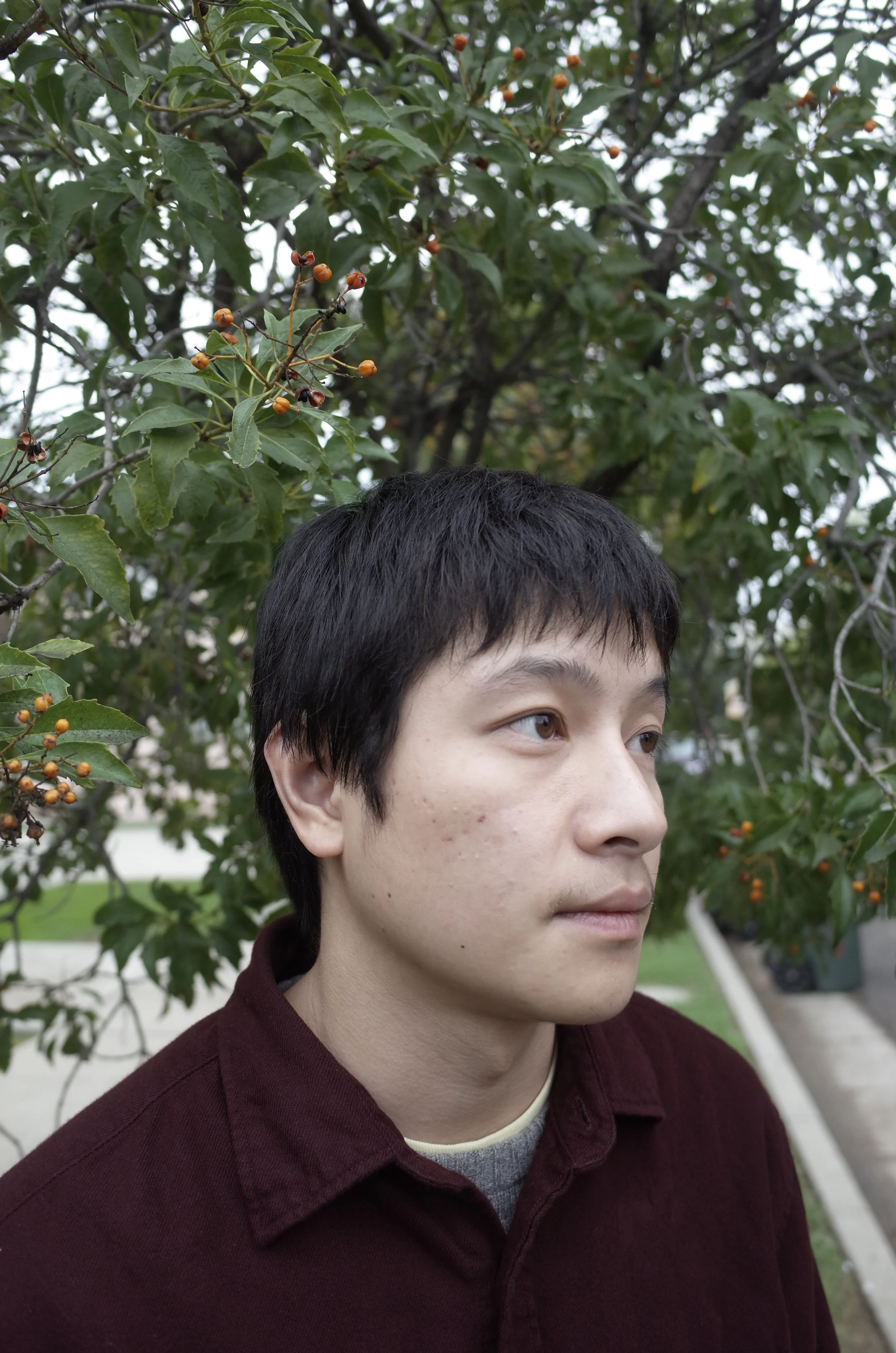
Bin Fang - Portrait
ARTIST STATEMENT
Bin works across language, video, installation, image, sound, and drawing, using daily life as a point of departure. Ordinary actions: walking, listening, adjusting light, repeating a gesture, are approached as ongoing processes through which meaning quietly accumulates over time. Rather than emphasising representation, the work attends to how things are done, revisited, and gently altered through repetition, sometimes to the point of familiarity, sometimes to the edge of drift.
Moving between Shanghai and Los Angeles, and shaped by time spent working in underground club settings, Bin has developed a sensitivity to timing, space, and atmosphere. Perception is understood as something formed before language: through sound systems, shifting light, bodies in motion, and the pauses between events. Sound, light, and performance are treated as temporary and spatial conditions, oftentimes felt first, and only later, if at all, understood.
Working from diasporic conditions, Bin follows how meaning shifts as it moves across languages, bodies, and places. Certain elements arrive late or slightly misaligned: phrases that never fully settle, gestures carried from one context to another, materials marked by use and wear. Rather than being corrected or resolved, these moments are kept close and allowed to remain out of sync, sometimes awkward, sometimes unexpectedly tender, holding traces of lived experience and collective memory.
Drawing inspiration from experimental short films, animation, slow cinema, and music, Bin’s work unfolds through repetition, pauses, and subtle variation. Fragments return across media and over time, occasionally lingering longer than necessary or drifting just off rhythm. Meaning emerges gradually, through sustained looking and listening, allowing experience to take shape with room for hesitation, ambiguity, and quiet humour, without insisting on immediate resolution.
Lyrics Writing vol.1, 4k digital video installation, sound, 10:13 (looped), 2025 © Bin Fang
Language functions as both self-reflection and projection outward. Rather than resolving the past, it exposes what has failed, loosening fixed meanings and allowing other futures to be imagined. Writing, in this sense, does not stabilise images but dissolves them. Lyrics Writing vol.1 begins with a simple action: writing lyrics in the studio. The words are written, rewritten, interrupted, and gradually lose their clarity. What starts as reflection turns into image, rhythm, and gesture. As the process repeats, legibility collapses. Meaning slips, and what remains is not a message but a trace, something incomplete and unresolved. Music enters not as something to be consumed, but as a structure that carries emotion, memory, and desire through sensation rather than explanation. The video works document these acts of writing and drawing, later brought into the exhibition space through projection.
INTERVIEW
You were born in Ningbo and now live in Los Angeles. How has moving between these places shaped the way you think about language, memory, and perception in your work?
Moving between Ningbo and LA exposes the physical weight of language; it becomes a shell dictating the role. My work lives in the friction between my raw intuition and these environments. I don't seek answers; I embrace displacement and the unreachability of things. Memory operates similarly. When familiar images loop into foreign spaces, the dislocation creates a necessary distance. This constant shift is the foundation of my perception of the work.
You work across language, video, installation, sound, and drawing. How do you decide which medium a work needs, and what does one medium allow you to express that another cannot?
I don't assign strict roles to different media; I see my practice more like an ongoing rehearsal or a jam session. I usually start with drawing and language. A stray thought or a quick sketch are the most direct ways to capture my intuition with no friction. Video then acts as a 'container.' Its inherent duration and rhythm give those static fragments a sense of physical momentum. When it comes to sound, I’m highly focused on its sheer materiality once it leaves the speakers. Whether it's everyday ambient noise or the sound of rough friction, it’s never just background. It actively intervenes in the space. That materiality forces you to physically feel the unspoken dynamic between your body and your immediate environment, which a static image alone cannot replicate.
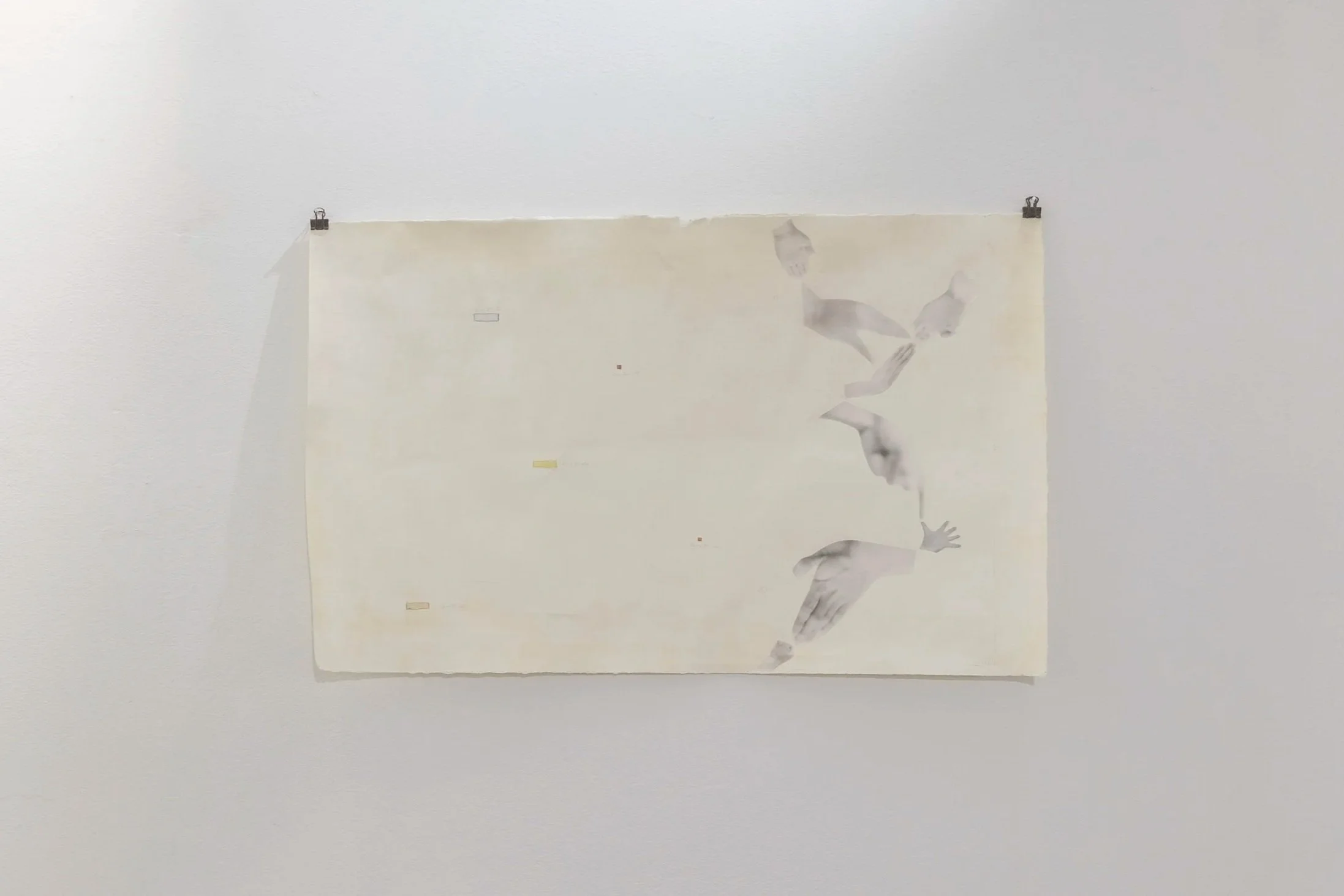
Ghost Echo, Film prints on vellum, watercolor and graphite on, airbrushed cotton paper, mounted with painted binder, clips, 14.5 x 23.5 x 0.8 in, 2025 © Bin Fang
In Ghost Echo, Bin Fang repurposes everyday objects, notes, shoe insoles, and hand-drawn fragments into a constellation of fragile assemblages. Suspended on walls or attached to door handles, these small installations appear at once scattered and interconnected. At first glance, they suggest casual improvisation, yet the surfaces reveal repeated reworking: worn creases on insoles, scribbled notations, edges misaligned and layered.
The installations invite close looking, often requiring viewers to bend or shift perspective. With each change of angle, the works slip between registers: an accidental collage on one side, an incomplete archive on the other. What emerges is a tension between rupture and continuity, objects that appear fragmentary yet insist on latent connection.
Fang embraces error and unpredictability as structuring principles. The fragments resist coherence but nonetheless generate a sense of order through their contingent alignments. Within the exhibition, Ghost Echo grounds the theme of hidden threads in the most tactile register, tracing how memory inscribes itself on objects and how the residue of daily life reconfigures into tenuous yet enduring bonds.
Daily gestures, like walking, adjusting light, and repeating movements, often appear in your practice. What draws you to these subtle, ordinary actions as artistic material?
I am fascinated by the primitive physical motivations behind a medium. It’s much like practising handwriting in elementary school: the physical act of writing a stroke is essentially no different from painting a canvas. Through my experiences of environmental displacement, I've realised that once stripped of context, our instinctual actions are already an independent artistic language. At the same time, whether writing or making art, the process is always accompanied by unexpected 'cracks.' You can never completely control it to reach an absolute state of 'completeness.' I am simply extracting these everyday actions, along with their uncontrollable traces, as my most direct raw materials.
Your work often engages with fragmentation and mistranslation. Do you see misunderstanding as a limitation, or can it become a productive space?
I would say it’s both. Fragmented information and mistranslation are precisely the catalysts that make me realise my limitations, while also offering a new layer of insight. It’s like a newborn child being thrust into a pre-existing system of language and images. Yet, as a biological creature, the way I receive inputs on a physiological and affective level is instinctual.
A perfect example is when I first moved to the US. My way of speaking English was largely based on mimicking characters in movies, or the speech logic and physical mannerisms of friends around me. This mimicking was my body's most direct, sensory choice for receiving information, even if I didn't fully grasp the deeper cultural layers behind the words, which, from a certain angle, applies to Chinese contexts as well. This 'misunderstanding' or bypassing of grammatical rules actually generates the purest form of resonance; it bypasses rational translation and touches the body directly. Rather than trying to cover up these cracks in communication, I prefer to let this 'inaccuracy' become the raw material of my work. Once I acknowledge these limitations, the purely perceptual, like the texture of a voice, rhythm, or physical gestures, begins to surface. It is through becoming aware of these gaps that I create a productive space for a new kind of communication.
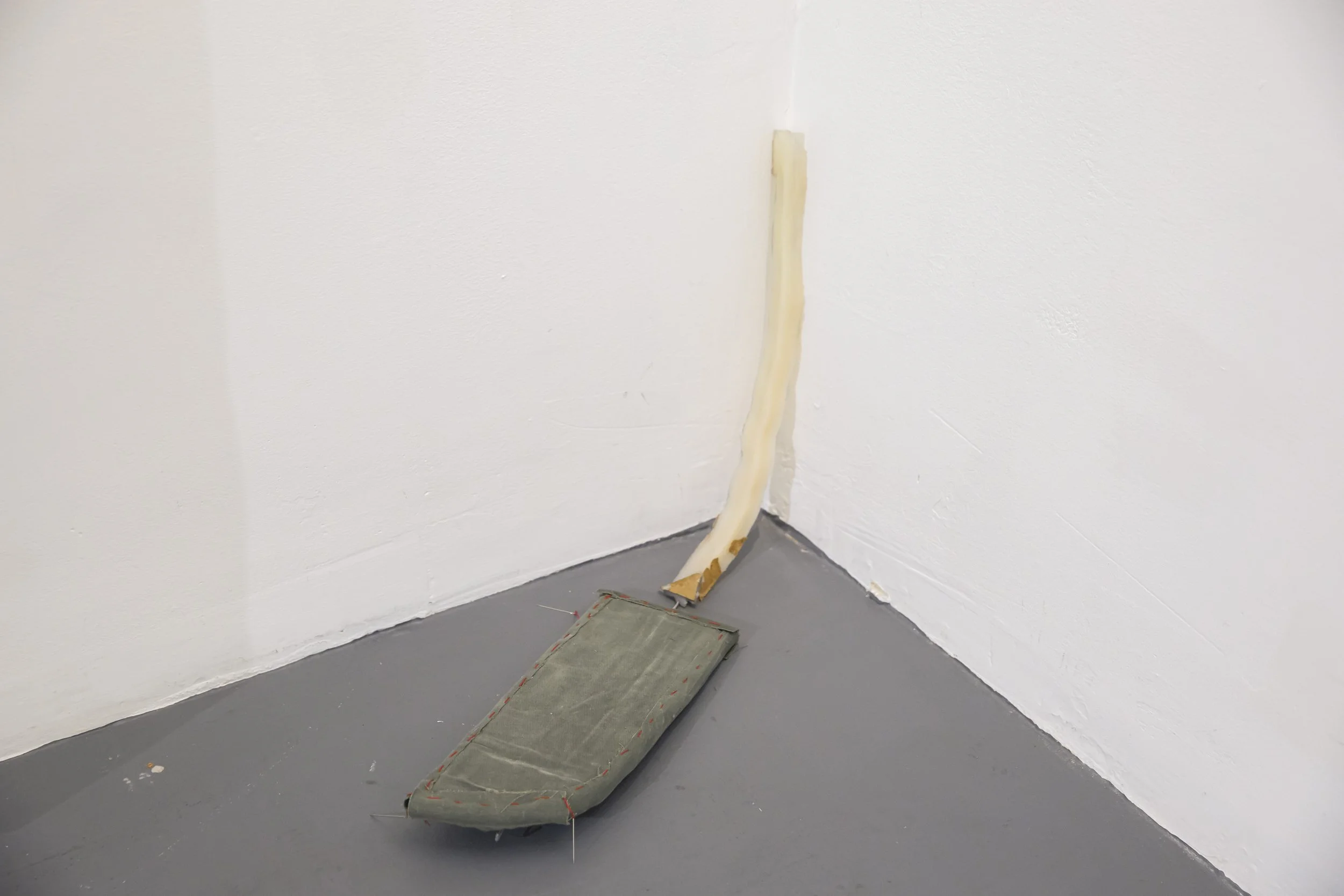
Ghost Echo, Hand - stitched used military cotton-canvas, coated, silicone, aluminum wire , 15 x 13.5 x 4.4 in, 2025 © Bin Fang
Having spent time in underground club settings, you’ve developed a sensitivity to timing and atmosphere. How does that experience inform the way you construct space and rhythm in exhibitions?
The underground club to me is more like a temporal 'enclave.' It’s a liminal space where established social labels temporarily just... stop working. People’s emotions, desires, and even basic physiological reactions are magnified or compressed. It’s a very raw testing ground. You're forced to use the vibrations of the sound, the shifting lights, and the physical constraints of the room to figure out how to exist with your own body.
But in my exhibitions, I have less interest in replicating a 'club beat.' Instead, I tend to pull from the micro-physics: the labour of the backstage, the somatic movements of the body, and the rawness of architectural materials. My practice is about stretching time and lighting. I want to drag that intense, fleeting dancefloor perception out, flip it, and redistribute it into a daily timeline, but somehow trap that residual body heat. I'm obsessed with that second, the house lights suddenly snap on at the end of the night, that moment when the vibe is stripped away, and you're left with the most unadorned, defenceless, physical presence of the people there. That's the moment.
In Ghost Echo, everyday objects like shoe insoles and handwritten notes become central elements. What interests you about objects that carry wear, residue, or personal traces?
In Ghost Echo, I am interested in the materiality of memories. I like to articulate their somatic textures and that lingering, floating sensory temperature. Everyday objects like shoe insoles and handwritten notes carry an inherent relatability; they might not be visually spectacular, but this lack of visual aggression creates a void, a space that allows the audience to perceive how time operates physically. Working as an artist within a cross-cultural context, I actively avoid heavily labelled or culturally stereotyped materials. I experiment with materials that possess a certain rawness, naivety, or even a 'bluntness.' This choice reflects an underlying state of 'not fully arriving', a perpetual in-betweenness that drives my continuous curiosity.
The installations in Ghost Echo shift depending on the viewer’s angle or proximity. How important is the viewer’s body and their movement to completing the work?
I see this whole process as an exercise. I'm testing whether the artwork is a passive object or if I can offer a space where the viewers take over as the active subjects. When I play with the viewer’s angle, I'm choreographing the viewer's physical body. When the perspective shifts, your body reacts instinctively: a hesitation, a brief pause, or a subconscious leaning-in. These micro-movements are a kind of somatic training, a way to recalibrate how we perceive time. I prefer not to say the viewer’s body 'completes' the work for me. Instead, the exhibition is a transient, fluid container for the interactions between viewers and materials. I always leave a gap open.
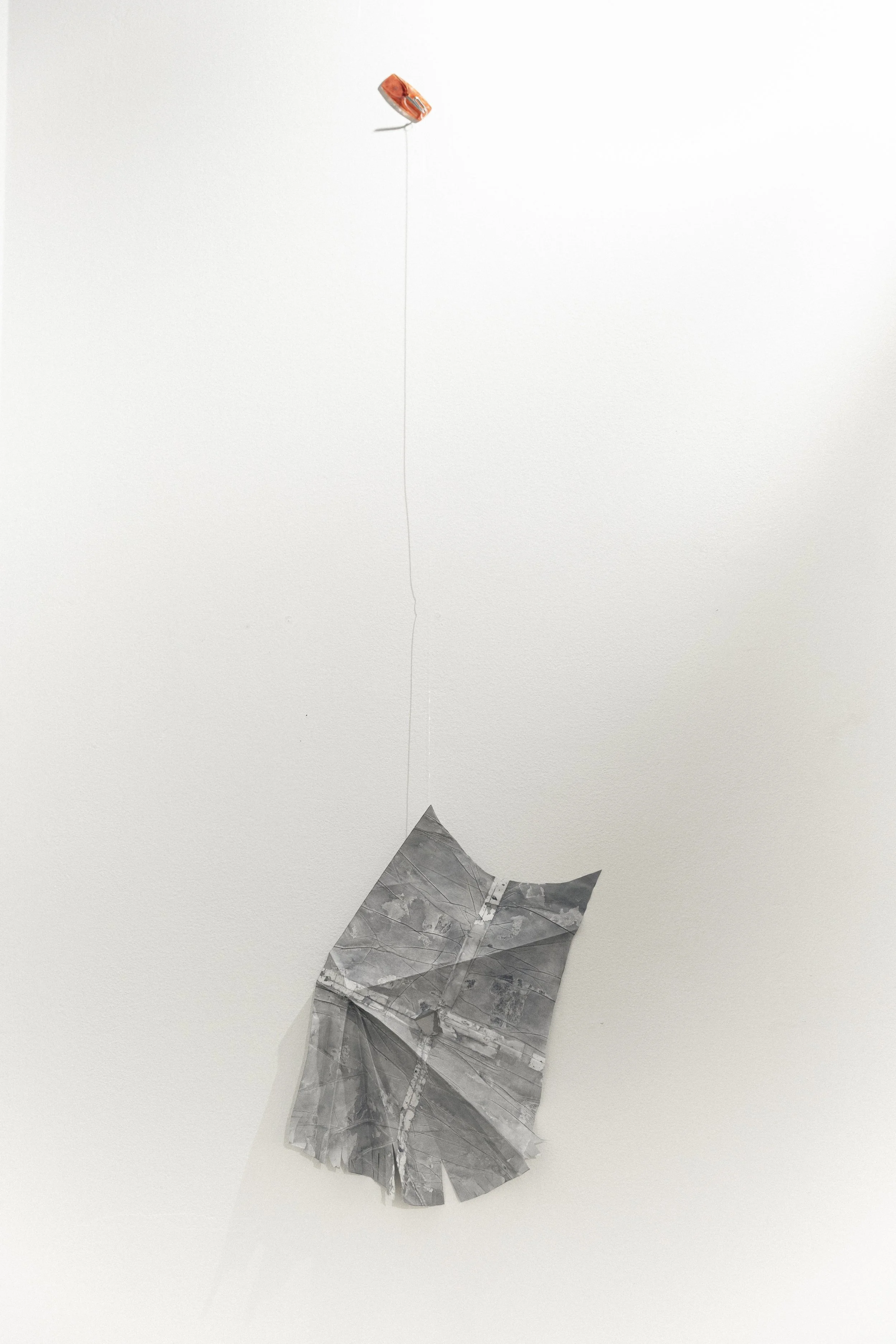
Ghost Echo, Watercolor and tape on layered vellum, coated binder clip, reflected, light and line shadow, 8.5 x 38 x 0.2 in, 2025 © Bin Fang
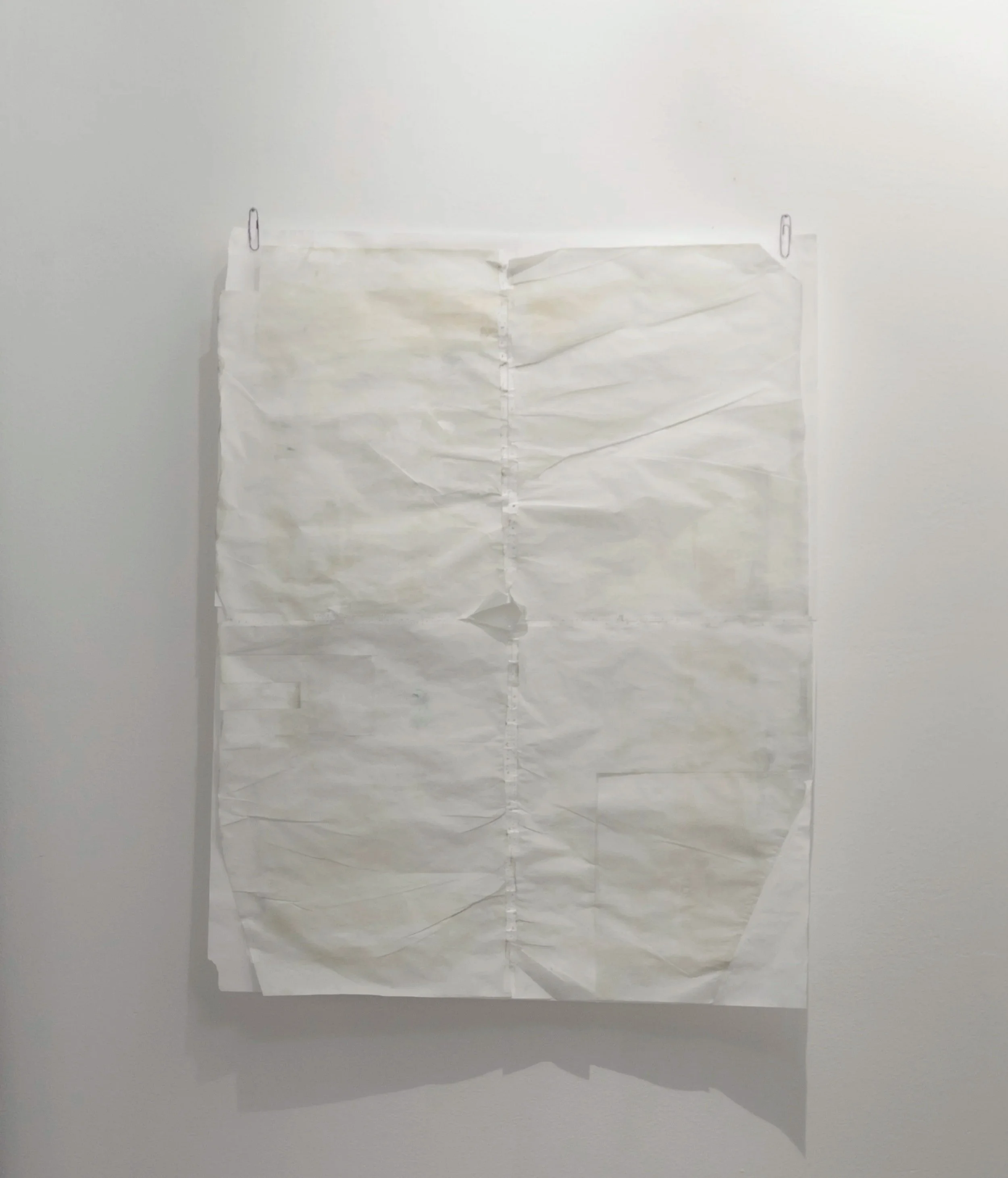
Ghost Echo, Watercolor, tape, pencil on layered vellum, mounted with, painted binder clips, 14.5 x 23.5 x 0.8 in, 2025 © Bin Fang
You describe embracing error and unpredictability as structuring principles. What does it mean for you to “keep” something unresolved rather than correcting it?
I feel like the notion of 'correcting' carries an almost authoritarian undertone. It implies the existence of a single, flawless 'master narrative.' But neither memory nor perception operates in a perfect, linear sequence. For me, the physical traces left behind from handling materials, the friction, the dust, the bluntness, are the language itself. Retaining those accidental, somewhat clumsy, or even absurd choices is far more convincing to me than a polished final product. Much like language, once an intimate experience is forced into a neat translation, it loses its vitality. Remaining in a position that actively refuses to be translated is the closest I can get to pure, unadulterated perception.
Many of your works unfold slowly, resisting immediate clarity. How do you think about audience reception in a time when attention is often fragmented or rushed?
I see today’s rushed, fragmented attention as a highly socialised condition; we’ve been conditioned to prioritise efficiency and immediate consumption. My work unfolds slowly, resisting clarity precisely to suspend the drive for certainty. I aim to create a state akin to how a child or an animal engages with a picture book, a process of de-culturing. In this state, the audience is invited to abandon the urge for quick interpretation and revert to a pre-linguistic confrontation with the work, guided by raw intuition. I explore a 'physiological gaze' through the familiar: a shoelace, a piece of vellum, materials known so deeply that they cease being mere images and begin functioning as intentions. The 'slowness' of the work is the necessary physical time required for the biological body to fully react.
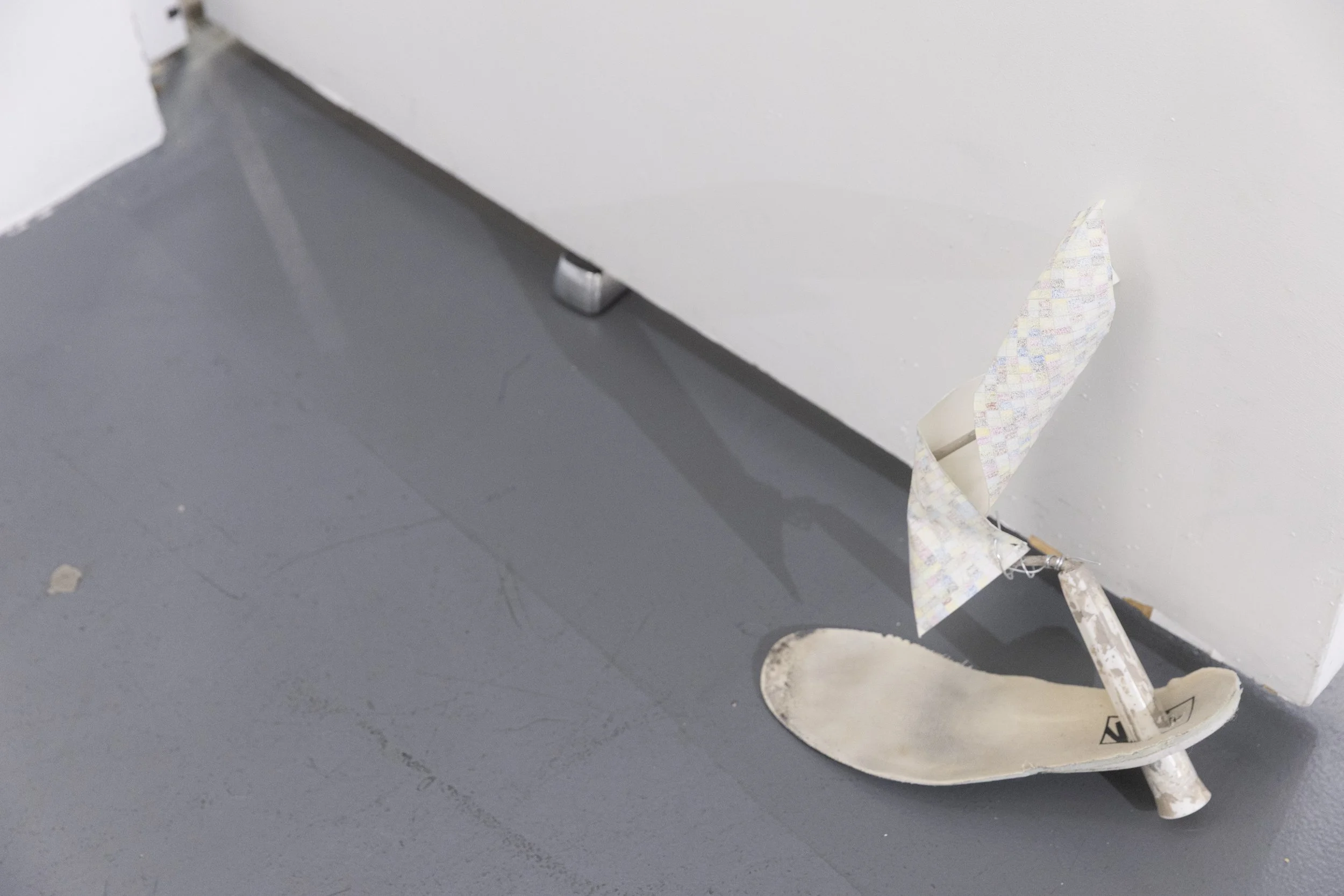
Ghost Echo, Used vans insole, aluminum wire, colored pencil, drawings, found painted roller, 12.3 x 9.5 x 2 in, 2025 © Bin Fang
Looking ahead, are there new directions, materials, or questions you feel compelled to explore in your upcoming projects?
I’ve always been obsessed with the 'stuff' behind the image. For me, film isn't just a tool to capture a scene; I want to look at what it’s actually made of, the raw, physical chemistry of how light and fluids react on the surface of the strip. I want to bring this same experimental energy into my drawings and time-based works, treating them as physical sites rather than just visual surfaces. I’m also diving deeper into sound and instrumentation, seeing audio as a material with its own weight and density. My goal for upcoming projects is to see how these different forces, chemical reactions, the vibration of sound, and the grit of a physical surface, can actually talk to each other in a space to create a raw, visceral experience.
Artist’s Talk
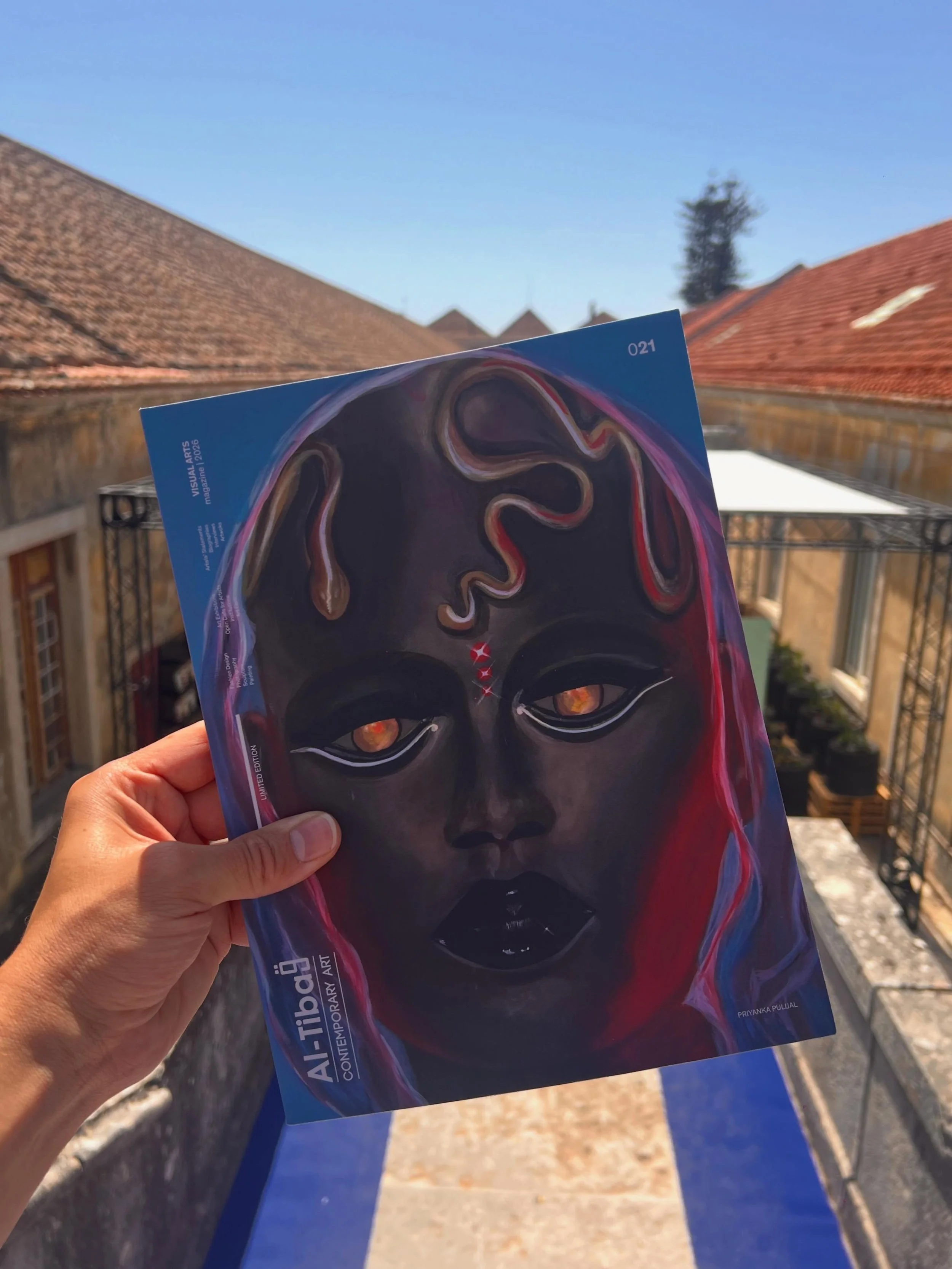
Al-Tiba9 Interviews is a curated promotional platform that offers artists the opportunity to articulate their vision and engage with our diverse international readership through insightful, published dialogues. Conducted by Mohamed Benhadj, founder and curator of Al-Tiba9, these interviews spotlight the artists’ creative journeys and introduce their work to the global contemporary art scene.
Through our extensive network of museums, galleries, art professionals, collectors, and art enthusiasts worldwide, Al-Tiba9 Interviews provides a meaningful stage for artists to expand their reach and strengthen their presence in the international art discourse.
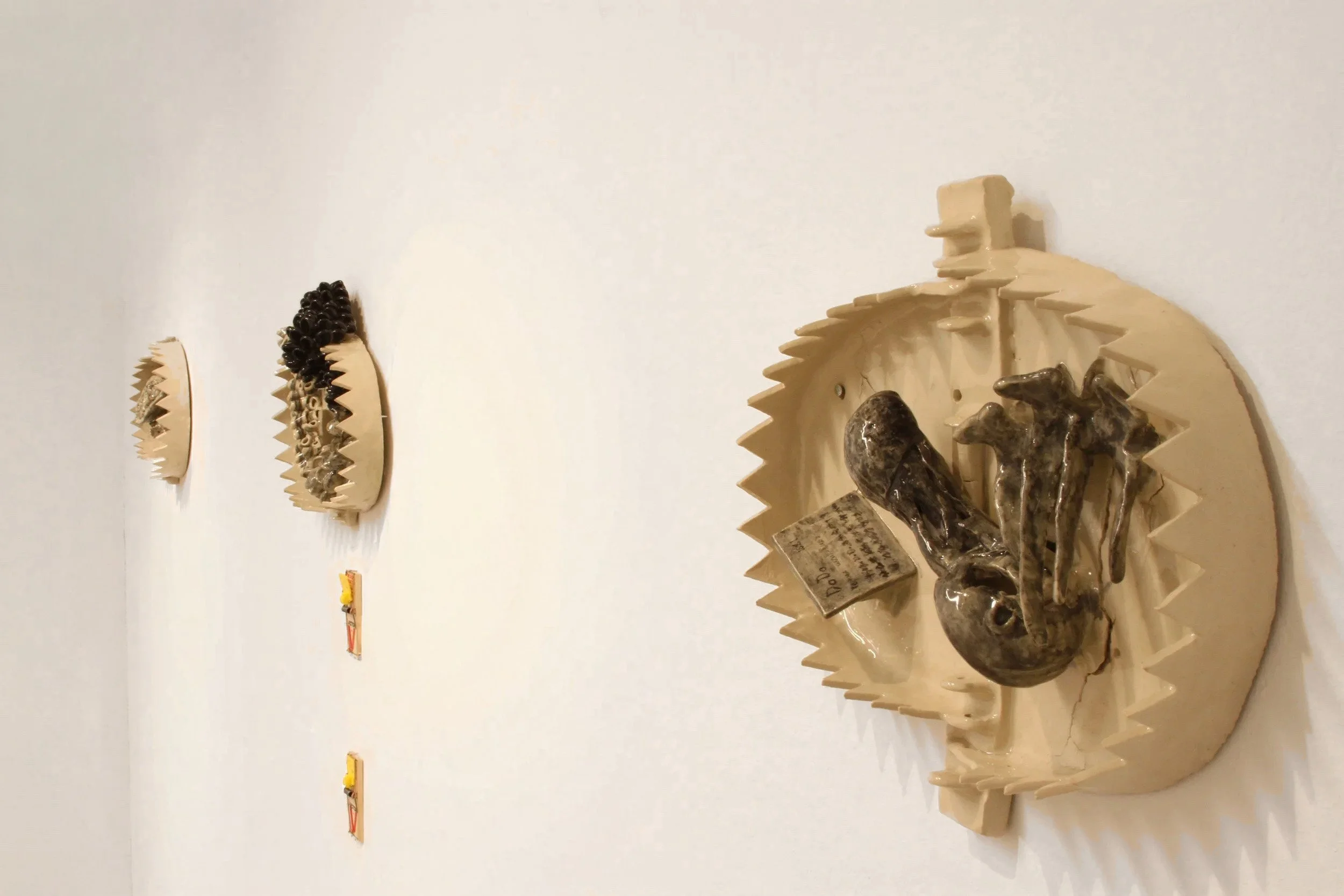

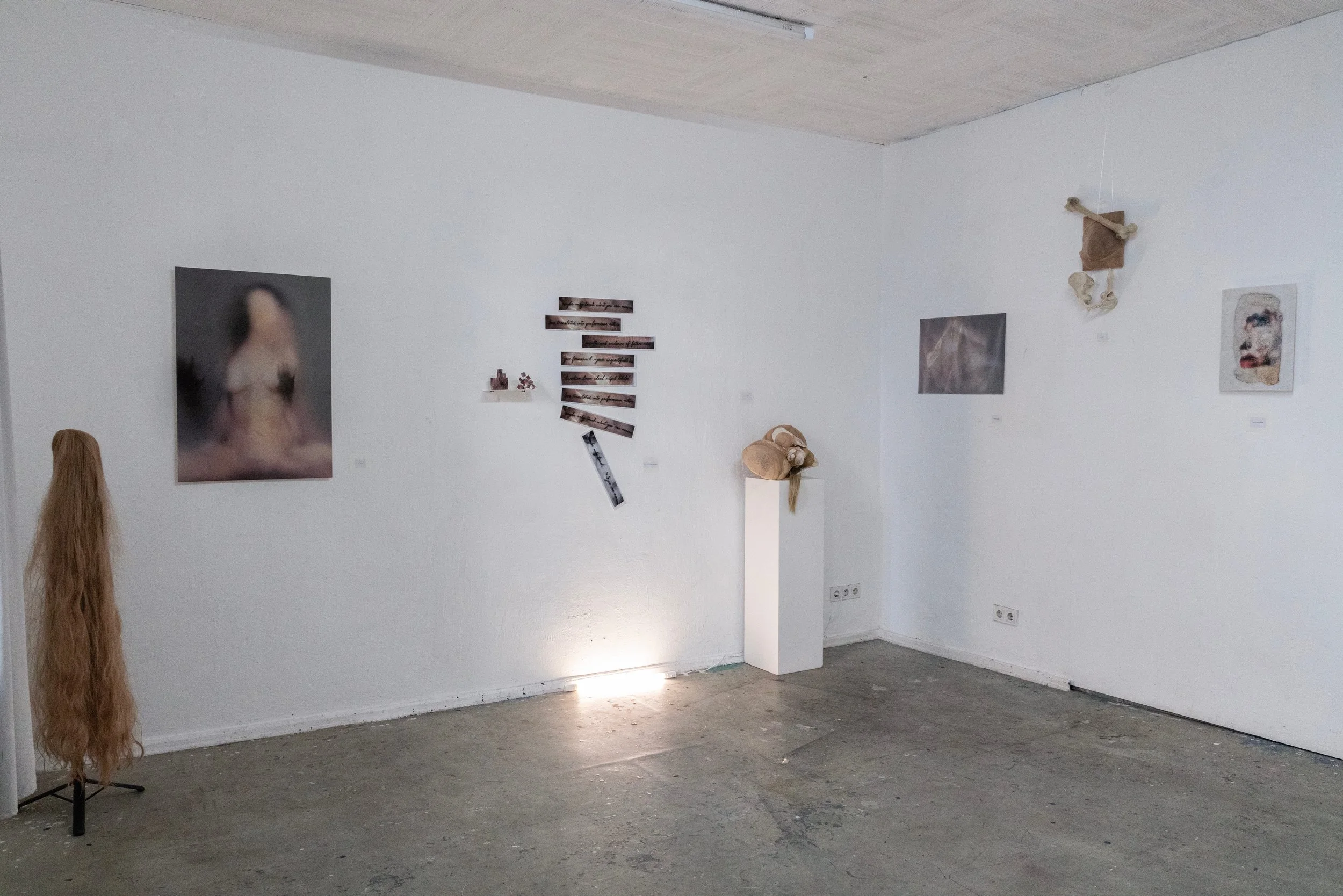


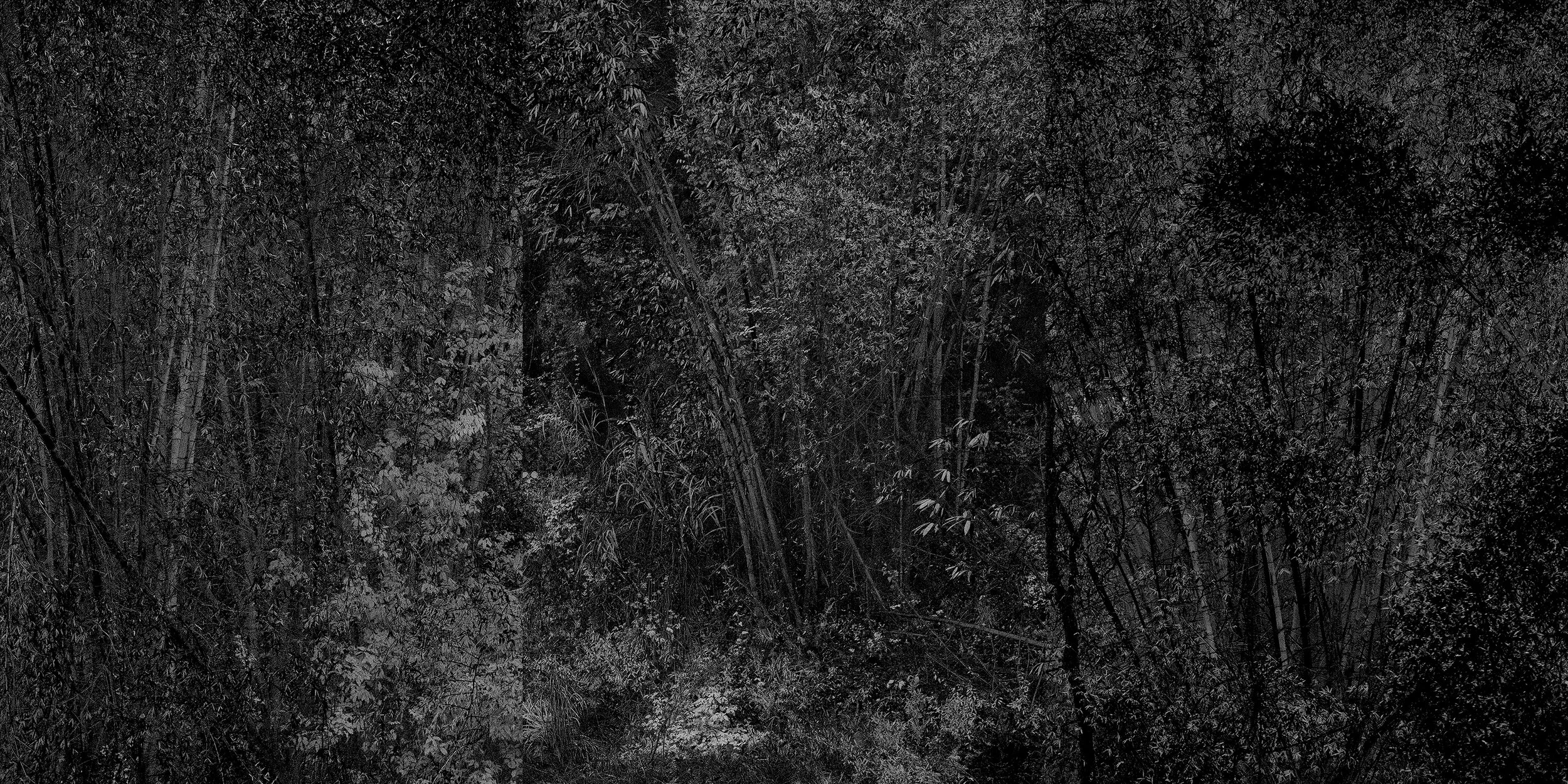
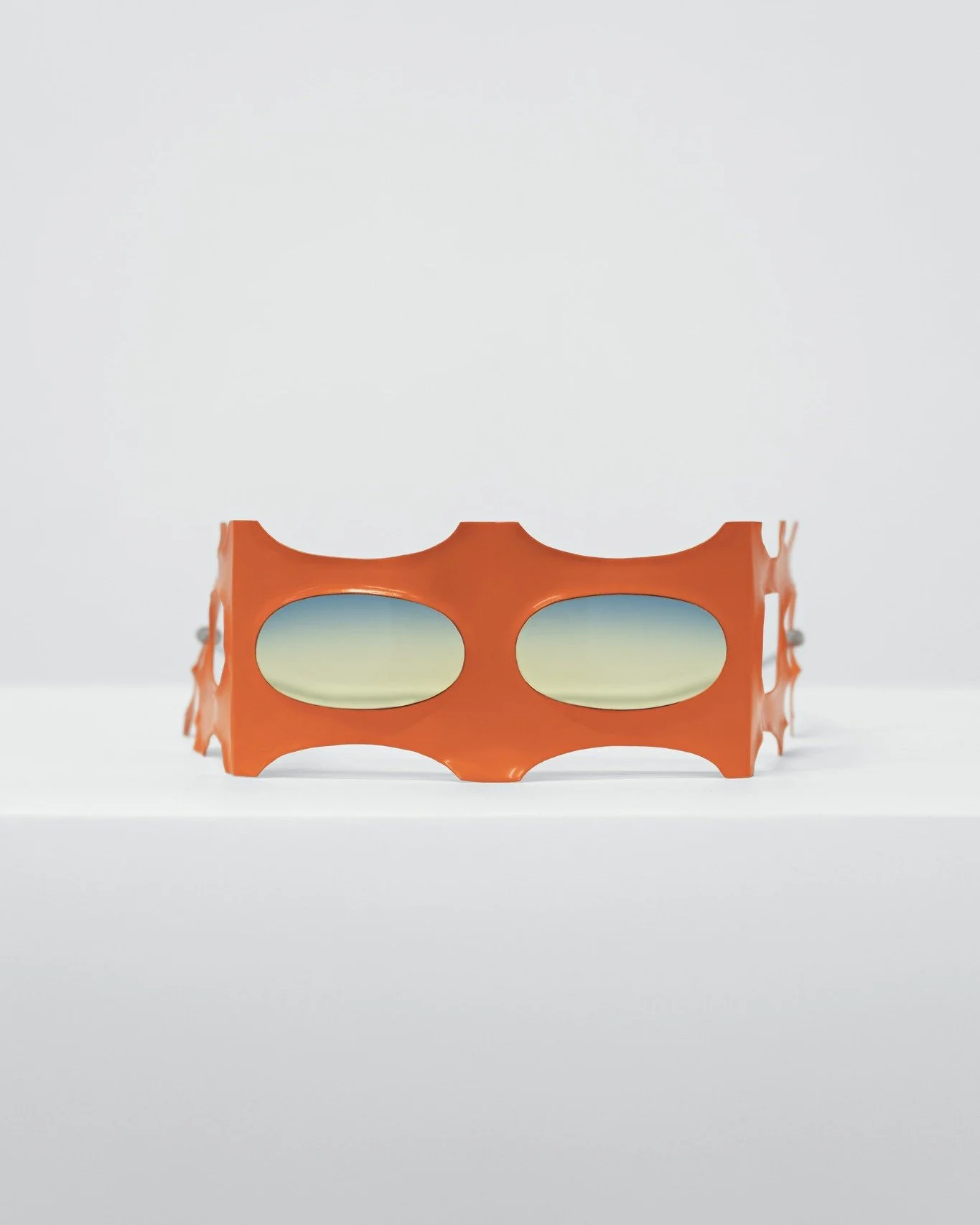
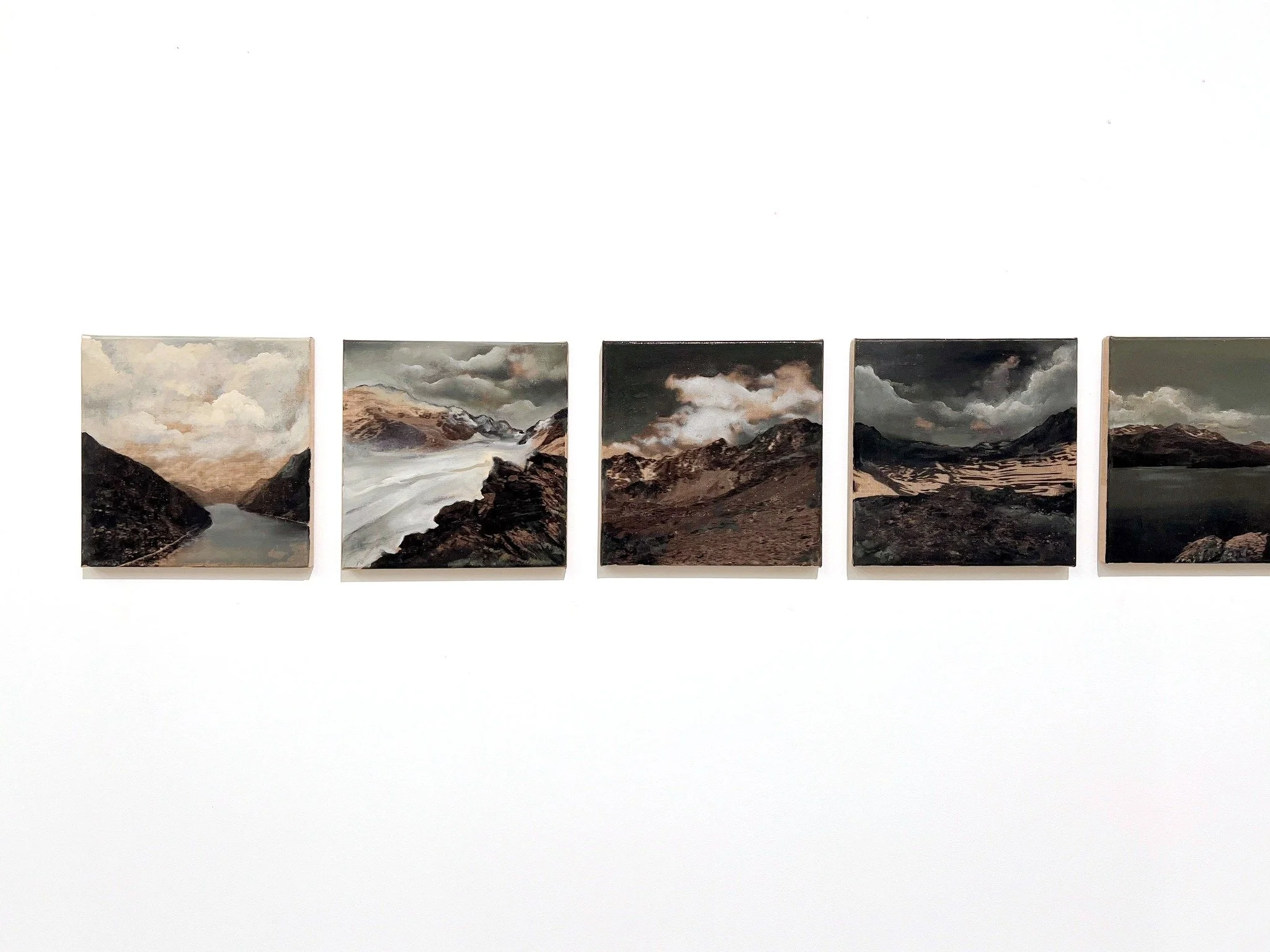

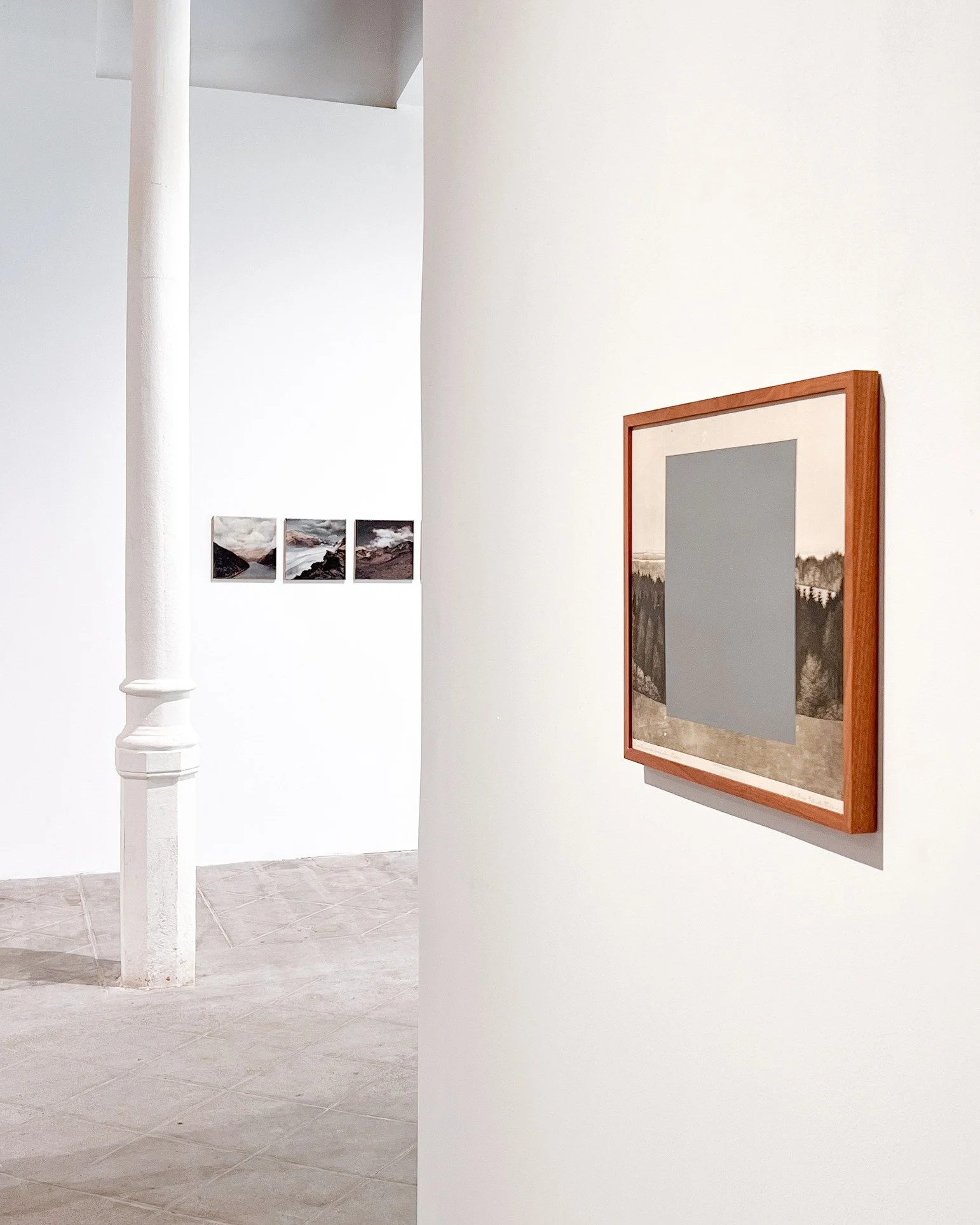
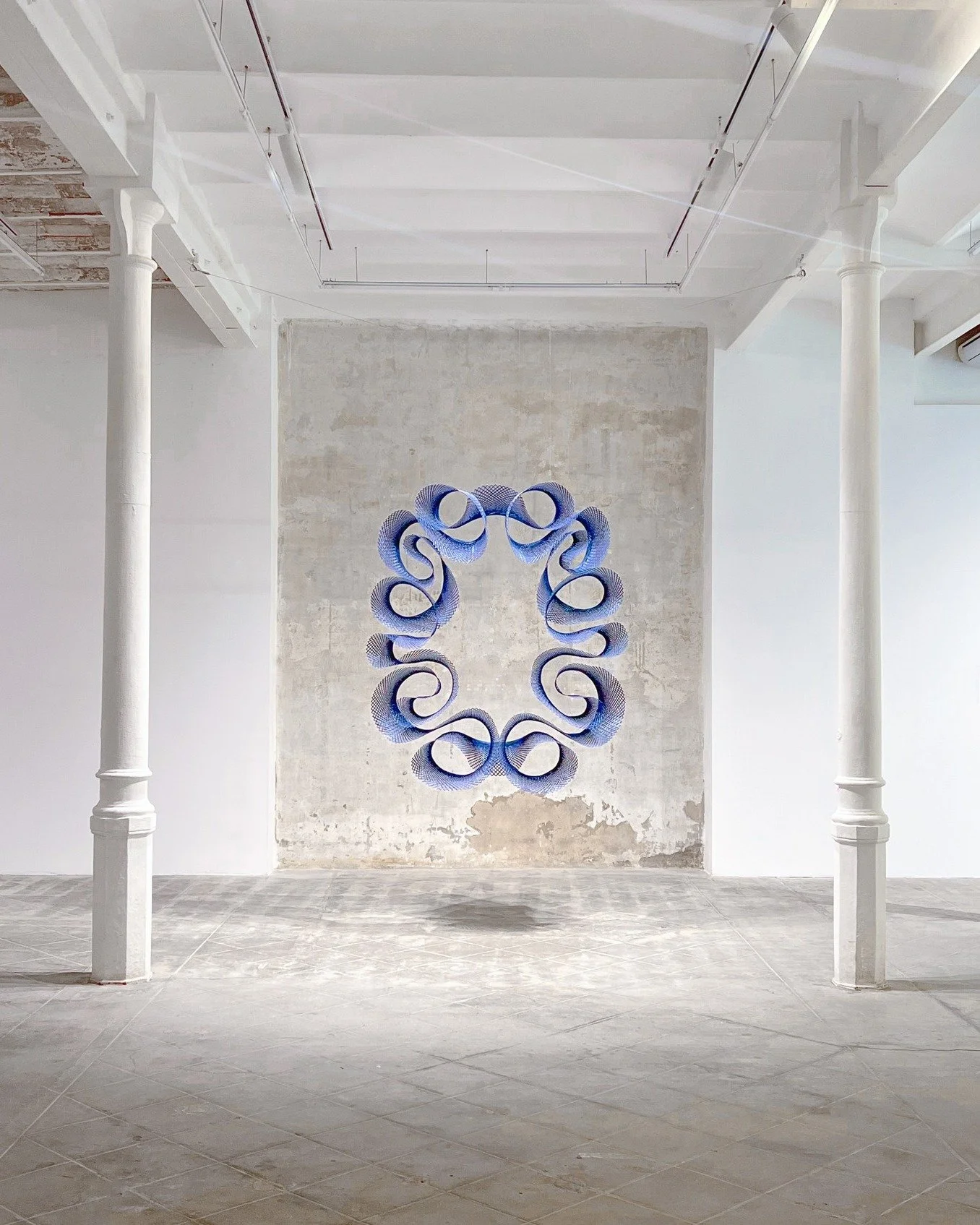
Lim Won Ji (Oneg) is a South Korean artist based in Chicago. Working across sculpture, installation, performance, and process-based experimentation, Lim investigates hypervigilance as a bodily condition shaped by anxiety, uncertainty, anticipation, and the desire for control, constructing unstable situations in which order is continually negotiated through gravity, time, repetition, and chance.