
10 Questions with Qi Liu
Qi Liu is an artist living and working in Los Angeles, working with photography, installations, and art direction. After completing her studies at the California Institute of the Arts, she began exploring social issues, including gender and environmental concerns, through reflective and dialogic approaches. She often examines her own perspectives and invites viewers to engage with the questions her work raises. By transforming observations of daily life into immersive experiences, Liu aims to create works that encourage reflection, dialogue, and heightened awareness of pressing contemporary topics, fostering connections and prompting audiences to reconsider the world around them.
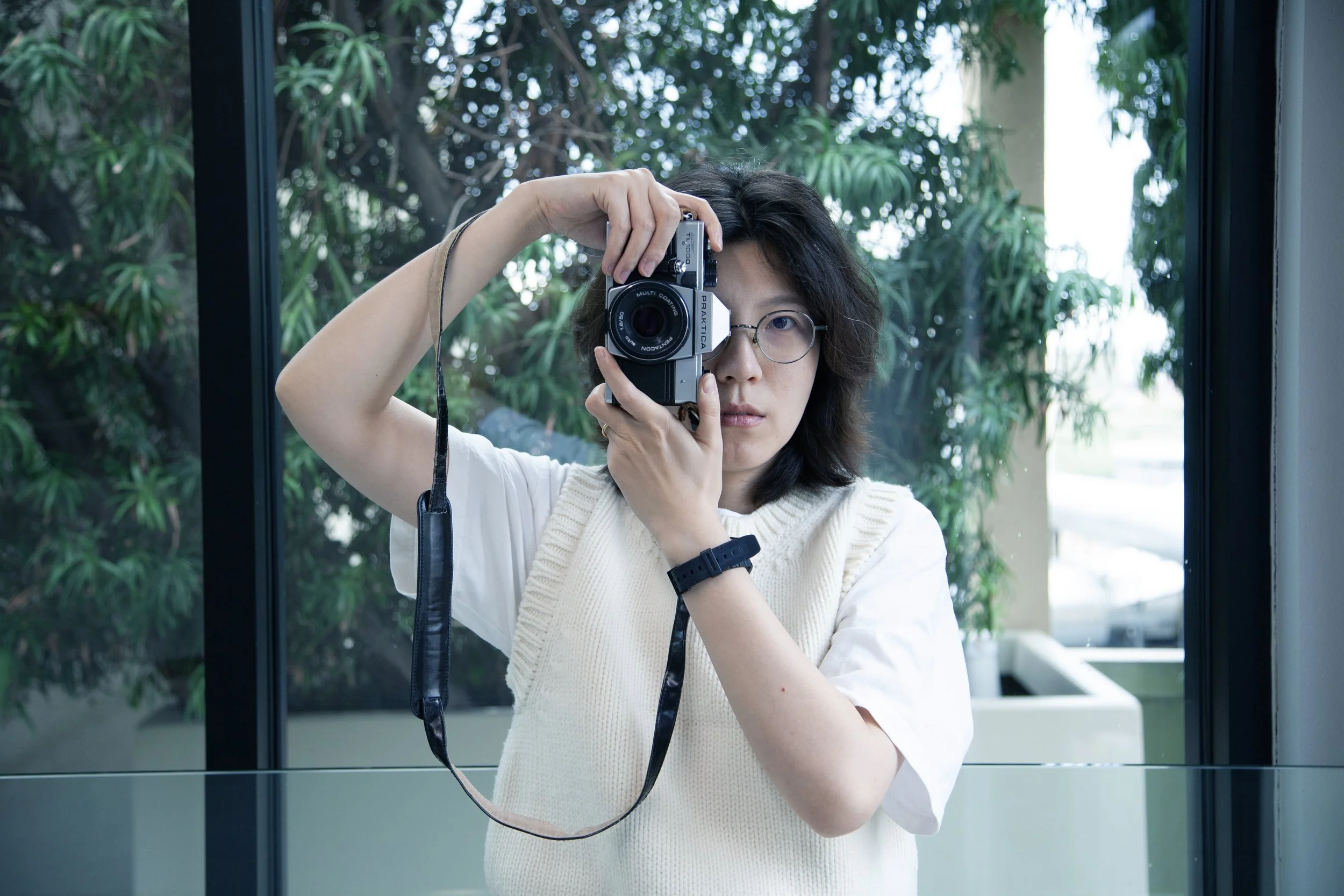
Qi Liu - Portrait
ARTIST STATEMENT
Qi Liu is a multidisciplinary artist based in Los Angeles whose practice explores the intersections of gender, society, and environment. Her work often takes the form of installations and photographs that translate social realities into visual experiences. Liu believes that art, regardless of its medium, has the power to inspire awareness and reflection. Whether in two-dimensional photography or three-dimensional space, her intention is to provoke questions, invite empathy, and remind viewers that social change begins with recognition.
For Liu, art is not a distant concept but a living conversation with everyday life. Before entering the art world, she once thought that art existed apart from reality. Yet through her creative journey, she discovered that art can become a language for expressing one’s stance and inspiring others to think differently. Her practice now centers on creating works that transform personal observation into collective dialogue, encouraging people to move from merely “seeing” to asking what they, too, can do.
Liu works intuitively with materials drawn from daily life, believing that the most ordinary objects carry the weight of shared experience. Through repetition, accumulation, and spatial arrangement, she constructs environments that reflect the structures and emotions of contemporary society. Her installations and images often highlight the invisible labor, quiet endurance, and human vulnerability that exist beneath familiar surfaces.
In the future, Liu intends to continue investigating social, gender, and environmental issues that unfold around her every day. For her, creating art is a form of questioning, connecting, and seeking solutions, a way to engage with the world through both sensitivity and responsibility.

Qi Qi Chairs Fair, Mixed-media installation, 4x6x12 ft, 2024 © Qi Liu
INTERVIEW
You studied at the California Institute of the Arts. How did your education there influence your artistic approach?
My time at CalArts fundamentally reshaped how I understand art. When I first arrived, I carried certain assumptions that beauty was its defining quality and that art existed somewhere distant, removed from everyday life. One of my mentors challenged this view and helped me see that meaning gives art its real depth; beauty alone cannot sustain it.
Through the conversations, critiques, and daily practice at CalArts, I came to see that art exists everywhere, in ordinary life and in every individual. Being an artist is not a detached pursuit but a way of engaging with the world, of serving humanity through one’s creative language. This awareness grounded my practice. Rather than striving for works that feel lofty or untouchable, I create from lived experience, using art to connect with reality and invite reflection.
Before becoming an artist, you believed that art was separate from reality, as you mention in your statement. What shifted that perspective for you, and how does this realization shape the way you approach your work today?
Before studying art, I was a science student and assumed I had little connection to it. I used to think that art was valid only when it took the form of polished works displayed in galleries. It wasn’t until I began learning about art that I realized how mistaken I was. The essence of art lies in its ability to question, to express life, and to engage with the world.
Meaningful art can address both grand social themes, such as anti-war works, and everyday experiences, like the constant stream of advertisements on television. What matters is that it begins from the creator’s perspective and communicates with society. This understanding completely reshaped my practice. Today, I approach my work by closely observing life and social realities, using art as a tool to explore, reflect, and communicate human experience.
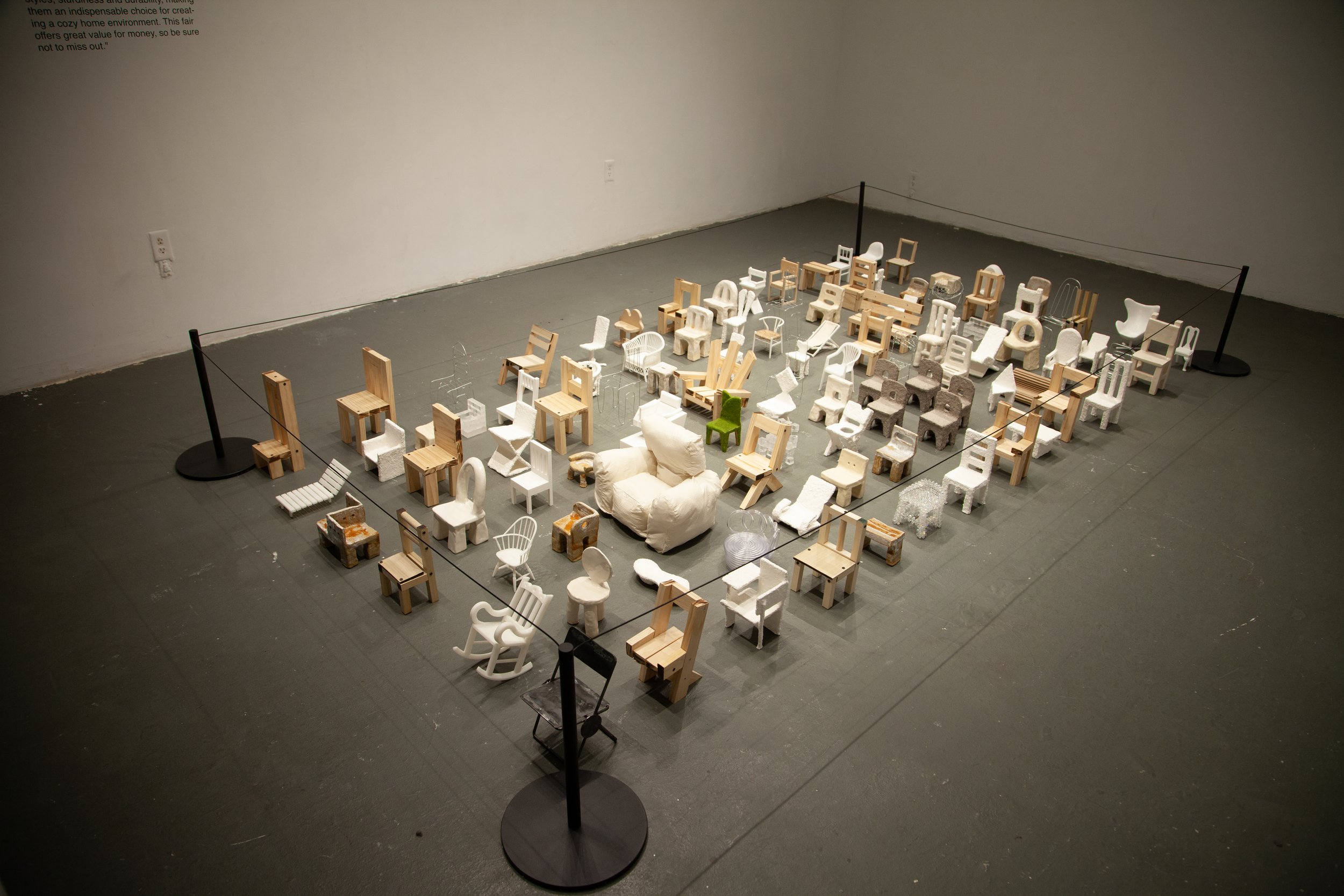
Qi Qi Chairs Fair, Mixed-media installation, 4x6x12 ft, 2024 © Qi Liu
Your practice often transforms ordinary materials into powerful visual statements. What draws you to everyday objects, and how do you choose which materials best convey your ideas?
I’m drawn to everyday materials because they carry a universal familiarity; people instinctively recognize them, yet in their ordinary context, they often go unnoticed. By working with these objects, I can explore cultural and social dynamics through something tangible and accessible.
When I select materials, I consider how their form, texture, and history embody the ideas I want to convey. Their physical characteristics and symbolic associations both shape how they speak within a work. Through transformation, whether by isolating, repeating, or recontextualizing them, I aim to reveal the hidden structures behind what appears mundane, inviting viewers to reconsider the everyday and reflect on broader social or personal narratives.
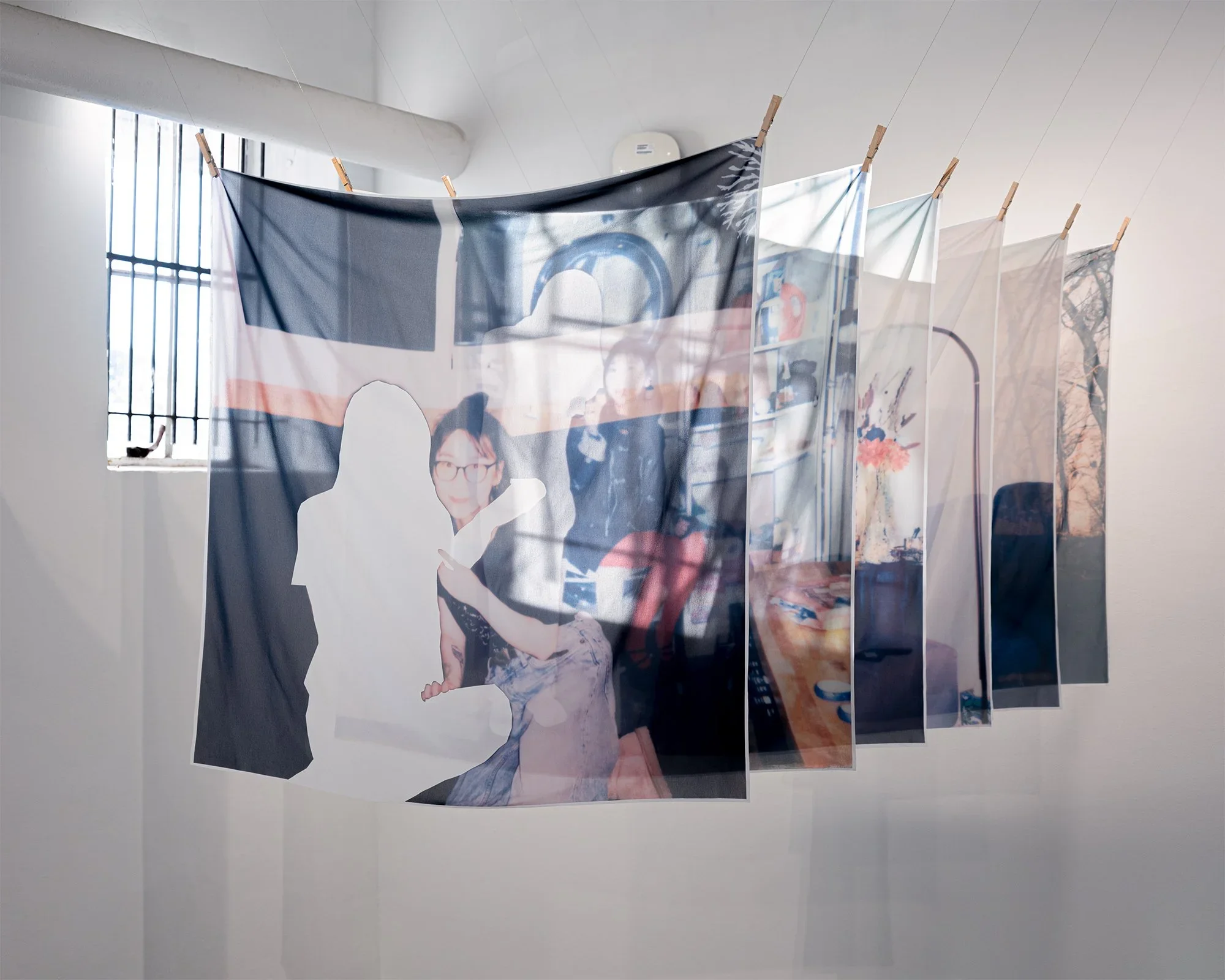
Projects like QiQi Chairs Fair and Blind Spot confront gender expectations and the invisibility of women's labor. What inspired you to focus on these social issues, and what do you hope viewers take away from them?
My attention to gender issues began during a simple social observation at a local market, where I noticed that nearly all the vendors were women. Before that moment, I had hardly reflected on gender dynamics. It made me realize that awareness of such issues should begin much earlier, not only after years of conforming to social expectations.
I approach these subjects as an ordinary person, hoping to connect with others who share similar experiences. While it’s encouraging that more women today are aware of gender inequality, many still accept social norms as “natural” or “correct.” Through my work, I aim to create conditions for sustained reflection and dialogue through continued engagement, offering a space where viewers can encounter women’s perspectives firsthand and recognize how deeply such structures shape everyday life.
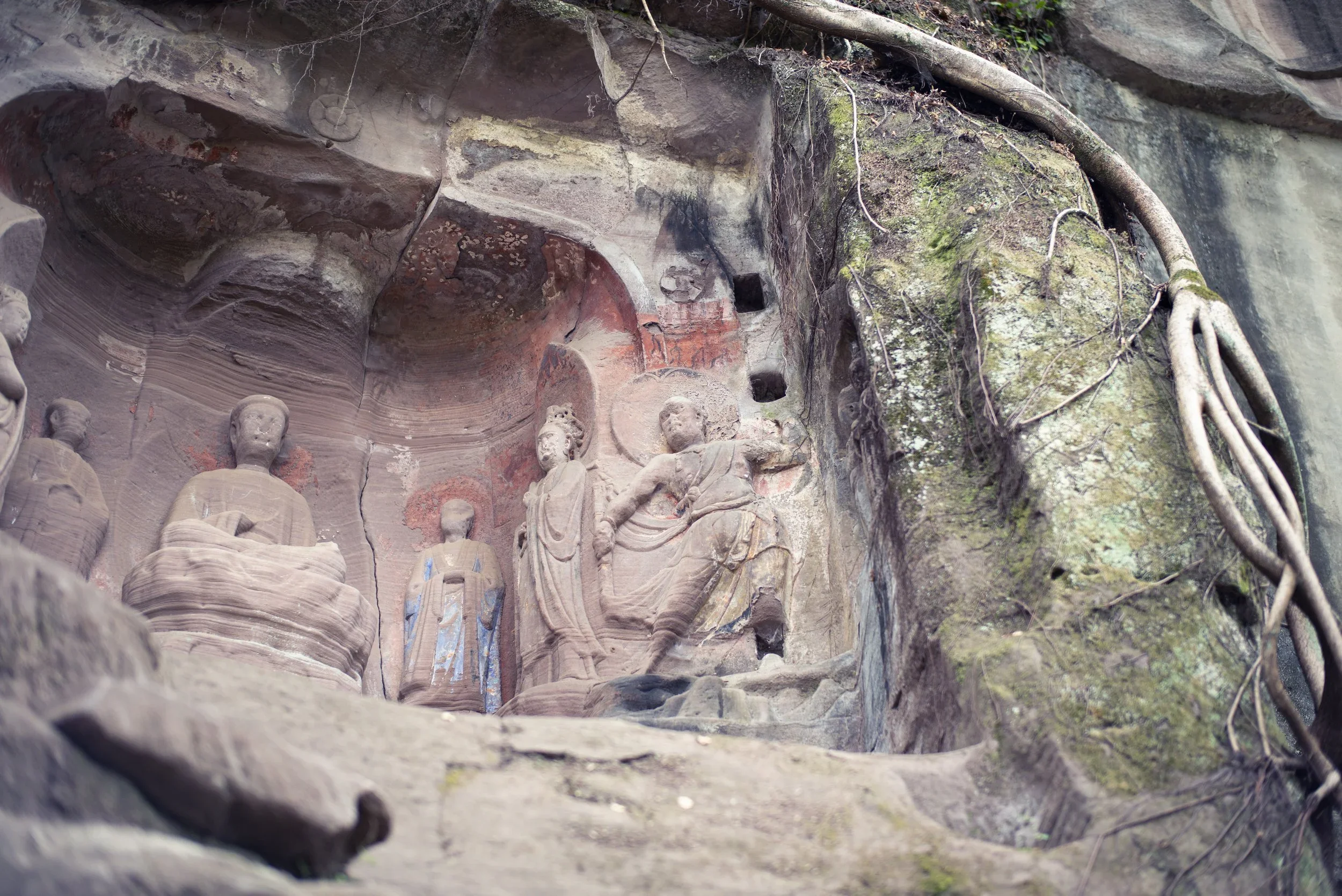
In Silence of the Ages, you engage with the ancient Buddhist sculptures of Anyue. What inspired you to explore this dialogue between history, spirituality, and temporality through photography?
The inspiration came from the Buddhist sculptures carved into the mountains of Anyue, Sichuan, over a thousand years ago. I was deeply moved by how time acts as both witness and participant, slowly eroding these figures while simultaneously preserving their presence.
This ongoing photographic project involves revisiting the same sites to document gradual changes, capturing the dialogue between history, spirituality, and temporality. Through this process, I hope to invite viewers to reflect on the endurance of faith, the passage of time, and humanity’s continuous search for meaning within impermanent forms.

Qi Qi Chairs Fair, Mixed-media installation, 4x6x12 ft, 2024 © Qi Liu

Qi Qi Chairs Fair, Mixed-media installation, 4x6x12 ft, 2024 © Qi Liu
Your installations often rely on repetition and accumulation. Can you walk us through your creative process from initial concept to the moment you feel a work is complete?
Repetition and accumulation are essential strategies in my work. A single object or gesture might easily pass unnoticed, but when repeated or arranged in deliberate patterns, it can reveal hidden structures and social dynamics that otherwise remain invisible.
My creative process usually begins with an observation or question drawn from daily life. From there, I explore materials and forms that can best express the idea. I experiment with placement, rhythm, and density, observing how repetition alters perception and emotion. I know a work is complete when its visual order and conceptual intent align, when the repetition no longer feels like a technique, but like a language that allows reflection to emerge naturally.
Your art invites empathy and reflection, encouraging audiences to question their own assumptions. How do you perceive the role of the viewer in completing or transforming the meaning of your work?
For me, the viewer is not a passive observer but an active participant who completes the work. While I provide the framework, objects, forms, or situations, the meaning only truly comes alive through the viewer’s perception and reflection. Each person brings their own experiences and emotions, creating a dialogue that I could never fully predict.
I design frameworks that the viewer activates. I offer ideas and situations that invite empathy and thought, allowing each viewer to arrive at their own understanding. In that sense, the work is not an end in itself but a living process of engagement that extends beyond the exhibition space.
How do people's reactions influence your ongoing dialogue with the themes you explore?
People’s reactions are an important part of how my work evolves, though they don’t determine its direction. I pay close attention to how audiences respond, what moves them, what confuses them, and what lingers afterward. These reactions help me understand which elements resonate most clearly and which might need further refinement.
Sometimes, a viewer’s interpretation reveals something I hadn’t consciously considered, expanding my understanding of the work itself. These exchanges remind me that art is an ongoing dialogue rather than a finished statement, guiding me toward deeper reflection and more nuanced explorations of social structures, gender, and human experience.

Silence of the Ages, Digital, color, 19x13x0.5 in, 2025 © Qi Liu

Silence of the Ages, Digital, color, 19x13x0.5 in, 2025 © Qi Liu
Looking ahead, what directions or projects are you most excited about? Is there any new project or concept you are eager to investigate next?
I remain deeply committed to exploring the relationship between women and society, which continues to be a central thread in my practice. Living abroad and navigating different cultural systems have also informed my current direction, prompting an inquiry into identity, belonging, and social integration.
These reflections inform how I approach my ongoing work: I am examining how art can speak to these experiences and how personal migration stories illuminate broader social patterns. My practice responds to lived realities, documenting, questioning, and translating them into visual forms that invite empathy and awareness. I am expanding into new media and formats while remaining grounded in observation and social inquiry.
Lastly, where do you see your practice and yourself as an artist in five years from now?
In five years, I will have consolidated a rigorous and comprehensive body of work that continues to engage with questions of gender, society, and human experience. I envision my practice extending across different media and contexts, enabling me to explore new ways to present ideas and connect with audiences.
My work remains reflective yet socially responsive, nurturing empathy, sparking dialogue, and prompting audiences to reconsider the assumptions that shape everyday life. My goal is to maintain clarity, precision, and depth in how I respond to the world, creating works that resonate across time and context.
Artist’s Talk
Al-Tiba9 Interviews is a curated promotional platform that offers artists the opportunity to articulate their vision and engage with our diverse international readership through insightful, published dialogues. Conducted by Mohamed Benhadj, founder and curator of Al-Tiba9, these interviews spotlight the artists’ creative journeys and introduce their work to the global contemporary art scene.
Through our extensive network of museums, galleries, art professionals, collectors, and art enthusiasts worldwide, Al-Tiba9 Interviews provides a meaningful stage for artists to expand their reach and strengthen their presence in the international art discourse.



Bichen Liu is a Chinese lens-based visual artist working across fine art photography, black-and-white image-making, and experimental photographic practice. What Lies Beneath is a black-and-white photographic series focusing on exposed root systems and coastal residues, that transforms overlooked ecological fragments into visual records of support, erosion, and displacement.