

10 Questions with Raquel Sanchez
Born in Paris, Raquel Sanchez is a multidisciplinary artist and poet based in Jerusalem. With a diverse upbringing across New York, London, Ibiza, Caracas, and Essaouira, she holds a B.A. in Forensic Psychology, Film, and Poetry from Brooklyn College, an MSW from Yeshiva University, and is a PhD candidate at NYU’s Ehrenkranz School of Social Work. Her artistic journey spans decades of study in painting, ceramics, sculpture, and design, both formally and informally. In her visual work, Sanchez explores light, reflection, nature, and biblical symbolism to evoke spiritual dimensions of human experience. She has also designed functional objects, light fixtures, fans, and furniture, using recycled materials like wood and marble. Sanchez made Aliyah after years of living in Israel intermittently and became religious during that time. In the 1990s, she founded the Rose Institute (now Crossroads), which has supported thousands of English-speaking youths in partnership with Kidum Noar and the Israeli Ministry of Education. Her paintings have been exhibited in solo and group shows across Jerusalem, Tel Aviv, and Rishon LeZion, and she has created several commissioned works, including ceramic tile murals installed in mikvahs and other public spaces.

Raquel Sanchez - Portrait
ARTIST STATEMENT
”My work exists within the layers of nature, both real and surreal, capturing moments that extend beyond the visible. I seek to evoke sensations of time, movement, and light, immersing the observer in fleeting yet profound experiences of landscape and waterscape. As Picasso once said, “Ideas are simply starting points.” For me, painting is a dance of moments, a dialogue between reflection and light between what has been seen and what remains unseen. The canvas is more than a surface; it is a space that connects to my inner world. The first brushstroke is an act of breaking through a moment of breath, presence, and transformation. Light plays a central role in my work, not only illuminating form but also revealing the interplay of shadow and time. I use colour and reflection to weave movement into stillness, creating a seemingly kinetic effect that invites contemplation.”
— Raquel Sanchez

Prayer, solo exhibition installation view © Raquel Sanchez
INTERVIEW
Starting from your background, you grew up between several cities and cultures. How has that sense of movement and displacement shaped your work?
This is an interesting question because I really feel that all three aspects of this question have a world of difference in perspective from one another. Let’s say my background helped me feel closer to people of other cultures because differences in myself have been integrated. I enjoy the several cultures that I am part of. As for other communities and cultures, they became a source of curiosity and curiosity in a true sense, was my ‘connection builder.” I generally identified cultures via the arts, including the culinary arts. I’ve made rugs with a group of Moroccan women and learned skills like ceramics and sculpting by being an inquisitive child. Perhaps this elevated my thinking as an adult of what art is or can be while considering the perspectives of traditions. I enjoy elaborating on these developed skills. As far as the “displacement” shaping, true, there’s displacement with travel in a sense, and yet there is a natural adaptation to the widening of space that exudes from the natural rebalancing that happens when the world becomes your habitat. It connects me to people of other languages, their films, their art, their foods and mainly the way in which drawing information is a form of reference for further growth. I grew up realising that being an individual exists on the level of sharing much more than connecting only via likeness.
A New Song of Praise © Raquel Sanchez
Your academic background spans forensic psychology, social work, film, and poetry. How do these disciplines inform your visual language?
Within academics, I found it a privilege to think out of the box. Thinking out of the box was my personal norm. It guided my work. I generally worked in “other languages”, and so, I was relied on for information. Within any framework, information can potentially be experienced as cold or warm. Compassion can be directed in translation. I have a lot that I’ve learned from how information is expressed within the confines and structures of education. As per writing to canvas, I was blessed with those around me who wrote and expressed beautifully. If this gave me one thing, I could pinpoint and share with you… It would be the sense of visualising phenomena. Writing is visualisation. It is also the discussion of what you might see vs what I see, even though we heard or read the same thing. I believe that each of the material aspects of my art contains discussion. With writing, the discussion is editing. What I mean by this is that I work with an intention, an idea and an image. The artistic materials are placed on paper or canvas. Then, let’s say, the point moves to its place. Colour and texture move on their own volition, also due to heat, cold, oil, paint brush, and this discussion evolves. What I intend returns to me with what happens, and working with that which happens is a practice of discipline also attainable in life. Still, no matter what, each one of us perceives it differently. I’m sure my studies invite different perspectives because I enjoy hearing what people think of my work and listening to what they see. In fact, even though I get asked to speak at an exhibition, I prefer listening much more than talking when it comes to my work.
Light is central in your paintings. When you begin a new work, are you thinking more about emotion, symbolism, or physical phenomena?
Definitely physical phenomena. I work from the morning until the evening. My studio has windows through which I can attain light from almost 360 degrees. There is one full wall where I have my large, hand-made, self-designed easel, which can carry canvases of many sizes. I enjoy this easel and can work on several pieces at once. If one is in the process of drying, I can work on another. This helps me await making the next layer with more palatability and with more ease. Sunlight clears the space and travels around my work during the day from East to West. It takes days, sometimes months, and not often, but years, to gain certain “moments” to be worked on “just right” on the canvas.

Approaching perfection, oil on canvas, 130x110 cm, 2023 © Raquel Sanchez

Insignificance, Prayer VIII, oil on canvas, 140 x 110 cm, 2023 © Raquel Sanchez
You describe painting as a “dance of moments.” What allows a painting to feel alive rather than static for you?
Nice question! This connects to your previous question of which the physical presence of light was described. Now the response is more of a challenge to the observer. Can the observer allow some real time to view the works? The work will tell its story as light travels. When exhibited in stagnant light, the movement of light and people walking changes light and continues its story. This dance of light helps the intended images emerge.
Nature in your work feels both real and surreal. How do you decide when to stay close to observation and when to move toward abstraction?
Usually, I’m asked, “When do I know when a painting is ready?” Your question is more specific, and I appreciate the thoughtfulness of it. For me, the answer is not necessarily that abstraction happens prior to realism. With that said, I do have an idea of what I want before I begin painting. I allow the conversation as mentioned and continue to stick with the plan. Many artists use a notebook to outline what they’re going to do. I tend to do this exercise when life involves me in tasks that might take me away from a mental visualisation. There’s always something to do with paper, even when working on canvas and then I do my best to destroy the original paper. This way, I allow what happens in “the artistic conversation” a life of its own without previous hindrance. So, I write out an image that then becomes an actuality and simultaneously dust. So, back to the question. I stop painting when I step away for a moment (not necessarily physically) and like what I see and what I feel from what has been created, and I personally prefer the discipline of abstraction.
Biblical symbolism appears subtly in your imagery. How do you approach translating spiritual narratives into visual form without becoming literal?
I am not a preachy type of person, even though I am religious. I believe in God, and I do have opinions. My opinions, however, are not stagnant. I listen. An easy answer to this would be that I pray. And there is more to it with tactility. The deeper answer is that I listen. My bookbinding teacher says about cutting paper, “listen.” This is when you know how the paper is accepting being cut. There is an aspect to hearing in painting in addition to other forms of my art. This hearing of the moment in its presence in the framework of expression that allows something more than me, the artist, to influence. The present is its container. It is the non-literal structure. I believe being aware of the present moment is the flexibility of listening to the garment being expressed. It’s what I need to attain and to be aware of between what I want and what is happening.

Installation view of Raquel solo exhibition, Light and Darkness, at the Marie gallery in Jerusalem, November 2025. Curator: Vera Pipoul © Raquel Sanchez
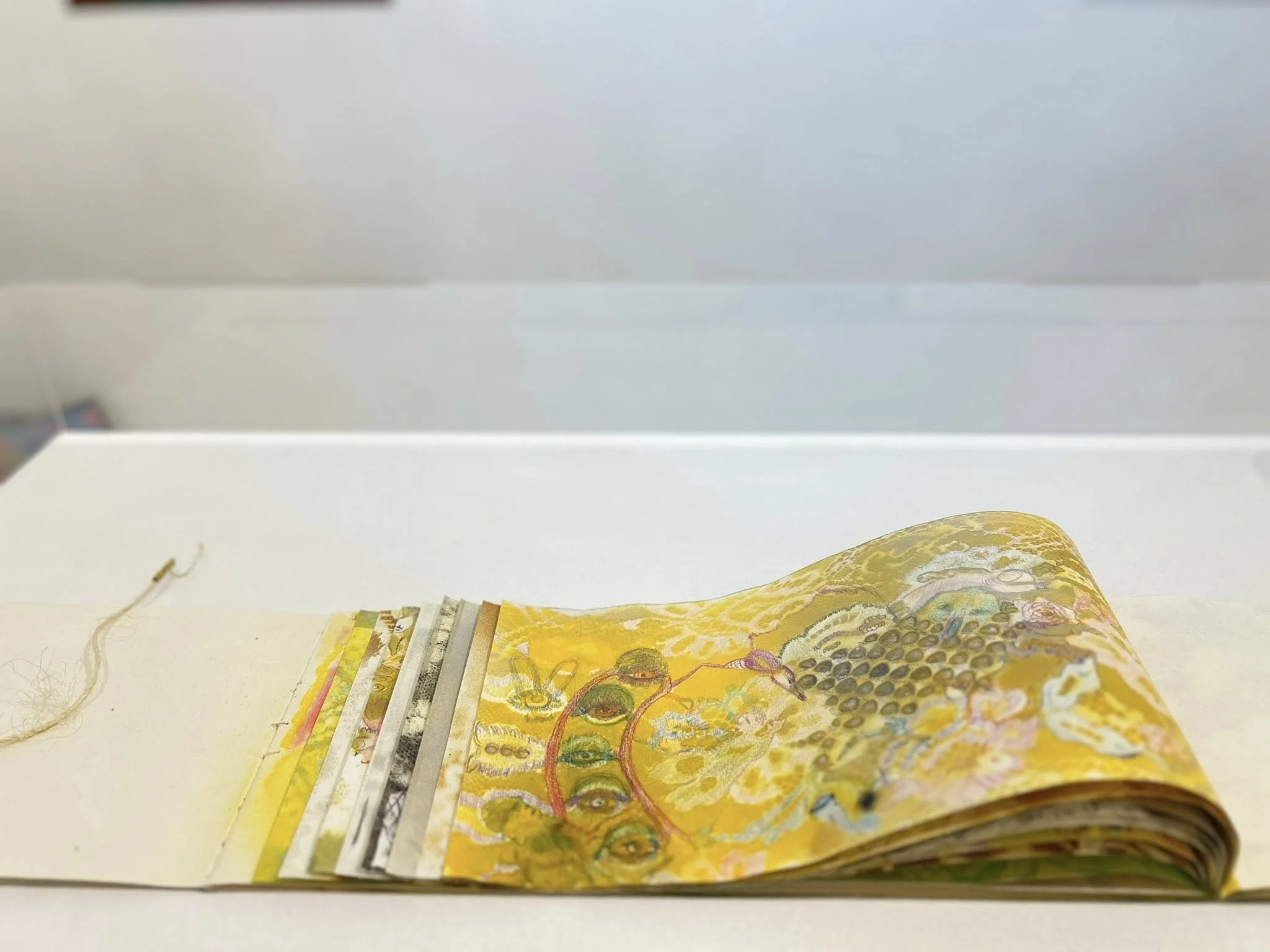
Artist book, details view, mixed media, monoprint on sending paper, 20x55 cm (closed book), 2025 © Raquel Sanchez
You’ve worked across painting, ceramics, sculpture, and functional design. What does each medium allow you to express that the others cannot?
Each medium, including poetry, which can also be considered rhythm and structural design, which is touch, sight and aesthetics with objects, reaches into diverse senses. I don’t feel limited by mediums. Each one, in and by itself, reaches us without measure into a world of its own, contained in our ability to understand it. Words describe three-dimensionality, while colours and hues can increase and connect to emotion. Aspects of expression are not limited to their structure. Each medium can expand emotion, thought, and provoke inspiration. A cup with fur inside it is thought provolking art. A bicycle tyre held upside down and attached to a chair is art and inspiring. A cut canvas is its first brush stroke.
Your functional objects, light fixtures, furniture, sculptural pieces, bridge art and utility. Do you see them as extensions of your studio practice or as a separate exploration?
Functional Objects began from my life, then walked into my studio. It always began conceptually. Then it continued by asking skilled craftspeople to assist with ideas. For instance, I found large marble blocks being thrown away after a construction project for a building in Long Beach Island, New York and had the idea to make them a base for holding light. I had 3 lamps built with the help of electricians and craftspersons I found through my superintendent, whose name is Joe. Joe helped me create table tops and fans that had so many layers of sparkles and polyurethane that when light was nearby, the sparkles became three-dimensional as if the universe’s stars could reach the space. I want fun and beauty in the aesthetics around me. I fix bags, pocketbooks, bookcases and doorknobs. I think perhaps instead of existing from one place to the other… like the studio moves into my life or that my life moves into my studio, I'd like to believe my studio is my life and life is my studio. I keep my inner artist with me wherever I am.

Separation Between Water and Water © Raquel Sanchez
You’ve worked extensively with youth and in social initiatives. Has that long-term engagement with the community shaped the themes or intentions behind your art?
Yes. Everything has shaped me. Love, sweetness, anger and pain have all shaped me as well. People’s stories, my story, I am a part of what beauty I’ve seen, as well as what terror I have listened to and therefore witnessed through social initiatives. Some of the pain of others has really been worked out. Some of mine as a witness is still being worked through. Trauma can be a way of paving a road to peace of mind, and sometimes not. With that said, the success of programs I have either founded or been a part of has helped me have a community of those whom I believe in and who believe in me. It’s a support that is wider than meets the eye. Yes, it all shares space with how I live my life now. My belief in the human experience and resilience has definitely proven to emerge also in me. My skipping sideways into the arts was as comfortable a move as if I were walking into my own childhood story. How this returns to themes of my artwork tends to resolve itself toward a pale color pallate or even something simply black and white, like an old photo, feeling rather than explanation, something that rests on canvas while capturing a calm path from the mind to the soul. I’m hoping my audience and viewers of my work also find this contemplative calm.
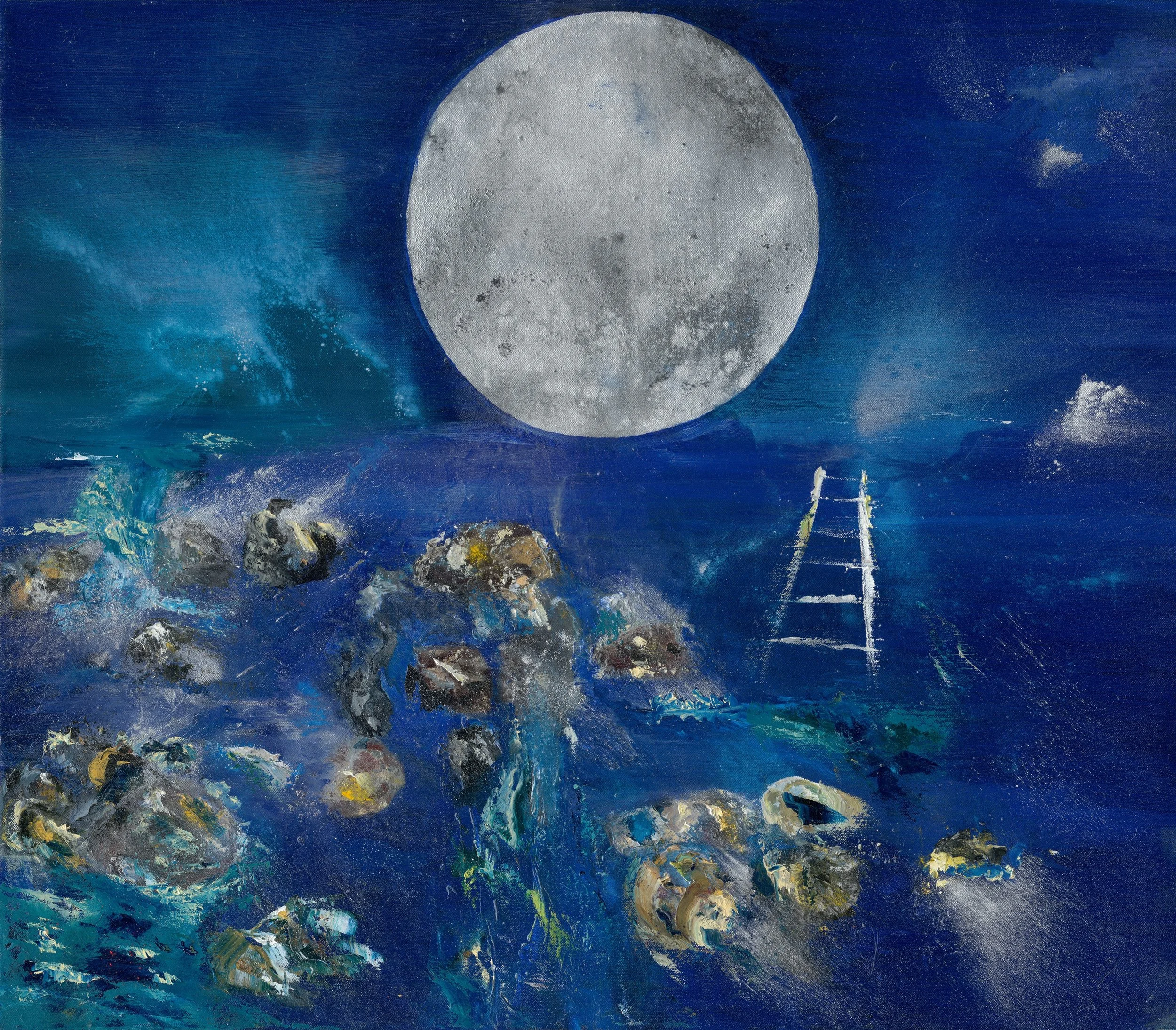
Jacob's ladder © Raquel Sanchez
Looking ahead to 2026, what would you like to expand or challenge in your practice? New materials, larger installations, collaborations, or something entirely unexpected?
I am working on five fronts and continuing a series that was exhibited in the Artist House called “Prayer” in Tel Aviv (2025, curated by Vera Pilpoul). There are two aspects of “Prayer” that I have yet to cover artistically. This is all I want to say about these series at this time; however, they will be available at the gallery which represents me, and that has really encouraged me, including my curator throughout all my series so far. I am also working as a bookbinder on an artist's book. What this book is expected to contain is ruminating. I work on this at the Print Workshop of Jerusalem, so there is an array of options for its content with comments and guidance from artists in a variety of specialised fields, wondering as well. I am working on silkscreens on paper using subtle iconic messages which manifest provocative messages of peace. And finally, I am working with my curator on a three-dimensional work which should elaborate on one of my last series and continue messages within my work encompassing “Peace within our internal Home”. She introduces me to people who can mentor the formulation of these ideas. In addition, I get great support from my gallerist, Uri of Rosenbach Contemporary. He trusts the freedom I need to produce work. This type of trust is inspirational. These bodies of work are expected to be produced and available this year. I am optimistic about the productivity and hoping it all forms its fruition.
Artist’s Talk
Al-Tiba9 Interviews is a curated promotional platform that offers artists the opportunity to articulate their vision and engage with our diverse international readership through insightful, published dialogues. Conducted by Mohamed Benhadj, founder and curator of Al-Tiba9, these interviews spotlight the artists’ creative journeys and introduce their work to the global contemporary art scene.
Through our extensive network of museums, galleries, art professionals, collectors, and art enthusiasts worldwide, Al-Tiba9 Interviews provides a meaningful stage for artists to expand their reach and strengthen their presence in the international art discourse.



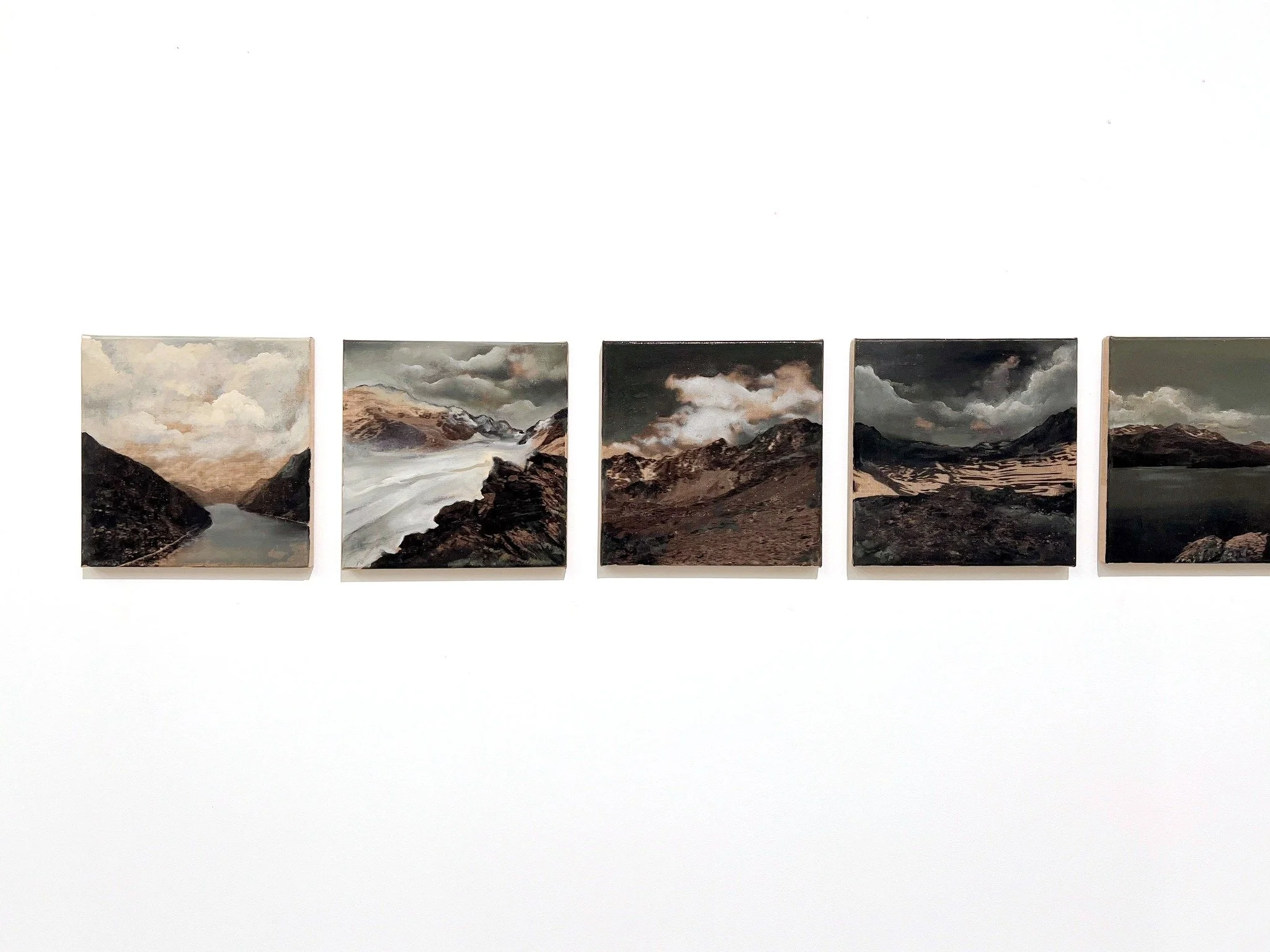
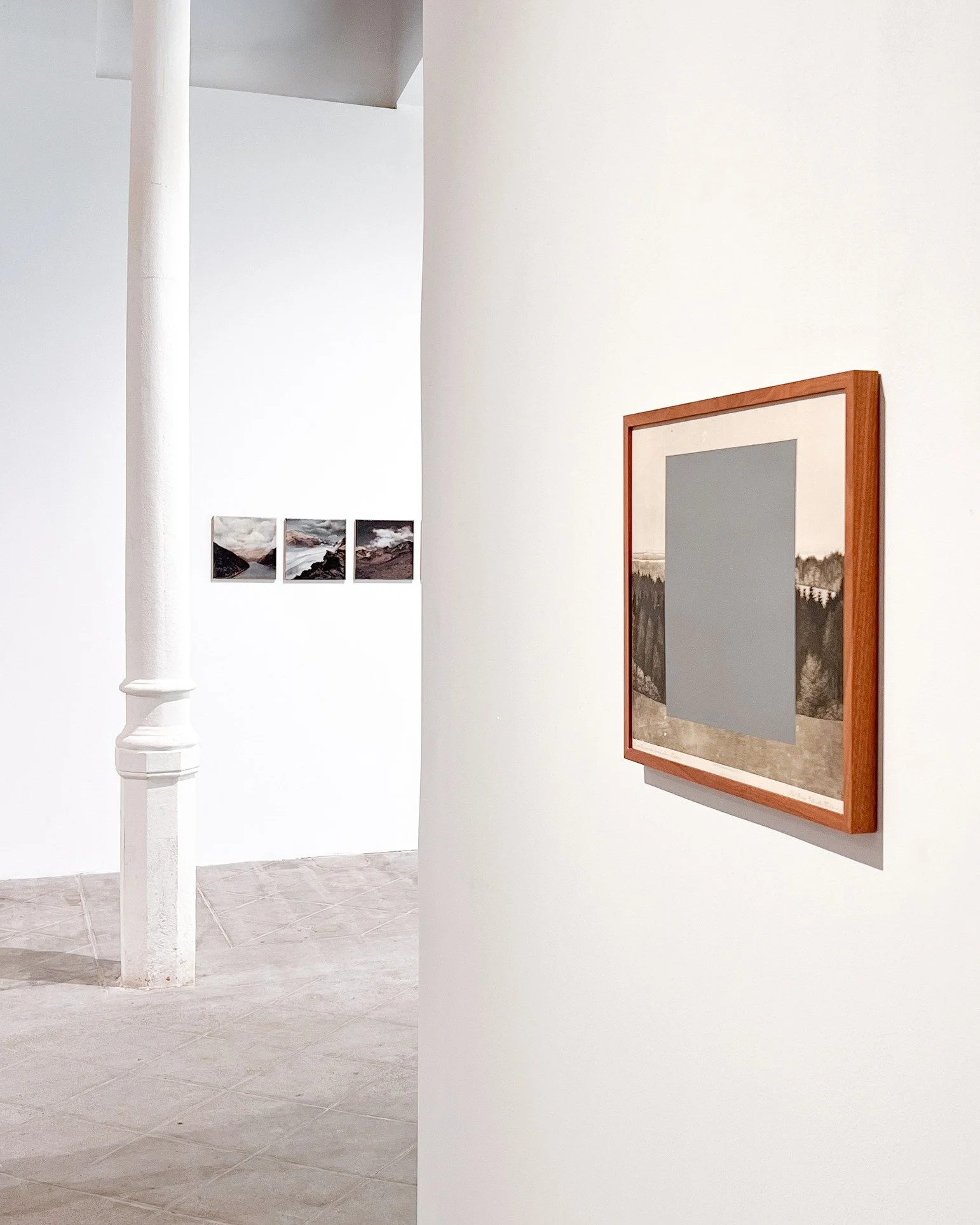
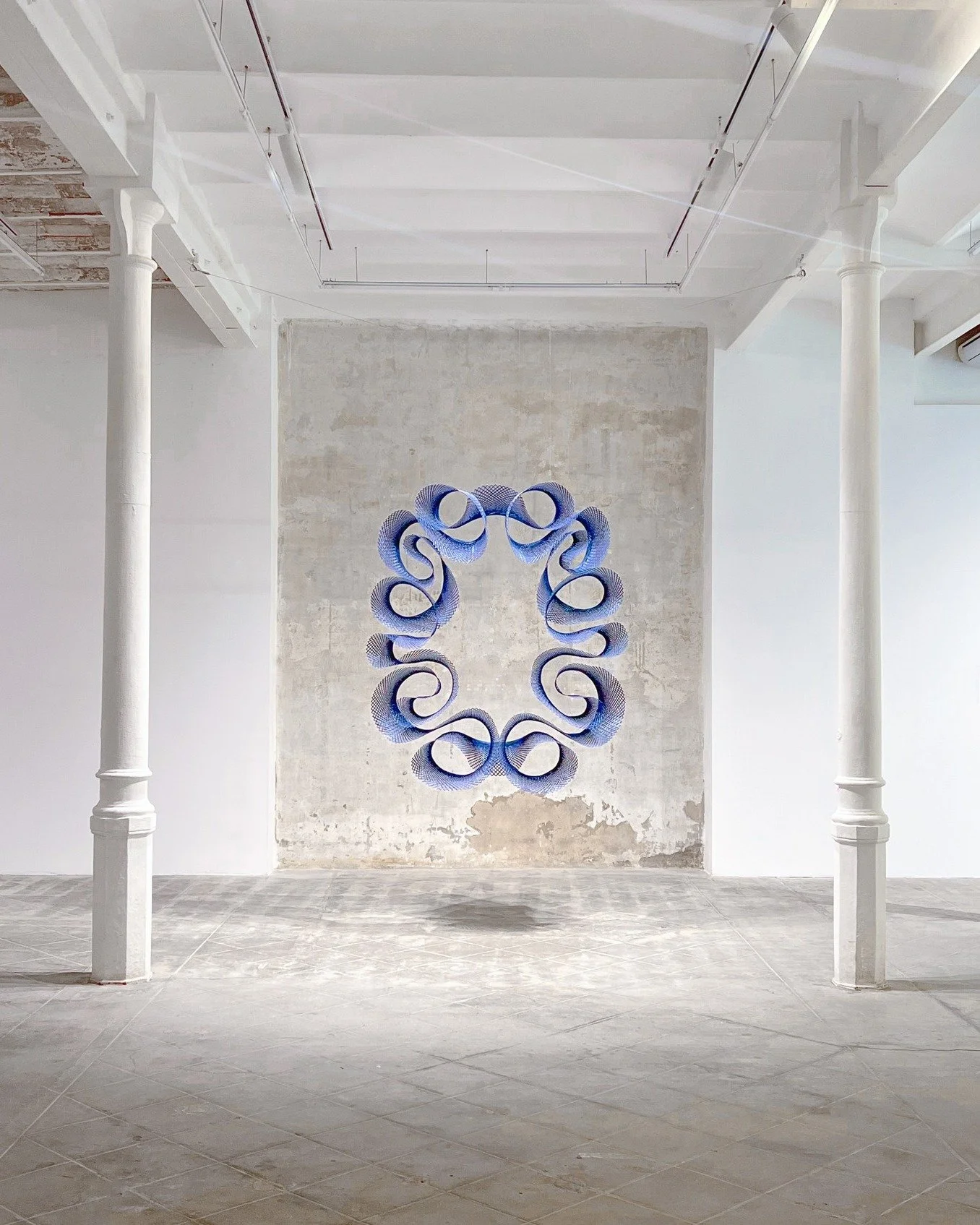
Nataraj von Allmen is a painter based in Switzerland. Often taking photographic material as a starting point, he weaves together landscapes, mythological archetypes, Christian symbolism, and contemporary socio-political themes into complex paintings. Oscillating between figuration and abstraction, his work investigates transformation, collective memory, and the human condition.