

10 Questions with Slitrobo
Al-Tiba9 Art Magazine ISSUE20 | Featured Artist
Slitrobo (Vova Shlygin, b. 1991, Russia) is a contemporary artist working at the intersection of art, technology, and philosophy. While he lives between Los Angeles and Vancouver, his frequent travels across Asia and the Americas allow him to engage with multiple cultural contexts that inform his artistic perspective. His practice investigates the relationship between consciousness and matter, exploring life as a recursive expression of dynamic stability within chaos. Through software-based systems and audiovisual installations, he creates digital environments that simulate the behaviour of living matter and invite embodied, somatic engagement. Vova's projects have been presented in exhibitions such as Existence Particules (Buhroke Gallery, Brooklyn, 2018) and Dialogue (Leeds Corn Exchange, UK, 2014), alongside collaborations with art institutions including Garage Museum, the Jewish Museum, and Strelka Institute, as well as global brands such as Samsung, Snap Inc., eBay, and BP.
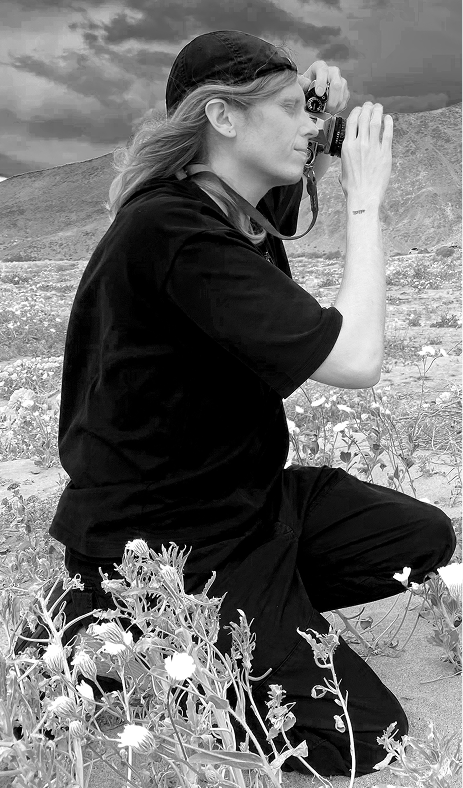
Slitrobo - Portrait
ARTIST STATEMENT
At the core of Slitrobo’s practice is the belief that life is a recursive manifestation of dynamic stability in chaos, shaped by the innate desire to live. He is drawn to themes of duality, emergence, and will, which he expresses through systems that mirror natural behavior: fractals, symmetries, and feedback loops. His works emerge through a dialogue between instinct and code, using procedural algorithms, generative AI, modular synthesis, analog photography, and biometric sensors. Often, he begins with real-world data, such as brainwaves, breathing rhythms, or photographs, and embeds them into computational systems.
His early works treated code as a parallel to nature, then he turned toward the body as a living data source as a way to externalize the invisible self. Over time, he shifted from raw measurement to embodied synchrony, as in Mythology (2024), dissolving the individual into shared rhythms of existence.
In a world fractured by informational noise and algorithmic distraction, he wants to create works that slow perception, reawaken inner rhythms, and ritualize awareness. For him, digital tools are not an escape from the body but a medium for embodied contemplation, empathy, and collective presence in the here and now.
Mythology, Interactive audio visual installation, myth #6 details, 2024 © Slitrobo
Mythology | Project Statement
Designed after breathwork instruction videos, these audiovisual pieces invite viewers to synchronise their breathing with engaging visuals. This project continues the artist's previous research, where an ECG device was used with real-time visualisation. That earlier work demonstrated high levels of engagement: participants, observing variations of a Turing pattern, were able to focus deeply without external distractions. Expanding on these findings, the artist developed a generative evolutionary system that alters colour and shape according to the generation number. Mythology explores symmetry and recurring patterns across all scales of life: from proteins and cells to fungi, trees, insects, and flowers, ultimately aiming to connect individual perception with larger cycles of life. In a world where visual content often distracts to monetise data, Mythology aims to reclaim our attention

Ancestry, Interactive audiovisual installation #1, 2021 © Slitrobo
AL-TIBA9 ART MAGAZINE ISSUE20
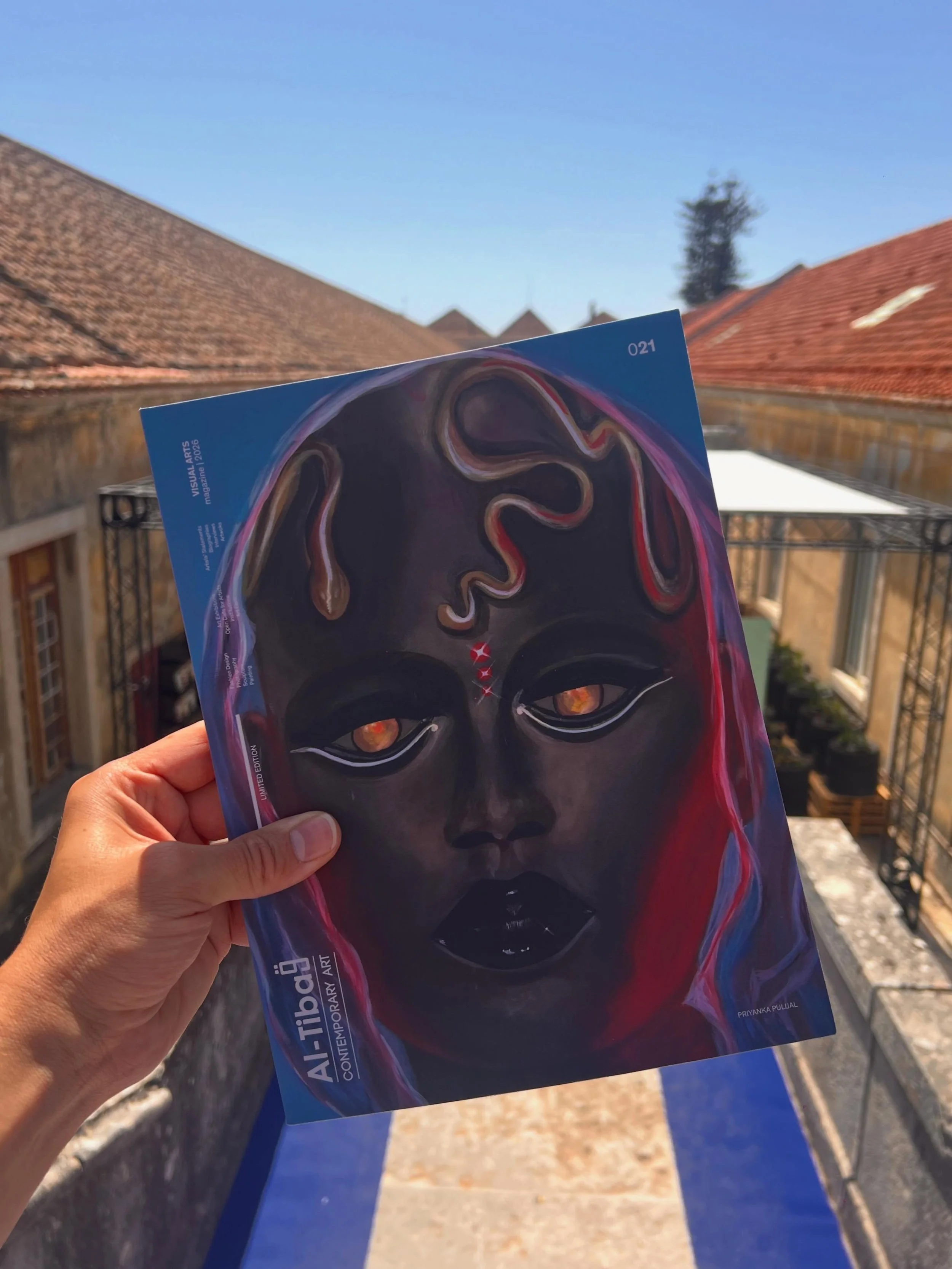
DISCOVER THE INTERNATIONAL ART SCENE WITH AL-TIBA9
LIMITED EDITION | Shipping worldwide.
Premium museum art paper.
Printed in London.
Grab 3 or more prints and get your FREE digital magazine.
Get your limited edition copy now
INTERVIEW
When did you first realize you wanted to make art, and what sparked your interest in exploring the relationship between technology and human experience?
I was always working on personal projects, but I did not frame myself as an artist or try to actively participate in shows until a few years ago. These projects were a natural expression of the skill set I acquired through many years working as a designer and creative director. The transition to art began when, after several burnouts, I prioritized intuition over rationality and realized that the core question I had always been interested in is rooted in the nature of life experience itself. I have a sharp memory from when I was 12. I had the first realization that my life has a strange setting: I am in the body of a super-evolved primate in an artificial shelter constructed by my parents. Why is life this particular way? I am human — not a cat, a bee, or a tree. I still remember the existential feeling I got from this thought. I began creating art regularly after working with art institutions in Moscow and London. My interest in technology and generative media was sparked by architecture, specifically at the Strelka Institute, where I worked as a digital art director. We frequently hosted lectures by world-renowned architects like Patrick Schumacher, Santiago Kalatrava, and Bjarke Ingels, who use technology and algorithms. Later, I founded a design agency that collaborated with various art museums and galleries, applying generative and parametric techniques.
Your practice bridges software systems, sound, and visual forms. What led you to choose digital and generative media as your main artistic language? And what does it allow you to express that other mediums could not?
When I was younger, I learned coding as a contemporary practice, but later realized its fundamental backbone lies in algorithms that help to make sense of the natural phenomena. Procedural media exposes computation primitives, such as scale-free systems and multifractals, that are present in all forms of matter. For instance, blood vessel systems can be generated using the same algorithm as branching trees, and mountain ranges can be synthesized with the same code as cloud formations. This universality of procedural media continues to fascinate me to this day. I believe generative media uniquely enables artists to work with process primitives instead of shape primitives. I also wanted to create multisensory pieces, so I incorporated sound with imagery. Having played guitar and keys since childhood, learning sound synthesis was a natural progression. Today, I blend various techniques for visuals and sound, continuously learning as technologies evolve. The inherent quality of generative media is its infinite reactivity to the environment, fostering engaging, personalized experiences that deepen the connection between the piece and the viewer.

Future Fossils, Digital art & custom software, ff-5, 2021 © Slitrobo
You often describe life as “dynamic stability within chaos.” How does this idea guide your creative decisions when building systems or shaping audiovisual environments?
Life is unique in that it achieves stability through a variety of metabolic pathways, notably primordial respiration and the Krebs cycle. Together, this enables organisms to generate energy, synthesize essential molecules, and maintain internal order. Our bodies are made of stardust, molecules that are constantly rearranging. It’s a magical process in its own right, and it inspires me as an artist. I believe metabolism is the essential mechanism that sustains “self” as an individual entity and enables experience and sensual awareness of matter. At the same time, every living thing has to consume other living things to stay alive. Exploring these processes with algorithmic abstractions gives me insight into how living systems self-organize and evolve. A lot of the work I produce stems from simple rules that take on elaborate shapes as systems scale. I like to explore these primitives by combining procedural approaches and layering self-trained AI models to produce more realistic outcomes. As the final touch, I enhance the emotional dimension of my pieces with soundscapes.
Many of your works use real-world data like brainwaves, breathing rhythms, or photography. What attracts you to the idea of using the body as a source of data, and how does it change the way you think about authorship?
Our bodies hold wisdom, which can be understood from both experiential and material perspectives. By focusing on our breath, we can transform our entire experience, a principle utilized by many meditative traditions. Our bodies have evolved through epigenetic interactions with the environment, shaped by millennia of DNA changes and personal experiences. When creating algorithmic art using real-time biometric data, I see myself as a facilitator rather than an author. If viewers concentrate fully on the artwork, it can feel like an external body, as these pieces adapt to individual body markers. I design the environments, but the experiences are personal and can't be claimed through authorship.

Future Fossils, digital art & custom software, rd-1, 2021 © Slitrobo

Future Fossils, Digital art & custom software, v-2, 2021 © Slitrobo
The Mythology project invites viewers to synchronize their breathing with evolving visuals. What inspired you to connect breath, perception, and computational systems in this way?
Before working on this project, I conducted a small study using a real-time ECG device to explore how biofeedback could enhance focus and relaxation. Participants interacted with generative Turing-pattern visuals that responded to their heart rate, and nearly all reported high levels of engagement and sustained attention. This experiment demonstrated the potential of synchronized visuals to guide meditative breathing. The concept, titled Symbiosis, aimed to create an audiovisual environment where users could control organic visuals through their breath, blending mindfulness and interactive art. The best performing part of the experience was visual, so I decided to focus on the complex visual system in "Mythology".
The project also transforms planetary and biological patterns into something almost ritualistic. What experience do you hope audiences walk away with after engaging with this piece?
The motion aspect of the pieces is dominant; it helps to hold the attention in almost a hypnotic way. The animation makes it easy to follow the breathing rhythm. Meanwhile, the brain tries to figure out what the shapes are. The viewers’ first reaction is confusion; they try to identify the object, but the abstract shapes help to avoid instant associations, at least for the first few seconds. This is when detailed visuals can help people escape thought loops and actually feel something. The ideal outcome is that they experience greater body presence, especially after synchronizing their breathing with the artwork.

Mythology, Interactive audio visual installation, myth #3, 2024 © Slitrobo

Mythology, Interactive audio visual installation, myth #9, 2024 © Slitrobo
Your work often explores dualities, such as nature and technology, chaos and stability, individuality and collective rhythms. What general message or feeling do you hope these themes communicate?
I am fascinated by the idea that the body of any living being is defined by its longing for life, and these manifestations are built within the framework of universal algorithms. The most fundamental duality we experience is existence versus inexistence. Everyone is aware of their existence, as it is a self-evident truth: no proof is needed since we all experience life. This consciousness is shared by all sentient beings and has been expressed through mythological metaphors throughout history. While I occasionally reference these metaphors, I primarily focus on the visualizable duality of life and death. Every living entity innately desires to live, driving behavioral and reproductive cycles. This desire sustains individual and collective identity against death, allowing the continuation of experience. From a material perspective, this is a survival strategy, but experientially, it manifests as a longing for life. Claude Shannon's Information Theory suggests that the universe relies on bits, an abstract unit of distinguishability, the basic duality of 0 and 1. This binary nature is essential for encoding information about particles and events. Every measurable degree of freedom, such as particle spins, DNA base pairs, cellular metabolism, and neural activations, can be expressed as bits. Duality is essential for making the material universe tangible and for life itself. In simple terms, differences are necessary for distinguishing one thing from another.
You’ve worked with generative algorithms, AI, modular synthesis, and biometric sensors. Are there new technologies or creative tools you’re excited to explore in upcoming projects?
The essence of any technology is acceleration to enhance productivity. While I appreciate this aspect, I am more intrigued by the peculiarities of specific tools. Various types of biometric data influence outcomes similarly to how different clays shape pottery. Raw algorithms can create lifelike structures with few lines of code, but biometric data enables diverse variations, “casts” of these processes. I've discovered that diffusion models effectively morph and blend lifelike forms, and I am now exploring real-time video models, which allow me to create rich, reactive environments previously unattainable with existing technology. As I experiment with new methods, I'm also distilling the essential principles of life's structures, building a vocabulary of universal algorithms vital to life.
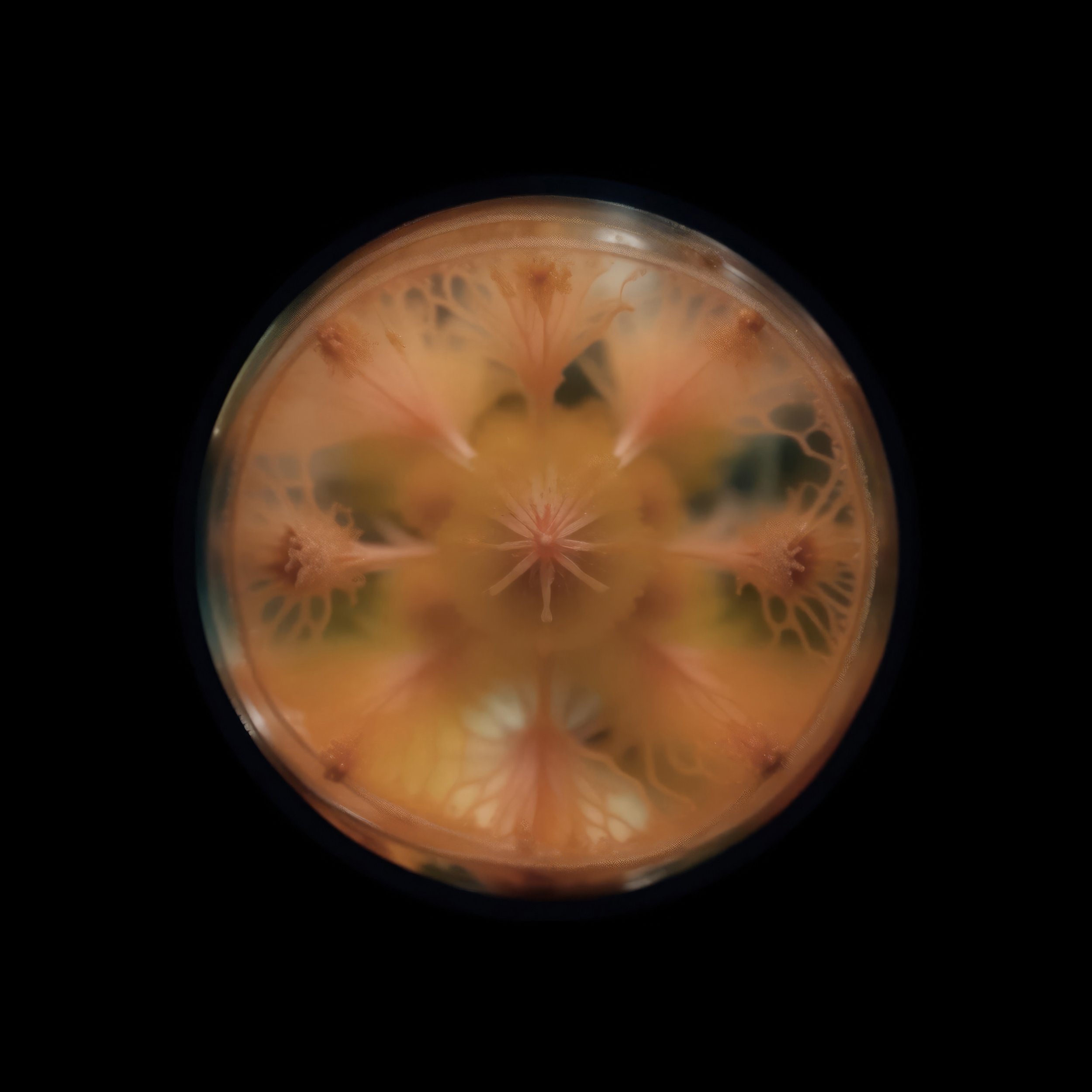
Mythology, Interactive audio visual installation, myth #11, 2024 © Slitrobo
In a world where attention is constantly being monetized, your work aims to slow perception and invite contemplation. How do you see the role of art evolving in this technological environment?
As I mentioned earlier, the main aspect of technological development is acceleration, so the bandwidth of producing art will definitely increase. Current trends in art are accelerating, with new approaches being synthesized rapidly. While novelty remains scarce, there are more opportunities for experimenting that can keep the discourse fresh. It might actually be a renaissance of creativity, and I believe we will see entirely new media. For example, AI enables art to become a programmed entity, allowing for the emergence of autonomous ambassadors of artists. However, as production pace grows, our consumption capacity remains unchanged, leading to overstimulation and exhaustion. Thus, there is a need for art that fosters decompression and destimulation. Many people are returning to traditional techniques like clay and paint, seeking simple experiences to heal the information anxiety. Interestingly, AI also accelerates education in these traditional mediums, potentially reviving them. I'm taking a different approach here. My primary aim is to enable direct somatic responses by using state-of-the-art technology. Different approaches work differently, but ultimately the core function of art remains unchanged since early cave paintings: it serves as a tool for expressing the transcendent and translating inspiration into physical form. Thus, I believe the essence of art will always remain constant.
Lastly, where do you see your practice in the next five years? Do you have dreams, collaborations, or goals you hope to pursue as both technology and society continue to change?
I will definitely invest more time in creating reactive environments that engage multiple senses. My dream is to develop pieces that feel like external bodies and encompass entire environments. I aim to collaborate with musicians, fragrance designers, creative technologists, poets, and philosophers. I continually ask: “How can we use technology and art to foster a sense of oneness and enhance body awareness?” While all we need to do this is to pay attention, technology can give us enough inspiration and education to make the first step.
Artist’s Talk
Al-Tiba9 Interviews is a curated promotional platform that offers artists the opportunity to articulate their vision and engage with our diverse international readership through insightful, published dialogues. Conducted by Mohamed Benhadj, founder and curator of Al-Tiba9, these interviews spotlight the artists’ creative journeys and introduce their work to the global contemporary art scene.
Through our extensive network of museums, galleries, art professionals, collectors, and art enthusiasts worldwide, Al-Tiba9 Interviews provides a meaningful stage for artists to expand their reach and strengthen their presence in the international art discourse.




David Moješčík - MojDa is a Czech sculptor. His work is centred on figurative sculpture, the human body, and the female figure. Modelling in clay and with digital tools, he ultimately prioritises manual engagement with materials. . He draws inspiration from yoga philosophy with the concepts of non-violence and human-centeredness, as well as from Egyptian, ancient, and European classical sculpture.