
10 Questions with David Moješčík - MojDa
Al-Tiba9 Art Magazine ISSUE22 | Featured Artist
David Moješčík MojDa (b. 1974) belongs to the middle generation of Czech sculptors. After finishing primary school, he first trained as a stonemason (1988-1991) and worked as a stonemason for a short time. In 1993, he was admitted to the Secondary School of Stonemasonry and Sculpture in Hořice in the Krkonoší Mountains, which he graduated from in 1996. In 1996, he was admitted to the Faculty of Fine Arts of the Brno University of Technology, where he studied with Prof. Acad. Sculptor Vladimír Preclík. He continued his studies in 1998-1999 at the Academy of Fine Arts in Prague with Prof. Acad. Sculptor Jan Hendrych in the studio of figurative sculpture. In 1999, he returned to Brno, where he studied with Prof. Acad. Sculptor Michal Gabriel. He completed his studies in 2002 and received the title of Master of Arts (MgA.). In 2007, he completed the creative residency “The Cill Rialaig Project” in Ballinskelligs, Ireland. Over the years, he has taken part in exhibitions such as NordArt 2022, 2023, 2024, 2025, Büdelsdorf, Germany, and BBA PRIZES 10 YEAR ANNIVERSARY EXHIBITION, Berlin, Germany.

David Moješčík - MojDa - Portrait | Photo by Petr Hrubes
ARTIST STATEMENT
His work is centred on figurative sculpture, the human body, and the female figure. He makes full use of materials such as plastics, but does not let the material's essence limit his creative process. Modelling in clay and with digital tools, he ultimately prioritises manual engagement with materials. The spatial composition and broader context of each sculpture are shaped by its intended placement, and he is attentive to the material's final form. While he explores and incorporates the latest technologies, he consistently seeks to maintain a sense of the human touch and classic traditions in his work. He draws inspiration from yoga philosophy with the concepts of non-violence and human-centeredness, as well as from Egyptian, ancient, and European classical sculpture, and the art and symbolism of the 19th century. Although he touches on realism, it serves as a means of expression rather than aiming for hyperrealism. He gradually eliminates all non-essential elements from his sculptures, guided by the philosophies of non-attachment and detachment, creating a subtle tension between the artwork, its space, and the viewer.
In addition to his free figurative work, he is also engaged in public art, sculptural projects in public spaces and portraiture. Maintaining his distinctive artistic approach and style, he often incorporates hidden symbols, irony, or exaggeration. Many of these works exist as projects, with some realised independently or in collaboration with other artists and architects.
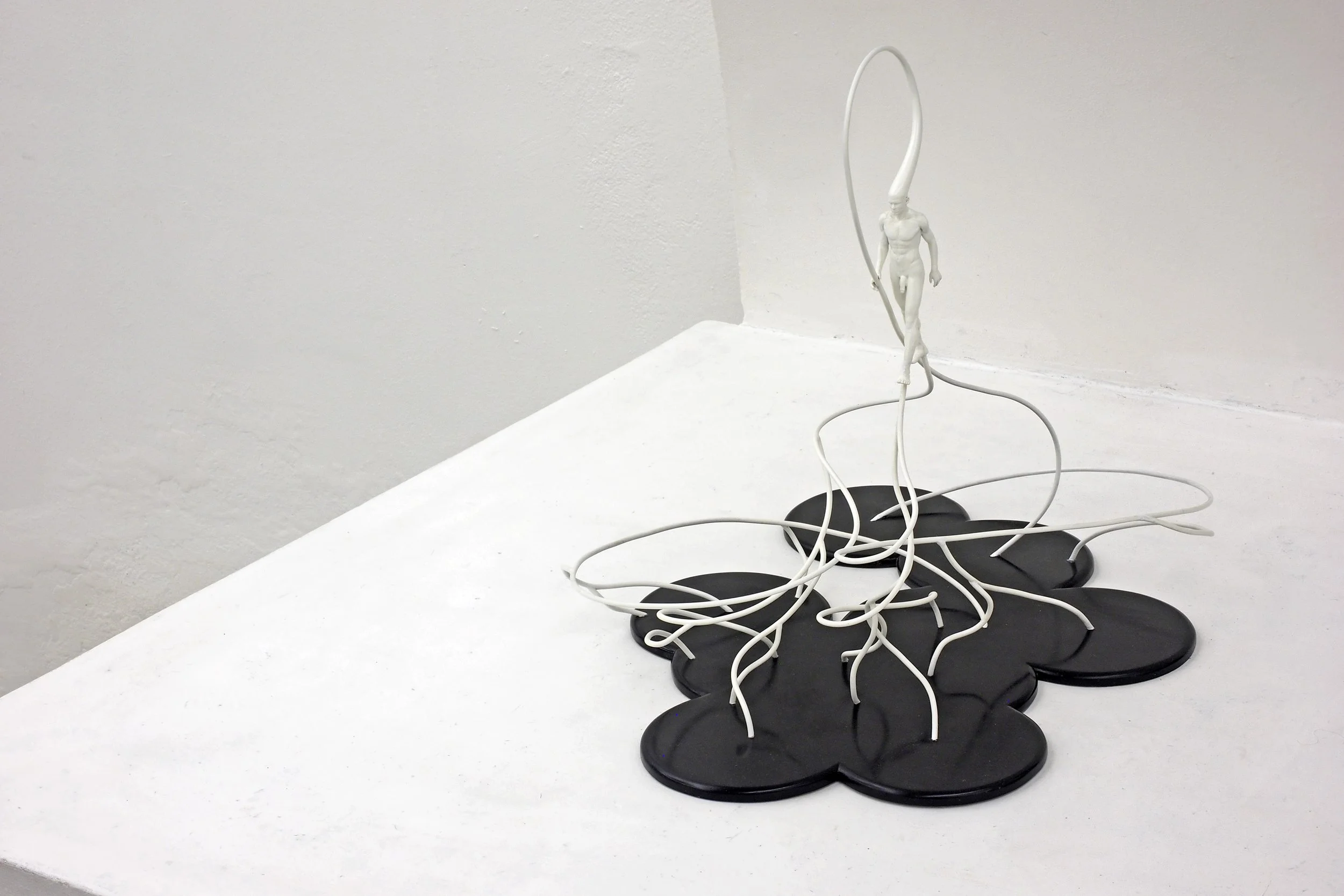
The Pilgrim, mixed media, 70 x 60 x 60 cm, 2013 © David Moješčík - MojDa | ph. Oldřich Šembera
AL-TIBA9 ART MAGAZINE ISSUE22
DISCOVER THE INTERNATIONAL ART SCENE WITH AL-TIBA9
LIMITED EDITION | Shipping worldwide.
Premium museum art paper.
Printed in London.
Grab 3 or more prints and get your FREE digital magazine.
Get your limited edition copy now
INTERVIEW
Since our last conversation in 2023, how has your artistic practice evolved? Has anything changed in the way you think about sculpture?
Although it has only been three years, quite a lot has happened since then, not only in my view of sculpture, but of art in general, and naturally of society as a whole. Even back then, I was strongly influenced by world events, especially in Europe. At that time, it was still a post-Covid period, and the war in Ukraine had already been going on for a year.
The following year, my friend Pavel Netopil passed away. He was a close family friend, but also a prominent Czech curator, critic, and art historian. He wrote numerous texts about my work for exhibition catalogues and magazines. I always discussed a great deal of my work with him in person; he was capable of being genuinely honest. At the same time, he had an exceptional instinct for the "right things."
Perhaps under the influence of all this, I began thinking more about how art, in its final result, should primarily be for people. And naturally, about how important it is to strike a balance in one's creative work between what might be called success and, in contrast, the ability to cope with potential challenges, which can take many different forms.
I also increasingly notice the use of cutting-edge technologies in the work of many colleagues and other artists, whether that is AI or simply more accessible tools for fabrication (CNC, robotic arms, 3D printing, etc.). Despite these possibilities, particularly when applied to realistic and figurative work, I find myself questioning the meaningfulness of much of what we see today. I view these technologies as a new creative medium that we probably do not yet fully or properly understand and utilise. I often find myself in intellectual and personal conflict with the fact that many of these creations lack an inner depth, or any genuine concept whatsoever. While it is possible today to create many things that were once far less feasible, it remains essential for an artist to consider whether their work is communicative and, above all, meaningful.
In my view, art should fulfil and, in its own way, satisfy the artist during its creation. If the artist is genuinely connected to the piece and it holds personal meaning, that relationship can translate to the viewer, making the work communicative and rewarding for others as well. That does not rule out depersonalised art, either. However, I am convinced that creative work must be authentic and real, rather than becoming a form of falsehood. Perhaps that is precisely why, lately, I feel increasingly drawn back to traditional methods and purely manual craftsmanship.

Little Angel I, polyester, 57 x 22 x 25 cm, 2001 © David Moješčík - MojDa | ph. Ivan Pinkava
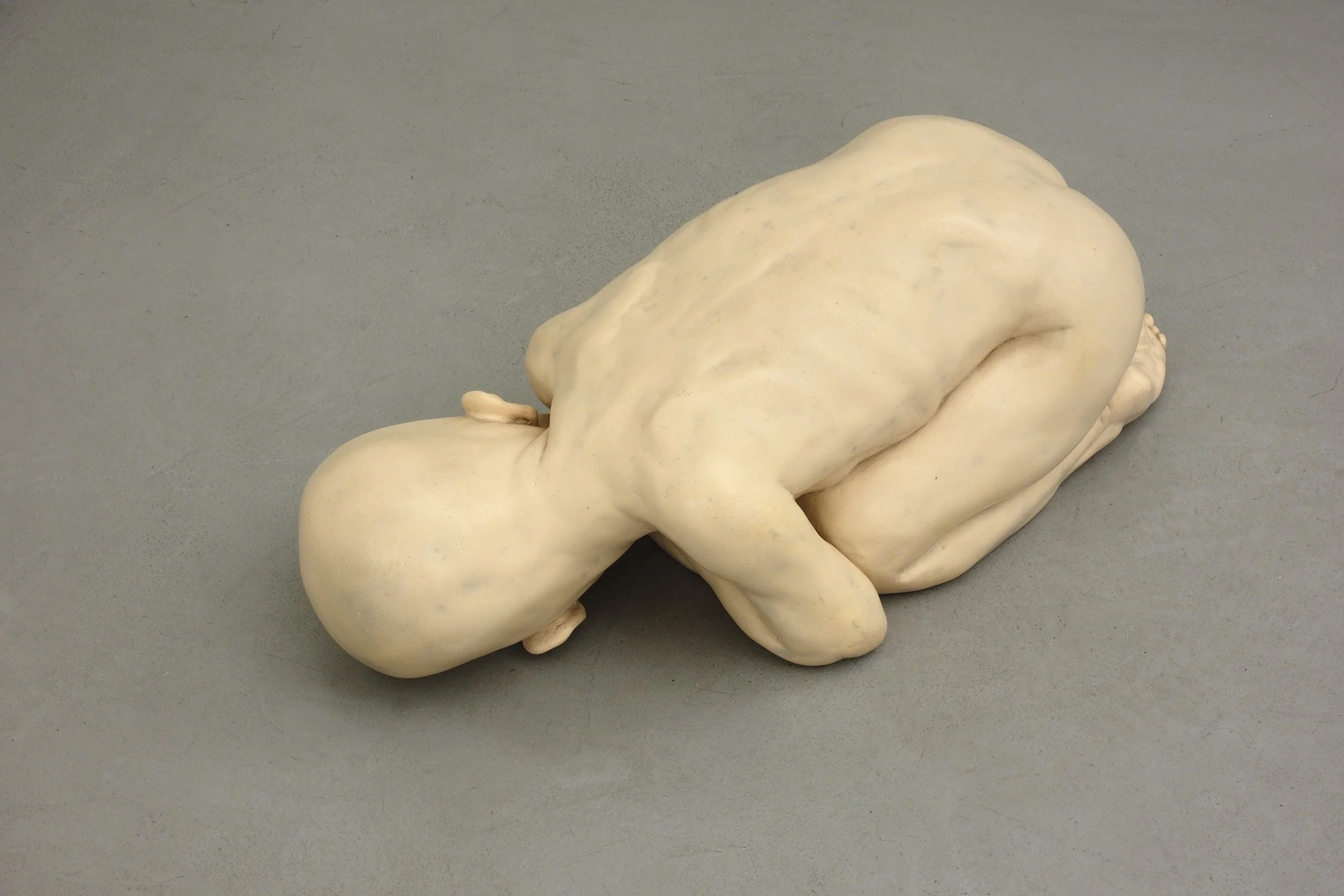
Little Angel I, polyester, 57 x 22 x 25 cm, 2001 © David Moješčík - MojDa | ph. Ivan Pinkava
You have continued exhibiting internationally, including several editions of NordArt. How have these experiences influenced your work?
It has influenced me tremendously. The most remarkable aspect of large exhibitions, such as NordArt or BBA in Berlin, is, above all, meeting other creators: artists working across a wide range of media and disciplines.
It is fascinating to observe so many different, often completely contrasting perspectives, approaches, and emotions, as well as the various manifestations of the human ego. In the end, it is truly captivating to see how all of this converges and interacts in a single space. It allows you to understand other artists' work much better, as you gain insight into their thought processes and creative approaches. At the same time, you are constantly confronted with new ideas, which I find immensely inspiring and, over time, highly beneficial for my own practice.
I have also made many new friends, some of whom I have already collaborated with on further exhibitions, which is fantastic. Above all, it is an invaluable experience that moves you forward in countless ways.
You have often spoken about balancing tradition with new technologies. How do you approach that balance today?
I touched upon this briefly at the beginning. Years ago, around the year 2000, my father told me that my generation would be confronted with technologies that would not only be extraordinary, but perhaps so exceptional that we wouldn't yet be capable of fully understanding them. I think he foresaw that very accurately, and in its own way, it really holds true.
The capabilities of many technologies are advancing at such a pace that sometimes even their creators cannot fully grasp them. Meanwhile, the penetration of these technologies throughout the whole of society is profound. It transforms not only how we work and communicate, but also how we think, create, and perceive the world around us. Perhaps that is where one of the greatest paradoxes of our time lies: technologies are no longer merely tools we use; they are increasingly becoming the very environment and world we inhabit.
That is likely why, in art today, I feel increasingly drawn to freehand drawing and forms sculpted by the human hand. I have always been, and remain, open to diverse ways of working, techniques, and approaches. I do not reject new technologies. Rather, it is an awareness that in an era where technology plays an ever-growing role in how images and forms are generated, the human touch, imperfection, and the physical imprint of the creator take on an even greater, or perhaps entirely new, significance for me.

Eva, polyester, fiberglass, acrylic, 200 x 396 x 132 cm, 2023 © David Moješčík - MojDa | ph. Paweł Lawreszuk
Your sculptures explore simplicity and the removal of the non-essential. Has this idea taken on a new meaning for you in recent years?
I don't think it has taken on an entirely new meaning for me. Rather, I try to continue in this spirit and keep working along those lines. Perhaps it has become a mantra in my creative process, where during work I very often tell myself: "Get rid of everything non-essential, don't be afraid to simplify and strip away everything that isn't essential."
I also often tell myself: "Stay unattached" in the sense that I don't want to feel bound or constrained by anything; I still (for now) feel the need to search and explore new possibilities. Because when you keep searching, you might ultimately find something new.
Alongside your figurative sculptures, you also create works for public spaces. How does your creative approach change when a sculpture is designed for a specific location?
Above all, it is about responsibility, responsibility to the artwork itself, but primarily to the given space. It is wonderful when you can work with a higher degree of freedom and even choose the environment where the piece will function. In sculpture competitions, however, the site is usually strictly defined. That presents a challenge which, alongside great responsibility, offers a significant opportunity, while inevitably requiring a series of compromises.
On such projects, I often collaborate with other people: architects, fellow sculptors, or other specialists who together form a team. Naturally, this leads to creative confrontations, an exchange of perspectives, and working through further compromises. When the team is strong, and I am usually fortunate to work with wonderful people, these clashes of opinions can be deeply enriching and ultimately rewarding.
For me, it is essential to genuinely understand the space and perceive all of its broader relationships and context. Only then can what you create truly function and continue to coexist with its surroundings. Naturally, this is rarely achieved without additional compromises. The investor almost always enters the process, along with a variety of other stakeholders. In the end, it always comes back to people, because everything is ultimately created for people.
It is absolutely fantastic when an investor grants you a wide margin of freedom. Even more so when they openly state that you, as the artist, must be truly satisfied with the result first, and that only then will they, as the financier of the project, be satisfied as well.
During the creative process itself, I constantly question things from every angle. Above all, I remain fascinated by the interaction with the viewer. I believe the viewer's reaction, or whatever emotion arises, is vital, regardless of what it may be. In its own way, that remains part of the creative process.

The Pilgrim, mixed media, 70 x 60 x 60 cm, 2013 © David Moješčík - MojDa | ph. Ivan Pinkava

The Pilgrim, mixed media, 70 x 60 x 60 cm, 2013 © David Moješčík - MojDa | ph. Ivan Pinkava
You once mentioned wanting to experiment with new materials and rethink elements such as the eyes of your figures. Have these explorations led you in any unexpected directions?
Yes, I am still experimenting with the eyes. I also intend to return to other such "animating" elements. The eyes act like a "shem" or a form of incrustation, carrying additional layers of symbolism. I was originally inspired by my encounters with ancient sculpture, certain works of Baroque sculpture, and the works of Old Masters in Spain. Part of it is also a childhood memory of the eyes on little dolls. I always found them somewhat eerie, yet simultaneously fascinating. It is an element I insert only at the very end. It might unsettle some viewers, or perhaps even frighten others. Nevertheless, I enjoy exploring this element.
Recently, I experimented a bit with a master glassblower. I wanted to give the sculpture Ishvara III diseased eyes, something akin to cataracts. It is a sculpture representing the principle of destruction, endings, closure, simply the opposite of creation. Over many attempts to craft the eyeball, we ultimately managed to create something that (unexpectedly) somewhat resembled the famous photograph of the Trinity nuclear test. Perhaps that was the result of subconscious expectation and seeking, or perhaps pure coincidence.
I am also still considering returning to some form of hair, as I once used on the sculpture Catharsis (Očista). Hair can hold a similar, very compelling significance. For quite a while now, I have been preparing a sculpture that is tailor-made for this element, though I keep postponing it due to work on other projects.
Then there is the matter of materials. During my creative process, I appreciate a certain sense of certainty. In the past, I tried various materials, but traditional clay remains the closest to my heart when modelling. The subsequent phase, casting the modelled piece, is a slightly different matter. Polyester resin has proven reliable for me, but it works primarily indoors. For outdoors, time-tested bronze or stone still work best. Even so, there is room for experimentation here as well, though it depends largely on the capabilities and approach of the foundry itself, and, of course, the financial aspect.
The upcoming projects I will be realising in the coming months, or rather years, whether on my own or with my team, involve many challenges as well as several new possibilities for the final execution of the work. But I don't want to get ahead of myself; let's leave room for surprise. God willing, and with the skills of our team, I believe another step forward will certainly come.
Your work is deeply connected to philosophy, symbolism, and the human figure. Are there any new themes or questions that have recently captured your attention?
I believe this fascination still continues to shape the direction of my work. The ideas are interconnected. I am certainly drawn to working with composition. The simplification of forms often verges on geometry, and geometric elements are an integral part of some of my themes. On the other hand, I have steered my current work much more toward a greater sense of naturalness and perhaps a deeper connection with nature. But here, too, I don't want to get ahead of myself: everything is still in the initial stages of the creative process and in the end, things might turn out quite differently.
Lately, I have been returning to some older themes, trying to develop them further. I am also working more with portraiture again. And I find myself returning to the motif of the animal, which functions perhaps more as a symbolic motif. In a way, the animal motif in these new works represents a form of raw emotion and naturalness, though it might also carry an underlying touch of irony.
Naturally, I am constantly influenced by everything around me, which ultimately manifests in the work in one way or another. I remain engaged with similar fundamental themes: harmony, humility, truth, falsehood, and love.

Leoš Janáček IV, mixed media, dimensions approximately: 30×17×19.5 cm, 2025 © David Moješčík - MojDa
Looking back at your career, is there a project or artwork from the past few years that represents an important milestone for you? Why?
There are probably several important milestones from recent years. Some are about emotions, others more about the work itself.
If I consider the past ten years, there is definitely one piece that brought me into the public consciousness, even among people who have no interest in art whatsoever. I am referring to the 2018 sculpture realised in Ostrava, Czech Republic: a statue portraying the immensely popular singer Věra Špinarová. At the time, I conceived the work not merely as a portrait, but also as a symbolic, or rather ironic, depiction of Czech pop music. The story behind the sculpture alone would warrant a separate and likely very long interview, so I won't delve too deeply into it. Looking back, I can only say that it was predominantly about raw emotions. But it was also about misunderstanding, as well as exploitation and falsehoods.
I am fully convinced that the work completely served its purpose, far exceeding all my expectations and notions of viewer interaction with an artwork. Kurt Gebauer, my childhood role model and one of the most prominent contemporary Czech sculptors, made a wonderful remark regarding the entire controversy: as long as people are arguing over statues and venting their anger on sculptures, there won't be war. Perhaps there is some truth to that, because it truly can provide a great "vent" for public tension and emotion.
Unfortunately, over time the piece also became an instrument in political score-settling, albeit on a regional level. Even within our democratic world, I witnessed firsthand how those in power can attempt, with great success, to manipulate public opinion and bend the law to suit their own agenda. At a certain point, however, the attacks from social media and the press, but also via personal messages, exceeded bearable limits. Combined with attempts by certain individuals (politicians) to manipulate copyright law, a turning point arrived where it became unequivocally clear that I had to cut myself off from the matter entirely and simply let it be. Nevertheless, the sculpture continues to live a life of its own; it has become part of the place, and for many people, it is already an icon of sorts. The statue even has its own Instagram account.
If I look back strictly over the last few years, the sculpture EVA was very important to me, allowing me to work in a slightly different way and partly incorporate new materials. The piece was created for a specific site. The client approached me back then looking for an artwork for the extensive grounds of a spa park. It was a real challenge to find the right location, and then conceive and create a sculpture that would function effectively there. It was on the basis of this realisation that I was recently approached for further projects.
What are you currently working on, and what can audiences expect to see from you in the near future?
In June, in collaboration with Fijewski Gallery, I exhibited two of my larger sculptures, Levitation III and Eva, in the lobby of the European Union's tallest building, Varso Tower in Warsaw. Both sculptures will be on display there until the end of October.
Since the beginning of summer, I have been working on a sculpture dedicated to the composer Leoš Janáček for the spa park at the Rehabilitation Centre in Čeladná. The centre's management approached me to create this piece. Leoš Janáček was born not far from there, and I have engaged with his figure in the past. His music is undeniably powerful and goes far beyond mere emotion. Personally, I consider Janáček one of the principal precursors of minimalism in music, and my concept for this sculpture is framed in that spirit. A similar concept was originally intended for Ostrava, but was rejected by the city leadership. Although it is a portrait, I am shaping it primarily as a sculpture. Once again, I am working with composition, yet allowing many elements to emerge organically, and I want to integrate everything more deeply with the site where the sculpture will be installed. I am therefore very pleased to finally bring this project to fruition.
Alongside this ongoing project, my team and I are preparing a proposal for a sculpture dedicated to our first Czechoslovak president, Tomáš Garrigue Masaryk. We were approached to deliver a design study and concept. We intend to realise the monument in a way that differs somewhat from the conventional approach seen here so far. We are working with the idea of a narrative, but also, to some degree, a myth. If realised, it will mark a reunion after quite some time with my friend, classmate, and colleague Michal Šmeral, with whom I previously collaborated on the Operation Anthropoid Memorial in Prague and certain architectural elements for The Drama Club (Činoherní klub) in Prague.
In addition, I may have finally found an investor to realise a large-scale version of one of my sculptures from previous years. It would represent a major challenge for me, as well as an opportunity to generously expand upon that specific theme. But for now, that remains in negotiations, perhaps just an idea and wishful thinking. I certainly don't want to get ahead of myself.

The Anthropoid Operation Memorial, Prague (Praha - Libeň) © David Moješčík - MojDa | ph. Kristýna Štuková
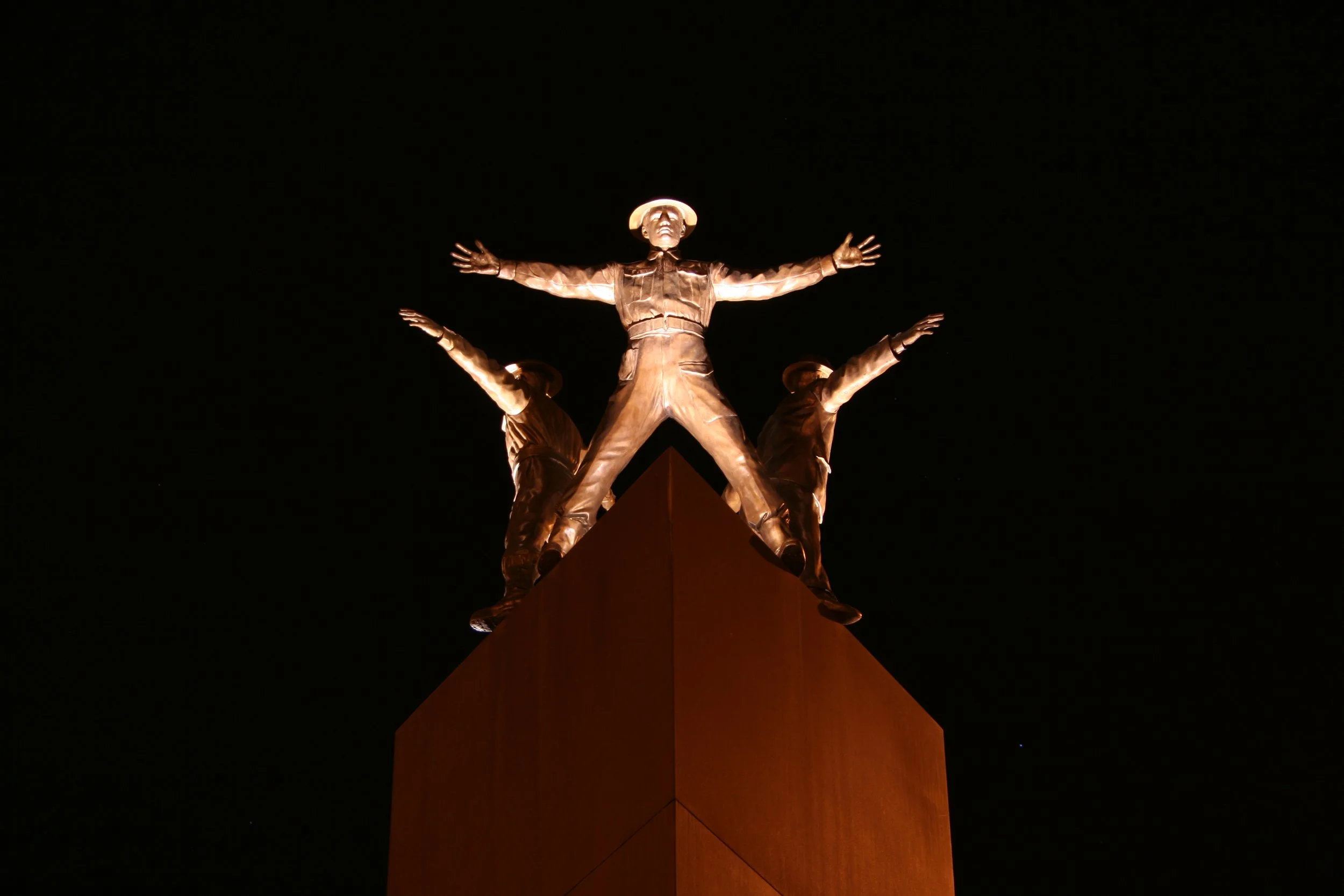
The Anthropoid Operation Memorial, Prague (Praha - Libeň) © David Moješčík - MojDa | ph. Kristýna Štuková
As we move through 2026, what goals or ambitions have you set for yourself, both as an artist and as a person?
I am not much in the habit of setting specific goals or ambitions regarding what I would like to achieve as an artist. There are things that genuinely interest me, and I intend to realise them, or at least attempt to. Some might say I am competitive because I participate in competitions, but I see it somewhat differently. If you want to create for the public realm, competitions are simply one of the natural routes to that objective. Placing sculptures in specific locations (whether indoors or outdoors), permanently whenever possible, is my primary and long-term ambition. That is the approach instilled in me by my mentors. Exhibitions are certainly important as well, but with the benefit of hindsight, I know they are not what should form the core objective and focus of my true artistic effort.
On a personal level, my goal is fundamentally simple, yet, perhaps precisely because of that, very complicated. On the one hand, I strive to realise numerous projects and deliver all the work with integrity. That makes it all the more demanding to balance it all with my personal life and family. It is wonderful when your work receives recognition, and it is a tremendous honour to have been selected among the finalists in several art competitions. At such moments, however, I am reminded of the words of a Czech writer who, upon receiving a literary award, stated in her acceptance speech that while all of it is wonderful, it doesn't pay the household bills, nor will it ever return the time you could have spent with your loved ones. Operating as a professional artist is often unimaginable, and when looking at the actual time and figures, almost brutally unrealistic and unsustainable.
If I were to sum it up very briefly in a few words, it would primarily be along the lines of "survive and don't lose your mind in the process." But in all seriousness, I believe it is genuinely vital, and at times extraordinarily difficult, to reconcile one's creative work with the reality of daily life. So the goal is, once again, to try to connect and balance everything, even though I know it is far from easy.
I mentioned recently in another interview that it is good and right when your creative work satisfies you internally. It is great if that work also engages the viewer (or at least stirs some emotion). It is gratifying when a piece succeeds in a competition and attracts interest from experts. However, it is equally great when, through all of that, you can support your family.
Artist’s Talk
Al-Tiba9 Interviews is a curated promotional platform that offers artists the opportunity to articulate their vision and engage with our diverse international readership through insightful, published dialogues. Conducted by Mohamed Benhadj, founder and curator of Al-Tiba9, these interviews spotlight the artists’ creative journeys and introduce their work to the global contemporary art scene.
Through our extensive network of museums, galleries, art professionals, collectors, and art enthusiasts worldwide, Al-Tiba9 Interviews provides a meaningful stage for artists to expand their reach and strengthen their presence in the international art discourse.




David Moješčík - MojDa is a Czech sculptor. His work is centred on figurative sculpture, the human body, and the female figure. Modelling in clay and with digital tools, he ultimately prioritises manual engagement with materials. . He draws inspiration from yoga philosophy with the concepts of non-violence and human-centeredness, as well as from Egyptian, ancient, and European classical sculpture.