

10 Questions with Hannah Wu
Hannah Wu is a Taiwanese-born, New York–based multidisciplinary artist working across painting, olfactory art, sculpture, installation, photography, and moving image. Using acrylic, plaster, resin, fragrance, and found materials, her practice explores the relationship between scent, memory, and visual form, translating ephemeral experiences into tangible objects.
She is also the founder of Perfume Who, an independent fragrance studio that approaches perfume as an artistic medium, creating small-batch fragrances alongside sculptural objects and immersive visual narratives.
Wu studied Cosmetics and Fragrance Marketing at the Fashion Institute of Technology (FIT), the Art of Perfumery at ISIPCA in Versailles, France, and earned a master's degree in Public Relations and Corporate Communication from New York University. Her work has been exhibited internationally through installations, exhibitions, and design showcases, including Milan Design Week and Paris Fashion Week.
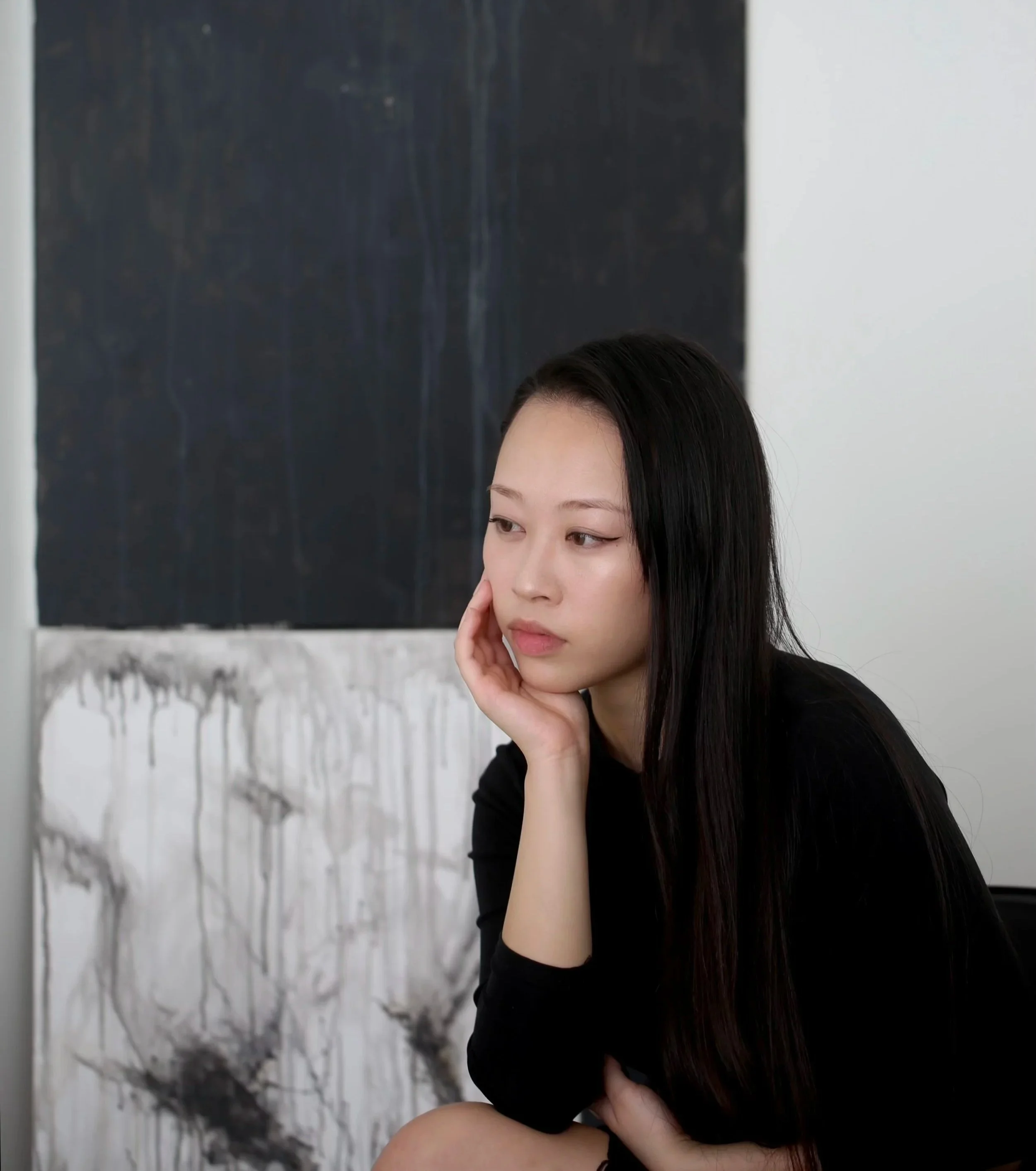
Hannah Wu - Portrait
ARTIST STATEMENT
Hannah Wu’s practice explores how memory can be translated across different senses. Working across painting, olfactory art, sculpture, installation, and photography, she investigates the relationship between the visible and the invisible, and how scent, light, shadow, texture, and form can evoke experiences that resist language.
Central to her work is the idea of impermanence, or 無常: the understanding that all things are transient and continually changing. Having lived in New York since 2018, Wu has experienced the city as a place of constant arrival and departure, where relationships, spaces, and communities can disappear as quickly as they form. The repeated act of saying goodbye has shaped her desire to preserve the traces people and places leave behind, while acknowledging that they cannot be held permanently.
Drawing inspiration from experimental cinema, particularly the films of Maya Deren and Stan Brakhage, Wu begins with fleeting images, dreams, and fragments of memory. These impressions evolve into paintings, sculptural objects, fragrances, and installations that exist in conversation with one another. She uses materials such as acrylic, plaster, resin, fragrance, and found objects not for their permanence, but for their ability to carry traces of ephemeral experiences. Scent is especially significant within her practice because it can summon a memory with sudden intensity before disappearing again.
Alongside her studio practice, Wu founded Perfume Who, an independent fragrance studio that approaches perfume as an extension of contemporary art. Each fragrance is developed alongside sculptural cap, photography, and film, allowing scent to exist within a broader visual and material language. Through both her artistic practice and Perfume Who, Wu creates works that invite viewers to navigate memory through multiple senses, blurring the boundaries between fine art, design, and fragrance while reflecting on what remains after a moment, place, or person has passed.
Vessel Studies, Dimensions variable, 2026 © Hannah Wu
INTERVIEW
First, you were born in Taiwan and have lived in New York since 2018. How have these different places and experiences shaped your artistic practice?
I think the people around me have shaped my practice more than the cities themselves. My relationships and shared experiences often become the starting points for my work. Growing up in Taiwan, the people around me felt relatively close, even when they moved to another city. In New York, people come from all over the world and are constantly arriving and leaving. Living here has changed how I experience connection and distance, and those feelings find their way into my work. I’ve been interested in art for as long as I can remember. I started painting with watercolors and acrylics in middle school, then explored photography in high school. Moving to New York introduced me to an openness that I found liberating, giving me more freedom to follow my instincts.
You studied Cosmetics and Fragrance Marketing at FIT, Art of Perfumery at ISIPCA, and later Public Relations and Corporate Communication at NYU. How have these different fields influenced the way you approach art?
When I first went to FIT, I was mainly interested in fashion marketing and the business side of creative industries. But I soon realised I also had a strong urge to create. My interest in scent led me to study fragrance, and FIT and ISIPCA opened my eyes to its possibilities. They gave me a practical foundation in formulating fragrances, understanding raw materials, and developing products. After graduating, I worked in PR, which led me to pursue further studies at NYU. That experience taught me how to communicate artistic intention and how publicity can help bring an artist’s work to a wider audience.

Vessel Studies II, Resin, air-dry clay, perfume bottle, fragrance oil, and alcohol, 11 x 3 x 3 cm, 2023 © Hannah Wu
You work across painting, sculpture, installation, photography, moving image, and fragrance. How do you decide which medium is most appropriate for a particular idea?
My approach is very instinctive. I usually begin with an image, a shape, or a feeling, and then explore which material can give it form. When I started Perfume Who, for example, I knew I wanted a distinctive bottle. That led me to experiment with unfamiliar materials, including resin and metal clay, before settling on plaster for the caps. I enjoy that process of discovery and learning about a material by working with it.
Your work often begins with dreams, fleeting images, and fragments of memory, as you mention in your statement. How does an initial impression develop into a finished artwork?
I often start making before I fully understand what I want to express. It might begin with picking up a pen to sketch or reaching for acrylic paints. The first Trace Studies painting came about when a dear friend was leaving New York. I translated the emotion of that departure into a black canvas with grey lines and shapes. The feeling came first, and the painting developed as I worked. Making gives me a way to explore something I’m still processing and might not yet know how to put into words.

Suspended Forms I (Detail), Plaster, stainless steel wire, fragrance oil, Dimensions variable, 2026 © Hannah Wu

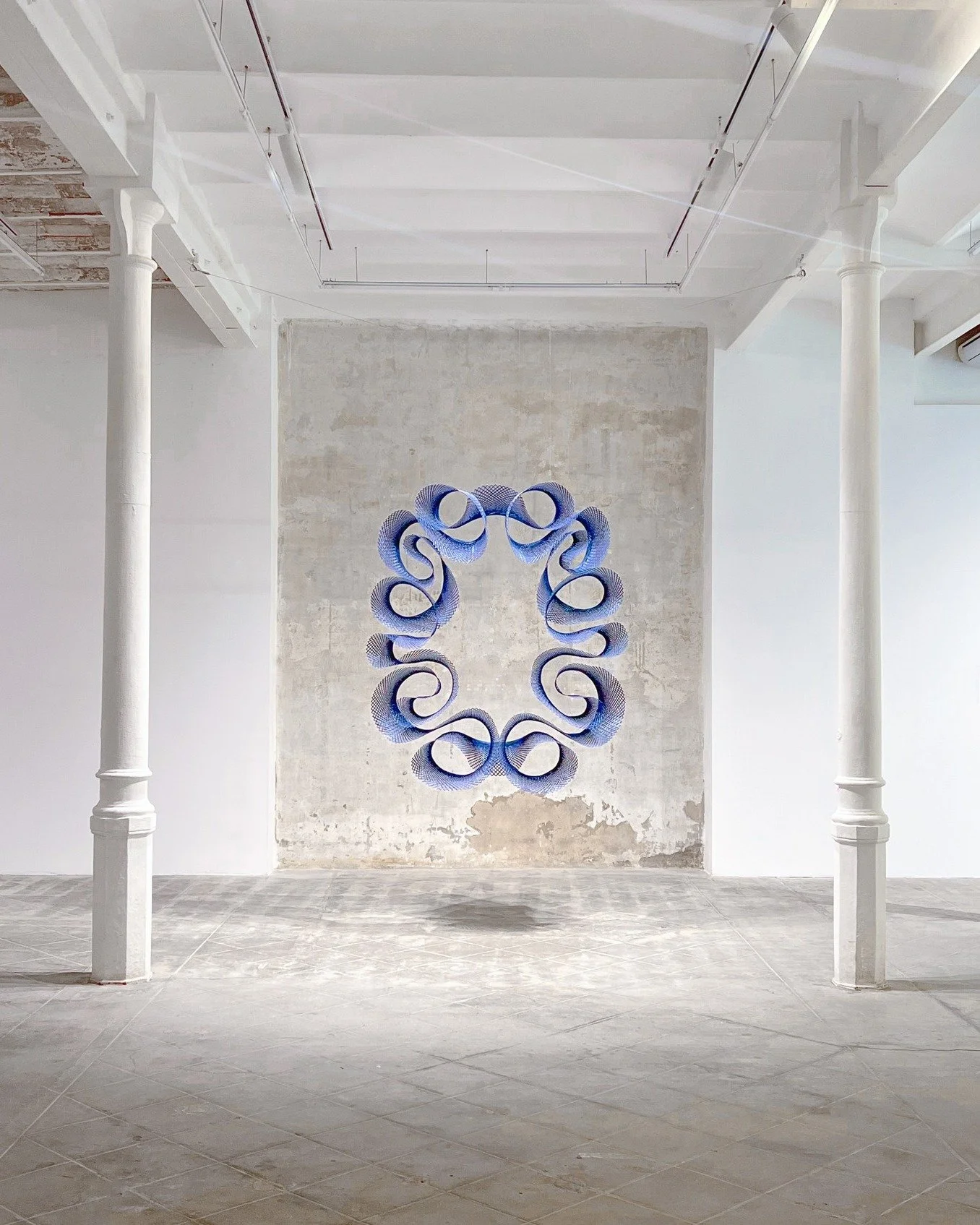
Suspended Forms I, Plaster, stainless steel wire, fragrance oil, Dimensions variable, 2026 © Hannah Wu
Scent plays a central role in your practice. What can fragrance communicate about a memory or experience that visual art alone cannot?
For me, scent can bring back a memory before I’ve consciously recognised it. A familiar smell can suddenly return me to a moment from childhood or a place I haven’t thought about in years. It feels as though something I’d forgotten has stayed with me all along. There’s no single correct association, because we’ve all grown up around different smells. Chanel No. 5 reminds me of my mother, while a Victoria’s Secret fragrance takes me back to my first summer in New York. I created Meshes of the Afternoon, with notes of rose, honey, and ambergris, to evoke the memory of my mother’s vanity table. I’m interested in how immediate and personal those connections can be, and how the same fragrance can evoke entirely different memories for someone else.
The concept of impermanence, or 無常, is an important part of your work. How do you explore the idea of things constantly changing or disappearing?
For me, it begins with acceptance. Experiencing the loss of family members and seeing relationships change have shaped my understanding that nothing stays the same forever. People, places, and feelings are constantly changing. Sometimes, the harder we try to hold on, the more we feel things slipping away. That awareness informs how I approach memory and absence in my work. At the same time, I don’t think change is necessarily a bad thing. I’m learning to accept it and leave room for what comes next.
Your works bring together visible elements such as light, shadow, texture, and form with invisible elements such as scent and memory. What interests you about this relationship between the visible and the invisible?
The book In Praise of Shadows really inspired me. I’ve always appreciated shadows and the beauty of negative space. I’m especially drawn to darkness and the way light falls across a textured surface. Scent interests me in a similar way: it’s invisible, yet it can have a powerful presence and shape how we experience a space. In college, a film studies class introduced me to surrealist films. I was drawn to their ambiguity and the way seemingly unrelated images could connect through a feeling or a subconscious association. That also informs my interest in things we can sense without fully seeing or understanding them.

Trace Studies I, Acrylic on canvas, 61 x 91 cm, 2022 © Hannah Wu
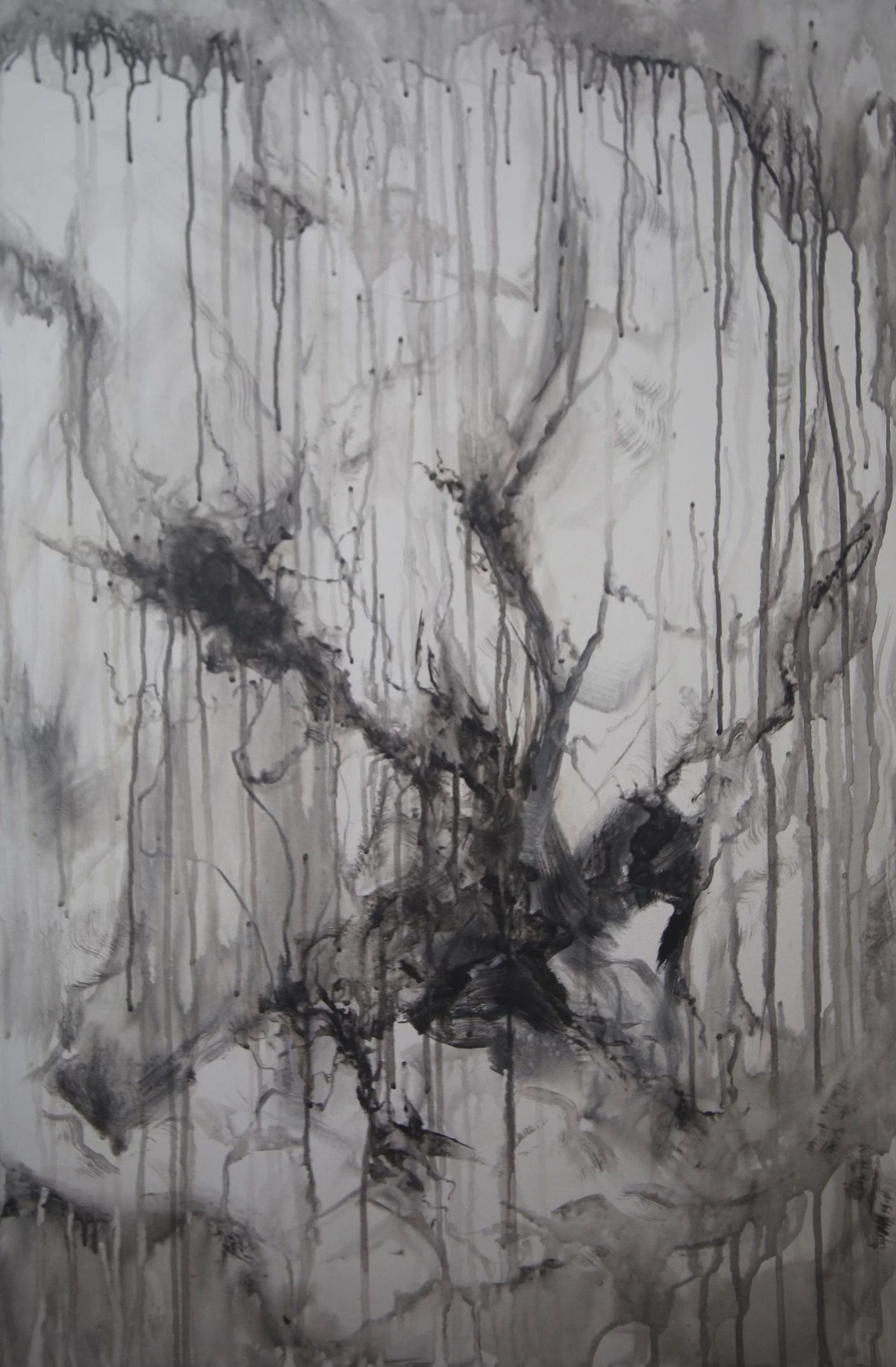
Trace Studies III, Acrylic on canvas, 61 x 91 cm, 2023 © Hannah Wu

Trace Studies II, Acrylic on paper, 61 x 91 cm, 2023 © Hannah Wu

Trace Studies IV, Acrylic on canvas, 61 x 91 cm, 2026 © Hannah Wu
Many of your works reflect on people and places that are no longer present. What do you hope viewers feel or remember when they encounter your work?
I hope the work leaves space for viewers’ own memories. They don’t need to know my exact story; they might connect with a person, a place, or a feeling from their own lives. I enjoy ambiguity and the possibilities it creates for interpretation. I like the idea that a work can begin with something personal to me and take on another meaning through someone else’s experience.
You founded Perfume Who as an independent fragrance studio that approaches perfume as an artistic medium. How does this project relate to your wider art practice, and how do the two inform each other?
Perfume Who brings together my interests in scent, sculpture, and film. I cast and carve each egg-shaped cap by hand. The egg symbolises birth and the possibility of becoming “who” you want to be. Surrealist cinema is a major interest of mine and inspires the fragrances, beginning with At Land, from which I drew elements of driftwood, ocean, and smoke. Like my other work, the process begins with an image or feeling that I translate into another form. Perfume Who gives me a way to explore that through both a sculptural object and the invisible experience of scent.

Vessel Studies I, Resin, air-dry clay, perfume bottle, fragrance oil, and alcohol, 11 x 3 x 3 cm, 2023 © Hannah Wu
Lastly, what are you currently working on, and are there any new directions, mediums, or projects you would like to explore in the near future?
I’ve started a program in scientific glassblowing. I’m captivated by the transparency of glass and curious to see how that quality might become part of my work. I’m also planning to launch Perfume Who’s sixth fragrance, inspired by the film The Color of Pomegranates. Looking ahead, I’d like to create large-scale installations with scent and explore how fragrance can shape the experience of an entire space.
Artist’s Talk
Al-Tiba9 Interviews is a curated promotional platform that offers artists the opportunity to articulate their vision and engage with our diverse international readership through insightful, published dialogues. Conducted by Mohamed Benhadj, founder and curator of Al-Tiba9, these interviews spotlight the artists’ creative journeys and introduce their work to the global contemporary art scene.
Through our extensive network of museums, galleries, art professionals, collectors, and art enthusiasts worldwide, Al-Tiba9 Interviews provides a meaningful stage for artists to expand their reach and strengthen their presence in the international art discourse.




Hannah Wu is a Taiwanese-born, New York–based multidisciplinary artist working across painting, olfactory art, sculpture, installation, photography, and moving image. Using acrylic, plaster, resin, fragrance, and found materials, her practice explores the relationship between scent, memory, and visual form, translating ephemeral experiences into tangible objects.