

10 Questions with Katia Shneider
Al-Tiba9 Art Magazine ISSUE21 | Featured Artist
Katia Shneider (ex. Katia Candor), b. 1986, Moscow, is an artist working with installation, sculpture, and video. Her practice focuses on exploring how the individual reconfigures the self and presence in the world amidst ongoing radical social, technological, and cultural transformations. From 2009 to 2022, she worked in advertising agencies, film production, and industrial enterprises, specialising in media production and strategic communications. In 2022, Katia left Russia, concluding her career in PR to dedicate herself fully to her artistic practice. Since 2011, she has participated in group exhibitions in Russia, Spain, Georgia, and Montenegro. From 2014, she began creating performances in Moscow museums and parks, primarily working with painting, graphics, and performance. Since 2023, she has actively developed skills in ceramics, creating installations and video art, and experimenting with materials. In 2025, her first public art project, “Module of the Possible,” was unveiled in Tivat, Montenegro. Participant of The Wrong Biennale 2025–2026.

Katia Shneider - Portrait
ARTIST STATEMENT
Katia works with installation, sculpture, photography, and video. Her artistic practice has been shaped by the conditions of forced emigration. A radical change of circumstances, roles, and social context led to the destruction of her former identity.
In her practice, Katia explores the phenomenon of the nomadic identity of the contemporary individual, a fluid form of self-awareness in which the subject is not fixed to a single social role, cultural belonging, or space. Nomadic identity manifests as a collective phenomenon, formed under the conditions of wars, forced migrations, accelerating technological change, and the total presence of media. The artist’s practice does not seek to fix identity in a new stable form, but rather considers it as a process.
DISPOSABLE IDENTITY, 100 hand-built ceramic heads (5-12 cm height), installation (work in progress), ph. Alex Lenyashin © Katia Shneider
Disposal identity | Project Statement
Humanity cultivated identity for centuries as if it were a family garden: a name, a craft, a faith, a place in the world were passed down almost like an inheritance. A person is no longer the bearer of a single stable form of self; we live in an era of hypermodernity in which identity ceases to be an essence and becomes a process of endless transformation amid migration, accelerating technological development, and the permanent presence of media. It is assembled and disassembled, updated and edited, like a profile online. At times, identity is something that can be worn once, bought in a store, “tried on” for a project or an evening. It can literally be consumed: swallowed like lunch and replaced without significant loss. Today one version of the self, tomorrow another, and more often a combination of them, a temporary assemblage of available cultural, social, and digital elements.

DISPOSABLE IDENTITY, 100 hand-built ceramic heads (5-12 cm height), installation (work in progress), ph. Alex Lenyashin © Katia Shneider
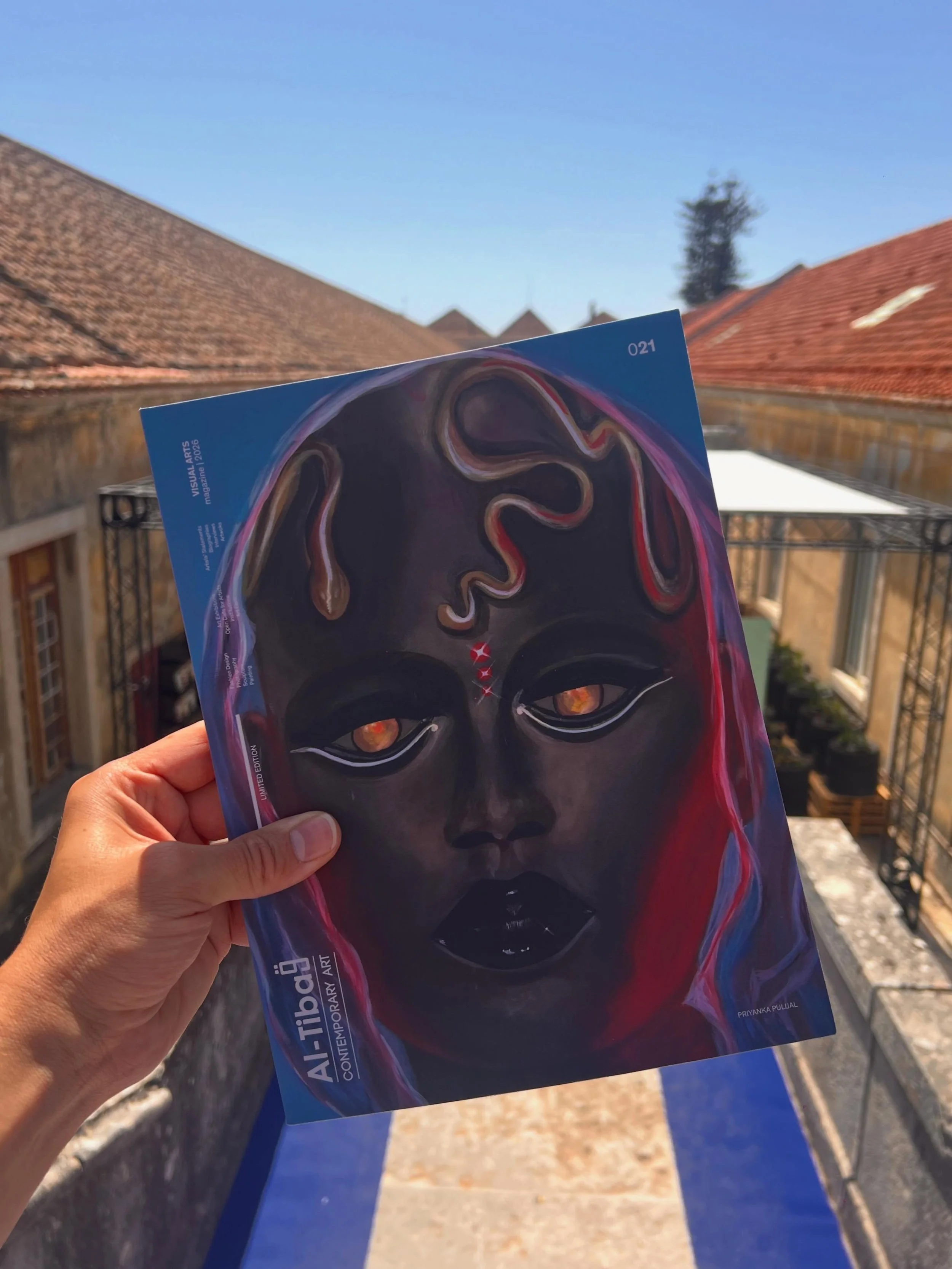
AL-TIBA9 ART MAGAZINE ISSUE21

DISCOVER THE INTERNATIONAL ART SCENE WITH AL-TIBA9
LIMITED EDITION | Shipping worldwide.
Premium museum art paper.
Printed in London.
Grab 3 or more prints and get your FREE digital magazine.

Digital Magazine - Available SOON…
INTERVIEW
Your professional background includes many years in media production and strategic communications before fully committing to art. How has that experience shaped the way you think about images, narratives, and audience today?
When you work in media, your job is literally generating pathways for manipulating consciousness, imposing priorities, lobbying interests, and, I’m not afraid to say it, propaganda. It isn’t necessarily political. You literally create myths and make people believe in them. In my practice, I create myths to a lesser extent; I rather examine and question them. What I do is not creation, but observation and transformation.
Leaving Russia and undergoing forced emigration marked a major turning point in your life. How did this rupture influence the shift from your earlier artistic experiments to your current practice?
My earlier works were more intuitive. There was less reflection and no research component. Although looking at them now, I see that from the very beginning, I was already working with questions of identity, authenticity, and the relationship between the subject and the world.
Forced emigration undoubtedly had a huge impact on my practice, because I was violently pulled out of my home, out of familiar contexts: professional, linguistic, social, and family. It’s a very sobering experience if you are someone prone to reflection. Everything that happened during my first two years of emigration became something I closely observed and studied. My way of seeing things changed completely. I started noticing things that I had previously missed, in myself, in the world around me, and in how I relate to it.
Right now, my practice is focused on researching the phenomenon of nomadic identity in contemporary human beings. I’m interested in understanding myself and others: where the foundations of human identity come from, what shapes it, and how a person defines what they are in a given context. where the foundations of identity come from, what shapes it, and how we define ourselves in different contexts. And also how identity shifts when the surrounding context stops being clear or predictable, and when adaptation becomes difficult. I think this topic is relevant to many people today, even those who haven’t experienced emigration.
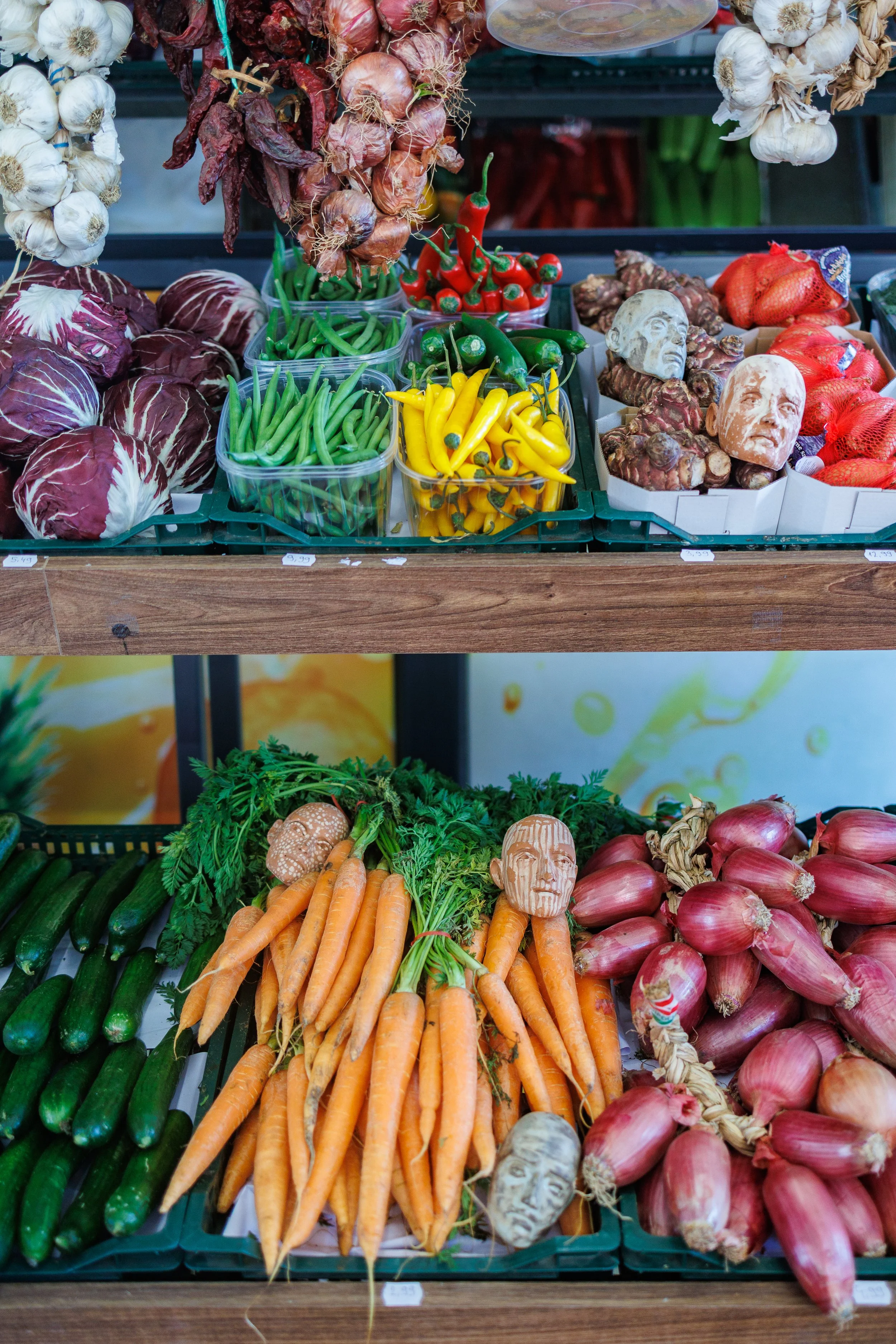
DISPOSABLE IDENTITY, 100 hand-built ceramic heads (5-12 cm height), installation (work in progress), ph. Alex Lenyashin © Katia Shneider
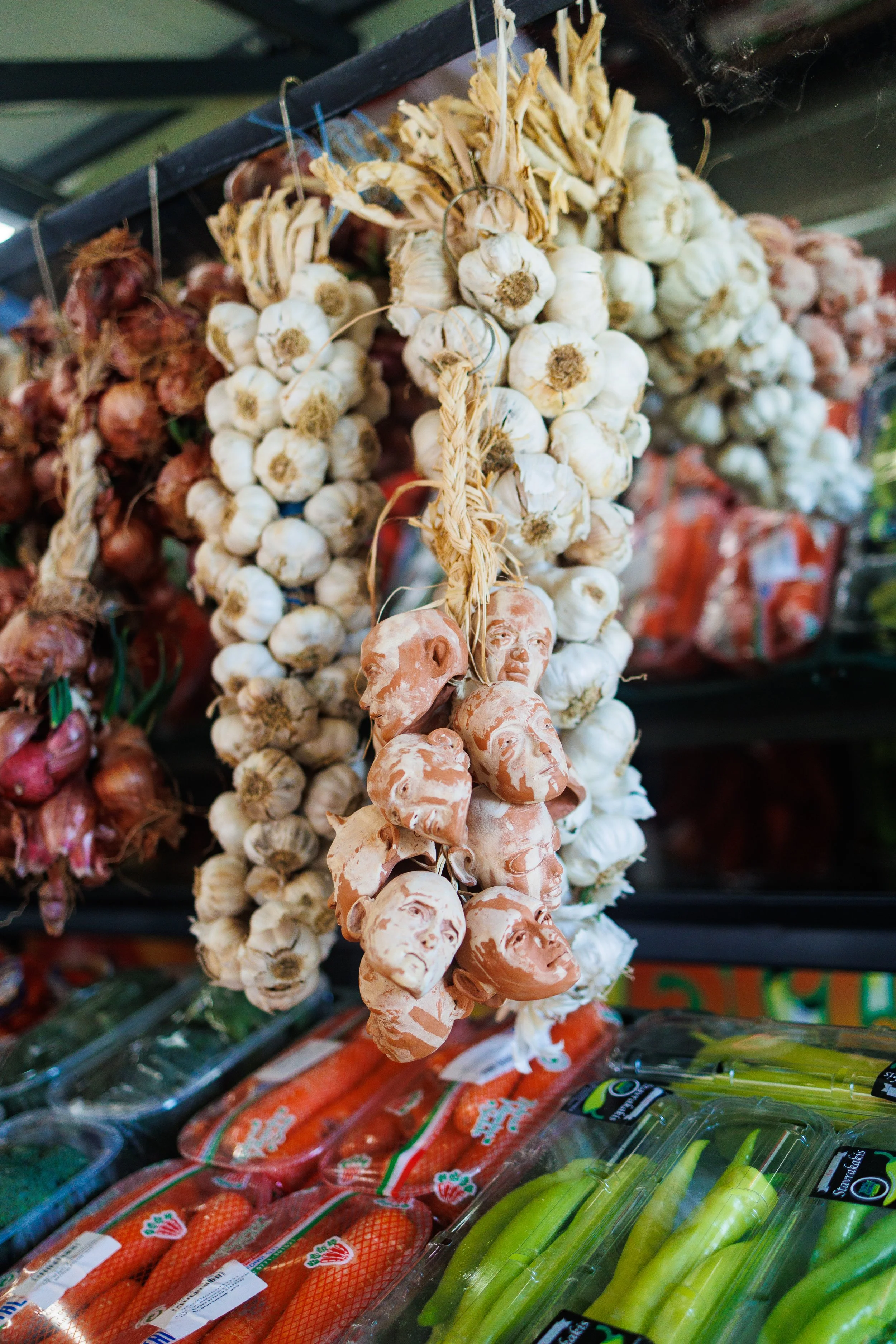
DISPOSABLE IDENTITY, 100 hand-built ceramic heads (5-12 cm height), installation (work in progress), ph. Alex Lenyashin © Katia Shneider
You work across installation, sculpture, video, and photography. How do you decide which medium best expresses an idea about identity or presence at a particular moment?
It usually happens intuitively. I don’t want to limit myself in terms of media at all: I’m interested in working with everything, and I expect I’ll keep experimenting with new methods. I love ceramics as a material, and right now, clay is my main medium. In almost all of my works, installation, video, photography, or performance, clay appears in one form or another.
It’s a material with an incredible range of states: it can be soft or hard, fragile or strong, wet or dry. And the transition from clay to ceramic is literally a transformation from one state into another, which I find fascinating.
Installation allows me to create a context and a space for the viewer, which I really enjoy. When I work on an installation, it feels like I’m adding another layer of reality.
With photography and video, I capture moments of transformation and highlight a trigger or a glitch, something slightly strange within the ordinary.
Your work often describes identity as something fluid and constantly assembled rather than fixed. When creating a project, do you begin from personal experience, observation of society, or conceptual research?
I always start from personal experience. The questions come from what I go through myself. Then, in trying to understand them, I turn to the experience of others, to research, philosophy, news, and statistics. My own experience is what triggers a new phase in my practice, and I often process it through the experiences of others. I would call this art anthropology.
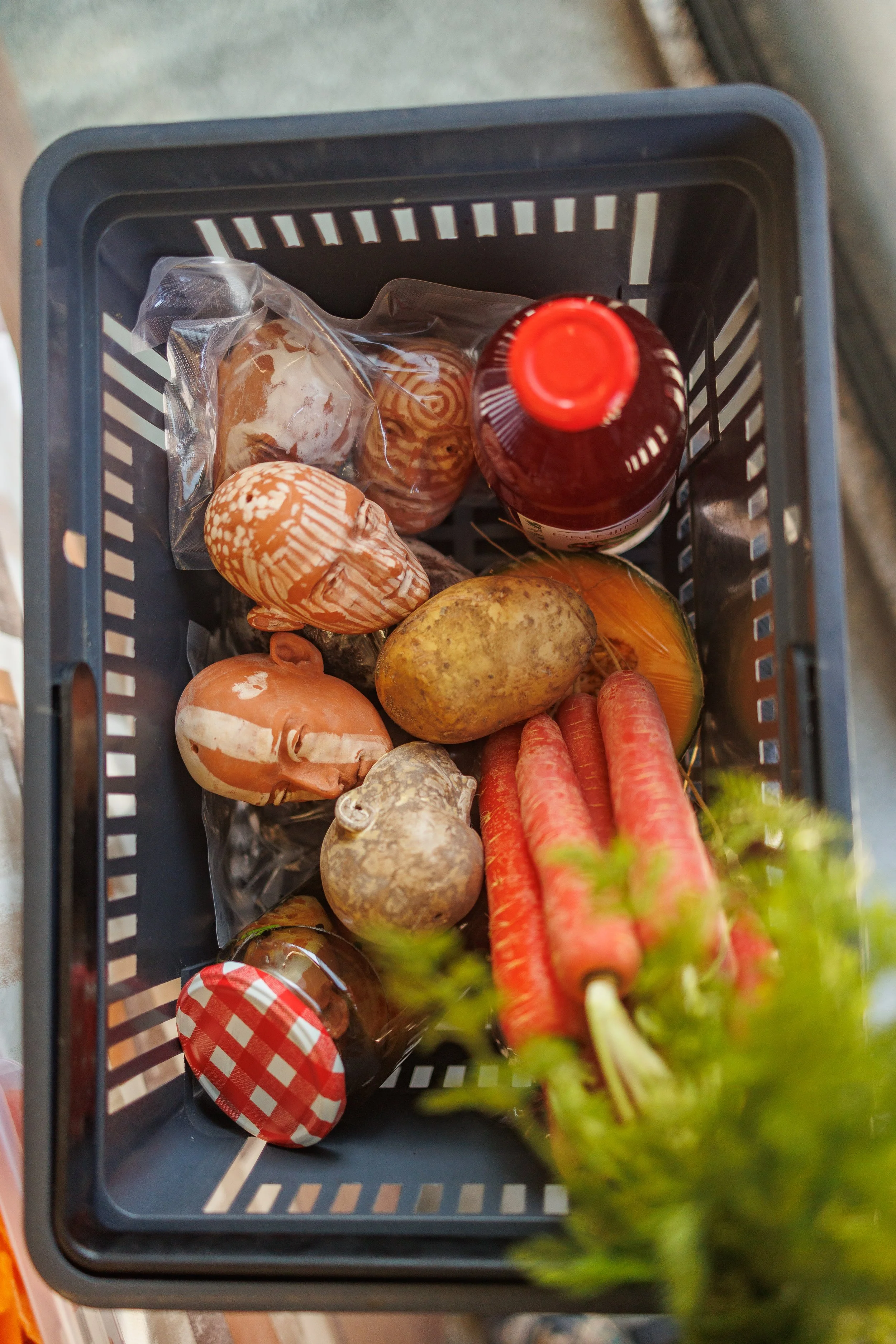
DISPOSABLE IDENTITY, 100 hand-built ceramic heads (5-12 cm height), installation (work in progress), ph. Alex Lenyashin © Katia Shneider
The idea of “nomadic identity” runs throughout your practice. What does this concept mean to you on a daily level beyond theory?
For me, it’s about the constant renewal of identity that contemporary life seems to demand. Today, people are focused on themselves, on success and well-being, and on achieving autonomy and freedom, along with an almost endless consumption of experiences. Because everything becomes obsolete almost immediately. And this applies to identity as well. A person needs constant self-actualisation and achieves it through all available means: travel, education, changing professions, new interests, and continuous consumption of content and new impressions. But what happens if we turn off this never-ending stimulation?
You recently began working extensively with ceramics and material experimentation. What drew you to clay, and how does working with a physical material change your relationship to themes shaped by migration and instability?
Clay is an extraordinary material with a huge range of physical states and properties. It can go through many transformations, take shape and lose it again, until it is fired and becomes ceramic. Even then, it still has a lot of expressive potential through surface treatments, sound, combinations with other materials, and interaction with the environment. It gives a lot of freedom for experimentation, but it also has its own character and memory.
It is a material that gives the artist great freedom and many possibilities for experimentation, while still having its own character and memory.
It also forces you to slow down. When you actually work with clay, you’re to some extent dependent on its rhythm, the weather, and other conditions. For example, if you rush and put clay into the kiln before it is completely dry, it can explode during firing, and the piece will be lost.

DISPOSABLE IDENTITY, 100 hand-built ceramic heads (5-12 cm height), installation (work in progress), ph. Alex Lenyashin © Katia Shneider

DISPOSABLE IDENTITY, 100 hand-built ceramic heads (5-12 cm height), installation (work in progress), ph. Alex Lenyashin © Katia Shneider

DISPOSABLE IDENTITY, 100 hand-built ceramic heads (5-12 cm height), installation (work in progress), ph. Alex Lenyashin © Katia Shneider

DISPOSABLE IDENTITY, 100 hand-built ceramic heads (5-12 cm height), installation (work in progress), ph. Alex Lenyashin © Katia Shneider
In Module of the Possible, your first public art project, you moved into a shared urban space. How did working in the public realm alter your understanding of participation and presence?
It was a very interesting experience. On the production side, it required thinking through many details: environmental conditions, weather, context, and how to make the installation durable while keeping it light and mobile.
In terms of audience interaction, I noticed that people rarely read explanatory texts, but many still stop and spend time with the work. Some sit in front of it and simply observe the sound and movement created by the wind or by children playing with it. I’m very glad that it invites people into a state of observation and attention. I think this is an important skill in our fast-paced world.
Your statement suggests that identity today can be edited or replaced, almost like a digital profile. How do technology and media culture influence both the content and the form of your work?
I think this is quite a broad question. I wouldn’t say that technologies and media directly influence my art as long as I work mostly with analogue things. But of course, they influence it indirectly, and that influence has both positive and negative sides.
I am increasingly convinced that endless consumption of content dulls my own voice, my genuine interest. It takes a huge amount of energy and gradually dissolves focus. I think information hygiene is very important for an artist.
Returning to our first question, a person working in media needs to be aware of all trends, the news agenda, and the market situation; they need to be inside all these events and know how to navigate them.
For an artist, however, it is very important (while inevitably being surrounded by the most diverse context) to keep focus on their own interests, to stay curious, and in a way to remain slightly obsessive.

DISPOSABLE IDENTITY, 100 hand-built ceramic heads (5-12 cm height), installation (work in progress), ph. Alex Lenyashin © Katia Shneider
Many of your works seem to exist between personal transformation and collective experience. What kind of reflection or response do you hope viewers have when encountering your installations or videos?
Returning to yourself. I don’t mean indulging your desires, or the cliché idea that “you have to love yourself.” Of course, that’s an important skill, but I think many people misunderstand it.
I mean returning to yourself as a subject existing in this reality and capable of influencing it. Looking closely at yourself, getting to know yourself and your darker sides as well.
To stay closer to the artist within your own life - the one who remains authentic in the middle of all the noise, and to try, as much as possible, not to become a media manager constantly adjusting to trends.
Looking forward, what directions or experiments feel most urgent for you now? Are there new materials, collaborations, or new questions you want your practice to explore next?
I think art is an act of affirming life. And for me, it will always be that. I want to try new media, and I really want to collaborate with other artists.
Artist’s Talk
Al-Tiba9 Interviews is a curated promotional platform that offers artists the opportunity to articulate their vision and engage with our diverse international readership through insightful, published dialogues. Conducted by Mohamed Benhadj, founder and curator of Al-Tiba9, these interviews spotlight the artists’ creative journeys and introduce their work to the global contemporary art scene.
Through our extensive network of museums, galleries, art professionals, collectors, and art enthusiasts worldwide, Al-Tiba9 Interviews provides a meaningful stage for artists to expand their reach and strengthen their presence in the international art discourse.




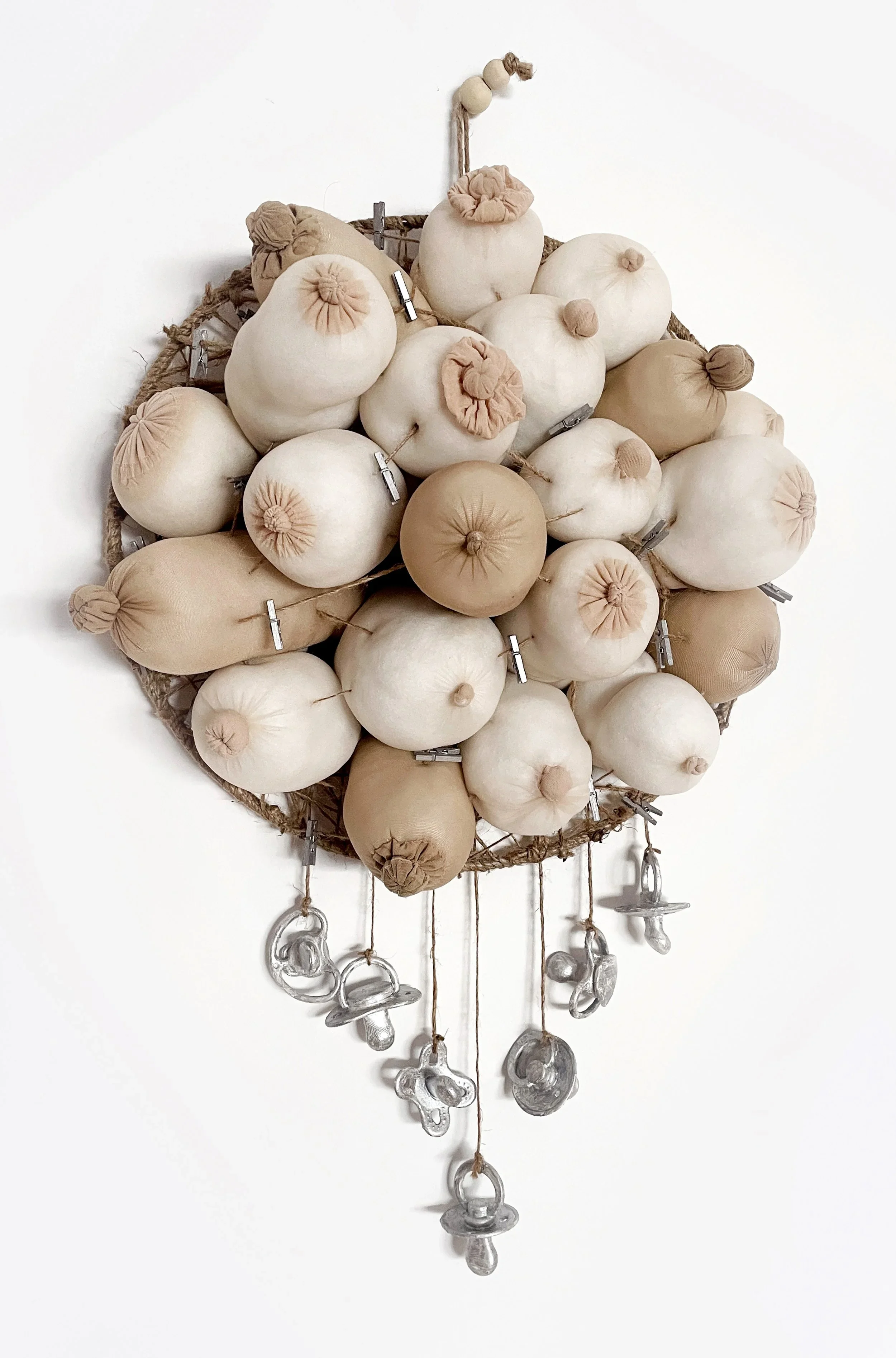

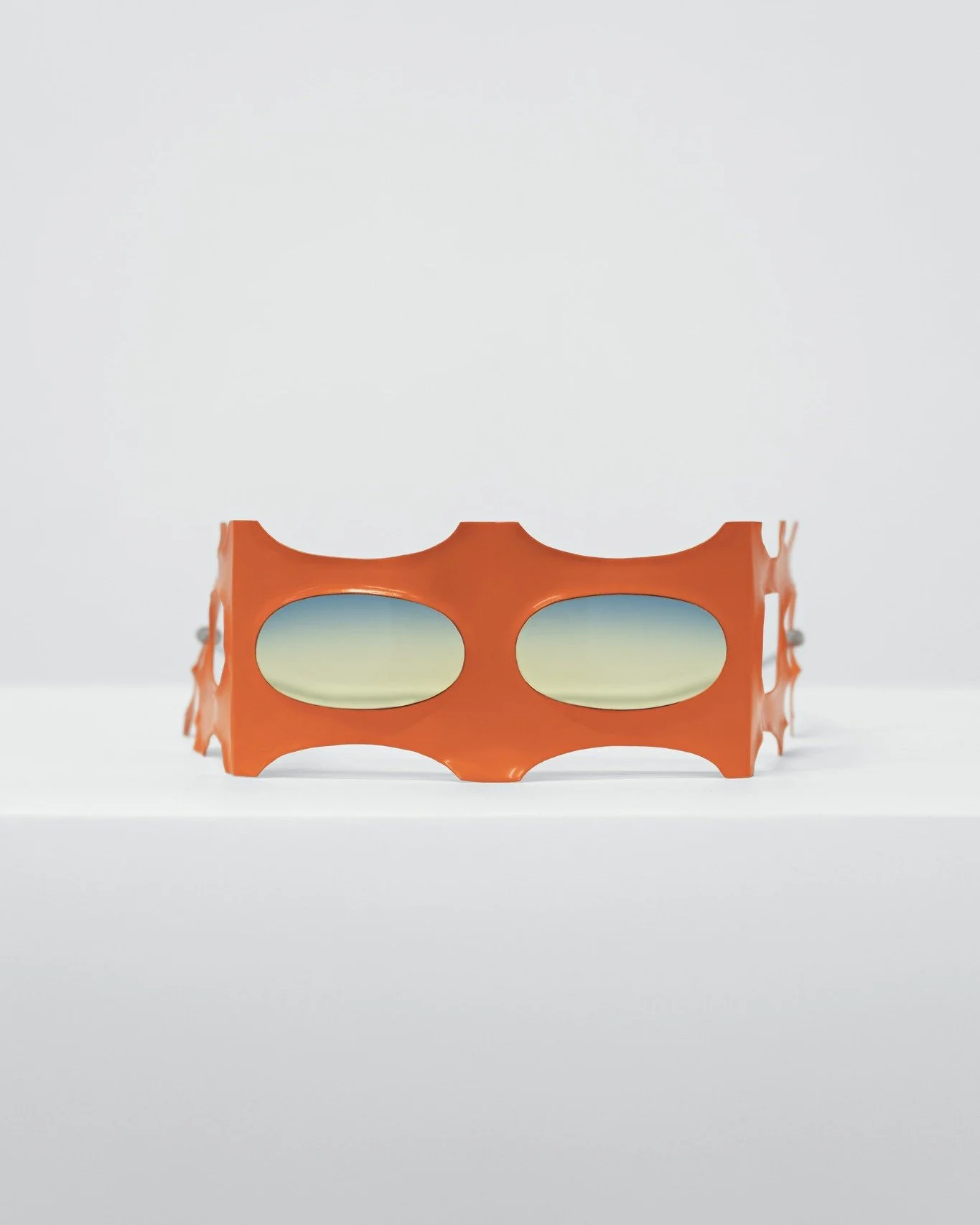
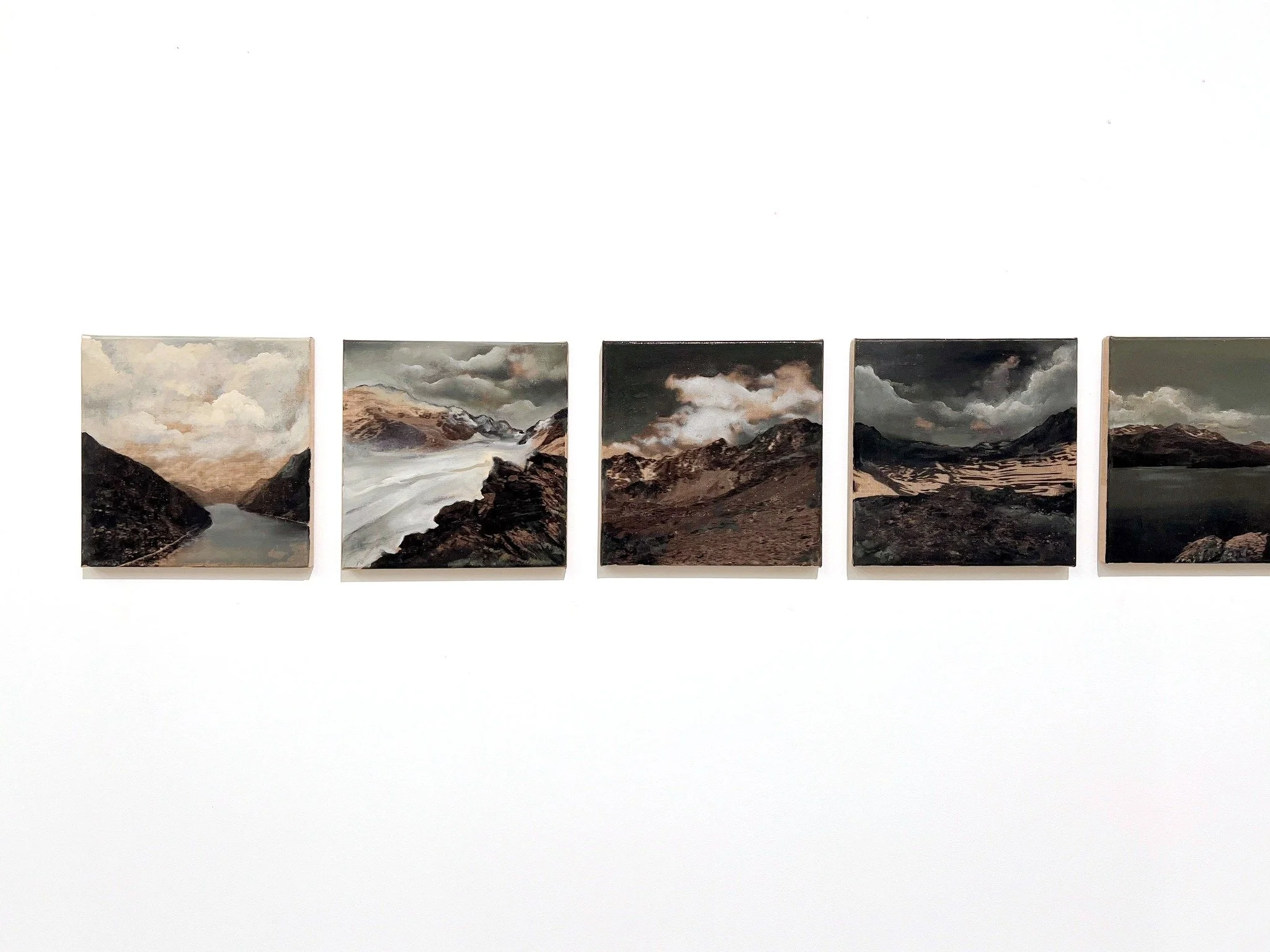
Kfir Galatia-Azulay Darash is an architect, engineer, multidisciplinary designer, and artist. In his practice, architecture defines the framework, scale, rhythm, and light; interior design addresses the body and the human experience; product design approaches detail, material, and physical contact; and art allows an idea to move beyond function and become emotion, memory, and interpretation.