
10 Questions with Nataraj von Allmen
Al-Tiba9 Art Magazine ISSUE22 | Featured Artist
Nataraj von Allmen (*1953) is a painter based in Thun, Switzerland. He studied at the Bern University of the Arts and the Art Academy in Toulouse. His work has been exhibited in Switzerland and internationally, most recently in Miami (2023), Venice (2024), and Seoul (2025). Often taking photographic material as a starting point, Nataraj von Allmen weaves together landscapes, mythological archetypes, Christian symbolism, and contemporary socio-political themes into complex paintings. Oscillating between figuration and abstraction, his work investigates transformation, collective memory, and the human condition.
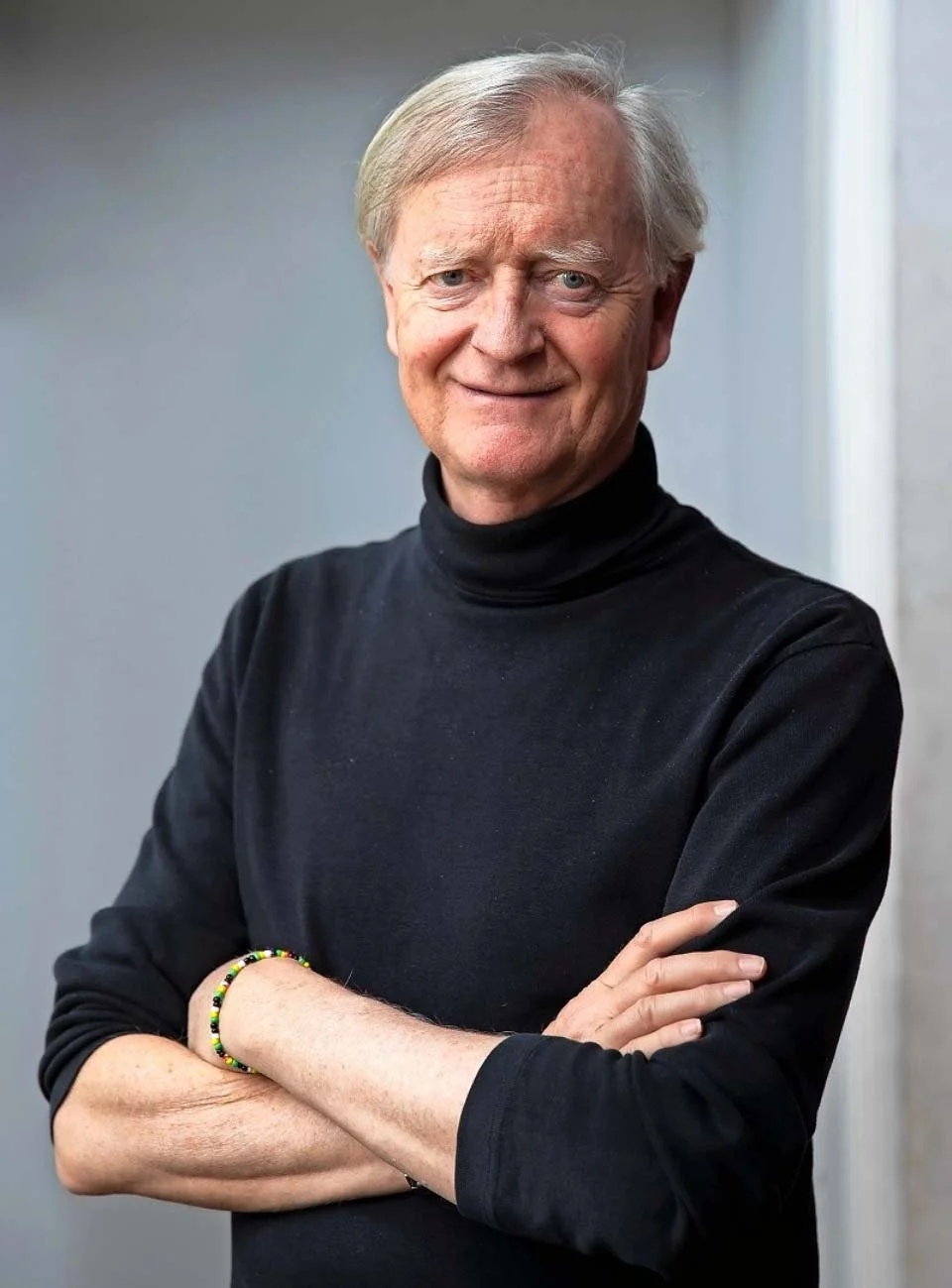
Nataraj von Allmen - Portrait
In Resurrection of Light (2026), a mysterious figure rises above a sarcophagus within a circle of flames, merging the symbolism of Shiva Nataraja and Christian resurrection. Recalling Leon Battista Alberti's words that painting has the power to make the absent present and to give the dead a second life, the enigmatic figure evokes both vulnerability and transcendence, inviting a gaze suspended between empathy and unease. The painting becomes an act of revival, exploring how art can animate memory, identity, and presence.
Text by: Nurja G. Ritter, art historian, Switzerland

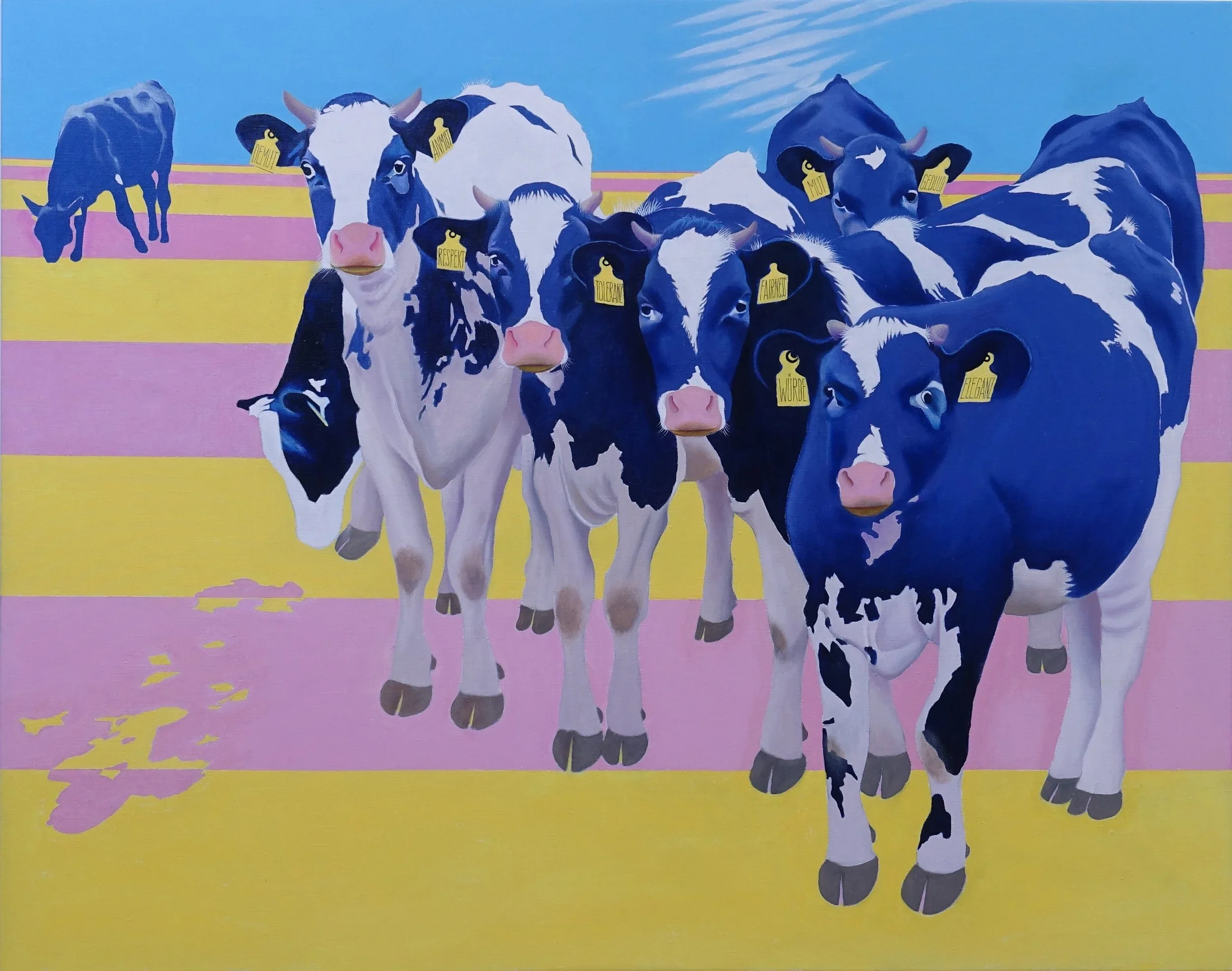
All in One, One in All, oil painting on canvas, 280x110 cm, 1996 © Nataraj von Allmen
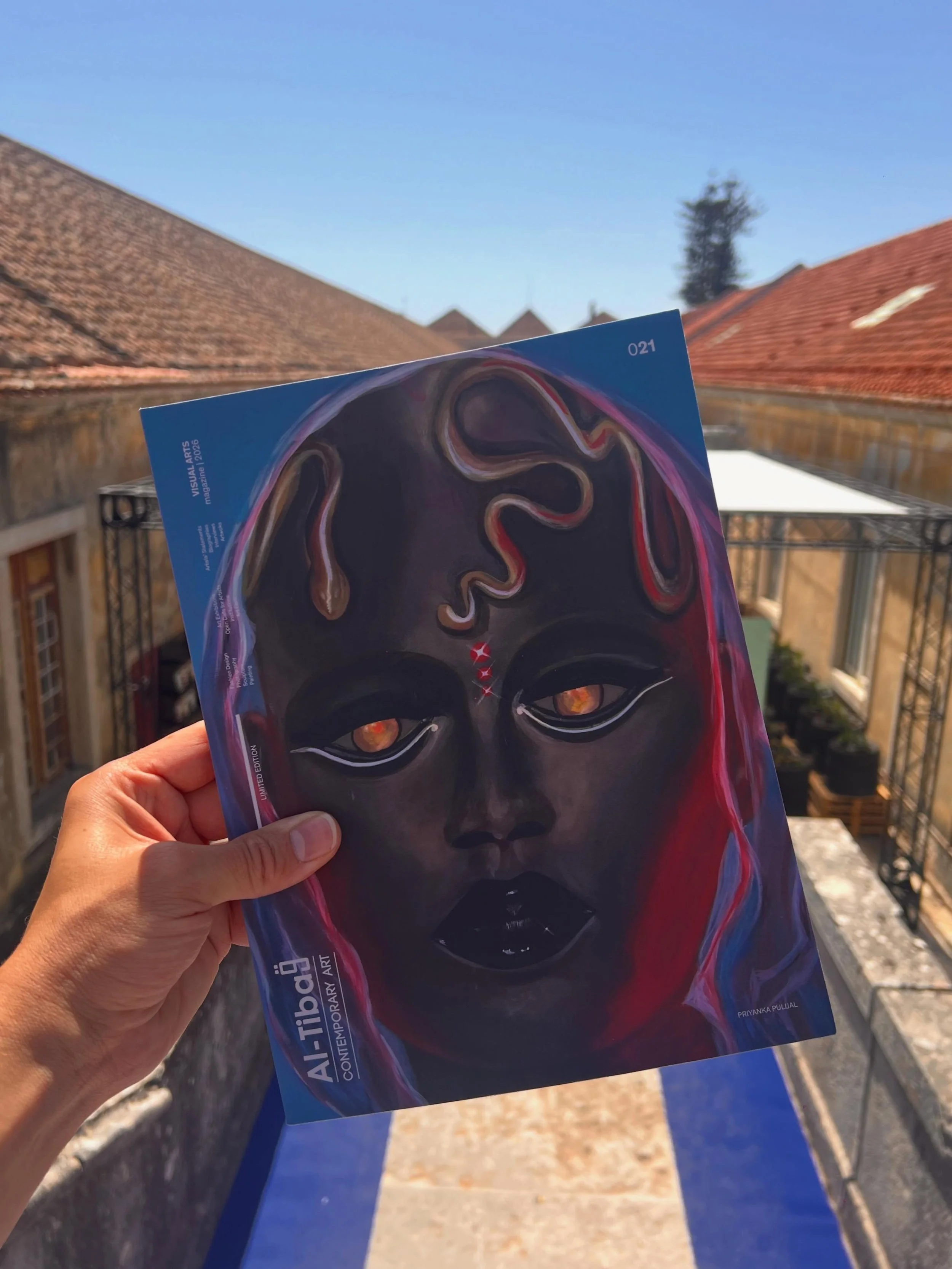
AL-TIBA9 ART MAGAZINE ISSUE22
DISCOVER THE INTERNATIONAL ART SCENE WITH AL-TIBA9
LIMITED EDITION | Shipping worldwide.
Premium museum art paper.
Printed in London.
Grab 3 or more prints and get your FREE digital magazine.
Get your limited edition copy now
INTERVIEW
You studied at the Bern University of the Arts and the Art Academy in Toulouse. How did these different environments shape your understanding of painting and your artistic development?
Toulouse offered me the opportunity to live away from my family for six months and to experience my daily life in a different country and language, perhaps also to question the patterns of my childhood. In Toulouse, the program was still organised as an academy, meaning life drawing with models every day from 8 to 10 a.m., and from 10 a.m. to noon, Monday through Friday, I worked with clay in the sculpture studio. I loved this strict schedule, the fundamental exercises, and being able to observe my small steps forward. I began to understand artistic creation as a process that develops step by step.
In Bern, during my five years, I gained insights into various aspects of art in different studios. Often, much revolved around art education topics. There was a lack of space and time to develop my own artistic perspective. The focus was more on breadth than depth. Interestingly, my many years of teaching art at a high school led to themes that still influence my work today. In Bern, I gained valuable experience in a freelance painting studio.

Göttibachstäg, oil painting on canvas, 330x110 cm, 2022 © Nataraj von Allmen
You often begin your work with photographic material. What attracts you to photography as a starting point, and how do you transform an image into a painting?
A photograph as a starting point challenges me to go beyond the photograph itself. The photograph is rarely interesting enough. I often ask myself whether a photograph is worth transforming into a painting. As a painting, it reaches a higher level, in a sense. Is a photograph worth reaching a higher level? The screaming baby in "One in All, All in One" is my three-week-old son, who is teething. My emotional connection gave me the impetus to create the painting. A stencil provided the structure and playful repetition; the brush, the painterly structure. In "Geisterspiel" and "The Resurrection of Light," the image motifs were symbolistically altered, e.g., the setting: a football stadium, the transforming football jerseys, the masquerade ball, and the candle held out to the viewer in the resurrection painting. Often, the arrangement of objects unfamiliar to everyday life transforms a painting into a symbolist and surreal context: What is the naked mole rat doing with its paintbrush between its teeth on a coffin?
Your paintings move between figuration and abstraction. How do you decide when an image should remain recognisable and when it should become more open and ambiguous?
My paintings, such as "Resurrection of Light," "Geisterspiel," or "Good Morning, Ms Zurich," contain a symbolist message and therefore require recognisable pictorial elements. If we add "All in One, One in All," all the paintings have monochrome or multicoloured, flat, abstract backgrounds to emphasise the object more clearly. The freedom of abstraction in these presented paintings is also evident in certain pictorial elements, such as the flying fox or the body bag in "Geisterspiel." The three pictures “Good Morning Mrs Zurich”, “Geisterspiel” and “All in One, One in All” could also be interpreted as theatre scenes; here my engagement with theatre is visible.

Good Morning Mrs. Zurich, oil painting on canvas, 140x110 cm, 2025 © Nataraj von Allmen

Good Morning Mrs. Zurich (detail), oil painting on canvas, 140x110 cm, 2025 © Nataraj von Allmen
Your work brings together landscapes, mythological archetypes, Christian symbolism, and contemporary issues, as you mention in your statement. How do you create connections between such different visual and cultural references?
For me, landscapes are always linked to a direct experience of nature through painting. They are usually created outdoors (plein air). Landscapes in a symbolist context, on the other hand, are always constructed and usually subordinate to the message. My exploration of myths, archetypes, and allegories has taken me to India, among other places. (See question 6.) It's worth noting that the pallbearers in "Geisterspiel" were transformed into Venetian plague doctors with red beaks, an allegory for medieval fighters against the plague, by a red plastic bag in the photographic source material. Therefore, there is only a limited connection between the genres.
Many of your paintings explore transformation and collective memory. What role does memory play in your creative process?
When I was three years old and sick in bed, wild figures flitted across a curtain in a fever dream, like a screen. This deeply shook me and made me feel the power of images. Today, when I lie on the sofa and look out the window at the magnolia tree, I see countless faces in all sorts of situations among the leaves. My visual memory is very strong. The memory that flows directly into my paintings is more like visiting exhibitions, which often penetrate deep into my subconscious and are reinforced by sketches. “Geisterspiel” is a direct processing of my personal experience during the pandemic; I am thus part of this collective memory. The personal fate of the people in the funeral procession becomes an allegory for the global pandemic.
Your recent painting, Resurrection of Light, combines the symbolism of Shiva Nataraja and Christian resurrection. What inspired this dialogue between different spiritual traditions?
From 1989 to 1990, I lived in India at a meditation centre, a so-called ashram. My spiritual master gave me the name Nataraj, which means “dancing god” and is a manifestation of Shiva. Since then, Nataraj has been my artist name. Here is a brief explanation: Shiva dances as Nataraja in a circle of fire. This circle symbolises the universe and cosmic energy, while the dance itself represents the eternal cycle of creation, preservation, and destruction, in which old structures are dissolved, and space is created for the new. Fire represents destruction and renewal, and Shiva's cosmic dance (Tandava) embodies the movement of the entire universe and the balance between creation and destruction. I have often visited art museums and churches, and in my profession as an art teacher, I frequently taught art history. Many paintings from the Early Renaissance to the Baroque period are therefore part of my personal, inner visual treasury, untouched by the dancing god.

Geisterspiel, oil painting on canvas, 150x190 cm, 2023 © Nataraj von Allmen
In your work, figures often seem to exist between vulnerability and transcendence. What aspects of the human condition are you interested in exploring through these figures?
Yes, "Resurrection of Light" in particular addresses vulnerability, but so do "Geisterspiel" of the mourners and "All in One, One in All" of the crying babies. In "Resurrection of Light," vulnerability is even the main theme: A newborn, two-headed being, a pathological anomaly, is neither viable nor capable of social interaction and is to be disposed of, except for scientific purposes. Nevertheless, nature created this being, and art should not turn a blind eye to any anomaly. The two heads with one face convinced me to breathe new life into this formalin-encased object through painting: I open the cork and let the genie out of the bottle. Shiva Nataraja's circle of fire offers protection to the supernaturally fragile creature and invites it to dance. The outstretched hand with the candle is a sign of life. The vermilion brush in the naked mole-rat's mouth symbolises the manifestation of being through painting. The linguistic expression "the genie out of the bottle" powerfully conveys the theme of transcendence.
You have exhibited internationally, from Miami to Venice and Seoul. How does presenting your work in different cultural contexts influence the way you think about your paintings?
To be honest, Art Basel Miami took place entirely digitally on a screen, without the original artwork and without the painter himself, so without an exhibition experience. The solo exhibition in Jinju, South Korea, on the other hand, inspired me to create short videos with people from my everyday life: the owner of a restaurant and a wine bar where the local drink was served and my exhibition poster was displayed. There, I was able to talk about the exhibition. The videos were shared on social media. The wine bar video reached 2,800 views (see Instagram: @natarajall). A much-discussed watercolour, a fish painting that addressed the position of women in general through the body language of the female fishmongers at the Jinju fish market, also contributed to the exhibition. Some lovely encounters with Koreans during my exhibition made it a very personal experience. In contrast, Venice was the grand international platform for a group exhibition with 240 artists, complete with a red carpet in a large hall of the Arsenale, a building dating back to the late industrial era. The "ghost game" was celebrated by the media there; work, visitors and the painter were photographed, the painter was interviewed, and the painting was constantly reinterpreted. I felt as if my painting belonged to the world. It calls for more. The question should rather be: How have your exhibited works been received in an international context?

Resurrection of Light, oil painting on canvas, 150x200 cm, 2026 © Nataraj von Allmen
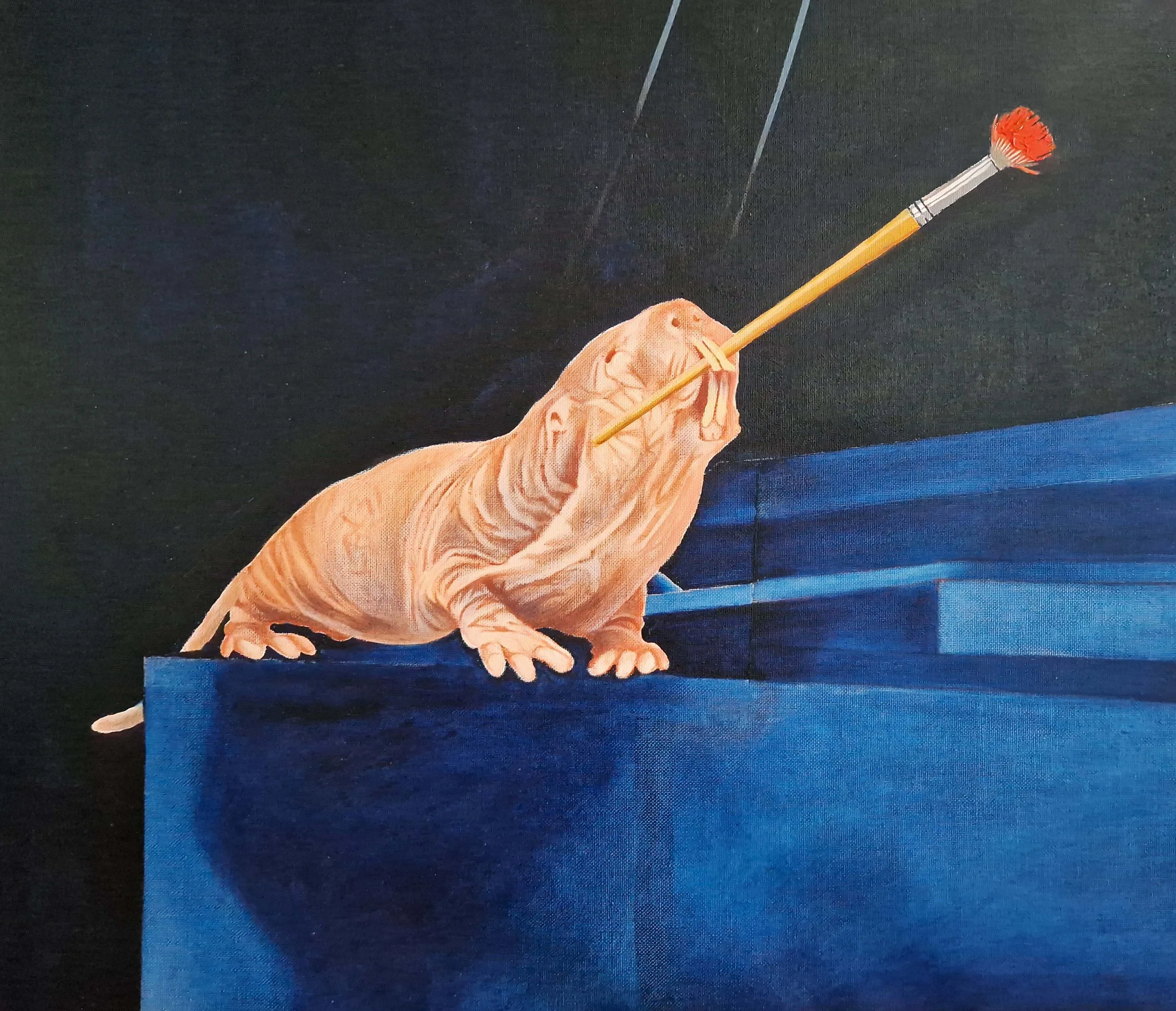
Resurrection of Light (detail), oil painting on canvas, 150x200 cm, 2026 © Nataraj von Allmen
You reference the idea that painting can make the absent present and give the dead a second life. What do you believe painting can reveal or restore that other forms of expression cannot?
For me, painting has a special ability: It doesn't just describe or illustrate the world; it makes something present again. A photograph captures a moment, language explains, music unfolds over time. Painting, on the other hand, creates presence. It invites us to encounter a being or a moment that no longer exists, and yet stands before us. In "Resurrection of Light," the return of the dead cephalopagus is not primarily about biology or fantasy. It's about transformation. Death is not erased, but rather transferred into another state where memory, light, and imagination merge inextricably. Painting can endure these contradictions without resolving them. It allows life and death, beauty and decay, presence and absence to coexist in the same image. Perhaps this is what painting reveals better than any other medium: that reality is not limited to what physically exists. A painted image can become a place where memory takes shape, where loss becomes visible, and the invisible is given a face. In this sense, every painting is a silent act of rebirth.
Lastly, looking ahead, what themes, ideas, or new projects are you currently exploring in your practice?
This autumn, my wife and I will be attending an abstract painting workshop on the island of Filicudi in northern Sicily. I am writing a play about monster robots and humans, so my next painting will explore the coexistence of robots and humans. The opportunity to exhibit at the Arsenale in Venice and connect with other artists and art lovers from around the world was an extraordinary experience that has whetted my appetite for more. Many thanks to the Al-Tiba9 gallery for the invitation to be featured in the next art magazine.
Artist’s Talk
Al-Tiba9 Interviews is a curated promotional platform that offers artists the opportunity to articulate their vision and engage with our diverse international readership through insightful, published dialogues. Conducted by Mohamed Benhadj, founder and curator of Al-Tiba9, these interviews spotlight the artists’ creative journeys and introduce their work to the global contemporary art scene.
Through our extensive network of museums, galleries, art professionals, collectors, and art enthusiasts worldwide, Al-Tiba9 Interviews provides a meaningful stage for artists to expand their reach and strengthen their presence in the international art discourse.



Nataraj von Allmen is a painter based in Switzerland. Often taking photographic material as a starting point, he weaves together landscapes, mythological archetypes, Christian symbolism, and contemporary socio-political themes into complex paintings. Oscillating between figuration and abstraction, his work investigates transformation, collective memory, and the human condition.