

10 Questions with Daniela Miranda – Antüpewma Rülkelme Mella
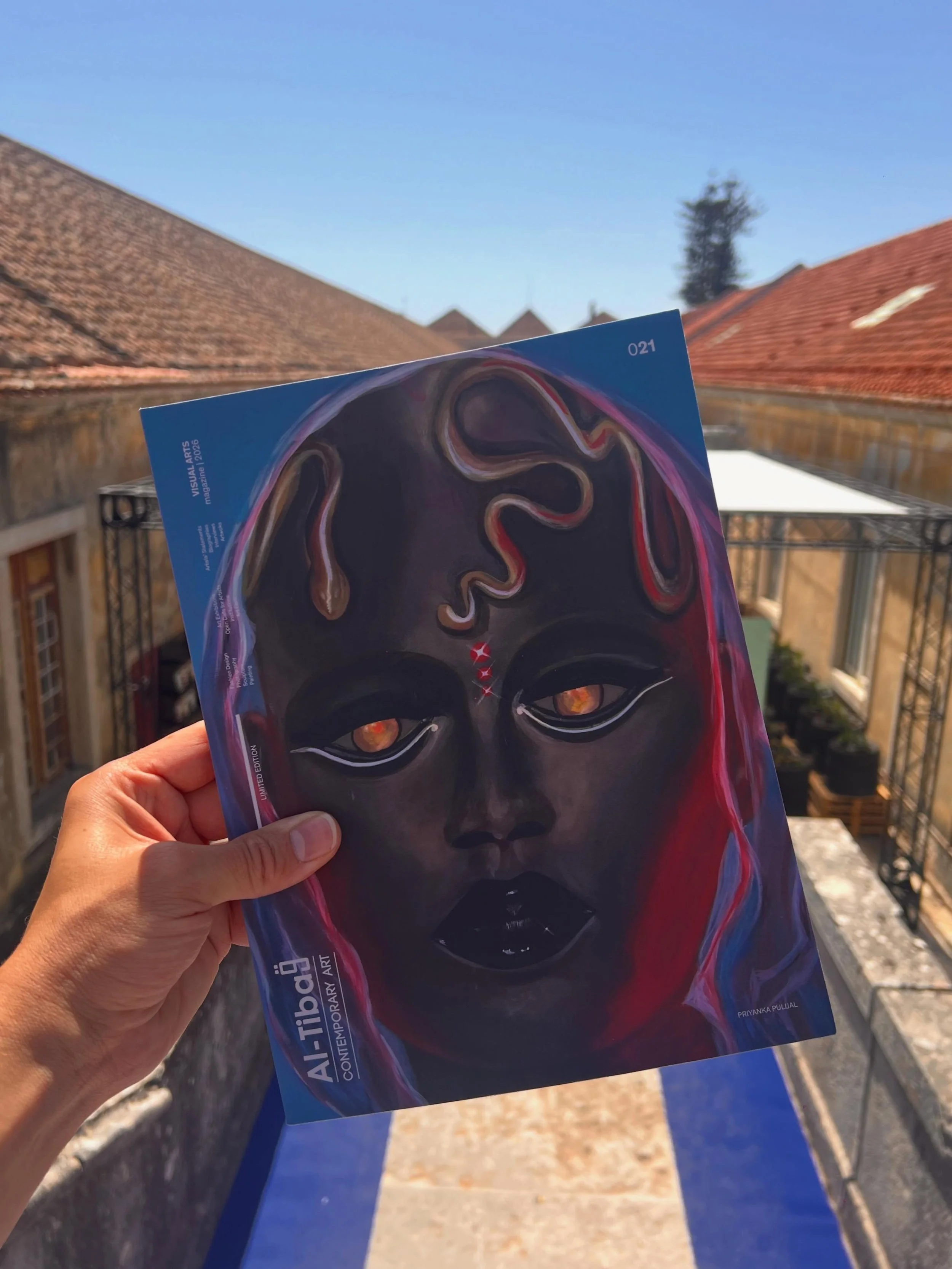
Al-Tiba9 Art Magazine ISSUE21 | Featured Artist
Daniela Miranda (Antüpewma Rülkelme Mella) is a photographer, ceremonialist, and cultural storyteller rooted in her Mapuche lineage. She is the Director of Narrative & Creativity at the Naku Foundation, working to protect Indigenous territory and uplift Sapara voices through photography, film, and story. Her practice weaves ancestral memory, visual ritual, and cultural preservation. She created Real Beauty: Uncovered, a national portrait project exhibited across museums and universities and honoured at the White House for its impact on representation and community healing. Her work evolved into Antü, an intimate photography ceremony rooted in cacao and self-witnessing. She co-produced Cacao + Climate Change, screened at NYU, FIT, Pratt, and Hardwick University. Her current project, Whispers of the Amazon, is an ongoing visual archive of Sapara cosmology, feminine resilience, and the fight to protect one of the world’s most threatened forests.
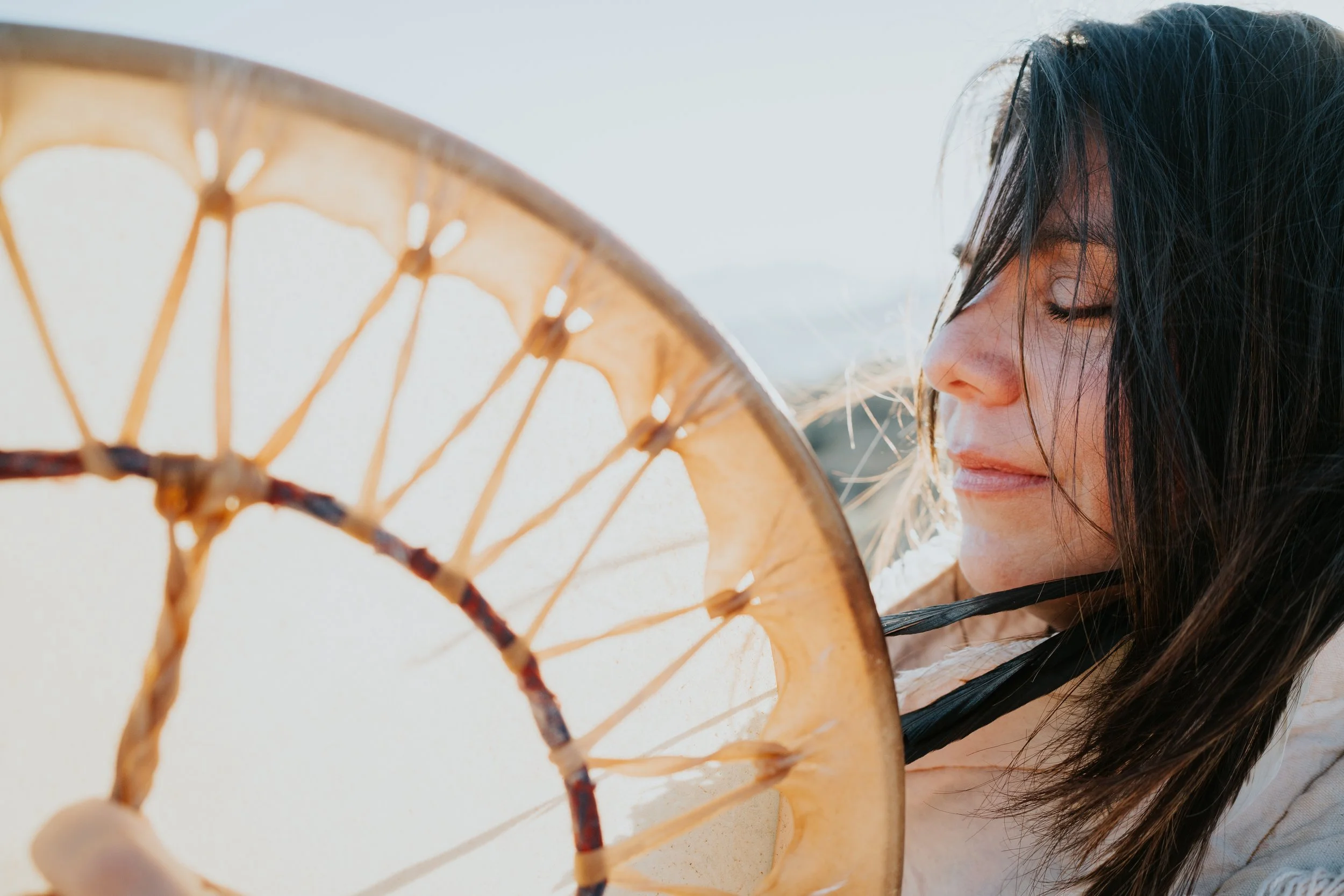
Daniela Miranda – Antüpewma Rülkelme Mella - Portrait
Whispers of the Amazon | Project Statement
Whispers of the Amazon is a ceremonial act of remembrance, an offering to the Sapara Nation, whose language and ancestral knowledge stand on the edge of disappearance. Rooted in collaboration with Sapara spiritual leader Manari Ushigua, this work carries the stories of his people through image, sound, and silence. Guided by my Mapuche lineage and invited into Sapara territory, I hold this project as a shared responsibility carried with consent, reciprocity, and respect. I approach photography as a healing practice, a way to remember, honour, and bridge worlds. Each portrait and landscape becomes a site of prayer, where witnessing replaces extraction and art becomes ceremony. With fewer than 700 Sapara people remaining and only two fluent elders, their cosmology faces an urgent threat. These images remind us that what is vanishing can still be protected, if we learn to listen. Whispers of the Amazon invites viewers into this listening and into the shared responsibility to protect those who continue to live in a sacred relationship with the land.
We See You Too, photography, 2025 © Daniela Miranda – Antüpewma Rülkelme Mella
AL-TIBA9 ART MAGAZINE ISSUE21

DISCOVER THE INTERNATIONAL ART SCENE WITH AL-TIBA9
LIMITED EDITION | Shipping worldwide.
Premium museum art paper.
Printed in London.
Grab 3 or more prints and get your FREE digital magazine.

Digital Magazine - Available SOON…
INTERVIEW
Your work is deeply rooted in your Mapuche lineage. How has your cultural background shaped the way you approach photography and storytelling today?
It shapes everything; it’s the foundation of my relationship to my work and how I bring story into being. From how I move through a room, to how I listen and connect with people, energy, and space, to how I show up before the camera is even present. I don’t experience my lineage as something separate from my practice; it is my practice. The Mapuche worldview shares that everything is alive and in relationship, that the ancestors are always present. So when I lift a camera, I’m entering into a reciprocal relationship that was already in motion before I arrived.
The essence of reciprocity is at the centre of everything for me. It shapes how I build relationships with communities, how I follow the lead of the people I work with, and what can be shared versus what belongs only to them. It also informs how I move through Indigenous territories and the relationships that emerge with each community.
The deeper I go in reclaiming my lineage, the more I understand that the way I’ve shown up in this sacred work was never something I developed. It has always been part of who I am.

The Heart Remembers, photography, 2025 © Daniela Miranda – Antüpewma Rülkelme Mella
You describe yourself not only as a photographer but also as a ceremonialist and cultural storyteller. How do these roles intersect within your artistic practice?
Honestly, I don’t experience them as separate roles that intersect. They feel like the same river moving through different terrain. When I’m behind the camera, I’m already in a ceremonial relationship with what’s coming through the lens and the environment around me. The story begins to shape itself, and I become a conduit, curating what needs to come through and be told. I try to carry the integrity of all of it, the image (the moment), the ritual, and the narrative. It’s in this space of weaving that the relationship creates the conditions for something true to emerge.
What I know is that none of it works without a relational foundation. Before I ever raise a camera, I’m tending something, trust, presence, deep listening. That preparation is as much a part of my practice as anything that gets captured, written, or shared.
Many of your projects emerge through collaboration and community relationships. How do you build trust and reciprocity when working within Indigenous territories and shared cultural spaces?
Slowly. That is the only honest answer. Trust isn’t built within a project timeline. My collaboration with Manari Ushigua and the Sapara Nation spans years of relationship before a single image was made for Whispers of the Amazon. I traveled. I listened. I participated in ways that had nothing to do with my camera. I showed up when there was nothing to document. That consistency is what builds the kind of trust that allows sacred things to be shared.
Reciprocity means the community holds real power over how their story is told and used. The Naku Foundation’s model of 50% community-led proceeds isn’t just a policy; it’s a value made tangible. The images belong to the relationship, not to my portfolio.

Keeper of the Old Fire, photography, 2025 © Daniela Miranda – Antüpewma Rülkelme Mella

She Who Held the Stories (Manari’s mother), photography, 2025 © Daniela Miranda – Antüpewma Rülkelme Mella
Your current project, Whispers of the Amazon, is described as a ceremonial act of remembrance. How did this project begin, and how has it transformed you personally and artistically?
It began with a relationship. Years of slowly building trust, of Manari knowing me and me knowing him, of doing ceremony together, of being present in ways that had nothing to do with photography or documenting. That foundation is what made everything else possible.
Manari Ushigua is the spiritual leader of the Sapara Nation, a people whose oral traditions and language were recognised by UNESCO in 2001 as a Masterpiece of the Intangible Cultural Heritage of Humanity. Today, fewer than 700 people remain, and only a handful of elders are still fluent in the ancestral tongue. His vision for his people is rooted in the understanding that the Sapara carry within their oral tradition a body of knowledge the world urgently needs: the dreams, the plant wisdom, the cosmovision.
When he eventually invited me to photograph the community, it wasn’t simply about him choosing me, even though he did. It was about finding someone who could hold and share the story in the way he and the community envisioned it. Because it is not my story to tell. It never was. I am the one holding the camera, but the story belongs to them. What I didn’t anticipate was how much the rainforest would witness me in return.
I have stood in a primary forest untouched by extractive industry and felt something I can only describe as grief mixed with memory, a cellular recognition of what we have lost elsewhere, and what we are still losing. That feeling changed everything about how I work. I stopped trying to make beautiful images. I started trying to make authentic ones, true in the sense that they carry the weight of what is actually at present, not just the beauty of the surface. Artistically, this project broke me open and rebuilt me with more room inside.
Photography in your practice moves away from documentation toward ritual and witnessing. What does it mean, for you, to create an image as an act of ceremony rather than observation?
Observation keeps you at a distance. The ceremony asks you to enter into a relationship. For me, creating an image as a ceremony means I’m not outside of what’s unfolding, I’m inside of it, in a reciprocal relationship with it. The image becomes a thread of that weaving, not a document of what I saw.
In practice, this means I prepare. I arrive in prayer before physically arriving, in stillness, or in conversation with what I’m about to photograph. I pay attention to what is being asked; there are moments that need to be witnessed without being captured, and I honour that. Not everything is meant to become an image.
The work isn’t about producing something. It’s about being in the right relationship with the people, the space, the moment, and what is moving through it. The image is simply what remains when that relationship is held with integrity.
Some of the most important moments of my work in the Amazon have not been photographed because they asked for a witness without capture. When we are sitting in a ceremony together, within hours set apart from ordinary time and held as sacred, the camera stays down. You don’t reach for a camera in those moments any more than you would in prayer. You are there to receive, to be present, not to record.
What happens in the circle stays in the circle. The image that emerges from the ceremony is not mine. It belongs to the forces that made it possible.
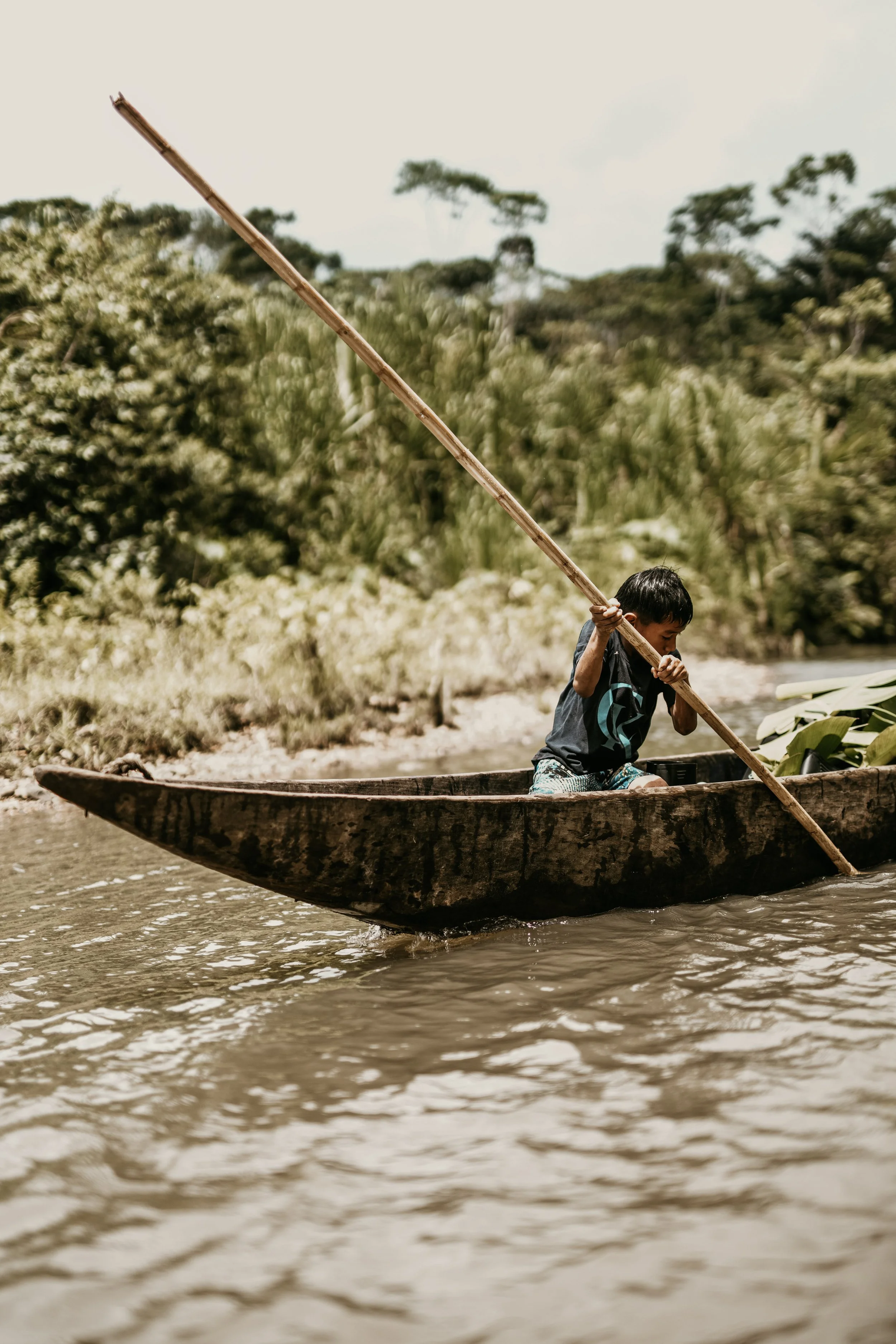
The River Teaches, photography, 2025 © Daniela Miranda – Antüpewma Rülkelme Mella
Across your work, themes of ancestral memory, protection of land, and feminine resilience recur. What messages or conversations do you hope these images open for audiences unfamiliar with these realities?
I hope they open a door inside the viewer, not just a window into someone else’s world. Every human being has ancestors. The themes you name aren’t distant; they’re lived. They exist in relationship, in memory, in the ways people continue to hold and protect what has been passed down to them. Every human being comes from a land that shaped them, even if they’ve been separated from it. My hope is that the images meet the viewer in a place that feels familiar before it feels understood, something felt before it is explained.
I want someone standing in front of a print from Whispers of the Amazon to feel, even for a moment, the weight of what is disappearing, and, in the same breath, the aliveness of what is still here. That space and connection are where something can shift. If an image can open that kind of awareness, even for a moment, it has done its work.
Projects like Real Beauty: Uncovered and Antü engage healing and self-witnessing in different ways. How do you see the relationship between personal healing and collective healing in your practice?
I don’t experience them as separate. What I’ve come to understand through this work is that the personal and the collective are always in relationship.
Real Beauty: Uncovered began with a simple question: What would you see if you looked at yourself without the stories you’ve been told? Over two thousand people stepped in front of my camera to answer that. What I witnessed, again and again, was that the moment someone truly saw themselves, it didn’t stay personal. It opened into something larger: a recognition of the grief and dignity we carry in our bodies, around worth and belonging.
Antü moves even deeper into that space. In Mapudungun, the language of the Mapuche people, Antü means sun, light, wisdom. Each session begins in ceremony with cacao, with intention, with listening for what wants to be seen in that person in that moment. We sit together before the camera ever comes out. By the time we begin, the photograph is almost already there. It becomes a record not of how someone looks, but of who they are when they stop performing and begin remembering.
What I see is that this kind of self-witnessing doesn’t stay contained. It moves outward into families, into relationships, into community. Personal healing ripples. It always does. My work lives at that threshold, where one person’s remembering becomes something shared.

He who shares the joy, photography, 2025 © Daniela Miranda – Antüpewma Rülkelme Mella
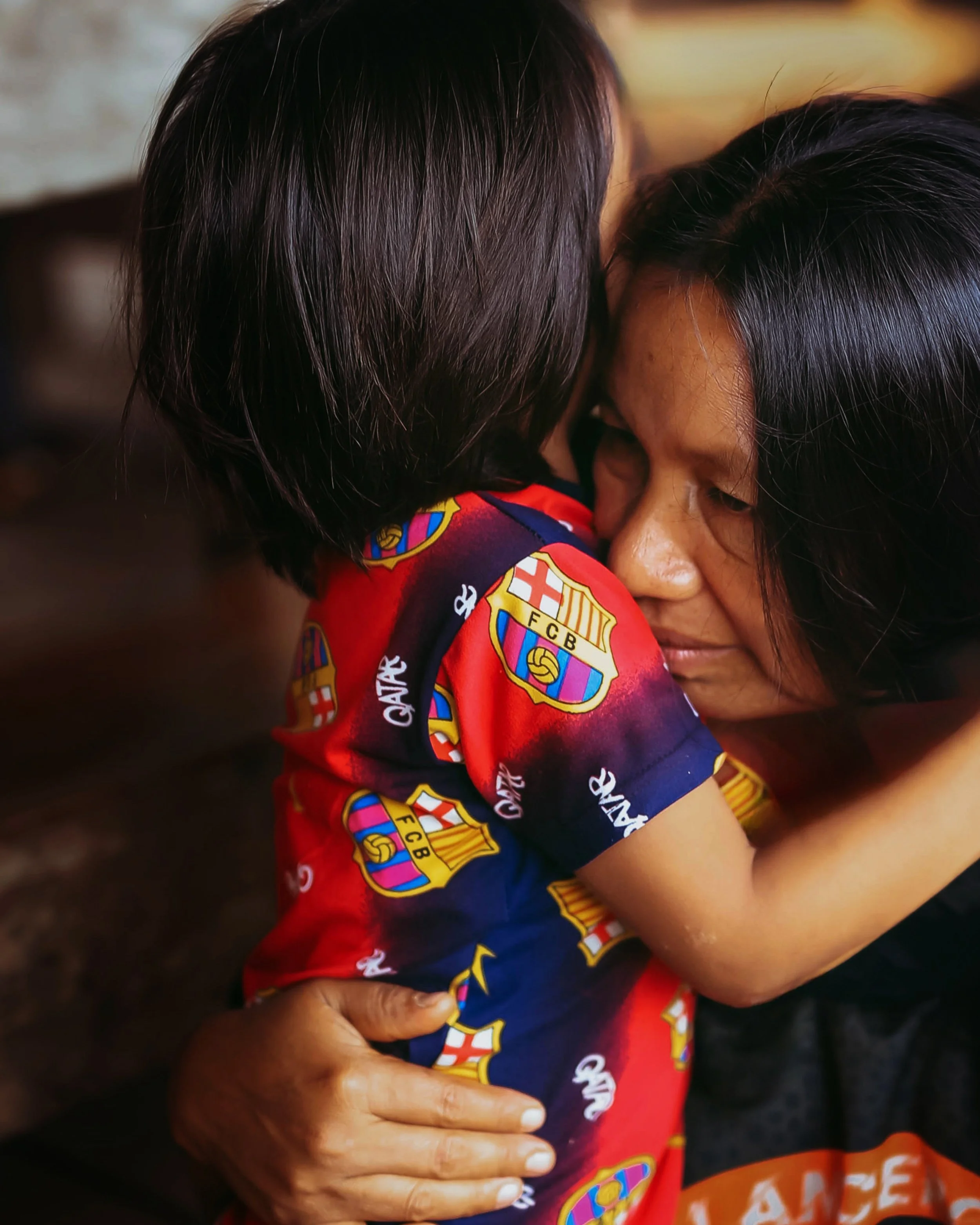
The Embrace, photography, 2025 © Daniela Miranda – Antüpewma Rülkelme Mella
Your work has been exhibited in museums, universities, and international contexts. How have audiences responded, and what kind of emotional or ethical response do you hope viewers carry with them afterwards?
What moves me most is when people recognise something of themselves in the images. Not because they share the same culture or story, but because something essential is reflected back to them. I’ve witnessed that across very different audiences: engineers, teenagers, artists, and academics. Something in the work meets something in them they didn’t yet have language for.
Sometimes there are tears, and I’ve learned to understand them. It isn’t sadness alone, it’s recognition. One moment that stays with me occurred during a university lecture when my work was on display. A student looked at a photograph of pottery and asked how old it was. She thought it had to be hundreds of years old. I told her it was made the month before. The room shifted. That’s what I hope the work can do: collapse the distance between what is assumed to be ancient and what is still living, present, and under threat.
What the Sapara are living, what Indigenous communities across the Americas are protecting and fighting for, is happening now. And what is at stake can still be changed. I want people to leave with that awareness. To walk back into their lives carrying a different question, not what happened to them, but what are we part of right now, and what are we still in time to protect?
As your projects often exist between art, activism, and cultural preservation, how do you navigate responsibility toward the communities whose stories you help share?
By staying in a relationship long after the project ends. Responsibility isn’t something that closes when an exhibition does. It’s ongoing. I serve as Director of Narrative and Creativity for the Naku Foundation, the Sapara’s own foundation, which means my commitment to the community is not project-based. It’s part of my daily life. I also have a goddaughter in the community. The relationship is personal in the deepest sense of that word. Just a few months ago, the Sapara faced a serious health crisis. I was in communication throughout, helping coordinate relief efforts, sending funds, and making sure the right people understood what was happening. That wasn’t something I did as an artist. It was something I did as someone whose life is genuinely woven into theirs.
The agreements that guide my work aren’t legal; they’re relational. They’re built over time, through trust, through consistency, through understanding that the community holds authority over their own story at all times. And I stay honest about what I don’t know. Working across cultures and languages means there will always be gaps in my understanding. The practice is to keep asking, to keep listening, and to be willing to be corrected. That humility and respect are the only way this work can be done with integrity.
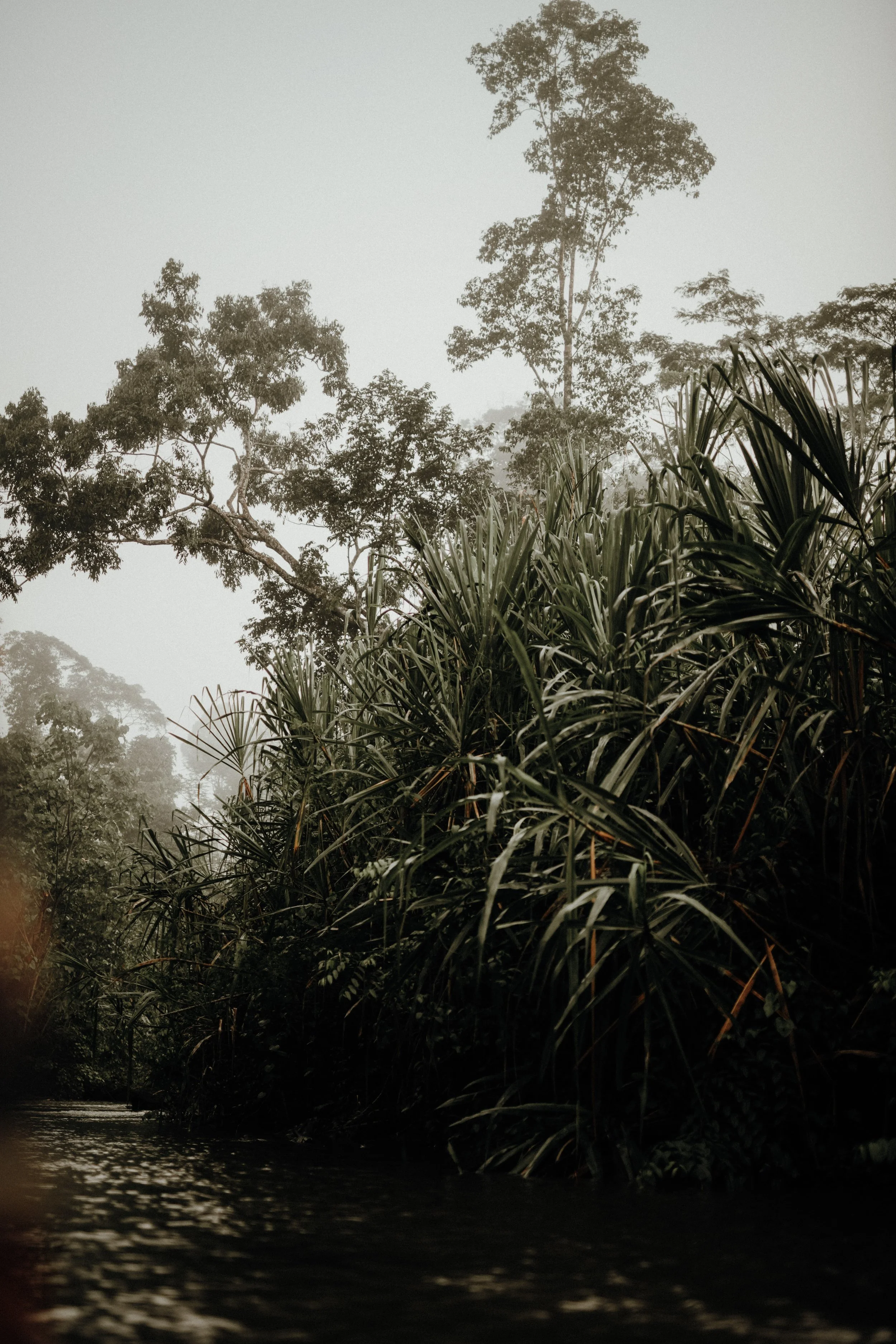
The Forest Breathes First, photography, 2025 © Daniela Miranda – Antüpewma Rülkelme Mella
Lastly, looking ahead, what future projects or long-term visions feel most urgent for you, both artistically and in terms of cultural and environmental impact?
I’m developing a mixed-media body of work that explores printing photographs onto llanchama, the bark paper of the Amazon, and then working directly onto the image through embroidery and weaving. Thread entering the photograph. Stitch by stitch, the ancestral feminine arts of the hand in conversation with the lens. Something shifts when you sew into an image when you add texture, time, and touch to something captured in a fraction of a second. It becomes alive in a different way. I want the medium to hold the story as much as the image does.
Beyond the still image, I’m also expanding into film. Some stories need movement. They need breath, sound, and time to be fully received. There’s a project in motion now that feels like it’s been waiting for me my whole life. We have not finalised the name yet. It’s a book series and documentaries co-created with Indigenous, award-winning writer Juliet Diaz. Documenting Indigenous cosmovisions across the world through image, story, and ceremony. We’re building something meant to outlast any single exhibition cycle, a living record that centres Indigenous voice as present and ongoing. To help shape a new language for what conservation means. The remembering of humans as nature. That the animals, the trees, the rivers are as alive as we are, and that we were never separate from them to begin with. The Sapara know this. The Mapuche know this. My work, in every form it takes, is in service of that remembering.
These things feel urgent because they are. We are in a moment where what is preserved and what is lost will be shaped by the stories we are willing to tell, and the ones we are willing to receive. I choose to keep telling.
Artist’s Talk
Al-Tiba9 Interviews is a curated promotional platform that offers artists the opportunity to articulate their vision and engage with our diverse international readership through insightful, published dialogues. Conducted by Mohamed Benhadj, founder and curator of Al-Tiba9, these interviews spotlight the artists’ creative journeys and introduce their work to the global contemporary art scene.
Through our extensive network of museums, galleries, art professionals, collectors, and art enthusiasts worldwide, Al-Tiba9 Interviews provides a meaningful stage for artists to expand their reach and strengthen their presence in the international art discourse.




Shingo Ohta is a Japanese photographic artist based in Toyooka, Hyogo, near the Sea of Japan. After a long career in business and regional revitalization, he turned to photography as a primary artistic practice, developing an ongoing body of work centered on the sea as a living, volatile, and almost sacred force. His images transform waves, spray, light, and weather into abstract forms.