
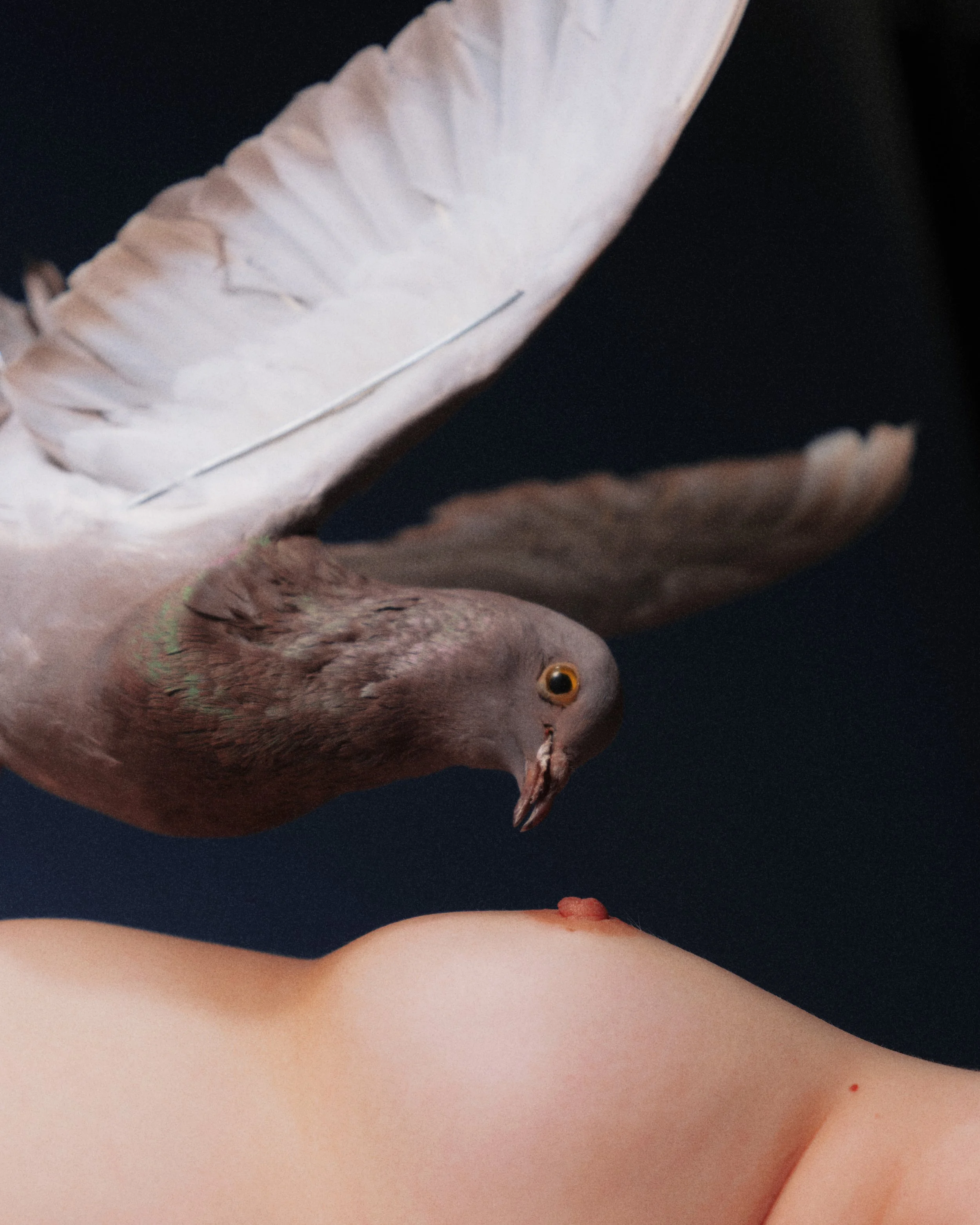
10 Questions with Yuchen Li
Yuchen Li, also known as Moxi, holds a BA in Visual Communication Design from Shanghai Jiao Tong University and an MA in Fashion Photography from the University of the Arts London, graduating with Distinction in both degrees.
Her photographic practice is concept-driven and rooted in personal experience and research into trauma psychology, exploring the relationships between emotional experience, memory, and the body. Drawing on the restrained aesthetics and imagery of Chinese literature, her work emphasises subtlety, ambiguity, and internal emotional tension as visual strategies, examining the latent pressures and traces embedded in everyday experience.
Her work has received multiple photography awards, including ITCD and the Beijing Fashion Week Photography Competition, and has been published in international media such as *Vogue* and *PAP Magazine*. She has exhibited in the UK and China at various artistic and cultural venues, including the Edinburgh Fringe and Three Rooms Gallery in London.
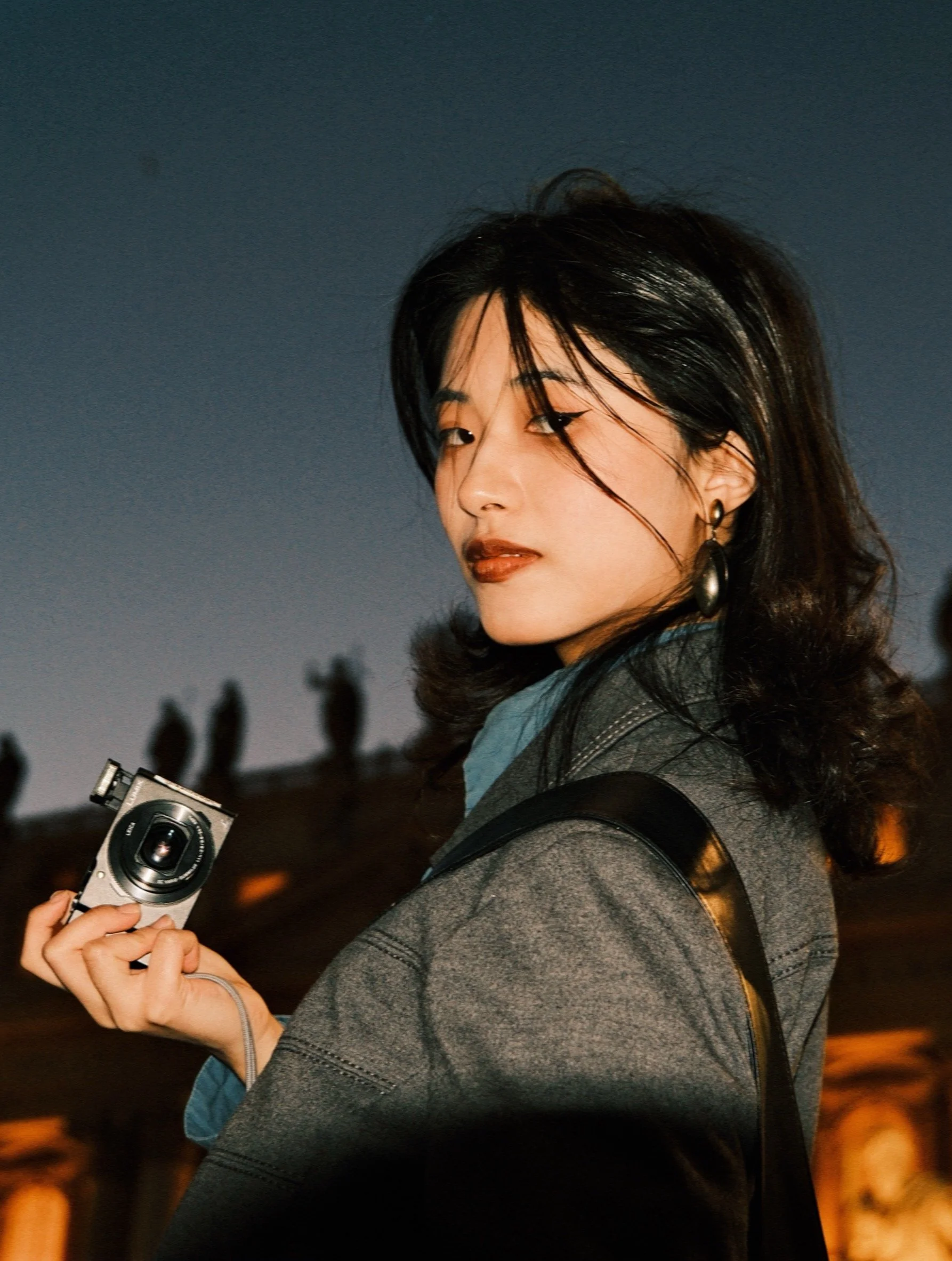
Yuchen Li - Portrait
ARTIST STATEMENT
Her photographic practice is concept-driven, rooted in personal experience as well as research into trauma psychology. She is interested in the relationships between emotional experience, memory, and the body.
As a Chinese artist, her approach is deeply influenced by the restrained aesthetics and imagistic traditions of Chinese literature. She often draws inspiration from its subtle metaphors and translates them into visual language. Rather than making direct statements, she hopes her work can function as a vessel, inviting viewers to enter and bring their own stories with them, allowing meaning to unfold gradually through the act of looking. Compared to documentary approaches, she is more drawn to creating a space of her own, one where viewers are invited to knock, pause, and linger.
Through a soft, feminine visual language, her work responds to the quiet pressures that have gently impressed themselves upon her. Photography becomes a way of observing, reconstructing, and rearticulating these traces, not to provide definitive answers, but to offer them a space in which they can be felt, held, and slowly understood through the rhythm of breathing.
Emotional Numbness 4 (misunderstanding), photography, 866x1117 mm, 2025 © Yuchen Li
INTERVIEW
Let’s start with your background. You studied visual communication design in Shanghai and later fashion photography in London. How did this shift in education influence the way you think about images today?
Visual Communication Design is fundamentally about designing for others. The discipline brings together advertising, marketing, and graphic design, and it trains you to think about how to communicate an idea that already exists. My role was often to act as a bridge between two points: Point A could be a product or a brand concept, and Point B is the public.
Through this education, I developed a strong ability to translate ideas clearly, effectively, and with intention. At the same time, I also grasped many picture editing software programs. It affects my way of developing the final picture.
Fashion photography, however, shifted my thinking in a very different way. My education in the UK encouraged me to turn inward and reflect on myself as a creator. In this context, I am not only the bridge, but also Point A. I am both the origin of the idea and the one responsible for how it is communicated. Within the course, we are constantly asked to consider what we truly want to express, and to reflect on our responsibility as photographers, both artistically and socially. This fundamentally changed the way I think about art and about myself.
Both educational experiences are deeply important to me. Together, they allow me to think rigorously about the concept behind an image, while also understanding how to develop, refine, and communicate it with clarity and depth.

Body, Photography, 841×1117 mm, 2025 © Yuchen Li
Photography became your main medium. What drew you to it as the best way to explore your inner world and personal experiences?
The images I create often carry a subtle sense of surrealism, without becoming fully abstract. They exist in a space where familiarity and strangeness coexist. Rooted in reality, they are shaped by my reflections on the small, often overlooked details of everyday life.
I am drawn to photography because of the sense of reality it offers, something I believe cannot be fully replaced by other artistic media. I want to bring my close observations of daily life into my images: the texture of skin, the folds of the body, the surfaces of nature, and the tangible sensations of the real world. While painting and sculpture, other media are also capable of creating realism, the cost and effort required are significantly higher. For me, realism itself is not the central pursuit. Rather than investing energy in recreating reality, I prefer to focus on expressing images that exist in my mind, images that differ from what can be directly observed in everyday life.
Your work is strongly concept-driven. Where does a project usually begin for you, with an emotion, a memory, a text, or an image?
Emotion is the main trigger. Thoughts and emotions all come from past memories. My thinking tends to unfold slowly, accumulating day by day rather than arriving all at once. When this accumulation becomes strong enough to stir an emotional response, the impulse to create emerges naturally. That is when the work begins. During the making process, I often rely on references from both text and images.
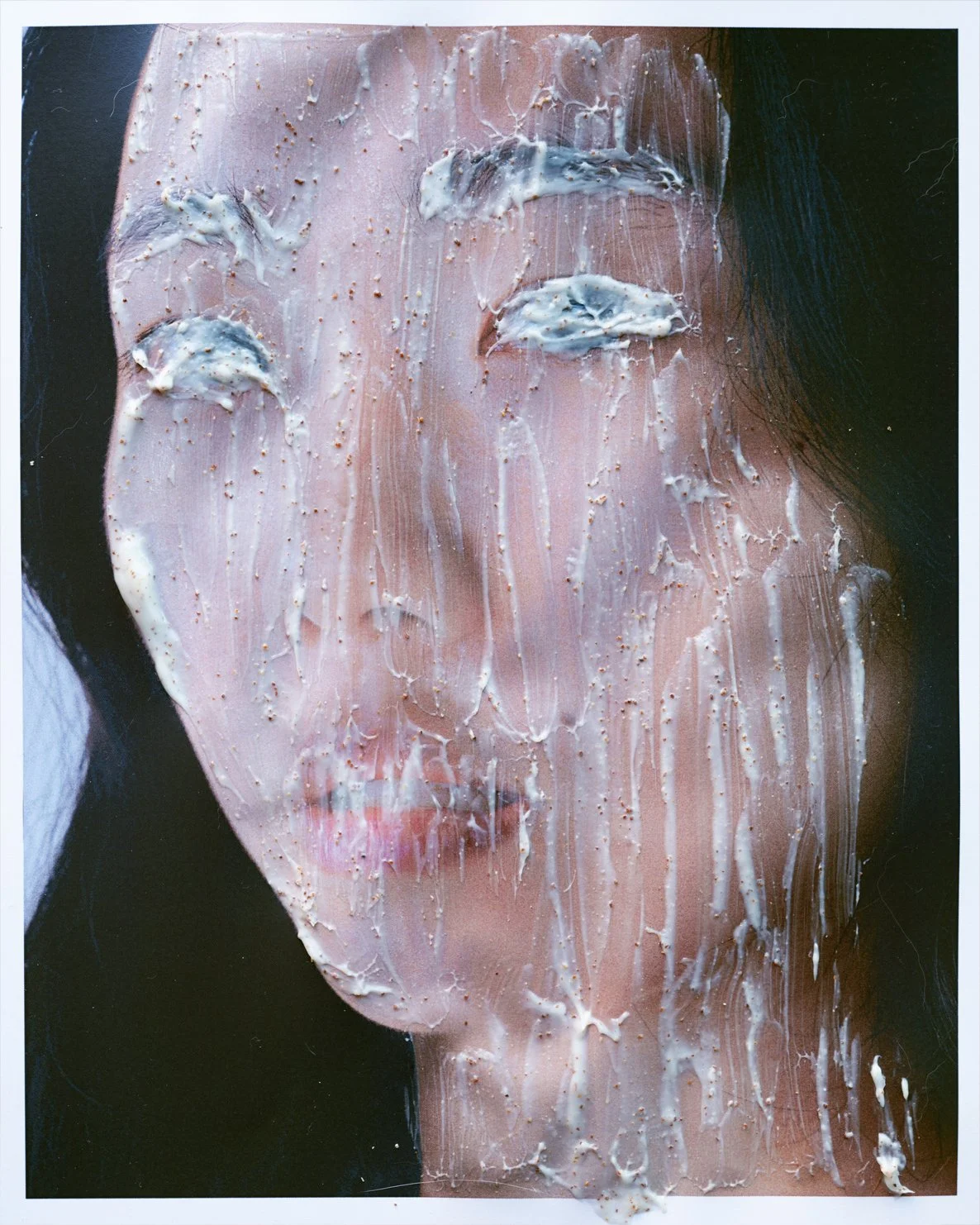
Emotional Numbness 2, photography, 866x1117 mm, 2025 © Yuchen Li
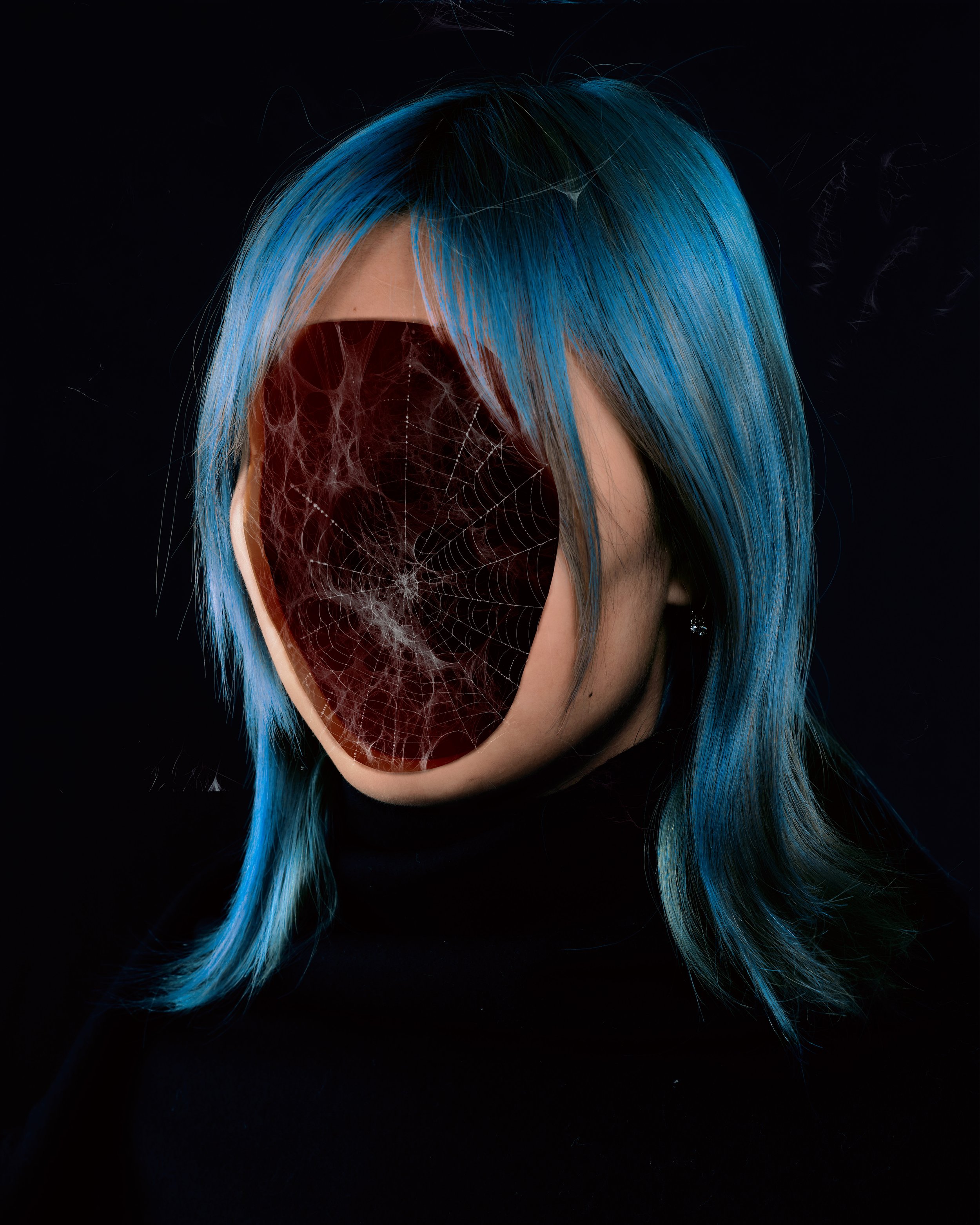
Emotional Numbness 3, photography, 866x1117 mm, 2025 © Yuchen Li
You often research trauma psychology alongside your personal experiences. How do you balance emotional sensitivity with artistic distance while working?
I always complete my thinking before beginning the artwork. By the time I start creating, I am no longer inside the trauma itself. I am able to analyse how it formed, how it unfolded, and to clearly name the emotions I experienced at the time. At that stage, I can approach the experience as a bystander and translate it with clarity.
If an experience is still emotionally overwhelming, I do not force it into my work. I go to the gym, give myself physical release, and allow time to create distance, letting intense emotions gradually settle. Time helps me think more clearly and washes away emotional extremes.
Although I am a highly emotional person, when I am making art, I find myself becoming very rational. This balance allows me to remain emotionally honest while maintaining the distance necessary to shape the work thoughtfully.
The body plays an important role in your images, even when it appears indirectly. What does the body represent for you in relation to memory and emotion?
Haha, this is a question I’m asked very often in interviews. To be honest, I’m still exploring why I’m so drawn to using the body in my work.
I think the main reason is that I am more interested in the body than in clothing. I’m drawn to its natural curves and the texture of skin. To me, the body represents a kind of purity. When it is present, any additional decoration feels excessive. It is beautiful, yet at the same time plain and uniform. It doesn’t demand attention, but quietly reveals its own beauty.
Another reason is that all emotions and thoughts are held within the body. They emerge from our inner world and are deeply personal to each individual. At the same time, the body functions as a universal artistic language. It can evoke a shared sense of vulnerability, something intimate and unspoken that resonates across cultures.
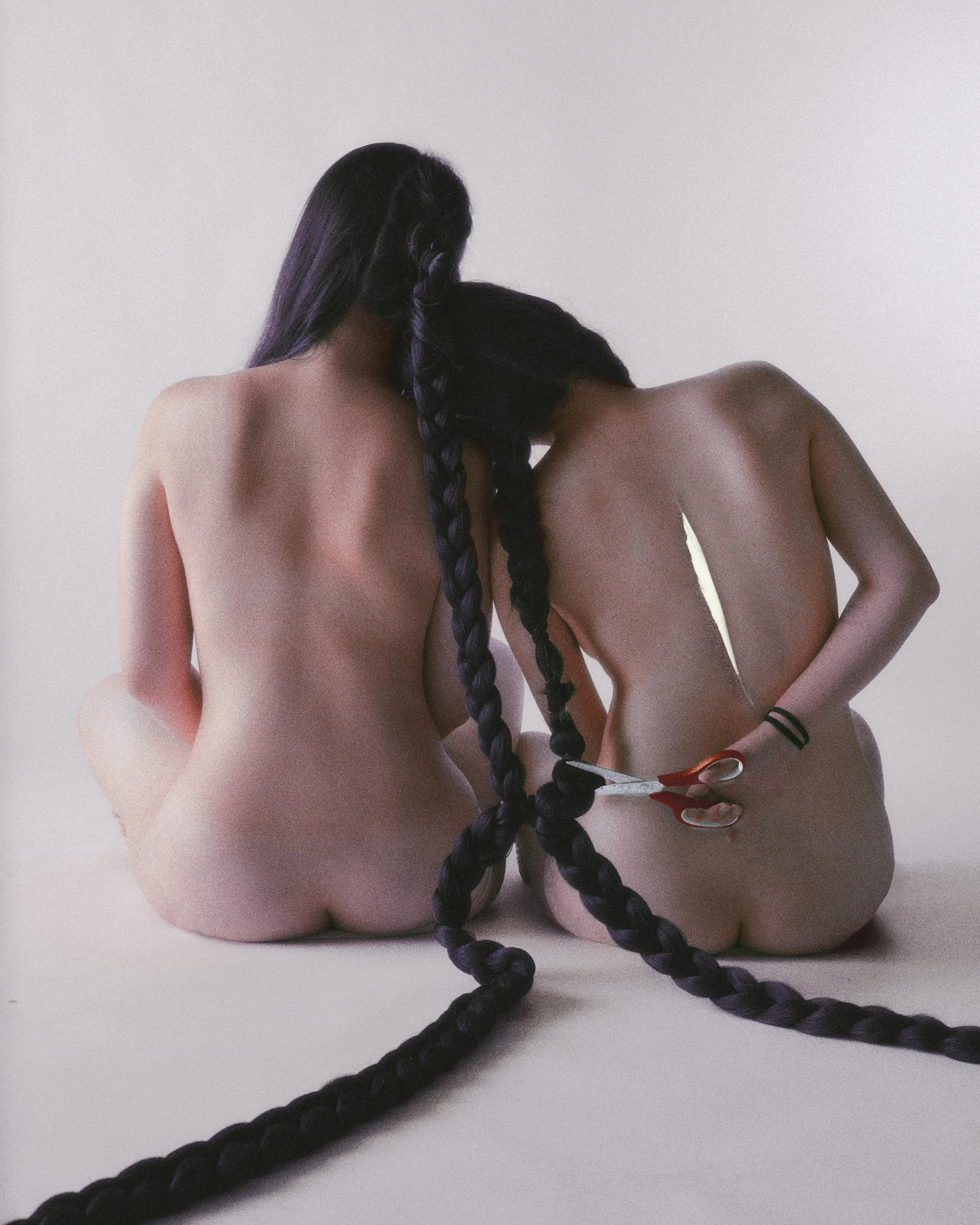
Emotional Numbness 5 (hurt), photography, 866x1117 mm, 2025 © Yuchen Li
Chinese literature has deeply influenced your visual language. Are there specific qualities or moods from literature that you consciously try to translate into your photographs?
What has influenced me most in Chinese literature is its use of metaphor. One of my favourite essayists, Zheng Jian, writes:
“I am tired. The dawn stepped out by my left foot is always caught by the dusk following my right.
Let’s not stay here.
Come back with me to when we were eighteen, hide beneath the azaleas on the NTU campus, and do not let fate find us.”
When you read these lines again and again, you begin to feel how much emotion is held within such beautiful metaphors. She uses ordinary, everyday imagery to describe an abstract state of being.
I don’t see this as a particular mood or temperament, but rather as a way of experiencing and observing life. Nothing in life is ever just itself. It doesn’t simply arrive and disappear. Everything carries delicate emotions within it.
Because of the metaphors I have learned from different writers, when I think about how to express an abstract emotion such as numbness, I cannot simply photograph a person with an expressionless face in a realistic scene. Instead, I think in images and sensations: the numbness lingered for a long time. Her emotions were trapped in a space thick with spider webs, struggling yet unable to move forward. The quiet horror evoked by the spider webs becomes inseparable from the fear I feel toward numbness itself.
Your images are subtle and restrained, leaving space for ambiguity. How important is it for you not to explain everything to the viewer?
It is very important to me because I want my artworks to function as containers. Once they are created, I hope to invite the audience to enter them with me, to collectively fill them with subtle, personal memories. Only through this process do I feel that the work becomes truly complete.
Your work has been widely published and awarded. How has this external recognition affected your confidence or direction as an artist, if at all?
I wouldn’t say that there have been many direct influences, but I have noticed that works which receive awards or are selected for publication often share a certain tendency. Simply expressing the individual is not enough. Artists are expected to carefully consider the relationship between their work and society. This requires me to think about how my work can reflect a particular aspect of society, a shared emotional state, or an issue worth paying attention to. This awareness may influence how I approach my future projects.

I bloom, therefore I am, photography, 841x1117mm, 2024 © Yuchen Li
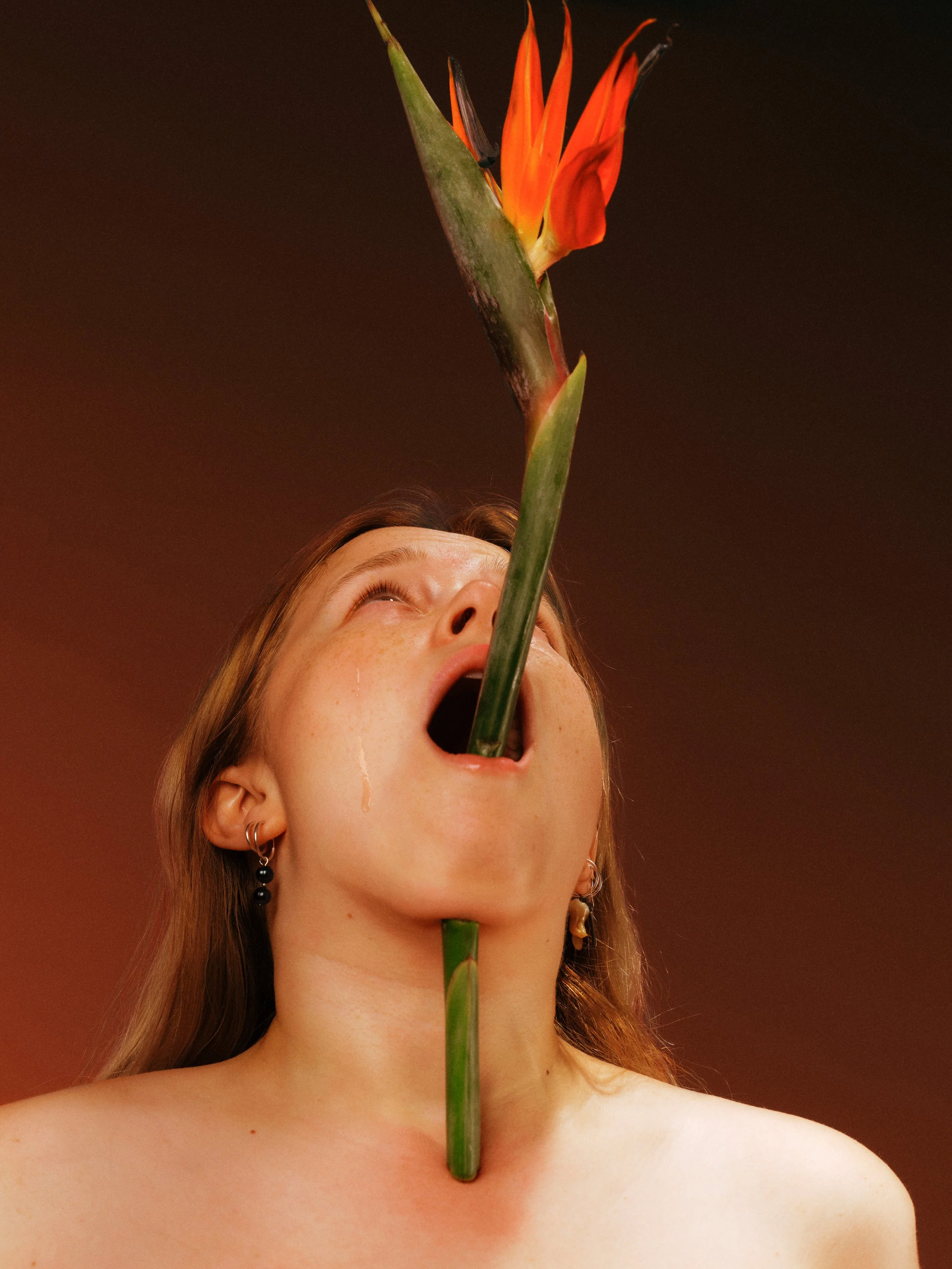
Emotional Numbness 6 (bloom), photography, 866x1117 mm, 2025 © Yuchen Li
When audiences encounter your work in exhibitions, what kind of emotional response or pace of viewing do you hope for?
Personally, I believe that when a photographic artwork truly moves someone, the emotional response often happens in the very first second of encountering it. For this reason, I think there is no single correct pace for viewing a work. Of course, if possible, I would encourage slower looking, especially with series, as it may allow viewers to sense more layers.
In terms of emotional response, I hope for something complex rather than singular. Ideally, I want a work to remind viewers of something they have long left in the corner of their mind, prompting further reflection, and perhaps even allowing them to reconcile with that memory.
Lastly, looking ahead, are there themes, mediums, or forms of storytelling you are interested in exploring next?
My interest in psychology is very strong, so my future themes may continue to revolve around psychological things. At the same time, it is also possible that a new theme will emerge when I have accumulated enough reflection on a past experience.
In terms of medium, I will most likely continue working with photography. I don’t feel that I have explored it to its fullest yet, and there is still a great deal of space for experimentation. I am also interested in developing interactive installations based on my photographic work. For now, however, my priority is to allow more people to become familiar with my existing work. As an artist, I believe it is necessary to learn how to market oneself.
Artist’s Talk
Al-Tiba9 Interviews is a curated promotional platform that offers artists the opportunity to articulate their vision and engage with our diverse international readership through insightful, published dialogues. Conducted by Mohamed Benhadj, founder and curator of Al-Tiba9, these interviews spotlight the artists’ creative journeys and introduce their work to the global contemporary art scene.
Through our extensive network of museums, galleries, art professionals, collectors, and art enthusiasts worldwide, Al-Tiba9 Interviews provides a meaningful stage for artists to expand their reach and strengthen their presence in the international art discourse.



Shingo Ohta is a Japanese photographic artist based in Toyooka, Hyogo, near the Sea of Japan. After a long career in business and regional revitalization, he turned to photography as a primary artistic practice, developing an ongoing body of work centered on the sea as a living, volatile, and almost sacred force. His images transform waves, spray, light, and weather into abstract forms.