
10 Questions with Tereza Jobová
Tereza Jobová is a Czech photographer working primarily with staged photography, alongside painting, collage, and poetry. She holds a master’s degree in Photography from Jan Evangelista Purkyně University in Ústí nad Labem, where she is currently pursuing a PhD in Visual Communication. Her doctoral research examines Contemporary Spiritual Art as a Response to the Crisis of the World. She is a member of the female photography collective Sisters in Photography. Her work has been presented in group and solo exhibitions in the Czech Republic and internationally, including the Yeast Photo Festival (Italy, 2023), Gallery X (Ireland, 2025), and Sex and Politics at the Bastille Design Center in Paris (2025). Her photographs were published in PHOTONEWS (2023) and the Czech–German bookmag N&N Noble Notes (2025). In 2025, she gave a lecture at the international doctoral conference Truth and Nature in History, Art and Thought at Charles University in Prague. Her artistic practice is informed by surrealism and horror, focusing on the unconscious, spirituality, and decadence.
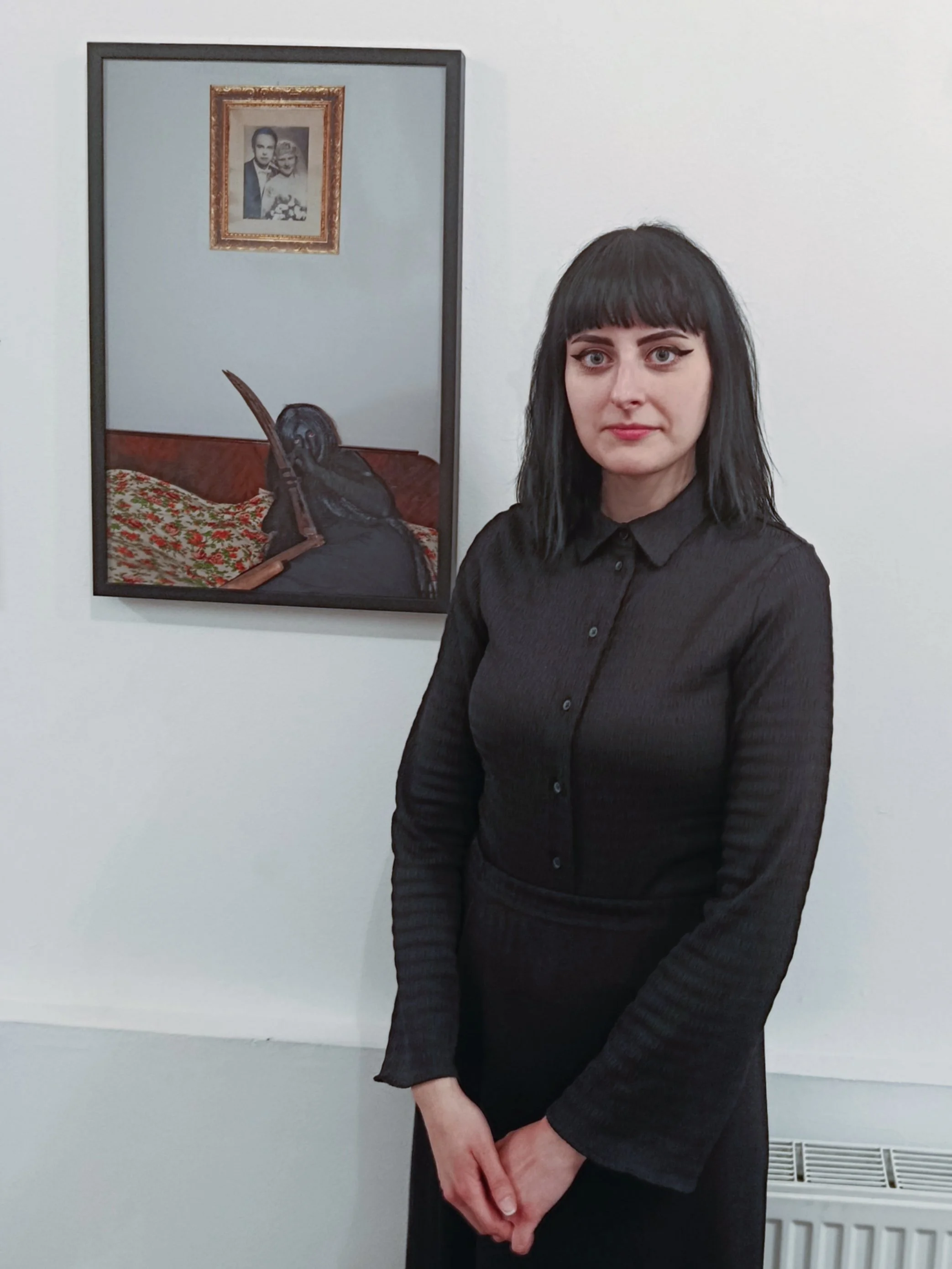
Tereza Jobová - Portrait
ARTIST STATEMENT
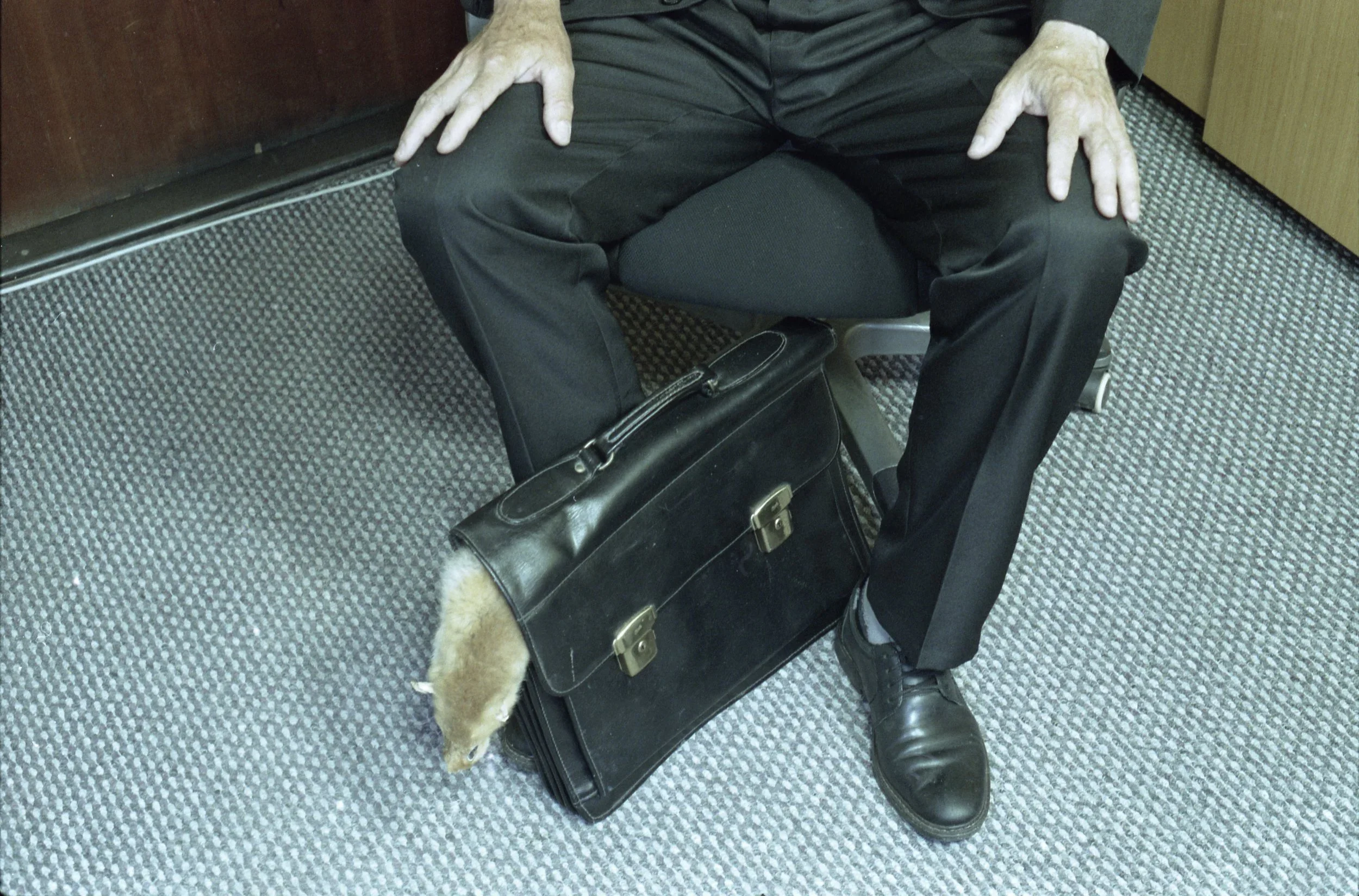
Jobová’s photographic series UNDERCURRENTS explores the hidden, wild, and unconscious forces that are still at work in our rational, civilized world, shaping us whether we want them to or not. Through visual metaphors of magical fetishes, rituals, and corporate shamans, she captures the tension between control and chaos, consciousness and unconsciousness. UNDERCURRENTS exposes the dark, hidden layers of human existence and the subconscious that inevitably assert themselves in everyday life. Informed by Julia Kristeva’s theory of abjection and resonating with Antonin Artaud’s concept of ritual and cruelty, UNDERCURRENTS reveals repressed elements that inevitably return to disrupt symbolic order, framing the unconscious as an active force that destabilizes the illusion of control.

Undercurrents, film photography, 80x50 cm, 2023 © Tereza Jobová
INTERVIEW
First, tell us a bit about your background and studies. You were trained in photography at Jan Evangelista Purkyně University. How did your time there shape your approach to staged photography?
Studying in the photography studio at the aforementioned university taught me not only how to physically create photography, but above all, how to think in terms of photography. You could say that studying there was a kind of training in thinking, perception, and observation for me. During my years of study, I also realized what my personal creative essence is, which always appears in my work; or rather, I began to discover what resonates with me, and that for me, creation is actually related to a certain obsession, which is probably why some motifs appear repeatedly in my photos; it's almost like my personal mythology. This obsession is key for me. Otherwise, my work would just be intellectual gymnastics.
Although I tried other approaches besides staged photography during my studies, I always ended up returning to it. It is very important for me to have control over the image, not necessarily 100%, of course, but it is about the most accurate realization of a concept in the material world, a bit like the Magician tarot card. Of course, I still have to respect the laws of the material world, unfortunately, but thanks to my studies, this "translation" has become increasingly precise.
You are currently pursuing a PhD in Visual Communication. How does your doctoral research on contemporary spiritual art influence your artistic practice?
In my research, I come across many interesting books, concepts, and artistic approaches, most of which I encounter completely by chance. And I like that, because you never know when something will suddenly motivate you to create; inspiration cannot be planned. I devoted myself to studying literary sources on spirituality, witchcraft, etc., even before my PhD studies. For example, I remember the book Prime Chaos: Adventures in Chaos Magic by Phil Hine, in which I discovered the band Radio Werewolf through the foreword. Another unexpected encounter. And thanks to that, I discovered Zeena Schreck and one of her interviews, where she mentions that David Lynch was inspired by Kenneth Anger. Although my research focuses on contemporary female artists working with the medium of photography, I am naturally interested in these "side-topics" as well. And sometimes, when I read something for my research, I get inspired to create another work; one such case is currently in progress.

Undercurrents, film photography, 80x50 cm, 2023 © Tereza Jobová
Speaking of your practice, you work across photography, painting, collage, and poetry. How do these different media interact within your artistic process?
I sometimes combine different media, but I've noticed that photography is often my starting point, both my own photos and ones I've found. I've incorporated them into collages many times, but I've also used them as a basis for my paintings. I enjoy incorporating elements characteristic of photography into my paintings, such as flash, which makes them more multimedia-like. I always photograph the reference for my paintings, so painting is also intrinsically linked to photography for me.
When I mentioned found visual material, I remembered that I once found two really thick and heavy books in an antique bookshop, which were two volumes of some kind of health encyclopedia. I wasn't so interested in the texts, but rather the illustrations, and there I saw a woman's back arched like a bow in a "hysterical fit," all kinds of skin diseases, infected eyes, and surreal-looking medical procedures. This inspired me to create several collages, and the discovered theme of what you might call medical art inspired me to create a painting. So for me, everything is connected to everything else, working on quite similar themes across different media.
And poetry. I used to write it a lot a few years ago, but not so much now. However, I enjoy using texts in the collages I mentioned, especially found texts. I enjoy looking for different possible meanings in them, and even a single sentence can inspire me to create. For example, in Kurt Seligmann's book The History of Magic, I read the sentence "There is something unreal about his figure; his legs and arms are grooved, showing no joints or muscles. The devil of Souillac is unnatural, as if to show that evil is against nature." Something immediately stirred in me, like when a QR code is scanned, and I had to make a collage.
Surrealism and horror seem to play an important role in your work. What draws you to these references as tools to explore the unconscious?
In art, I am primarily interested in extreme approaches, which does not necessarily mean provocative ones (on the contrary, blatant provocation tends to repel me), but rather repressed content, taboos, a kind of "astral mud," or whatever you want to call it, and it is precisely these extreme positions that I can touch upon through a surrealistic approach and horror. Surrealism is also intrinsically linked to magic, as evidenced, for example, by the excellent book Surrealism and the Occult by Nadia Choucha. Moreover, it goes perfectly hand in hand with the obsession I mentioned at the beginning; for example, for Czech filmmaker Jan Švankmajer, obsession is an important part of his surrealist work. Without obsession, Magritte would not have painted those veiled heads, and without obsession, Bellmer would not have photographed fragmented mannequin bodies.
And horror seems to me to be the perfect tool for exploring the Jungian Shadow. If I see something somewhere or work with something that evokes a strong emotional response in me for some reason, I focus on exploring that reason. It's like when you have a toothache, you keep poking the tooth with your tongue.

Undercurrents, film photography, 80x50 cm, 2023 © Tereza Jobová
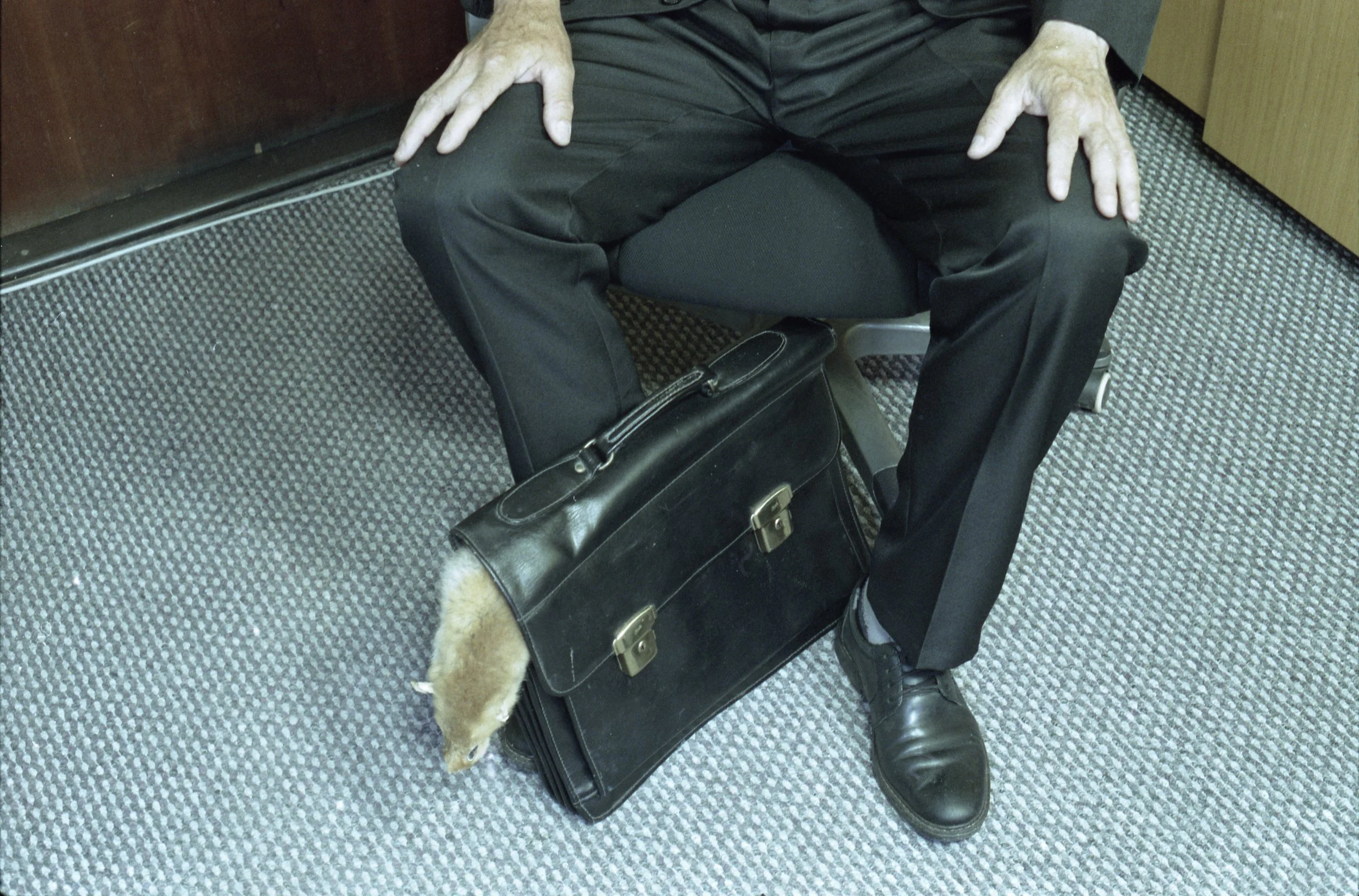
Undercurrents, film photography, 80x50 cm, 2023 © Tereza Jobová
Your series UNDERCURRENTS addresses the tension between control and chaos. What initially led you to explore this theme?
Before this series, I created a series called How to Control the Uncontrollable, which was my diploma thesis project. In it, I focused on visual metaphors for situations that humans, with their limited capabilities, cannot reach or influence, such as death or reversing the natural flow of time. And, for example, magic, divination, etc., are largely about the need for control, as Theodor Adorno argued in his Theses Against Occultism. So it's about an attempt to tame chaos and achieve control, which is, of course, only achievable to a certain extent. And when you mention the UNDERCURRENTS series, it's based on the corporate world, and belonging to a corporation is often a substitute for religion these days. Not to mention how meditation techniques, such as mindfulness, are used to increase work efficiency. In fact, corporations seem to me like one big tribe; there is something primal about it.
Spirituality, ritual, and abjection recur in your imagery. What kind of questions or reflections do you hope these elements provoke in the viewer?
Actually, it’s enough for me if I raise any questions and reflections at all, because I reckon that today’s viewer/gallery visitor is someone whose attention is difficult to capture and who is even more difficult to force to slow down. In my work, I deal with the intensity of inner states that cannot be rationalized or smoothed into socially acceptable forms. I draw on deep emotional memory from the space of home, body, and subconscious, where the desire for security mixes with the need for destruction and transformation. For me, an image is not a representation of reality, but a tool for survival, a ritual field in which sexuality, fear, faith, and identity intertwine in a single tension. I am attracted to borderline situations, archetypes, and symbols that activate the viewer's unconscious reactions and evoke either strong attraction or repulsion, nothing in between. My work moves between spirituality, decadence, and dark imagination; its structure constantly disintegrates and reassembles, just like identity itself. I believe in the image as a transformative act, as a space where wounds can be transformed into strength, chaos into order, and personal experience into collective myth. For me, creation is a way to give shape to the invisible and to disrupt rigid systems of thought, belief, and power through aesthetics. And I hope to convey at least some of these approaches/ideas to the viewer.

Undercurrents, film photography, 80x50 cm, 2023 © Tereza Jobová
Your work has been shown internationally, from Italy to Ireland and France. How have different cultural contexts shaped the reception of your work?
Someone once told me that my work is quite unusual in the local context and that it would resonate more in the West than, for example, here in Czechia, and so far, my experience has been that there has been more interest in it in Western Europe. For example, I really like Gallery X in Dublin, where I have exhibited twice so far, and I would definitely like to return there sometime, this gallery is key for me mainly because Steven Stapleton (from the experimental music project Nurse With Wound) has had several solo exhibitions there, and there was also a group exhibition in honor of John Balance from the band Coil, and I really like this music and this visual culture in general. Many industrial musicians have referred to works from art history in their work. But I've wandered off topic a bit. In any case, the artistic spirit of a place is important to me when I'm abroad.
In Paris, it was an honor for me to exhibit alongside Joel-Peter Witkin, Roger Ballen, and Laibach. Roger Ballen even came to the opening, but I was too shy to talk to him because he's such an artistic authority to me. But I hope that someday I'll have the opportunity to talk to him, thanks to exhibiting abroad. I just remembered his short documentary about the people he photographed, and one man in particular stuck in my mind: he catches rats, takes them home, and then releases them again. And this man has been doing this every day for maybe 20 years.
You are part of the female photography collective Sisters in Photography. What does working within a collective add to your individual practice?
The photography collective, or rather the Sisters in Photography photoclub, represents a safe platform for me where we can meet, share, help each other, be together, and even consult each other about our portfolios. After completing my master's degree, I no longer had the opportunity to regularly show the progress of my work to more people and get feedback from them, and among other things, I find this photoclub perfect for that. In addition, thanks to this, members can get opportunities that might not necessarily be so accessible to me on my own. And even though the work of some of the other members may be quite different, we sometimes touch on very similar topics, and sometimes smaller joint projects crystallize, such as my 2024 exhibition with photographer and fellow Sisters in Photography member Kateřina Sýsová called Corpus Luxuria, where we focused on representations of the female body in particular. Incidentally, that was where I exhibited my paintings for the first time.
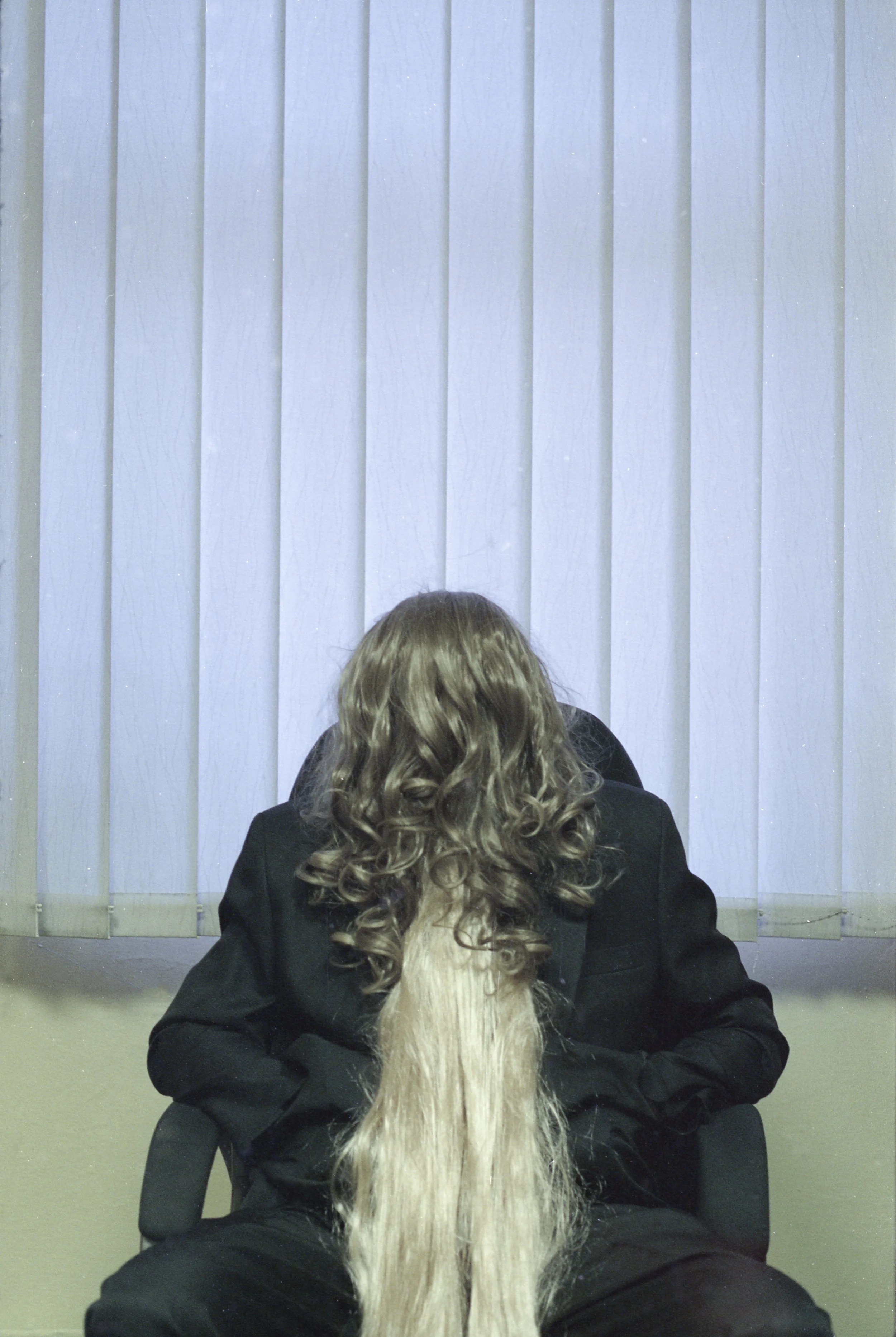
Undercurrents, film photography, 80x50 cm, 2023 © Tereza Jobová

Undercurrents, film photography, 80x50 cm, 2023 © Tereza Jobová
Your photographs have appeared in magazines and publications alongside exhibitions. How do you see the relationship between printed matter and photographic work?
Magazines, publications, and even exhibition catalogs are quite important to me because, unlike exhibitions, they are more permanent and can reach a wider audience, whereas exhibitions may require people to travel abroad. And it's also about the context, the works that my photographs will be included among. Moreover, as I mentioned about slowing down, it is precisely these printed publications that allow people to spend as much time with the images as they need.
Looking ahead, what themes, projects, or research directions are you interested in developing next?
Recently, a series has begun to take shape that I could characterize as "walking in someone's footsteps." For example, I read about Austin Osman Spare and Antonin Artaud, and based on my sense of their essence and their ideas, I took photos that are loosely based on their concepts and are a kind of tribute to them. Perhaps this is the beginning of a new series, where I would draw on authors/works/concepts that are close to my heart, which would of course have to be connected by a certain approach. But choosing who to focus on in these photographs will be more difficult, spontaneously, W. S. Burroughs, Genesis P-Orridge, Hans Bellmer, David Cronenberg, Diamanda Galás, Alejandro Jodorowsky, David Lynch, Alfred Kubin, Lautréamont and his Les Chants de Maldoror come to mind. There are so many. Getting to know their works is actually a bit like socializing with them for me.
And on top of that, I'm fascinated by medical art, prosthetic limbs, dentures, orthopedic aids, and anatomical models. For example, at the National Gallery in Dublin, I bought a book called The Anatomical Venus with female anatomical models, where, for example, in one of those perfect photographic illustrations, after removing the angelic female face, the brain, eyeballs, etc., are revealed. Or, for example, a scene from the movie Vienna Calling stuck in my mind, where a trembling hand with dentures bites into a piece of cake. That's roughly the path I want to take. And, of course, finish my thesis project.
Artist’s Talk
Al-Tiba9 Interviews is a curated promotional platform that offers artists the opportunity to articulate their vision and engage with our diverse international readership through insightful, published dialogues. Conducted by Mohamed Benhadj, founder and curator of Al-Tiba9, these interviews spotlight the artists’ creative journeys and introduce their work to the global contemporary art scene.
Through our extensive network of museums, galleries, art professionals, collectors, and art enthusiasts worldwide, Al-Tiba9 Interviews provides a meaningful stage for artists to expand their reach and strengthen their presence in the international art discourse.
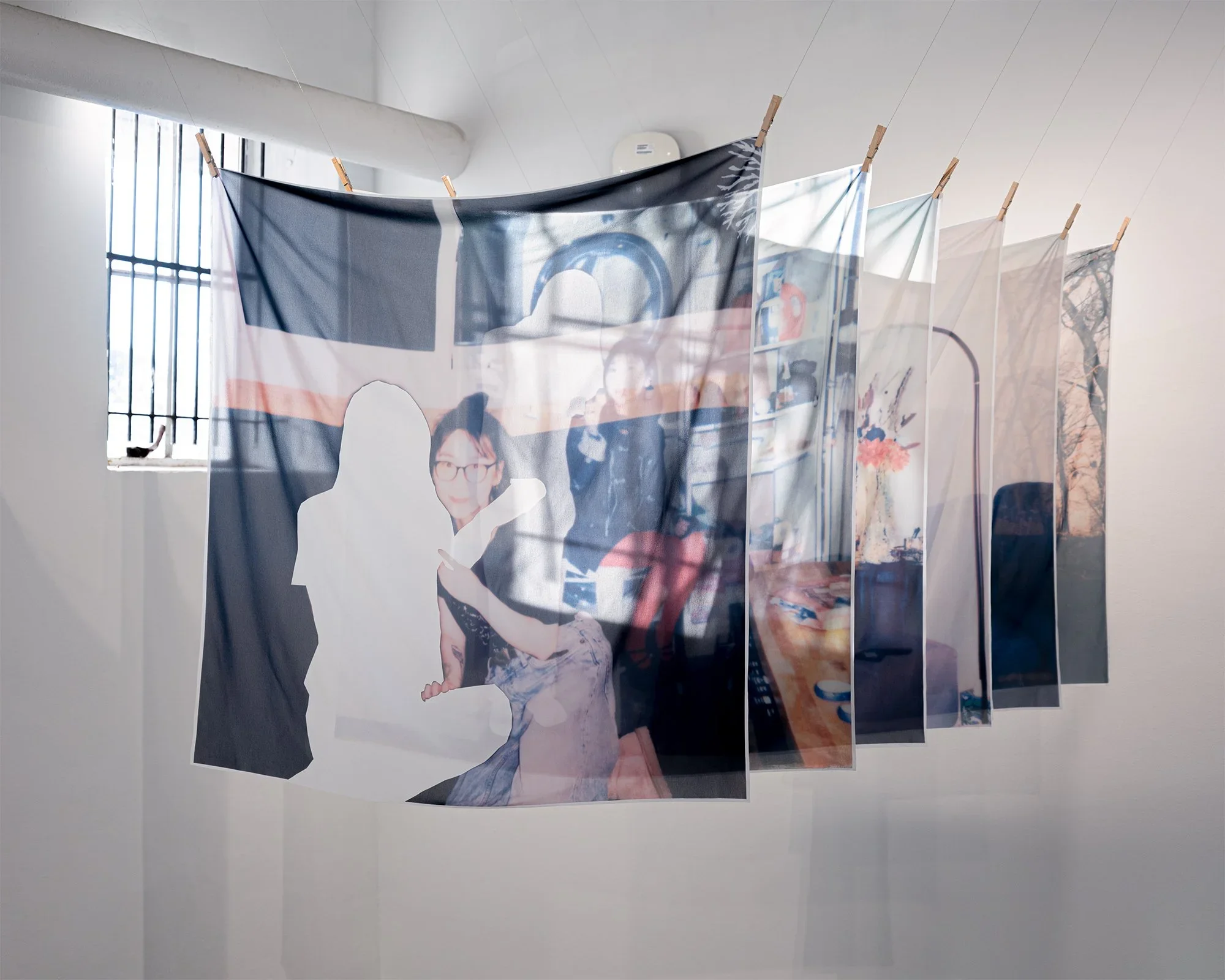

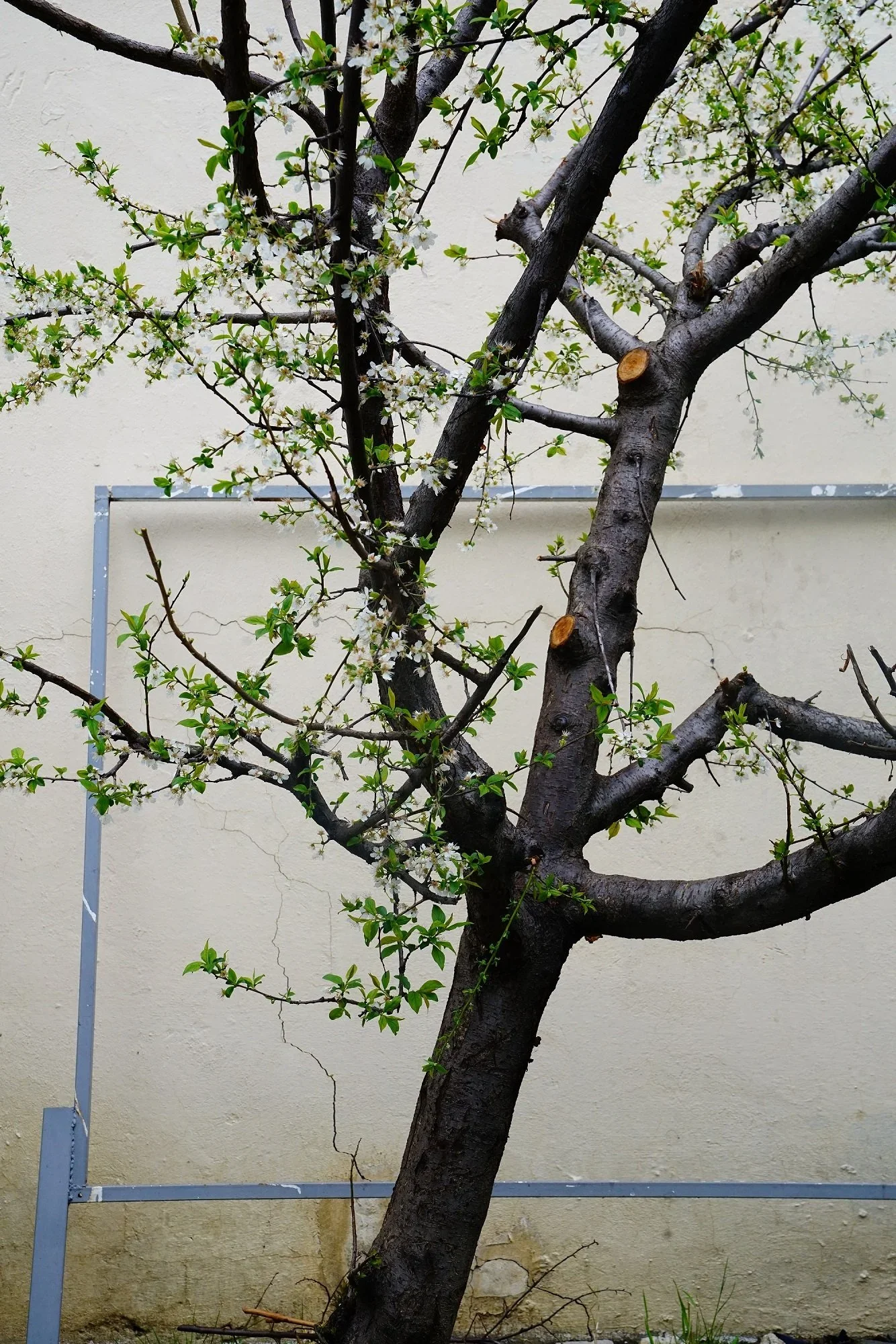


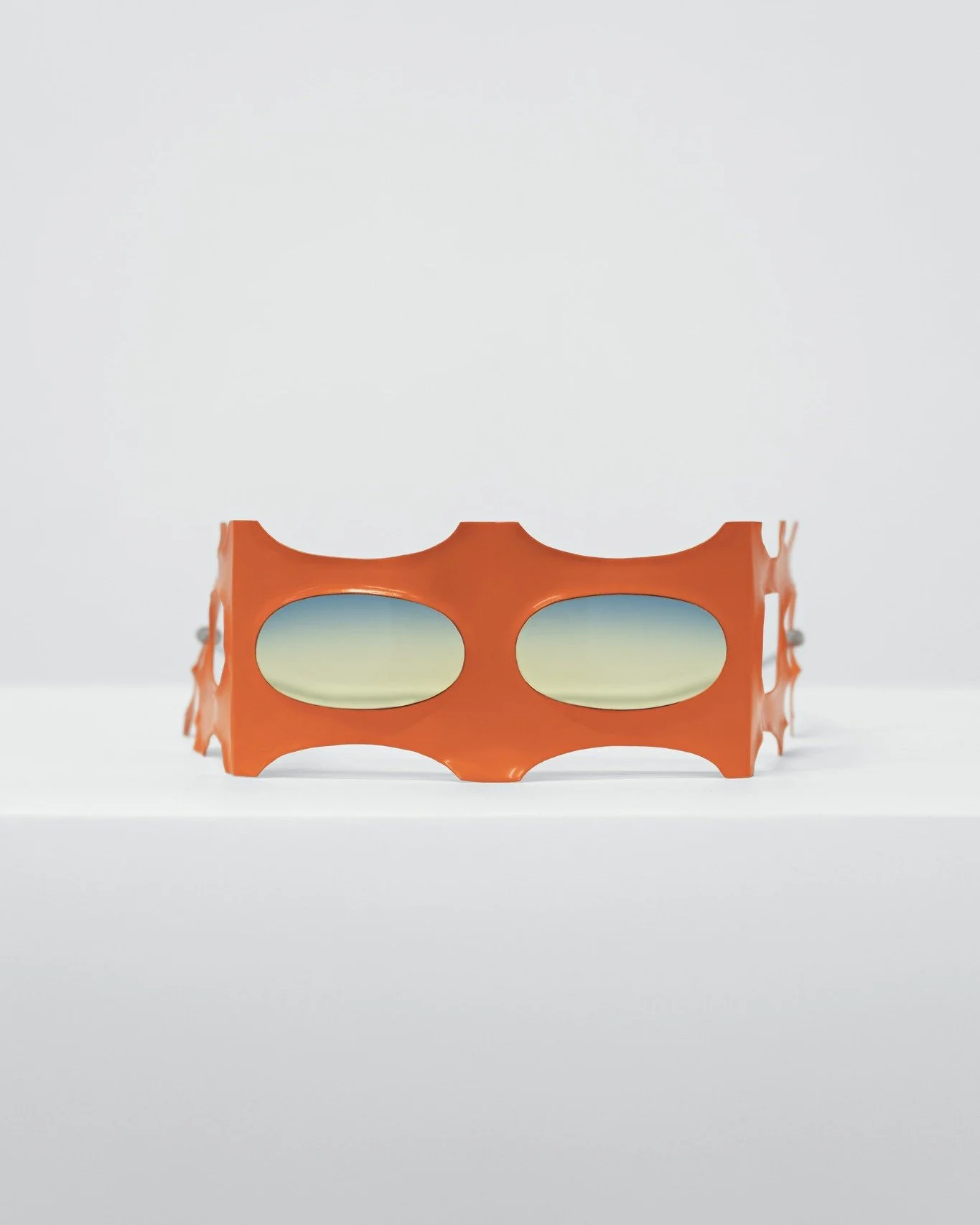
Bichen Liu is a Chinese lens-based visual artist working across fine art photography, black-and-white image-making, and experimental photographic practice. What Lies Beneath is a black-and-white photographic series focusing on exposed root systems and coastal residues, that transforms overlooked ecological fragments into visual records of support, erosion, and displacement.