

10 Questions with Lynne Roberts-Goodwin
AL-TIBA9 ART MAGAZINE ISSUE21 | FEATURED ARTIST
Lynne Roberts-Goodwin (b. 1954, Sydney) is an internationally recognized artist known for her photography, sculpture, and video. She studied fine arts at institutions in Australia and the UK, earning a Master of Fine Art from the University of Manchester. Her large-scale photographic projects explore the impact of place on cultural consciousness, often focusing on remote landscapes and ecological change. Over four decades, Roberts-Goodwin has documented environmental and social issues, such as endangered species, deforestation, and resource extraction, in locations including India, Turkey, Mexico, and Australia. Her work, blending the sublime and the unsettling, highlights humanity’s effect on the planet and shifting cultural heritage.
Roberts-Goodwin has received numerous fellowships, residencies, and public art commissions, exhibiting her work globally in museums and galleries. Her projects have taken her to countries across Asia, Europe, North America, and the Middle East. Major residencies and commissions include the Museum of Contemporary Art Sydney, Bundanon Trust, the American Academy in Rome, and projects in Jordan, Italy, Vietnam, and Mexico. Her art is held in prominent public and private collections, such as the Museum of Contemporary Art (Sydney), Art Gallery of New South Wales, National Gallery of Victoria, and international collections in Europe, the US, the Middle East, and beyond.

Lynne Roberts-Goodwin - Portrait | Ph. Kim Steel
ARTIST STATEMENT
Lynne Roberts-Goodwin’s artworks transform extreme global terrains into sites of fragile beauty and danger, suspending moments that evoke awe and vulnerability. Her images oscillate between sweeping vistas and fine details, serving as psychological mirrors. By pairing aerial and terrestrial views, and using diverse technologies, she destabilizes conventional perspectives, offering omniscience and vertigo.
Her "BALANCING ACTS" series (2023–2025) explores how atmospheric forces are harnessed and how instability is embraced, especially when materials and bodies interact with the elements. This performative approach highlights the vulnerability of all entities and invites viewers to let go of fixed understandings.
Roberts-Goodwin grounds her practice in historical documents, maps, logs, archives, patents, studied alongside contemporary texts. She traces narratives of exploration, loss, and renewal within remote terrains. In both field and studio, archival research informs concept and process, with careful attention to environmental changes and history.
Presented as images or installations, her work challenges the idea of photography as mere record. Instead, it becomes a negotiation between history, technology, and lived experience, embodying a delicate balance between beauty and peril.
This condensed summary captures the key themes and methods of Roberts-Goodwin’s practice at half the original length.
ungrounded moment 3, photographic print, 100 x 237.5 cm, 2025 © Lynne Roberts-Goodwin
AL-TIBA9 ART MAGAZINE ISSUE21

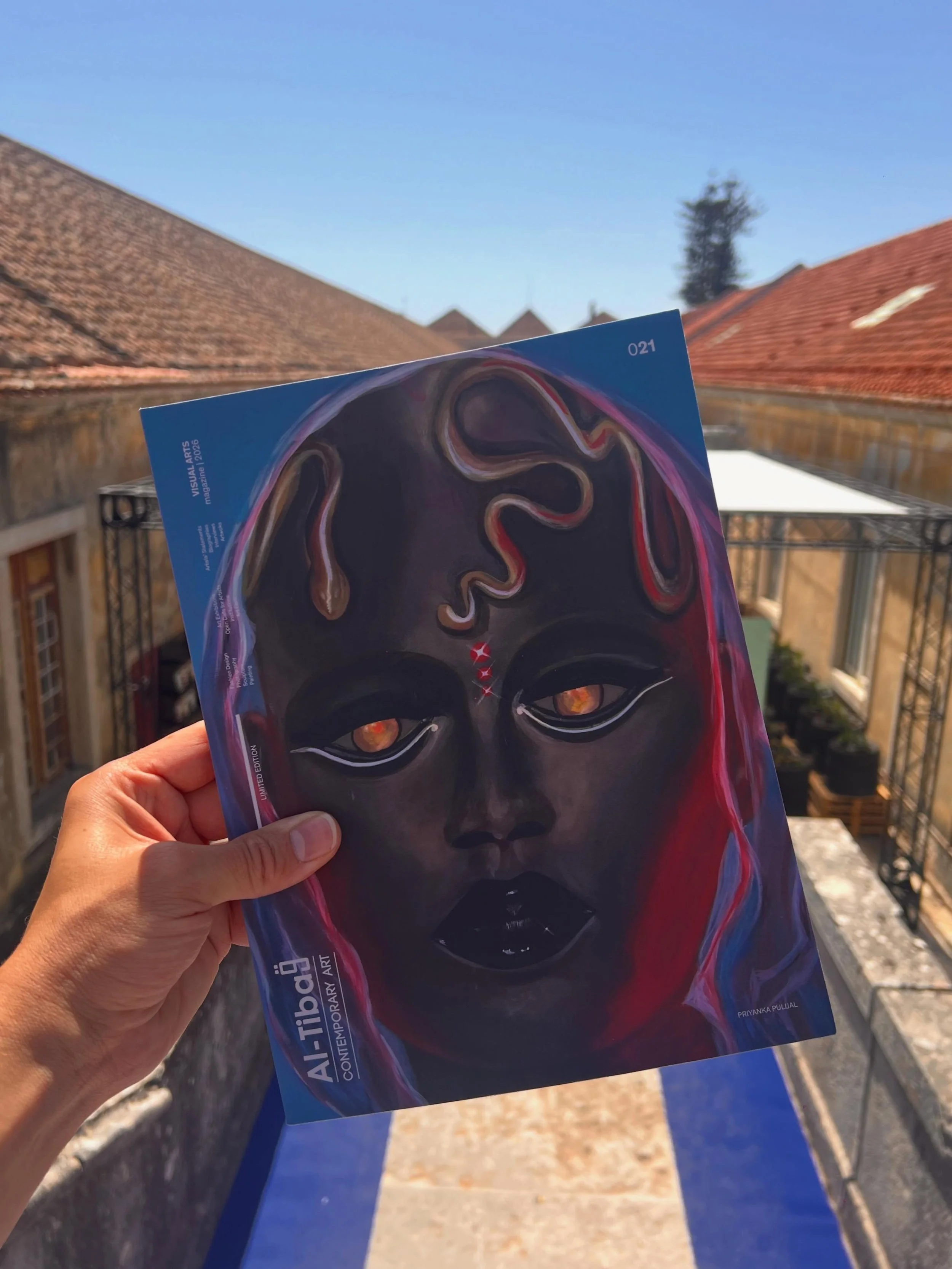
DISCOVER THE INTERNATIONAL ART SCENE WITH AL-TIBA9
LIMITED EDITION | Shipping worldwide.
Premium museum art paper.
Printed in London.
Grab 3 or more prints and get your FREE digital magazine.

Digital Magazine - Available SOON…
INTERVIEW
First, let’s start with your background. You were trained in Australia and later in the UK. How did these early educational experiences shape the way you approach your projects today?
I completed my formative undergraduate studies in Fine Arts and Visual Arts in Australia as a dual major in photography and painting. While I worked across both disciplines, my focus was predominantly on photography. My education was grounded in analogue darkroom practice, alongside study in the history and theory of photography and painting, and other media formed a secondary but important strand, shaping my understanding of surface, composition, temporal and spatial relationships, but it was the photographic image that became central to how I began to think about the world.
During this period, I was drawn to artists who understood the image as a form of social document, works that engaged with lived experience, politics and the conditions of everyday life. At the same time, I was equally interested in artists who were pushing photography beyond traditional formats, experimenting conceptually with the medium through installation, scale and site, and encouraged to work and think outside the conventions of the white museum cube. This dual interest, in photography as both socially engaged and materially experimental, established a productive tension that I feel continues to inform my practice today.
Being awarded the Art Gallery of New South Wales Moya Dyring Travelling Scholarship at the end of my studies and the Art Gallery of New South Wales Moya Dyring Paris Studio residency was pivotal, as it enabled me to leave Australia and spend more than a decade living and working internationally. Living in the United Kingdom and travelling extensively throughout Europe exposed me to a far broader and more diverse field of artists, exhibitions and institutional contexts than I had previously encountered. I was immersed in an active cultural environment where contemporary practice, particularly the incorporation of the photographic image, was deeply connected to history, theory and critical debate, and where exhibitions operated across a wide range of scales, media, sites and formats.
Completing a postgraduate Master’s degree and exhibiting throughout the UK and Europe significantly reshaped both my artistic and professional development. I was exposed to different critical frameworks and artistic approaches, particularly in relation to landscape, history and place shaped by long and often contested cultural narratives. At the same time, working within these contexts changed how I understood professional practice, from how projects are developed and sustained, to how work is exhibited, contextualised and communicated. These experiences reinforced my understanding of photography as a medium capable of operating across disciplines, sites and temporalities, and continue to inform the way I approach making and presenting work today.
I feel that my visual arts grounding in darkroom practice instilled a sensitivity to process, materiality and time, while my exposure to conceptual and installation-based practices encouraged me to think beyond the single image and approach photography not as a neutral or purely descriptive tool, but as a spatial and experiential medium, one that can operate across environments and respond to the conditions in which it is made.
Living and working in the UK and Europe for an extended period also sharpened my awareness of borders, displacement and cultural difference, shaping my commitment to research-led practice and sustained engagement with sites, questioning with curiosity and remaining attentive, I think about how histories, social structures and power relations are embedded in landscapes, often invisibly.
Returning to Australia in the late 1980s, I feel I brought with me an international perspective that continues to inform my work, one of looking outward and open to change, valuing experimentation and resisting fixed interpretations. I can sense that these principles underpin my current practice, where photography and other media are not used to define or stabilise place, but to encounter it, allowing ambiguity, curiosity, instability and multiple readings to remain present, I feel.
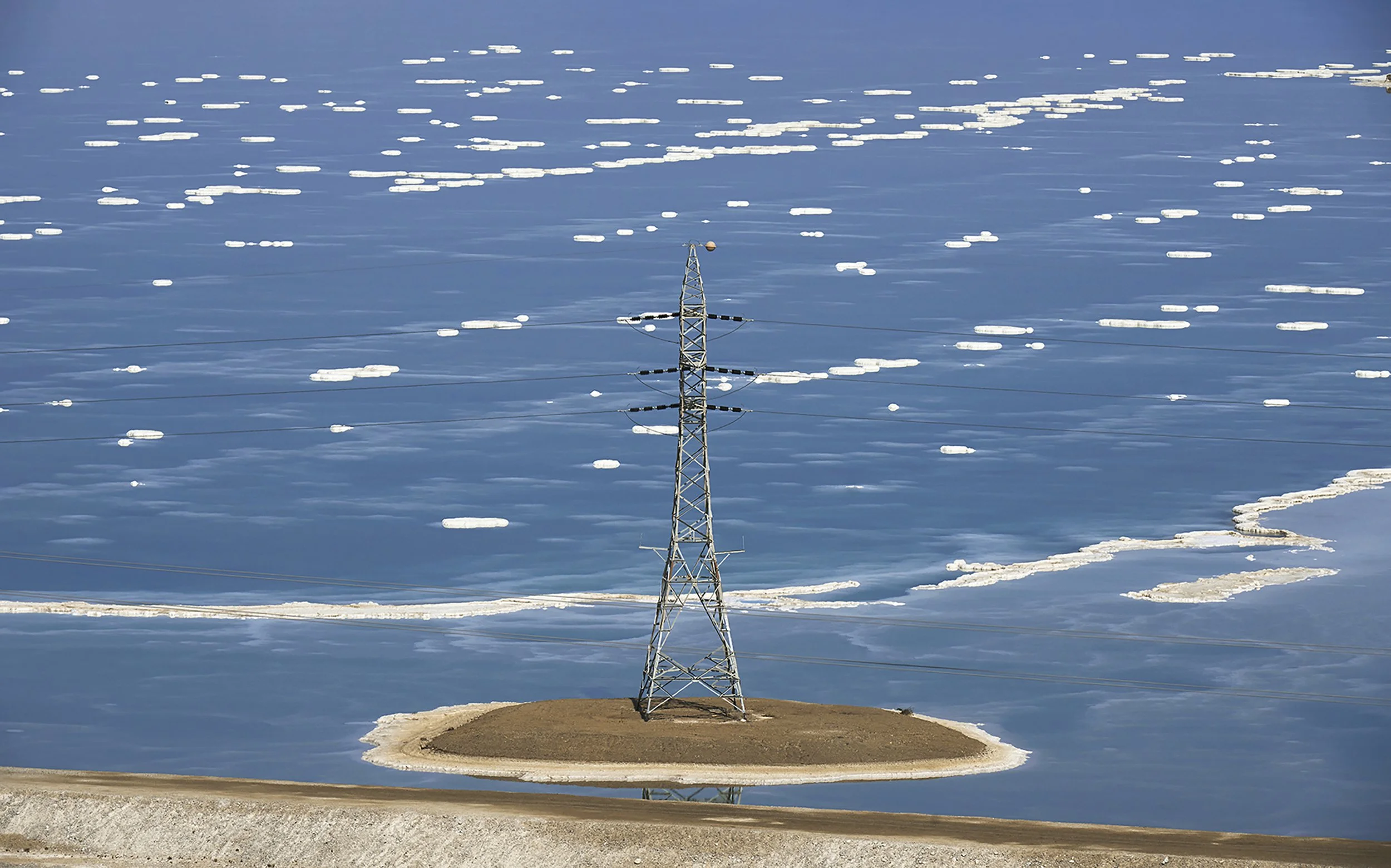
deadcalm tower 21, closeupatadistance Dead Sea Project, photograph, 150 x 240 cm, 2016 © Lynne Roberts-Goodwin

deadcalm border 132, closeupatadistance Dead Sea Project, photograph, 150 x 240 cm, 2016 © Lynne Roberts-Goodwin
Photography has remained central to your practice, even as you work with sculpture and video. What draws you repeatedly to the photographic image as a primary medium?
Interesting to reflect on this question as the photographic image and the experience of looking at photographs and the image are now ubiquitous in the digital era, where often these are the currency of communication, shared globally and instantly! Yes, my principal use of photography, both digital and analogue, functions as my primary visual language and often as the initial creative impetus for a project. Photography and the photographic image itself, I feel, allow me to speculate, to linger in a state of wondering, and to sit with uncertainty, giving me a way to question what it is I am looking at, what I am sensing, and how I am culturally positioned in relation to what is before me. The image becomes a space where perception, feeling and awareness intersect, rather than a tool for resolution. Importantly for me is photography’s potential as a visual language, and in a poetic way, the photographic image has become my fingerprints that carry a unique impression and sense of belonging.
What I feel repeatedly draws me to photography is not habit, nor a fixed or automatic response to the world, but perhaps my relationship to the camera and the photographic medium is irregular and deliberately non-precious, though continually holding its many histories and narratives close. There are long periods when my cameras lie dormant while I research, read, write and develop conceptual frameworks. So, photography does not lead every project, but emerges when it is needed. I do have specific notebooks for each project, where I sketch, write, notate geo-locations, people’s names, potential camera settings and ideas, etc., which become a form of critical reference throughout projects, and which are added to progressively. When I begin working in the field, the camera and the photographic image/s become a means of thinking rather than recording.
I’m also drawn to the photographic image as a form of visual sketching. These initial photographic gestures are not about producing finished works as I said, but about testing ideas, sensing atmospheres and registering spatial or cultural cues prior to coming back to my studio to test ideas before returning to undertake more image captures. Working in this way gives me the freedom to be less self-conscious, less controlled and less attached to outcome.
Also, the photographic image offers a particular elasticity in a way, allowing me to move between observation and abstraction, between intimacy and distance, and I’m drawn to its ability to hold contradiction, to suggest presence while withholding explanation. Photographic images can feel familiar, even recognisable, yet remain unresolved, and this tension is important to me, mirroring how places are experienced and carry layered histories and where meaning is never singular or fully visible.
In this sense, I feel photography and the image operate as an expanded way of thinking through concepts, as I mentioned, particularly in my studio environment and works as not simply a medium for representation, but perhaps as an imaging process that unfolds alongside research, movement and encounter. In reflecting on this question, I feel the act of photographing and its subsequent image/s become a way of paying attention, of slowing down, and of allowing ambiguity and failure to remain productive. Rather than clarifying what I already know, photography helps me question and stay with what I don’t yet understand, if that makes sense.

deadcalm distance 100, closeupatadistance Dead Sea Project, photograph, 113 × 180 cm, 2016 © Lynne Roberts-Goodwin
Many of your projects unfold over long periods and across multiple locations. How do you begin a new body of work, and what signals that a project is ready to take form?
Yes, that’s correct and again an interesting question to reflect on. I think I can best address this through a few examples, which may explain how ideas and projects take form. My projects usually unfold over long periods of time and across multiple locations, as you said, often requiring extensive research and careful logistical planning, particularly when working across borders that can be politically or physically difficult to enter or access. It feels sometimes like working in the dark! Time and negotiation are integral to how the work is approached and initially develops, without hopefully compromising the core concepts, though on many occasions I continue to be surprised at the shift in ideas which lead to a rethink.
I typically begin a new body of work by consciously or unconsciously reflecting on the most recent project I’ve completed and exhibited, looking for unresolved ideas that have arisen, questions or tensions that remain active for me, though I’ve often taken a tangential leap into an area that has sparked my interest via reading, cinema or a conversation. Often, it’s a visual trigger, an encounter within a site that I can’t quite make sense of, a conversation or critique that shifts my perspective, or a growing awareness of a place or history that feels under-examined or unfamiliar. I’m often interested in narratives or concepts that are unusual or culturally complex, especially places, people or sites that defy simple explanation in my mind, which fuels my curiosity.
I tend to think of starting a new project as a pivot rather than a clean break. I should say that there are unrealised projects working in the background, which can lie in wait for a few years or whenever I feel they need to be investigated and started. One body of work often leads tangentially into the next, and a good example is a project that began through my research into sinkholes after completing a series on volcanic sites on residency in Kīlauea Caldera, Big Island, Hawaii. That enquiry led me conceptually to the lowest points on earth, which in turn took me to the Dead Sea and its surrounding environment. As is my usual approach, once the idea began to take shape, I contacted an institution that could further my research, and in this case, the Jordan Red Sea Project (JRSP), to outline my proposal and request access to inaccessible sites along the shoreline. This exchange proved invaluable, providing both institutional support, access and the opportunity to contribute documentation in return for access and shared knowledge.
The Dead Sea is a deeply beautiful yet contentious site, subject to environmental degradation, industrial impact and political complexity. These conditions intensified my interest in potentially creating imagery that could hold both beauty and unease, images that did not aestheticise the site without acknowledging its fragility. I’m drawn to dichotomies within my work, and so when commencing the Dead Sea project on the Jordan foreshores, it allowed that shift, while still maintaining continuity and the concept of the ‘lowest point’ to translate across a very different cultural, environmental and political context.
Once institutional relationships were established, I expanded my research to include environmental concerns surrounding the Dead Sea and connected with artists and colleagues in Amman, Palestine and Jerusalem. These conversations significantly broadened my understanding of the region and deepened my emotional and ethical engagement with the site, and in hindsight, these exchanges were formative in shaping how I approached the work and led to where the project was ready to take form. The body of work is titled ‘closeupatadistance’.
What signals this readiness is usually a sense of unknowing or unease, perhaps also anxiousness! When my expectations begin to feel unstable, despite having notebooks, image archives, references and documentation in place, I know it’s time to enter the project physically. That state of openness, combined with focus, is essential for me, and only then do I feel able to fully inhabit the project and let it unfold and begin its journey.
Your images often move between vast, aerial perspectives and intimate, ground-level views. What does this shift in scale allow you to explore conceptually?
Yes, moving between vast, aerial perspectives and intimate, ground-level views allows me to think through scale as both a physical and conceptual condition and not simply a visual trope. I think this scale shift fundamentally alters how space, power, vulnerability and belonging at sites are experienced and understood, and I’m interested in what happens when perception oscillates between distance and proximity, when the viewing body is alternately lifted out of the landscape where I can levitate, feel vertigo and then return to it.
Exploring an aerial or elevated position of terrains can appear abstracted, flattened or diagrammatic where borders dissolve, patterns emerge, and scars left by human intervention become visible, and viewpoints can expose systems such as migration routes, extraction, or environmental damage. At the same time, aerial perspectives often evoke a sense of groundlessness, that levitation I referred to, where my viewing body is imagined as detached, hovering above the world by using drone imaging, helicopters, aircraft, standing at elevation or more recently via hot air balloons. Obviously, these positions carry associations with surveillance, control, histories and power; however, I try to resist treating the aerial as a stable or dominant viewpoint as it is affected by weather, turbulence and risk, where it becomes provisional, unstable and contingent rather than authoritative.
Alternatively, my approach to ground-level perspectives operates very differently. They bring the body back into the landscape, emphasising proximity, friction and intimacy where, at this scale, the viewer can be drawn into a closer relationship with the image, where framing becomes tighter and more constrained. These views foreground embodiment and vulnerability, particularly in sites marked by cultural trauma or environmental degradation. In considering this, perhaps the ground insists on consequence and limits what can be seen to remind us that vision is always partial.
So yes, by allowing these positions to coexist within and throughout a project, they can interrupt one another and refuse a single, coherent reading of place, exposing how meaning shifts depending on position, height and distance. This is where perhaps photography becomes critical for me, not as a documentary tool, but as an encounter, where angled and oblique viewpoints render familiar landscapes unfamiliar and cultural cues made visible that are embedded in terrain surface indirectly, through scale, distortion or disorientation. In this sense, I suppose, photography paradoxically shows us what we don’t see. The final exhibited large-scale photographic prints are also quite thoughtfully considered in terms of scale, particularly in relation to content, viewing body scales, museum space and lines of sight. Where possible, I create small 1:12 scaled Marquette/models of exhibition spaces to consider proposed placements and scaling.
Ultimately, shifting the scale between aerial and ground-level views allows me to think through how landscapes are experienced rather than defined. It opens a space where intimacy and surveillance, vulnerability and control, wonder and unease coexist. By destabilising scale and viewpoint, my work at times asks viewers to reconsider their own position in relation to terrain, power and the act of seeing, and to recognise that understanding place is always provisional, mediated and incomplete.
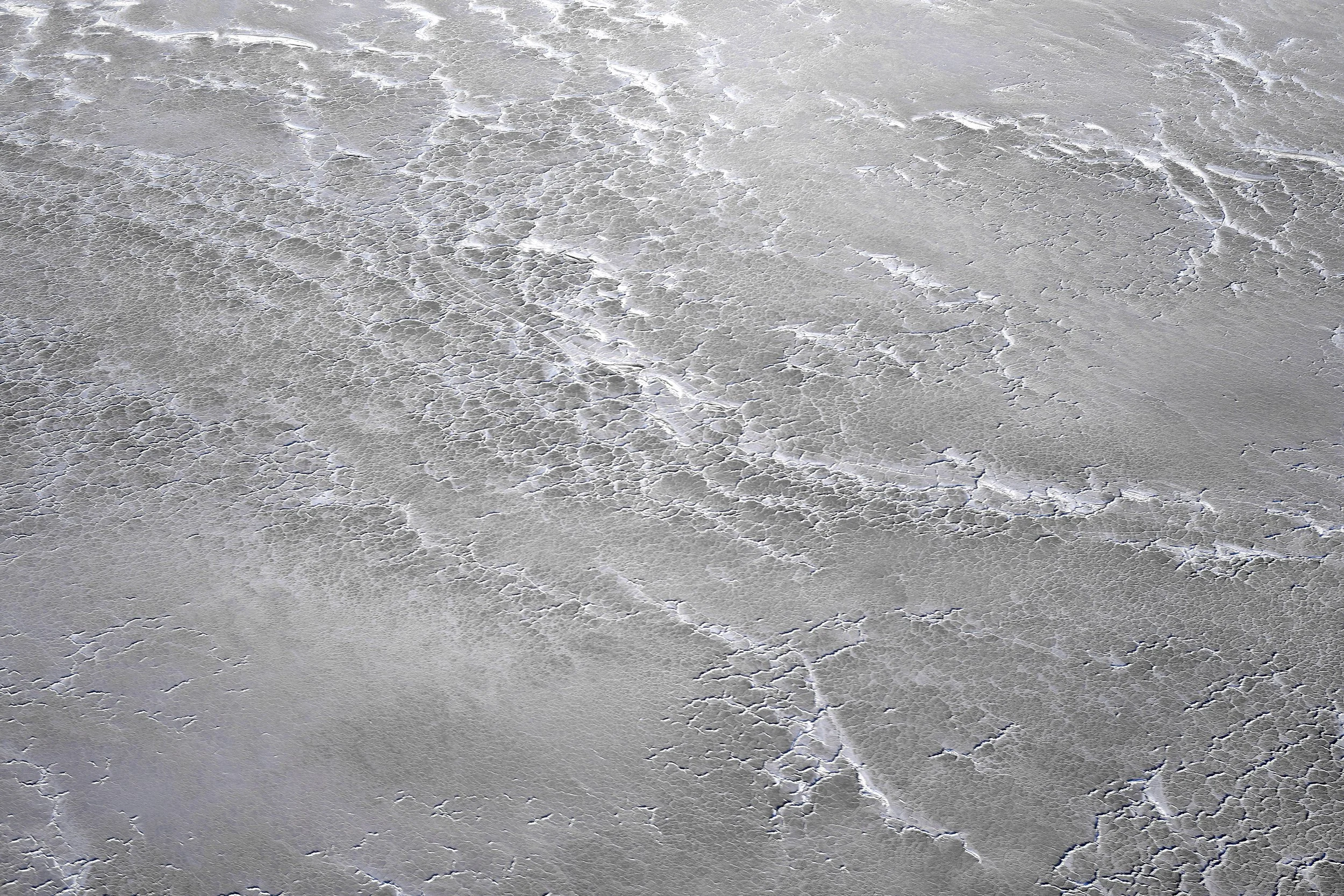
anticlockwisemagnet0041, Tempo Squisito, photograph, 80 x 120 cm, 2019 © Lynne Roberts-Goodwin

anticlockwisemagnet0035, Tempo Squisito, photograph, 80 x 120 cm, 2019 © Lynne Roberts-Goodwin
Environmental change, borders, and contested territories are recurring themes in your work. How do you navigate the balance between documentation and poetic interpretation?
Such a thought-provoking question in this conversation, and to consider this, I feel that balance can take place at a few critical points within a project, contingent on how I view the actual photographic image as a document or perhaps documentary in genre and it’s ability, given the subject matter, to also be interpreted as poetic depending on the weight of recurring themes. I think I approach photography as a representational document with caution and intention and am aware that photography carries a long history of authority, of being read historically as evidential, though when working in sites marked by environmental change, borders or cultural trauma, that authority can easily become reductive so my task is not to abandon documentation, but to slow it down, to stretch it, and to allow it to coexist with uncertainty is a good way to explain this.
For me, documentation is a necessary foundation. I undertake extensive research, historical, environmental, political and social, and spend long periods in the field, as I said. I need to understand where I am, what has occurred there, and what forces continue to shape or disrupt a site or subject. This grounding establishes an ethical framework and ensures that the work is accountable to the place rather than speculative or detached. The photographic image and my physical presence are anchored, made in a real location, under specific conditions, at a particular moment in time. However, I feel I resist allowing the photograph to function purely as a descriptive or explanatory tool, particularly given the weight of some subjects that are divisive or contentious, as I’m not interested in images that close meaning by showing everything too clearly, perhaps and reinforce or repeat media or reportage imagery so prevalent. In my experience, places shaped by instability or trauma cannot be fully understood through clarity alone, and documentation can suggest resolution where none exists, so this is maybe where poetics becomes essential through creating balance by shifting how the photograph operates via framing and point of view. Rather than aiming for comprehensive views, I work with oblique angles, partial visibility and unstable perspectives, paying close attention to atmosphere, light, weather and duration where elements interrupt straightforward reading, introducing softness, distortion or ambiguity without falsifying the site. The image remains actual, but not definitive.
I also think carefully about what I exclude, as what is left out of the frame can be as critical as what is included when considering how the image is formed, and perhaps this restraint allows the image to breathe and prevents it from becoming illustrative or familiar, but remains balanced between actual and poetic. It’s with this consideration that the photograph can become an encounter rather than a statement and asks the viewer to engage, to linger, and to form associations from the work. It’s a balance, yes, where the poetics within an image isn’t wholly undermined by the documentary aspect of the image but complicated by it, acknowledging that place is layered, unstable and often resistant to singular interpretation.
Ultimately, the balance I seek is one where the image holds tension, remaining grounded while allowing space for ambiguity, emotion and uncertainty. Documentation provides structure and responsibility, poetics create openness and depth. I think that when these forces are held together, the photograph can move beyond description and become a site of reflection, one that mirrors the complexity of the environments I work within and resists the urge to resolve them too quickly. Very thought-provoking to consider.
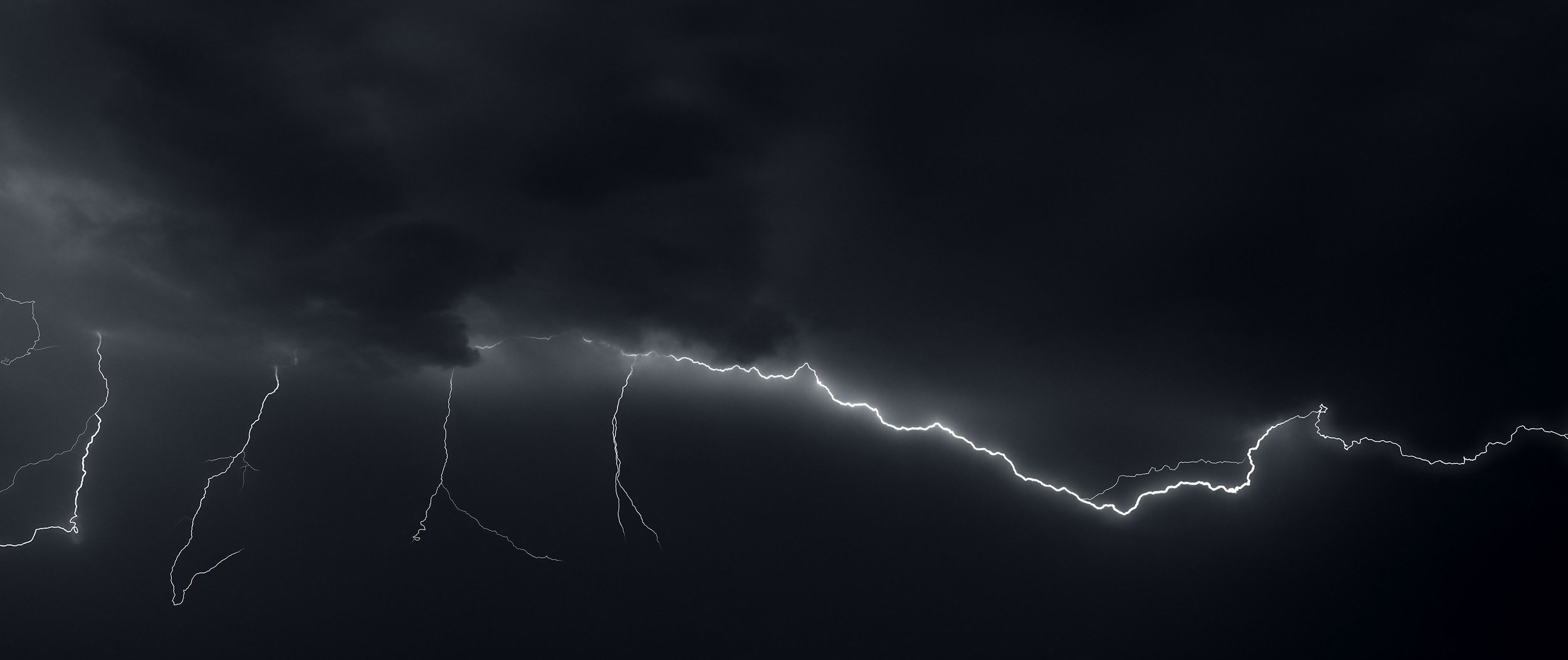
ungrounded moment 2, photographic print, 100 x 237.5 cm, 2025 © Lynne Roberts-Goodwin
Fieldwork plays a crucial role in your process. Can you describe how time, waiting, and physical presence in a place influence the final images?
Yes, absolutely, fieldwork is central to my practice and not a supplementary phase that follows research, but the point at which research becomes embodied or enacted, where I move and feel most alive and focused, yet always open to chance. Time spent in a place, waiting, returning, moving through it repeatedly, allows the work to form in ways that cannot be anticipated in the studio alone. I often describe this as “being out there” because it involves physical presence, endurance at times and attentiveness. It is through this sustained engagement that the project, the concept, its histories, atmospheres and social meanings begin to embed themselves into the work.
Most of my projects, as I’ve said, begin with long periods of studio-based research such as reading, mapping, archival study and conceptual testing. But this research remains incomplete until it’s tested against the specificity of place, where maybe the fieldwork introduces friction, where weather changes plans, where access is delayed or denied or often where light behaves differently than expected. These interruptions are not obstacles but perhaps productive conditions that shape the final images, where waiting becomes a method and a necessity, where time allows me to notice subtle shifts in atmosphere and where my physical presence allows an understanding of how a site breathes.
This approach, for example, was fundamental to the project ‘Tempo Squisito: everything remains as it never was’, which I developed while I was an Inaugural Rome Scholar and Artist-in-Residence at the American Academy in Rome, and a Mordant Family Fellowship from the Australian Council for the Arts. The project began in the studio through historical research into early aeronautics, military aerial surveillance, and satellite tracking, and finally led me to the largely forgotten trajectory of the Luccese aeronaut Vincenzo Lunardi (1754-1806). Lunardi’s failed hydrogen balloon journey became a conceptual anchor, not as an act of heroism, but as an embodied encounter with risk, atmosphere, navigational failure and uncertainty.
Over a period of nine weeks, I undertook fourteen balloon flights, working both aerially and at ground level to trace the route Lunardi had attempted but never completed. These flights were not about re-enactment but about a form of navigational failure at times, an incomplete tracing and poetic atmospheric experience to create works under conditions such as wind, turbulence, shifting light and the physical vulnerability of being suspended, which fulfilled my levitation and vertigo checklist! Each ascent required waiting for the right meteorological window, often with long periods of inaction, watching weather systems operate and accepting delay, and the images that emerged were shaped by this waiting in many ways. As completed photographic works, they now carry the tempo of anticipation and the instability of flight, which paradoxically are not of all aerial views in the majority but of the ground imagery looking up at the slow breath of the large hot air balloons exhaling and folding after descent.
Atmosphere, scale and duration leave traces on the work, and my physical presence is hopefully incorporated in numerous forms and ways, inseparable from this process, carrying the weight of time spent waiting, moving and being present.
Your work frequently evokes both beauty and unease. How intentional is this tension between the sublime and the terrifying?
Thank you, and yes, the sublime and unease are two of the visual or sensory feelings within most of my work, and any perceived tension between beauty and the terrifying is, I feel, both conscious and unconscious and not imposed intentionally from the outset. It emerges possibly through long engagement with places that are already charged environmentally, politically or historically. I’m drawn to landscapes that appear visually seductive but are shaped by instability, precarity or trauma. For me, beauty is never separate from risk, and that proximity is unsettling. It’s precisely this coexistence that gives the work its weight.
The idea of the sublime helps frame this, particularly in my aerial work. From above or oblique angles, the view can feel exhilarating, even liberating, but it’s always accompanied by groundlessness and exposure, where vision becomes dependent on weather, movement and forces beyond control. That sensation feeds directly into the images, where what might initially appear calm or ethereal often carries an underlying instability. Whereas, at ground level, intimacy produces a different kind of unease. Close framing places the body inside the landscape rather than above it. Vision becomes partial and constrained, especially in sites marked by environmental degradation or contested histories. I’m less interested in presenting places as either beautiful or damaged than in allowing the image to hold both.
The Dead Sea project that I spoke of before makes this very clear for me. When I first arrived at the Jordanian foreshore, I was struck immediately by the toxicity of the atmosphere. The air was thick and mineral-laden, a result of extreme evaporation, industrial extraction and environmental collapse. It was a bodily experience, uncomfortable and unsettling. While I’d seen many documentary images online describing the site’s degradation, being there revealed something else. The mineral-heavy air created a constant haze that shifted with light and heat. At times, land, sea and sky seemed to dissolve into one another. That beauty didn’t soften the reality of the place; it intensified it. The sublime and the terrifying were embedded in the same conditions. Those qualities weren’t constructed but generated by the site itself.
This tension becomes very explicit in my recent work BALANCING ACTS (2025), bringing together nocturnal lightning imagery with images of my own body beneath a white parachute, unstable and enveloped by weather. I placed myself directly within conditions of risk, allowing meteorological forces to take control. Extreme weather isn’t a backdrop here, it’s performative where the work interrogates both aerial and terrestrial vision through vulnerability, exposure and imbalance.
Ultimately, I want the viewer to feel unsettled in a productive way. If the work were only beautiful, it would become a cliché, and if it were only confronting, it might shut down reflection. Holding beauty and trauma, the sublime and the terrifying together keep the work open to reflect the complexity of the environments I’m working within and conversations I wish to engage in both within and outside the work.

BALANCING ACTS shape of things Gallery view, Dimensions variable, 2025 © Lynne Roberts-Goodwin
Your projects have been shown in museums, public spaces, and international exhibitions. How have different audiences responded to these landscapes and the issues they raise?
From my experience, I find audiences respond to the work very differently depending on where it is encountered, and that difference has become an important part of how I understand the projects in terms of communication. What has remained consistent, however, is that people rarely read the landscapes as neutral or purely aesthetic and yes, I feel some audiences respond differently to my work, though most tend to sense that something is at stake, even if they don’t immediately know what that is.
In museum contexts, audiences often spend more time with the work I find, where there is space for sustained looking, and viewers are more inclined to sit with ambiguity. I’ve found that people respond strongly to the tension between beauty and unease. They’re often drawn in by the visual calm or expansiveness of an image, only to realise that it carries environmental fragility, political complexity or bodily risk beneath the surface.
Many conversations begin with someone saying they were initially seduced by the image and then unsettled by what they started to feel rather than what they could clearly identify. Overall, I sense that responses to my landscapes or terrains are shaped by local histories and lived experience, particularly when the work is shown in regions marked by borders, conflict or environmental stress, where audiences often recognise aspects of their own context in the images, even when the landscapes depicted are geographically distant. I’ve had people speak about the work in relation to migration, restriction of movement or ecological loss in ways I hadn’t anticipated. That slippage between places is important to me. It suggests the work is operating beyond site specificity and entering a shared spatial and emotional register.
Public and non-gallery spaces produce a different kind of engagement, I feel, where viewers encounter the work unexpectedly, without preparatory context and in those settings, the images often provoke bodily responses first. People talk about vertigo, disorientation or stillness before they talk about meaning. Aerial works can often create a sense of groundlessness, while ground-level images invite a more intimate, sometimes uncomfortable proximity, and so these reactions tell me the work is functioning experientially rather than illustratively, which pleases me. I find it interesting being present in a museum or gallery where my work is being exhibited to listen to and observe responses, movement through the space or at times, non-responses!
What I find most meaningful is that public audiences rarely ask for an explanation if I’m present. Instead, they often describe how the work made them feel or what it reminded them of, which may open a space for reflection, where viewers bring their associations into the encounter. Across different contexts, the landscapes may seem to act as mirrors rather than destinations to allow the viewer or spectator to think about terrestrial shifts or changes, the immensity and complexity of land, atmospheres, borders and vulnerability, I hope. For me, that’s where the work succeeds, when it holds complexity, remains unresolved, and invites viewers into a shared but uncertain terrain.

shape of things 002, photographic print, 100 x 150 cm, 2025 © Lynne Roberts-Goodwin

shape of things 037, photographic print, 100 x 150 cm, 2025 © Lynne Roberts-Goodwin

shape of things 027, photographic print, 100 x 150 cm, 2025 © Lynne Roberts-Goodwin

shape of things 067, photographic print, 100 x 150 cm, 2025 © Lynne Roberts-Goodwin
In recent series such as Balancing Acts, atmospheric forces and instability take centre stage. What new questions has this body of work opened for you?
Balancing Acts has opened many new sets of questions for me that feel both more embodied, performatively related and yet more unresolved than in earlier projects. By placing atmospheric forces and instability at the centre of the work, I became less interested in what can be seen and more focused on what it means to be exposed, suspended and acted upon by forces beyond control.
One of the key questions the work has raised is how vulnerability can be made visible and suggested without being dramatised or seemingly staged. Within ‘Balancing Acts’, the series of works ‘shape of things’ of the white parachutes and hot air balloons, the body becomes a participant, where my own body became subject to extreme and uncertain meteorological conditions, working with lightning, wind and turbulence rather than around them. On returning to the studio to view these tests, these images felt like a surrender to the elements, of performative acts of relinquishing control within the atmospheres and materiality of illusion. I couldn’t quite understand at first why I felt so drawn to these works. This shifted my attention from landscape as something observed to landscape as something encountered. It made me ask how photography can register risk, hesitation and imbalance, but also as complex performative acts of lived experience.
The work also pushed me to think more deeply about agency, particularly in the ‘ungrounded moment’ series of nocturnal lightning, when weather becomes an active participant rather than a backdrop and authorship starts to fragment. I began to question once again how much control I have as an artist, and how much the work is co-produced by atmosphere, material and chance. This has led me to again consider photography less as an act of capture and more as a negotiation, where waiting, timing and surrender are as important as intention.
Of particular importance during the final stages of ‘Balancing Acts’ was a conversation with a friend and well-known collaborator with artists, musician Rosie Westbrook, on composing and performing a suite of musical works in response to the imagery. What began as an exchange of ideas evolved into a deeply generative collaboration that expanded how the work could be experienced and felt. The music did not illustrate the photographs but instead reinterpreted their underlying tensions. Rhythm, duration, breath and dissonance echoed the instability, suspension and vulnerability embedded in the visual work where the compositions gave form to forces that are difficult to imagine directly, such as wind, turbulence, anticipation and release, allowing the atmospheric qualities of ‘Balancing Acts’ to be felt rather than simply seen.
This collaboration significantly altered how the work was encountered in two solo exhibition contexts and confirmed the value of interdisciplinary collaboration within my practice. The presence of experimental live music (electric guitar) at both the opening and closing events transformed the gallery into a shared, temporal space, where sound, image and body operated together, shifting the pace of looking, encouraging audiences to slow down, linger and experience the work as something unfolding rather than fixed.
For me, this collaboration reinforced the central concerns of ‘Balancing Acts’, introducing another layer of risk and responsiveness, mirroring the meteorological forces and bodily exposure that underpin the work and expanded the project beyond the visual, allowing the tension between beauty and unease to resonate across sensory registers.

ungrounded moment 1, photographic print, 100 x 237.5 cm, 2025 © Lynne Roberts-Goodwin
Lastly, looking ahead, are there new geographies, materials, or formats you are interested in exploring in future projects?
Currently, I am researching my upcoming project that began in 2024 in Napoli, near Pozzuoli and Baia on the Bay of Naples, at the site of Campi Flegrei, the Phlegraean Fields, often referred to as the “fiery fields,” and its surrounding archaeological landscapes. I’ve already returned to the site twice and will be undertaking a third period of fieldwork in May 2026. Campi Flegrei is a highly active, little-known super volcano and volcanic caldera, approximately thirteen kilometres wide, and the terrain feels and looks profoundly otherworldly. The last eruption occurred in September 1538, and in Greek and Roman mythology, the site is described as an entrance to the underworld, which I find compelling! Plumes of steam, sulphur, ash, and smoke, combined with constant atmospheric shifts, make it a place where the ground itself feels unstable, both physically and psychologically.
This project is pushing me toward new questions surrounding materiality, time, volatility and deep geological processes. While photography and video remain central, my attention has increasingly shifted toward how material forms emerge from this landscape. During this upcoming fieldwork, I will be closely documenting the volcanic ash, particularly as well as rock formations, fractured ground and the debris that accumulates around vapour vents and steam-emitting zones. These areas are constantly in flux, where geological fragments and the overall terrain can be imagined as carriers of pressure, heat, and transformation.
Later in 2026, I plan to return to the studio to bring these elements together, images, video and sculptural forms, and to test how objects, images, video works and installation might carry the weight, density and volatility of the site itself. I’m interested in how these different registers can coexist, how solid material can sit alongside atmospheric imagery, and one may experience both grounding, belonging, presence and unease simultaneously.
This upcoming return to Campi Flegrei in the Bay of Naples, Italy, has hovered in my thoughts for quite some time, and I welcome this potential shift within ideas, moving me into new geographies and terrains while extending long-standing concerns with instability, embodiment and forces unseen, and maybe I could explain this as looking at deep time and the unseen subterranean!
Artist’s Talk
Al-Tiba9 Interviews is a curated promotional platform that offers artists the opportunity to articulate their vision and engage with our diverse international readership through insightful, published dialogues. Conducted by Mohamed Benhadj, founder and curator of Al-Tiba9, these interviews spotlight the artists’ creative journeys and introduce their work to the global contemporary art scene.
Through our extensive network of museums, galleries, art professionals, collectors, and art enthusiasts worldwide, Al-Tiba9 Interviews provides a meaningful stage for artists to expand their reach and strengthen their presence in the international art discourse.
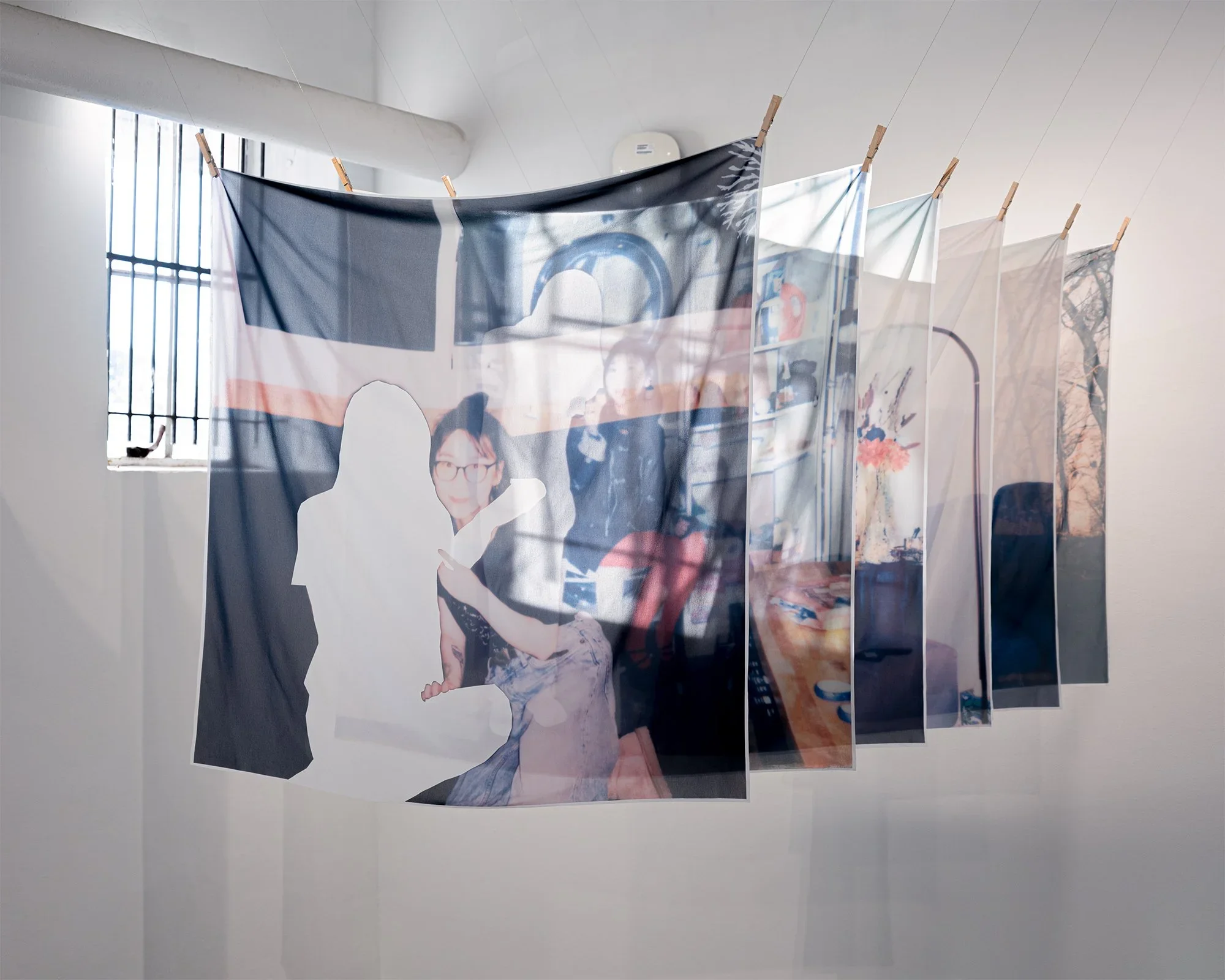



Bichen Liu is a Chinese lens-based visual artist working across fine art photography, black-and-white image-making, and experimental photographic practice. What Lies Beneath is a black-and-white photographic series focusing on exposed root systems and coastal residues, that transforms overlooked ecological fragments into visual records of support, erosion, and displacement.