

10 Questions with Mei-Tsen Chen
Chen Mei-Tsen, born in Taipei (Taiwan), is a visual artist based in Paris (France) for over 30 years. A graduate of Taipei National University of the Arts, her artistic practice spans painting, drawing, photography, video, installation, and sculpture, through which she explores the intricacies of her personal quest for a sense of belonging, identity, and connection. Her journey reflects the essence of a nomadic existence, forever moving and seeking. She thus transforms personal life experiences into a continuously writing perceptual map. Influenced by architectural thinking, Mei-Tsen views the city as a living structure that evolves over time through movement and human experience. Defining herself as an urban nomad, she investigates the relationship between place and identity, tracing how displacement and return shape individual and collective topographies. Her work has been exhibited internationally and won the European Cultural Centre Award (Painting & Mixed Media) at the Personal Structures Art Biennial in Venice in 2024. Her paintings were collected by Taiwan’s China Medical University Art Museum in Taichung, a building designed by Frank Gehry, which will be inaugurated in 2028.

Mei-Tsen Chen - Portrait
ARTIST STATEMENT
“What is near cinnabar turns red, and what is near ink turns black.” This Chinese proverb highlights the significant influence one’s environment has on character and decision-making. Throughout my long stay in France and travels to various cities around the world, I have reflected on how these experiences have impacted my life plans. As the daughter of an architect, this heritage has profoundly shaped my artistic journey. To broaden my perspective beyond the island, I seek to engage with different cultures. This search for identity is shaped by movement and immersion. I navigate through cities, moving from one path to another like plant roots seeking nutrients. Like rhizomes, I create my own network map that becomes a dream, a connected utopia. Through exploring different experiences, I search for self-discovery, often reconnecting with childhood memories that manifest as intricate, dynamic lines in my artwork. My path is an ongoing quest for traces and answers about the origins of constructive nomadism. Inspired by natural elements and scientific discoveries, my artwork oscillates between the microcosm and the macrocosm, and is based on an aesthetic of displacement and trajectory.”
— Mei-Tsen Chen
In Flux W, acrylic on canvas, 243x116 cm, 2026 © Mei-Tsen Chen
INTERVIEW
Let’s start with your background. As the daughter of an architect, in what ways has architectural thinking influenced how you build images, spaces, or narratives?
I grew up surrounded by my father’s blueprints and drawing tools. To me, as a child, it was a wonderland full of all kinds of paper, pencils, and measuring tools, such as rulers, compasses, and protractors. There were also paint colours, wallpaper, and tile samples that became my favourite toys. In fact, I tried to understand the designs on these blueprints on my own, while developing my drawings on the backs of the discarded ones. During this time, I have evolved into an active imagination and learned to view things from different angles, considering various perspectives of architectural structure, for example. Through the structural process, I built an intimate topography, a map detailing my sensitivities and experiences as I moved through time and space. In my work, this map becomes a dream that connects and weaves together disparate networks to create a new narrative.

Utopia U, acrylic & chalk on canvas, 80x80 cm, 2024 © Mei-Tsen Chen
You were born in Taipei and have been based in Paris for over 30 years. How has this long-term movement between cultures shaped you both personally and artistically?
Right after graduating from art school over 30 years ago, I arrived in Paris with one suitcase, eager to learn about the local culture and art. How naive I was! Exiled abroad at such a young age, I had to start from scratch, learning the language, becoming independent, and dealing with life's most basic necessities. However, having now lived in France far longer than in Taiwan, I am further developing my long-standing research on "city-identity-movement" by rethinking "home." Rather than viewing home as a fixed spatial unit, I see home as a trajectory generated by the process of leaving and looking back. Through painting and other techniques, I transform personal life experiences into a continuously evolving perceptual map. In this way, "home" becomes a state in formation rather than a completed result. My creative method can be seen as a kind of visual topography that uses depiction, recording, and spatial translation to create a blueprint of life. It's about reexamining life's greatest questions: Who am I? Where did I come from? Where am I going?"
You often describe yourself as an “urban nomad.” What does this term mean to you today, and how does it translate into your daily artistic practice?
Well, I actually travel with my artwork whenever possible, to better understand visitors' reactions to my work when it is exhibited in different cities. Through this, I have had many interactions with the public and other artists of all nationalities, responding to social and cultural differences. These travels enable me to establish physical connections between different urban environments. Across the constructive exhibition process, I seek the meaning of life and reflect on my identity as an artist, studying how places shape identity through repeated movement, stays and returns. By shifting the focus from personal memory to geographical and cultural migrations, I explore the world from a wandering approach, transforming the experience of movement into nourishment, a pursuit of identity and a coordinate of existence.

In Flux F, acrylic & chalk on canvas, 80x80 cm, 2025 © Mei-Tsen Chen

In Flux U, acrylic & chalk on canvas, 80x80 cm, 2025 © Mei-Tsen Chen
You work across many media, including painting, drawing, photography, video, installation, and sculpture. How do you decide which medium is right for a particular idea or project?
Choosing the appropriate techniques and materials is an essential part of the creative process. While personal preferences are important, I prioritise accurately conveying the concept and theme of the artwork. The stronger the medium's properties, the greater the work's impact. For instance, in the fossil series “Les Plis”, I used resin to achieve a transparent, crystalline effect. For the jellyfish series “Drifting over Time”, I used plastic cloth to capture the translucency of jellyfish and highlight the irony that plastic waste pollutes the ocean, yet actually promotes their reproductive ability. After experimenting with various media, I started thinking about which technique would best suit my creative lifestyle. When creating the city map series “Paradise”, I opted for painting. As I meticulously depicted each stroke, I felt as if I had returned to the carefree days of my childhood, doodling freely. I believe this rediscovery of myself, this journey back to the source, represents my optimal creative state!
Your paintings are often dominated by shades of blue. What draws you to this colour, and what emotional or conceptual role does it play in your work?
Blue represents the sky, air, water, the ocean, depth, infinity, freedom, and life. It is the most essential colour in the universe. In my work, however, blue is a language of self-discovery and reconstruction. I first discovered the mystery, the profundity, and the inclusiveness of "blue" while travelling internationally and looking down from an aeroplane. At that moment, all the cities, mountains, forests, land, lakes, and oceans merged into one, transforming into various shades of blue and connecting with the sky to form a vast, boundless blue realm. A second powerful impact from blue came from a long-forgotten memory. My father passed away early. One day, among the family belongings preserved by my mother, I discovered his architectural drawings. These blueprints brought back my childhood memories and awakened emotions that had been buried since his passing. Blue has ultimately become one of the most important themes in my work. Moreover, it is deeply linked to my inner awakening and connected to my life’s blueprint, which unfolds in the pursuit of my creative desires.
Themes of identity, belonging, displacement, and return recur throughout your practice. Do these themes come from lived experiences, observation, imagination, or a combination of all three?
By definition, an artist is a traveller who leaves "home," discovers the world, and embarks on an exploratory journey. This journey inevitably involves an emotional and reflective process that goes beyond literally entering and leaving one's place of origin. Although Taiwan is of primary importance in my life, I have not truly returned psychologically to the home from which I began my journey. Instead, I find myself in a position that is both accessible and distant. I contemplate the meaning of "home" and embark on a philosophical exploration of the self. Furthermore, long-distance travel and cross-border movement have clearly influenced my thoughts as a traveller. The contradictions, confrontations, and readaptations I experienced with others and in foreign environments while travelling forced me to constantly search for the answer to "What is home?" From self-discovery to self-transcendence, I have redefined my relationship with the world. Therefore, my series of paintings is like a subtle, personal history containing rich reflections on life and experiential perspectives.

Utopia B, acrylic & chalk on canvas, 80x60 cm, 2024 © Mei-Tsen Chen

Utopia I, acrylic & chalk on canvas, 80x60 cm, 2024 © Mei-Tsen Chen
Your works have been exhibited internationally. How do different cultural contexts influence the way audiences respond to your work?
Travelling beyond geographical borders broadens my horizons, takes me further, and deepens my worldview. Every journey is a source of inspiration, and every exhibition nourishes my future creations. Due to their diverse cultures, viewers from different countries may perceive my work differently. Understanding these differences through dialogue and comparing modes of perception is fascinating. In 2024, I took part in the Venice Biennial, organised by the European Cultural Centre, where I exhibited my city map series “Paradise”. On the opening day, there were so many people from different countries. One person from Spain saw my Barcelona and came over immediately to talk to me, saying that it was his city. Others from New York, Stockholm, London and elsewhere also engaged with me, actively exchanging opinions. This is a perfect example of how art can bring people together!
In 2024, you received the European Cultural Centre Award at the Personal Structures Biennial in Venice. What did exhibiting in Venice represent for you at this stage of your career?
I am honoured that my project was recognised by the European Cultural Centre through the ECC Award. But beyond the recognition itself, exhibiting in Venice had a deeper significance for me. Venice is a city shaped by water, movement, exchange, and the meeting of different cultures, qualities that resonate strongly with my own artistic journey. As a Taiwanese islander, I set out to experience other cultures. I have travelled through cities and, in doing so, created maps of organic cities, urban forests, and networks where different cultures intersect. In this sense, Venice felt like a natural extension of my own research into movement, identity, and the idea of home. The city itself became part of the dialogue with my work. For me, going beyond boundaries is not only about crossing geographical borders, but also about constantly redefining where we belong.

Out of the Blue O, acrylic on canvas, 116x81 cm, 2017 © Mei-Tsen Chen
Looking back, is there a particular exhibition or city that marked a turning point in your artistic journey?
In fact, many of the cities in which I have exhibited over the years have inspired me. As well as Venice, which I mentioned earlier, I would like to highlight the important cultural melting pot that is New York City. The New Yorkers I met during my exhibitions were curious and enthusiastic, eager to share their opinions and exchange ideas. They were almost like me, global citizens, drifting along with the current of the world like jellyfish!
Lastly, what projects or directions are you currently working on, and what would you like the next phase of your practice to explore?
As an artist, I also see art as a means of retracing life’s journey, observing the world, and forging my own path. Understanding the origins of creation by going back to the source is my most important task right now. My current creative approach is precisely to recreate an emotional process through time and space. Using the architectural plans of my family home in Taipei from the 1980s as a starting point, I revisited my childhood memories. At home, we would each work on our own side of the drawings, in a gesture of silent sharing: my father used the front to design his buildings, while I used the back to develop my drawings. Through this collaborative, four-handed approach, I create works on these blueprints, opening up new possibilities. For me, painting is a way to continue the dialogue with my father, my memories, and architecture. It is exactly this emotional and universal language of parent-child inheritance that resonates within each of us that I wish to explore.
Artist’s Talk
Al-Tiba9 Interviews is a curated promotional platform that offers artists the opportunity to articulate their vision and engage with our diverse international readership through insightful, published dialogues. Conducted by Mohamed Benhadj, founder and curator of Al-Tiba9, these interviews spotlight the artists’ creative journeys and introduce their work to the global contemporary art scene.
Through our extensive network of museums, galleries, art professionals, collectors, and art enthusiasts worldwide, Al-Tiba9 Interviews provides a meaningful stage for artists to expand their reach and strengthen their presence in the international art discourse.


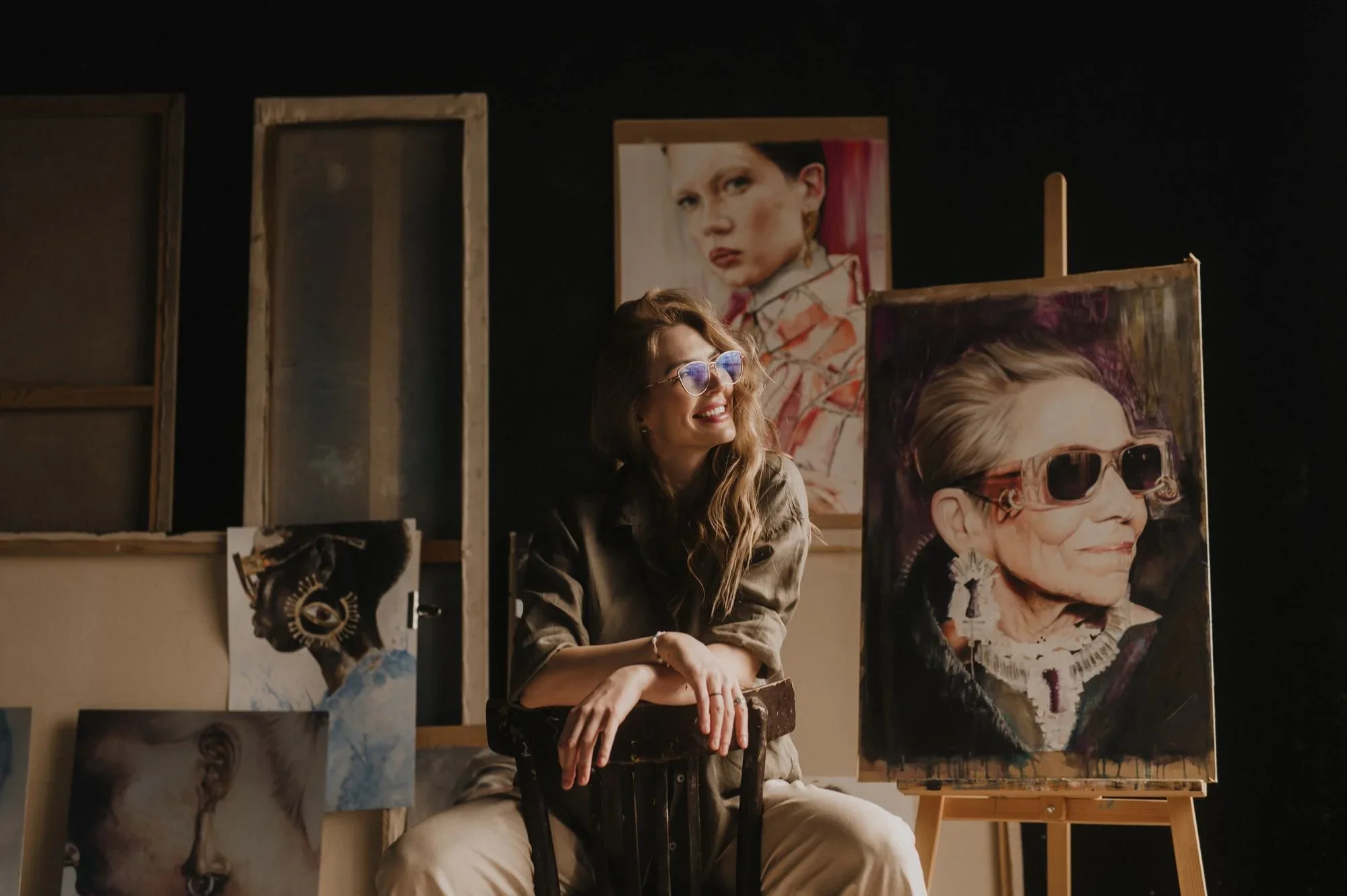
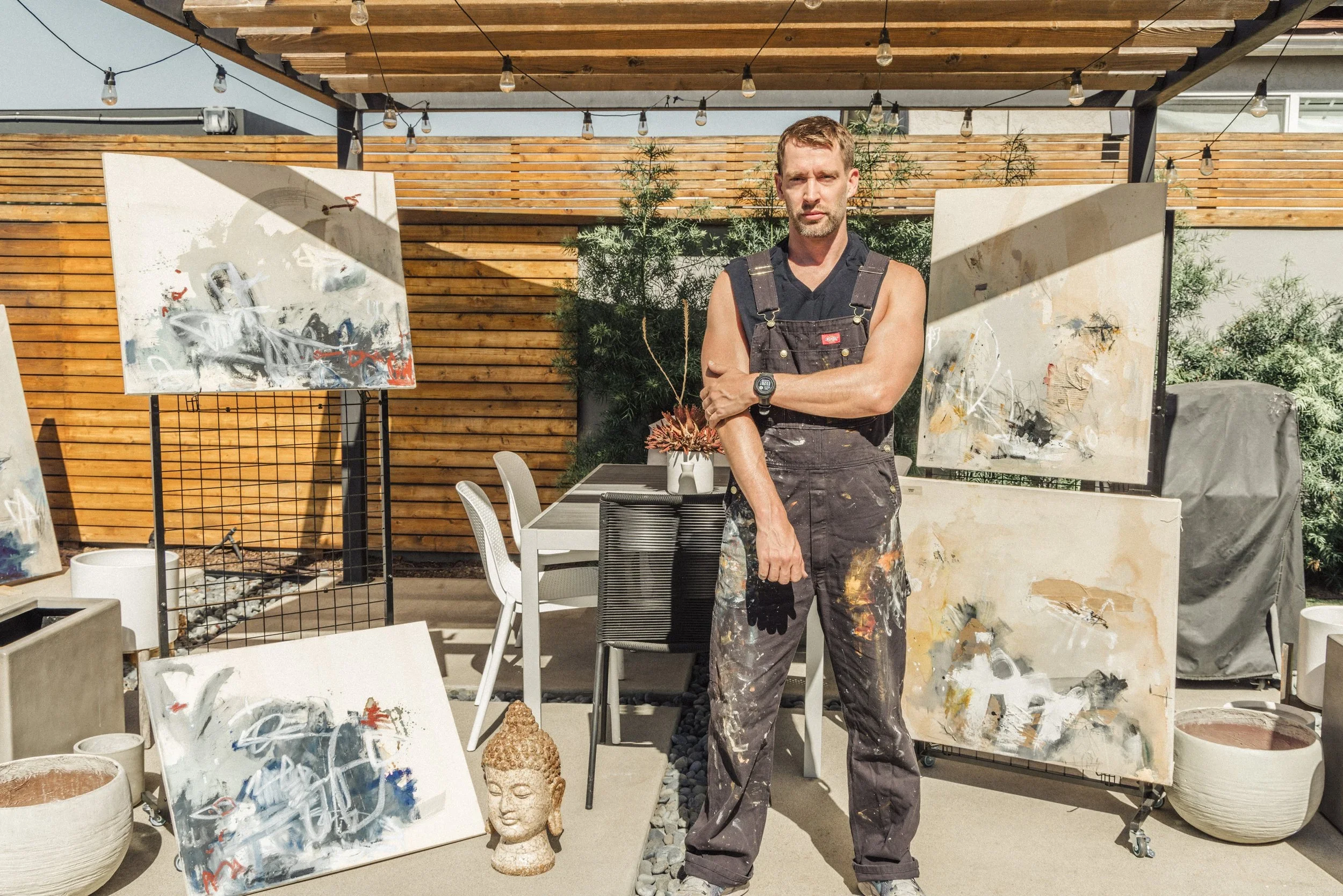

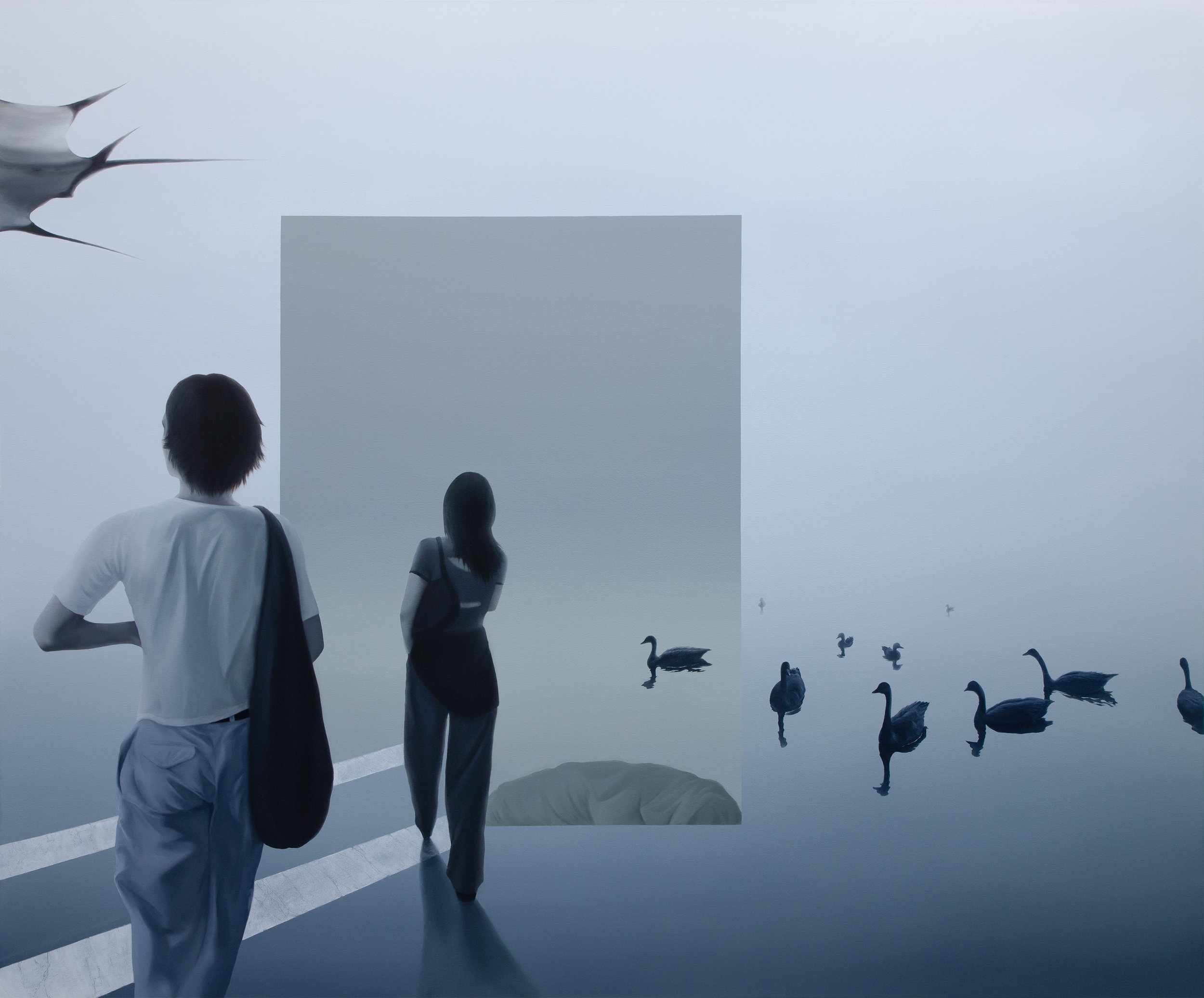
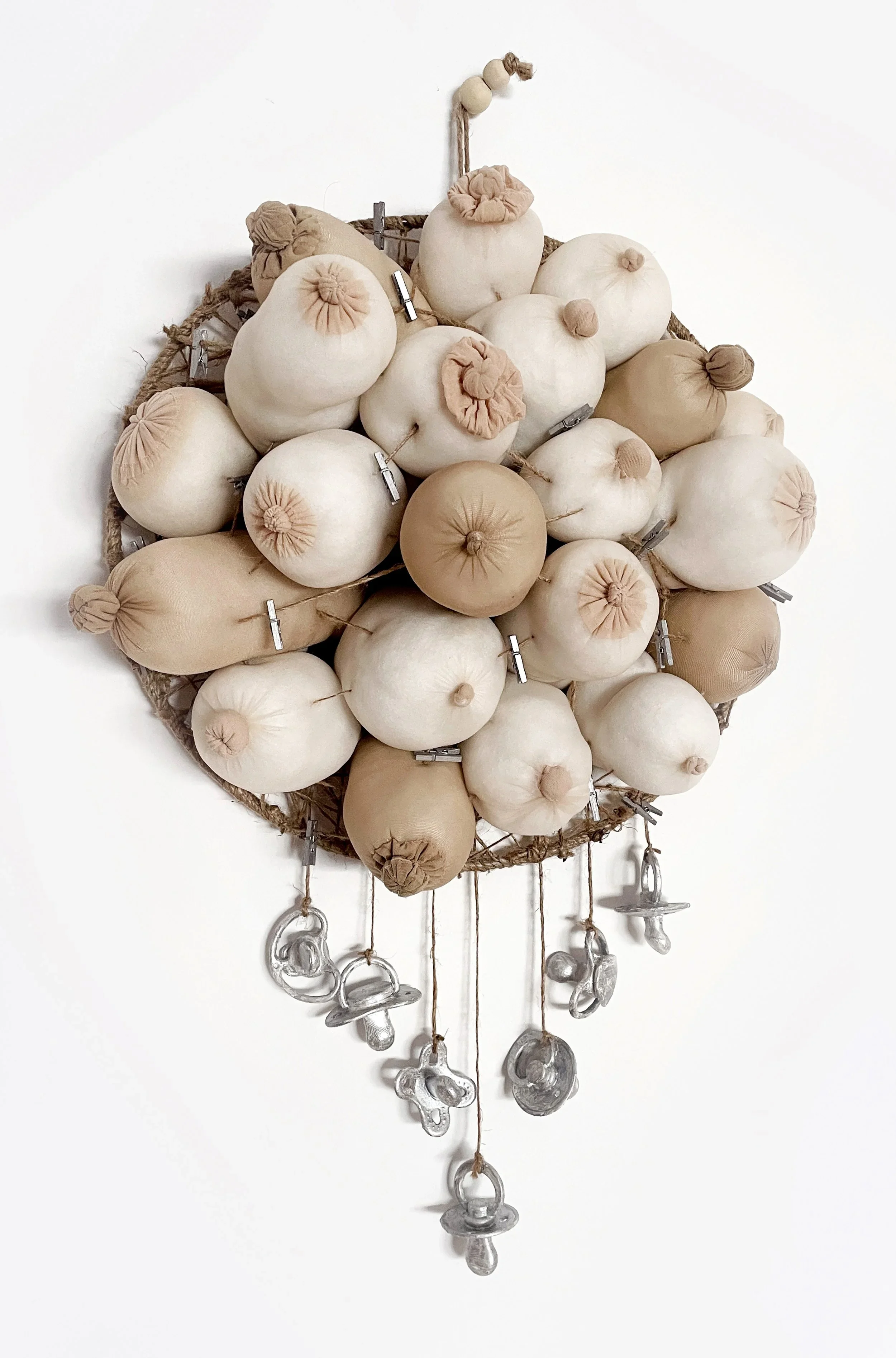
Brooklyn-Born Allan Gorman is a contemporary fine artist based in Jersey City, NJ, with a unique artistic vision cultivated by a distinguished commercial career that helped refine a sense of aesthetics and unwavering commitment to excellence that continues to define his artistic process to this day. His latest series of paintings is titled Imaginary Spaces.