

10 Questions with auroraerica (Erica Manenti)
auroraerica (Erica Manenti) works at the intersection of spatial design and visual storytelling, developing environments that operate as emotional architectures, spaces not intended as neutral containers, but as vessels for psychological and perceptual states. Her practice is concerned with shaping feelings as places, where introspection becomes spatialized, and emotions acquire architectural form.
Working through digital environments, moving image, and rendered spaces, she creates atmospheres charged with a subtle yet persistent emotional tension, inviting viewers into unfamiliar territories that feel simultaneously intimate and unsettling. Self-taught in Blender, she integrates CC0 and royalty-free assets into meaningful spatial compositions. Rather than offering narrative resolution, her works function as thresholds: spaces where perception slows down, and self-awareness becomes unavoidable.
At the core of her research lies a sustained investigation into the complexity of the human psyche. Curiosity and doubt act as driving forces, guiding a process that privileges vulnerability, ambiguity, and emotional exposure. The spectator is never positioned as a passive observer, but as a presence confronted with their own internal landscape.
She is currently based in Italy and developing cross-disciplinary exhibition projects across Europe and Asia. Her background includes studies in Visual Merchandising and ongoing training in Interior Design.
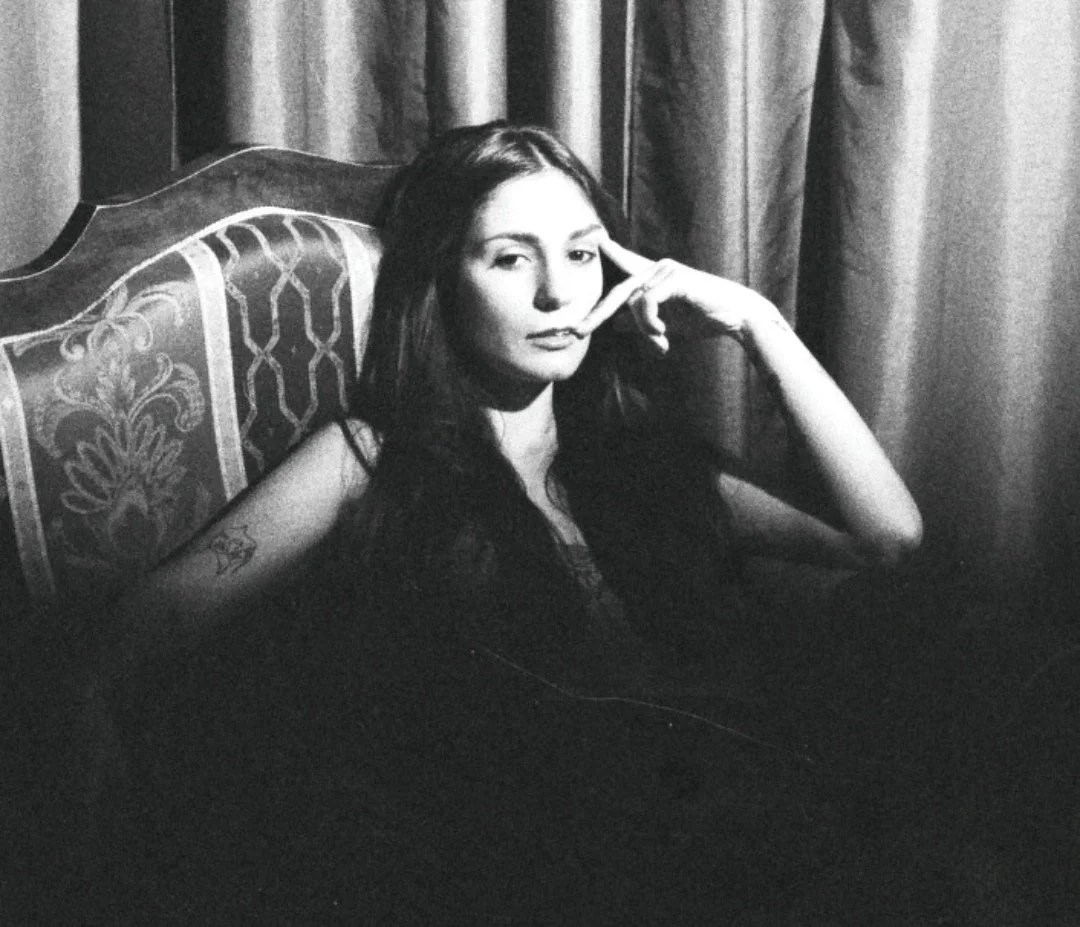
auroraerica (Erica Manenti) - Portrait
ARTIST STATEMENT
auroraerica is a spatial designer and visual storyteller whose artistic practice is concerned with the creation of emotional architectures, shaping feelings as places rather than as narratives.
Her primary intent is to subvert perception, evoking a cathartic response within the unaware spectator. Interplayed visual elements function as tools within emblematic relationships, where introspection emerges as a point of tension rather than resolution.
A restless and exploratory mind, as well as a world-builder, auroraerica grounds her work in curiosity and doubt. A sustained fascination with the complexities of the human psyche and condition forms the basis of her inquiry. Her artistic drive is oriented toward prompting the viewer to radically examine the self and its constructed persona through the exploration of disquieting territories, where uneasiness persists as a lingering trace.
Her creative expression unfolds primarily within post-production processes, crafting environments in Blender and integrating digital readymades such as CC0 and royalty-free assets. Through this process, she reassigns meaning to standardised, neutral, and indexically minimal objects and to liminal architectures, often overlooked or forgotten, transforming them into sites of emotional charge.
An in-depth investigation of human circumstances underpins her work. Within these constructed environments, the body is not treated as mere flesh but as a symbolic threshold: a site of transition and corporeal in-betweenness. It operates as another limen, no longer representing but evoking, an ephemeral presence oscillating between absence and presence, reality and artifice, interiority and exteriority.
Uncanny and unsettling atmospheres constitute the foundation of this sculpting of feelings. By blurring the boundaries between idealism and authenticity, what manifests lacks tangible proof in everyday life, yet remains disturbingly familiar, resonating on a subconscious level.
Dreams and fragments of trivial human experience inform these visions, guiding the carving of sensations into three-dimensional matter. The resulting spaces function as invitations for viewers to investigate their own limits and to renegotiate their boundaries.
Discomfort and uneasiness act as allies, points of departure for radical self-reflection, appearing less as abstract emotions than as a stranger’s gaze, unexpectedly close, silently asking: Are you okay?
dollhouse, Blender, 1920x1020 px, 2026 © auroraerica
INTERVIEW
Let’s start with your background. You studied Visual Merchandising and Interior Design. How did these experiences shape your way of thinking about space as an emotional medium?
The first time I truly understood space as an emotional medium was during my Visual Merchandising final project. I was interested in creating a store installation that could abolish the gap between art and the commercial experience, treating the retail space not as a neutral container but as an expressive device.
This approach is particularly evident in parts of East Asia, especially in Japan and South Korea, where retail spaces often operate as immersive environments rather than purely commercial settings. In these contexts, the store becomes a narrative and sensorial device, a space where architecture, visual language, and atmosphere work together to generate an experience that can incorporate artistic and performative elements, beyond the act of purchase itself.
From there, I began to focus more deeply on how environments are perceived and felt. I felt the need to understand how spaces are constructed, which rules govern them, and how those rules can be subtly manipulated to disrupt expectations and produce unexpected emotional responses. Studying Interior Design gave me the structural and technical foundation to support this research, allowing me to move consciously between order and distortion, function and affect.
You work primarily with digital environments and rendered spaces. Why did Blender and virtual space become your main tools of expression?
I have always been drawn to 3D because it begins from an infinite blank field, a space without gravity, hierarchy, or predefined rules. The possibility of constructing an entire world from nothing and controlling every spatial parameter within it felt immediately aligned with the way I think and imagine.
Blender became my main tool because of its openness and flexibility. At first glance, it can feel hostile, almost resistant, but that complexity is exactly what makes it powerful. Within my practice, it allows me to visualise environments in a highly controlled yet exploratory way, modulating light, materials, scale, and spatial configurations to shape atmosphere rather than simply form.
Working with rendered space does not represent a refusal of the physical. On the contrary, I see digital environments as a parallel dimension where spatial ideas can exist without logistical constraints, while remaining translatable. I am deeply interested in extending these environments into physical or three-dimensional outputs, through installation, objects, or printing, using virtual space as a site of experimentation that precedes and informs material reality.

He became that - Unintended configuration, Blender, 3840 × 2160 px © auroraerica
You describe your works as “emotional architectures.” What does this term mean to you in practice?
When I talk about “emotional architecture,” I mean spaces where the emotional weight of the narrative is carried by the environment itself. I use spatial and architectural elements not only for their functional role, but as tools to create tension, pacing, and anticipation.
Rather than relying on explicit symbols or recognisable narratives, I let space and its mechanisms evoke meaning. Through subtraction, atmosphere becomes central: scale, light, distance, and spatial sequences activate expressive layers and guide perception indirectly.
I’m interested in creating spaces that don’t provide answers or resolve anything. Instead, they open questions and leave them suspended. Within this condition, subversion happens quietly, and introspection becomes the final outcome, something that emerges through the experience rather than being imposed.
Much of your work explores introspection, vulnerability, and uneasiness. What draws you to these psychological states?
I’ve always been drawn to human psychological mechanisms and to moments of internal instability. I see internal turmoil as a potential catalyst for pivotal change, a state in which transformation becomes possible, even if it is uncomfortable or unresolved.
My artistic practice functions both as a method of inquiry and as a site of processing: a space where internal, unnamed conditions can be externalised and examined from a critical distance. Working with space allows me to approach vulnerability indirectly, through atmosphere and structure rather than through narration.
Recently, this approach informed a spatial design project titled He became that. Unintended configuration. Without recounting a specific event, the work engages with something I experienced last year that had not yet found a name or a form. It explores identity as something that can become condensed into a single action, a moment so decisive that, over time, only its final outcome remains visible. What disappears is the complexity, hesitation, and vulnerability that preceded it. The work is not about representation, but about the psychological residue left behind.

None, Blender, 3500x2500 px, 2025 © auroraerica

palaceoffailure, Blender, 1920 × 1080 px, 2026 © auroraerica
Rather than telling stories, your environments function as thresholds, as you mention in your statement. What kind of experience do you hope viewers have when entering your spaces?
Rather than guiding the viewer through a narrative, I aim to create a state of suspended sensorial tension. The experience begins from ambiguity: the spatial configuration opens questions and doubts without offering immediate solutions or resolutions.
What follows is a form of contemplation. Today, contemplation is often perceived as passive or non-performative, but I see it as one of the most demanding positions, remaining with what does not immediately make sense. I’m asking the viewer to negotiate meaning internally, rather than consume a ready-made or closed narrative.
Through observation and introspection, the space continues to exist beyond the encounter. It remains active in the viewer’s mind, generating a lingering resonance that persists after leaving the environment.
You often use CC0 and royalty-free assets. What interests you in transforming neutral or overlooked digital elements into emotionally charged spaces?
Working with CC0 and royalty-free assets allows me to start from elements that are intentionally neutral, functional, and often overlooked. These objects are designed not to demand attention; their role is to serve a purpose and then disappear into the background. That neutrality is precisely what interests me.
When such elements are removed from their expected context, reconfigured, or used against their original function, a fracture appears. Meaning emerges not from the object itself, but from its positioning and relationship to the surrounding space. The familiar becomes slightly unstable, and this instability opens an emotional register.
A key aspect of my work is the displacement of the focal point. By making meaning or orientation not immediately accessible, the viewer becomes more attentive and permeable to the environment. They are invited to navigate the space, to linger, and to negotiate significance through elements that would normally be disregarded. In this way, neutral digital materials become carriers of tension, atmosphere, and psychological charge. In Palace of Failure, this approach takes the form of familiar elements whose functions quietly collapse, allowing failure to operate as a spatial condition rather than an exception.

hostile acceptance, Blender, video frame, 3840 × 2160 px, 2026 © auroraerica
The body in your work appears as a liminal presence rather than a fixed figure. Why is this in-between state important to your research?
States of in-betweenness are inherently delicate and unstable. They describe conditions in which something is not fully formed yet, but already carries the potential of what it might become. In this suspended space, past and future versions overlap, generating an atmosphere permeated by uncertainty.
Within my work, the human presence often appears only as an anthropometric reference, a measure, a trace, or a scale, rather than as a fixed or identifiable figure. Used in this way, it reinforces the sense of in-betweenness: a condition where definition fails and outcomes remain unresolved. This suspended state becomes an ideal ground for introspection and critical self-observation, activated through ambiguity rather than representation.
How have audiences and institutions responded so far to the unsettling or uncanny atmosphere of your work?
My engagement with spatial design as a primary language is relatively recent, and much of the work is still unfolding through research, visual testing, and speculative environments. Because of this, responses so far have emerged more through dialogue and informal exchanges than through fully institutionalised presentations.
What I’ve noticed is a recurring sense of attentiveness: viewers and interlocutors tend to spend time with the work, lingering rather than immediately resolving it. The unsettling or uncanny atmosphere often opens conversations rather than closing them, generating curiosity and reflection instead of rejection.
At this stage, my focus is less on fixed reception and more on allowing both the projects and the contexts that host them to remain alive and responsive.
I’m intentionally orienting my practice toward both spatial and institutional contexts that can host uncertainty, allowing the work to remain open and responsive.

someone j_____ off here, Blender, 1920 × 1080 px © auroraerica
You are currently developing cross-disciplinary projects across Europe and Asia. How is your practice evolving through these new contexts?
Working across different geographical and cultural contexts has pushed my practice to become more attentive and precise. Each environment brings its own spatial codes, rhythms, and expectations, which inevitably affect how space is perceived and inhabited. Engaging with these differences encourages me to refine my gaze rather than replicate a fixed method.
These exchanges have strengthened my interest in cross-disciplinary and site-responsive work, where spatial conditions, context, and atmosphere become active components of the project. While much of my research currently unfolds through digital environments, I’m increasingly interested in testing these ideas through site-specific installations, allowing my work to respond directly to place while remaining conceptually consistent.
Looking toward 2026, what are your main artistic goals or directions you hope to pursue?
Looking toward 2026, my main goal is to consolidate my practice and give it greater spatial clarity. At the very beginning of this year, I took time to reflect on my artistic direction and consciously moved toward a more sensitive and precise approach. I’m increasingly interested in engaging with space as a language in itself, rather than as a purely expressive tool. A key direction I hope to pursue is the realisation of a fully installed environment, where the work can exist physically and be experienced over time. I’m currently developing projects with this possibility in mind.
Artist’s Talk
Al-Tiba9 Interviews is a curated promotional platform that offers artists the opportunity to articulate their vision and engage with our diverse international readership through insightful, published dialogues. Conducted by Mohamed Benhadj, founder and curator of Al-Tiba9, these interviews spotlight the artists’ creative journeys and introduce their work to the global contemporary art scene.
Through our extensive network of museums, galleries, art professionals, collectors, and art enthusiasts worldwide, Al-Tiba9 Interviews provides a meaningful stage for artists to expand their reach and strengthen their presence in the international art discourse.
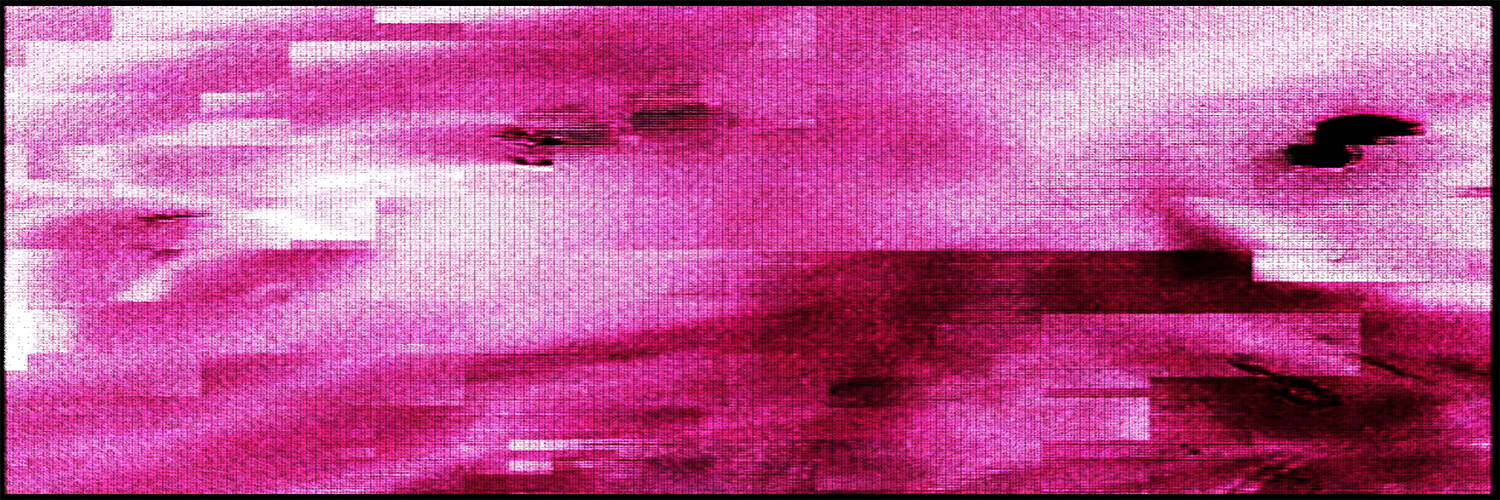


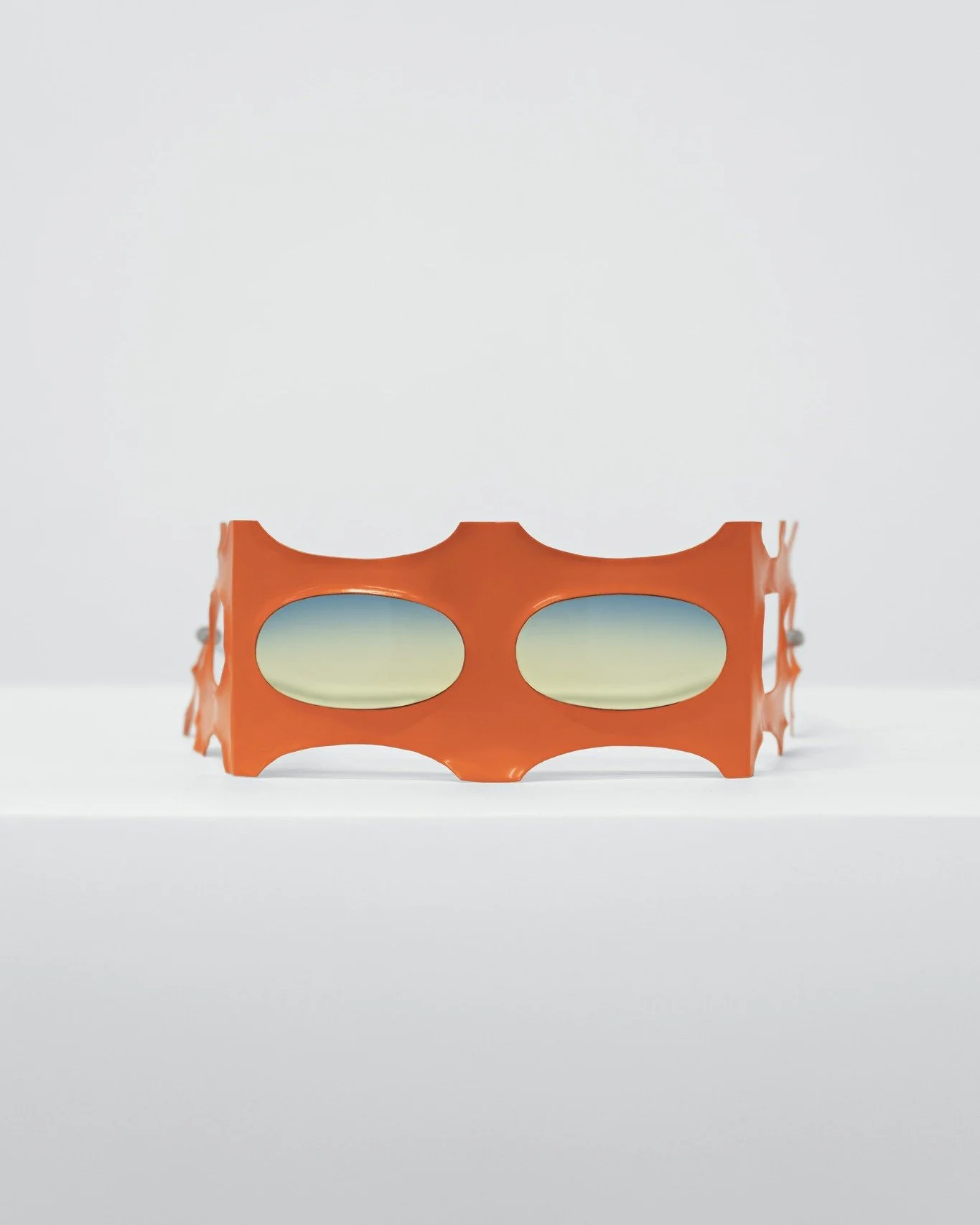
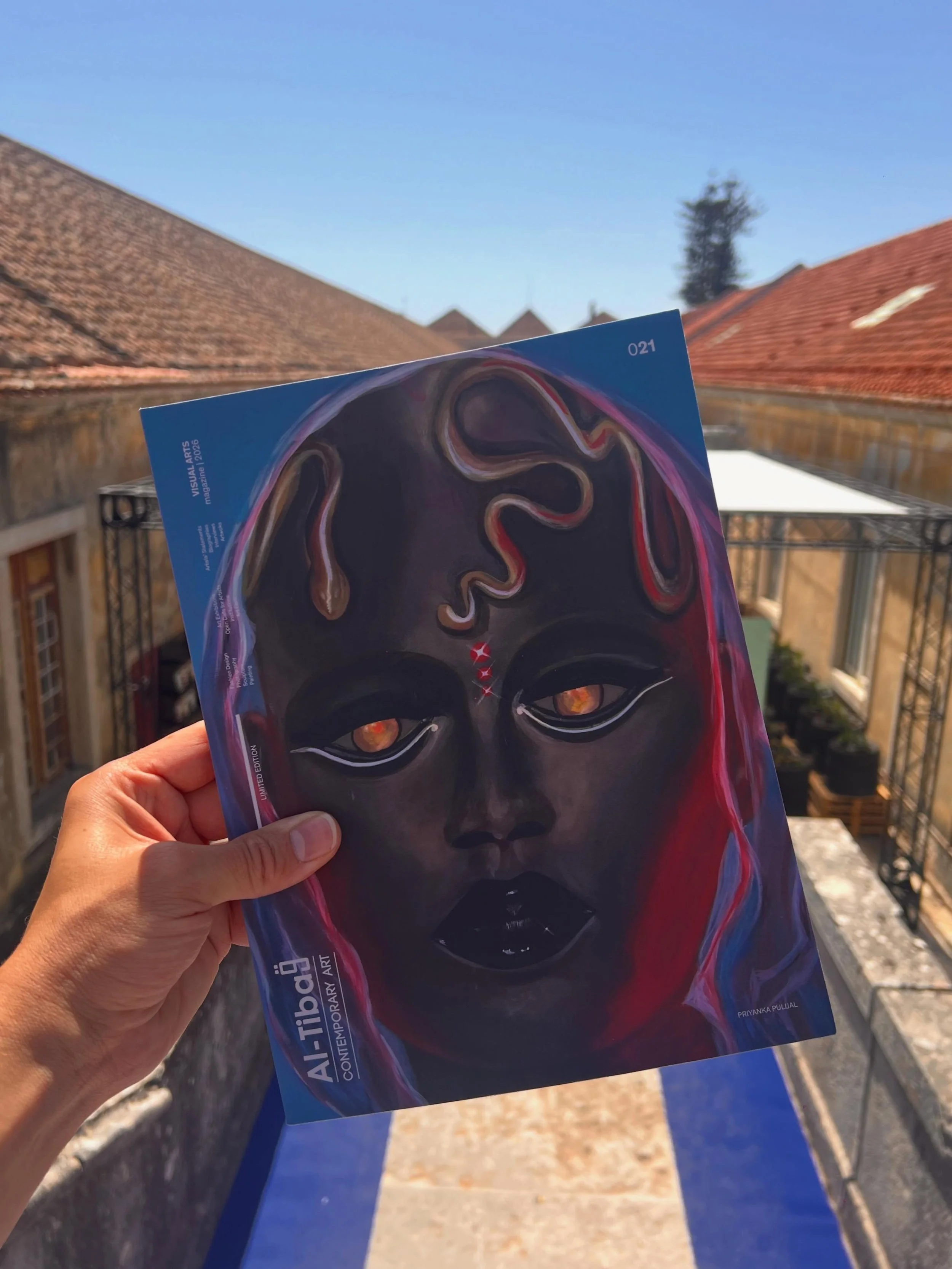
Lumi Liu is a New York–based designer and visual artist working at the intersection of art, medical visualisation, and public expression. Her practice explores consciousness, hidden biological systems, and the multiple dimensions of life that exist beyond human awareness. Lumi transforms these invisible biological architectures into poetic artistic experiences.