
10 Questions with Gauri Gandhi
Gauri Gandhi is a conceptual artist whose work often features simple, toylike forms that deliver critical commentary with a touch of humour. While ceramics remain her forte, she works in papier-mâché, nature assemblages, found objects, and plywood to create installations and artworks.
Born in Amritsar, India, Gauri completed her BFA (distinction)and MFA at the Maharaja Sayajirao University of Baroda (MS University) in 1982. In 2001, Gauri established her studio in Pune, where she freelanced, participated in various exhibitions, and undertook commissions. In 2008, she joined FLAME University, teaching sculpture. With a focus on providing hands-on experiences, she designed Art-tête-à-tête, a collaborative art festival featuring eminent Pune artists and FLAME faculty members. In 2018, she established the FLAME Artists’ Residency.
She has exhibited and curated extensively within Pune, and in 2016, she initiated Art Mandai, an ongoing annual event aimed at connecting art with the local public. Resigning from FLAME University in 2023, Gauri has established her ceramic studio in Pune, and is once again back into her art practice, creating and exhibiting as a freelance artist.
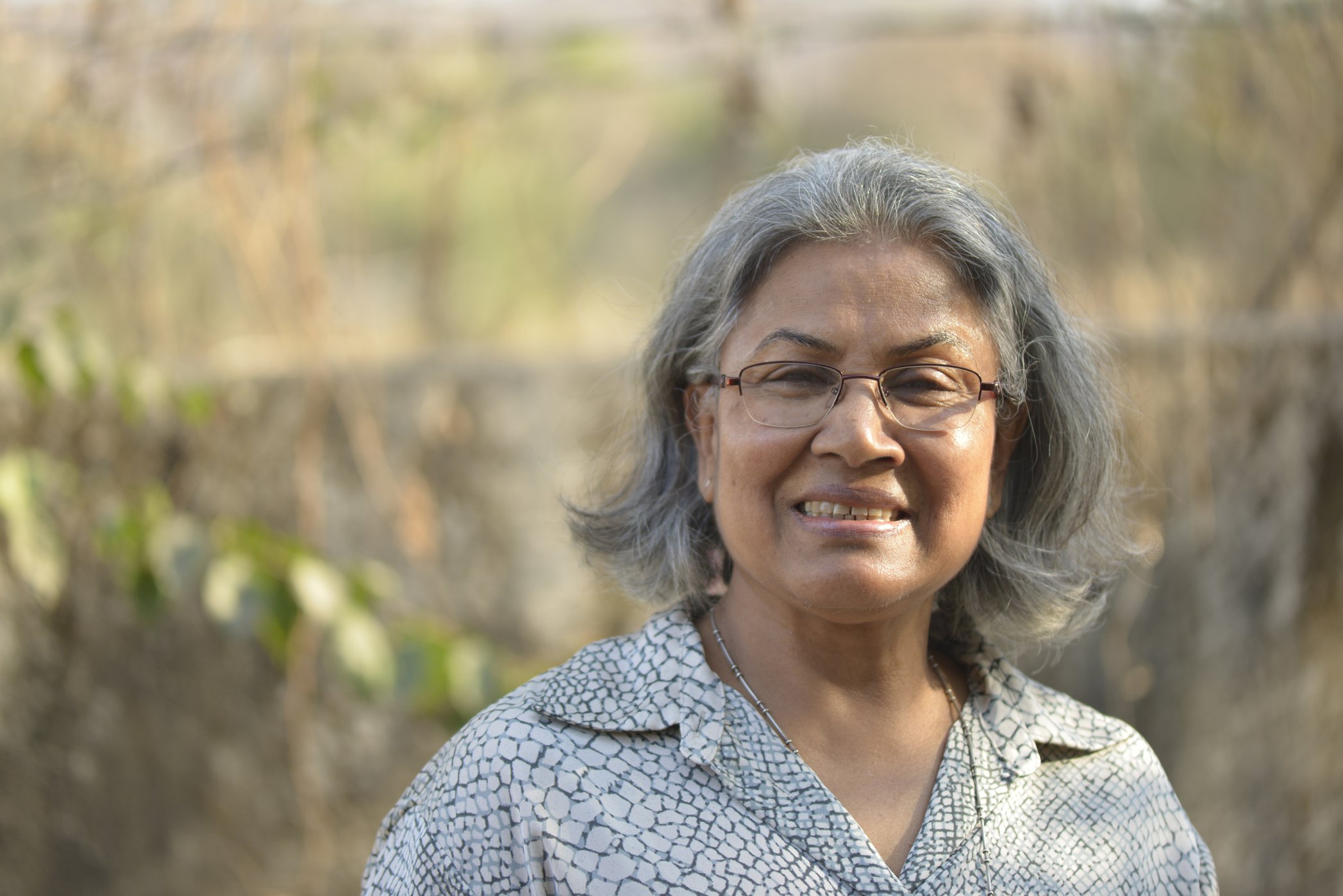
Gauri Gandhi - Portrait
ARTIST STATEMENT
For Gauri Gandhi, art emerges from an attentive engagement with life. Observing the world around her, she reflects on individuals shaped and constrained by emotional, social, and cultural structures that quietly inform their identities and relationships.
Her work unfolds through conceptual inquiry rather than adherence to fixed styles or predetermined outcomes. Ideas often originate from chance encounters, an overheard conversation, a found object, or a fleeting moment, allowing material and form to evolve organically. Through this approach, Gandhi creates works that mirror the layered complexities of human existence, where meaning is gradually revealed rather than immediately declared.
Gandhi frequently addresses everyday realities through forms that appear playful, light-hearted, or toy-like. This visual simplicity, however, conceals a deeper critical engagement with vulnerability, isolation, and emotional tension. The apparent ease of her forms invites approachability, while their underlying narratives prompt reflection on the less visible aspects of lived experience.
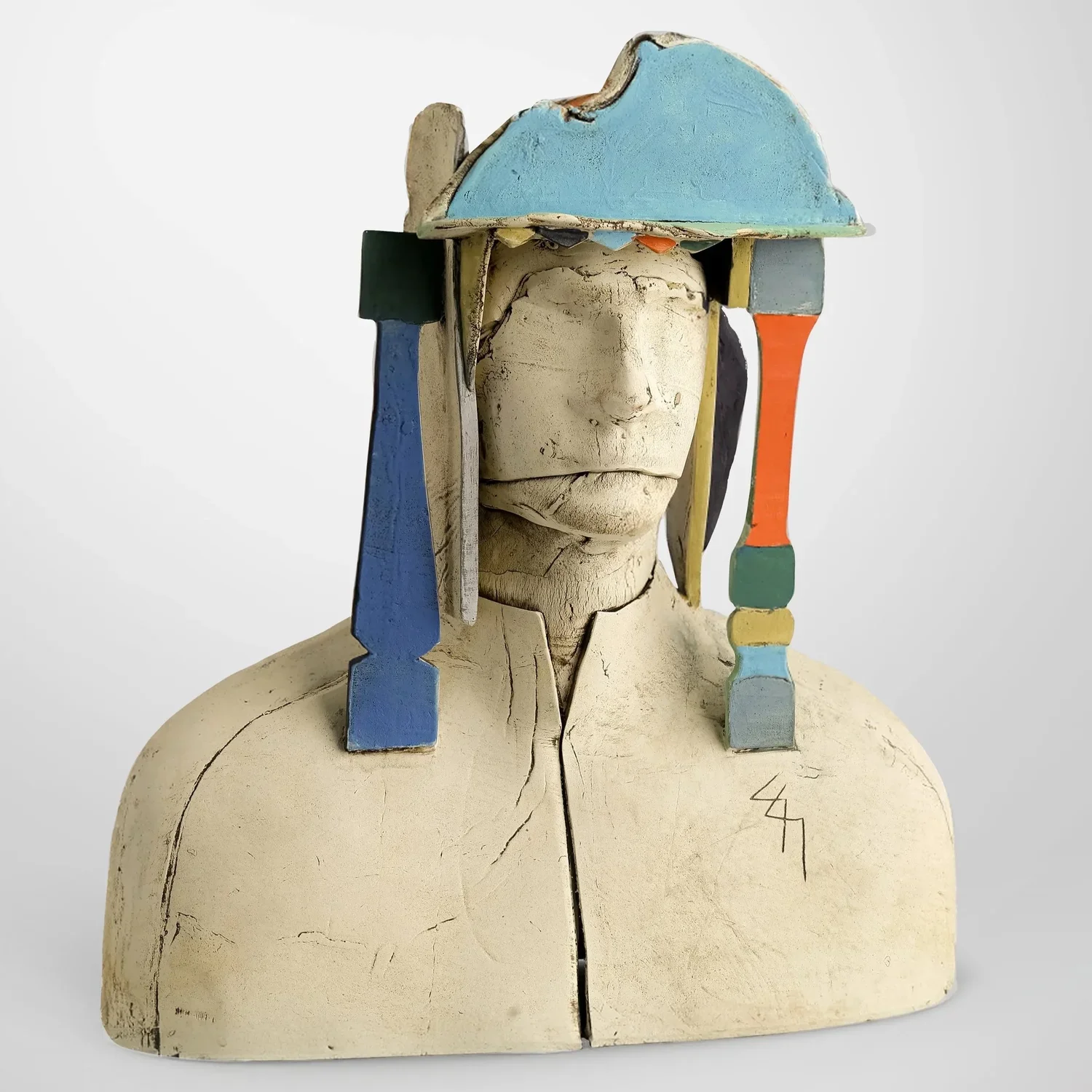
Her ongoing body of work, The Stranger, centres on ceramic heads cast from a single mould, serving as a metaphor for humanity’s shared origin. While the form remains constant, each head develops an individual presence shaped by distinct emotional states and personal histories. The series reflects the paradox of collective sameness and individual distance, how people coexist within proximity yet remain emotionally separate.
Within The Stranger: The Wrap, the house appears as a recurring metaphor for inherited structures such as family, tradition, belief systems, and upbringing. At times enveloping the head, and at others carried like a symbolic headgear, the house represents cultural frameworks that provide protection, identity, and belonging while simultaneously influencing perception and choice. The urban figure, surrounded by constant movement and density, embodies adaptation, resilience, and emotional endurance distinct from quieter landscapes.
Following this, Gauri introduces the act of the “selfie” as a contemporary gesture within The Stranger. Once approached with scepticism, the selfie here is re-examined as a tool of self-representation and connection. Through three ceramic heads depicting this act, the work reflects the human impulse to frame oneself, to reach outward, and to negotiate visibility in an increasingly mediated social world.
Through The Stranger, Gandhi turns her attention to relationships and emotions, arriving at love as their quiet, underlying force, fragile, complex, and deeply human.

SELFIE. HAPPY BIRTHDAY, Ceramics, 16x21x16 in, 2024 © Gauri Gandhi
INTERVIEW
First off, could you introduce yourself and tell us a bit about your background as an artist?
I am Gauri Gandhi, a ceramic sculptor from India. I come from a business family, but art entered my life very early through my father. He was a hobby artist, deeply connected to painting, music, and nature. While weekdays were busy, Sundays belonged to art. Instead of taking us to cinemas or restaurants, he took us to art exhibitions, museums, the theatre, and long drives into the countryside. During these drives, we were not allowed to speak. We simply sat quietly and looked outside. That silence taught me how to observe, how to be present, and how to engage with the world internally. Even today, I carry that ability to observe quietly. Art came very naturally to me. At the time, I thought I was escaping academics by entering fine arts, but once I entered, I realised I had found my true language.
You trained at the Maharaja Sayajirao University of Baroda. How did your education there shape your way of thinking about art and materials?
Entering the Faculty of Fine Arts at the Maharaja Sayajirao University of Baroda opened a completely new world for me. Only after joining did I realise that I was studying at one of the finest art institutions in India, surrounded by exceptional artists and teachers. Initially, I thought I would become a painter. But as we were introduced to various materials and processes, I discovered that clay allowed me to express myself most naturally. It responded directly to my touch and gestures. The institute helped me understand my strengths and limitations. This awareness shaped my relationship with materials and helped me make honest choices based on what I could express most truthfully.

SELFIE. A VISIT TO THE TEMPLE, Ceramics, 12x14x20 in, 2024 © Gauri Gandhi
Ceramics have been central to your practice, but you also work with many other materials. What draws you to these media, and how do you decide which material a work requires?
I am deeply drawn to materials. Every material carries its own character, energy, and presence. I am interested in preserving the inherent identity of a material rather than forcing it to become something artificial. My choices are intuitive but also practical. I am drawn to materials that allow direct engagement, materials that can carry gesture, texture, and spontaneity. Clay, papier-mâché, and found objects allow this immediacy. Sometimes the material suggests the form. At other times, the idea demands a particular material. The same form made in clay, metal, or paper can communicate differently. Material is not just a medium; it becomes part of the meaning itself.
Your ideas often begin with everyday observations or chance encounters. Can you describe how a work typically develops from an initial moment to a finished piece?
I consider myself an everyday artist. I remain open to what is happening around me. Often, a simple moment becomes the starting point of a work. Once, a broken chair was being taken away from my studio. I placed a colourful cushion on it, and suddenly it felt complete and alive. That moment led me to explore cushions as symbols of comfort and emotional support. Similarly, during a casual conversation, a friend said, “I became a stranger.” That sentence stayed with me. It made me question what it means to be a stranger. This simple thought gradually evolved into a large body of work. The process is organic. One thought leads to another. The material responds. The work evolves slowly through engagement and reflection.
Many of your works appear playful or toy-like at first glance. Why is this sense of simplicity or humour important to you?
I am naturally drawn to simplicity. I find it difficult to make aggressive or loud statements. Life itself can be harsh and complex. I prefer to communicate gently, through forms that are approachable and visually engaging. Humour and playfulness create an entry point. They invite the viewer closer. Once the viewer engages, deeper emotional and psychological layers begin to reveal themselves. For me, beauty is not superficial. Beauty allows dialogue. It creates openness. Through simple forms, I explore complex emotional realities.

HEAD WRAP, Ceramics, 16x12x20 in, 2024 © Gauri Gandhi

THE STRANGER. THE THINKER, Ceramics, 16x6x18 in, 2023 © Gauri Gandhi

URBAN WRAP, Ceramics, 16x16x18 in, 2024 © Gauri Gandhi
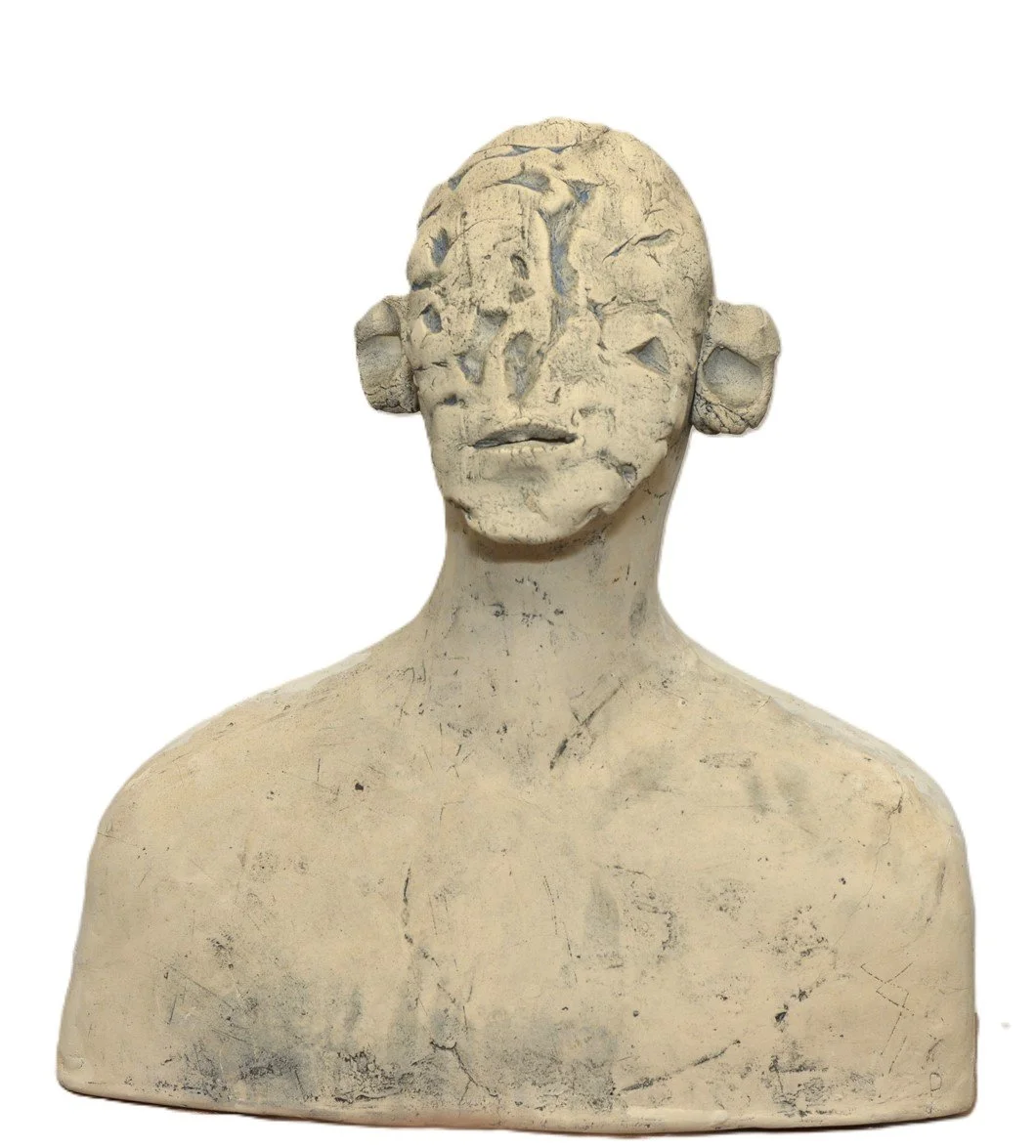
WEATHERED, Ceramics, 16x6x16 in, 2022 © Gauri Gandhi
Your ongoing series, The Stranger, uses repeated forms to explore individuality and distance. What first sparked this body of work?
The series began with a simple question: Who is a stranger?
Using a single mould, I created multiple ceramic heads. They all originate from the same source, just as humanity does. Yet each head gradually becomes individual through subtle changes. This process reflects how each person, though sharing a common origin, develops a unique identity shaped by experiences, memories, and emotional histories. The work explores the paradox of being together yet remaining emotionally separate.
The image of the house appears frequently in The Stranger. What does this symbol represent for you?
The house represents one’s upbringing, belief systems, and cultural identity. While the heads originate from a single mould, the house becomes the element that individualises each person. It acts like an invisible wrap, symbolising the traditions and emotional environments that shape our perception. Sometimes the figure carries the house, and sometimes it peers through it. This reflects how deeply our roots influence how we see and navigate the world. In an urban environment, where one exists among countless strangers, the house becomes an inner anchor. It is not just a structure, but a psychological space of memory, protection, and belonging that each individual carries within.
How have audiences responded to The Stranger, both emotionally and conceptually?
Audiences often relate to the work very personally. Many viewers recognise themselves within these forms. Though the sculptures are not portraits of specific individuals, they reflect emotional states that are universal. Viewers bring their own experiences into the work, and the sculptures become mirrors of their inner worlds.
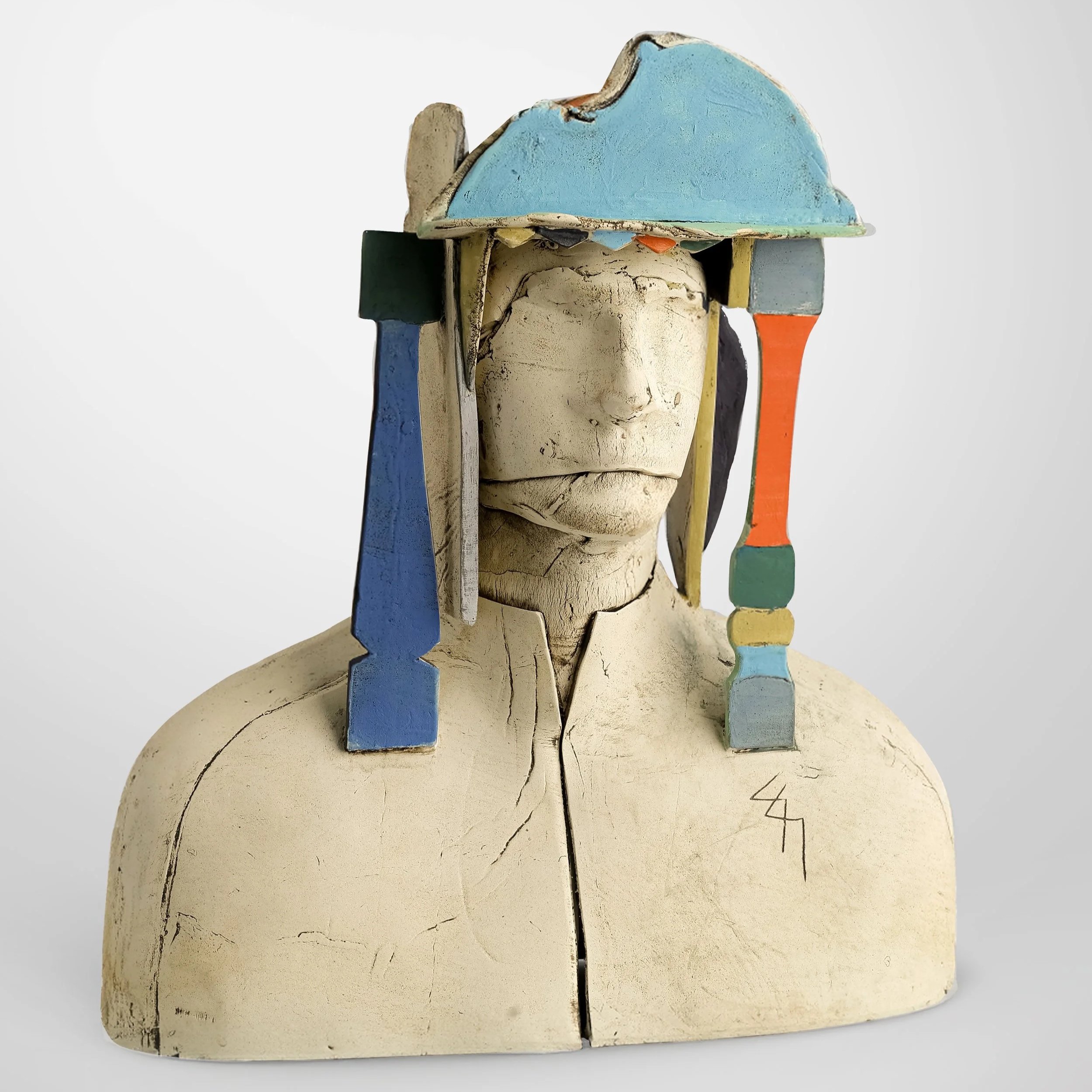
WRAP. THE STRANGER, Ceramics, 16x16x16 in, 2024 © Gauri Gandhi
After returning fully to independent practice, what are you currently working on or exploring in the studio?
I continue to work on The Stranger series, as I feel there is still much to explore. As I observe people and emotional interactions, I continue to discover new layers of human experience. Alongside this, I continue working on my cushion and balloon series, which explore comfort, relationships, and emotional fragility. My practice evolves naturally. Each series grows from lived experience and ongoing observation.
Lastly, looking ahead, what kinds of projects or questions would you like to focus on in the coming years?
I am currently expanding my material exploration beyond ceramics. I am particularly interested in working with metals like copper and iron. Each material carries a different emotional and physical presence. While ceramics remain central to my practice, I am interested in understanding how the same emotional inquiries translate through different materials. At the core, my work continues to explore the human condition, identity, emotional states, belonging, and the inner worlds we carry.
Artist’s Talk
Al-Tiba9 Interviews is a curated promotional platform that offers artists the opportunity to articulate their vision and engage with our diverse international readership through insightful, published dialogues. Conducted by Mohamed Benhadj, founder and curator of Al-Tiba9, these interviews spotlight the artists’ creative journeys and introduce their work to the global contemporary art scene.
Through our extensive network of museums, galleries, art professionals, collectors, and art enthusiasts worldwide, Al-Tiba9 Interviews provides a meaningful stage for artists to expand their reach and strengthen their presence in the international art discourse.



Gauri Gandhi is a conceptual artist whose work often features simple, toylike forms that deliver critical commentary with a touch of humour. Her ongoing body of work, The Stranger, centres on ceramic heads cast from a single mould, serving as a metaphor for humanity’s shared origin.states.