

10 Questions with Xiaohan Wu
Al-Tiba9 Art Magazine ISSUE21 | Featured Artist
Xiaohan Wu is a metalsmith and contemporary jewellery artist whose work explores the intersection of form, sound, and communication. Through horn-like and woven metal structures, she translates vibration into visual language, revealing how sound embodies both expression and silence. Her practice is rooted in her experience of navigating linguistic and cultural boundaries after moving across countries, where accent and miscommunication became part of her creative vocabulary. Wu holds a BFA from the Metal Program at the State University of New York at New Paltz.
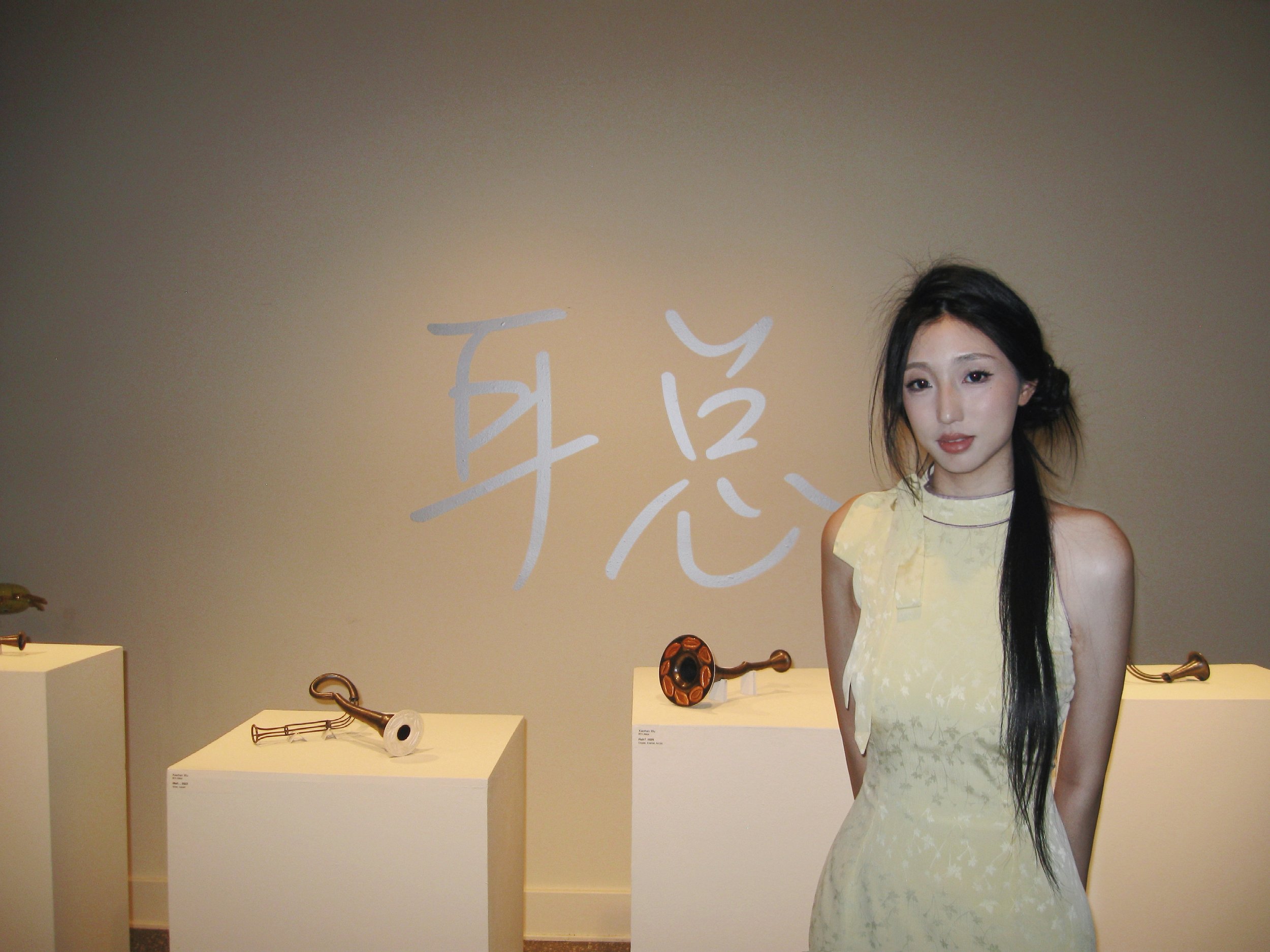
Xiaohan Wu - Portrait
How Are You? | Project Statement
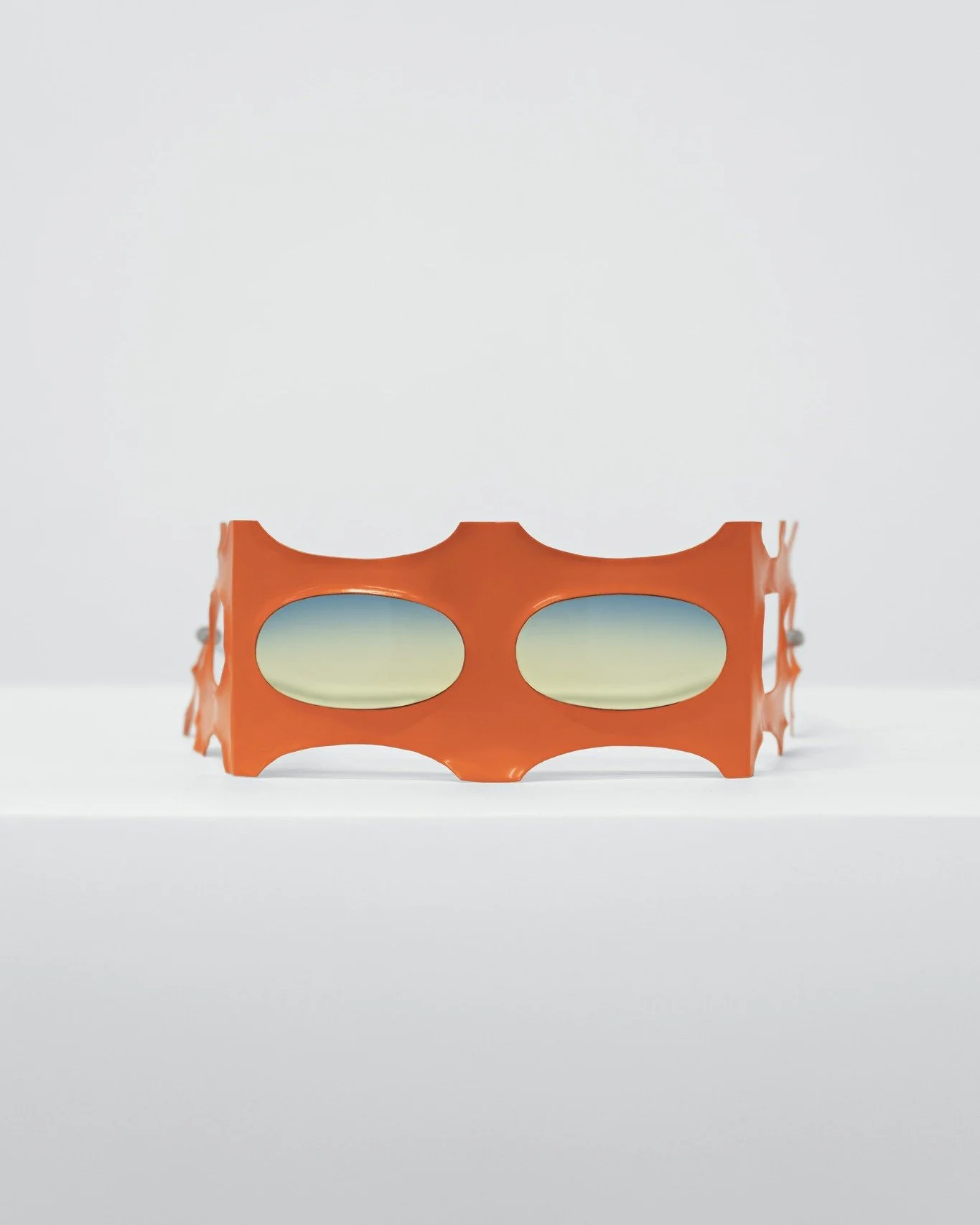
How Are You? transforms the idea of communication into a sculptural form. The twisted horn structure visualises how sound travels, expanding, bending, and fading. Through metal’s rigidity and the spiralling enamel text, the work reflects the artist’s experience with language barriers and the friction between speaking and being understood.
How Are You?, Copper, Enamel, 11x6x4.5 in, 2025 © Xiaohan Wu
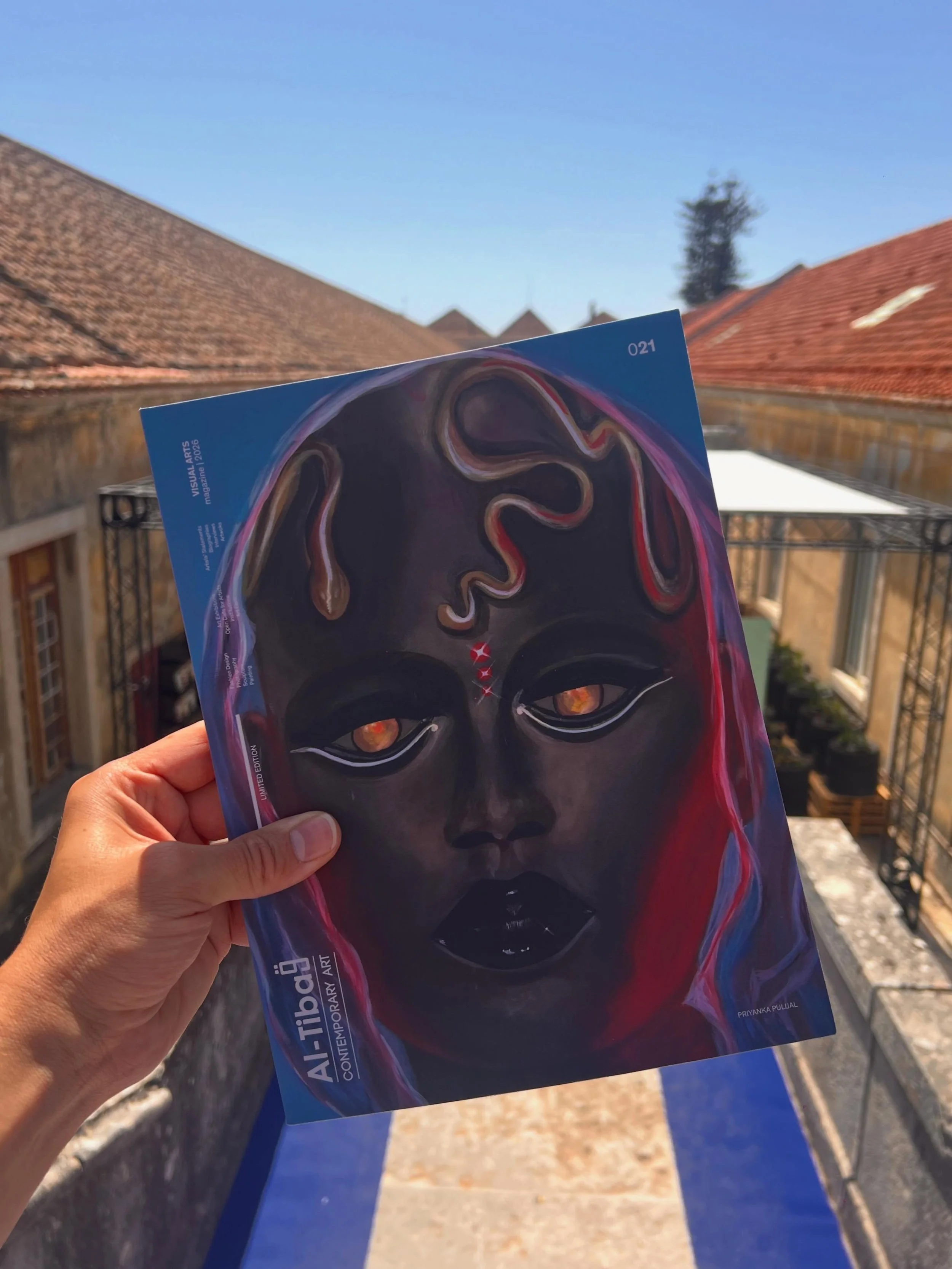
AL-TIBA9 ART MAGAZINE ISSUE21

DISCOVER THE INTERNATIONAL ART SCENE WITH AL-TIBA9
LIMITED EDITION | Shipping worldwide.
Premium museum art paper.
Printed in London.
Grab 3 or more prints and get your FREE digital magazine.

Digital Magazine - Available SOON…
INTERVIEW
Please tell us a bit about yourself and your journey into metalwork and contemporary jewelry. How did you first get interested in this medium?
I completed my studies and research in metalsmithing in New York. Before that, I simply enjoyed handmade crafts and making small accessories. I have always been drawn to objects with a sense of structured variability, forms that follow certain rules yet still allow for transformation, maintaining a balance between order, freedom, and unpredictability. Metalsmithing embodies these qualities perfectly. It enables the creation of precise, symmetrical structures while also allowing for fluid, organic forms. This material language, a blend of rationality and sensibility, is what ultimately led me to commit myself to this creative path.
Your work brings together form, sound, and communication. How did this focus develop over time?
My initial interest lay in the relationship between materiality and sound. I discovered that altering the physical form of an object directly affects the sound it produces. As my research deepened, I began to understand that sound is a mode of communication in itself, and my practice gradually expanded to include the broader theme of communication. After living across different cultures, I became increasingly aware of the connections among language, misunderstanding, expression, and listening. These experiences have steadily evolved into a central focus within my creative work.
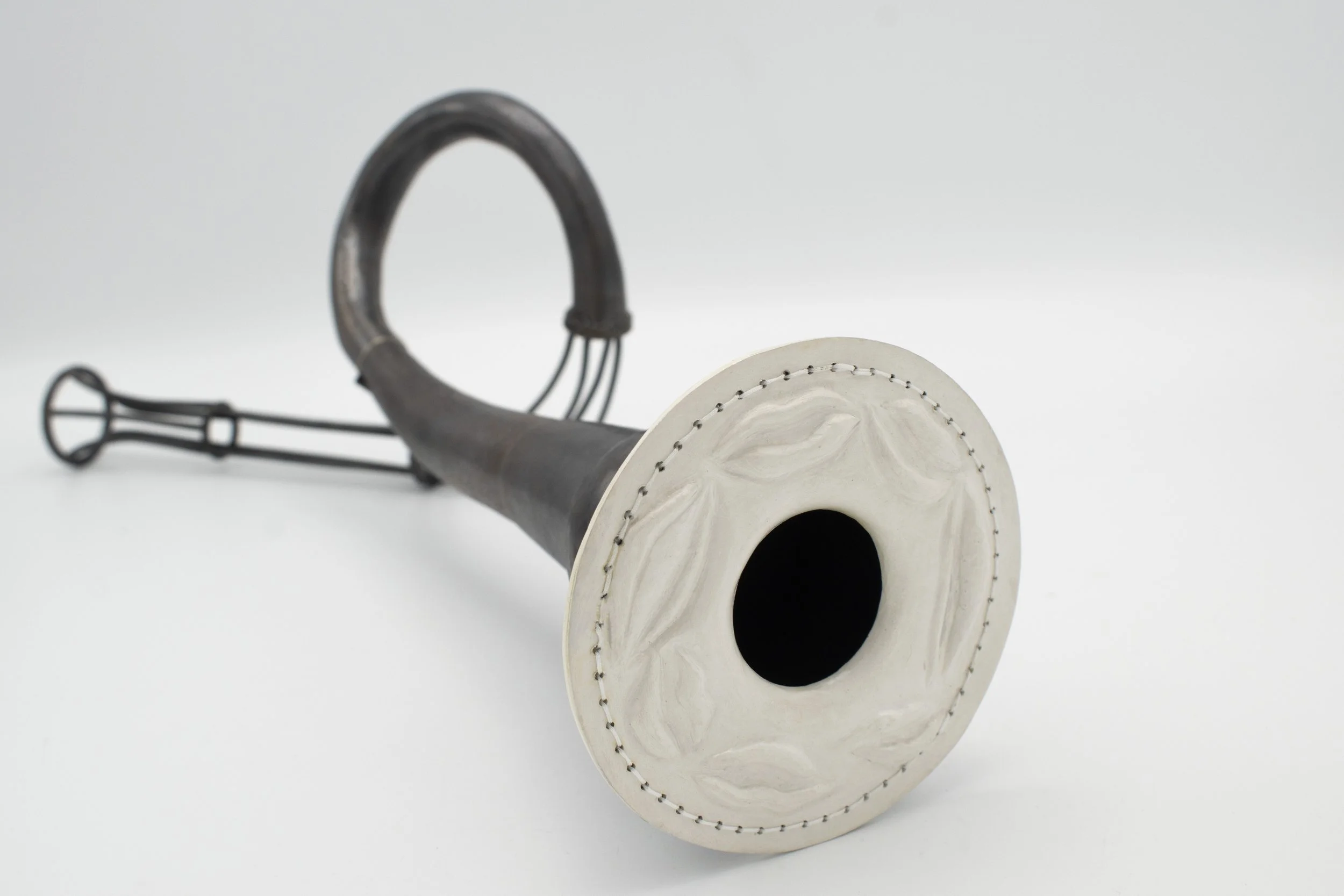
How Are You?, Copper, Enamel, 11x6x4.5 in, 2025 © Xiaohan Wu
Sound plays a central role in your work. What first drew you to explore it through metal?
There is a natural intimacy between metal and sound. Striking, colliding, vibrating, and resonating all produce an immediate audible response. When I first struck a metal plate with a hammer, the crisp and lingering echo made me realize that metal is not a cold or inert substance, but a material capable of responding. This inherent quality of being heard became the starting point for my exploration of sound.
You often use horn-like forms in your pieces. What does this shape represent for you?
The form symbolizes the transmission of sound. It resembles both a vessel and an extension of the ear. For me, this shape represents a structure that moves constantly between speaking and listening. At the same time, it traces the journey of sound as it shifts from faint to loud and from concentrated to diffused. It becomes a physical expression of emotion, language, and communication as they move through space.
Your work connects sound with miscommunication. How has your personal experience with language shaped this direction?
As a non-native speaker living in another country, I often felt uneasy about my accent, word order, and ways of expressing myself. Whenever my voice was misheard or misunderstood, I realized that communication is not a linear process but one filled with distortion, delay, and misalignment. These experiences made me ask: the sound was clearly sent out, so why was it not received? This question led me to use metal structures to give physical form to these gaps in communication and to explore the deeper emotional and psychological states that exist beneath language.
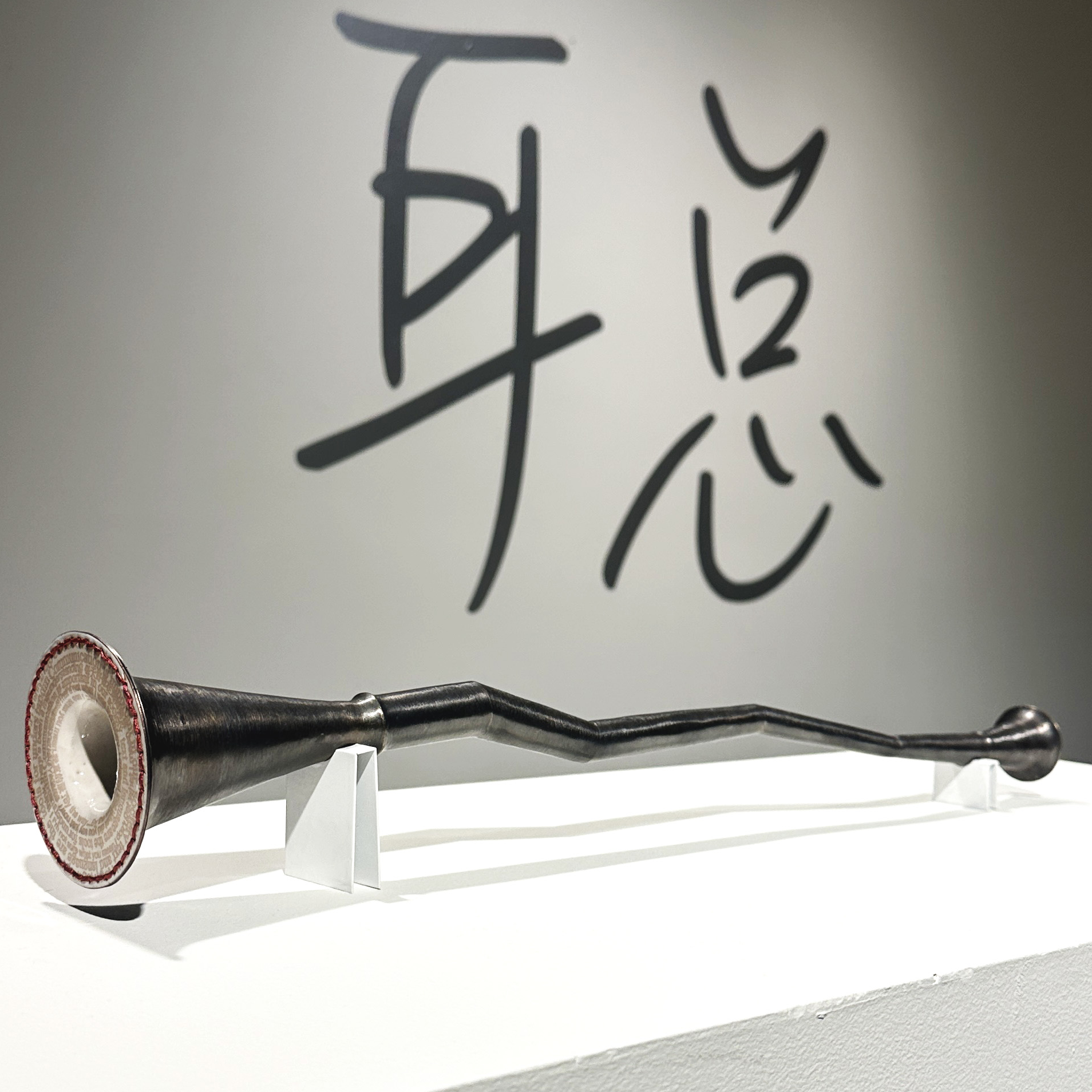
How Are You?, Copper, Enamel, 11x6x4.5 in, 2025 © Xiaohan Wu
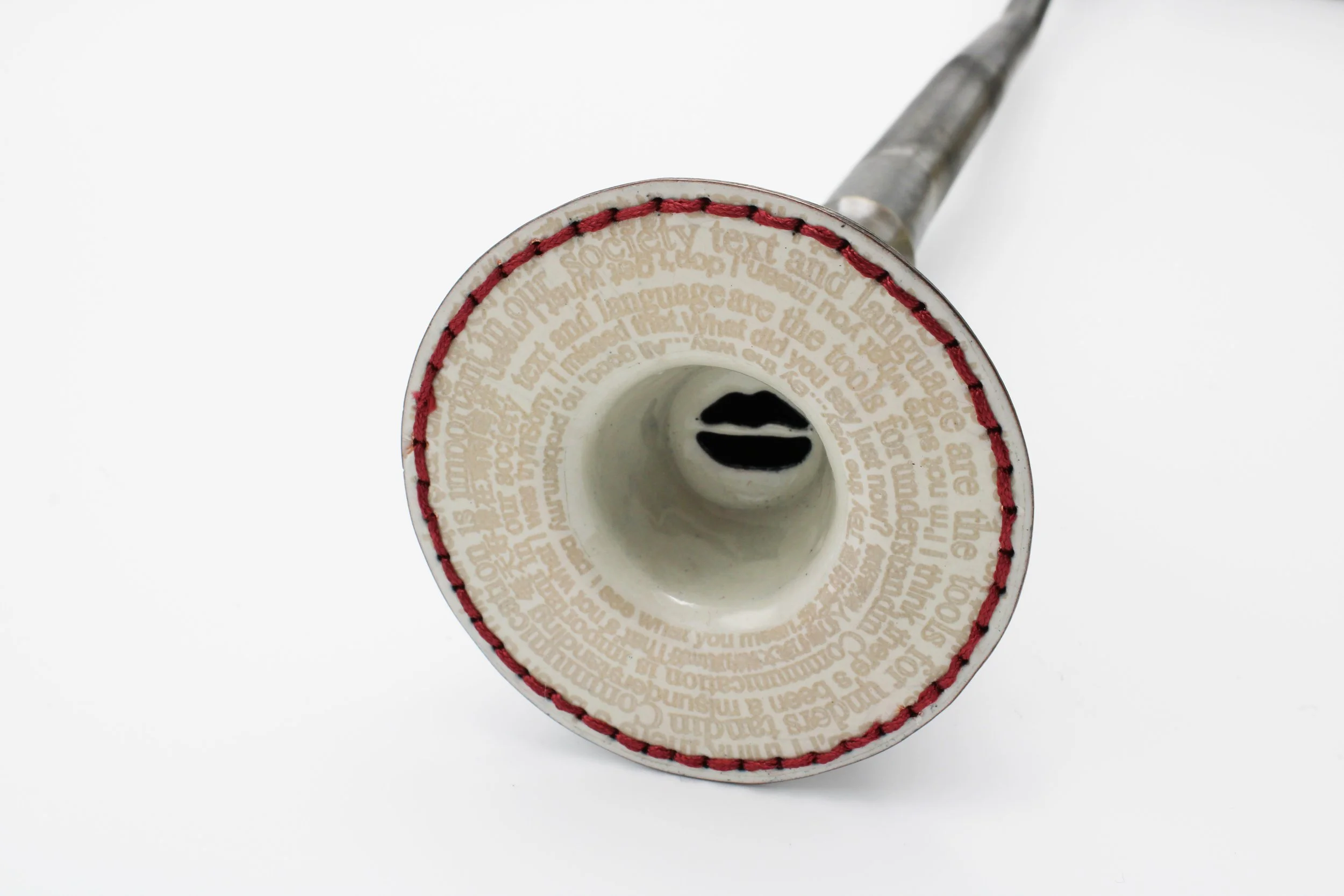
How Are You?, Copper, Enamel, 11x6x4.5 in, 2025 © Xiaohan Wu
In How Are You?, communication becomes a physical structure. How did this piece develop, and what were you trying to express through it?
"How Are You?" takes its inspiration from a common and superficial greeting, one that is frequently spoken yet seldom genuinely considered. Wanting to give physical form to this formalized exchange, I created a metal structure that resembles a soundwave while also suggesting obstruction. Viewers can follow the path of communication, yet they remain unable to truly hear its content. The work invites reflection: does the language we use out of habit actually convey what we mean, or has it become a social ritual repeated without thought?
Metal is a rigid material, yet your work suggests movement and vibration. How do you approach this contrast?
I utilize the deformation that metal undergoes when subjected to force, the tension generated through stretching, and the resonance within hollow structures to express motion that appears still. Although metal is rigid, it records every strike and bend as if freezing sound within its form. I hope that the work, even in its static state, evokes a sense of restrained fluidity, much like the moment just before a sound is released.
Your pieces seem to sit between speaking and silence. How do you think about this balance in your work?
I believe that true communication often takes place between sound and silence, not in the loudest moments but in the spaces shaped by hesitation, repetition, and pause. My work seeks to capture this ambiguous zone, appearing as if it is about to make a sound yet remaining restrained, as if ready to express something yet holding back. This tension embodies the state of communication I aim to explore.
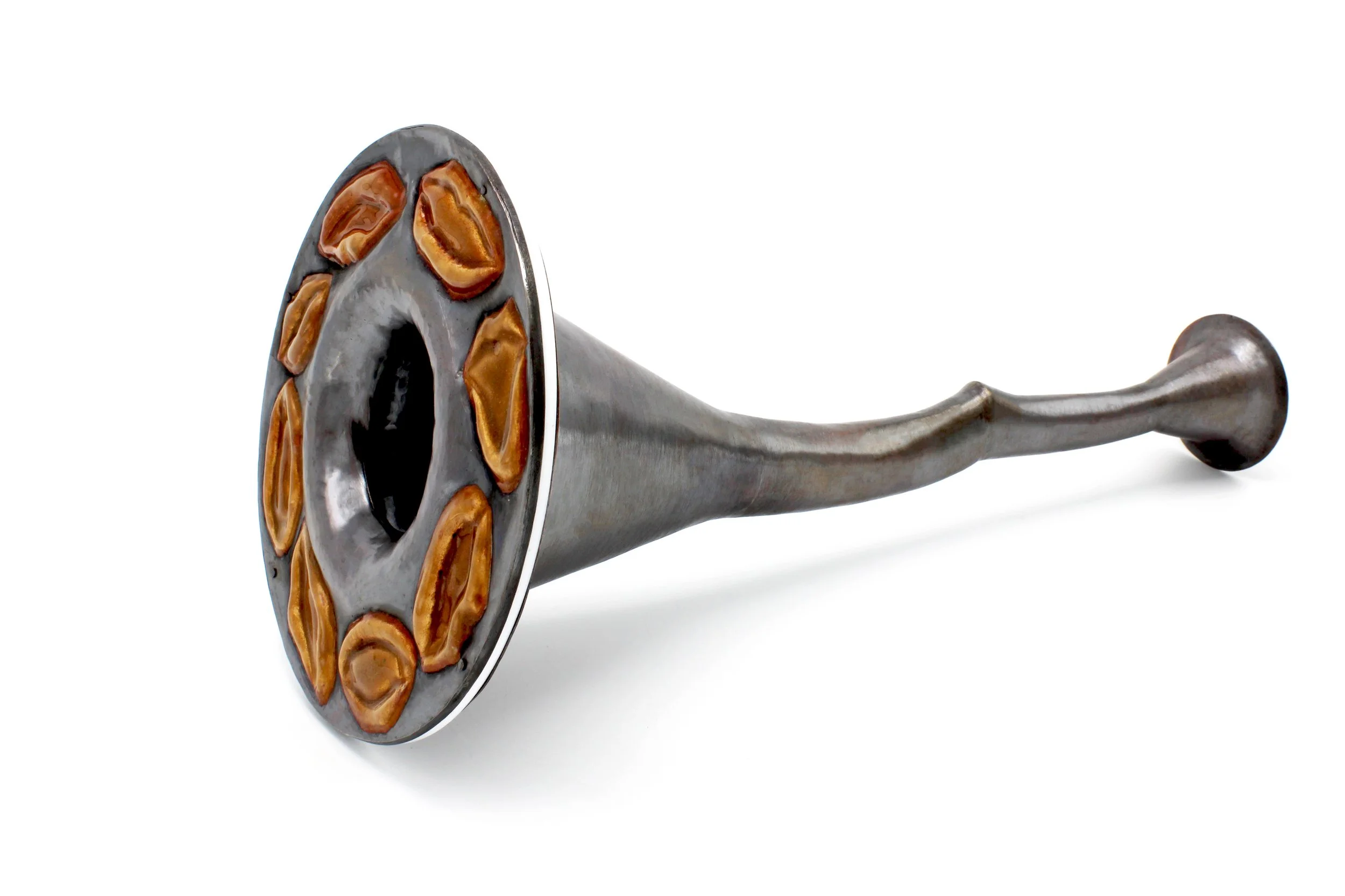
How Are You?, Copper, Enamel, 11x6x4.5 in, 2025 © Xiaohan Wu
Looking ahead, how do you see your practice evolving? Are there new forms, materials, or themes you would like to explore?
In the future, I plan to deepen my exploration of sound by expanding beyond jewelry and possibly creating interactive metal installations. I also hope to experiment with materials such as wood, ceramics, and acoustic substances, allowing sound to travel across a broader range of textures. In addition, I am increasingly interested in the ideas of collective sound and multi-part communication, and I may develop projects that involve group participation.
Lastly, what are your main goals for this year, both creatively and professionally?
This year, I hope to complete a new series of works centered on the themes of accent and identity, while also actively seeking opportunities to present my work in more exhibitions and publications. Professionally, I aim to expand my teaching and workshop engagements, allowing more people to explore the relationship between sound, communication, and the body through metalworking. In doing so, I hope to continue developing my dual path as an artist.
Artist’s Talk
Al-Tiba9 Interviews is a curated promotional platform that offers artists the opportunity to articulate their vision and engage with our diverse international readership through insightful, published dialogues. Conducted by Mohamed Benhadj, founder and curator of Al-Tiba9, these interviews spotlight the artists’ creative journeys and introduce their work to the global contemporary art scene.
Through our extensive network of museums, galleries, art professionals, collectors, and art enthusiasts worldwide, Al-Tiba9 Interviews provides a meaningful stage for artists to expand their reach and strengthen their presence in the international art discourse.




Kfir Galatia-Azulay Darash is an architect, engineer, multidisciplinary designer, and artist. In his practice, architecture defines the framework, scale, rhythm, and light; interior design addresses the body and the human experience; product design approaches detail, material, and physical contact; and art allows an idea to move beyond function and become emotion, memory, and interpretation.