

10 Questions with Wenyu Zheng
As an artist and fashion designer, Wenyu Zheng’s practice explores the interplay of materials, focusing on their inherent properties, limitations, and emotional qualities. His creative process is driven by continuous exploration, iteration, and refinement, balancing imagination and execution.
Born and raised in Hangzhou, China, Wenyu Zheng holds an MFA from the School of the Art Institute of Chicago (SAIC), where he was awarded the SAIC Merit Scholarship, along with the Luminarts Fellowship and the Fashion Council Fellowship. He has presented solo exhibitions, including The Beach After 25 Mins at the SAIC Dean’s Office, where he explored material experimentation through silicone, cyanotype, and textile-based structures, as well as a solo exhibition in the SAIC Fashion Department. In recent years, his work has been exhibited across multiple institutions in Chicago, including the annual juried exhibition By Degrees IV at Chicago Sculpture International, Visionary Voyages at DragonFLY Gallery, and Small Works and Prints with Chicago Fine Art Salon and Art City, in addition to online presentations on platforms such as Upward Gallery. In 2025, he received an Honorable Mention in The Elements Art Exhibition at Ten Moir Gallery, recognizing his distinctive approach to material language and sculptural practice.
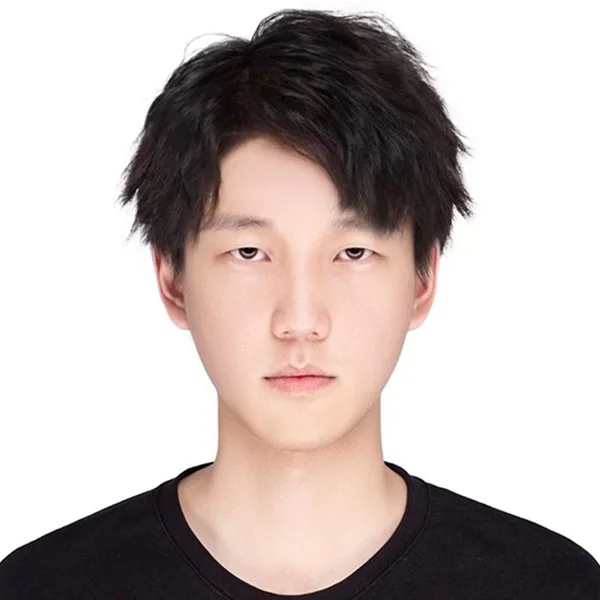
Wenyu Zheng - Portrait
ARTIST STATEMENT
Fragment is an ongoing core methodology in the practice of Wenyu Zheng, focusing on how structures born from rupture generate meaning. The project rejects repair and linear narratives, instead positioning “incompleteness” as an active state of existence. Through digital modeling, resin casting, and hand-sculpted forms, he constructs installations composed of ripple-patterned tiles and expressive hands, materializing the fragmented logic of memory, emotion, and perception. At the center, clusters of hands reach upward in varied gestures, embodying longing, vulnerability, and silent resistance. They form a connective tension between fracture and support, prompting viewers to confront their own reflection within shifting light, spatial compression, and structural tension. The four sub-works, Persist, Emerge, Eclipse, and Coalesce, represent emotional states rather than sequential chapters, guiding audiences to navigate fragmentation and flow while sensing a wholeness that remains unfinished yet deeply real.
Fragment, 3D printed resin hand-finished with coating and paint, 90x90x21 in, 2025 © Wenyu Zheng
INTERVIEW
To start, tell us a bit about your background and studies. What experiences and training helped you develop your practice and your approach to art making?
I received my undergraduate education in China, where I studied fashion design. After that, I continued my studies abroad, also within fashion design, but my experience at SAIC was fundamentally different from traditional fashion training. Under the guidance of my professors, I was exposed to installation-based and fine art–oriented approaches that challenged the conventional boundaries of fashion.
Rather than focusing solely on garments, I began to think about space, structure, and material as expressive systems. This shift marked a conceptual turning point for me and gradually led to a deeper engagement with contemporary art. I have always felt that I possess a strong sensitivity toward three-dimensional form and spatial imagination, which became especially important as my practice evolved.
Because I had early exposure to VR technologies and had previously taken courses related to virtual modeling, I began using VR tools as part of my design and thinking process. This technical background later became instrumental in shaping my installation practice and allowed me to translate abstract ideas into spatial structures with greater clarity.
Your practice moves between art and fashion design. How do these two fields inform each other in the way you think about form, material, and the body?
My training in fashion design gave me a deep familiarity with structured design processes, from initial inspiration to material realization. When I transitioned into art, I found myself applying a similar methodology. In both fashion and art, I begin with a small intuitive point and gradually expand it into multiple ideas, which are then refined, integrated, and distilled into a concentrated form.
I see fashion and art as sharing comparable forms of limitation. In fashion, constraints are shaped by cultural expectations and historical understandings of what clothing is. When those boundaries are pushed too far, garments may no longer be recognized as clothing. Art, on the other hand, allows greater conceptual freedom, but it is equally constrained by material realities.
Navigating these limitations, both conceptual and material, is a central part of my practice. I am particularly interested in how artists and designers preserve the original emotional intensity of an idea throughout the production process, minimizing the loss that can occur when ideas are translated into physical form. This requires a deep understanding of material behavior and a careful balance between concept and execution.

Emerge, 3D printed resin hand-finished with coating and paint, 9x9x11 in, 2025 © Wenyu Zheng

Emerge, 3D printed resin hand-finished with coating and paint, 9x9x11 in, 2025 © Wenyu Zheng
Material exploration is central to your work. What usually comes first in your process, an emotional idea, a material quality, or a structural problem?
My work almost always begins with an idea that emerges suddenly, often triggered by a moment of self-awareness, an emotional response, or an encounter in everyday life. These ideas tend to be intuitive rather than analytical at first. I have a habit of constantly recording thoughts, images, and sensations in my notes, which I revisit and develop over time.
Emotional concepts are essential to my process. I believe emotion is what most directly connects with people. A central question in my practice is how to translate an emotional state through material qualities and spatial arrangements while preserving its intensity. Developing a new language of emotional transmission through material is something I see as an ongoing task throughout my artistic career.
You work with a wide range of techniques, from digital modeling to resin casting and hand-sculpting. What does this mix of digital and tactile processes allow you to express?
The combination of digital modeling and hand-sculpted processes is not about spectacle or novelty, but about communication. As a creator, I have a clear understanding of my own emotional intentions, but audiences do not share that internal clarity. This makes the form of presentation critically important.
Digital modeling allows me to construct precise spatial structures, while physical fabrication brings those structures closer to the viewer’s bodily experience. By translating digital forms into tangible materials, I aim to reduce the distance between the work and the audience, allowing emotional ideas to be felt rather than merely understood.

Fragment, 3D printed resin hand-finished with coating and paint, 90x90x21 in, 2025 © Wenyu Zheng
Fragment is an ongoing methodology rather than a single project. What drew you to fragmentation as a way of thinking and making?
Fragmentation is not only a theme in my work, but a way of thinking. Human memory itself operates fragmentarily, we recall isolated images and moments and reconstruct narratives from them. My process follows a similar logic: beginning with fragments, expanding outward, and then reassembling them into a new structure.
I see fragmentation as a fundamental condition of human experience. Identity, memory, knowledge, and emotion are all assembled from incomplete and varied experiences. This understanding naturally shaped my methodology and continues to guide how I think about both form and meaning.
The recurring motif of hands appears throughout this body of work. What do hands represent for you emotionally and symbolically?
Hands function as a central visual and emotional anchor in my work. While fragmentation is an abstract concept, I felt the need for a concrete form that could carry and translate this idea visually. The hand emerged intuitively as that form.
As a part of the human body, hands are universally recognizable and emotionally accessible. They exist at the intersection of action, vulnerability, and expression. Using hands allowed me to materialize fragmented emotional states in a way that feels both intimate and immediately readable to viewers.
The sub-works Persist, Emerge, Eclipse, and Coalesce describe emotional states rather than a linear story. How do you hope viewers move through and experience these installations?
The four sub-works, Persist, Emerge, Eclipse, and Coalesce, are rooted in my personal experiences at different moments in time. Rather than forming a linear narrative, they represent emotional states that coexist and overlap.
I intentionally avoided embedding explicit autobiographical details into the visual language. Instead, I designed the installation to be experienced from all angles, allowing viewers to navigate it freely. Many viewers have shared that different sub-works resonated with their own memories and experiences. This response is essential to the project’s purpose: once the work is encountered, it no longer belongs solely to me, but becomes a shared emotional space.
Your installations often play with reflection, light, and spatial tension. How important is the physical presence of the viewer in completing the work?
Light, reflection, and spatial tension are fundamental considerations in my installations. As an artist, I cannot separate expression from reception. The viewer’s perspective is not an addition to the work, but an essential component of its realization.
I do not see the viewer’s body as completing the work in a literal sense, but their presence is crucial within the exchange between expression and perception. If the work invites reflection, recognition, or emotional response, then the viewer has already become part of its structure.

Eclipse & Coalesce, 3D printed resin hand-finished with coating and paint, 9x18x21 in, 2025 © Wenyu Zheng
Your work has been shown across different institutions and exhibition formats. How have curators and audiences responded to your material language so far?
Audience and curator responses have been deeply affirming. Many viewers have commented on the sculptural forms and material presence of the work, while others have connected it to personal memories, emotional states, or broader historical references. These conversations are meaningful to me because they suggest that the work functions as an emotional catalyst rather than a fixed narrative.
In one instance, a magazine editor noted that certain visual elements, particularly the presence of water imagery, evoked unexpected historical associations, reminding them of broader narratives beyond my original intention. While that reading was not deliberate, I find such responses important, as they reveal how the work opens itself to multiple layers of interpretation shaped by the viewer’s own context.
For me, the success of the work does not lie in controlling meaning, but in allowing viewers to recognize something of themselves within it. That moment of emotional recognition, whether personal, historical, or intuitive, is enough.
Lastly, what directions or projects are you hoping to develop next in your practice? Do you have any upcoming projects or exhibitions you would like to share with our readers?
Recently, I have become increasingly interested in 3D-printed ceramics. Ceramics carry thousands of years of material history, and their tactile qualities remain difficult to replace. With advances in technology, ceramic 3D printing now allows for complex forms that would be difficult to achieve through traditional hand-building alone.
I am currently exploring the possibility of combining ceramic structures with organic materials such as wood, particularly investigating whether natural growth patterns can be partially guided or shaped over time. This introduces the idea of duration and growth as part of the work itself. If realized, I would be very happy to share this direction with you in the future.
Artist’s Talk
Al-Tiba9 Interviews is a curated promotional platform that offers artists the opportunity to articulate their vision and engage with our diverse international readership through insightful, published dialogues. Conducted by Mohamed Benhadj, founder and curator of Al-Tiba9, these interviews spotlight the artists’ creative journeys and introduce their work to the global contemporary art scene.
Through our extensive network of museums, galleries, art professionals, collectors, and art enthusiasts worldwide, Al-Tiba9 Interviews provides a meaningful stage for artists to expand their reach and strengthen their presence in the international art discourse.


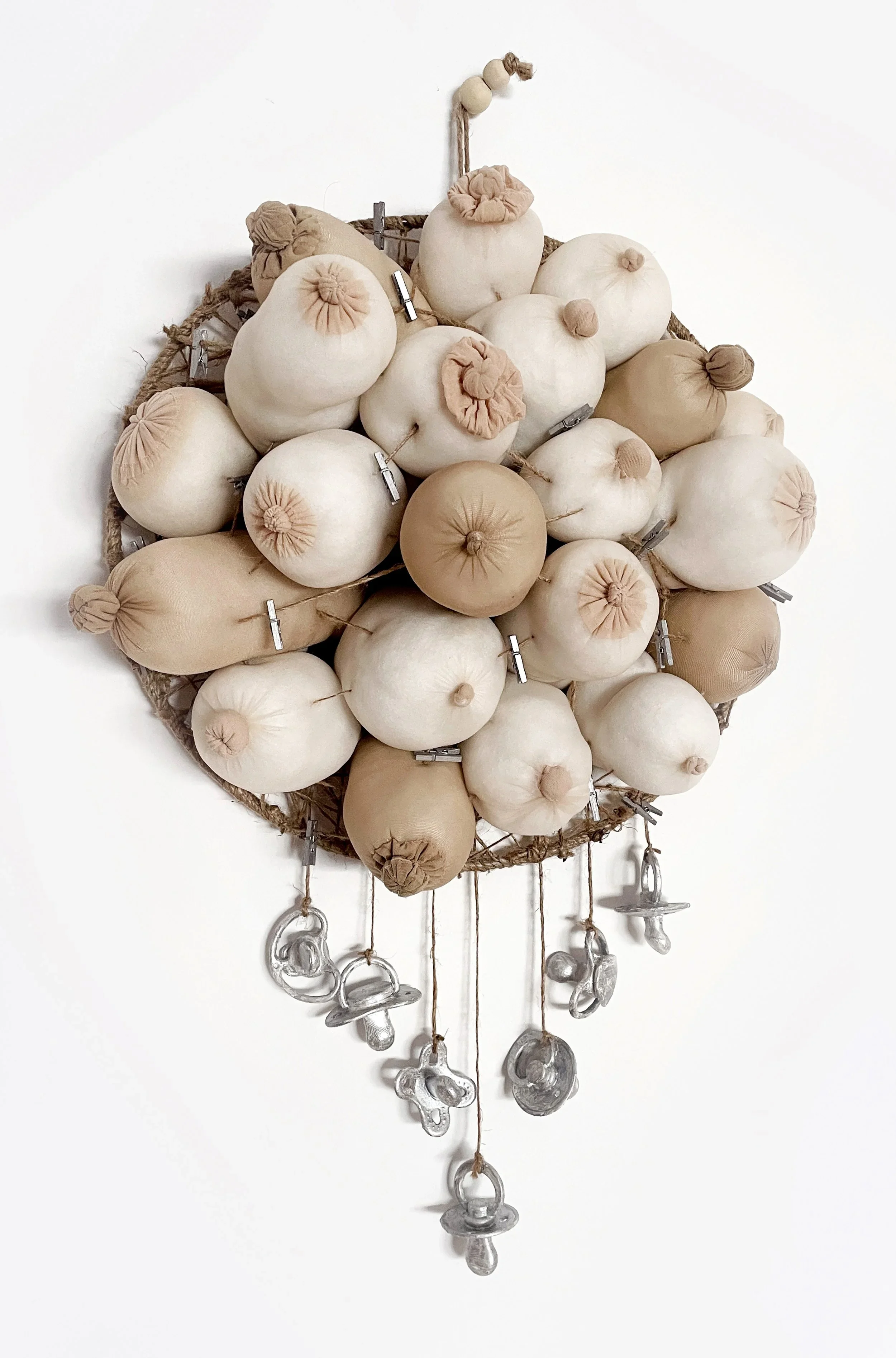
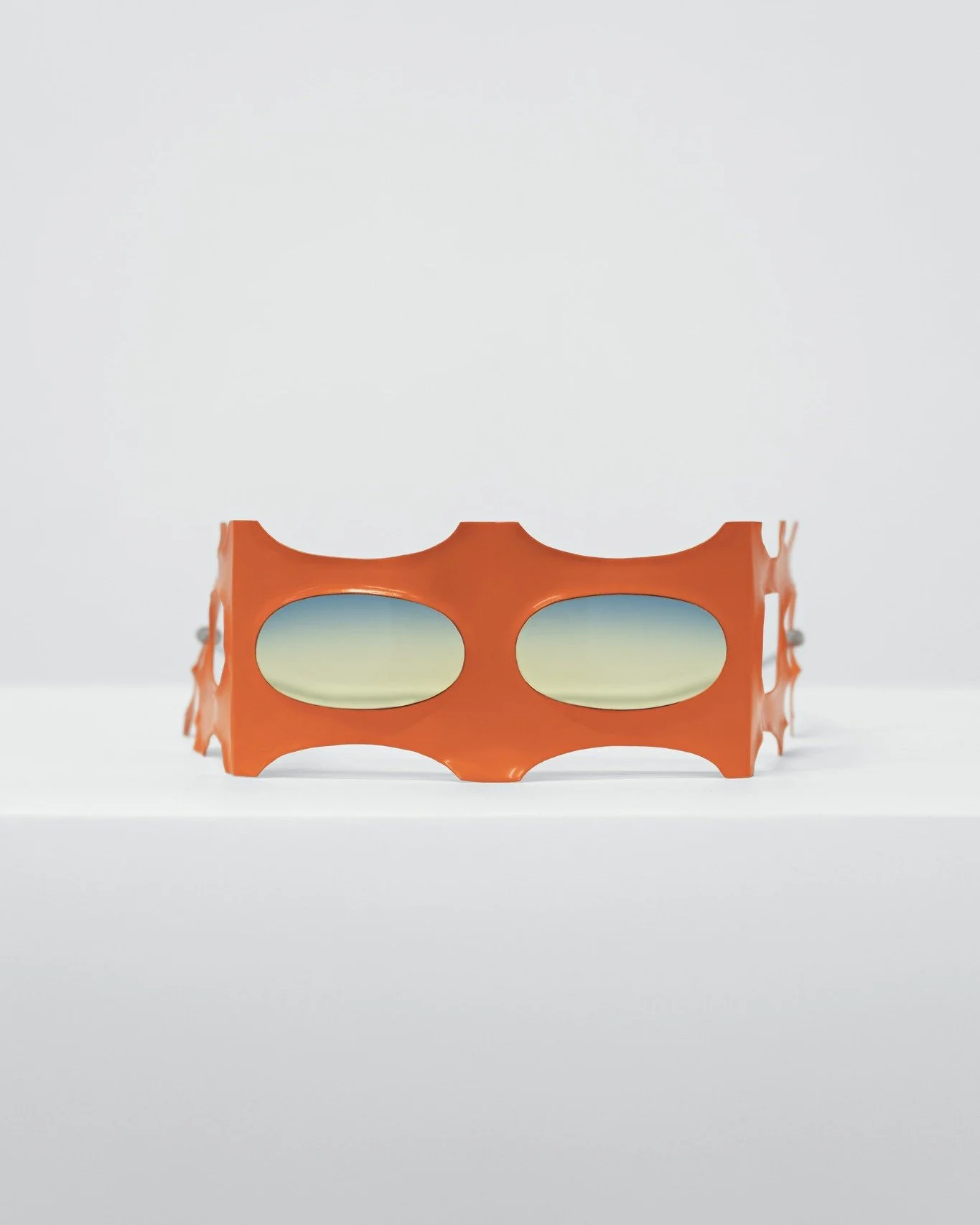
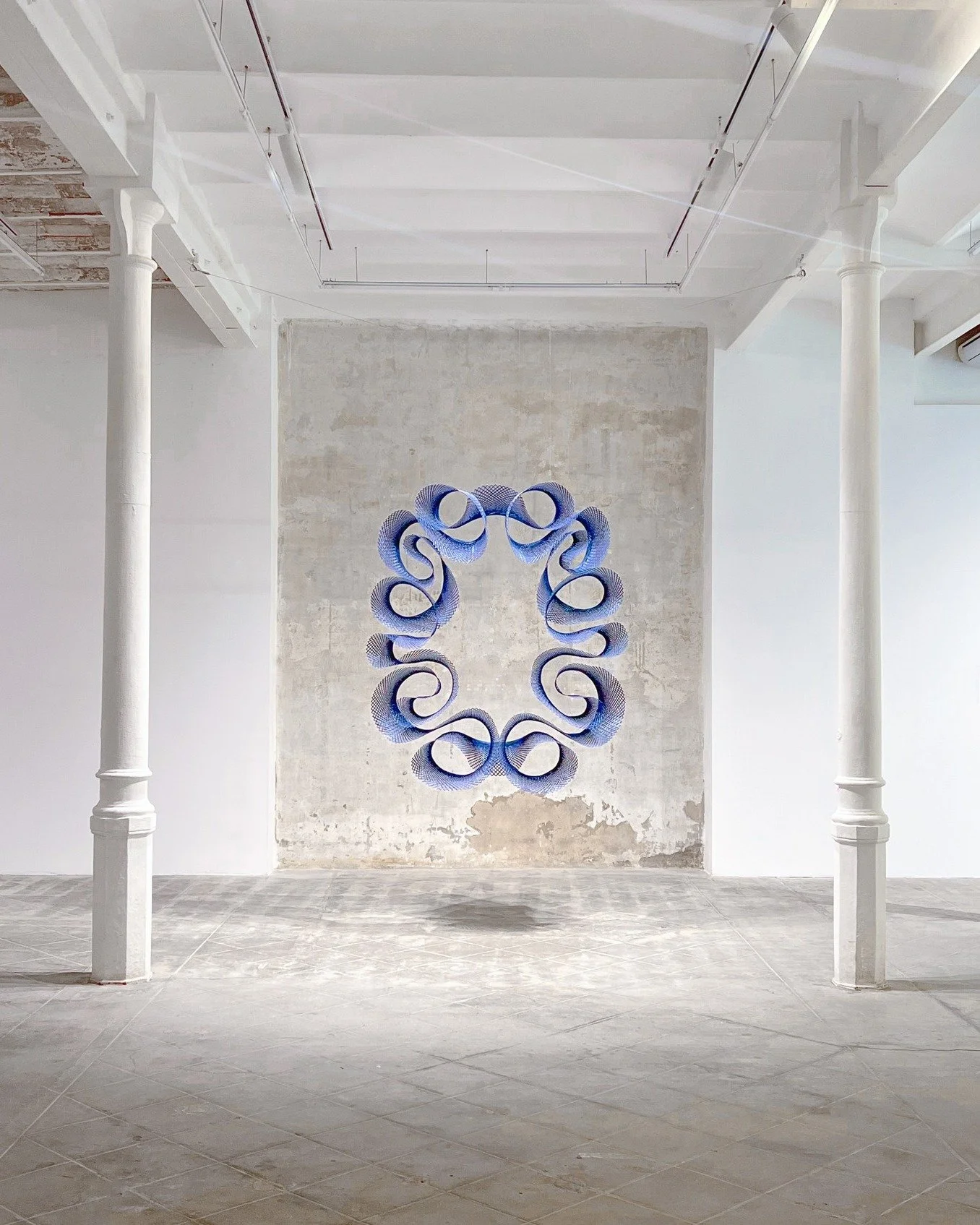
David Moješčík - MojDa is a Czech sculptor. His work is centred on figurative sculpture, the human body, and the female figure. Modelling in clay and with digital tools, he ultimately prioritises manual engagement with materials. . He draws inspiration from yoga philosophy with the concepts of non-violence and human-centeredness, as well as from Egyptian, ancient, and European classical sculpture.