

10 Questions with Chenglin Li
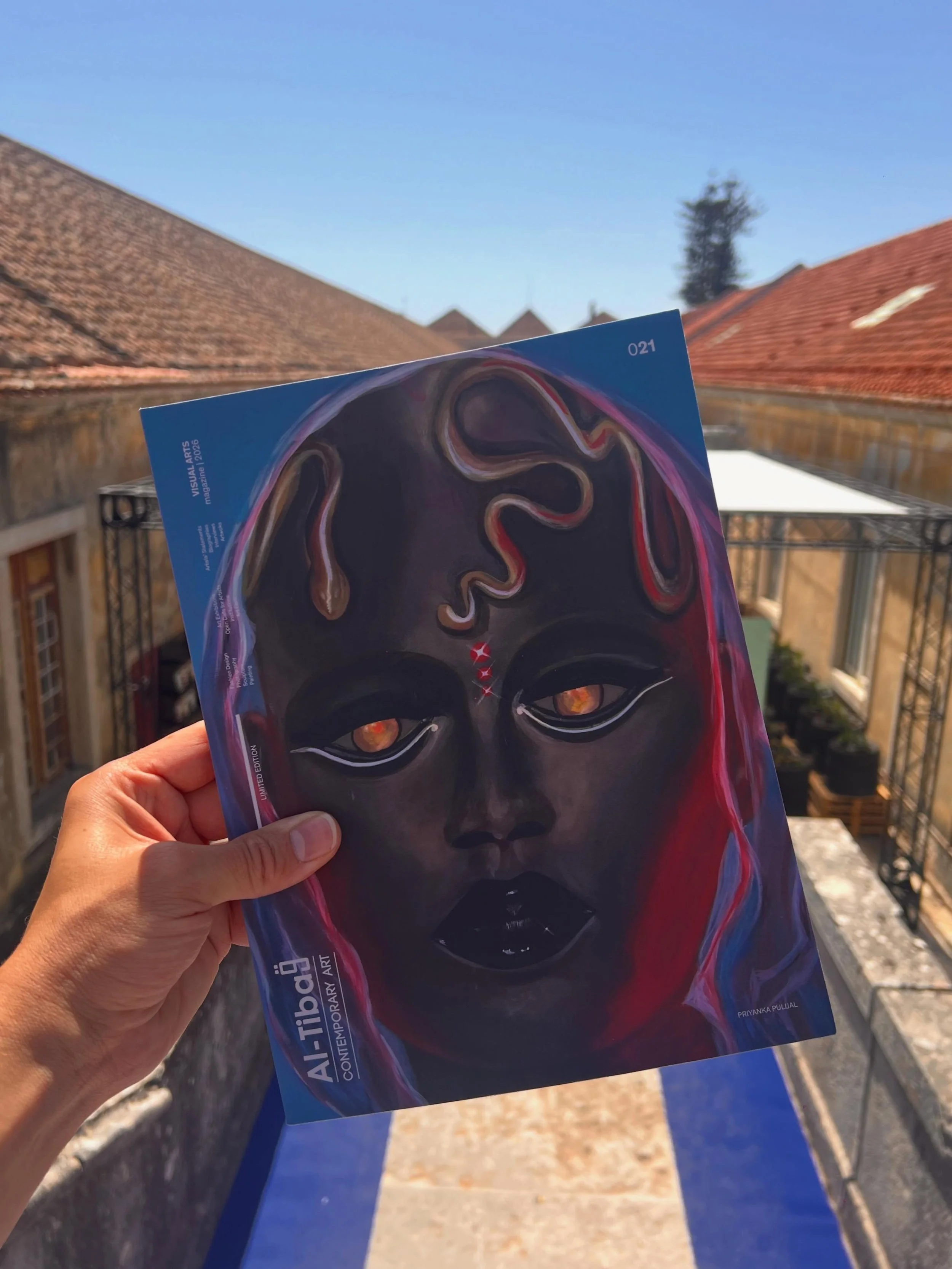
Al-Tiba9 Art Magazine ISSUE21 | Featured Artist
Chenglin (Clover) Li is a computational artist, designer, and entrepreneur working at the intersection of generative systems and contemporary visual culture. Using code, 3D printing, and emerging materials, she creates dynamic visual systems that evolve through algorithmic processes and interaction. Her work has been exhibited internationally, including at the Carrousel du Louvre, Paris, Palazzo Albrizzi-Capello, Venice, ArtExpo New York, and CICA Museum, South Korea. She is the recipient of multiple international awards, including the iF Design Award, Creative Communication Awards (C2A), International Design Awards, Grand Prix du Design Paris, European Product Design Award, MUSE Design Awards, and French Design Awards. She holds a Bachelor’s degree from New York University and a Master of Design from the University of California, Berkeley.
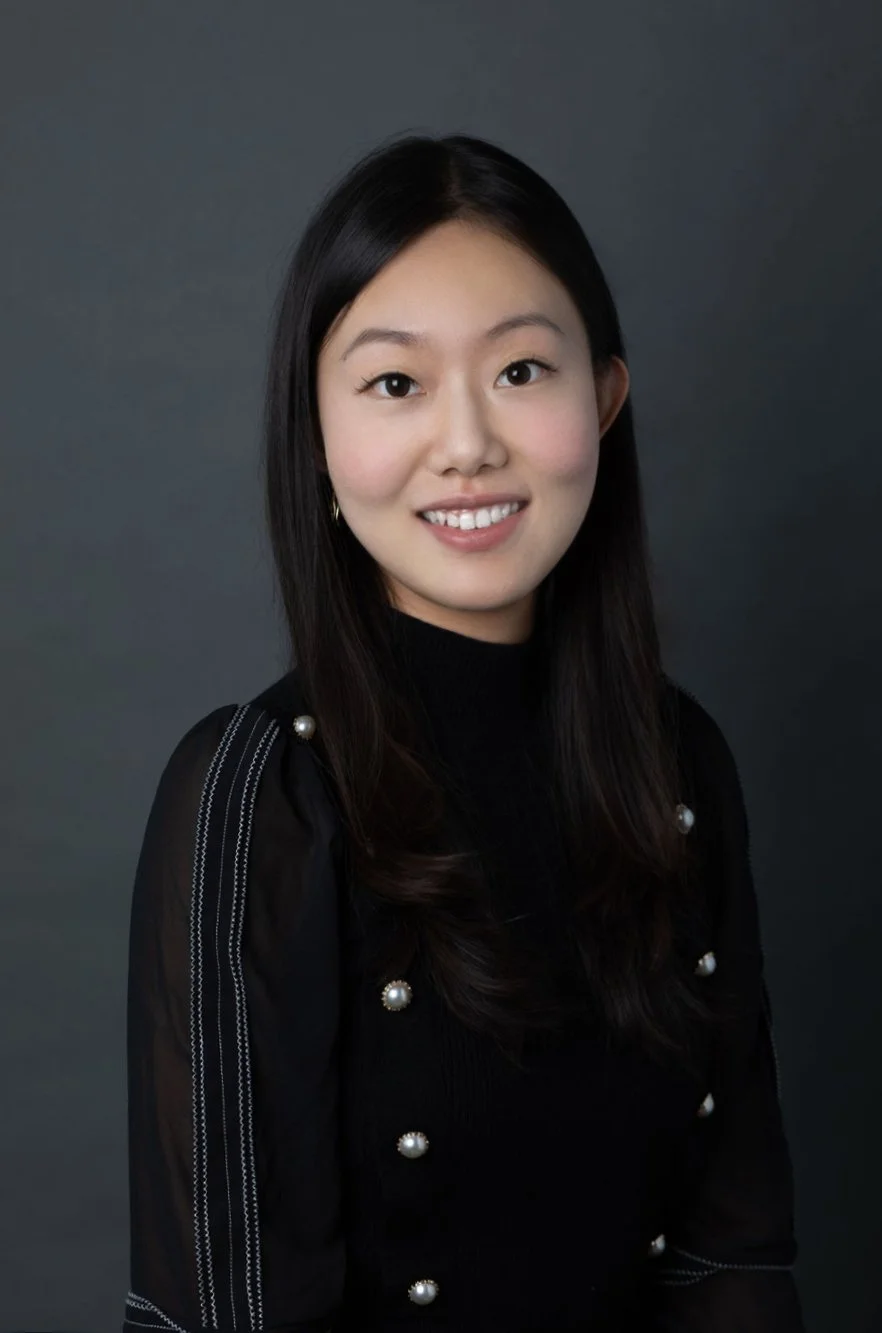
Chenglin Li - Portrait
ARTIST STATEMENT
Chenglin Li explores the tension between intentional design and algorithmic behaviour, positioning code as an active collaborator rather than a passive tool. Through generative systems, she develops frameworks that are not static but continuously unfolding, shaped by the interplay of rules, randomness, and interaction. This methodology challenges traditional notions of authorship, allowing for variability and autonomy within the creative process. In the video artwork Algorithmic Genome, created using Max (Cycling ’74), Li investigates how autonomous form emerges within a digital environment. Within this work, sequences such as Chromatic Emergence and Synthetic Evolution reveal distinct behaviours of colour and motion as they function within the larger system. Extending into the physical realm, works like OceanLung and Post-Human Bloom explore how emerging technologies suggest new modes of coexistence between human and non-human life, reflecting on perception and agency in machine-mediated environments.
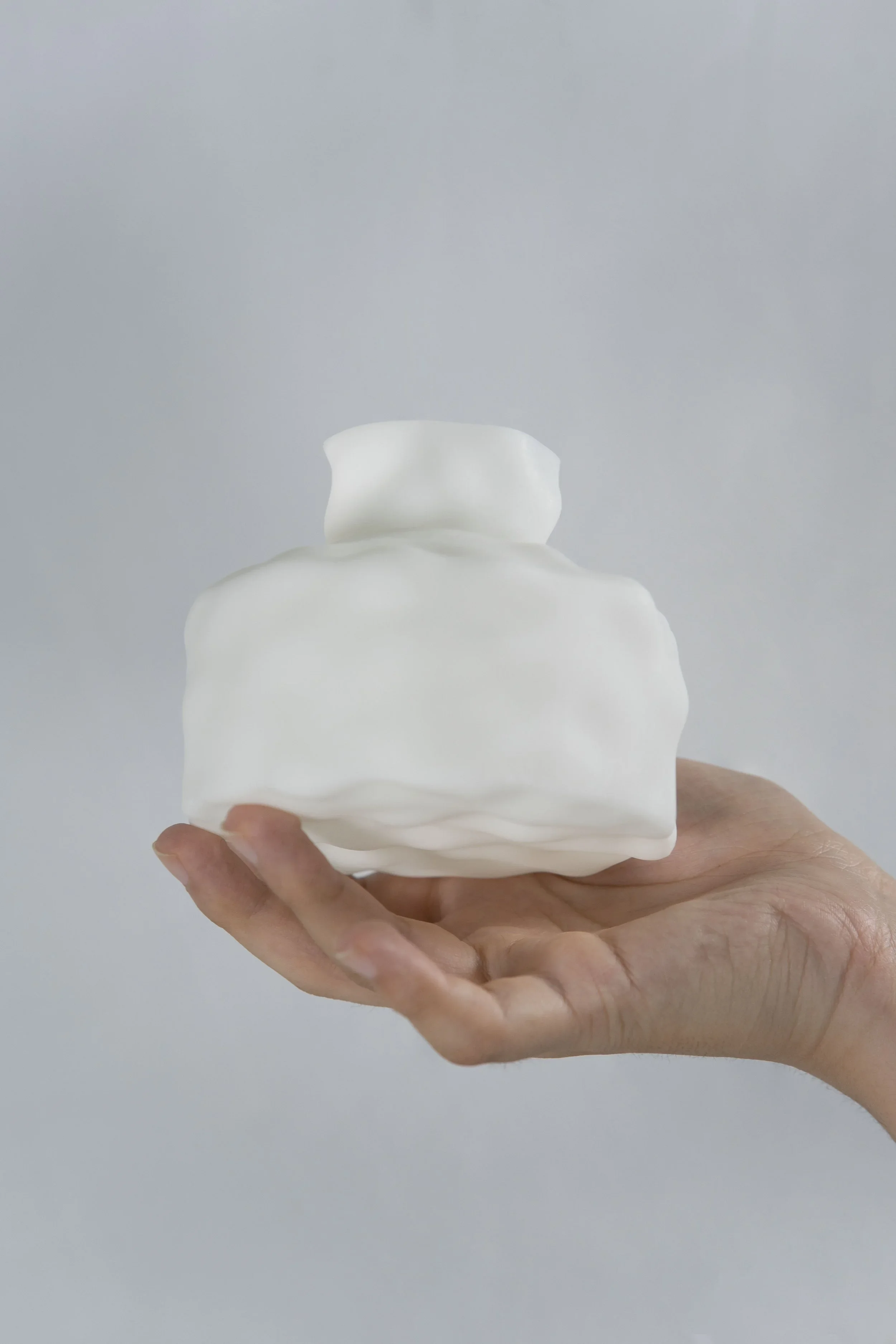
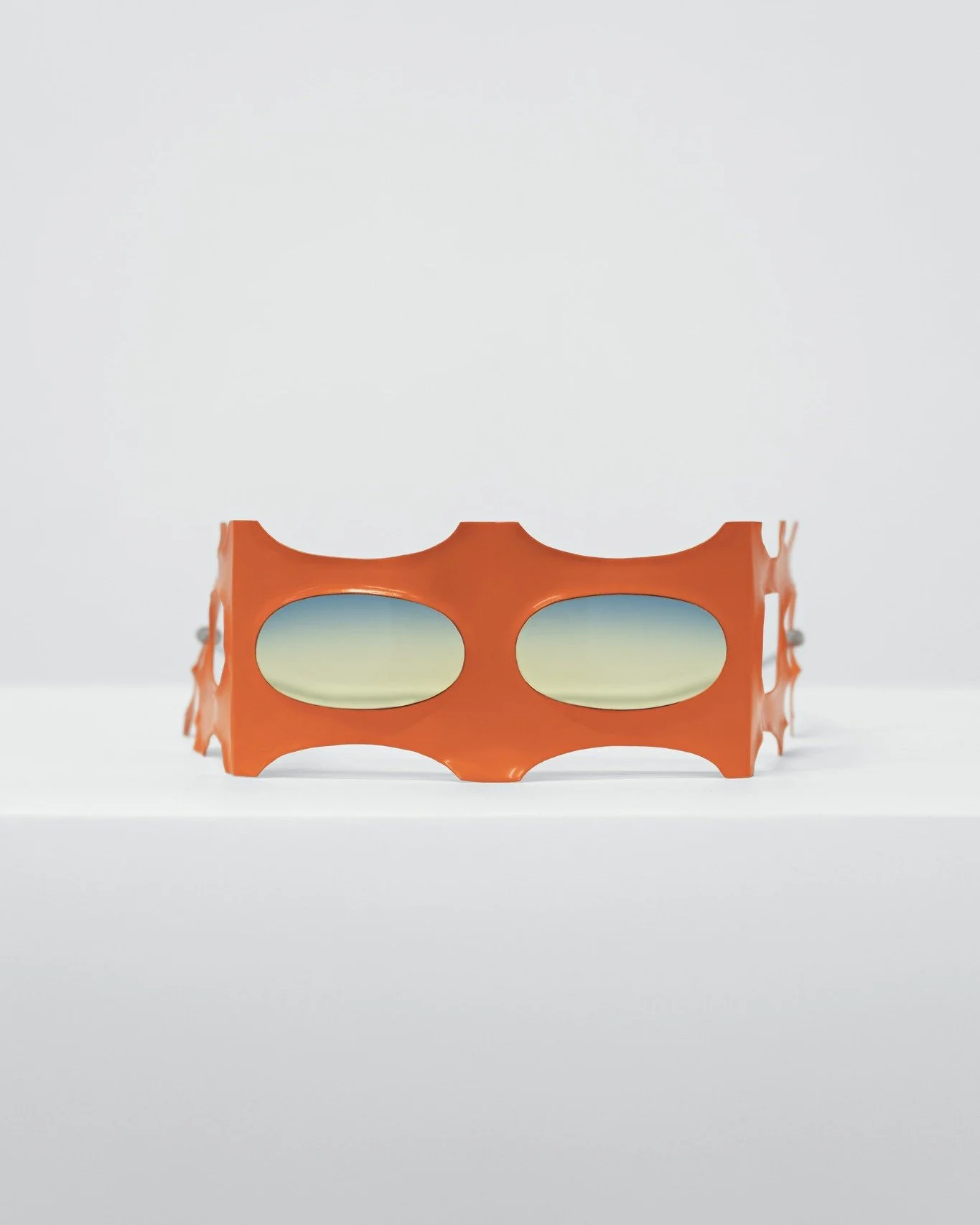
Post-Human Bloom, 3D-printed wearable sculpture (resin/bioplastic), photography, 20x15x10 cm, 2025 © Chenglin Li
Post-Human Bloom is a 3D-printed wearable merging organic growth with computational design. Translucent, branching forms wrap the face like coral or roots, suggesting a hybrid of biological and synthetic systems. Acting as both extension and constraint, the piece explores how algorithmic structures shape perception and embodiment, reflecting on evolving relationships between human and machine.
“Design doesn’t just visualize. It creates a universal entry point for everyone.”
AL-TIBA9 ART MAGAZINE ISSUE21

DISCOVER THE INTERNATIONAL ART SCENE WITH AL-TIBA9
LIMITED EDITION | Shipping worldwide.
Premium museum art paper.
Printed in London.
Grab 3 or more prints and get your FREE digital magazine.

Digital Magazine - Available SOON…
INTERVIEW
Please introduce yourself to our readers and tell us about your background. What led you to work at the intersection of art, design, and technology?
I am a designer and computational artist specialising in translating complex information systems into high-impact visual, material, and experiential communication.
My work operates across both industry and contemporary art. Professionally, I contribute to advanced energy technologies at global companies such as SLB and NOV, where I apply AI-driven methodologies to communicate complex technical outcomes to international operators. In these high-stakes environments, clarity directly influences technology adoption, operational decision-making, and commercial performance.
In parallel, my artistic work has been internationally recognised and exhibited at venues including the Carrousel du Louvre in Paris, Palazzo Albrizzi-Capello in Venice, Artexpo New York, and Matera Casa Cava in Italy. My work has also received multiple international awards, including the iF Design Award, International Design Awards, Creative Communication Awards, London Design Awards, and the European Product Design Award.
Across both domains, my core specialisation is designing systems that make complexity visible, understandable, and actionable, extending from digital interfaces to physical and 3D-printed forms for diverse global audiences. This cross-disciplinary capability distinguishes my work and is fundamental to its impact across industry and contemporary art.

Algorithmic Genome, digital art, 2026 © Chenglin Li
How would you describe your artistic practice in your own words?
My practice centres on system design, emergence, and controlled unpredictability. Rather than creating static images, I construct systems that generate outcomes. These systems are built using computational logic, where multiple simple rules interact to produce complex behaviours over time. The resulting work reflects not only visual composition but also the underlying structure.
This approach is consistent across both my artistic and professional work. Whether I am developing generative artwork or communicating more complex technologies, my focus is on revealing how systems behave, not just how they look.
This positions my work beyond traditional design. It operates at the level of framework creation, where the output is a result of a designed process rather than a fixed composition.
You often use code, generative systems, and 3D printing in your work. How do you choose the right medium or technology for each project?
I select the medium based on what is required to accurately express the system. If a concept involves dynamic behaviour, evolution, or real-time change, I use computational systems and code. If it requires spatial understanding or physical interaction, I move into 3D printing, AR/VR, or installation.
In industry contexts, this decision carries greater weight. I work with highly complex technologies, including AI-driven decision systems, subsurface data interpretation, and real-time operational analytics, where clarity directly affects operational outcomes. In these environments, ineffective communication can lead to inefficiency, increased risk, and delayed decision-making.
My role is to ensure that these systems are not only technically advanced but immediately understandable at the point of use. This requires precise judgment in selecting and applying the appropriate medium to translate complexity into actionable insight.
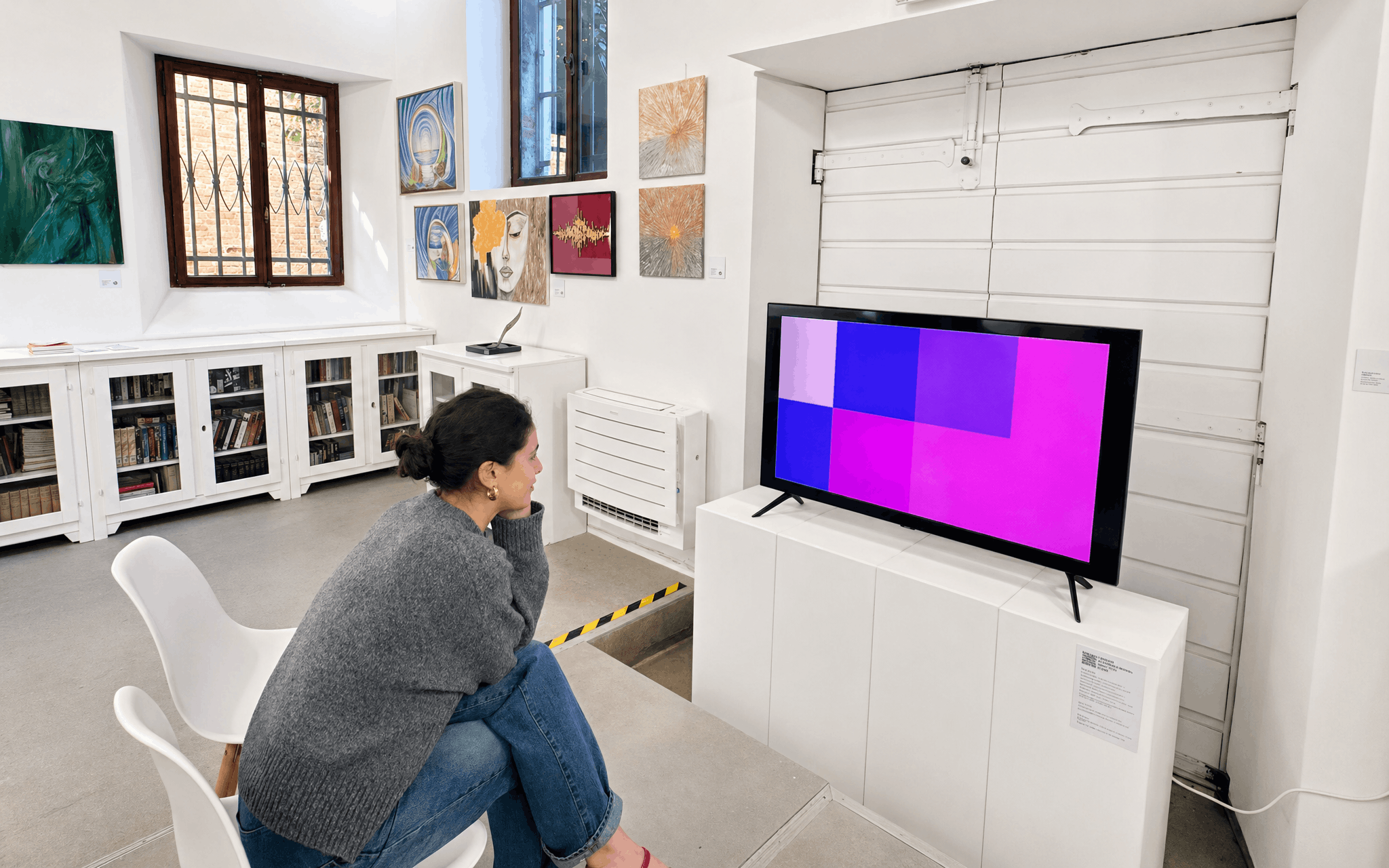
Algorithmic Genome, digital art, 2026 - Exhibited at Palazzo Albrizzi-Capello, Venice, Italy © Chenglin Li
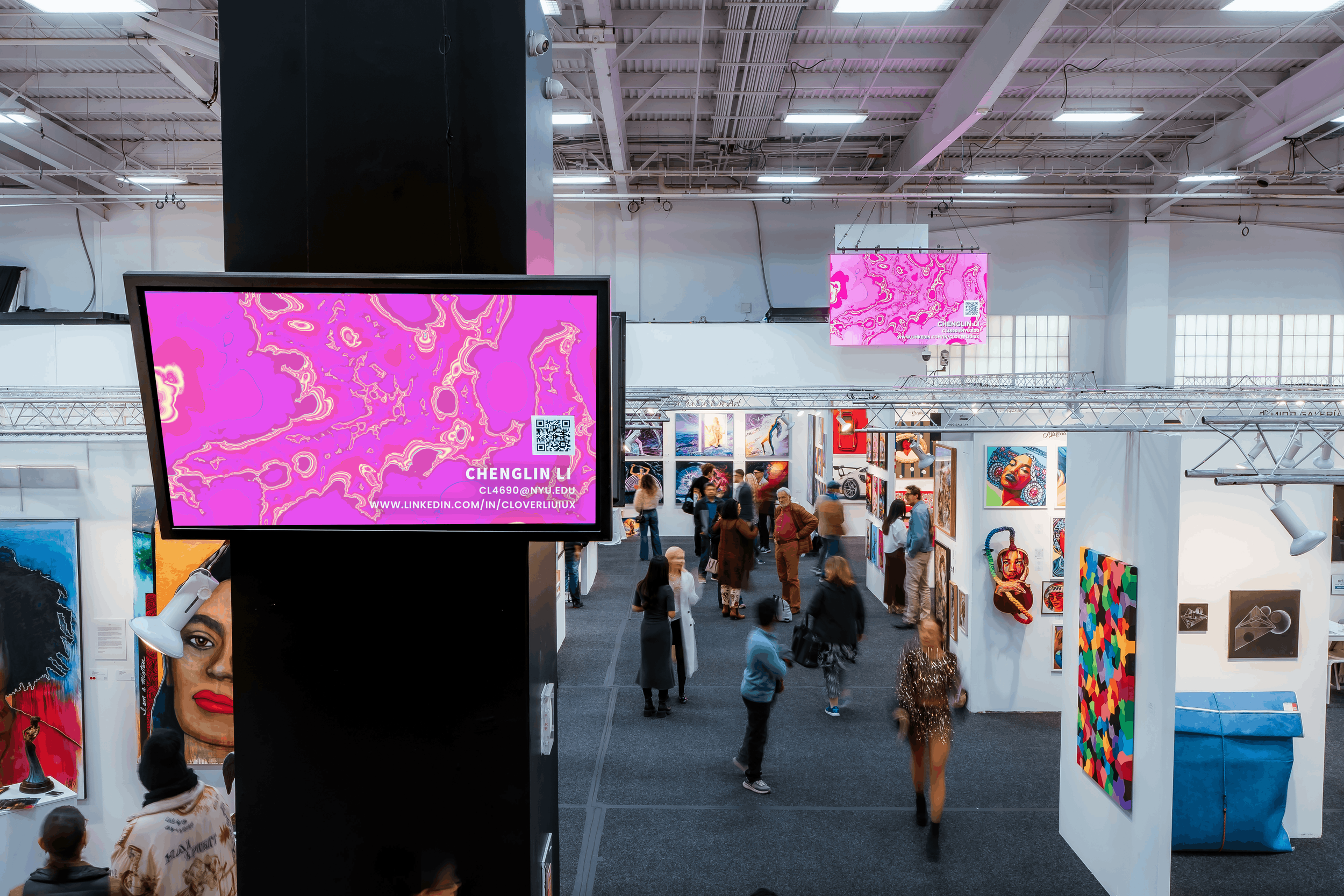
Algorithmic Genome, digital art, 2026 - Exhibited at Artexpo, New York, USA © Chenglin Li
You describe code as a collaborator rather than a tool. How does this idea influence the way you approach authorship and control in your work?
Code introduces a level of intelligence and autonomy into the creative process. I define the rules, constraints, and parameters, but I do not dictate every outcome. Instead, I design systems that produce results through interaction. This shifts authorship from direct control to system-level design. This approach allows for the emergence of complexity that cannot be manually constructed. It also aligns with how real-world systems operate, through interaction, feedback, and adaptation. In this sense, my role is not to control the final image, but to engineer the conditions under which meaningful outcomes occur.
Your practice explores the balance between intention and algorithmic behaviour. What draws you to this tension?
This tension reflects the structure of both natural and engineered systems. In real-world environments, including biological systems and industrial operations, outcomes are not fully controlled. They emerge from the interaction of multiple variables. I am interested in designing within that reality.
By introducing controlled unpredictability, the work becomes more accurate in representing how systems actually behave. It also enables discovery. Some of the most valuable outcomes emerge from interactions that were not explicitly planned but are structurally valid.
This is particularly relevant in my industry work, where understanding system behaviour, rather than just outputs, is critical.
In Post-Human Bloom, you combine wearable sculpture with computational design. How did this project develop, and what were you aiming to explore through it?
Post-Human Bloom was developed as an investigation into how identity and the human body can be extended through computational systems.
The form was generated through iterative digital processes that simulate organic growth, then translated into a physical wearable structure. The result is a hybrid object that exists between sculpture, fashion, and system output.
The project explores the idea that the human body is no longer a fixed boundary. Instead, it becomes a platform for interaction with external systems, including technological, synthetic, and computational systems. It also engages with ecological systems, prompting reflection on how humans can respect the environment and coexist with other living organisms.
This work reflects a broader direction in my practice: designing artefacts that are not purely aesthetic, but that represent underlying systems and transformations.

Algorithmic Genome, digital art, 2026 © Chenglin Li
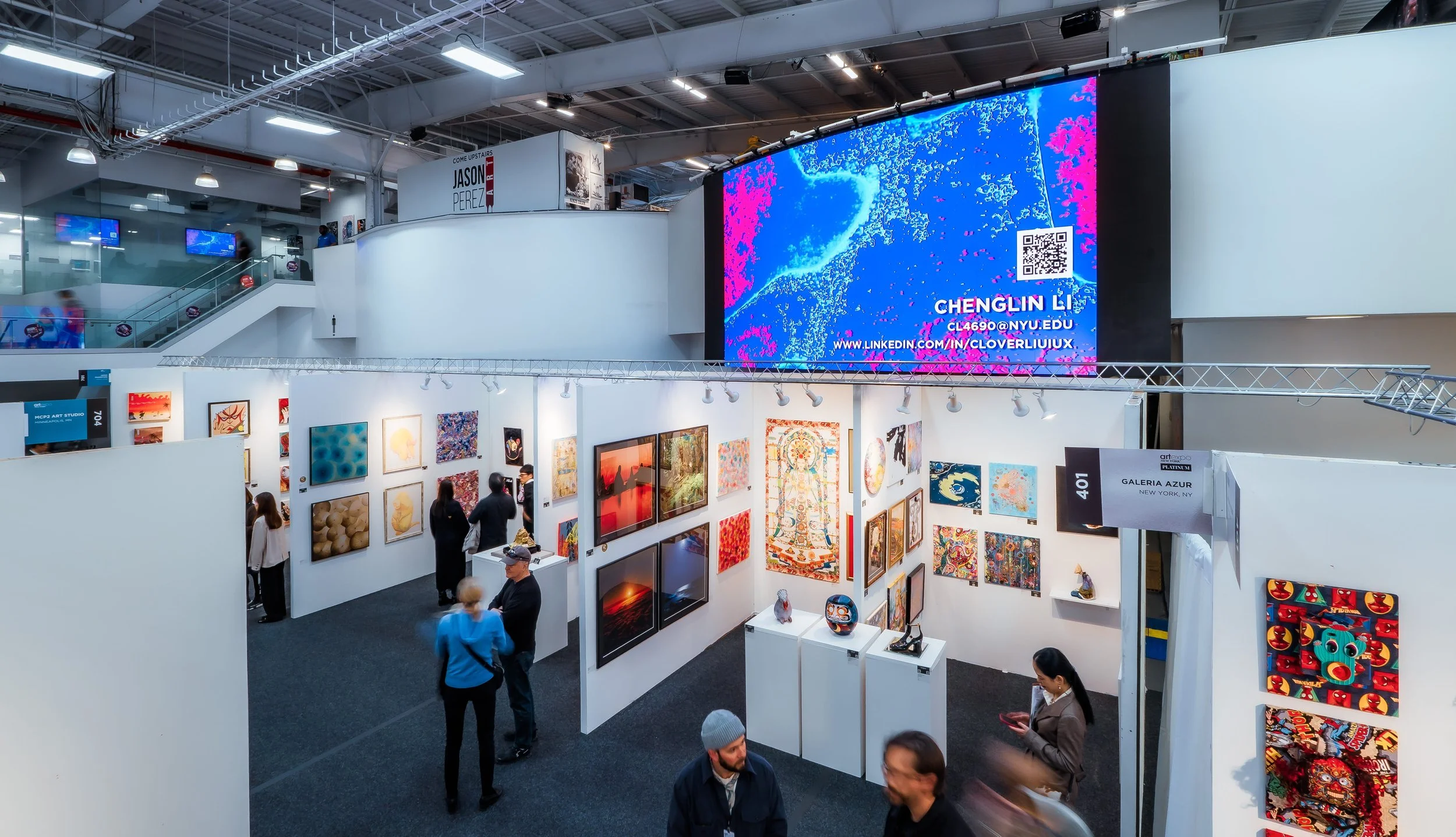
Algorithmic Genome, digital art, 2026 - Exhibited at Artexpo New York, NY, USA © Chenglin Li
The work suggests a hybrid between organic and synthetic forms. What interests you about the relationship between human and non-human systems?
The distinction between these systems is rapidly collapsing. Technological systems are no longer external. They are embedded in how decisions are made, how environments are interpreted, and how processes are optimised. At the same time, many computational systems are modelled on biological behaviour. My work explores this convergence. I am interested in systems that are adaptive, hybrid, and continuously evolving. These systems challenge traditional boundaries and require new ways of understanding form, function, and interaction.
How have audiences responded to works like Post-Human Bloom and OceanLung? Do their interpretations align with your intentions, or do they surprise you?
The response has been consistently strong, particularly in international exhibition contexts. At venues such as Boomer Gallery, London Tower Bridge, the work has engaged audiences across disciplines, spanning art, design, technology, and research.
What remains consistent is the level of engagement. The work prompts viewers to question what they are seeing and how it relates to broader systems, including identity, technology, and transformation.
This sustained engagement is further reinforced through international recognition across both exhibitions
and awards, including distinctions such as the European Product Design Award, Grand Prix du Design Paris, London Design Awards, and French Design Awards.
Together, this pattern of exhibition exposure and critical recognition indicates that the work operates beyond surface aesthetics and is being received and understood at a conceptual level.

Post-Human Bloom, 3D-printed wearable sculpture (resin/bioplastic), photography, 20x15x10 cm, 2025 © Chenglin Li
Your work moves between digital and physical environments. How does this shift affect the way viewers experience your pieces?
The transition between digital and physical fundamentally changes how systems are perceived. Digital environments allow for continuous transformation and real-time interaction. Physical environments introduce scale, materiality, and spatial presence. When a computational system is translated into a physical object, it becomes more immediate and accessible.
My work often operates across both domains because it allows for a more complete representation of the system, both as behaviour and as form.
Lastly, looking ahead, how do you see your practice evolving? Are there new technologies, materials, or ideas you’re interested in exploring next?
My work will continue to expand in areas where complex systems require clear interpretation to be effectively understood and adopted. This includes AI-assisted design and communication systems, real-time data visualisation, and immersive environments for complex system-level understanding.
I am particularly focused on advancing how high-impact technologies across both artistic and industrial sectors are communicated and adopted at scale. The direction is consistent: developing new frameworks for translating complexity into clarity. That capability is increasingly critical across both industry and society.
Artist’s Talk
Al-Tiba9 Interviews is a curated promotional platform that offers artists the opportunity to articulate their vision and engage with our diverse international readership through insightful, published dialogues. Conducted by Mohamed Benhadj, founder and curator of Al-Tiba9, these interviews spotlight the artists’ creative journeys and introduce their work to the global contemporary art scene.
Through our extensive network of museums, galleries, art professionals, collectors, and art enthusiasts worldwide, Al-Tiba9 Interviews provides a meaningful stage for artists to expand their reach and strengthen their presence in the international art discourse.




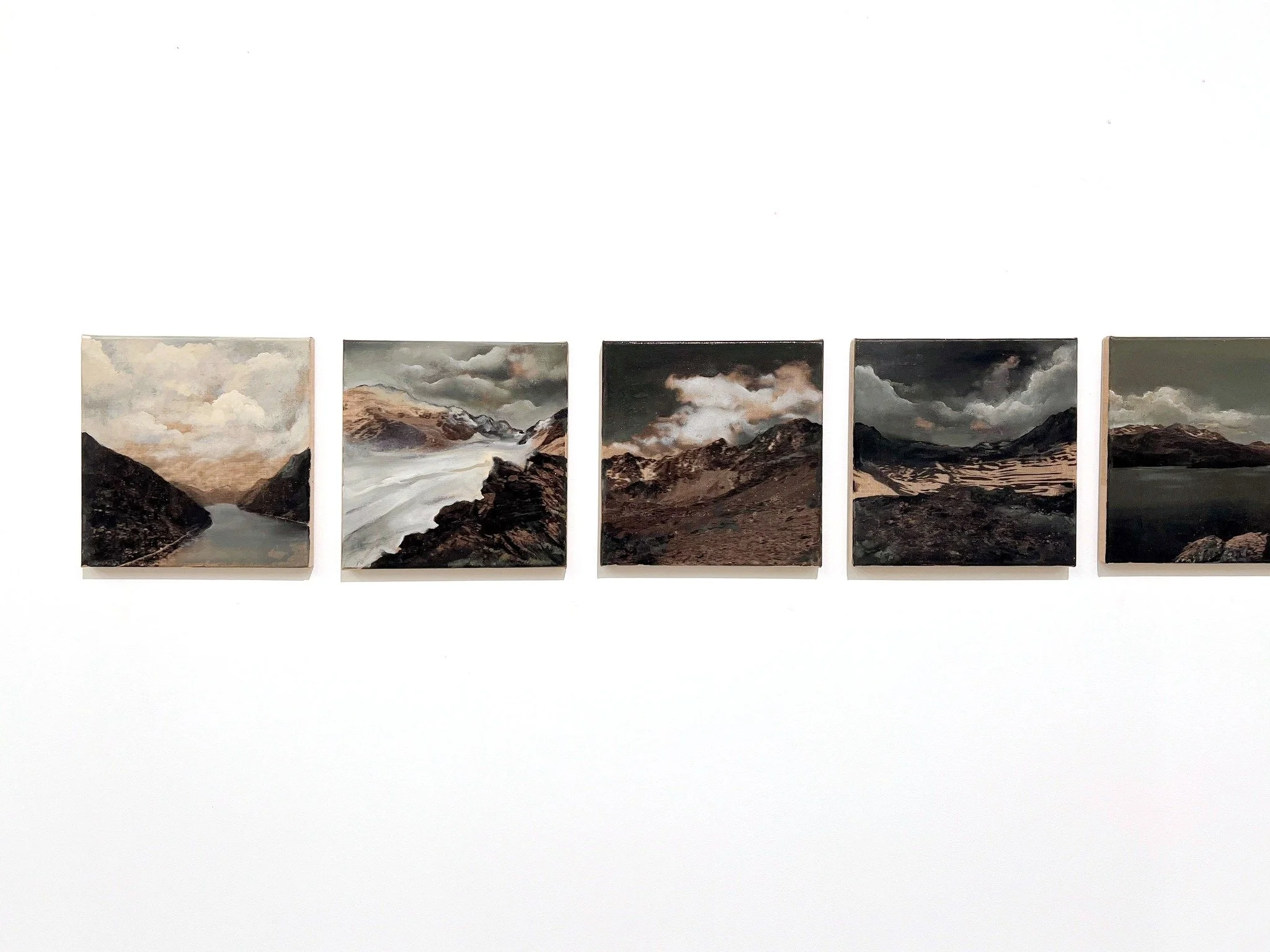
Run Wu is a Chinese Australian interdisciplinary digital artist, filmmaker, and signed commercial director currently based in Paris and London. Drawing inspiration from his multicultural background and experiences across continents, Run's work often reflects themes of displacement, transformation, and the human condition.