

10 Questions with Shingo Ohta
Shingo Ohta is a Japanese photographic artist based in Toyooka, Hyogo, near the Sea of Japan. After a long career in business and regional revitalization, he turned to photography as a primary artistic practice, developing an ongoing body of work centered on the sea as a living, volatile, and almost sacred force. His images transform waves, spray, light, and weather into abstract forms that move between landscape, sculpture, and spiritual encounter.
Ohta's practice is rooted in repeated confrontations with the coastal environment of the Sea of Japan. Rather than presenting the ocean as scenery, he photographs brief and unrepeatable moments in which water appears to become matter, body, energy, and myth. His work reflects a deep interest in impermanence, transformation, and the tension between human perception and forces beyond human control.
His photographs have received international recognition, including Honorable Mentions at the Annual Photography Awards, finalist selections in Photora Awards, recognition from LensCulture, TERAVARNA, Homiens Art Prize, and Creative Quarterly, as well as shortlist selection in the IMPRESSUM photography competition. Through his ongoing sea series, Ohta continues to pursue a visual language in which the natural world becomes a site of awe, confrontation, and revelation.
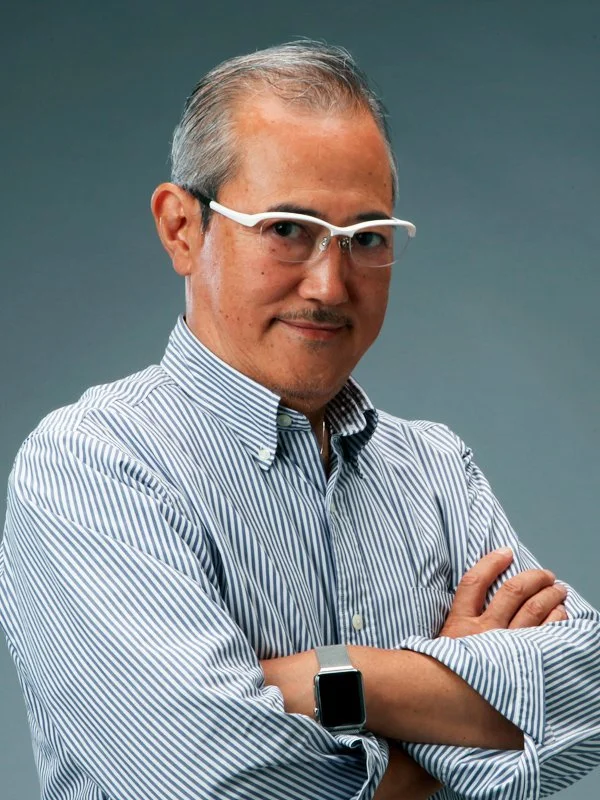
Shingo Ohta - Portrait
ARTIST STATEMENT
Shingo Ohta's work begins with the sea, but it does not end as landscape. Standing before the Sea of Japan, he approaches the ocean as a living force: unstable, violent, luminous, and unknowable. The waves he photographs are not treated as subjects to be observed from a distance, but as presences to be confronted. In this encounter, photography becomes an act of attention, surrender, and resistance.
His images are made in moments of extreme brevity. Foam, spray, shadow, and light gather for a fraction of a second, forming structures that resemble gods, storms, ruins, explosions, or primordial matter. Ohta is drawn to these instants because they exist at the threshold between order and collapse. The sea creates forms that cannot be repeated, predicted, or possessed. The camera becomes a way of receiving those apparitions before they disappear.
Although his work originates in direct observation of nature, it moves beyond conventional landscape photography. The resulting images often appear abstract, yet they remain tied to a real physical encounter with wind, water, weather, and the body. This tension between document and abstraction is central to his practice. Ohta does not seek to beautify the ocean. He seeks to reveal its energy, its violence, and its sacred ambiguity.
For Ohta, the sea is both the external world and an inner mirror. It carries time, mortality, fear, memory, and transformation. His photographs attempt to make visible the moment when the ordinary surface of water opens into something larger: a force that exceeds human scale, yet speaks directly to human vulnerability. Through this ongoing series, he continues to deepen a dialogue with the ocean, searching for images that feel less constructed than discovered, less seen than encountered.
Light, Digital Photograph, 60x90 cm, 2026 © Shingo Ohta
INTERVIEW
First of all, you came to photography after a long career in business. What led you to fully dedicate yourself to the sea?
After many years in business, I reached a point where efficiency and logic alone could no longer answer the deeper questions I carried inside me. Photography became not a second career, but a necessity. Among all possible subjects, the sea was the one presence that continued to call me back. It is never fixed, never obedient, never exhausted. I felt that by facing the sea, I was also facing time, mortality, fear, awe, and the unknown within myself. That is why I chose to fully dedicate myself to it.
Living in Toyooka, near the Sea of Japan, how has this specific landscape shaped your way of seeing?
Living in Toyooka has shaped my vision profoundly. The Sea of Japan here is not decorative or gentle; it can be severe, heavy, violent, and full of sudden transformation. The weather changes quickly, the light is often dramatic, and the sea carries an emotional density that is very different from a calm postcard view of nature. This landscape taught me to look for instability, tension, emergence, and disappearance. It trained my eyes to recognize form at the edge of collapse.

Storm Matrix, Digital Photograph, 60x90 cm, 2026 © Shingo Ohta
You describe the ocean as a “living, divine force.” When did you begin to experience it in this way?
I do not think this realization came in a single instant. It deepened through repeated encounters. At first, I was drawn by the visual power of waves and light. But over time, especially when standing alone before the sea in strong wind and changing weather, I began to feel that I was not simply looking at a scene. I was standing before something alive, something greater than human scale or intention. In those moments, the sea no longer felt like an object of observation. It felt like a presence. That is when I began to understand it as a living, divine force.
Can you walk us through a typical shooting moment? What happens just before you take a photograph?
A typical shooting moment begins long before I press the shutter. I watch the rhythm of the waves, the direction of the wind, the changing quality of light, and the distance between one surge and the next. I try to empty myself of distraction and become fully alert. Just before taking a photograph, there is a moment of heightened tension in which instinct, concentration, and physical readiness come together. I am not trying to impose an image on the sea. I am waiting for the instant when the sea reveals a form that feels inevitable and unrepeatable.

Genesis of Foam, Digital Photograph, 60x90 cm, 2026 © Shingo Ohta

Return to Stardust, Digital Photograph, 60x90 cm, 2026 © Shingo Ohta
Your images capture very brief, unrepeatable forms. How do you recognize the exact moment worth preserving?
I recognize it through a combination of experience, intuition, and surrender. The exact form cannot be predicted, but years of looking have trained me to sense when chaos is about to become image. There are moments when spray, wave, shadow, and light suddenly align with extraordinary intensity. I react to that flash of coherence. It is less a matter of deciding intellectually and more a matter of being ready enough to receive what appears for only a fraction of a second.
There is a strong sense of tension between control and unpredictability in your work. How do you navigate that balance?
That balance is at the heart of my practice. Technically, I prepare as carefully as possible: camera settings, position, timing, and repeated observation. But no amount of preparation can control the sea itself. The unpredictability is not an obstacle; it is the essential condition of the work. My role is to bring discipline to the encounter without trying to dominate it. In that sense, control creates the possibility of openness, and unpredictability gives the image its life.

Gate of the Sun, Digital Photograph, 60x90 cm, 2026 © Shingo Ohta
You often speak about confronting the sea rather than observing it. What does that confrontation feel like physically and mentally?
Physically, it can be exhausting and intense. The wind, salt, cold, noise, and force of the waves create a state of total bodily alertness. Mentally, it is both humbling and clarifying. Before the sea, I feel how small I am, but I also feel intensely alive. Confrontation means accepting risk, instability, and vulnerability. It means standing in front of something that does not care about human plans, and remaining present enough to meet it with respect and concentration.
Your photographs move beyond traditional ideas of landscape. Do you see your work as documentation, abstraction, or something else?
I see my work as existing in the space between direct experience and transformation. It begins in reality, so it is not pure abstraction. At the same time, I am not interested in landscape as a simple description or documentation. What I seek is the moment when the sea exceeds its literal identity and becomes presence, energy, gesture, or apparition. In that sense, my photographs are both records of real encounters and attempts to reveal something metaphysical within the visible world.

Silver Tempest, Digital Photograph, 60x90 cm, 2026 © Shingo Ohta

Sea God, Digital Photograph, 60x90 cm, 2026 © Shingo Ohta
Your series has been recognised on international platforms like LensCulture. How has this exposure shaped your perspective on your work?
International recognition has encouraged me, but more importantly, it has clarified the universality of the subject I am pursuing. The sea I photograph is rooted in my own place and experience, yet the responses from abroad have shown me that the emotions carried by these images, fear, awe, wonder, instability, transcendence, can cross cultural boundaries. That recognition gave me confidence not to broaden my theme superficially, but to go deeper into it with greater conviction.
As you continue this ongoing dialogue with the ocean, do you see your practice evolving in new directions or deepening the same pursuit?
For now, I feel that I am deepening the same pursuit rather than leaving it behind. The sea continues to reveal new forms, new tensions, and new spiritual questions. I do not experience this subject as something exhausted, but as something inexhaustible. At the same time, I believe deepening naturally creates evolution. By staying with the same elemental force, I hope to reach greater intensity, greater simplicity, and a more distilled visual language in the work to come.
Artist’s Talk
Al-Tiba9 Interviews is a curated promotional platform that offers artists the opportunity to articulate their vision and engage with our diverse international readership through insightful, published dialogues. Conducted by Mohamed Benhadj, founder and curator of Al-Tiba9, these interviews spotlight the artists’ creative journeys and introduce their work to the global contemporary art scene.
Through our extensive network of museums, galleries, art professionals, collectors, and art enthusiasts worldwide, Al-Tiba9 Interviews provides a meaningful stage for artists to expand their reach and strengthen their presence in the international art discourse.




Shingo Ohta is a Japanese photographic artist based in Toyooka, Hyogo, near the Sea of Japan. After a long career in business and regional revitalization, he turned to photography as a primary artistic practice, developing an ongoing body of work centered on the sea as a living, volatile, and almost sacred force. His images transform waves, spray, light, and weather into abstract forms.