
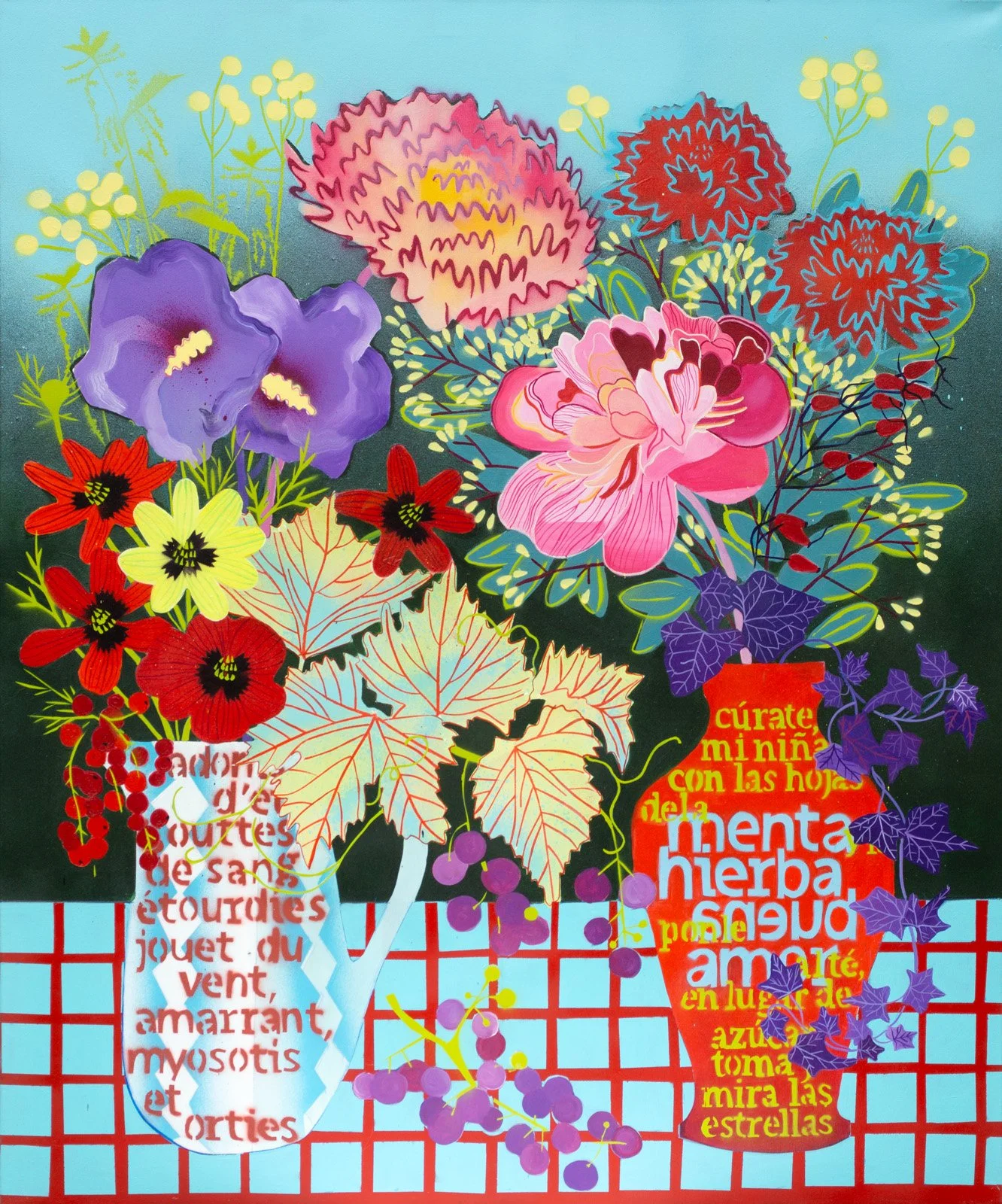
10 Questions with Malwina Jachimczak
AL-TIBA9 ART MAGAZINE ISSUE21 | FEATURED ARTIST
Born in Krakow, Poland, in 1983, she maintains a diverse academic background that bridges technical design and theoretical research. She began her education at the Academy of Fine Arts in Krakow, where she earned a Bachelor’s degree in Industrial Design in 2005. Shifting toward interdisciplinary studies, she completed a Master’s degree in Comparative Civilization Studies at Jagiellonian University in 2012, concurrently finishing postgraduate work in Socio-Cultural Gender Identity. To further refine her craft, she
completed additional postgraduate studies in Jewelry, Ceramics, and Precious Metal Processing at the Pedagogical University of Krakow in 2015. As a scholar, she has focused on the intersection of fashion and social practice. Her published work includes Second-hand clothes in theory and social practice (2011) and Fashion blogs as a form of contemporary art (2012), both released through Jagiellonian University. Her research also extends into international pedagogical contexts, notably with the 2014 publication Arts Education in the Middle East. This unique combination of hands-on design expertise and sociocultural analysis defines her professional trajectory.
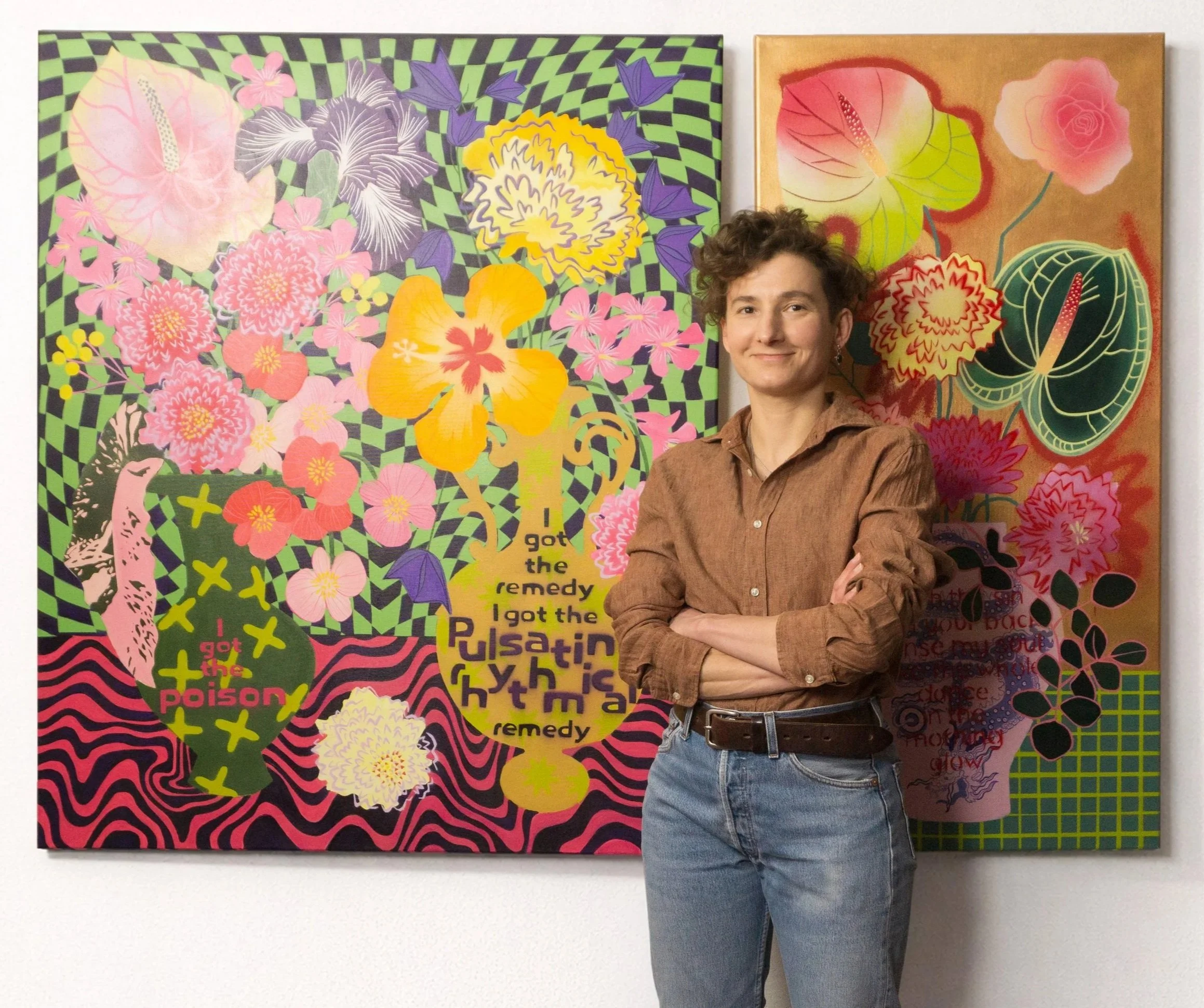
Malwina Jachimczak - Portrait
ARTIST STATEMENT
For many years of her adult life, Malwina was trapped in oppressive relationships that she considered normal. Her vision of the world was dictated to her, and her experience of reality was controlled. Cultural studies broadened her awareness. During her studies, she saw the diversity of ways in which people experience and feel life. She understood the wealth of emotions she herself has the right to feel. She saw how many places and moments there are in which cultures allow for the expression of emotions. A few years ago, Malwina completely cut herself off from her destructive past. She's developing a career as a visual artist. She offers people art like orange soda: fizzy, a little sweet, slightly tart, and emotionally accessible. Her art resonates with its format, the intensity of its colours, and the richness of its emotions. It is a testament to her inner expansion.
© Malwina Jachimczak
AL-TIBA9 ART MAGAZINE ISSUE21

DISCOVER THE INTERNATIONAL ART SCENE WITH AL-TIBA9
LIMITED EDITION | Shipping worldwide.
Premium museum art paper.
Printed in London.
Grab 3 or more prints and get your FREE digital magazine.

Digital Magazine - Available SOON…
INTERVIEW
Let’s start with your background. You studied Industrial Design at the Academy of Fine Arts in Krakow. Do you feel like this technical training has had any impact on your current visual practice?
To be honest, industrial design hasn’t really had much impact on me. First off, I wanted to study painting. However, studying art isn't considered sensible, so after some persuasion and pressure, I agreed to choose a more forward-looking option. However, I'm the worst designer in the world. During my studies, all these new graphic programs, vectors and simplicity were all the rage, and I didn't feel it at all. Painting, drawing and sculpture were certainly part of the curriculum, but they weren't the core. I also went to university right after high school, which was important because Polish schools don't teach critical thinking and discussion; they teach re-creation; things are done according to a formula. With such training, you can graduate, of course, but can you learn anything? And this is where my criticism of art studies steps in. During those three years of undergraduate studies, we had very few theoretical subjects. There was, of course, art history, very well presented, and also the history of design. However, the lectures focused on presenting the assumptions of individual trends, which in itself was interesting and necessary, but didn’t provide the tools for critical thinking. There were philosophy classes, very limited, a few interesting monographic lectures, and that was it. In my opinion, there was still too little intellectual stimulation. I felt a difference when, after completing my cultural studies, I enrolled in a postgraduate programme in jewellery, ceramics and precious metal processing. The ability to think critically and ask the right questions, which I developed during my cultural studies, allowed me to approach projects with much greater detachment and calm, and to draw more from the classes and the knowledge of the instructors.
© Malwina Jachimczak
Later on, you completed a Master’s degree in Comparative Civilization Studies at Jagiellonian University. How have these/the cultural studies changed the way you see art and society?
Cultural Studies was a no-brainer. After graduating with a Bachelor’s degree in industrial design, I went abroad to work, then decided to come back for family reasons, and the question arose: What now? Several programmes still had enrollment, so I planned the next five years of my life that way. I think it was a stroke of providence that led me there. The Cultural Studies programme was one of the most transformative and enlightening experiences of my life. The obligatory reading list was demanding, but it was also accompanied by a wide range of optional courses, giving me the freedom to choose subjects based on my interests, allowing space for critical thinking and asking questions. A strong theoretical base, such as courses in philosophy, art history and aesthetics, was complemented by more focused classes like feminism, Arabic literature and contemporary Japanese culture. These studies transformed me not only intellectually, but also emotionally. They gave me the right to experience joys and sorrows, to be an emotionally aware person. I met fantastic friends during this time. It may seem surprising, but these were the Cultural Studies that opened me up to art more than the Academy of Fine Arts. Cultural Studies didn't isolate art or strip it of its social context.
Your academic path also includes research on fashion and social practice. Does this theoretical background still inform your work today?
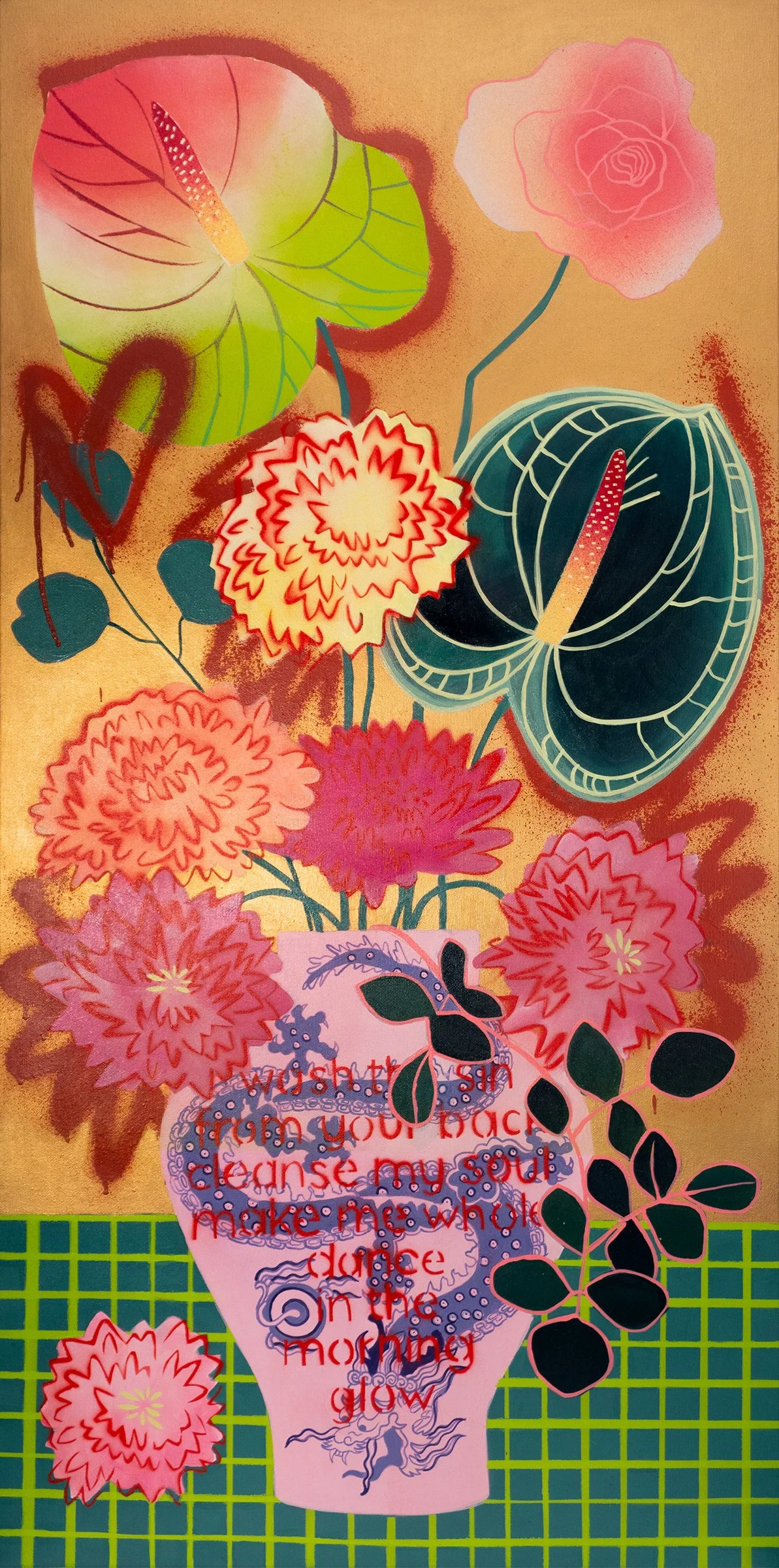
The topic of fashion keeps coming back to me; I'd love to delve more into it, but something else always comes up. In college, it allowed me to investigate and draw on social theories, but now I'd love to focus on its connections to consumerism and capitalism. I'm also interested in the conscious aspect of image creation. Since my teens, I've loved browsing through the secondhand stores. I'd run around on my own, with my sister, or with friends, unearthing treasures for myself and others. On one hand, this was dictated by the lack of funds, but it also had always been an adventure. It made me note how the merchandise in Polish secondhand stores had changed over the years; the gems are dwindling, while the polyester piles are growing. There are clothes that may look nice on the racks, but they're not even worth trying on because they always fit poorly. Fast fashion is flooding the market at a dizzying pace; the clothes that end up secondhand haven't even survived a season with their buyer. What always hurts me most are the products that were created through the exploitation of animals (such as wool, silk and leather), and for some reason got thrown away. Goods in the modern world magically materialise in stores, as if in a divine way they were created from nothing, as if their production required no labour, energy, natural resources, or sometimes even the lives of any living creatures.
© Malwina Jachimczak
© Malwina Jachimczak
You describe your art as "like orange soda: fizzy, sweet, slightly tart." How would you explain this idea to someone seeing your work for the first time?
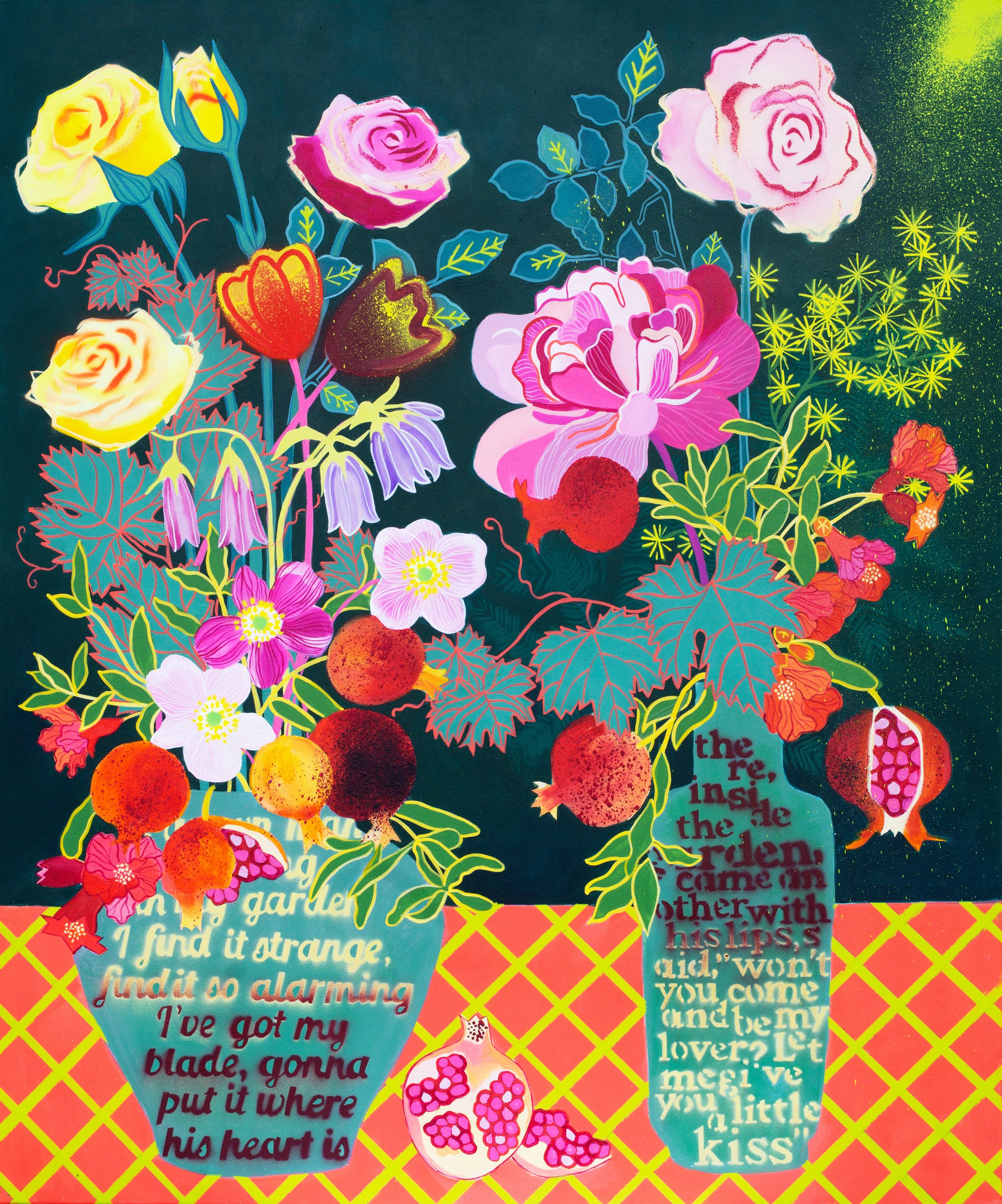
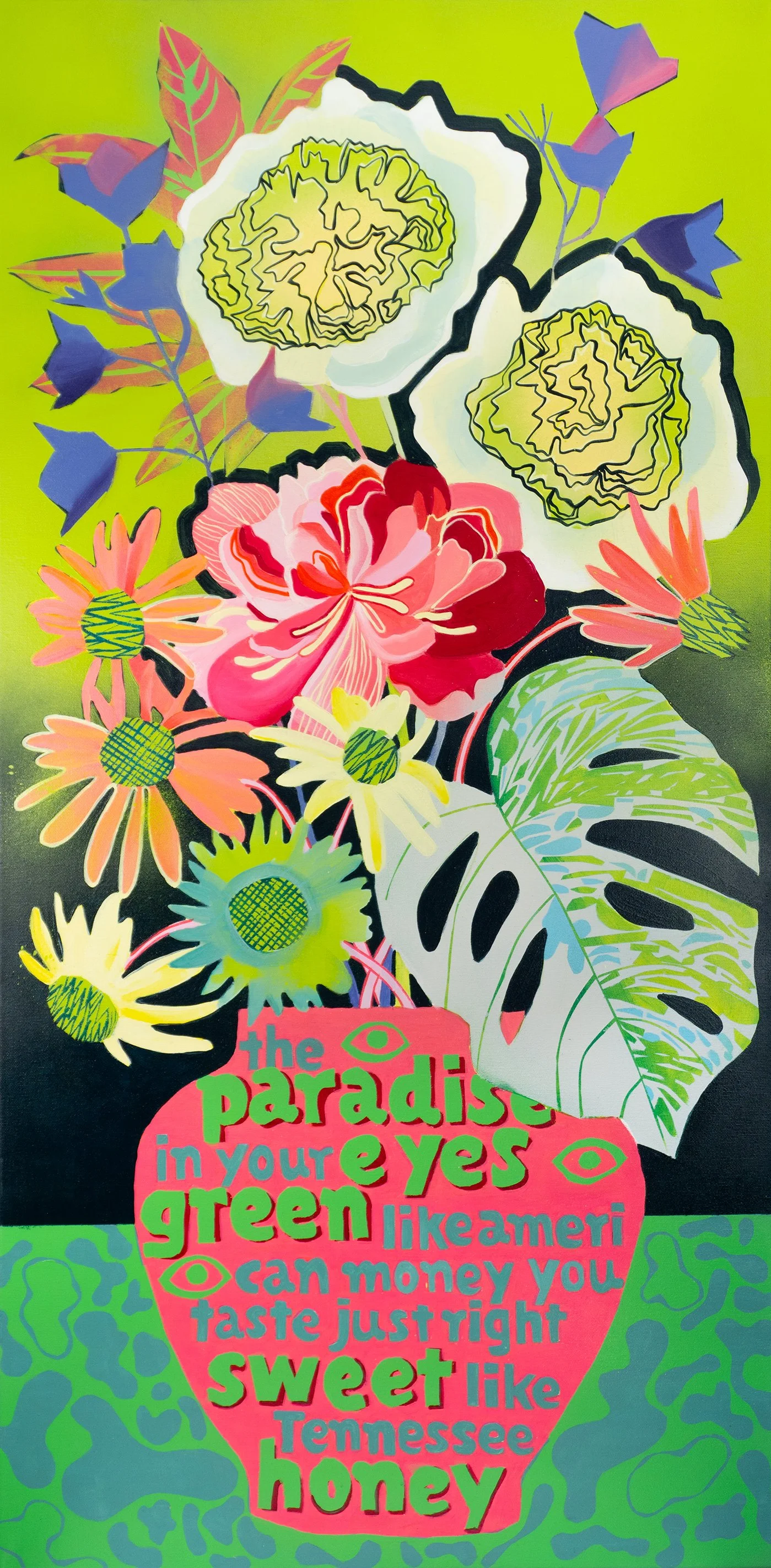
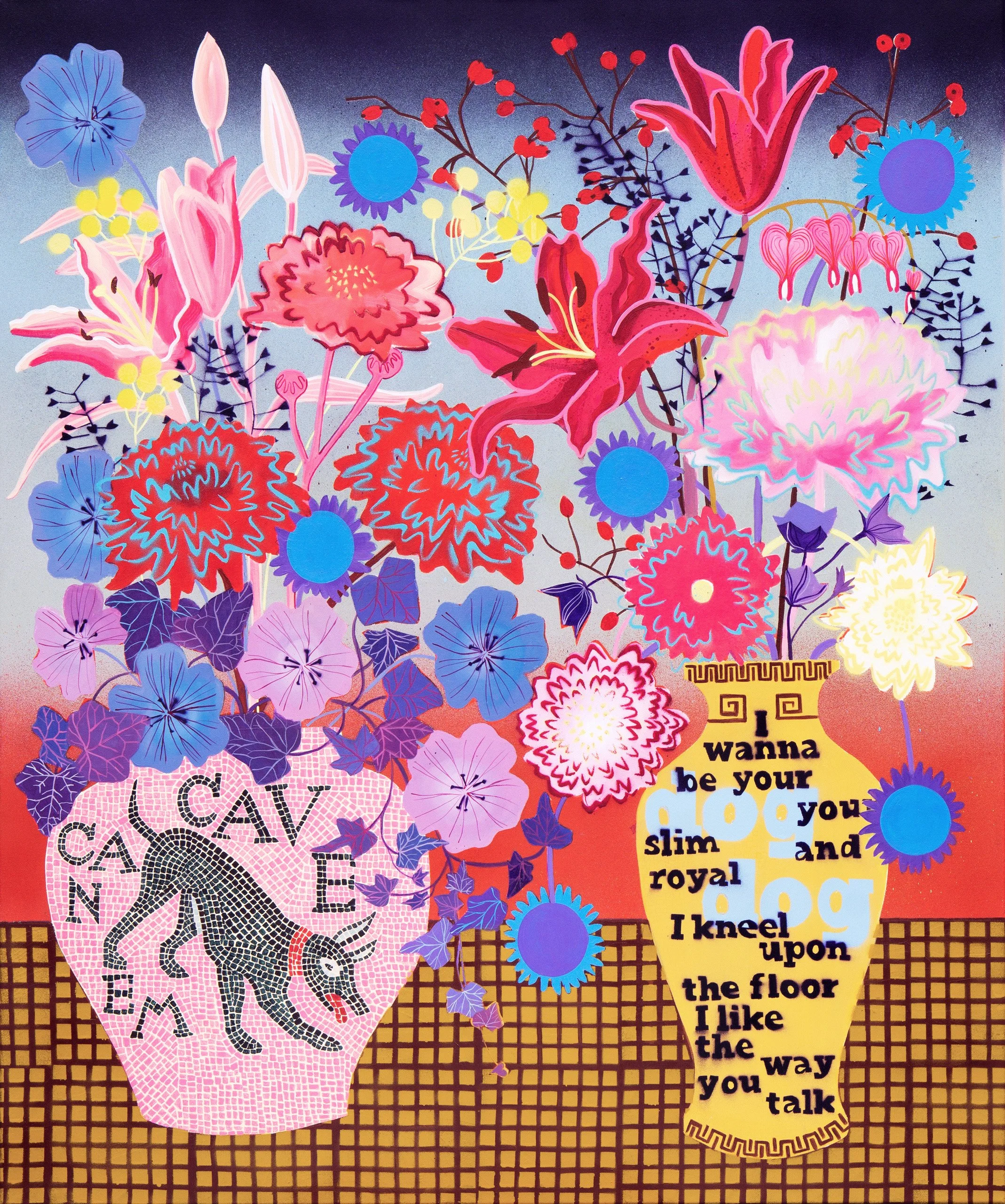
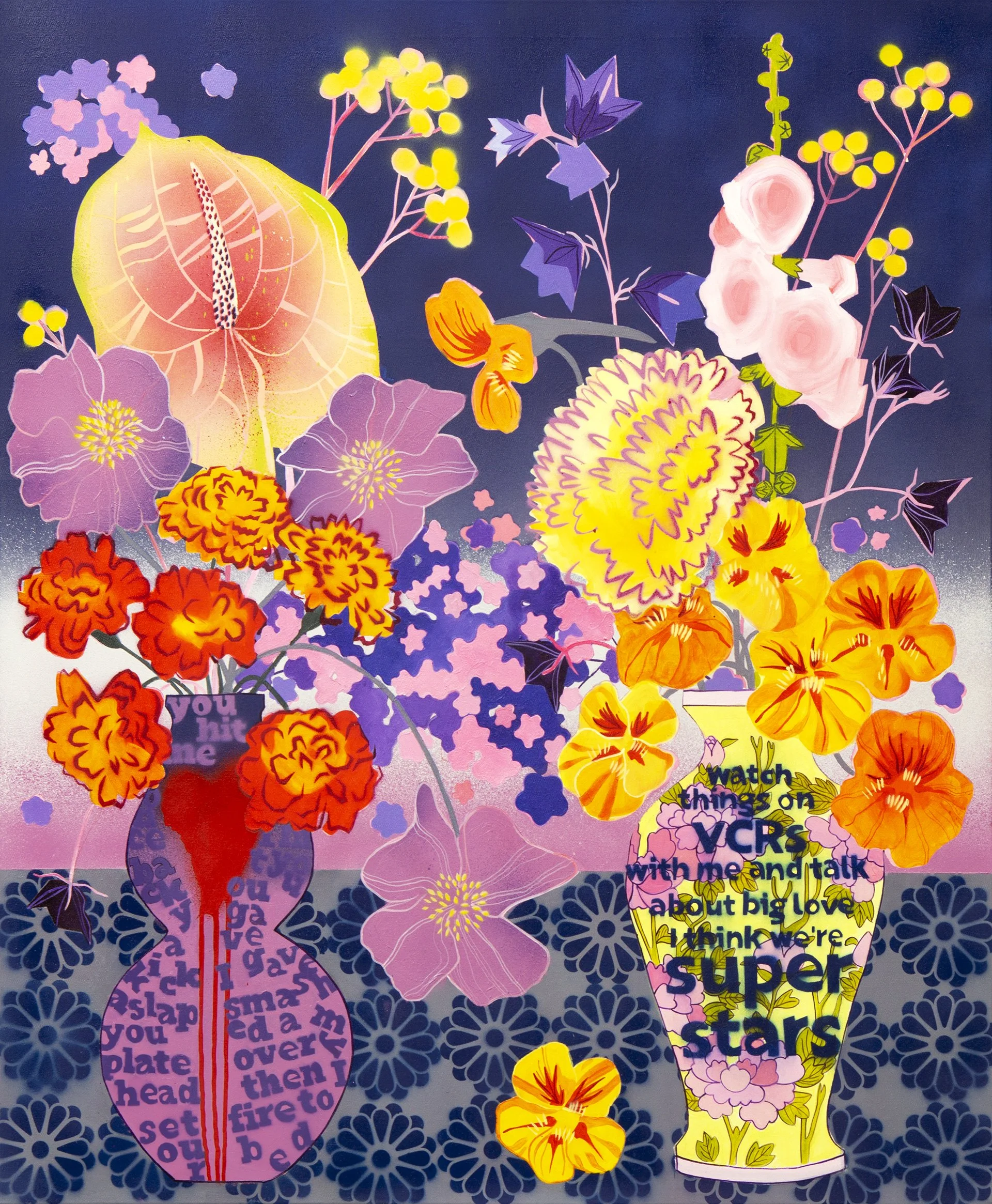
I don't remember the occasion on which this description was written; I probably had to fill out some form. However, I believe it's still accurate. I construct my paintings intellectually, defining the criteria they must meet, determining the contrasts, composition and arrangement of elements that the eye should follow. If I work according to my own taste, a balanced but not symmetrical composition emerges, with simple forms, varied colours, quite light and commercial. However, I like it when there's a less obvious touch, like song lyrics or a clash of colours. Sometimes, I ask friends to work with me and choose, for example, song lyrics for a verse, and then such an orange soda is much more difficult to balance. Friends often suggest songs that surprise me and completely don't fit my musical preferences or the way I experience the world. Oh, how I struggle then: weaving their ideas into my story, composing a work from their plants that don't fit the composition at all. These are the most demanding tasks, but that's precisely why I love these works so much. They demonstrate the discovery of a non-obvious synthesis.
Colour and emotional intensity are central to your practice. How do you decide on your palette and visual language?
Colour is very important to me. I get a lot of satisfaction from combining colours and seeing how they play off each other, how they interact. It's incomprehensible to me to eliminate colour from life, to flood the world with grey and beige. That doesn't mean I don't use these colours, but I try to make them work with others, become part of a story, have a mission to fulfil. My art dealer once told me that my paintings might be nice, but I'd have a hard time finding buyers for them, because they didn't match the sofa. So my joy was even greater when a client sent me a photo of my colourful vase proudly hanging above the grey sofa.
When it comes to colour decisions, I usually start by determining the mood that the painting will evoke. Once I know the mood, I choose the appropriate players. If, for example, the painting is supposed to be melancholic, there's a chance the palette will be more subdued. When I was working on a painting with lyrics from The Prodigy's "Poison", the first paint I held in my hand was a spray can of that awful, pungent green. And from then on, that song will always be green in my mind. I try to limit my colour palette, but I'm not very successful; I have too much fun mixing individual colours together. Modern chemistry has given artists enormous possibilities: we have light-fast pink pigments, inexpensive ultramarine, and non-toxic green, so it's a shame to waste such possibilities.
When it comes to the emotions in my works, they often stem from where I draw inspiration. I'm often inspired by music; it's been very important to me since childhood. I usually choose songs with lyrics and consider both the emotional impact of the lyrics and the music. I painted Skunk Anansie's "100 Ways to Be a Good Girl" quite quickly; everything fell into place, the palette was subdued, the composition was established, and only one flower still didn't quite work for me. I started with a beautiful lily in the centre of the composition, then painted it over. Then a yellow chrysanthemum appeared there, and that too had to go. Then there was a single lupine, followed by three lupines, and finally a light pink rose, and I still wasn't satisfied with the result. So I painted over the centre of the canvas; that was the centre of my composition. I sat on a stool and turned on the song, played it really loud. The vocals pierced me because it was a very important song for my young self. Many emotions came flooding back to me. I looked at the painting, and yes, there's supposed to be a void there; there's a void in the centre. There's darkness in the centre, and the rest of the plants tear the composition apart... "Still I'm alone, I'm alone."
© Malwina Jachimczak
Your personal history includes breaking away from oppressive relationships. How does this experience shape the themes in your art?
Breaking away from oppressive relationships was a huge turning point in my life. It was a difficult journey, supported by many people. After years of suffocation, I finally could breathe deeply. I wanted my art to be uplifting, to dazzle with colour. In the "Vases of Life" series, I reference cultural texts, mostly songs. I reach for them because music is a way for me to experience emotions. For my paintings, I often choose texts that speak of love, longing, anger, and what is human within us. I want them to remind viewers that they decide how they live their lives, their unique, unrepeatable lives, and the relationships they build within them. My paintings are neither a reckoning with the past nor a form of self-therapy; they represent all that had been suppressed and closed off, and that could finally come to life. I want my art to nourish people, to make them want to look at it, to lift their spirits.
Your art feels emotionally open and accessible. How do audiences usually respond to it?
Viewers often comment on the colours, which pleases me because I, too, pay attention to colours. They also comment on the flowers and how they interact with each other. I present many of my works online, so I'm not always able to gauge the reactions they evoke. I always smile when someone points out elements of my paintings that I didn't consciously design. It's a very surprising feeling when my own work slips through my fingers. Viewers begin to transfer their own experiences and values into my work, thus giving it additional layers of interpretation.
What materials and techniques do you usually use?
Art materials are very important to me. First, I have to be comfortable with them, and I also pay attention to the quality of the materials I use, for example, their lightfastness. Currently, I work most often with acrylics, and the use of spray paint and stencils has also contributed significantly to my workshop. Applying stencils and masks causes my painting to momentarily disappear, and I work blindly, building layers one on top of the other, then removing the masks to reveal previously hidden layers. I consider myself very in control of what I'm doing, so this way of working with layers allows me to temporarily lose control, allowing my work to surprise me. My brain works completely differently on a large acrylic painting than on a small, realistic oil painting. Recently, I had to revisit a technique I hadn't used in several years. A client wanted a copy of a stolen painting, created on paper using acrylic paints and colored pencils. Returning to this technique was very refreshing; I'd forgotten how powerful and yet sensitive a line can be with colored pencils. I can't wait to work with this technique again! I dream of a large studio, with a ceramic kiln and space for all my techniques, a sofa for the guests, and a view of my bird aviary.
© Malwina Jachimczak
Do you see your work more as personal expression, social commentary, or a combination of both?
I think it's a combination of both. There's a lot of my personal expression in them, but I also draw on culture as a source of inspiration, and that inspiration is rooted in society. I also feel that separating these two sources of inspiration would be a bit artificial, as if an artist could isolate themselves from social life, become a creative hermit, drawing solely on pure ideas. Just being an artist carries cultural baggage. I think that every artist, no matter how abstract their art is, carries the baggage of their life experiences, through which they perceive the world. The question of whether a work can be interpreted separately from its creator was already being asked by French sociology in the 1950s. But can a work be interpreted separately from the culture in which it was created? In my opinion, the more perspectives and interpretations there are, the more interesting it is, but it is important to present the interpretative assumptions.
And lastly, what are you currently working on, and what future projects or directions would you like to explore next?
I love painting and would love to do it non-stop. Projects constantly pop into my head, and I'd love to drop everything and tackle them immediately. However, I try to keep up discipline and stick to my plans. Currently, I'm continuing to develop my series of vases of life, gradually increasing the canvas sizes. I'd love to return to non-funeral wreaths and painting animals. Figures, especially female figures, have also been clamouring for my attention for some time now. I'm still searching for the key to sorting all these desires out. I'm a terrible megalomaniac: I always want more, faster, and bigger.
Artist’s Talk
Al-Tiba9 Interviews is a promotional platform for artists to articulate their vision and engage them with our diverse readership through a published art dialogue. The artists are interviewed by Mohamed Benhadj, the founder & curator of Al-Tiba9, to highlight their artistic careers and introduce them to the international contemporary art scene across our vast network of museums, galleries, art professionals, art dealers, collectors, and art lovers across the globe.
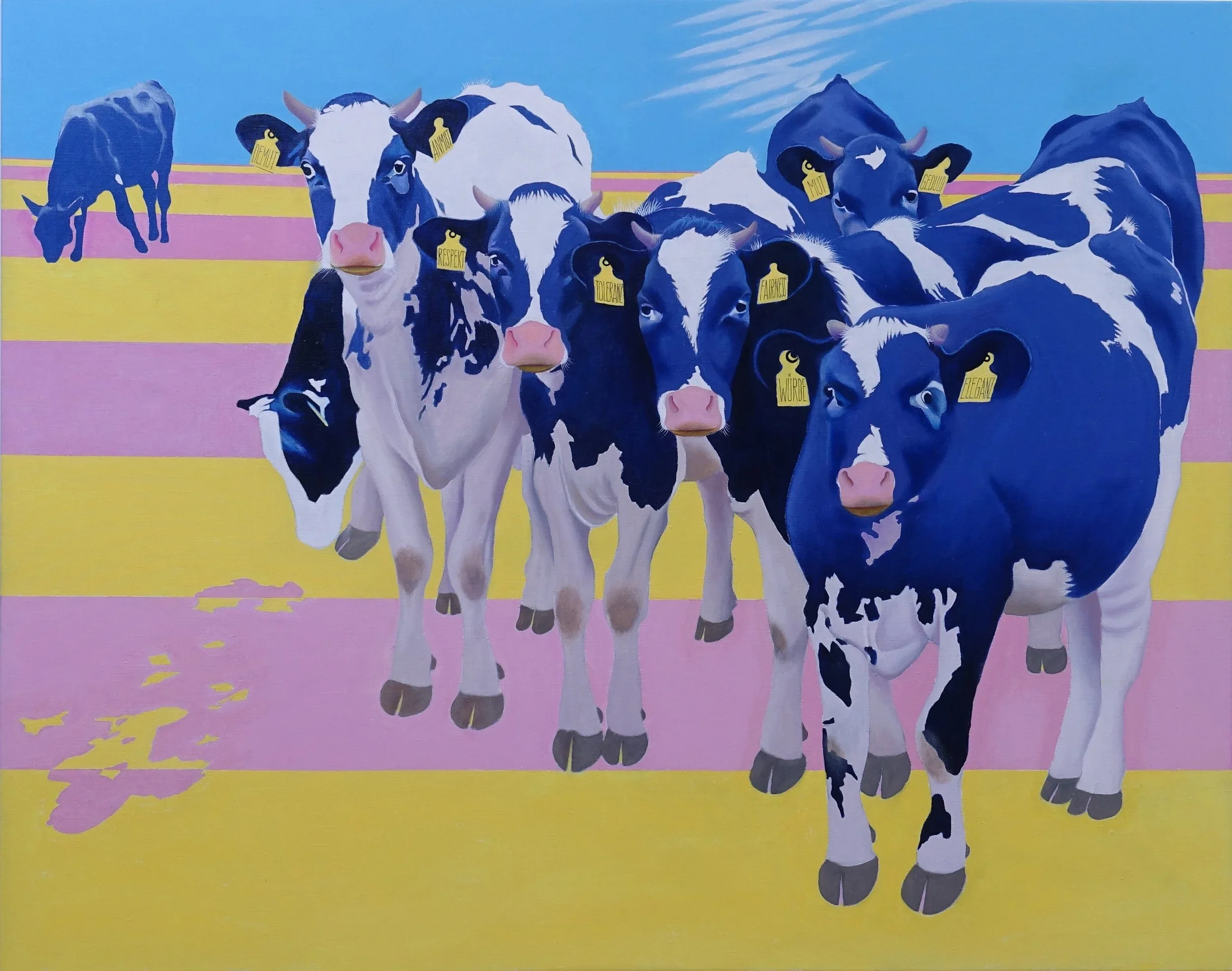


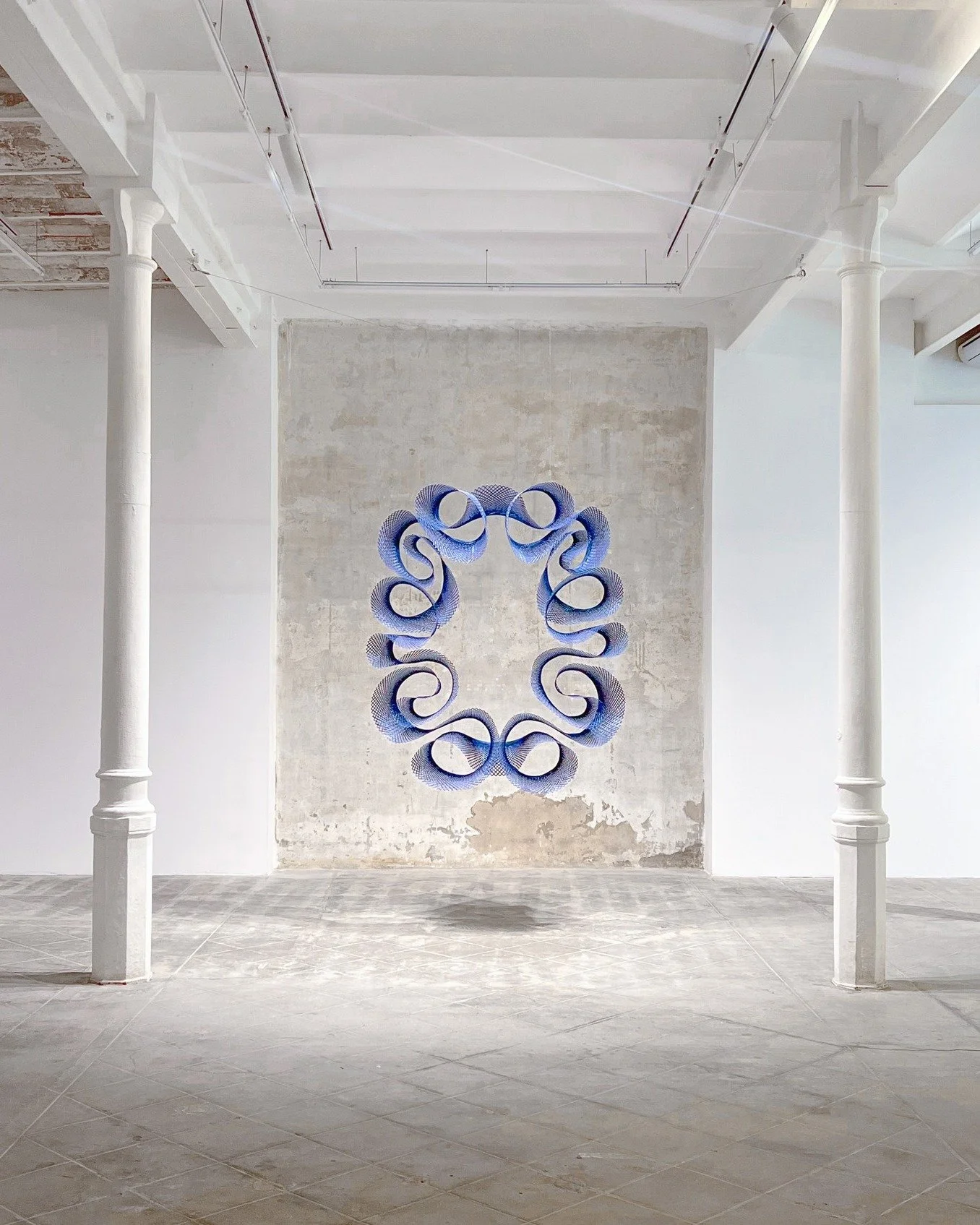
David Moješčík - MojDa is a Czech sculptor. His work is centred on figurative sculpture, the human body, and the female figure. Modelling in clay and with digital tools, he ultimately prioritises manual engagement with materials. . He draws inspiration from yoga philosophy with the concepts of non-violence and human-centeredness, as well as from Egyptian, ancient, and European classical sculpture.