
10 Questions with Masaaki Hasegawa
Masaaki Hasegawa’s practice explores the intersections of body, perception, language, and technology through lived experience. As a Japanese artist and immigrant in Spain diagnosed with ASD (autism spectrum disorder), he positions heightened sensitivity not as a limitation but as a source of knowledge, resistance, and poetic intensity. Informed by over 25 years of martial arts training, his work integrates disciplined physical movement with synthetic and digital processes. These gestures oscillate between control and vulnerability, structure and rupture. His practice functions as both ritual and inquiry, an attempt to access veiled mental states and to document ephemeral conditions that evade fixed meaning. Through large-scale installations, performance, and text-based works, Hasegawa confronts societal norms and the discomfort they produce, while inviting inward reflection. His work embraces contradiction: it denies certainty yet affirms presence, allows fragility to coexist with force, and transforms unease into resonance. Rather than offering representation, his practice proposes art as a mirror, reflecting embodied consciousness, otherness, and the unstable boundaries between self and society.

Masaaki Hasegawa - Portrait
ARTIST STATEMENT
Art is his revenge. Art is his liberation. Art is his prayer. It is him against society. The body is an ark for the spirit; flowers are solace. His art practice is a search within the mind, a ritual to access what is veiled, a documentation of ephemeral states. It empowers sensitivity and allows ugliness to bloom. It denies existence yet celebrates phenomena. It requiemizes knowledge but embraces poetry.

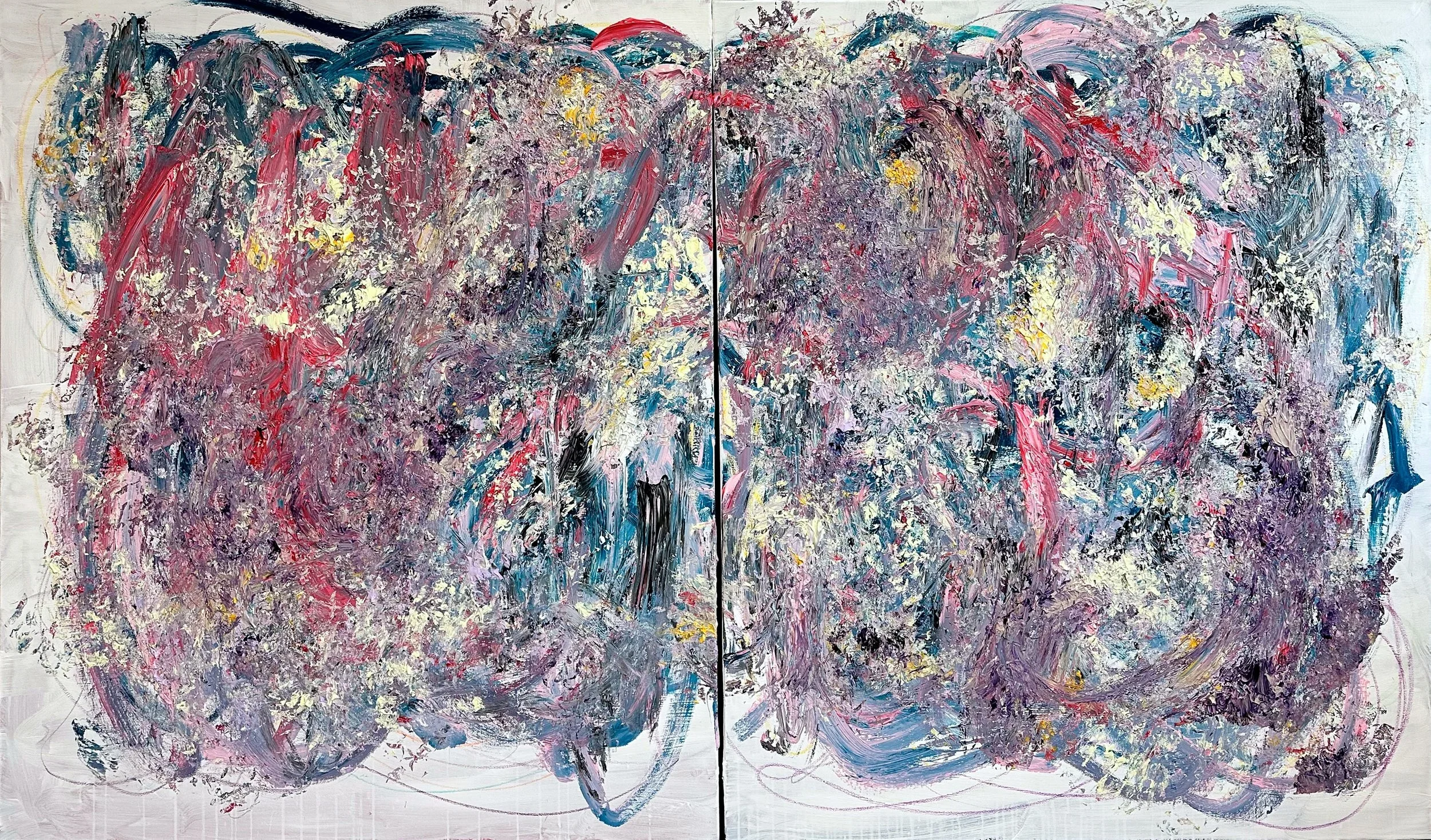
I-NO-RI, Acrylic and crayons on canvas (painted with hydrangeas flowers and calligraphy brushes), 120x200 cm, 2025 © Masaaki Hasegawa
INTERVIEW
First of all, tell us a bit about your background. Your training includes over 25 years of martial arts. How does that discipline enter the studio? Does it structure your movements, your timing, or even your state of mind while painting?
There is a deep resonance between martial arts and my artistic practice. Both ask me to enter chaos fully, to step into the present moment without hesitation, and to find a path from within it. Not by imposing order from the outside, but by moving through the turbulence until a structure reveals itself.
In this process, technique becomes secondary. What matters first is sensation, a heightened listening to the body, a sensitivity to subtle shifts in breath, weight, tension, and rhythm. Martial arts taught me that the body is never absent. It is immediate and undeniable. Every small detail alters your state. A fraction of imbalance, a flicker of hesitation, can change everything.
Even in stillness, the body remains in constant dialogue with the world. It adjusts, recalibrates, and seeks equilibrium, homeostasis, quietly and continuously. Most of the time, we are unaware of this negotiation. Yet the state of the body shapes the state of the mind, just as the mind reshapes the body. They are not separate territories, but one moving landscape.
After more than twenty years of training, this interconnection has become visceral for me. Each moment arrives unrepeatable. The body is never the same body, the mind is never the same mind, the world is never the same world. Everything is fleeting. This is not philosophy. It is something I have experienced again and again through physical practice. Martial arts made impermanence tangible.
In performance, music becomes a catalyst. It enters me and shifts my internal atmosphere. Yet as I move in response to sound, the movement itself transforms my thinking. The body listening to music alters the mind, and the mind guiding the body alters the movement. It is a continuous loop of sensation and response. All my senses participate in this exchange.
For me, art is not about imprinting ideas onto the world, but about tracing each state of mind as it passes, an ephemeral experience that is the only authentic reality I can truly inhabit.

Humanized Robots, Robotized Humans, and Our Obsession © Masaaki Hasegawa
Having lived and worked between Japan and Spain, how have these different cultural and environmental contexts influenced your relationship to art and your practice?
There are different layers of influence in the practice of art. The process of adaptation reveals the gap between different interpretations of reality, shakes the foundation of one’s identity, and compels you to find ways to reconcile inner cultural conflicts in order to regain balance.
You absorb and integrate multiple cultures within yourself. I have become something neither entirely Japanese nor entirely Spanish, but something else, carrying elements of both.
It is easy to label someone by nationality, language, skin colour, or other visible and superficial traits. But what does it actually mean to be Japanese or Spanish? This question leads me to reflect on what Japanese culture or Spanish culture truly is, so that I can move between them like clouds.
Within this space, we begin to notice the gaps between different cultural layers, and perhaps also the space where something new can emerge.
No matter how fluently I speak Spanish or acquire a Spanish nationality, people would not see me as Spanish. No matter how much I deepen my understanding of Japan or the fact that I was born there, people would not see me as someone who can represent Japan. So, art now serves as the only place where I can exist beyond social norms or categories created by words.
You describe painting not as image-making but as a ritualised condition. At what moment does a work begin for you, before the canvas, in the body, or in a specific mental state?
It begins when emotion emerges. Each emotion is a unique state of mind that also influences the state of the body. I receive feedback from my body in the form of sensations, which can be captured through different media. This means that I am constantly creating something in my mind for as long as I live.
Sometimes it is captured and visualised in a recognisable form that others can see, and we call it an artwork. It is simply a consequence of my existence. Through art, I give shape and colour to my experiences; in other words, it is a trace of my mindscape.
We are always experiencing something and constantly feeling emotions and sensations, but only a few moments become memorable or noticeable. We tend to ignore the vast majority of what we actually experience. It is similar to photographing or drawing a landscape. Nature is always there, yet only in certain moments do we truly recognise its presence. When we feel strong emotions or sensations, the landscape before us becomes something important to paint, but that does not mean the rest is less important.
Likewise, what you see in my artwork is merely a small fragment of what it truly is. It is a small window into my mind.

Black And White Have All The Colors Inside, ink on canvas, 98x177.5 cm, 2023 © Masaaki Hasegawa

Atonement and Purification © Masaaki Hasegawa
You primarily use acrylic because of its irreversible temporality. What does irreversibility mean to you, both technically and philosophically?
It gives me a sense of authenticity. Time is irreversible, and so am I in my existence. We live in a world where almost everything can be edited, whether it is a photograph, a text, or even a painting. But for me, painting is simply the consequence of documenting an experience.
How can you edit what you have truly lived? How can you modify the time you have passed through? That is a fantasy. Each moment happens only once. This is not a belief I invented; it is simply the nature of reality.
To live and work this way requires acceptance of who I am in each moment. I may make mistakes, but those mistakes are part of me. It takes courage to accept oneself, especially because of the ego. If I am afraid to reveal the radical truth of who I am and what I experience, then I do not see myself as an artist. It becomes no different from any medium that presents an edited truth, a more favourable version of reality.
I do not feel that I “make” paintings. Rather, the painting reflects who I am and what I experience in that specific moment. It is a trace of my state of being. Painting is only a tool to transmit that essence.
You often work with non-conventional tools such as flowers and calligraphy brushes. How do these tools alter your decision-making compared to more traditional tools?
The selection of materials is already part of the creation, because materials themselves generate experience. Traditional tools such as brushes are often used to render an image that already exists in the mind. Flowers, however, function differently. They are not merely instruments. They become part of the experience itself. They evoke emotion, affect the senses, and influence how my body reacts in the moment.
Japanese calligraphy brushes are used to register the movement of the body. They allow a direct bridge between mind, body, and canvas. In that sense, they both create and capture the experience at the same time.
Using flowers to paint is different. It is also a cruel act, because it involves the cessation of life. I am aware of that. Before I begin, I spend time interacting with them through multiple senses. I do not only look at them. Sometimes I even taste them. I try to establish a deeper connection, so that they are not separate objects but emotionally part of myself.
Each flower is literally unique. Its shape, size, colour, texture, scent, and fragility are never identical to another. You cannot fully rely on it as a predictable tool. You have to live with it, respond to it, negotiate with it. The objective is not to produce beautiful lines that I have designed in my head. The objective is to transform my experience into something visible through the movements of my body. The image is a consequence of that encounter.
Colour plays a powerful role in your abstract paintings. Do you approach colour intuitively, physically, or analytically? And how does it affect your internal state while working?
Colours talk to me, and I listen to their voices. In every moment, we experience sensations and emotions. Sometimes we label them in order to understand what they are. Using words is an attempt to capture them, but I use colours and shapes because, for me, they feel more authentic than words, which are merely tools. Throughout my life, I have learned and acquired different languages, Japanese, English, Spanish, Portuguese, and Italian, because I am interested in capturing what I experience. Language is a synesthetic act: a way of converting experience into sounds and letters. It is an interesting tool, but I feel the gap and distance between this tool and the actual experience. Colours and shapes feel more truthful, authentic, and raw to me.
What are the colours of your mind right now? Why do you think it has no colours? In the end, the mind is a phenomenon of the brain, and there is no single way it should be. You may unconsciously expect others to see the world as you do, or to recognise reality in the same way. For me, it is not that colours create my mind. Rather, my art reflects the colours my mind holds in that specific moment.
Your work resists representation and fixed meaning. In a world that constantly asks for explanation, how do you respond to the pressure to “explain” abstraction?
Human beings tend to fear the unknown and seek conceptual frameworks to make it manageable. Explanations of artworks often function as protective mechanisms, allowing viewers to avoid deeper engagement with the emotional and cognitive processes the work may evoke. Rather than confronting their own internal responses, individuals may rely on interpretation as a source of reassurance. Thus, the issue is not that I experience pressure to explain my work. Instead, viewers may feel unsettled by the work itself and seek explanation as a means of restoring psychological comfort and certainty.
Abstraction conveys complex layers of information, sensation, and emotion. Engaging with it meaningfully requires intellectual and emotional energy, which can be demanding and, at times, uncomfortable.
To illustrate: the existence of a tree depends upon the entire universe. Yet perceiving and comprehending that interconnectedness through the simple act of observing a tree requires deep concentration and openness. Accepting a verbal explanation, by contrast, requires far less effort.
Ultimately, the encounter with art raises a question of courage: whether one chooses to immerse oneself in the full experiential depth of the work or to seek immediate clarification.

I Am Hydrangea-full bloom everywhere, acrylic on canvas, 100x100 cm, 2023 © Masaaki Hasegawa
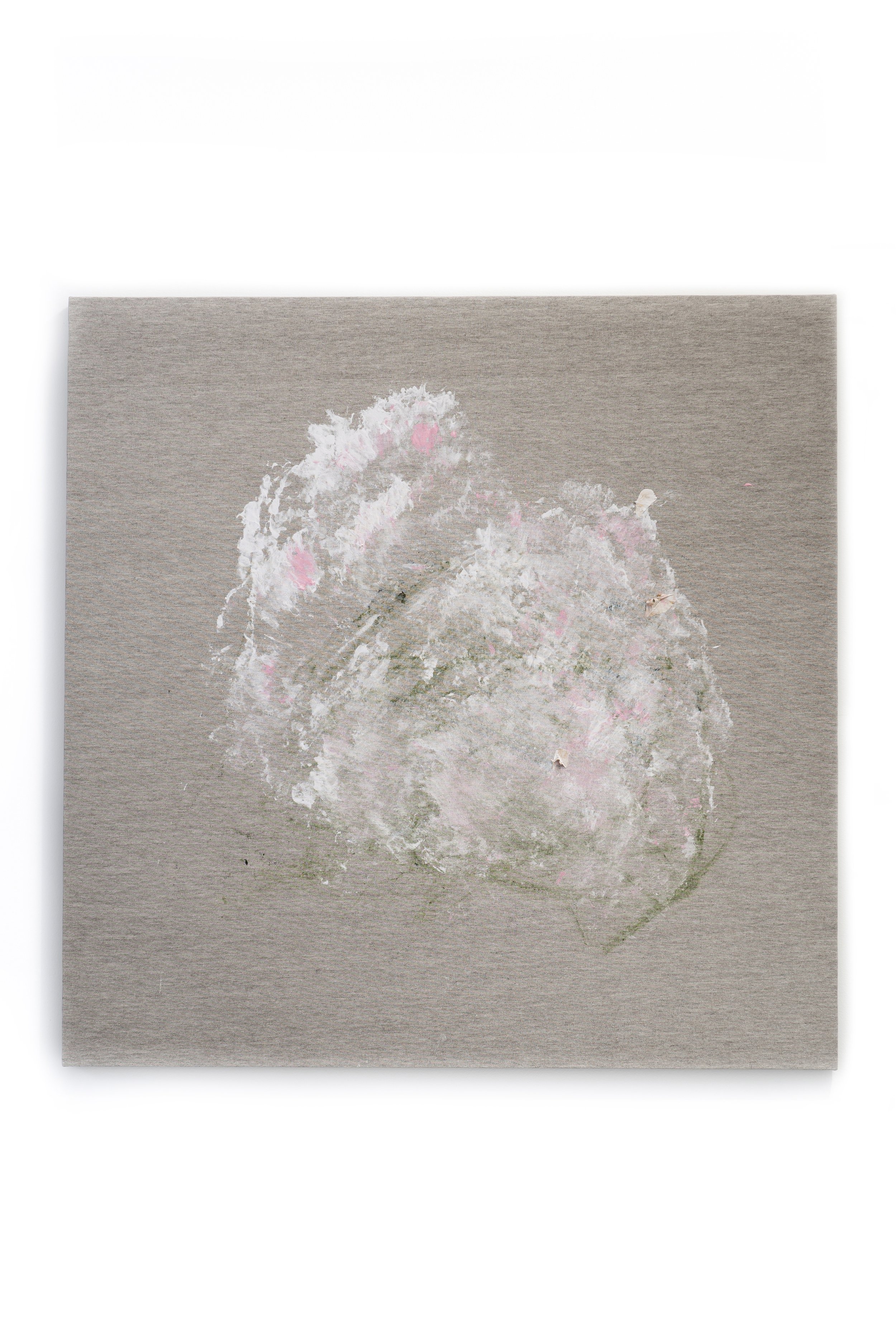
I Am Hydrangea-a life fades away, acrylic on canvas, 80x80 cm, 2023 © Masaaki Hasegawa
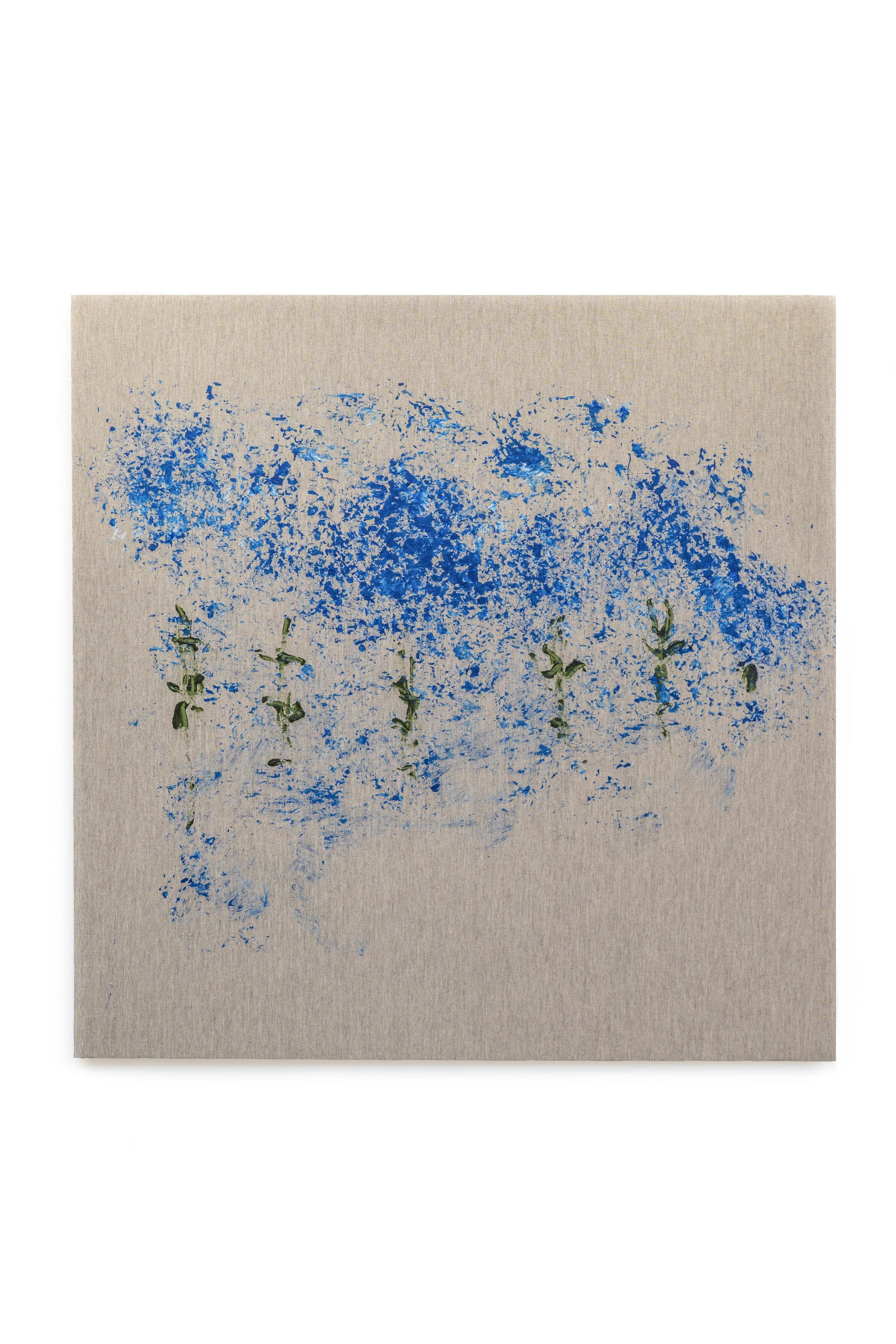
I am Hydrangea-wind takes it away, acrylic on canvas, 90x90 cm, 2023 © Masaaki Hasegawa
As an artist diagnosed with ASD, you speak about heightened sensitivity as a source of knowledge. How does this sensitivity inform your perception of rhythm, texture, or spatial scale in large works?
It is like a sensor. The higher the sensitivity of a sensor, the higher the resolution of information it can capture from the world. If it has a higher sampling rate, the amount and complexity of the information increase exponentially. But if it cannot process all that information, it may freeze.
Sensitivity functions in a similar way. It allows us to observe the world more vividly and experience it more intensely. At the same time, living with high sensitivity can be overwhelming. I need to compress the information coming through my senses so that my mind can function and operate without difficulty. However, this does not mean there is less information. As I mentioned, it is simply compressed somewhere in the mind.
Large-scale artworks are like opening a zip file; everything stored inside is released at once. The greater the volume, the more space it requires. I use my body as a catalyst to visualise my mindscape. Working on a larger scale gives me more space to move, flow, and capture that inner landscape more truthfully.
When audiences encounter your large-scale installations or paintings, what kind of experience do you hope they have, reflection, discomfort, recognition, or something else?
I want viewers to confront the work directly and dive fully into the experience, leaving aside the need for immediate intellectual understanding. It takes courage to go through what I have gone through, because feeling something intensely can be overwhelming. It is not easy for most people.
Intellectual reasoning often functions as a protective wall. It shields our vulnerability from emotion and gives us the comfort of believing we understand something. We cling to the fantasy of comprehension, and in doing so, we abandon the rawness of experience.
Creation does not necessarily emerge from comfort or positive emotions. More often, it requires long periods of facing pain, sadness, anxiety, fear, anger, frustration, or insecurity. You can understand the concept of an artwork through analysis and thought, but to truly inhabit the emotions that drive its creation is something entirely different.
There is a phrase about putting yourself in someone else's shoes. I invite people to go further than that. I invite them to step into my mind and my body.

Obsession-endless Cycle of Unfinished Matters © Masaaki Hasegawa
Lastly, looking ahead, what feels urgent for your practice? Are there new materials, technologies, or contexts you want to explore in your upcoming projects?
There are two areas I have been exploring: performance and experience. In my performances, I paint and improvise to music created by BONAMASA, using sounds recorded from daily life in Japan. Through these performances, I experiment with how a state of mind can shift not only through music but also through smell, texture, illumination, and the presence of others. It is a reinterpretation, rediscovery, and recreation of my own background: Japan. During the performance, I burn flowers, bring soil into the interior space, paint with indigo ink on Japanese paper, and explore layered sensory experiences that I share with the audience. The objective is to create and capture an experience, not to produce a painting. The painted canvases or papers are merely traces, evidence, or consequences of the experience, rather than the goal itself.
I personally see it as an internal “return to the human” movement, emerging within today’s highly materialised and increasingly mechanised global society, a society in which even human relationships are subject to consumption. It functions as a ritual of becoming human again, a humanistic reinterpretation of who we are. Another theme I explore is “obsession.” It is part of my search to understand the desire to create. Art is not a supplement to my life; it is essential to who I am. The question I ask myself is: where does this intense drive come from?
This project is a form of experiential research, an attempt to understand human nature through artistic practice. As a medium for this research, I painted 50 abstract rose paintings, each measuring 1m × 1m, a total of 50 square meters, and exhibited them together in a gallery space to visualise my own obsession.
This was a successful first step, but I would like to scale the project up to 100 or even 200 pieces, filling a large space that viewers can walk through, inhabit, and experience physically. After the exhibition, the idea is to burn everything down, mirroring the cycle of obsession itself.
For me, art is an act and a way of living rather than an object. In this project, canvases, traditional artistic mediums, are simply part of the process and the phenomenon, not the objective or the destination.
Artist’s Talk
Al-Tiba9 Interviews is a curated promotional platform that offers artists the opportunity to articulate their vision and engage with our diverse international readership through insightful, published dialogues. Conducted by Mohamed Benhadj, founder and curator of Al-Tiba9, these interviews spotlight the artists’ creative journeys and introduce their work to the global contemporary art scene.
Through our extensive network of museums, galleries, art professionals, collectors, and art enthusiasts worldwide, Al-Tiba9 Interviews provides a meaningful stage for artists to expand their reach and strengthen their presence in the international art discourse.



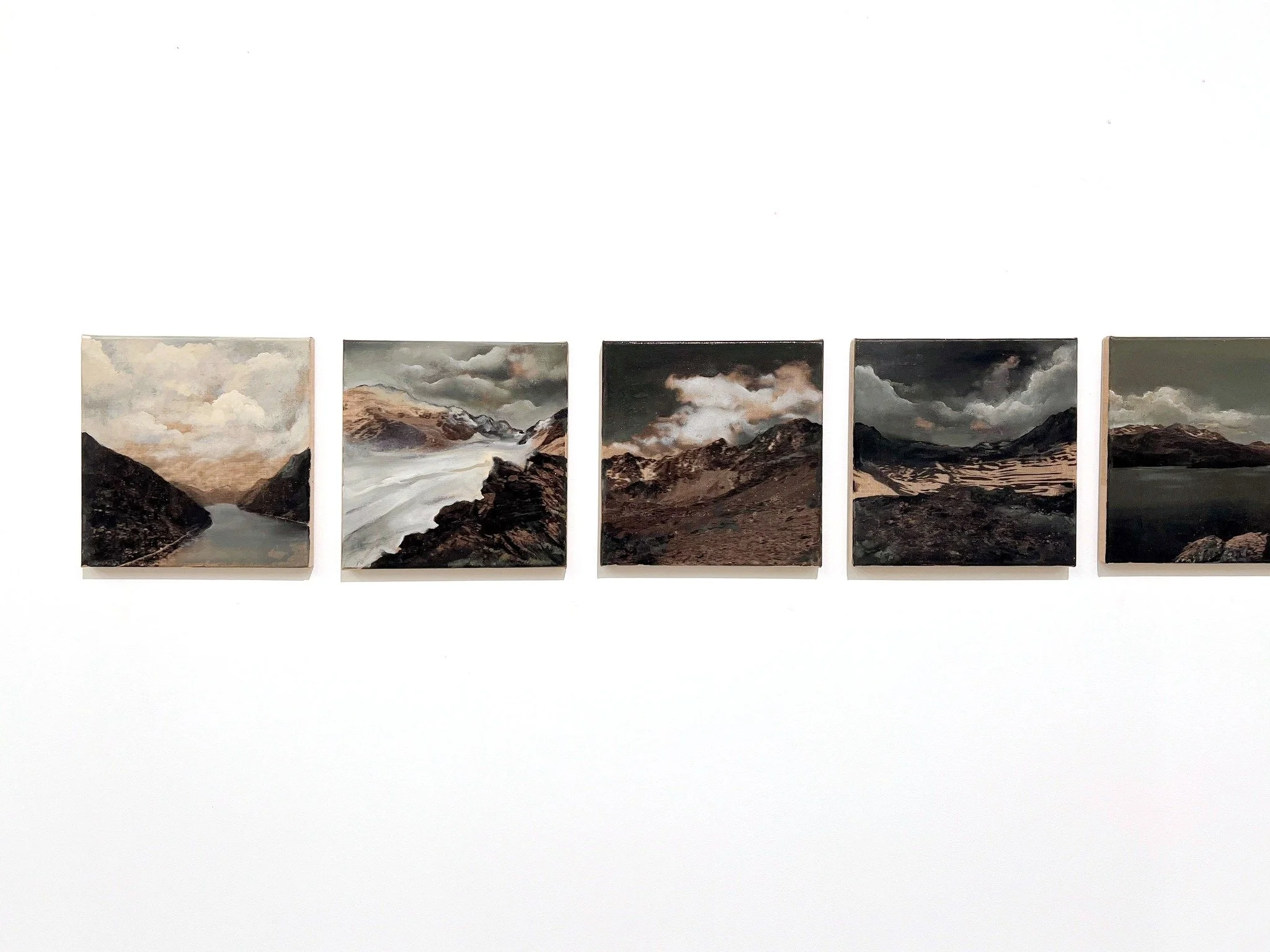
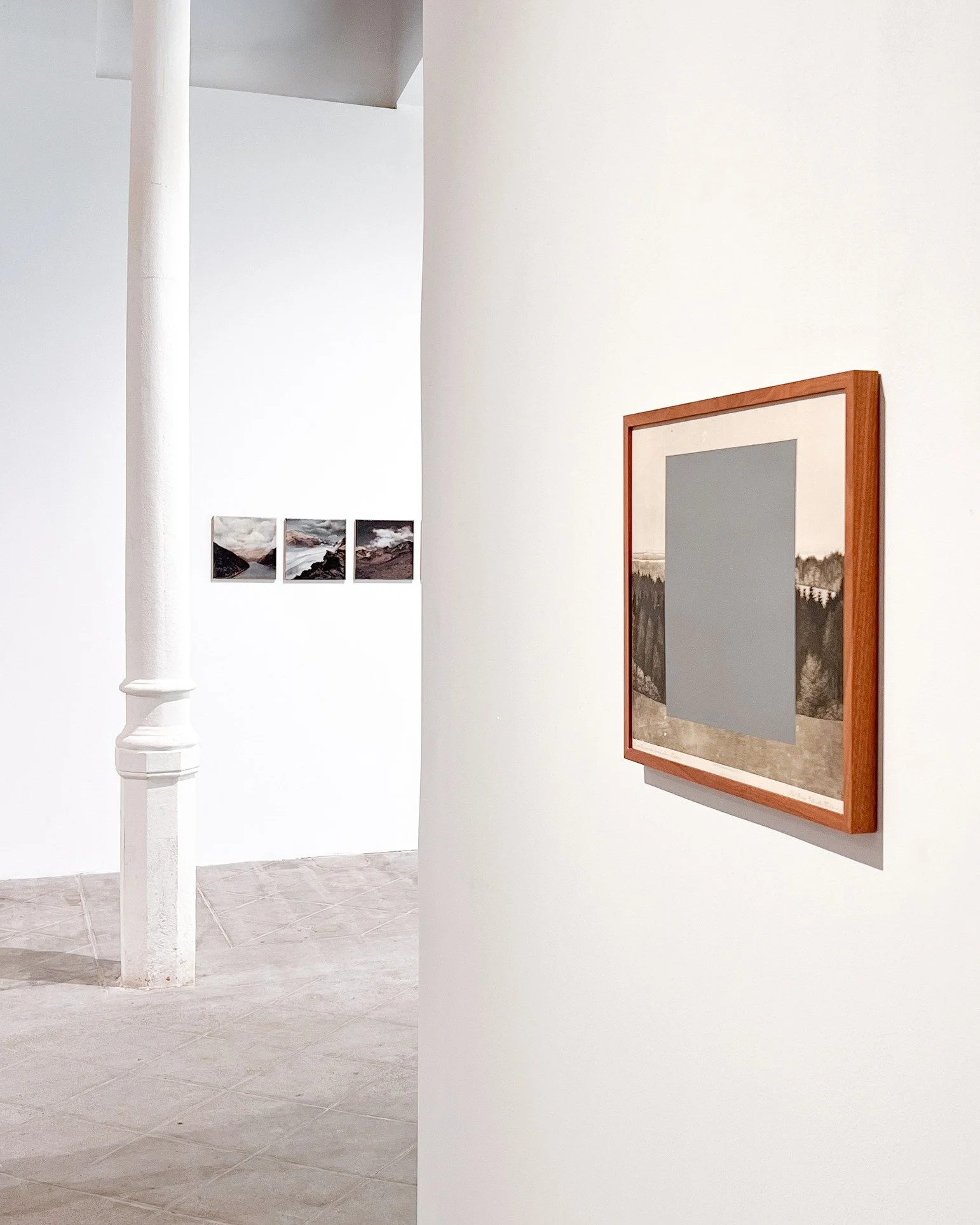
Nataraj von Allmen is a painter based in Switzerland. Often taking photographic material as a starting point, he weaves together landscapes, mythological archetypes, Christian symbolism, and contemporary socio-political themes into complex paintings. Oscillating between figuration and abstraction, his work investigates transformation, collective memory, and the human condition.