
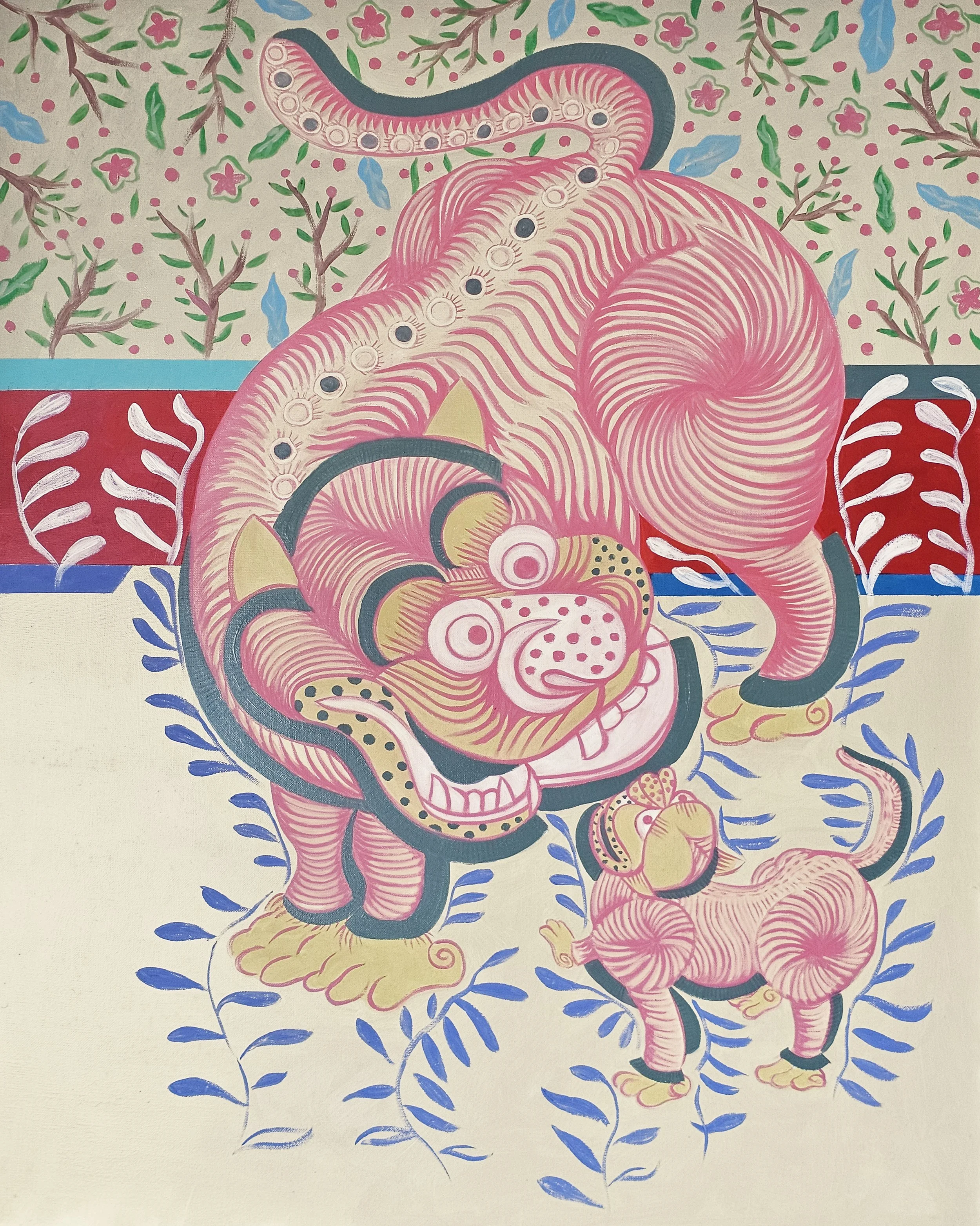
10 Questions with Yi Zhu
Mr Zhu Yi is an artist who has broken through himself amidst the great changes in China's social and economic structure. Mr Zhu Yi has witnessed the fission of China's social and economic structure from the Mao Zedong era to the Deng Xiaoping era. This fission of the social and economic structure has influenced Mr Zhu Yi's worldview. In the early days, he engaged in printmaking and illustration, creating many works with a unique perspective on composition. In the face of the diverse social sensations in the fission of the social and economic structure, as well as the struggle, desire and dignity of human nature in competition, Mr Zhu Yi has created a large number of printmaking and oil painting works, which also defines Mr Zhu Yi as an artist with a creative methodology of deconstruction and reconstruction from generation to existence in Chinese contemporary art and international art.
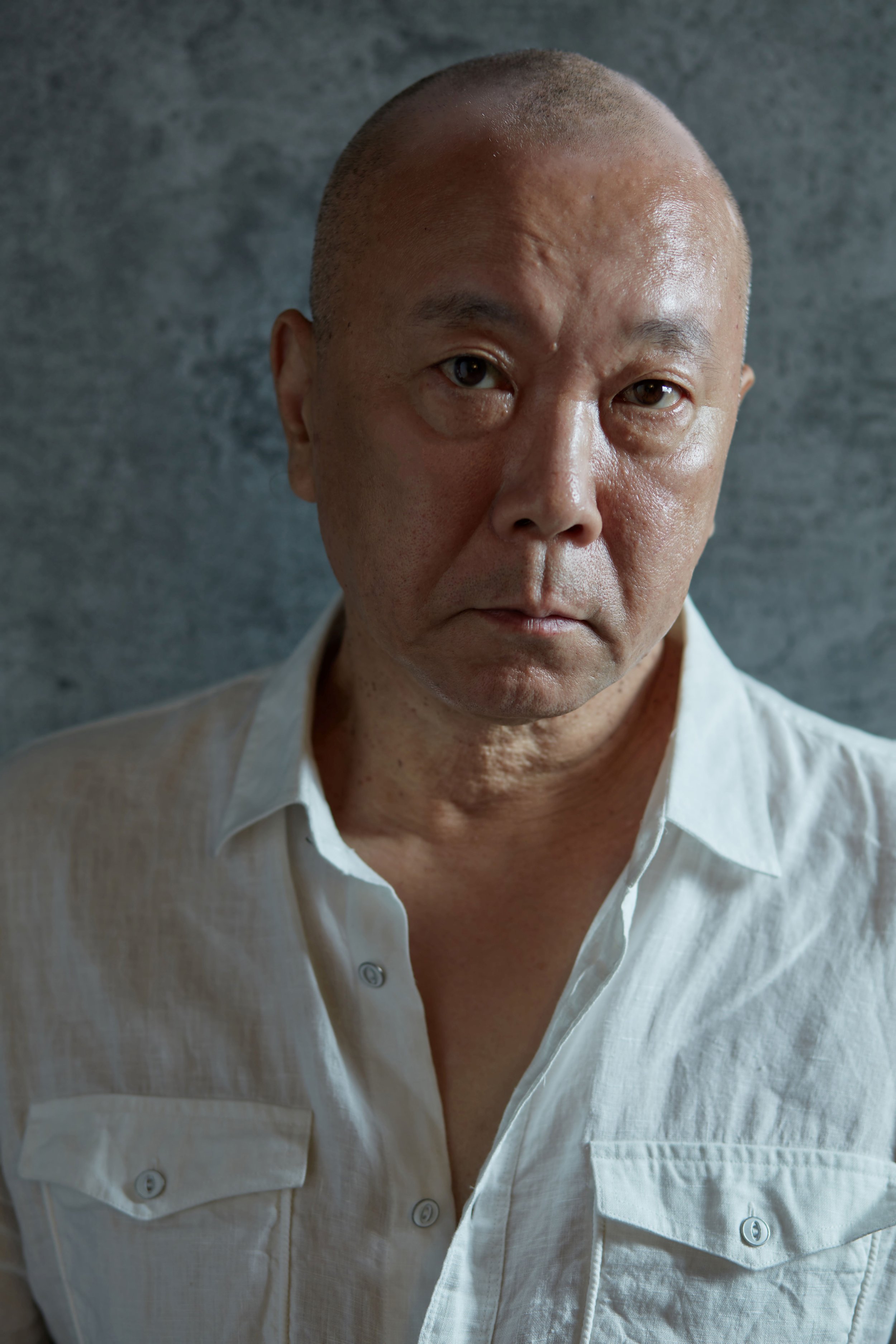
Yi Zhu - Portrait
ARTIST STATEMENT
Mr. Yi Zhu is an artist who has achieved self-transcendence, emerging from the profound social transformations of China.
Mr Yi Zhu puts forward the creative philosophy of "Deconstructing the Material, Reconstructing the Spiritual". He focuses on the tension and contractility inherent in the physical attributes of life. Influenced by Wittgenstein and Deleuze, he argues that creation consists in building an unreal spiritual world out of the real physical world, deconstructing an actual structure and reconstructing it to establish an intangible spiritual space.
Mr Yi Zhu draws on the pottery patterns of the Majiayao culture from thousands of years ago in the upper reaches of China’s Yellow River and the negative space symbols of Chinese paper-cutting to reconceptualise the timeless theme of human struggle and dignity on both intellectual and visual levels. The works he creates are not only intellectually thought-provoking but also visually compelling. His art serves as a bridge between the tangible and the intangible, guiding audiences to explore new dimensions of existence and redefine their understanding of the inherent complexities of life.
Mr Yi Zhu states of his own practice: “For me, colour composition is a war waged throughout the creative process, raw, brutal, confrontational, fraught with conflict, mutual annihilation and compromise. But once a piece is finished (and this war of colours draws to a close), what emerges is the primordial nature of colour: its harmony, its beauty, its redemptive power, and the order forged from chaos. It is a new colour-borne life, born of becoming and existing, reaching out to connect with you.”
The rhizomaticity in the works of Mr Yi Zhu is not only an artistic translation of Deleuzian philosophy, but also a contemporary interpretation of the spiritual essence of traditional Chinese culture. Through the dual movements of deconstruction and reconstruction, he constructs a spiritually charged universe on the canvas, one where there are no centres or peripheries, only ever-evolving nodes of meaning; no fixed paths of interpretation, only a narrative network co-woven by the viewer and the work itself. This creative practice not only offers new methodologies for contemporary art but also responds visually to humanity’s existential inquiries in the age of technological rationality. As demonstrated in his works, true art, like a rhizome, should generate new heterogeneous connections precisely at the points of rupture.
Works by Mr Yi Zhu, such as Hello It's Me, Industry Drives Desire, My World and the World No.02, have established an artistic framework that integrates subjective creative philosophy with viewer-perception interaction through innovative visual language, presentation and modes of perception. His works are collected by collectors worldwide and have garnered awards at numerous international art exhibitions. For instance, he was named Best Independent Artist at the 2023 New York Art Expo, and his piece My World and the World No.02 earned him an award in the UK, with the judges commenting: "It boasts extraordinarily unique imagination; its exceptional vision and profound artistic heritage are captivating, making it both illuminating and brimming with boundless potential."
Many works by Mr Yi Zhu are part of private collections in New York, Beijing, Shanghai and other major cities. In 2025, multiple works were awarded influential Gold Awards. The oil painting “Hello it's me” (2025) won the Gold Award in the Painting category at the 2025 Season 2 GBCA Global Best Creative Awards (UK). The oil painting “My World and This World No. 02” (2025) won the Gold Award in the Painting category at the Spring Session of the UK FADA Future Art & Design Awards. The oil painting “Industry Drives Desire” (2025) won the Best Green Painting Gold Prize at the UK World Green Sustainable Design Award 2025.
Love you No.01, Oil on canvas, 80x100 cm, 2025 © Yi Zhu
INTERVIEW
Welcome back to Al-Tiba9! What have you been up to since we last featured your work?
Returning to Al-Tiba9, I have selected three oil paintings as representative works for my creative methodology, Deconstruction and Reconstruction: From Becoming to Being, “Construct a State of Mind No. 01,” “My World and This World No. 02” (2024), and “Where to Go” (2026). These three works form a continuum within my visual system, interpreting the core logic: deconstructing matter and reconstructing spirit, moving from becoming to being, and ultimately realising existence. With emotional value as a horizontal bond, they establish a perceptual connection between the viewer and the artwork.
My “deconstruction” lies in stripping away the inherent semantics of cultural symbols and personal emotions, reducing them to pure visual elements. “Reconstruction” refers to creating an open spiritual field, guiding viewers to generate their own unique spiritual experiences based on personal perspectives. The ultimate “being” of the work is achieved through the horizontal diffusion of value via emotional nodes, allowing each viewer’s distinct perception to complete the transformation of the artwork from its creation into eternal existence.
Last time, we talked about your core practice as “Deconstructing the Material, Reconstructing the Spiritual.” At this stage of your career, do you feel this philosophy has evolved? And if so, what tensions are you currently dealing with?
The core philosophy of “Deconstructing Matter, Reconstructing Spirit “remains unchanged; on the contrary, it has been continuously deepened, gradually forming a complete creative methodology rooted in “From Becoming to Being”. Drawing on the centred and pluralistic characteristics of Deleuze’s rhizomatic image, I construct new connections at the fractures of visual fragments, endowing the work with more tense emotional expression.
The core challenge at present is to balance the symbolization tendency of the work’s emotional value: On the one hand, it is necessary to adhere to the individuality and purity of artistic expression to achieve free spiritual reconstruction. On the other hand, it is essential to ensure the openness and publicity of the work, so that viewers from different backgrounds can establish effective emotional connections, finding a precise balance between personal expression and public resonance.
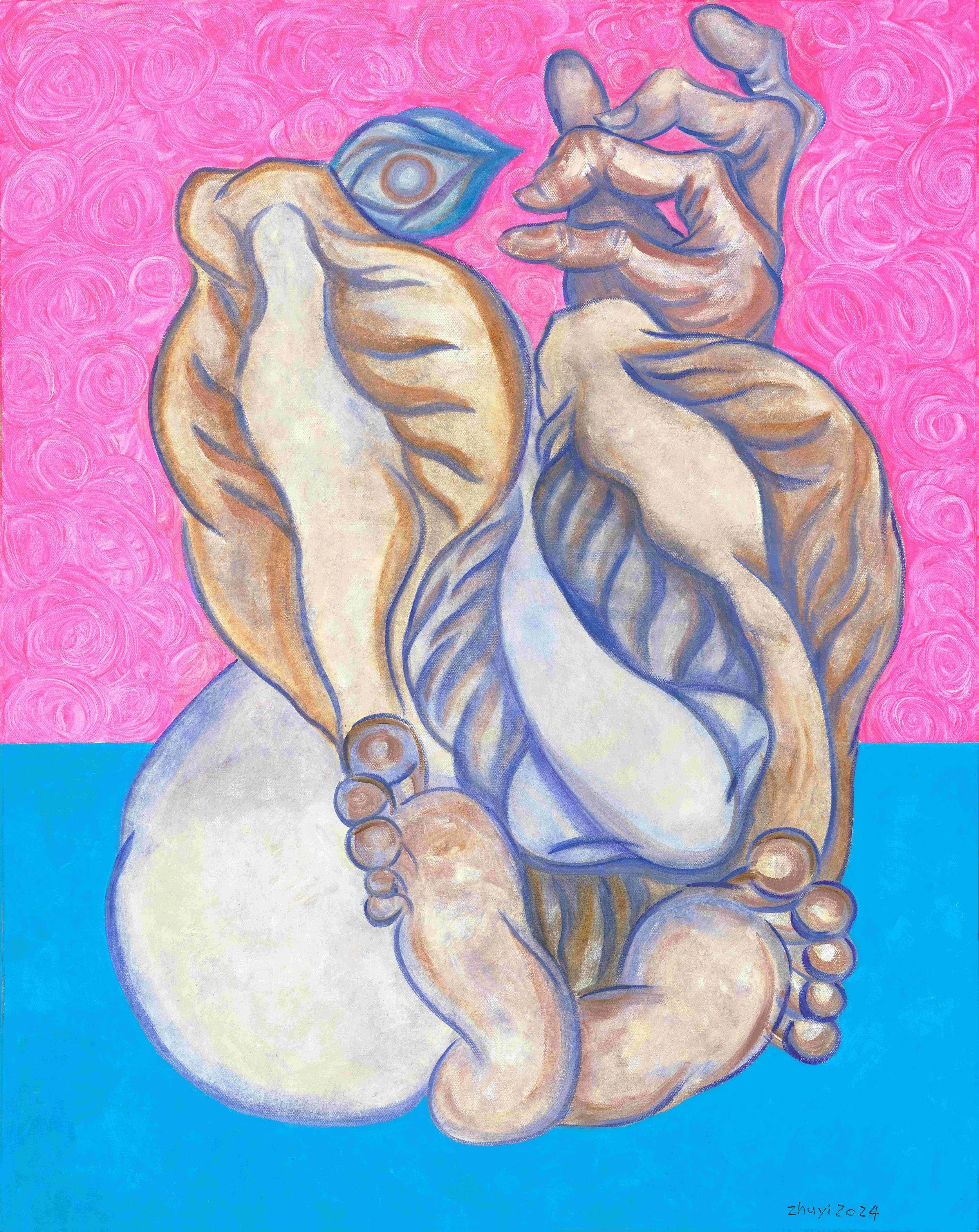
My world and this world No.02, Oil on canvas, 80x100 cm, 2024 © Yi Zhu
Philosophers like Wittgenstein and Deleuze play a role in your thinking. How do you translate abstract philosophical ideas into visual forms?
Wittgenstein and Deleuze provide the core philosophical foundation for my artistic creation. I translate abstract philosophy into concrete visual language: Centred on Deleuze’s rhizome structure, a centred, heterogeneously connected, and generative, I abandon focal points and hierarchical relationships, achieving the equal juxtaposition of visual elements. By integrating heterogeneous signs such as oriental painted pottery patterns and digital symbols, I realise the rhizomatic spread of visual emotional value, interpreting the instinctive physical properties of life’s tension and contraction, and allowing the work’s meaning to emerge naturally from the interrelation of elements. Through minimal visual forms, I convey the core essence: to retain the generative power of life and individual freedom in a fragmented and defined world. Philosophy also endows the work with the emotional tension and contraction that define its inner force.
Your practice is often described as a process of self-transcendence. What does growth or transformation mean to you as an artist today?
I have come to realise that the emotions of life and fragments of emotional memory highly coincide with Deleuze’s rhizome theory in terms of decentralisation, open connection, pluralistic generation, anti‑hierarchy, and nomadic existence. Both oppose tree‑structured thinking and pursue a distributed, centred, and infinitely connective open form.
This evolution has freed my creation from one‑way expression. I now focus more on deriving new connections at the fractures of visual fragments, resonating with the audience’s emotions beyond the canvas. Most collectors of my work acquire it for its emotional value or the philosophical thinking behind it.
The visual impact of life’s tension and contraction in my work implies that my art achieves its complete and full existence only when it connects and is completed together with the audience.
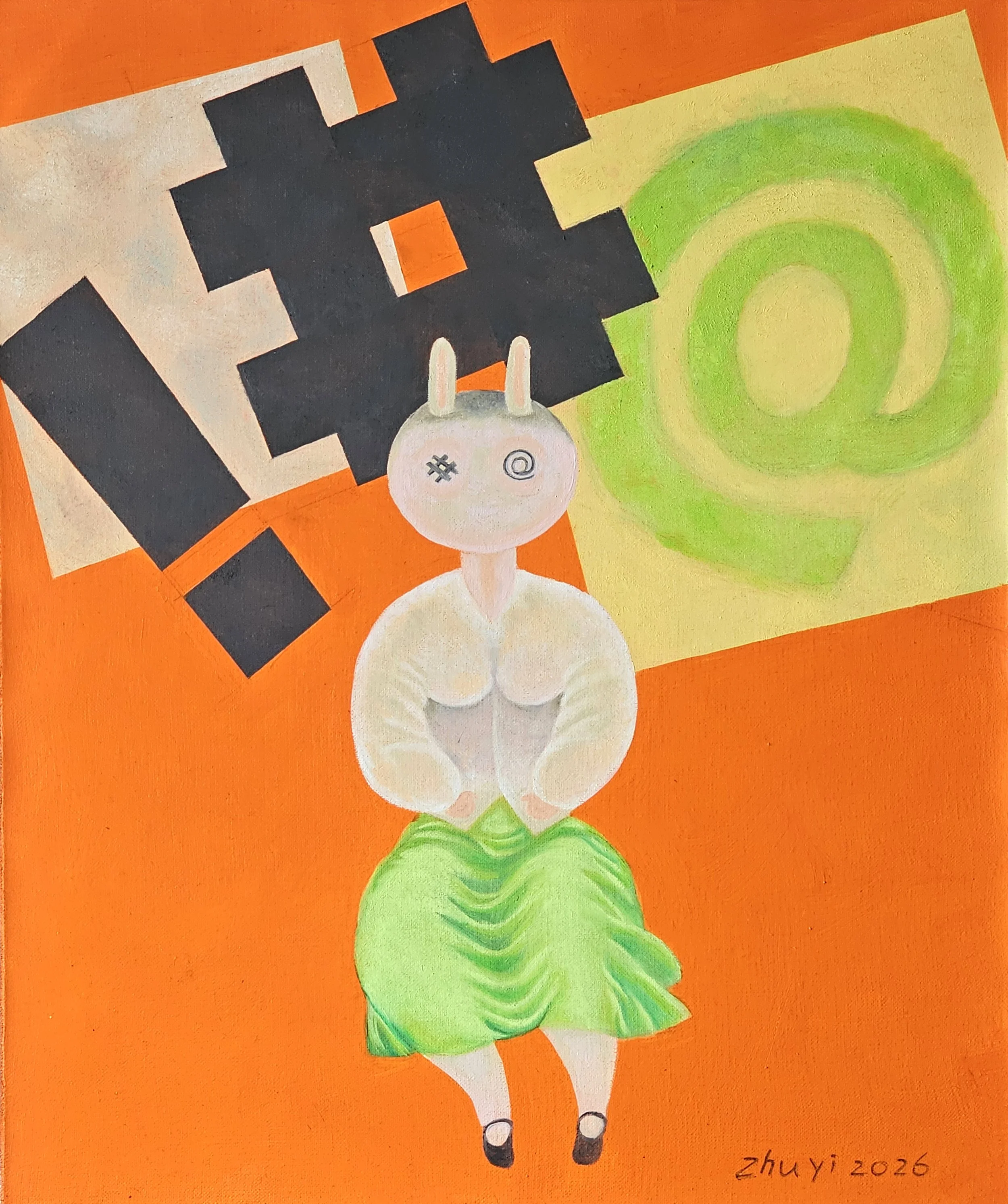
In context, we are so frail © Yi Zhu
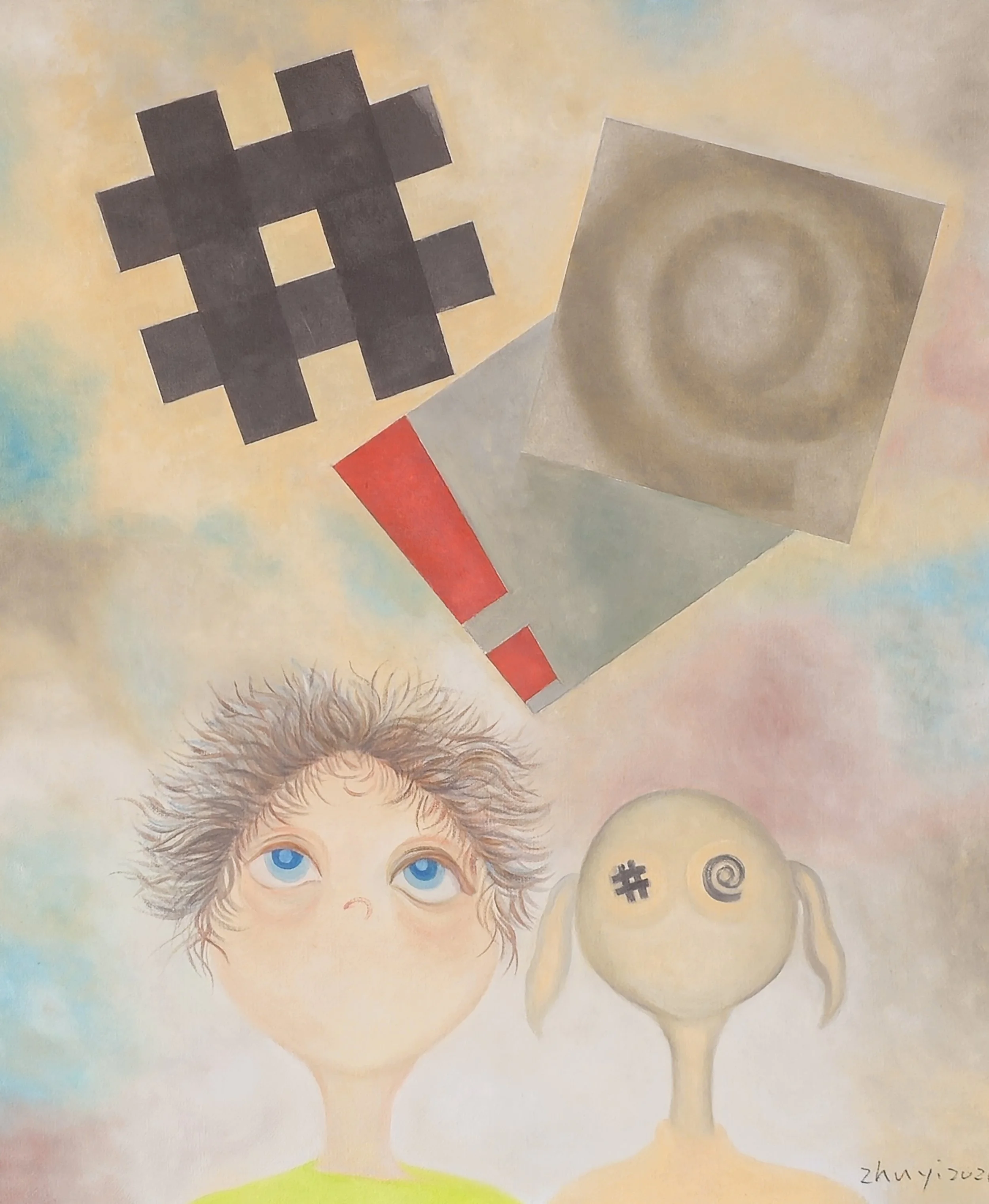
Interventionism © Yi Zhu
Your paintings are charged with tension between colours, forms, and movement. Is conflict something you intentionally seek during the creative process?
My colours are a war: during creation, it is a savage and violent war of colours, they confront, conflict, and dissolve one another, yet seek compromise within tension. When the painting is finished, this war of colours comes to an end. What appears before us is harmony and beauty, the power of healing, order growing out of chromatic chaos, and a colour rebirth from becoming to being. It allows my emotions to form a deep horizontal connection with those of the viewer.
You frequently draw from ancient sources such as Majiayao pottery and traditional papercutting. What continues to draw you to these visual languages?
The visual perception brought by the tension of Majiayao pottery patterns and the contractility of the negative space in traditional paper‑cutting serves as my constant source of inspiration. Its core appeal lies in enabling a profound resonance and dialogue between myself, history, cultural roots, and the emotions of contemporary life. integrate this resonance and dialogue with the fragmented emotions and lifestyles of modern people, creating within a framework of decentralisation, open connection, pluralistic generation, and anti‑hierarchy. This creative “equation” deeply fascinates me. My work “Hello It’s Me” is a representative piece of this approach, and it has also become an important part of my methodology: “Deconstruct Matter, Reconstruct Spirit”.
The rhizomatic structure in your work rejects hierarchy and fixed interpretation. How important is the viewer’s role in shaping the meaning of your paintings?
I, the audience(the concrete embodiment of life forms), and rhizome theory, with decentralisation, open connection, pluralistic generation, and anti-hierarchy at the core, generate new connections at the fractures of visual fragments. Together, we are creating a shared symbiotic work that evolves from becoming to being. The work attains its full existence ultimately through each viewer, beyond the frame. Inside the frame lies the metaphysical construction of my subjective idealism; outside the frame is a field of emotional value that forms horizontal connections between the viewers’ subjective worlds and my work.

My neighbor gave me a camisole, Oil on canvas, 80×120 cm, 2025 © Yi Zhu
Some of your recent awards engage with social or environmental themes. How do these concerns naturally find their way into your paintings?
Social and environmental themes do not appear in my work through direct narrative. Instead, they are deconstructed into a spiritual core and naturally integrated into the visual language and creative structure. I do not depict specific social events or environmental issues. Rather, I break down such reflections into fundamental visual elements, the tension of colour, the conflict of forms, the growth and entanglement of lines, making them carriers of spiritual states. These elements are then placed into an open rhizomatic structure, connecting with cultural symbols and personal emotional elements to construct a polysemous spiritual field.
In an age dominated by technological rationality and accelerated image consumption, what do you believe painting can still offer as a mode of resistance or reflection?
My new oil paintings for 2026, “How It Perishes” and “We’re Not in Kansas Anymore”, seek to respond to and articulate the contemporary issues of a world dominated by technological rationality and accelerated image consumption. Once, human beings had to ask how to act, how to arrive, how to achieve; action was wrapped in paths, methods, skills, and intermediaries. Today, technology has swallowed the process, compressing “how” into a single click, a command, or an interface. Yet visual creation and imagination in painting serve as an important form of resistance and reflection against this trend. Our current condition corresponds precisely to the core themes explored in “How It Perishes” and “We’re Not in Kansas Anymore”.
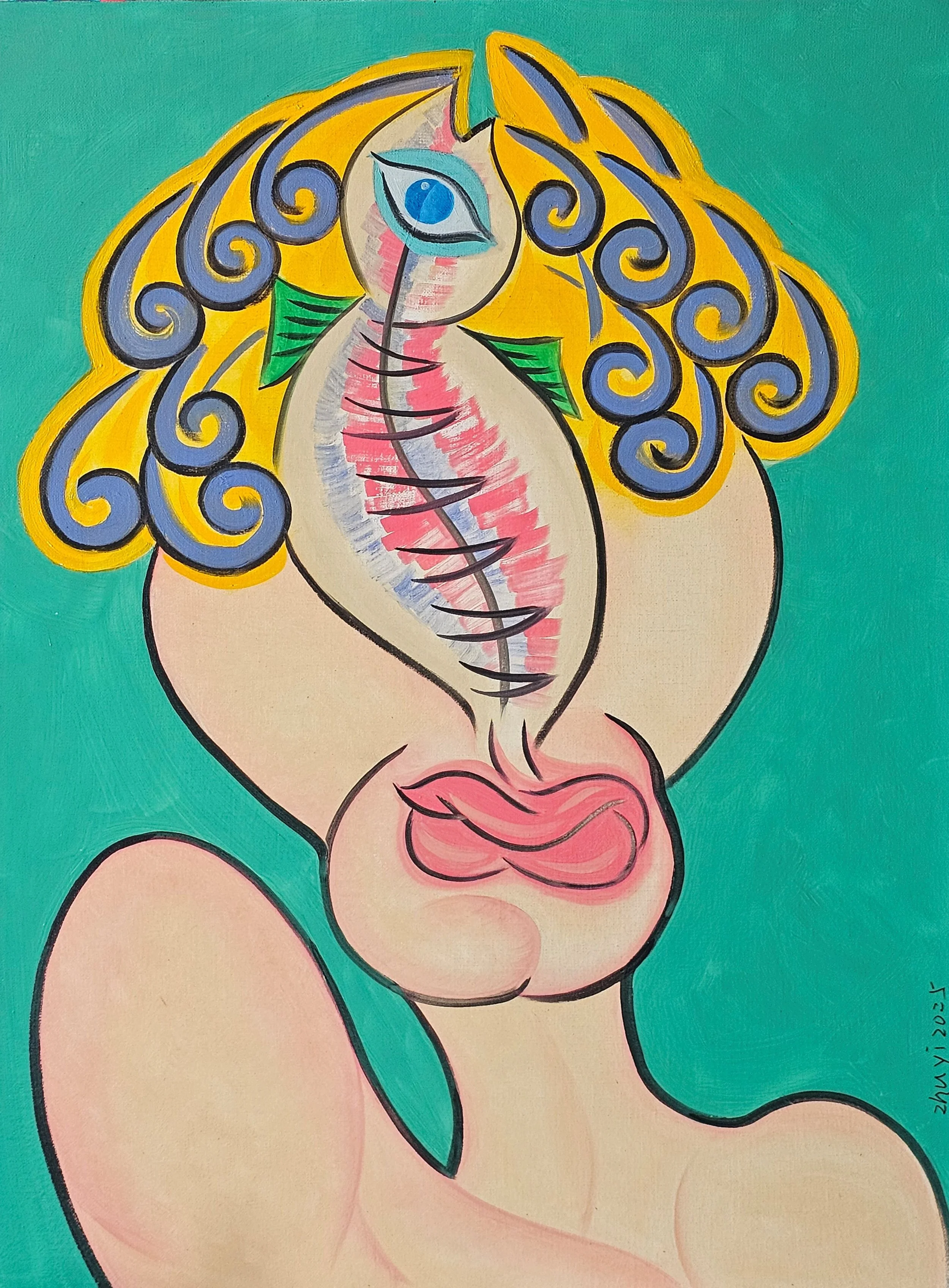
Hello it's me, Oil on canvas, 60×80 cm, 2025 © Yi Zhu
When you look at your recent works like “Hello It’s Me” or “Industry Drives Desire”, do you see them as conclusions of a cycle or as rupture points that open new, unpredictable directions for your practice? And where do you see your path leading you next?
Painting is meant to be seen, not explained. Yet in this era of profound transformation, we cannot help but reflect on and construct our own framework of creative thought. We must seek more cutting-edge narrative approaches, build an exclusive context for creation, and endow our works with unique emotional value.
For me, “Hello It’s Me”, “Industry Drives Desire”, and “My World and This World No. 02” belong to the past of my creation; they mark a point of rupture. Yet it is precisely at this ruptured point of the past that I connect new social insights with my own artistic practice. I will transform these insights into more recognisable visual symbols, shaping and sustaining the distinctiveness, imagination, creativity, perceptibility, and artistic longevity of my work. I have now begun to focus on the emotional fragility of life under digital power, as reflected in my new 2026 works “In Context, We Are So Frail” and “Interventionism”. This focus will lead me toward creations with stronger symbolic expression.
Artist’s Talk
Al-Tiba9 Interviews is a curated promotional platform that offers artists the opportunity to articulate their vision and engage with our diverse international readership through insightful, published dialogues. Conducted by Mohamed Benhadj, founder and curator of Al-Tiba9, these interviews spotlight the artists’ creative journeys and introduce their work to the global contemporary art scene.
Through our extensive network of museums, galleries, art professionals, collectors, and art enthusiasts worldwide, Al-Tiba9 Interviews provides a meaningful stage for artists to expand their reach and strengthen their presence in the international art discourse.



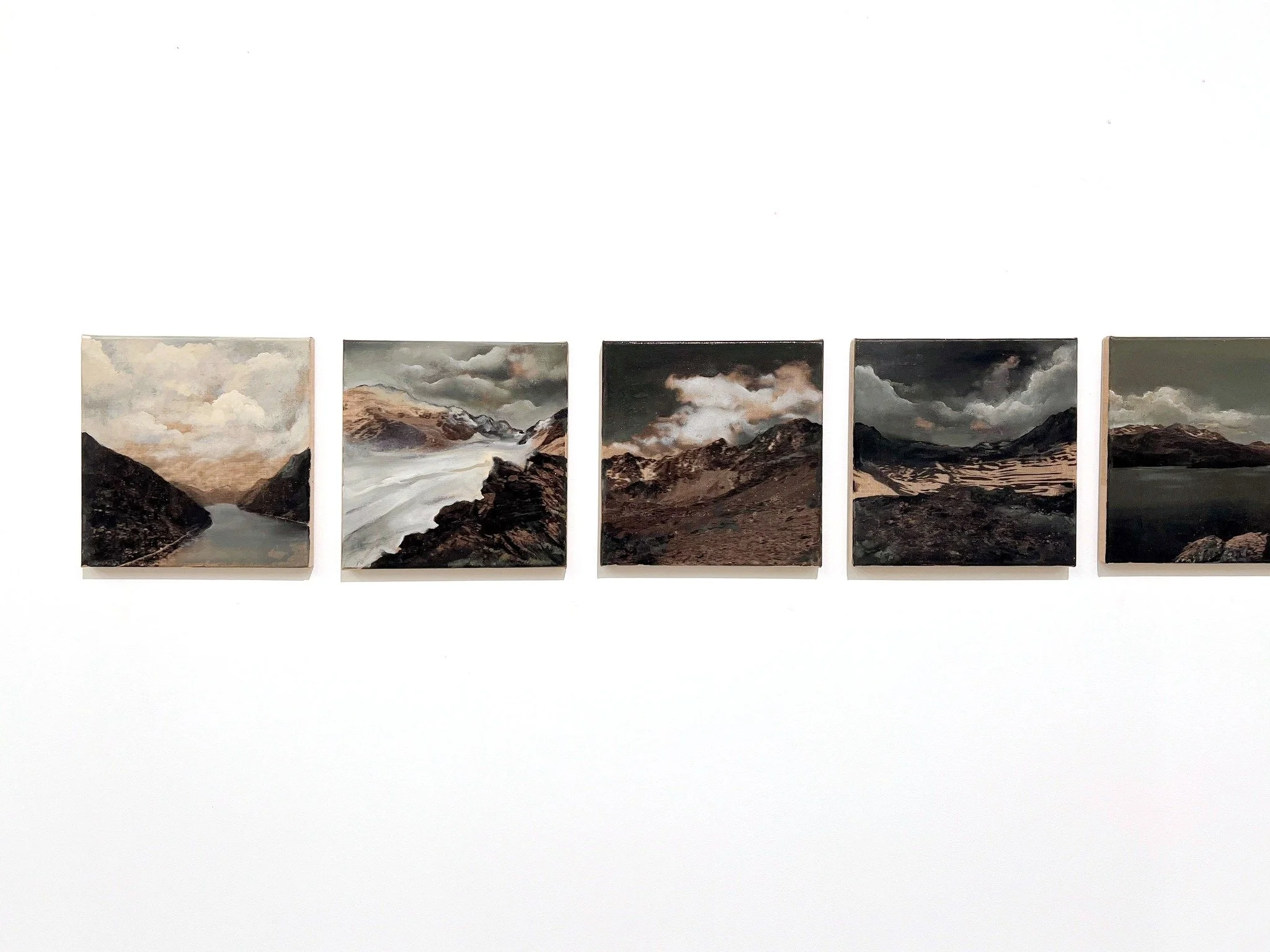
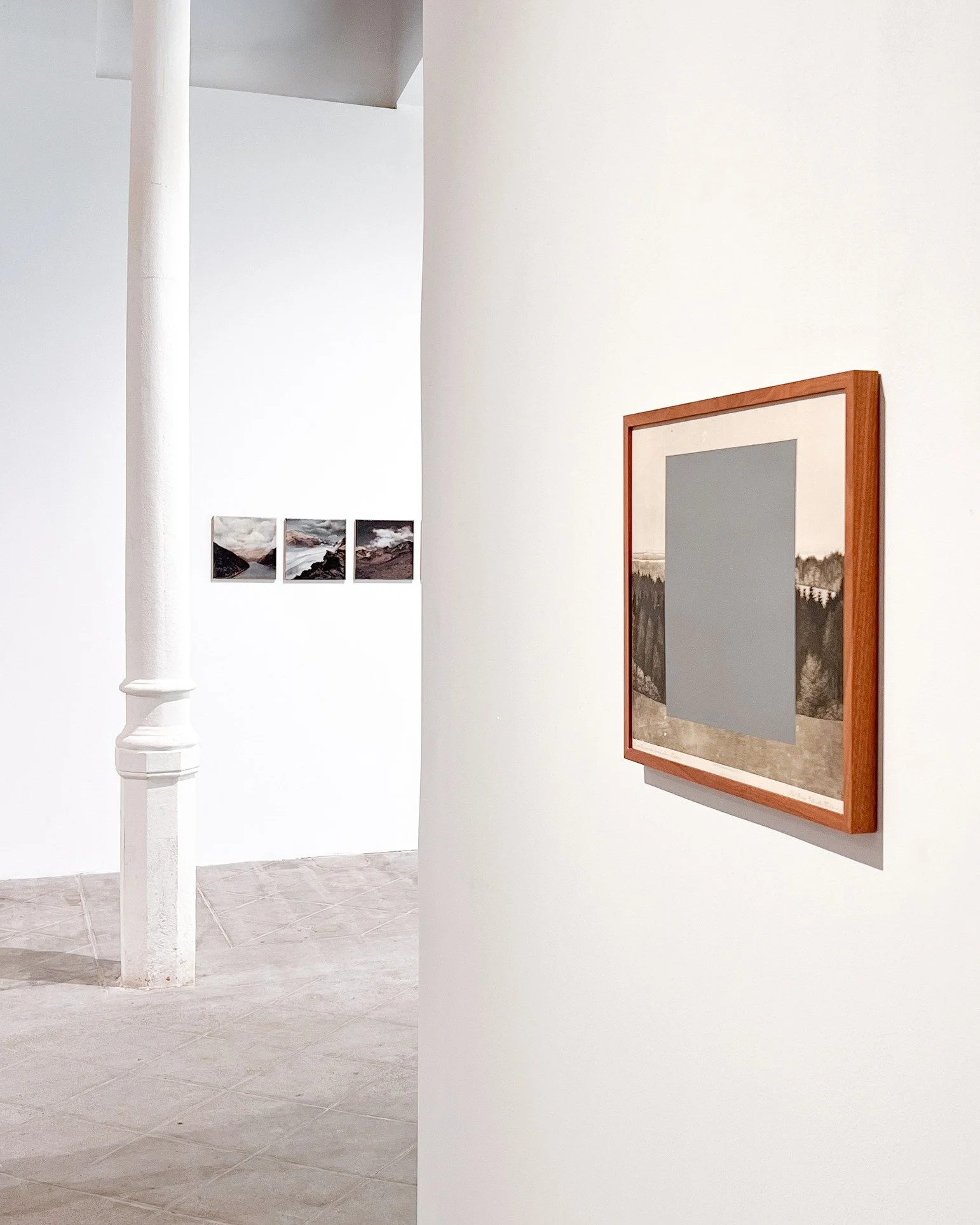
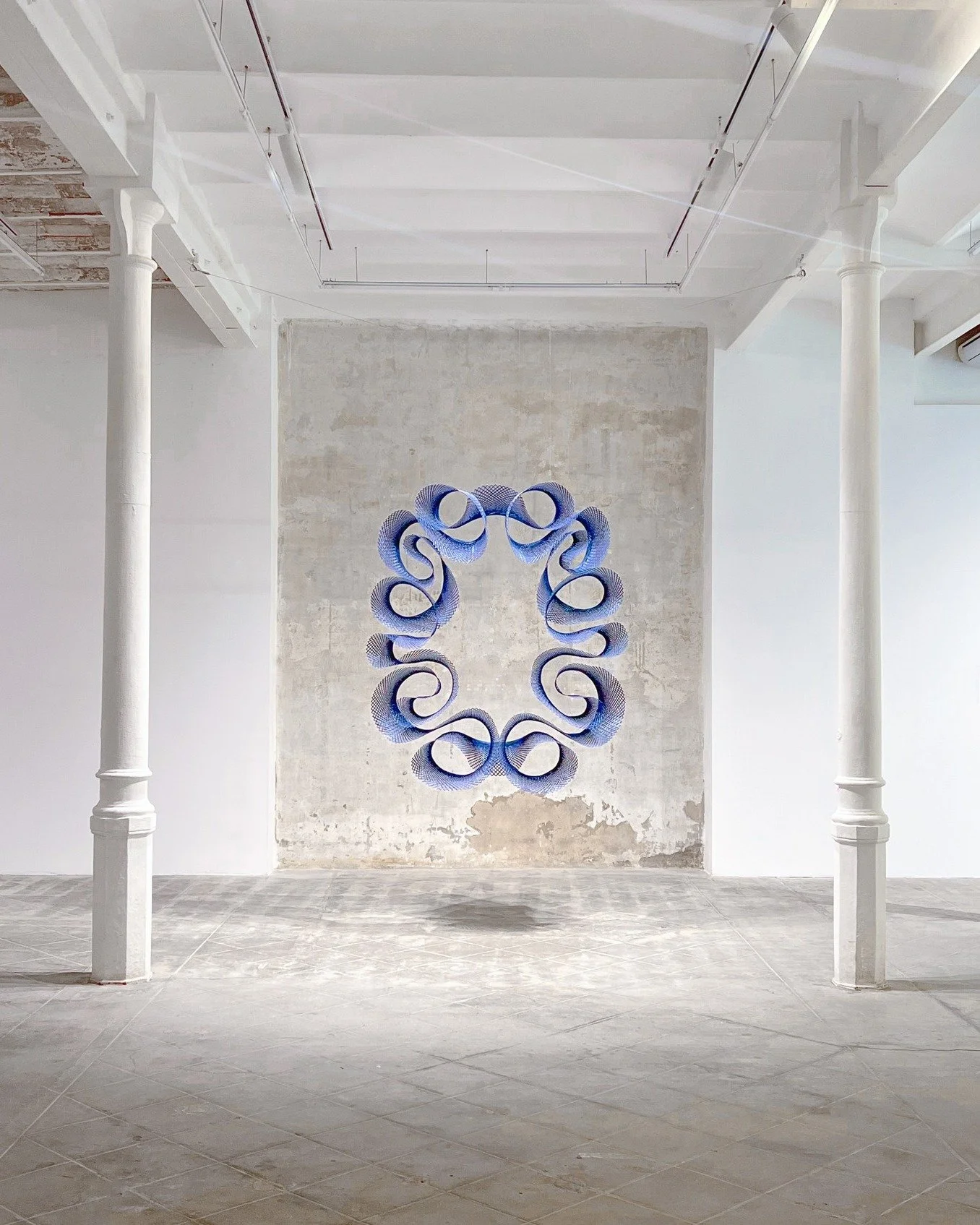
Nataraj von Allmen is a painter based in Switzerland. Often taking photographic material as a starting point, he weaves together landscapes, mythological archetypes, Christian symbolism, and contemporary socio-political themes into complex paintings. Oscillating between figuration and abstraction, his work investigates transformation, collective memory, and the human condition.