
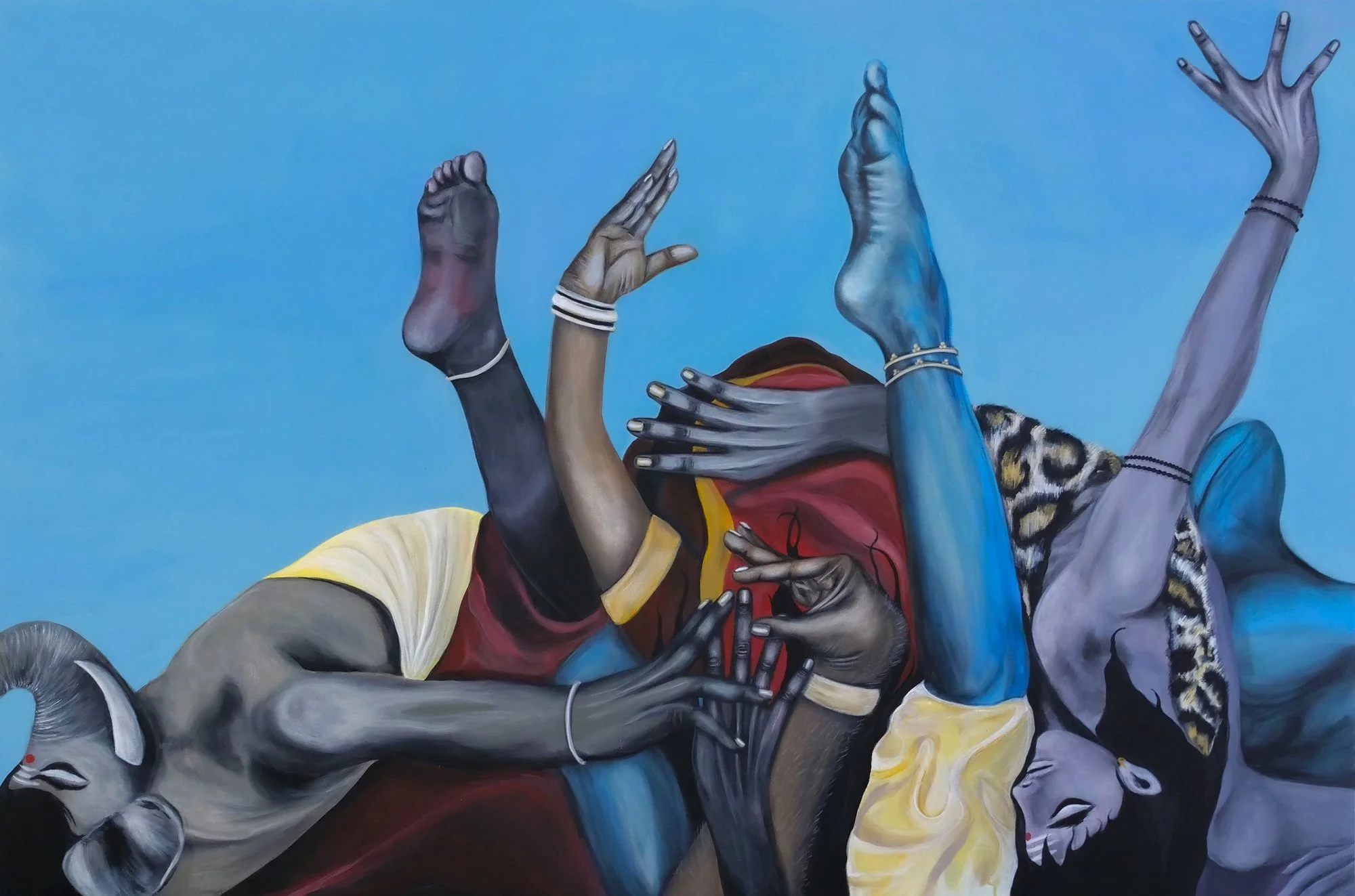
10 Questions with Priyanka Pulijal
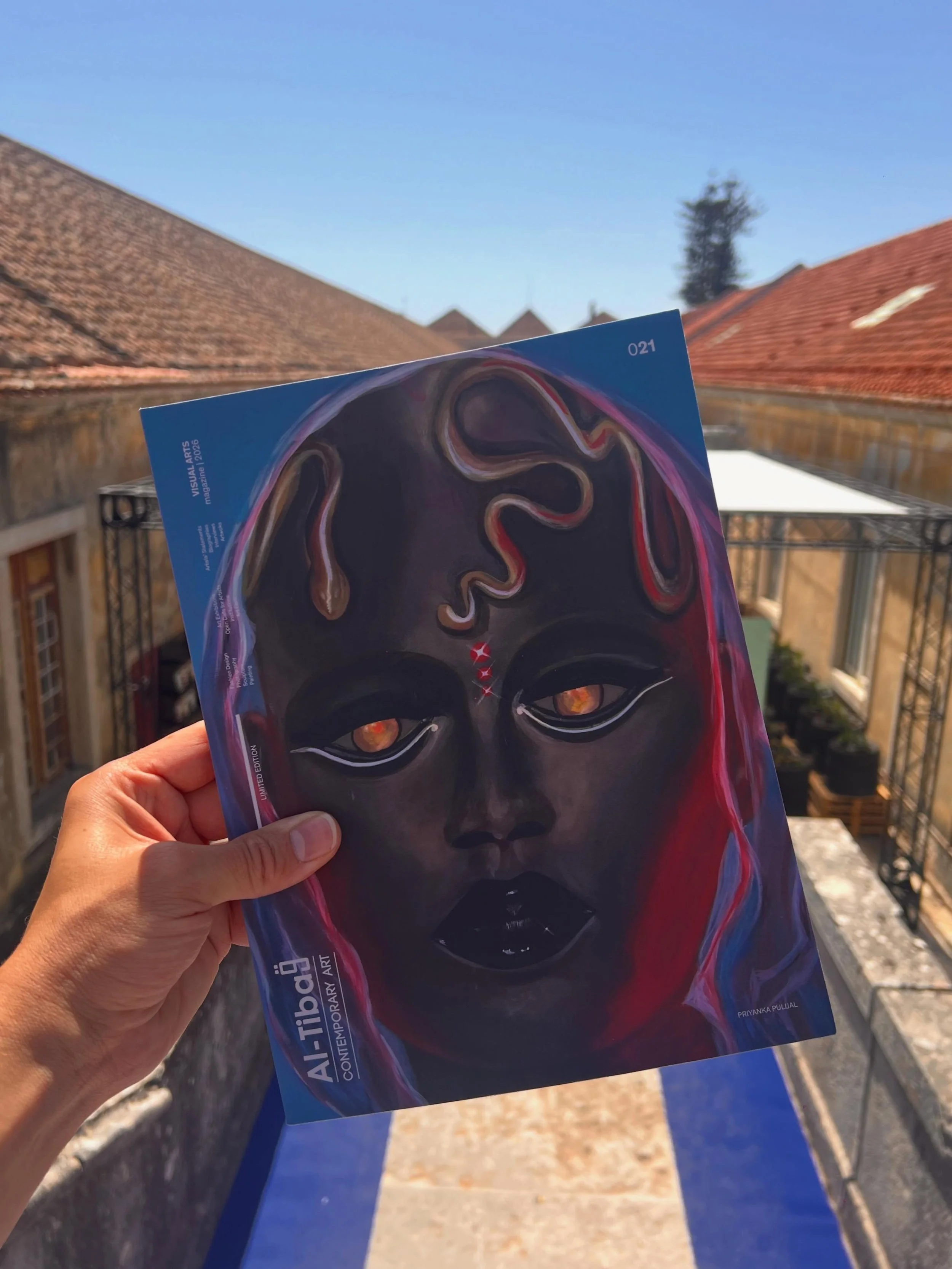
Al-Tiba9 Art Magazine ISSUE20 | Featured Artist
Priyanka Pulijal is a multidisciplinary artist based in Los Angeles and New York whose work explores imagined afterlives, cosmic states, and the unseen forces that shape human experience. Through large-scale paintings and immersive environments, she builds speculative worlds that merge surrealism, science fiction, and metaphysical inquiry. Her practice draws from cinematic composition, worldbuilding methodologies, and contemporary visual culture. Working between hand-drawn sketches, digital concepting, and layered acrylic painting, Priyanka creates sensory portals that examine consciousness, identity, and the space between the known and the unknown. Her work has been presented across experimental exhibitions and cross-disciplinary collaborations involving sound, movement, and installation.
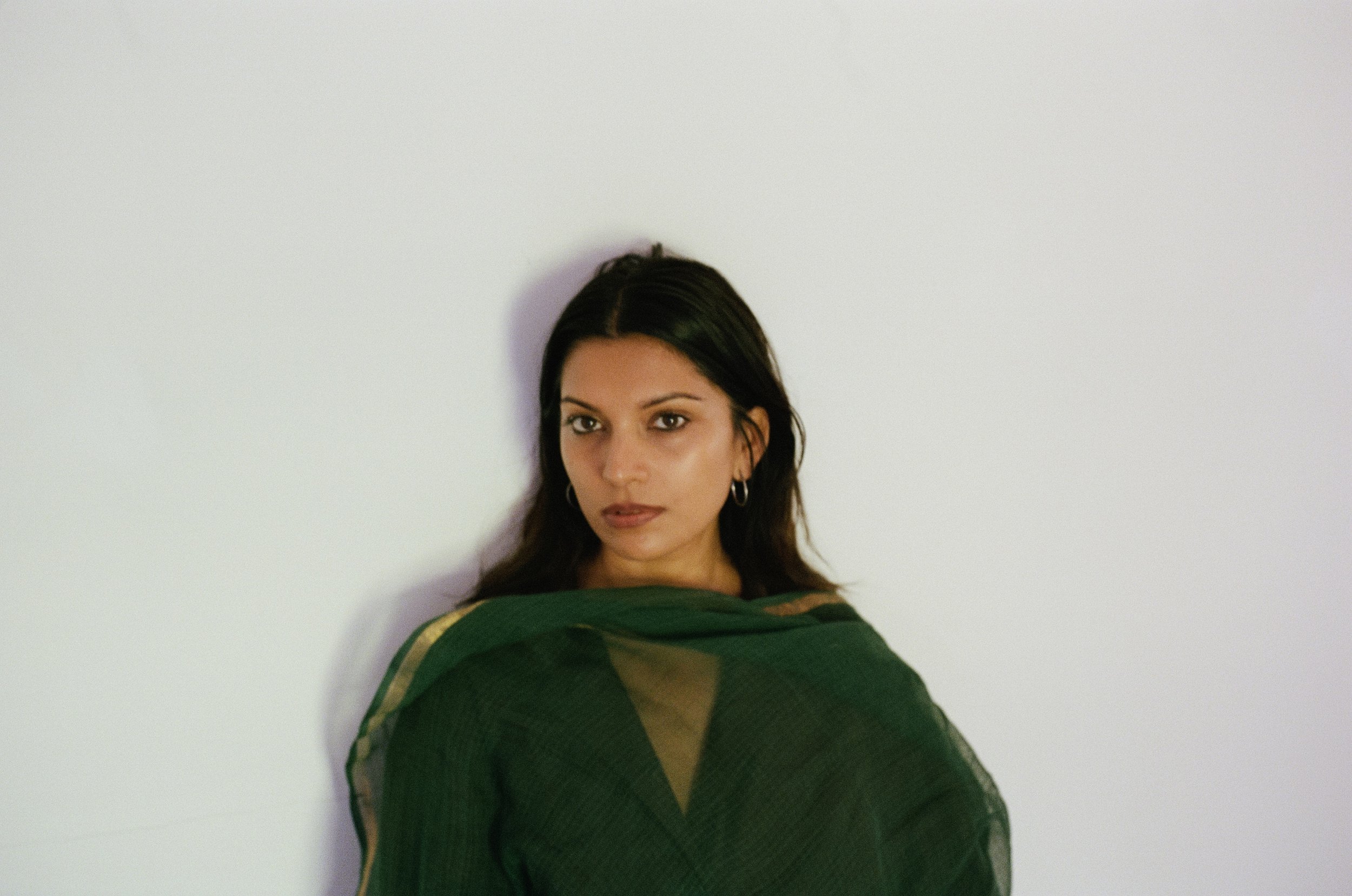
Priyanka Pulijal - Portrait
ARTIST STATEMENT
Priyanka Pulijal explores what lies beyond the visible and how ideas of the afterlife shape the way we live now. Her work blends cosmic inquiry, science-fiction aesthetics, and psychological worldbuilding to imagine realms between reality and speculation. She develops each piece through digital sketching, cinematic reference studies, and meditative visual mapping, which guide her use of perspective and colour. Her large-scale paintings and installations function as portals into imagined worlds that mirror human emotion and consciousness. Priyanka invites viewers to enter these environments and consider the boundaries between the known, the mythic, and the future worlds we create through belief and imagination.
Swarg, Acrylic on gesso board, 72x60 in, 2020 © Priyanka Pulijal
AL-TIBA9 ART MAGAZINE ISSUE20
DISCOVER THE INTERNATIONAL ART SCENE WITH AL-TIBA9
LIMITED EDITION | Shipping worldwide.
Premium museum art paper.
Printed in London.
Grab 3 or more prints and get your FREE digital magazine.
Get your limited edition copy now
INTERVIEW
You work between Los Angeles and New York. How have these two environments influenced your artistic development and perspective?
Los Angeles gives me grounding, space, silence, and community. It has a lightness to it: the nature, the sky, the room to drift and dream. It also has a darkness: distance, isolation, emptiness, space, and the kind of quiet that stretches into the unknown. This tension shapes my paintings, which often imagine what the afterlives might feel like in solitary, atmospheric worlds.
New York gives me something different. It is familiarity, access, energy, and an anchor in my identity and my people. It can doubt me and sharpen me in the same breath, yet the urgency and movement deepen my work. It keeps me alert. NY is the ground. LA is the sky. Moving between them keeps me balanced. I stay rooted and expansive at the same time, and that duality threads through everything I make.
Your practice spans sketching, digital concepting, and layered acrylic painting. How do these media and techniques interact in your creative process?
Sketching is where I loosen up. It lets me laugh at my own ideas and stay imaginative. It keeps me detached enough to explore different worlds and afterlives without needing to define them. The beyond can stay a question, and sketching reminds me of that.
Digital concepting helps me shape the world more intentionally. I experiment with format, layers, expression, and color. It is where I start to understand how the atmosphere should feel and how the pieces of a world interact.
Acrylic painting is where everything becomes physical. The matte, chalky textures let me move quickly and intuitively. I can build a world in layers that feel ancient, familiar, and slightly faded. The way the colors soften over time creates a sense of nostalgia that sits at the core of my practice.
Together, these media let me move from play to intention, to embodiment. There are three stages of the same imagination.
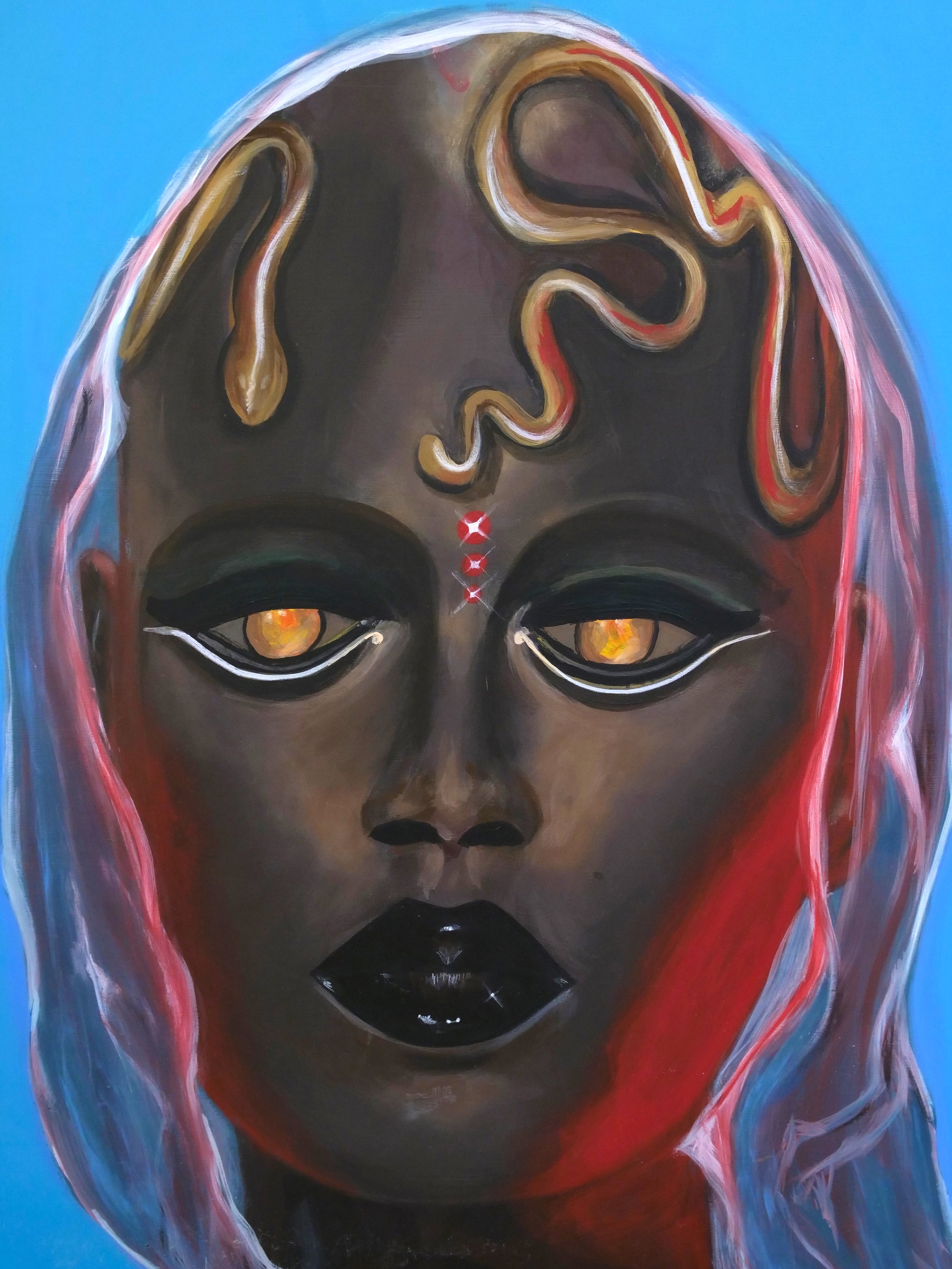
Mahatala, Acrylic on gesso board, 18x24 in, 2020 © Priyanka Pulijal
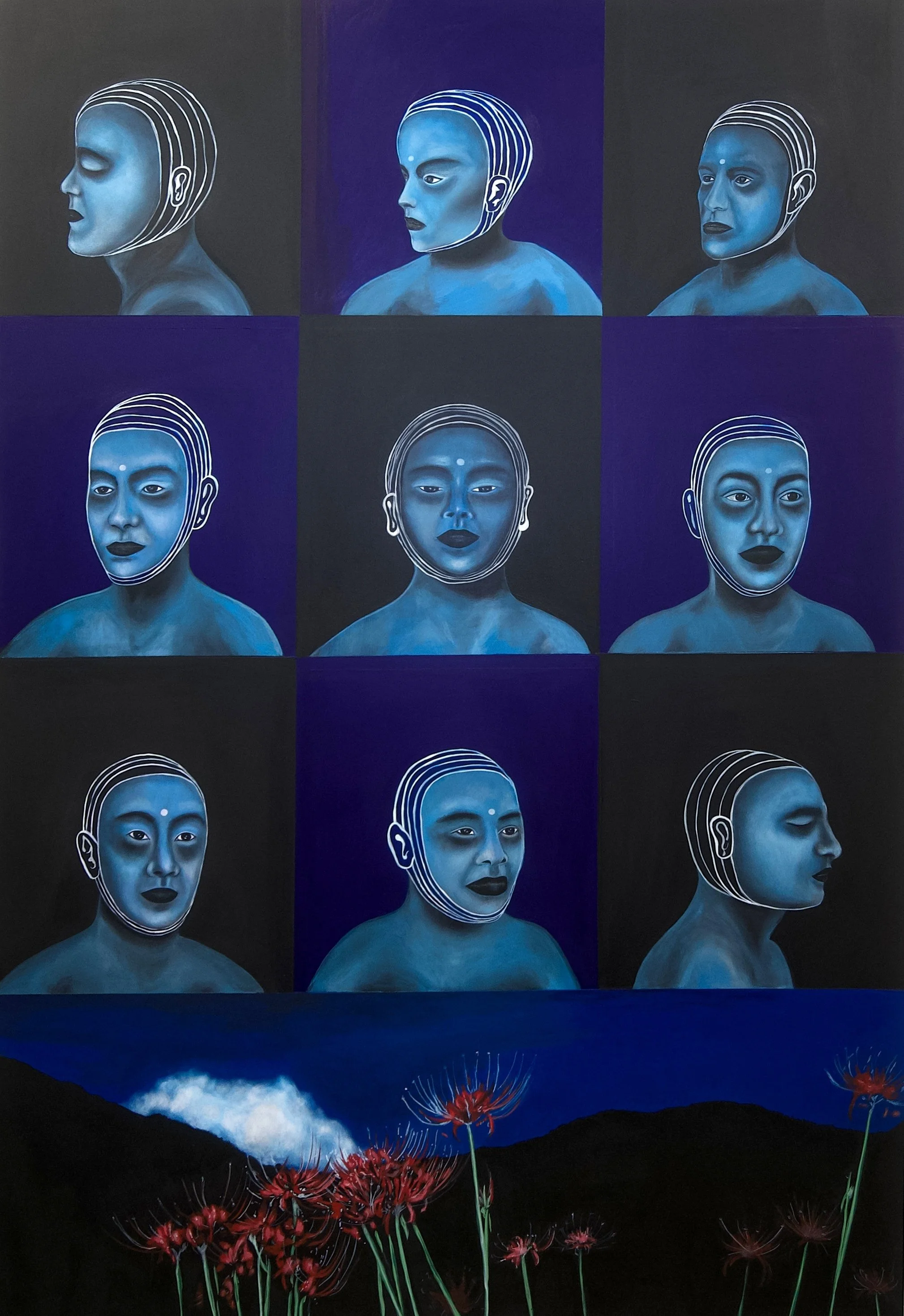
Satya © Priyanka Pulijal
Can you walk us through your creative process? What sparks the first image or idea, and how do you get to the final product?
For LOKAS, the first spark comes from the ancient texts. I read about these mythological worlds and let my imagination respond before I overthink it. I hold on to that first instinct, then flip it. I look for the opposite version, the alternate color palette, the hidden lesson, the part that makes me uneasy. Discomfort interests me because it is both familiar and unfamiliar.
Once I feel the emotional shape of the world, I move into visual research. I gather images and tones, print them, pin them to a wall, and sit with them until something resonates. I pay attention to what I am drawn to and what I reject.
From there, I start making. I sketch, I concept digitally, and finally, I translate the world onto canvas. Each step refines the atmosphere and brings the imagined world into form.
Cinematic composition and worldbuilding are important to your work. How do filmic references shape the structure or atmosphere of your works?
I can spend hours watching and rewatching and letting the visuals sink in. The language of cinema shapes how I compose my paintings because I am drawn to still moments that behave like movement. A slight tilt of an angle, a held frame, or a character study can communicate an entire feeling, and I try to bring that sensitivity into my work.
Many films sit in my subconscious and surface in the Lokas. Arthouse classics, old epics, and even mass-produced shows all leave traces. Naming only a few feels incomplete, but films like The Thief of Bagdad, Black Narcissus, Opening Night, The Color of Pomegranates, Under the Skin, Birth, Watchmen, The Leftovers, etc., are companions. They all affect how I build atmosphere and how I create a world that feels uncomfortable, cinematic, and alive in its own logic.
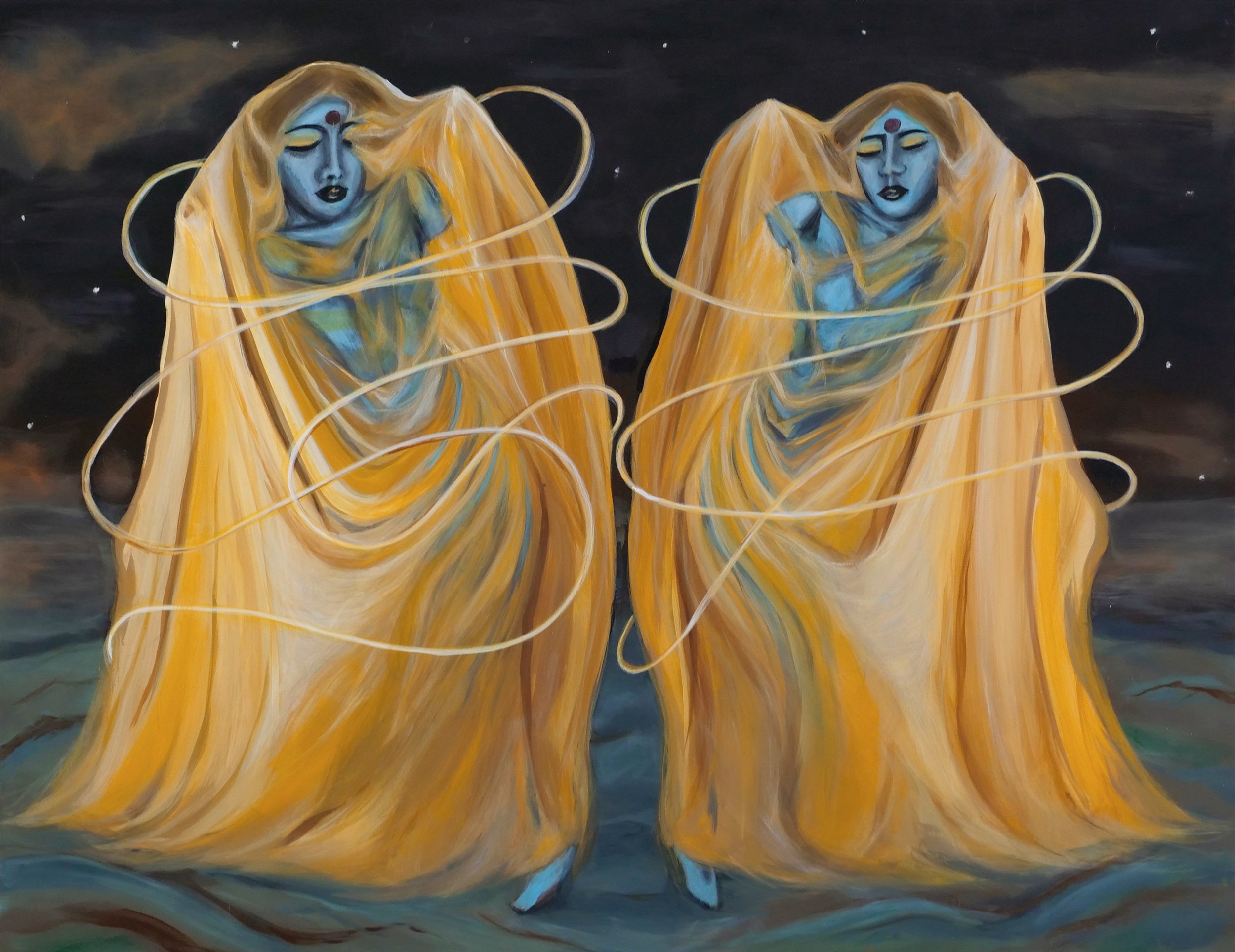
Vitala, Acrylic on gesso board, 24x18 in, 2021 © Priyanka Pulijal
Many of your pieces examine the boundary between the known and the unknown. Why does this tension interest you, and how do you translate it visually?
I think about our existence on this tiny ball of gas in a massive galaxy every day. Our lives are shaped by endless variables: where we live, who we love, what we believe, how we age, and how we survive. What stays with me is that even two people with nearly identical lives, when asked to imagine a flower, will picture it differently. A shift in color or memory reveals an entirely unique inner world. That is where the boundary between the known and the unknown lives for me. What we know shapes what we imagine, and what we imagine shapes how we move through the world. Visually, I try to hold that tension. The images feel familiar yet slightly beyond reach and invite the viewer into their own version of the unknown.
What drew you toward exploring imagined afterlives and cosmic states as central themes in your work?
I think my pull toward imagined afterlives and cosmic states began with pain. When human rights are challenged, or the world feels unbearably harsh, our instinct is often to look for escape. I started researching these other worlds in that search, but instead of escaping, I found a way to apply these ideas back to my own reality. It gave me a more profound sense of what is real.
The unknown became a place where emotion, memory, and possibility could coexist without the limits of our social structures. These imagined afterlives let me explore what might hold us when the systems around us fail. They became a way to understand my own interior landscape by stretching it beyond the physical one.
In the paintings, the emotional and the cosmic meet. These worlds are not about leaving this one behind. They are about imagining what else could exist alongside our fear, our hope, and our need for something larger than ourselves.
Your installations and large-scale works invite viewers into immersive environments. What kind of emotional or psychological impact do you hope they experience?
I hope viewers experience the work as both a portal and a mirror. The scale is intentional. It asks a loud question that only they can answer quietly. I want them to consider what they imagine the afterlives could be, not through religion or doctrine, but through their own histories, beliefs, and emotional truths. The installations are an invitation to look inward and to recognize that whatever they project onto these worlds says something about the one they carry inside themselves.
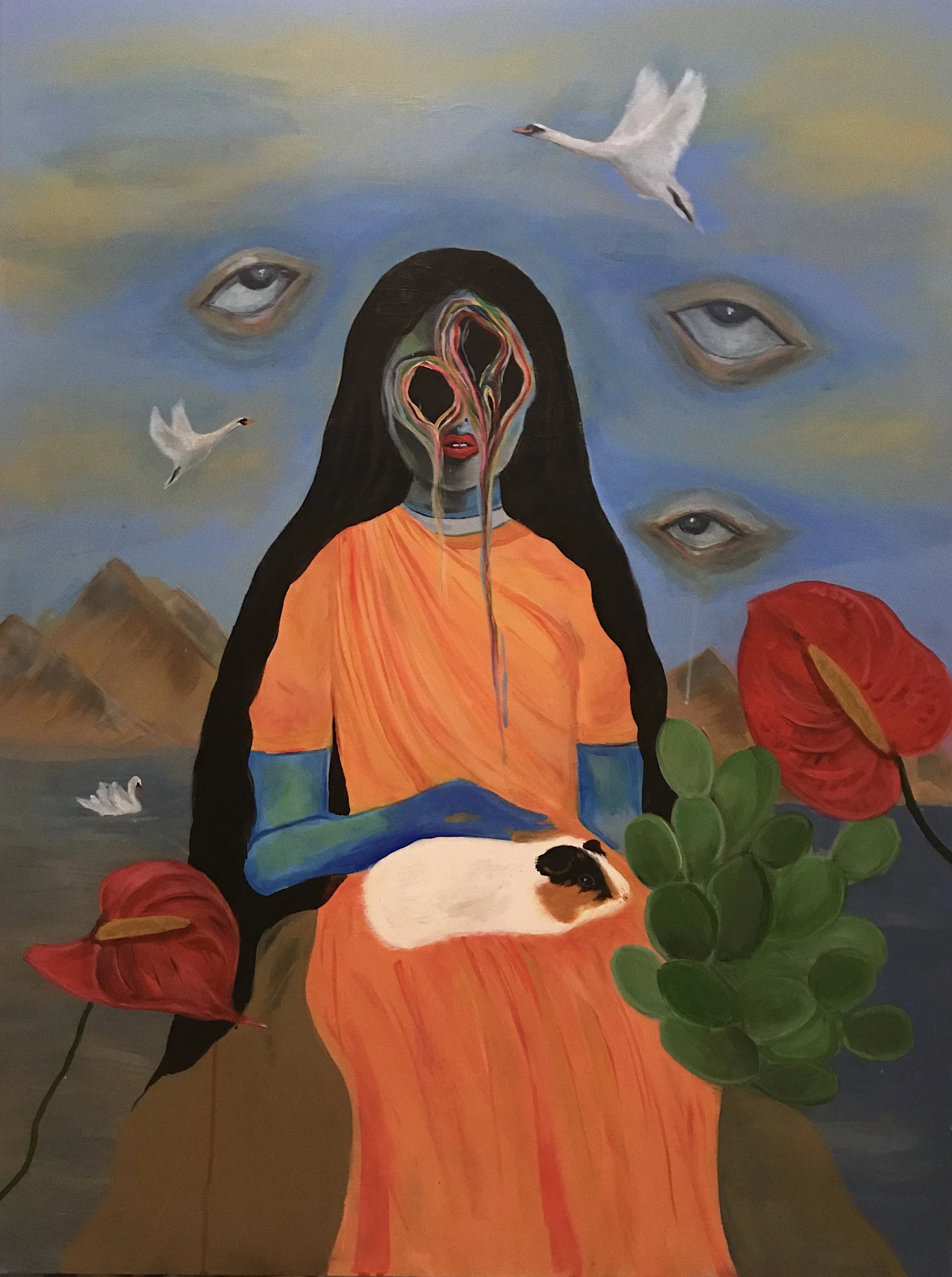
Jana I, Acrylic on gesso board, 18x24 in, 2020 © Priyanka Pulijal
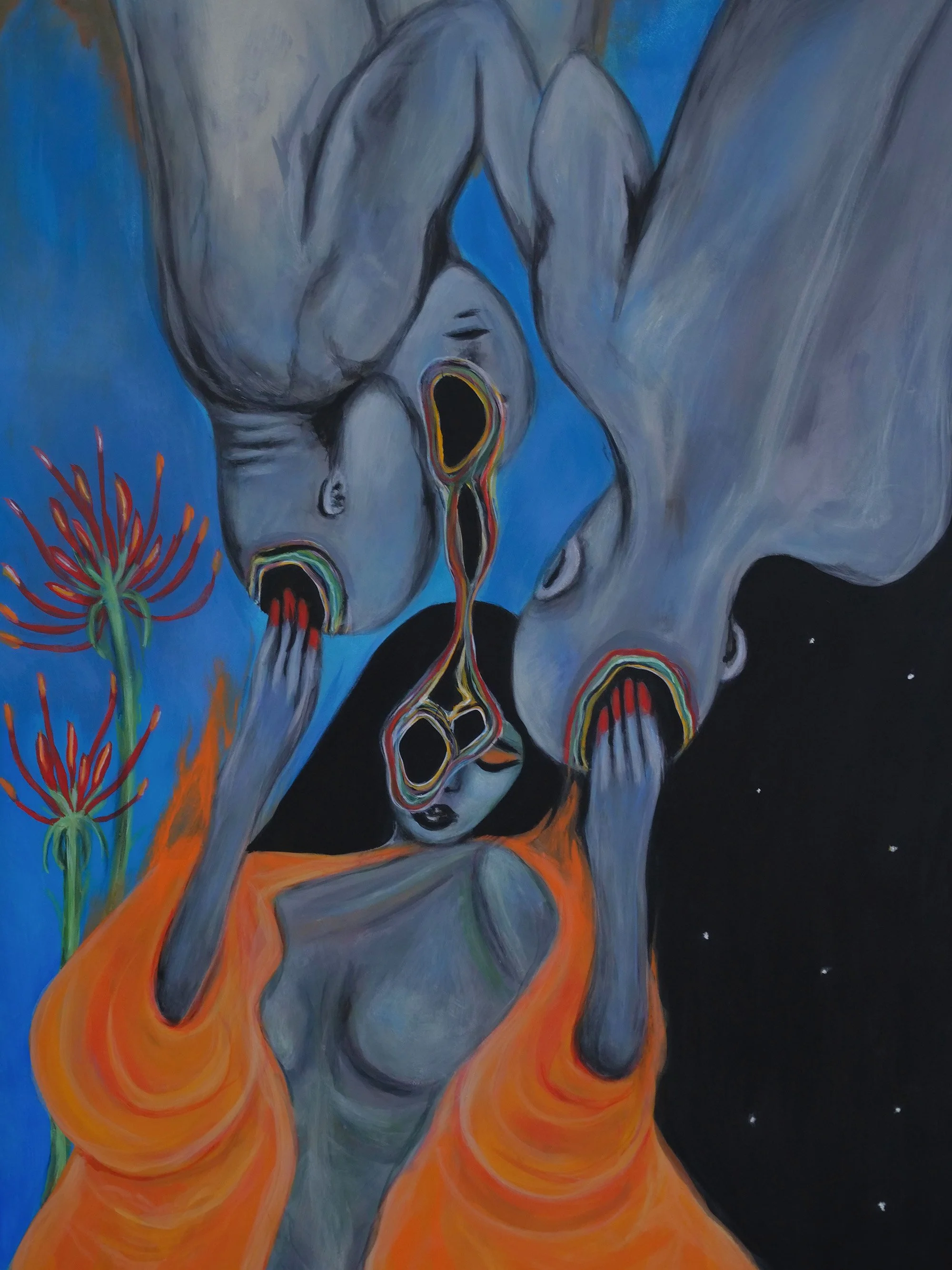
Jana II, Acrylic on gesso board, 18x24 in, 2020 © Priyanka Pulijal
You often merge surrealism, sci-fi, and metaphysical inquiry. How do you balance these influences while maintaining your own distinct visual language?
I think of them as invitations rather than strict influences. Each one offers a different way to wonder about the world, and I approach them with curiosity instead of trying to master or balance them. My own visual language comes from how these ideas move through my lived experience, my questions, and the emotions I carry. I take what resonates, let go of what does not, and allow the work to find its own atmosphere. The result becomes a blend that feels natural, because it comes from a place of care and instinct rather than strategy.
Looking ahead, what new themes, mediums, or forms of collaboration are you interested in exploring in your upcoming projects?
Within this theme, I have always dreamed of creating a planetarium experience. I want to keep expanding into immersive installations, to work with film, and to explore oil for a softer, more atmospheric feel compared to the chalky, ancient textures I have been indulging. I am also beginning to think about performance. I do not yet know what it will become, but I am drawn to the material identities we adopt to survive and the ways we move between constraint and liberation. It reminds me of films like Opening Night, where a person’s inner life and outer role collide. I want to explore that tension in a new form.
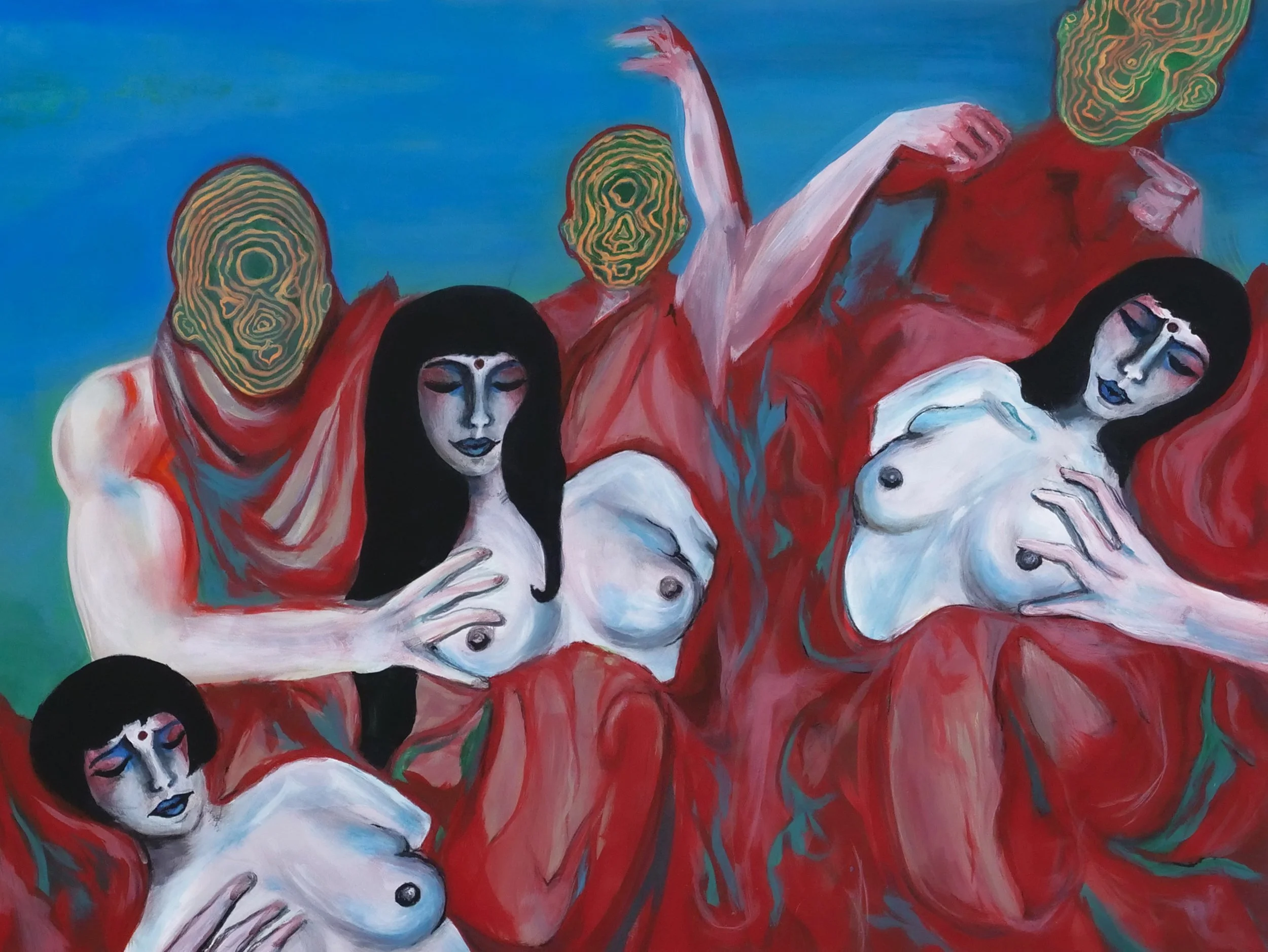
Atala © Priyanka Pulijal
Lastly, where do you see yourself and your work in five years from now? What is your biggest goal?
In five years, I see my practice growing into larger, more ambitious environments that invite viewers into fully built worlds. I want to develop immersive installations, planetarium-style experiences, and cross-disciplinary collaborations that merge painting, film, sound, and spatial design. I hope for the work to live in institutional spaces where audiences can slow down and meet the unknown with intention. My biggest goal is to create a body of work that feels inevitable in both scale and depth. I want to push the Lokas beyond the frame and into formats that become sites of reflection, inquiry, and transformation. I hope to work closely with curators and collaborators who are excited by worldbuilding and who see the potential for these imagined afterlives to evolve into something truly expansive.
Artist’s Talk
Al-Tiba9 Interviews is a curated promotional platform that offers artists the opportunity to articulate their vision and engage with our diverse international readership through insightful, published dialogues. Conducted by Mohamed Benhadj, founder and curator of Al-Tiba9, these interviews spotlight the artists’ creative journeys and introduce their work to the global contemporary art scene.
Through our extensive network of museums, galleries, art professionals, collectors, and art enthusiasts worldwide, Al-Tiba9 Interviews provides a meaningful stage for artists to expand their reach and strengthen their presence in the international art discourse.



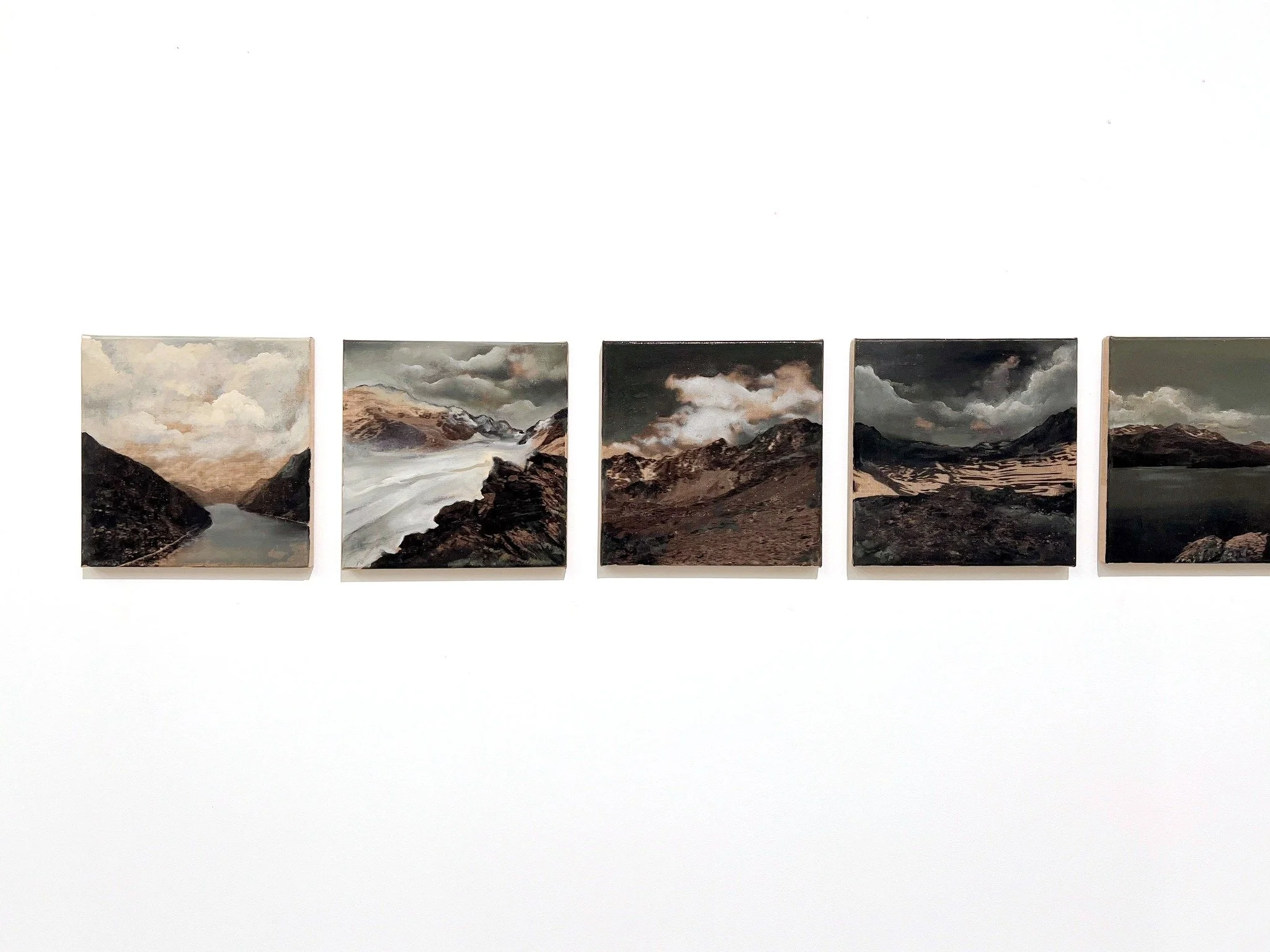
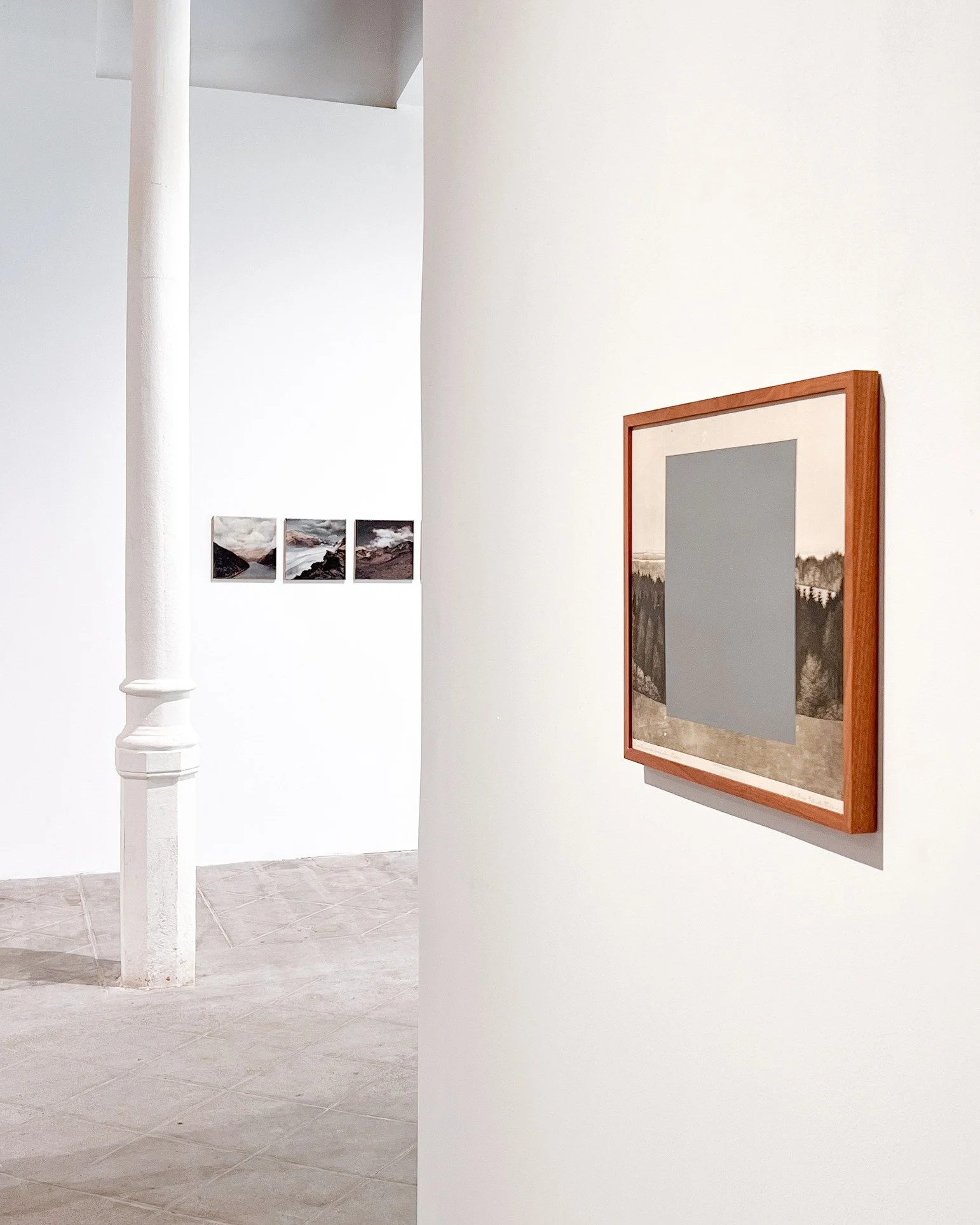
Nataraj von Allmen is a painter based in Switzerland. Often taking photographic material as a starting point, he weaves together landscapes, mythological archetypes, Christian symbolism, and contemporary socio-political themes into complex paintings. Oscillating between figuration and abstraction, his work investigates transformation, collective memory, and the human condition.