

10 Questions with Natalia Oginskaya
Al-Tiba9 Art Magazine ISSUE20 | Featured Artist
Natalia Oginskaya (b. 1980, Moscow) is an artist and mosaicist. She graduated from the University of the Arts London, London College of Fashion, and built a successful career as a stylist and make-up artist in the fashion industry (Vogue, Harper’s Bazaar, GQ, Instyle). Later, Natalia turned to mosaic, a medium she first encountered during a restoration internship in France. Working with 19th-century archaeological fragments and learning from master artisans, she discovered a new artistic language. Her projects have been shown in Moscow, St. Petersburg, Monaco, and Dubai. In 2025, her solo exhibition Fragments of the Whole was held at Exhibition Space “Hall No. 7” (Moscow, Russia).
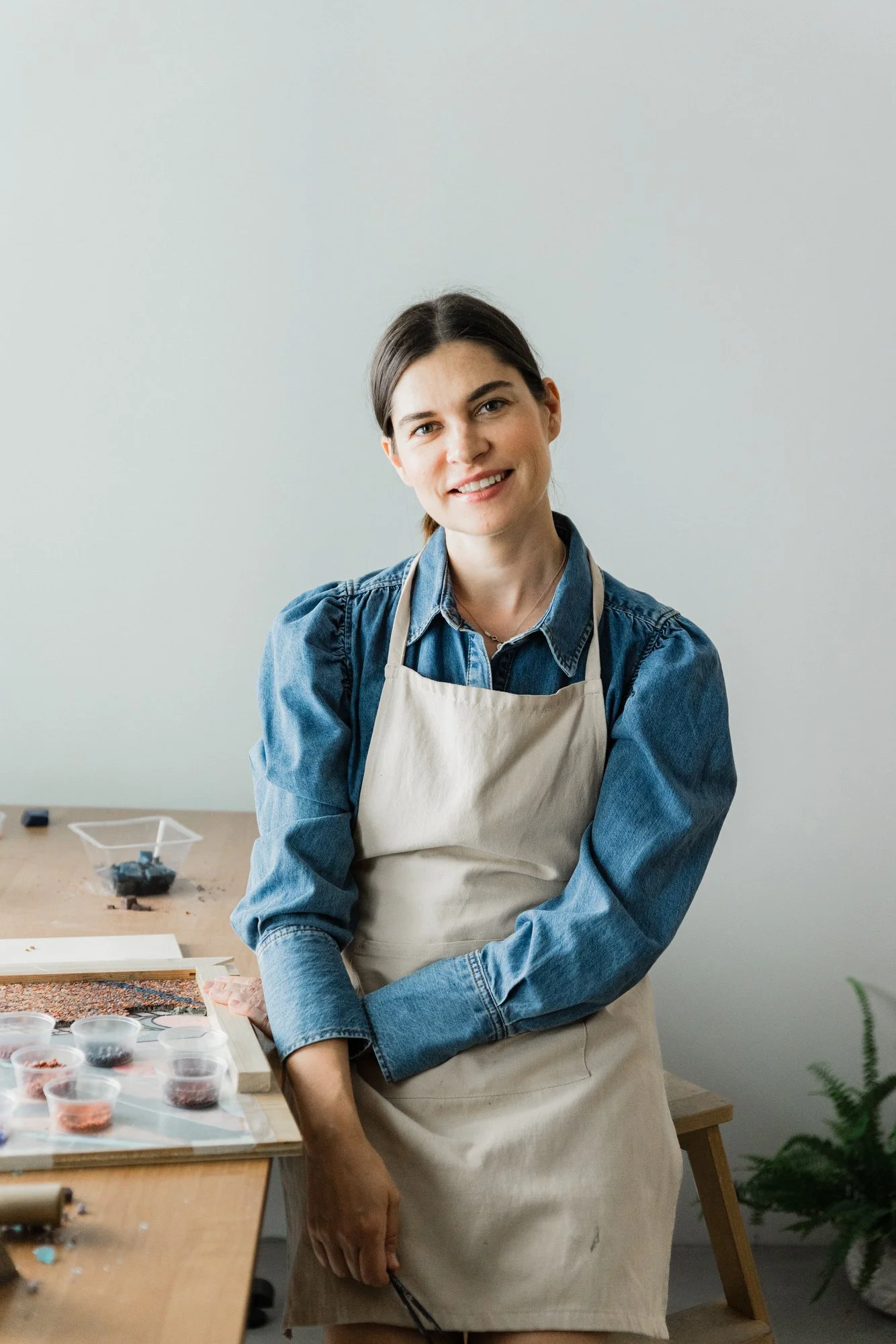
Natalia Oginskaya - Portrait
ARTIST STATEMENT
After many years in the fashion world, driven by speed and ideal images, Natalia chose mosaic as a medium that resists haste. Each “imperfection” becomes a sign of life. This slowness allows her to address themes of inner strength, resilience, and freedom. She deliberately avoids depicting faces. Faces create barriers, trigger associations, and distract from the essence. Instead, her figures remain universal silhouettes, inviting viewers to project themselves into the image and experience it personally. Colour is her key expressive tool: each work revolves around a dominant hue that sets the emotional tone. Through colour, she builds a space for dialogue between inner experience and external reality. Her mosaics are meditations on human dignity: the right to imperfection, the beauty of fragility, and the value of a slower gaze upon the world.
Run, Mosaic, Smalti, 61x61 cm, 2024 © Natalia Oginskaya
AL-TIBA9 ART MAGAZINE ISSUE20
DISCOVER THE INTERNATIONAL ART SCENE WITH AL-TIBA9
LIMITED EDITION | Shipping worldwide.
Premium museum art paper.
Printed in London.
Grab 3 or more prints and get your FREE digital magazine.
Get your limited edition copy now
INTERVIEW
You began your career in the fashion industry before transitioning into mosaic art. What led you to make that shift, and how did it change your relationship to creativity?
Working in fashion often meant aligning myself with very specific expectations, whether it was a magazine shoot, an advertising campaign, or a project with a celebrity, and over time, I started to feel that my own voice was getting lost in that process. This inner need for more freedom gradually pulled me toward art, and mosaic became the language through which I could finally speak honestly and intuitively. With every new work, I feel my personality unfold layer by layer, and my creative world grow richer with unexpected combinations, techniques, and ideas that truly belong to me.
During your restoration internship in France, you worked with 19th-century fragments. What impact did that experience have on the way you think about materials and history?
This is a very important subject for me, and one that keeps resonating over and over. Working with 19th‑century fragments in France made me think not only about technique, but about collective memory and the strange fragility of what survives. It raised questions I still carry with me: what exactly have we inherited, and how do we choose to treat it, what do we carefully preserve, and what do we allow to crumble and disappear?
Handling these fragments felt a bit like finding messages in a bottle: certain materials, images, and gestures have somehow made it across time and washed up at our shores, while countless others have dissolved into history without a trace. It made me see every shard, every piece of tesserae or stone, as something that was not just “left over”, but almost intentionally delivered to us. As artists, we become a link in this long chain, we reinterpret these messages in our own language, through our own time, and then send them forward again for someone else to discover.
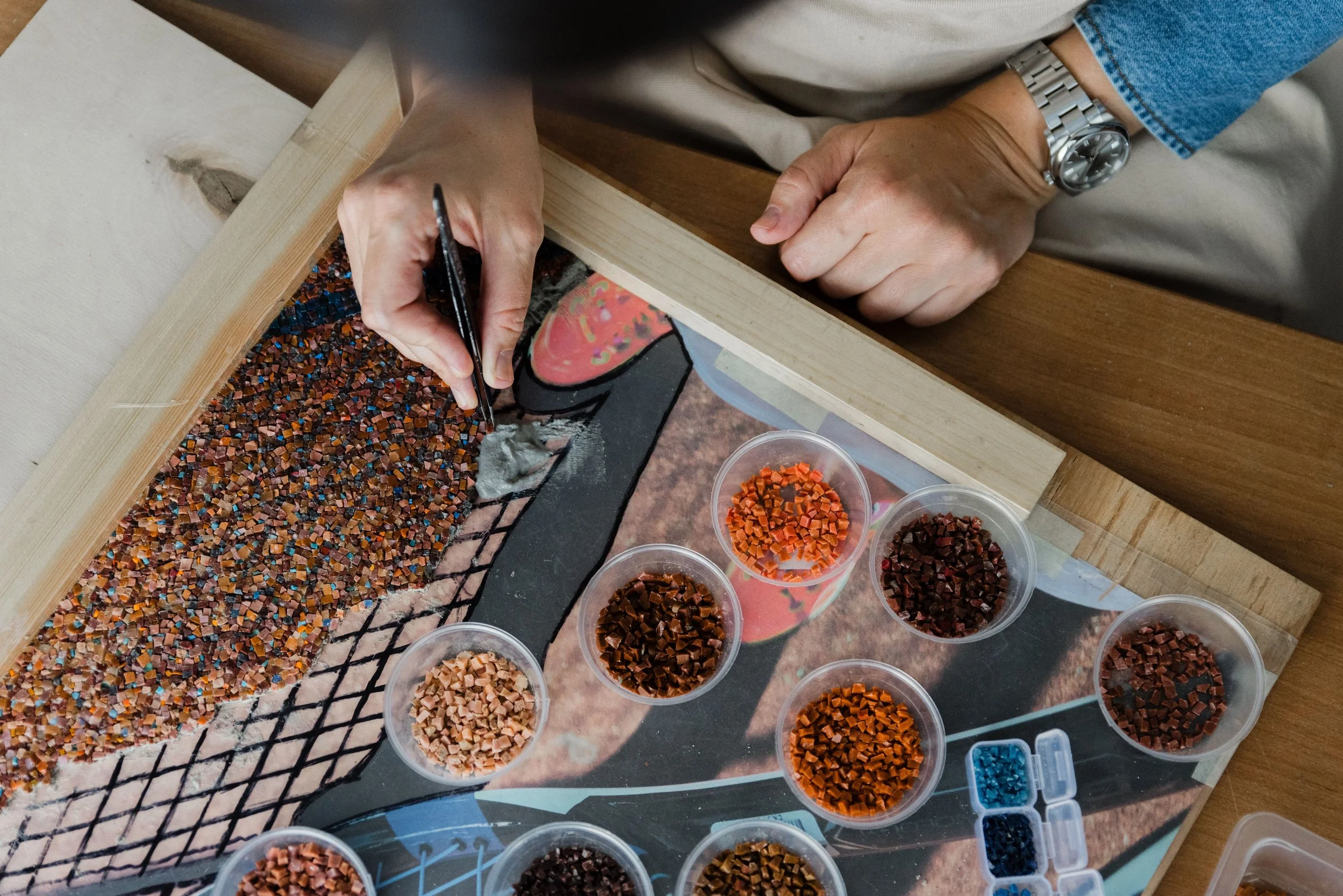
Natalia Oginskaya working in her studio
What drew you to mosaic specifically as your primary medium, especially given its slow and meticulous nature?
I am deeply drawn to the state I enter when I work on a mosaic. It becomes a kind of intimate meditation for me, a quiet form of resistance against the frantic rhythm of life, the anxiety, and the endless expectations that come with it. Slowly placing each tessera, one after another, I witness how something whole and alive grows out of tiny, almost insignificant pieces, and this process never stops astonishing and delighting me. It gently returns me to the present, sharpening my desire to really look at the world around me and to notice the subtle details that are so easy to miss.
Can you walk us through your creative process, from the first idea to choosing fragments, colours, and the final composition?
My process usually doesn’t start with a struggle over “what to make next”. Finishing one piece, I almost always already know what the following one will be. Maybe this is because mosaic is such a slow medium: while working on one piece, I have a lot of time to think, to write down what is troubling or inspiring me, and to arrive at a very clear sense of the next theme. By the time I am ready to begin, there is already a precise image in my mind, and I then translate it into a sketch, a collage, or sometimes a photograph.
From there, I think about scale: the overall size of the work, the size of the tesserae, and whether this idea wants to grow into a larger project or a whole series. Once I have decided on the sketch, the format, and the main colour relationships, I prepare everything for the practical part. I print the sketch, sort the materials by colour, and note the time I start and finish each session, so I can understand how much time each piece truly requires.
I also create very small “micro works”, where the tesserae are no larger than 3 mm. I cut smalti or stone myself to the exact size I need, draw the andamenti, the lines and directions along which the tesserae will move, and then begin laying. My method is almost entirely intuitive: I move away from strict Roman rules. I always place tesserae directly into the cement, which partially covers the sketch and makes the process both more difficult and more exciting.
The most magical part is that I never fully see what I have created until I set the very last tessera. Up until that point, there is always a degree of mystery and uncertainty, and that moment of revelation at the end is one of the reasons mosaic still feels so alive to me.

Basketball, Mosaic, Smalti, stained glass, 47x59 cm, 2022 © Natalia Oginskaya
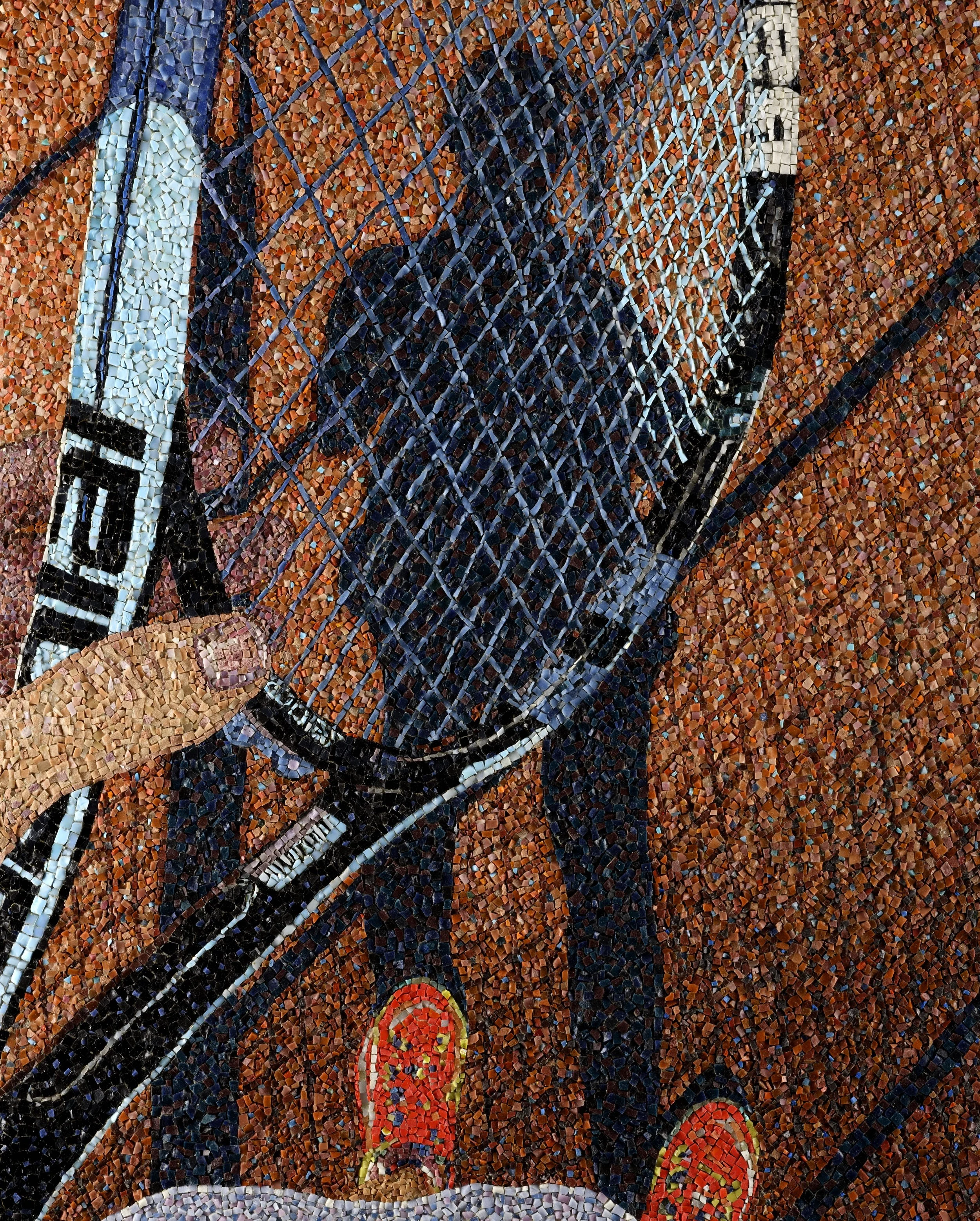
Tennis, Mosaic, Smalti, glass tiles, 41x51 cm, 2024 © Natalia Oginskaya
Colour plays a central role in your work. How do you select the dominant hue for each piece, and what emotions or ideas guide that choice?
In mosaic, the colour range is not as wide as in painting. Technically, it is much harder to achieve certain nuances. Yet instead of seeing this as a limitation, I respond to it with almost childlike curiosity, as if I have been given a very specific puzzle to solve.
When I start a new artwork, I lay out my materials, smalti, glass, stone, and genuinely feel joy arranging colours side by side, watching how different tesserae, when placed together, create the hues and vibrations I am looking for. This is the stage where I am more deliberate: I sense what emotional temperature I need, something quiet and contemplative, or something tense and energetic, and I build a palette around that atmosphere.
But once I begin laying the tesserae into the work, I let go of control and move into a more intuitive state. The small fragments gradually merge into larger colour fields, rhythms, and contrasts, and at some point the piece starts to “choose” its own dominant hue. My role then is to listen carefully and follow where this colour wants to lead the story.
You deliberately avoid depicting faces in your mosaics. Why is anonymity important, and how does it help shape the viewer’s experience?
When we look at a portrait, we almost can’t help but judge: we instantly sort a face into familiar boxes, age, gender, social background, even temperament, and sometimes this filters out everything that is fragile, subtle, and just as important. By removing the face, I also remove this noise: the figure steps outside the system of labels, and the viewer’s attention shifts to the gesture, the direction, the inner tension or vulnerability of the body, and that is what matters most to me.
In my mosaics, the main question is not “who is this?”, but “how is this character moving, why are they going there, and with what inner state do they exist in this space?”. It is important to me that the viewer can almost “try on” this figure, feel it as their own body, and live through whatever emotions, thoughts, or memories it brings to the surface.
Anonymity makes the image, paradoxically, both more universal and more intimate: the same faceless body can become a vessel for completely different stories. By taking the face away, I create room for projection, and it is there that the unique, deeply personal experience of each viewer is born.
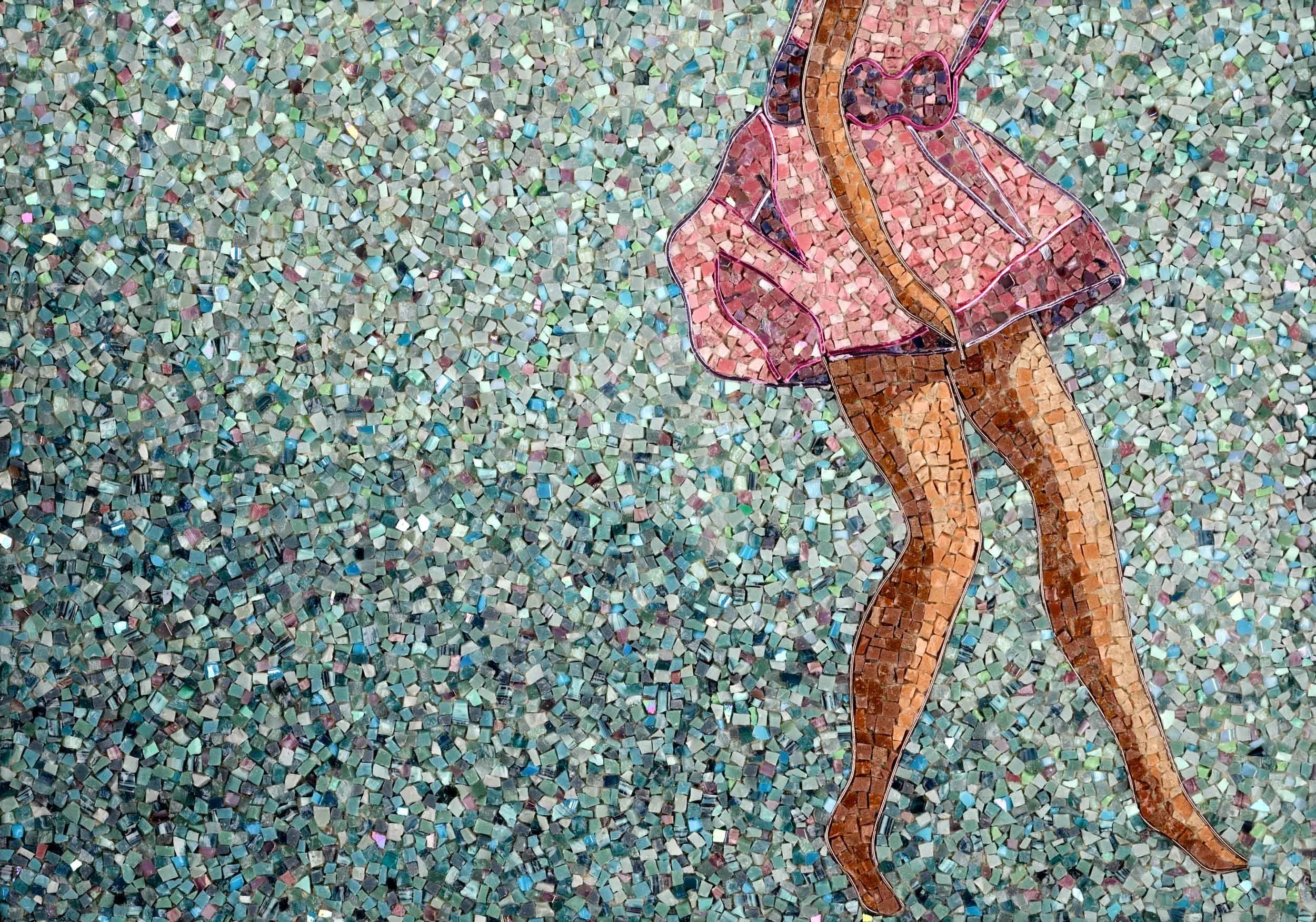
I'm gone. Barbie, Mosaic, Smalti, glass tiles, colored wire, 21x29 cm, 2023 © Natalia Oginskaya
Many of your works explore themes like resilience, inner strength, and human dignity. How do these themes emerge in your practice, and why are they meaningful to you?
These themes became truly important to me when I realised I could no longer stay in the fashion industry, and I hit a point of burnout. Leaving that environment, and at the same time becoming a mother to my third child, turned my gaze much more inward and made me pay closer attention to what helps a person stay alive, honest, and present in their own life.
Resilience, inner strength, and dignity are qualities I want to nurture in myself as a woman, and to pass on to my children, to encourage them to question, to see clearly, and to stay close to their own truth. As an artist, I see my work as a kind of relay: I take my experience, everything I have lived through and understood, and hand it forward in the form of images. My hope is that my mosaics give people a moment to pause, to feel, to sense the depth of their own mission and purpose, even if just for a heartbeat, to remember: “I am here, and my life has meaning.”
What do you hope viewers feel or reflect on when they encounter your mosaics in person?
When someone stands in front of my mosaics, I hope they feel a lightness, a small, quiet joy that makes them want to stay with the work for a moment longer. I want to invite a gentle kind of reflection, the sort that doesn’t demand “correct” interpretation, but instead gives space to simply feel and notice.
More than anything, I want viewers to sense their own agency in this encounter: to realise that they are free to decide what resonates and what does not, what they like or dislike, and that both choices are completely valid. If my work can give even a brief feeling of “I am here, I exist, and my response matters”, then it is doing exactly what I dream for it to do, reminding a person of their own inner strength, curiosity, and freedom to choose.
Your projects have been shown internationally. How have different cultural contexts influenced how your work is received?
My artworks deal with things that are deeply human, a person’s inner experience, vulnerability, joy, movement, emotions, so it tends to be understood regardless of cultural context. These themes don’t really need translation; they resonate on a bodily and emotional level, whether the viewer is in Helsinki, Paris, or somewhere much further away.
What fascinates me is how differently individual people respond. At international exhibitions, I noticed that there is never one “favourite” piece for everyone: each person is drawn to a different work, as if choosing a mirror that reflects something uniquely their own. This helped me realise that there is room for everything in the world and that any sincere artwork will find its viewer and be seen and valued beyond borders and territories.

A girl and a plane (Replica of a part af Aleksandr Deyneka's artwork), Mosaic, Smalti, 50×40 cm, 2021 © Natalia Oginskaya
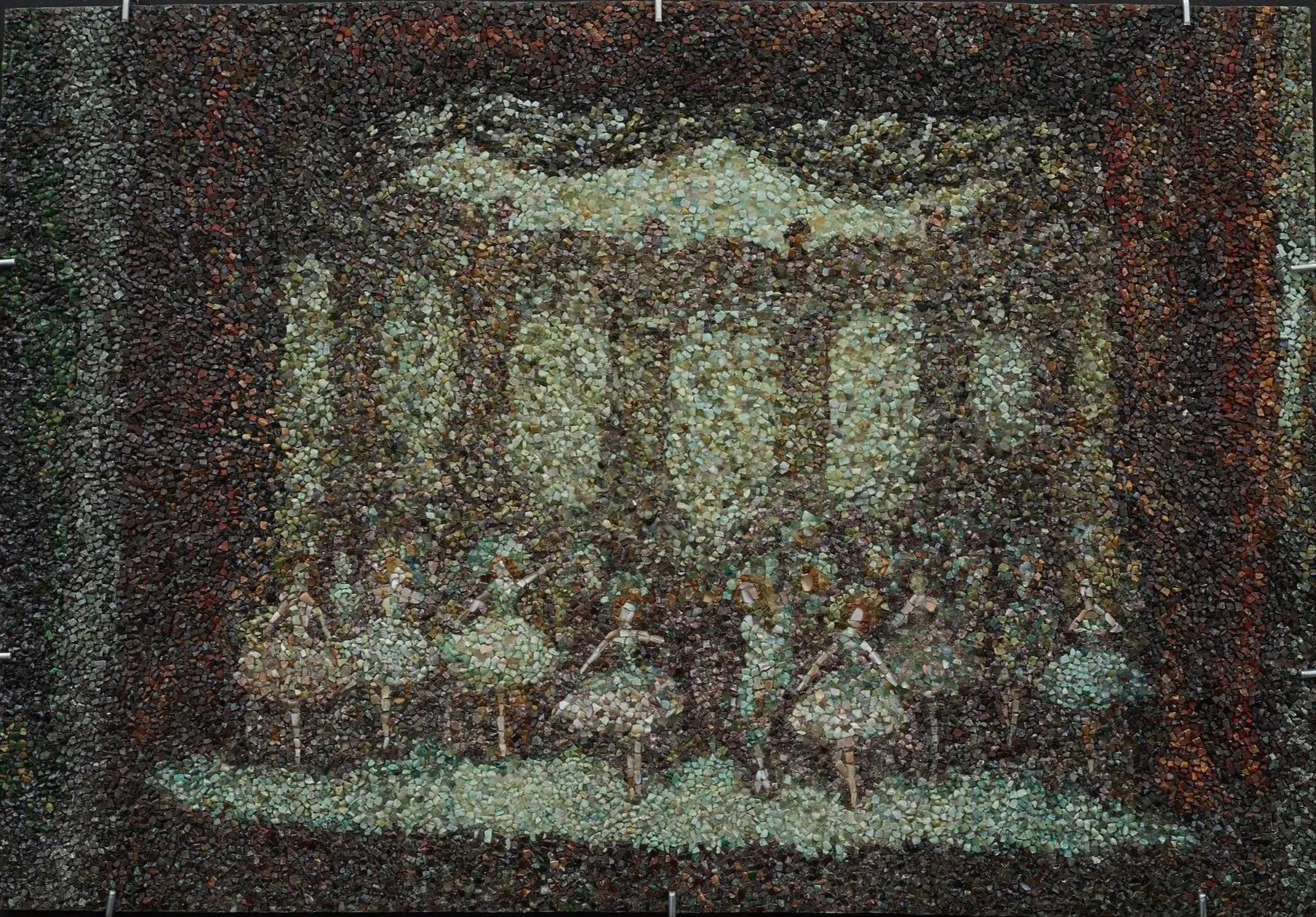
The Ballet (Homage to Nikolai Sapunov), Micromosaic, Natural stone, 30x43 cm, 2022 © Natalia Oginskaya
Looking ahead, what future projects or directions are you excited to pursue as your mosaic practice continues to evolve?
Although mosaic remains my primary medium, right now I am really interested in bringing together tradition and contemporary technology. I would love to create multimedia works, mosaic with sound, mosaic with light, where the piece only fully comes alive through interaction with the viewer.
It is important to me to build in more direct contact: to document how people experience the work, to invite them to touch it, to feel the surface, since so many already have this instinctive desire. I want to give them that permission.
What excites me most is the idea of pushing mosaic into something even more alive and active, a space where it doesn’t just hang on the wall, but responds, resonates, and coexists with the viewer in real time.
Artist’s Talk
Al-Tiba9 Interviews is a curated promotional platform that offers artists the opportunity to articulate their vision and engage with our diverse international readership through insightful, published dialogues. Conducted by Mohamed Benhadj, founder and curator of Al-Tiba9, these interviews spotlight the artists’ creative journeys and introduce their work to the global contemporary art scene.
Through our extensive network of museums, galleries, art professionals, collectors, and art enthusiasts worldwide, Al-Tiba9 Interviews provides a meaningful stage for artists to expand their reach and strengthen their presence in the international art discourse.


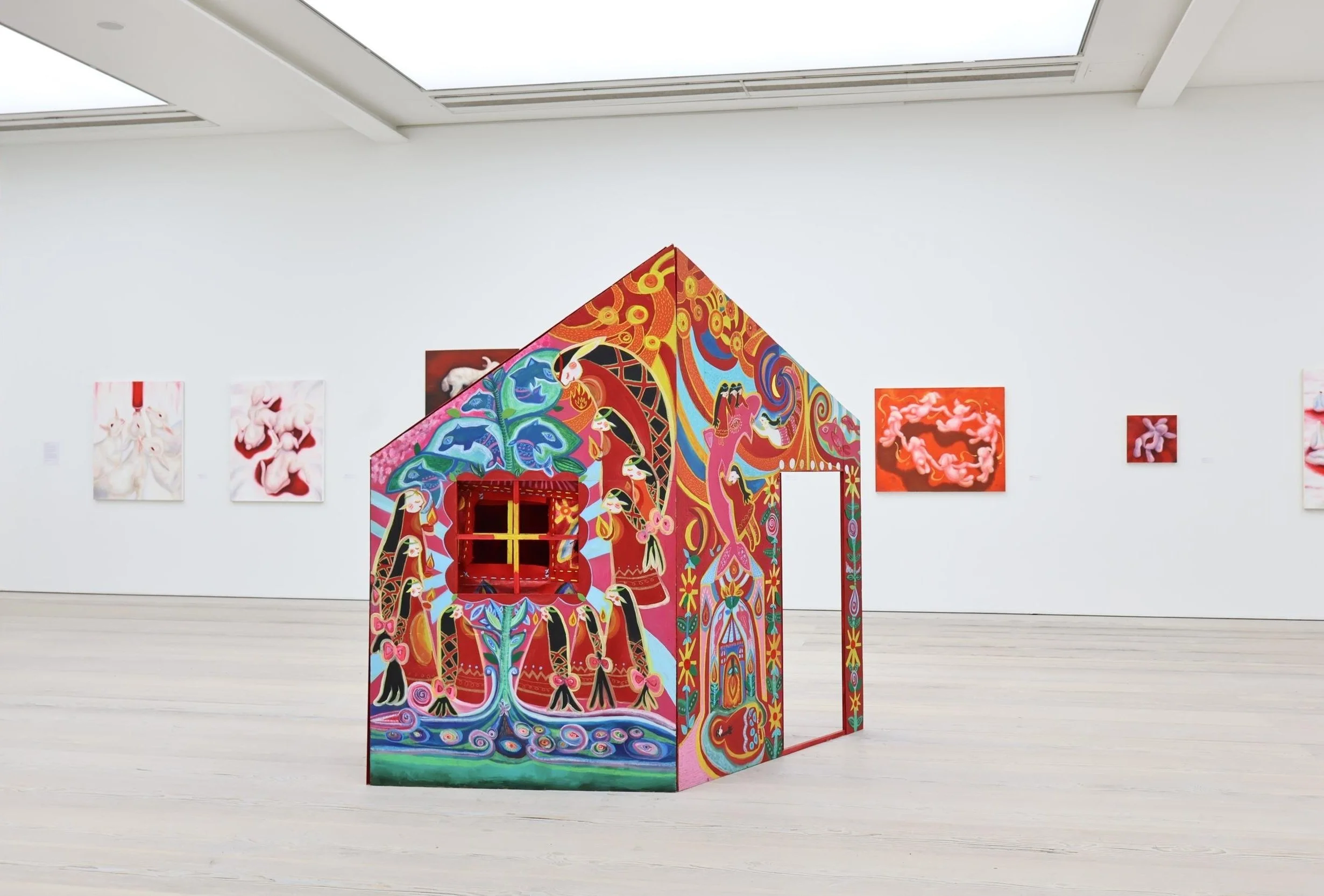



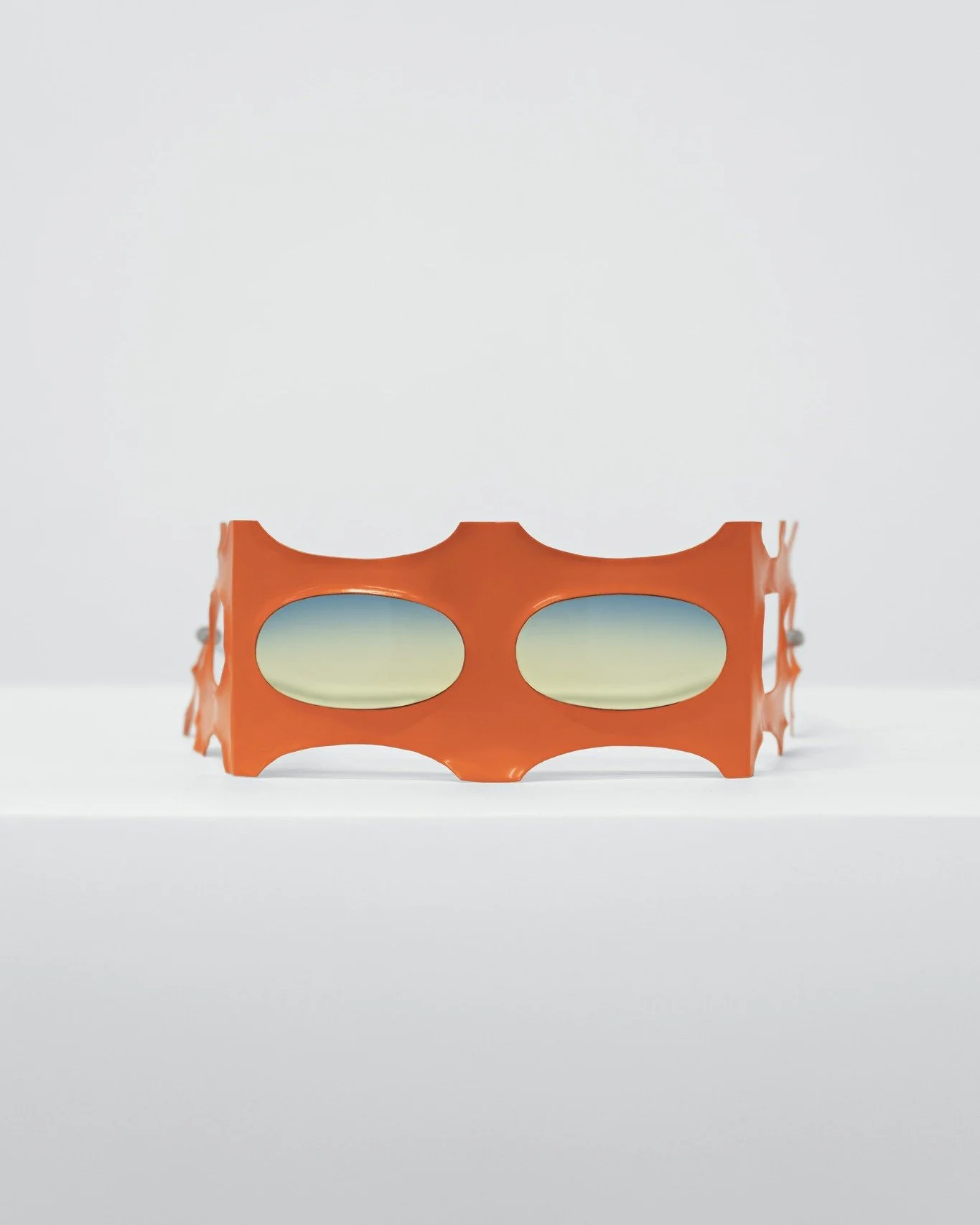
Yuhan Gu is a New York–based industrial designer whose work explores the intersection of function, emotion, and sculptural form. TACTO reflects Gu’s interest in the emotional relationship between people and the objects they keep close in their daily workspace. Designed as a cactus-shaped memo holder, the project transforms a familiar natural form into a playful and functional desktop object.