
10 Questions with Miguel Garcia - Marques de Jadraque
Marqués de Jadraque (Miguel García) was born in 1961 in Palencia, Spain. When he was 11, he attended drawing and painting classes at the School of Fine Arts in his town, Palencia. In 1981, he moved to Barcelona and continued his studies at the Royal Artistic Circle (painting nudes) and at the “Escuela Libre del Mediterraneo”, under the tutelage of the painter J. Torrents Llado (perfecting his technique and learning about light). During these years, his studio was located on Jadraque Street, where he founded the ‘Marqués de Jadraque’ group to share ideas with the cities of Barcelona and Madrid. This was the origin of his pseudonym. While in Barcelona, he received portrait commissions throughout Europe and worked for a while in the Vatican City.
Around 1986, he moved to Los Angeles, California. He began to move away from portraiture, painting bar scenes and the "people whistling" series. He was also chosen to represent Spain for the 500th anniversary of the Discovery of America (he was commissioned to create a series of paintings). He exhibited in several galleries in California, Mexico, and Hong Kong. In 1992, kind of tired of LA, he moved to London, where he spent a year painting traffic signs on the asphalt and developing a special interest in Cubism. He created a series of bar scenes influenced by Cubism for an exhibition in Mexico City.
In 1993, he returned to LA and settled in Hermosa Beach. He created a Cubist series in black and white that offers a critique of the American system. He painted series such as “people in line” and “clotheslines”.In 2005, he moved to Brooklyn, New York. During this period, he created a series of commissioned portraits and worked on “Donkeys”, “Clotheslines”, “Worried Man”, “People line”, etc.
In 2018, he moved back to London, where he has lived until 2024. He experimented with new materials and his work tended towards figurative abstraction, inspired by the colors of London gardens. During the pandemic, he began preparing a project to build his studio in a small town in his homeland. Influenced by his homeland, he painted storks and continued his figurative, abstract, emotional work.
Based in Autilla (Palencia), Spain, he divides his time between London, New York, and Los Angeles.

Marques de Jadraque - Portrait
ARTIST STATEMENT
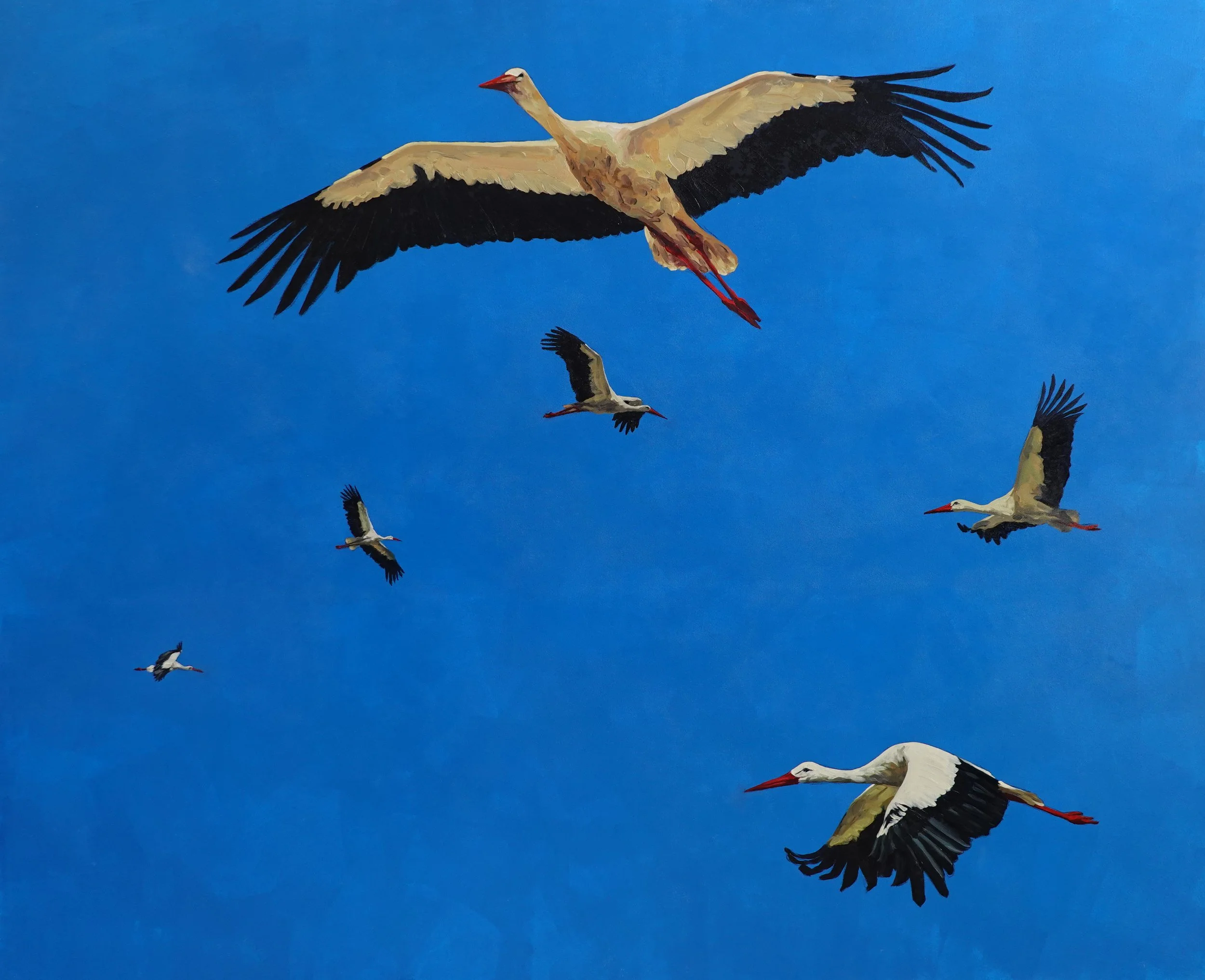
From childhood, Miguel (Marquis of Jadraque) has been interested in the figure, portraiture, movement, and light. Miguel is interested in all the materials he can adapt to his paintings: oil, charcoal, pastel, cement, ink, acrylic, spray paint, etc. He adapts them to his paintings according to the series he is working on. His inspiration comes from everyday life, his travels, people, what he reads, what he sees in other artists, conversations with friends, and film. In short, his life. Currently, Miguel is working on a series of "Storks" inspired by his homeland and continues to be interested in emotional figurative abstraction, alternating between the two.
Cigüeñas/Storks, Oil on canvas, 198x234 cm, 2026 © Marques de Jadraque
INTERVIEW
Welcome back to Al-Tiba9! What have you been working on since we last featured your work?
Thank you for your interest. Since the last time, I have continued my figurative abstract work (spoons, Porrones, etc.) and introduced new materials into my painting, such as spray paint and stencils. I have also created a series of sculptures using wood and cardboard. I had to travel to the USA to complete a series of commissions, among other projects. Additionally, I produced a series of still lifes featuring ducks (due to the pandemic, I used to cycle to the studio every day through Hyde Park, and since ducks would always cross my path, I decided to paint them). As you can see, I am constantly evolving and moving back and forth with my work.
Let’s dive a little deeper into your practice this time. You began studying drawing and painting at a very young age in Palencia. How did those early years shape your relationship with painting and discipline?
I started at the Palencia School of Art at the age of 11. I would leave school, grab a snack, and run to class until 9:00 PM every day. It didn’t matter if it rained or snowed; I went every single day. I loved it.
The first few years were dedicated to charcoal drawing, sketching plaster statues, busts, heads, full bodies, and so on. After a few years, I began oil painting, always alternating it with charcoal. I also started working on portraits, first in charcoal, and later in pastel and oil.
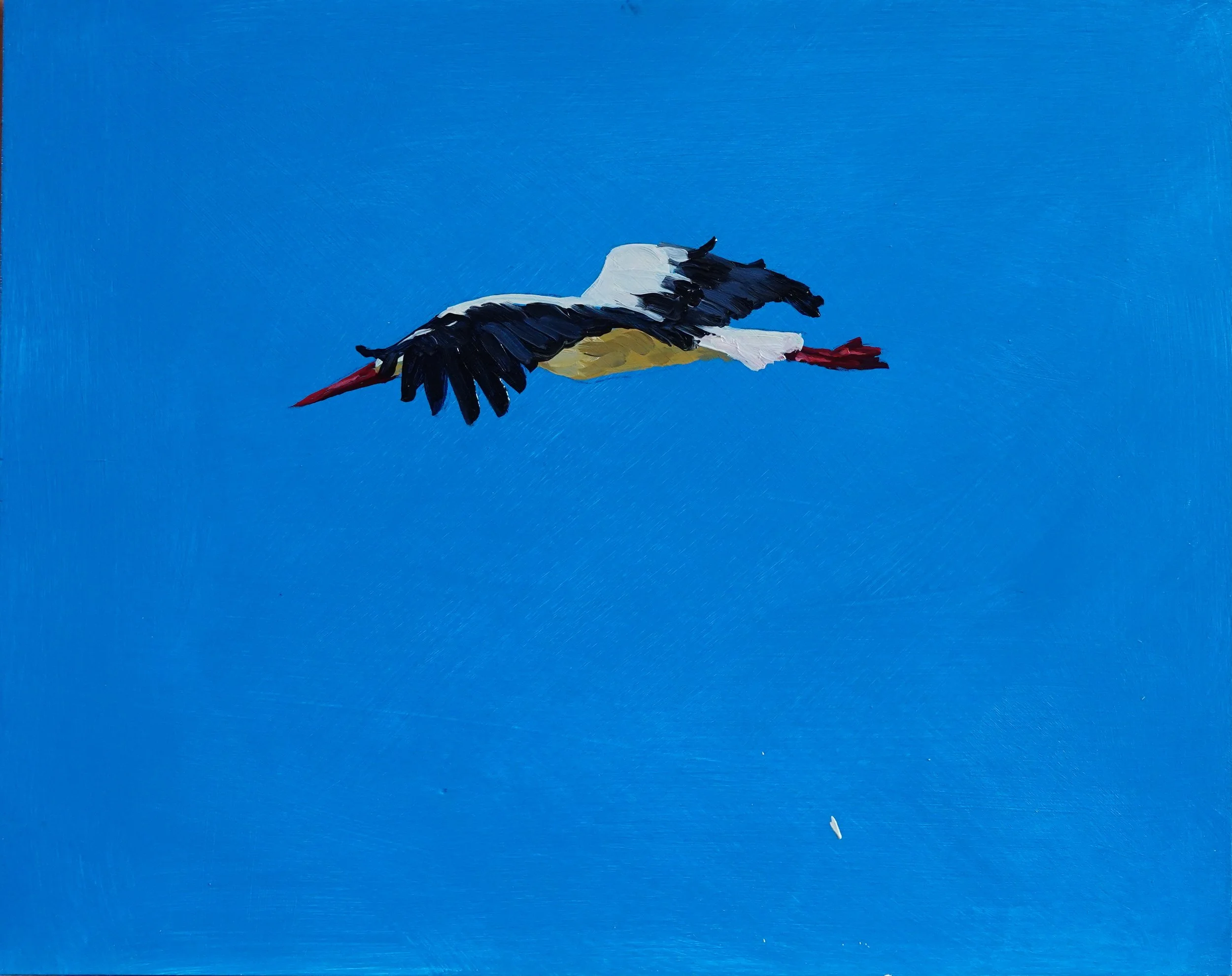
Cigüeña 8, Oil on wood, 50x41 cm, 2025 © Marques de Jadraque

Cigüeña 7, Oil on wood, 50x41 cm, 2025 © Marques de Jadraque
Your training in Barcelona focused strongly on technique, the human figure, and light. How did this academic foundation influence your later, more experimental phases?
After spending almost nine years at the school in Palencia, I moved to Barcelona. That was a whole different world, the city, the architecture, the distances, and so on.
I enrolled in the Círculo Artístico de Barcelona, where I began working on nude studies, attending both morning and afternoon sessions. Later, I received a scholarship to study at the Escuela Libre del Mediterráneo to refine my technique. There, I focused on mastering chiaroscuro, expanding the colors on my palette, applying more paint, and becoming more aggressive with my brushwork.
The pseudonym Marqués de Jadraque emerged from a shared studio and collective spirit. What did adopting this name allow you to express or rethink as an artist?
The pseudonym 'Marqués de Jadraque' originated from a final-year project in which we weren't allowed to sign our work. My professor was J. Torrens Lladó, a portrait painter for the European aristocracy, so, as a joke, I painted a self-portrait in pajamas. The name itself comes from Jadraque Street.
I later formed a group in the early '80s to generate creative ideas for the cities of Barcelona and Madrid, which I called 'Marquesado de Jadraque.' Before adopting the name, I made sure that such a noble title didn't actually exist; otherwise, I wouldn't have been able to use it. My friends started calling me 'Marqués' or 'Jadraque,' so I began adopting the name and signing my work with it. It’s a brand. Besides, I think it’s a bit more original than signing as Miguel García, don't you?
Portraiture played an important role early in your career, including commissions across Europe and work in the Vatican. What eventually led you to move away from portrait painting?
Yes, portraiture was very important. Back then, it was a challenge for me to become a good portraitist and painter, and it still is today. Thanks to portraits, I was able to pay for my classes, travel, and experience Barcelona.
When I moved to the USA, specifically Los Angeles, I tried to get portrait commissions, but I didn't feel there was much of an opening; I didn't get many, just a few, but very few. I believe that was the reason I moved away from it, or perhaps it was just destiny.

Cigüeña 3, Oil on wood, 50x41 cm, 2025 © Marques de Jadraque
Your time in Los Angeles marked a shift toward bar scenes and everyday social settings. What attracted you to these environments as subjects?
I’m not sure if you’re familiar with Los Angeles? It’s a very spread-out, sprawling city, full of freeways, where you need a car, even just to go buy a pack of cigarettes.' The only places where there was any human contact were the cafes, bars, and restaurants; that’s where I spent my time, and that’s where I would make my sketches, either in my notebook or on the bar's cocktail napkins.
Series like People in Line, Clotheslines, or Donkeys seem to observe social structures with irony or critique. How do you approach narrative and symbolism in these works?
Well, as I’ve told you, my inspiration comes from what surrounds me. One of the things that caught my attention during my time in LA was exactly that: people queuing for everything. That’s not for me; I don't have the patience. The hanging laundry, on the other hand, must come from my childhood when I used to help my mother hang out the clothes. In winter, with the frost, the clothes would freeze solid, like cardboard.
To me, it’s not just hanging laundry; they are shapes. Watching those planes relaxes me; they are mandalas, they are sculptures. In LA, I created a plaster installation with five lines representing the different time zones in the USA.
The donkeys happened by chance. I have friends back home who are working to prevent the extinction of the Zamorano-Leonés donkey. They invited me to see them; at the time, they had about 50 donkeys, and now there are more than 100. When I saw them, I felt the need to paint them. This work coincided with my time in New York, when I was running out of ideas. Things just lead you from one place to another.
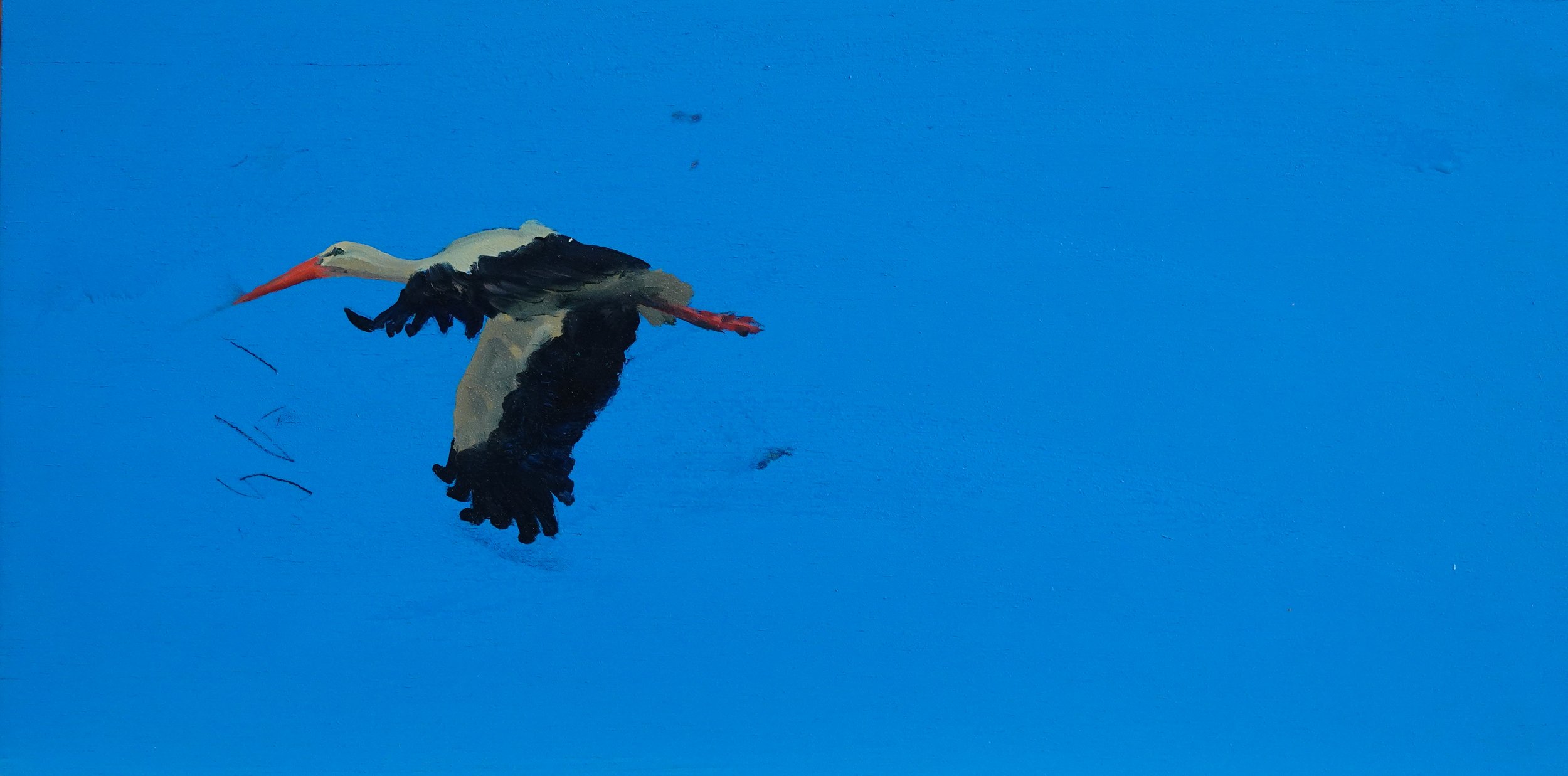
Cigüeña 5, Oil on wood, 50x41 cm, 2025 © Marques de Jadraque

Cigüeña 4, Oil on wood, 50x41 cm, 2025 © Marques de Jadraque
Over the years, you’ve worked across very different cities, Barcelona, Los Angeles, London, and New York. How does each place leave a trace on your palette, forms, or themes?
It influences me in many ways. The light is very important, as are the climate, distances, people, architecture, food, and so on. Depending on what I want to paint, my palette changes from one style to another.
Your more recent work moves toward figurative abstraction and emotional resonance, influenced by landscapes, gardens, and your return to Spain. What prompted this shift?
My most recent work (with the exception of my stork series) is emotional figurative abstraction, which began in London a few years ago and is the result of everything that came before. The impulse behind this change? I don't really see it as a change... it is a consequence, an evolution. In any case, themes come and go, depending on the moment.
Lastly, now that you are based in Autilla while continuing to move between major cities, how do you see this balance between rootedness and mobility shaping your future projects?
The most important thing is that now I have a place to return to.
Artist’s Talk
Al-Tiba9 Interviews is a curated promotional platform that offers artists the opportunity to articulate their vision and engage with our diverse international readership through insightful, published dialogues. Conducted by Mohamed Benhadj, founder and curator of Al-Tiba9, these interviews spotlight the artists’ creative journeys and introduce their work to the global contemporary art scene.
Through our extensive network of museums, galleries, art professionals, collectors, and art enthusiasts worldwide, Al-Tiba9 Interviews provides a meaningful stage for artists to expand their reach and strengthen their presence in the international art discourse.
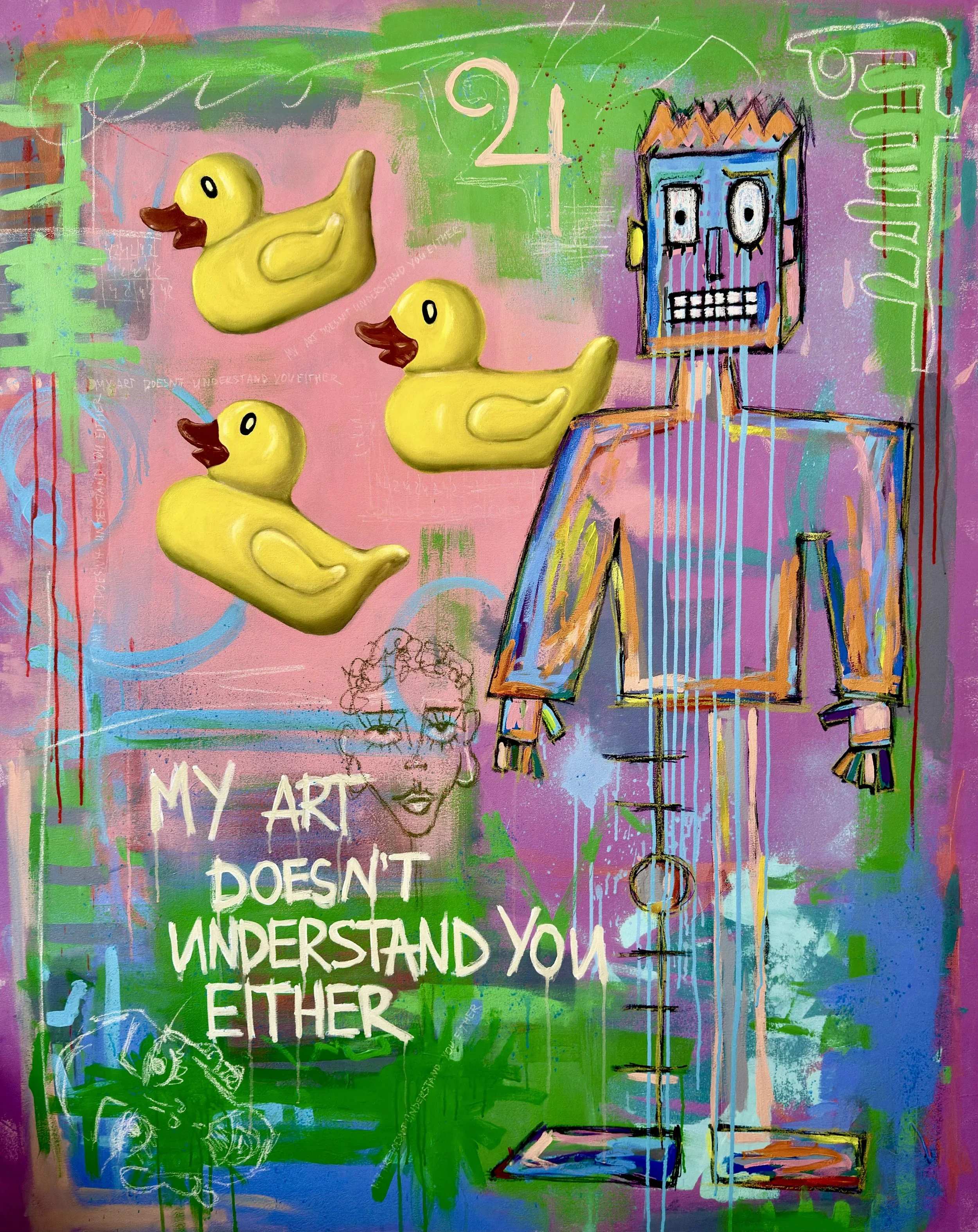



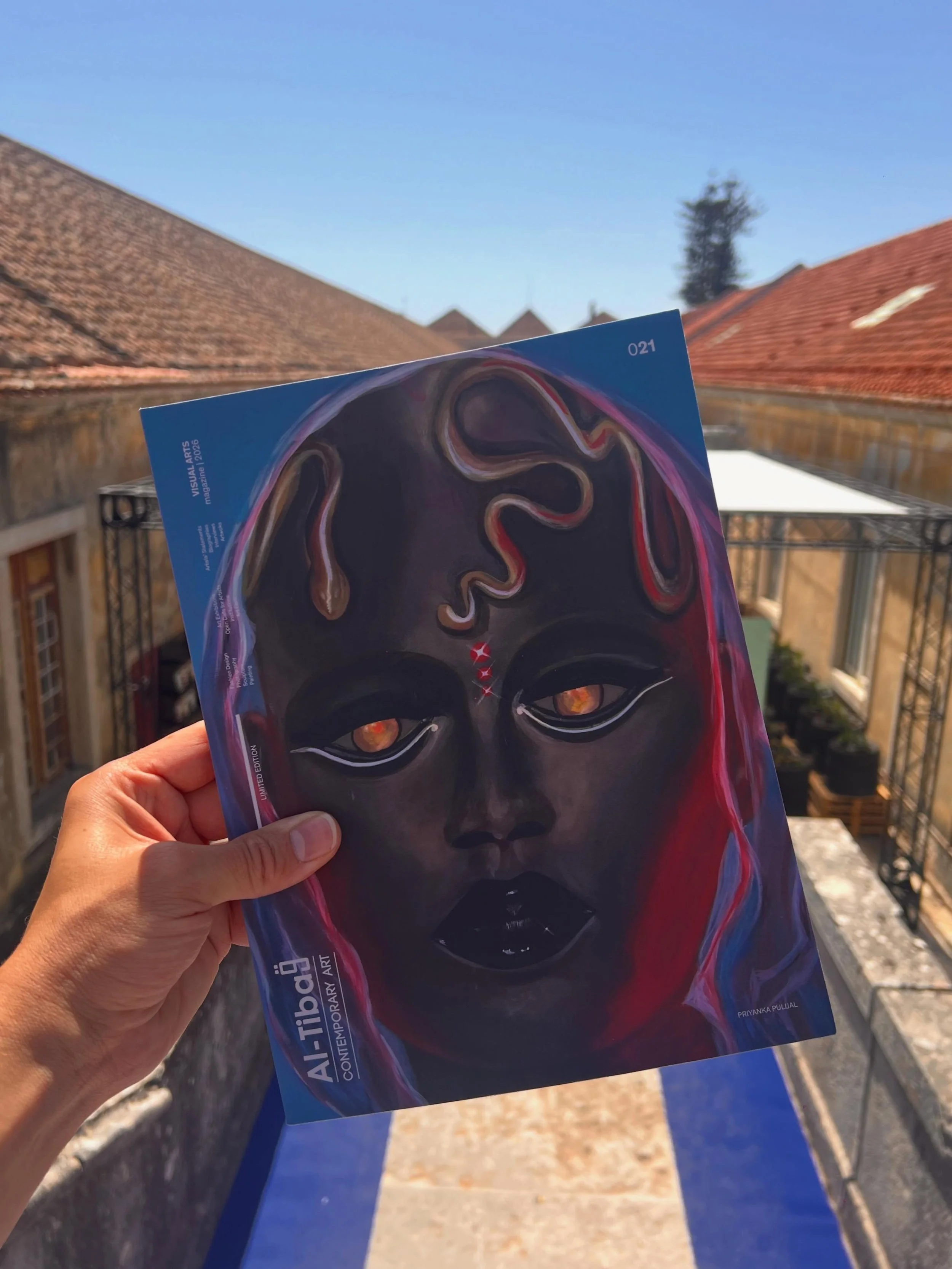
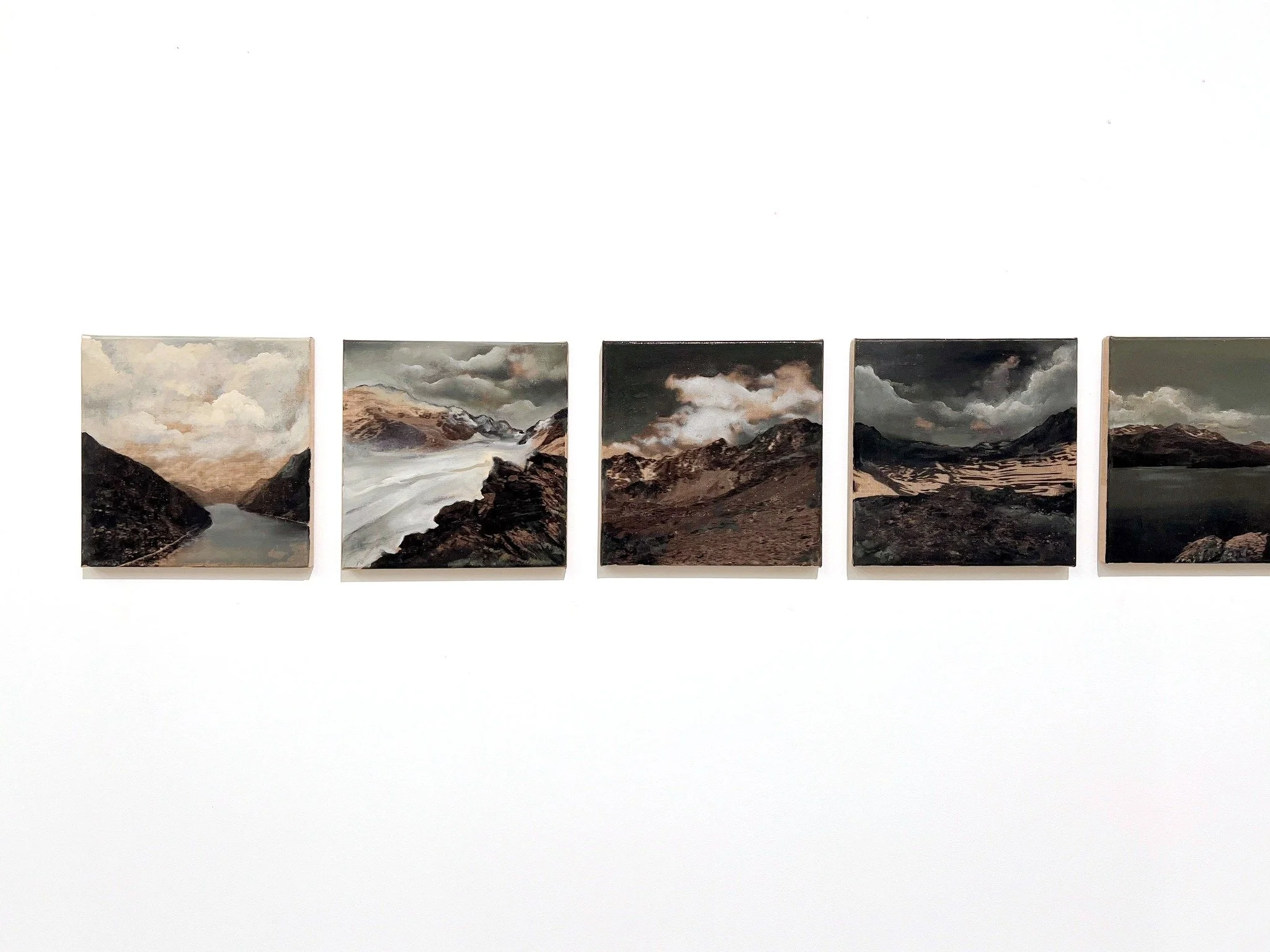
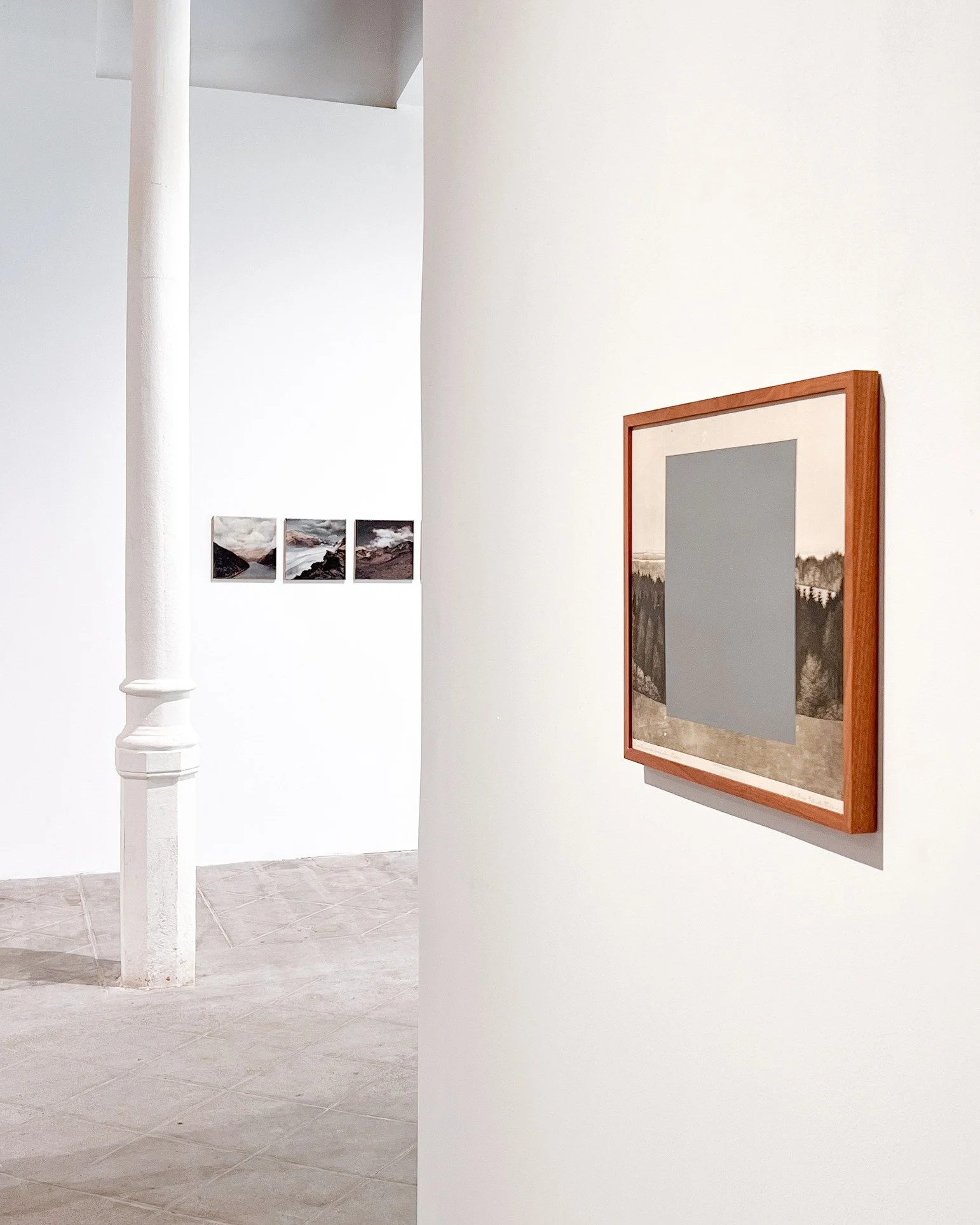
Nataraj von Allmen is a painter based in Switzerland. Often taking photographic material as a starting point, he weaves together landscapes, mythological archetypes, Christian symbolism, and contemporary socio-political themes into complex paintings. Oscillating between figuration and abstraction, his work investigates transformation, collective memory, and the human condition.