

10 Questions with Samantha Lance
Al-Tiba9 Art Magazine ISSUE20 | Featured Artist
Samantha Lance is a Canadian curator and writer whose work fosters meaningful connections between artists and communities. She holds a Master of Visual Studies in Curatorial Studies from the University of Toronto and a BFA in Criticism and Curatorial Practice from OCAD University. She is currently the Curator at the Visual Arts Centre of Clarington, a non-for-profit public art gallery and education centre located in Bowmanville, Ontario, Canada. Lance has worked with institutions including the Art Museum at the University of Toronto, The Power Plant Contemporary Art Gallery, C Magazine, the Art Gallery of Algoma, Onsite Gallery, and Latitude Gallery, New York. She continues to research and collaborate with artists and curators advocating for women's labour, textile practices, and ancestral techniques, with a particular interest in experimental, multisensory exhibition strategies that expand accessibility and dialogue.
As a curator, she sees herself as a listener, learner, collaborator, and conceptual engineer when it comes to working with artists and planning exhibitions. She gravitates towards voices that have not had the chance to share their narrative. To broaden her worldview, she conducts research and cultivates relationships with artists from different cultures, ancestries, life experiences, and spiritual beliefs. She is drawn to interdisciplinary and textile practices that explore hybrid identities, trauma healing, and intergenerational knowledge transfer. She sees the exhibition space as a palette. One on which she and artists can create a kaleidoscope of colours that have never been mixed before. Trust is the heartbeat of collaboration, and artists share their stories and histories with me in good faith as their curator. Her role is to welcome surprises, invite mystery, and embrace critical reflections from community members who are willing to engage with challenging works of art. She hopes to continue creating exhibitions that spark memorable moments, personal connections, and transformative experiences for audiences of all ages.

Samantha Lance - Photo by Anna Pelletier-Doble (Kevanna Fine Photography)
The Love that Remains | Project Statement
The Love that Remains brings together three Toronto-based artists whose contemporary textile practices recover matrilineal histories of displacement and belonging. Par Nair, Julie Gladstone, and Carol Ann Apilado revitalise ancestral practices to reconnect with their families, genealogies, and homelands. They seek to reconcile with the loss, trauma, and grief tied to their histories in the South Indian, Sephardic, and Filipino diasporic communities, respectively. The artists’ acts of weaving, embroidery, and knitting evoke how fabric has served as a material for survival, protection, and resilience. They bring attention to the female labour and creative expressions of their ancestors who endured displacement and/or exile across generations and in different geographical contexts. The artists’ works invite us to develop a deeper understanding of the role and history of women’s cultural work as weavers, embroiderers, and knitters.
Installation view of The Love that Remains, Art Museum at the University of Toronto, 2024, photo by Toni Hafkenscheid © Samantha Lance
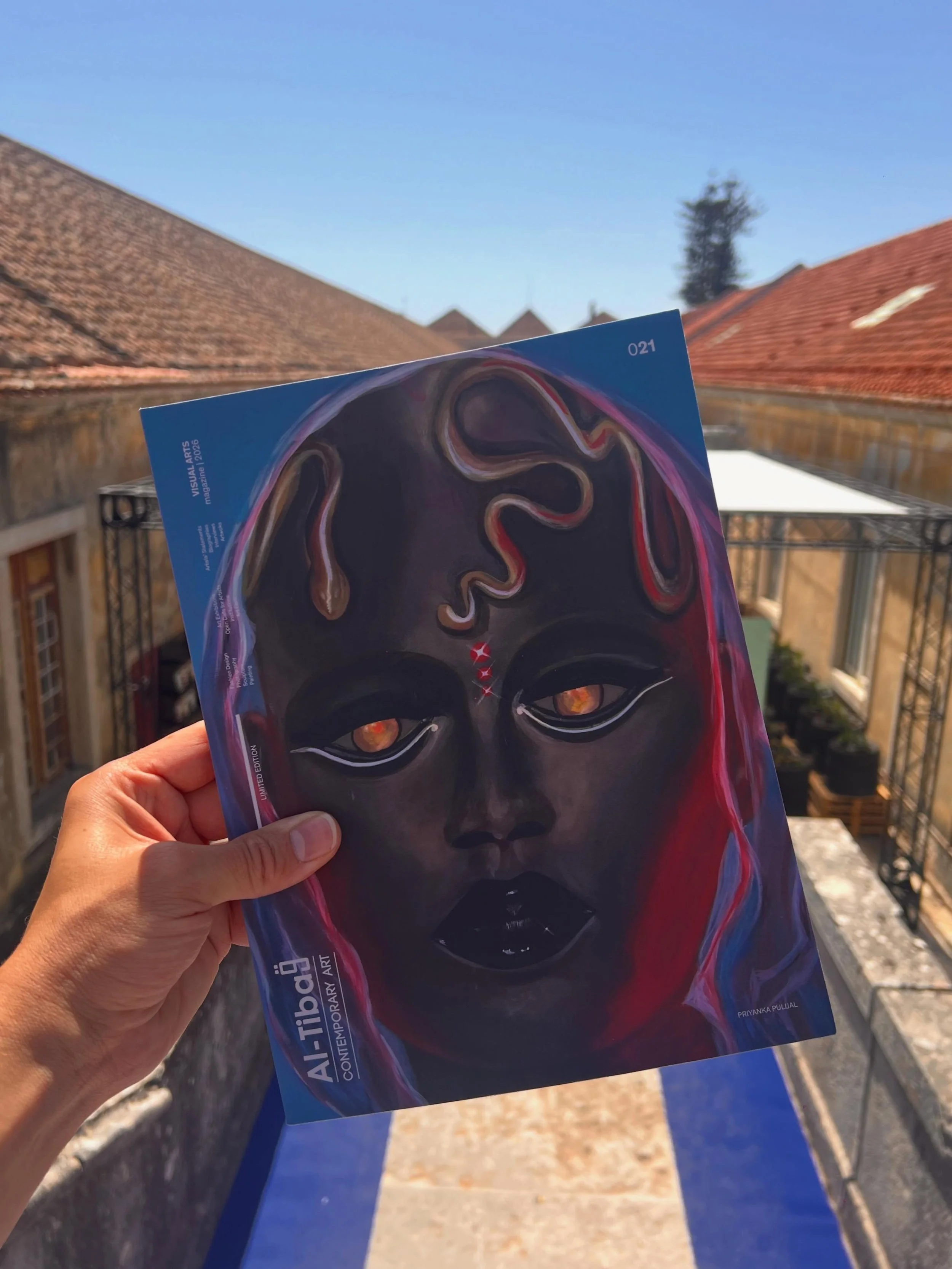
AL-TIBA9 ART MAGAZINE ISSUE20
DISCOVER THE INTERNATIONAL ART SCENE WITH AL-TIBA9
LIMITED EDITION | Shipping worldwide.
Premium museum art paper.
Printed in London.
Grab 3 or more prints and get your FREE digital magazine.
Get your limited edition copy now
INTERVIEW
First of all, can you tell us a bit about your background and how you first became interested in curatorial work?
I wouldn’t be where I am today without the artistic DNA and the abundance of support from my parents. While growing up in the small city of Sault Ste. Marie, Ontario, Canada, I watched my father become a jack-of-all-trades when it came to the visual arts. He was an elementary school art teacher who always went above and beyond his pay grade to develop school plays, theatre productions, and two movies with his students and staff. I see him as the first “curator” in my family since his leadership, ingenuity, and spirited nature created so many memorable moments for joy to thrive within his school community.
Without knowing how I was going to inherit these genes, my journey into the arts actually happened by accident. When I signed up for a cooking class as one of my Grade 10 electives, it was still a mystery to this day that my timetable showed that the elective would instead be a visual arts course with Mr. DiCerbo!
A year later, my interest in curating began in Grade 11 when both of my high school art teachers, Mr. & Mrs. DiCerbo, asked if I wanted to assist in the curation of our annual arts festival. As if by magic, I felt a natural instinct when it came to pairing artworks together on the display boards to create visual impact and thoughtful narratives in the school’s event space. I will always remember standing in this exhibition space and thinking, This is what I want to do as a career, curate meaningful experiences that empower, celebrate, and bring together diverse communities, life stories, and artistic practices.
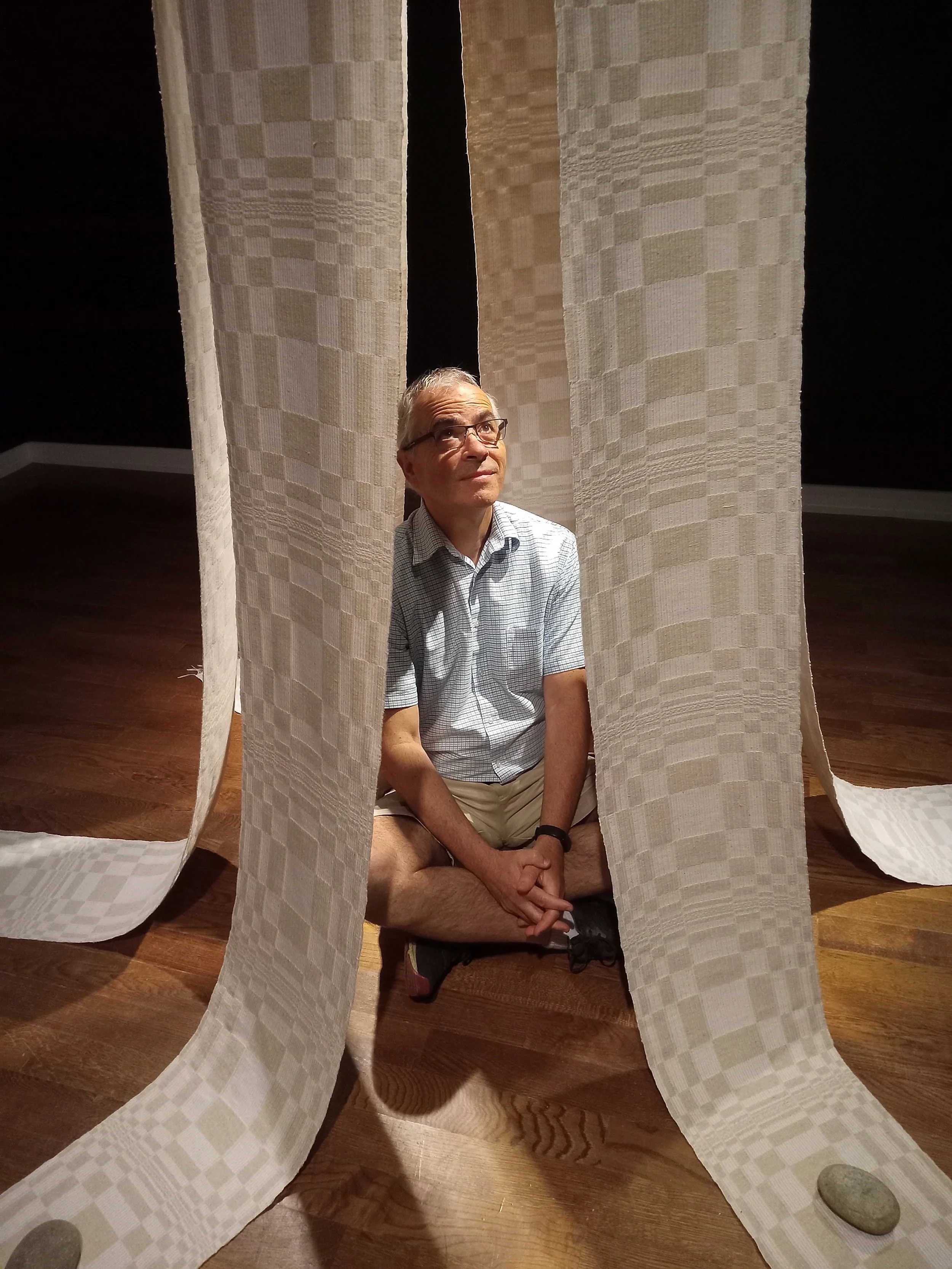
Dan Lance sits inside of Carol Ann Apilado's installation, “Channel” in The Love that Remains, Art Museum at the University of Toronto, May 24, 2024 © Samantha Lance
What drew you specifically to curatorship, and how did your studies at the University of Toronto and OCADU shape your approach?
My education at OCAD University’s Criticism and Curatorial Practice program and the University of Toronto’s Master of Visual Studies in Curatorial Studies program gave me the conceptual and practical tools needed to survive and thrive as a contemporary art curator. I gained a strong foundation in art history and exhibition histories, and deepened my research and resilience when it came to planning my thesis exhibitions with emerging and established artists. Being immersed in Downtown Toronto’s vibrant art scene also gave me the opportunity to build new relationships with talented arts professionals and explore as many art galleries, museums, festivals, and artist-run centres as possible.
Both universities taught me that a curator holds the responsibility of being a bridge between worlds wherever they go. A gallery that grows around its community and sees the value in the diverse perspectives and thoughtful debates of its visitors will surely plant seeds that will one day sprout into deeper connections. As I continue to find roots and maintain ties to multiple places, I remember that one of my roles as a curator is to be a listener to the stories and histories of the people who live in Clarington and in the Durham region.
As a curator, what would you say is your main goal when organizing an exhibition? What do you hope audiences take away?
My main goal is to ensure that all the puzzle pieces of an exhibition fit together from start to finish. Throughout the planning and production processes, there is so much behind-the-scenes work (and a ton of emailing) for an exhibition to be successful from a conceptual, financial, and marketing perspective. One of the exciting challenges of being a curator is developing an art show where the artworks harmonize together within a cohesive narrative. I hope that audiences are left with a mix of thoughtful questions and meaningful answers and that they find a special connection to an artist or artwork in the exhibition. Overall, I want my curation to give visitors permission to feel and heal. When we invite people to reflect on how their inner worlds shape their perspectives within an exhibition, we accept that the gallery is in a constant state of transformation and becomes a library of life stories.
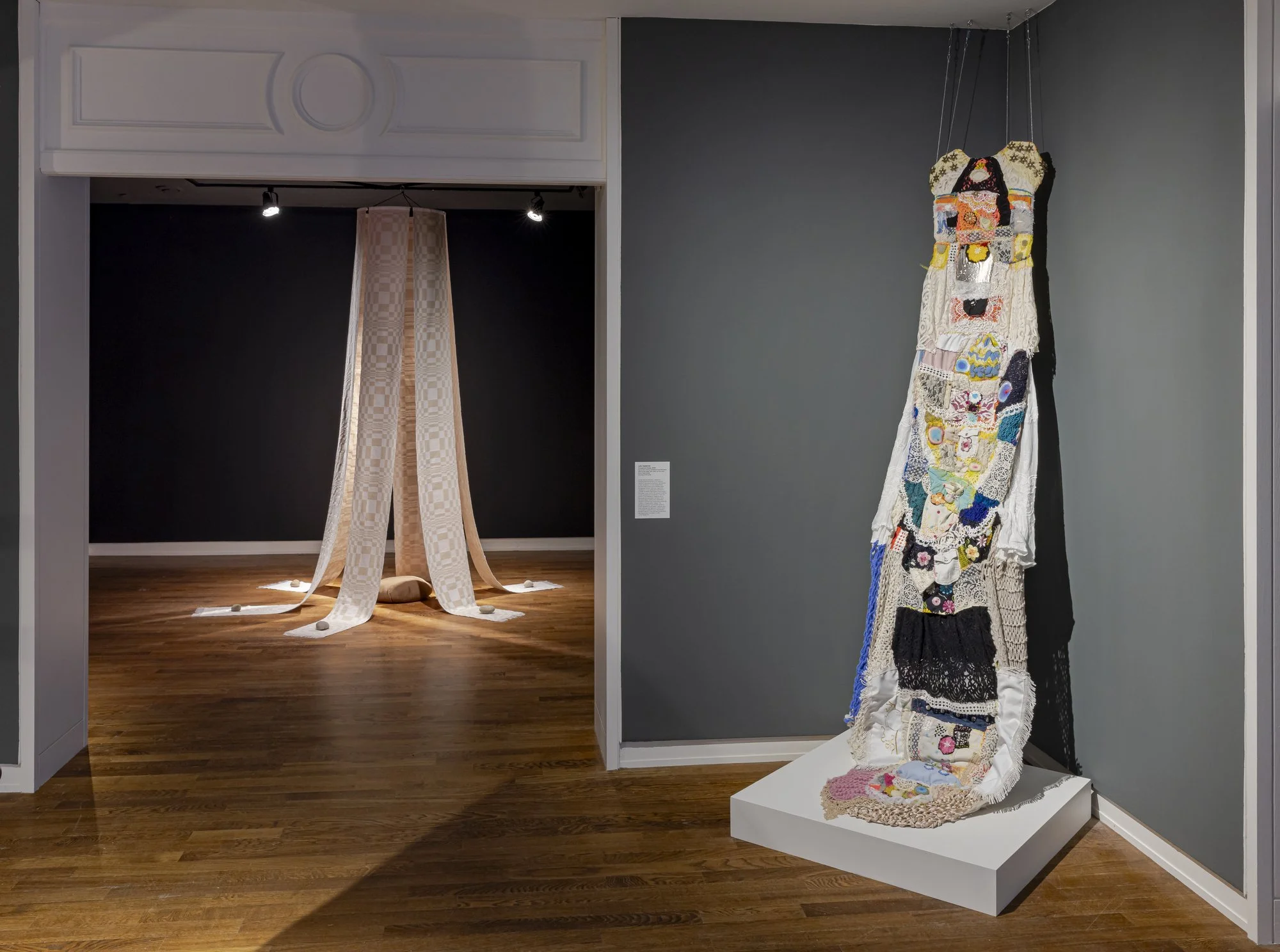
Installation view of The Love that Remains, Art Museum at the University of Toronto, 2024, photo by Toni Hafkenscheid © Samantha Lance

Installation view of The Love that Remains, Art Museum at the University of Toronto, 2024, photo by Toni Hafkenscheid © Samantha Lance
Your work often highlights voices and practices that haven’t been widely seen, such as matrilineal textile traditions. How do you discover and connect with these artists?
I first met Par Nair and Julie Gladstone during the “Practicing Resilience: Redefining Spirituality through Contemporary Art” conference in the Rosalie Sharpe Pavilion at OCAD University in March 2023. During their presentations, I remember seeing an instant connection between their practices, as they were both uncovering matrilineal histories through fibre art. Although both of the artists and their textiles deeply resonated with me, at the time, I was developing a completely different exhibition proposal to pitch at the end of my first year in the Master of Visual Studies in Curatorial Studies program. After reflecting on the feedback and my curatorial concept as a whole, I realized that I wanted to steer my research in a new direction and explore contemporary art in relation to ancestry, memory, spirituality, and homelands.
My growing interest in artists working through their own hybrid identities began during my curatorial internship at The Power Plant Contemporary Art Gallery (Toronto) in the spring of 2023. I had the opportunity to research and write articles about the artists featured in their summer exhibition, in parallel (2023), who were reflecting on their migration stories and past traumatic experiences through textile and mixed media practices. Then, my visit to see the Textile Museum of Canada’s exhibition, Gathering (March 2023–2024), served as a game-changer for my research and how I wanted to activate my role as a curator. Through community participation and artists’ interventions, the Textile Museum invited contemporary artists (featuring Par Nair and Carol Ann Apilado) to respond to historical textiles in its collection to explore themes of migration, family bonds, and the revitalization of intergenerational knowledge. This exhibition sparked something in me and made me reflect on the textile practices within my own mixed heritage.
In your recent projects, have you introduced any new methods, technologies, or experimental exhibition strategies? How have they impacted the way audiences experience art?
I think one of the ways exhibitions are becoming more experimental is by incorporating as many multisensory aspects as possible for visitors to encounter and remember. In The Love that Remains at the Art Museum at the University of Toronto, Par Nair and I added a jasmine reed diffuser across from her hand-embroidered silk sarees to recall her home in Kerala, her grandmother, and South Indian weddings. In my curatorial tour and family tour, this subtle fragrance opened a conversation about the different scents that come to mind when visitors think of their grandmothers or the multiple homes in which they have lived. Carol Ann Apilado and I also invited visitors to softly touch, walk around, or sit inside her handwoven structure, Channel, while they listened to her loom-weaving sounds echoing in the space. Apilado's installation pays tribute to her Filipino ancestors who loom-weaved while also inviting participants to reflect on the known and undiscovered fabrics within their personal histories. These gentle gestures become powerful reminders that spiritual experiences can happen in museums and galleries when we allow our ancestors to take up space within them.

Documentation of the Curatorial Statement and Julie Gladstone's artworks, "Ancestral Dress" (left) and "Portal into Dreamspace" (right) in The Love that Remains. May 1—July 27, 2024, Art Museum at the University of Toronto. Photo by Dominic Chan. © Samantha Lance
The Love that Remains focused on ancestral knowledge, trauma, and resilience. How do you approach sensitive themes like these in a way that is respectful and engaging?
Dealing with sensitive themes comes with caring for myself and knowing my limits while also recognizing and being open to understanding the artist’s depth on a given subject. I think it’s about deep listening and allowing myself to enter into the artist’s thought space when researching their creative practice, history, and philosophies. Building relationships with artists ultimately comes down to developing an ongoing trust and seeing if we can get to know each other as people beyond our careers. Since the studio visit is the first point of entry into that relationship, I like to prepare thoughtful questions and remain receptive when deeper conversations start to take shape. I think curating with compassion happens by working in parallel with the artist and acknowledging that both of us are growing together throughout the exhibition process. Once a special connection is established, one of the most rewarding parts is when the artist is receptive to the ideas I offer for their artistic explorations in the future. Specializing in contemporary art and living artists also means maintaining those relationships long after the exhibition finishes. Whether our paths cross again, it becomes a lifelong “investment” to flow with an artist and see how they evolve as artists and individuals.
How has your curatorial practice evolved in recent years, and what changes have you noticed in the way you conceptualize exhibitions?
From developing an online exhibition for my undergraduate thesis at OCAD U to my first physical exhibition at the Art Museum at the University of Toronto to working with guest curators this past year at the Visual Arts Centre of Clarington (VAC), I realize that curators often have the responsibility of doing anything and everything. Constantly networking, constantly emailing, constantly problem-solving. But at the end of each day, I remember that I am one step closer to putting something meaningful into the world.
I realize that I enjoy pairing artists from different ages, lived experiences, backgrounds, and artistic choices together in trio shows. It’s an exciting challenge to work within that triangle dynamic and reflect on how the artists’ works are responding to one another’s stories and practices. After passing my one-year anniversary at the VAC, I reflect on how each of the three gallery spaces acts as a chapter to build a cohesive story for visitors. Walking into 2026 will be new ground for experimentation as my staff and I work towards a solo show and a 50th anniversary exhibition.
My guest co-curator, Megan Kammerer, and I are currently in the planning and production phase of We Have the Cure, a solo exhibition running from January 31 to June 2, 2026, featuring the neurodivergent Nigerian-Canadian artist, Kosisochukwu Nnebe. While promoting her show throughout the exhibition run, I will also be developing the 50th anniversary exhibition with eleven local artists as my first curated show at the VAC, on display from June 12 to December 6, 2026. As I continue to conceptualize solo and group exhibitions, I see myself as a crafty juggler who has to manage multiple tasks and people at once while knowing how to organize my priorities.

Display boards with artworks created by high school students, St Mary's College Arts Festival, 2022 © Samantha Lance

Samantha Lance takes a picture of an artwork during the opening reception of Imago Mundi – Great and North, Onsite Gallery (Toronto, Ontario, Canada). October 24, 2018. Photo by Henry Chan © Samantha Lance
Looking ahead, how do you see your work developing? Are there new themes, communities, or formats you are interested in exploring?
I would like to focus on making the VAC into a space that radiates joy, wonder, and empathy when visitors walk through the door and journey through the exhibitions. I am fascinated by artists who offer alternative ways of perceiving the world by crafting accessible and multisensory experiences for their communities and the general public.
Throughout this past year, I have greatly enjoyed connecting with new artists, arts workers, nonprofits, teachers, and other leaders in the public sector within Clarington and the Durham region. I would like to continue exploring the hidden gems and creative hubs that lie farther and farther away from the big city of Toronto. These smaller communities, towns, municipalities, or cities each contribute and bond to a large ecosystem while still holding power to their creative and cultural beat.
As I open up the first chapter to the VAC’s next 50 years through the anniversary show, I seek to honour the past, present, and future of this gallery and its caretakers simultaneously. I hope to invite past curators, staff members, volunteers, artists, and so many others to the exhibition opening who have this shared history with this repurposed historic barley mill. While building and maintaining new relationships with the local scene, I hope that my curatorial contributions will continue to introduce the VAC to the rest of Canada and internationally.
Many curators are now exploring how AI and digital tools can influence exhibitions. How might AI impact your work, both positively and negatively?
I still love working with pen and paper when it comes to intuitive, creative, and curatorial writing. Although I use AI for spelling and grammar, I hesitate to use it as a constant collaborator since I am concerned that it will impact my personal voice, imagination, and problem-solving skills in the long run.
I think the tricky thing is sometimes determining whether an artist used artificial intelligence solely or partly to create a digital artwork or picture that we see on social media. Perhaps the more AI we encounter, the more we will want to pause and think critically or thoughtfully about the artwork presented to us. If we give ourselves permission to slow down, we can rewire our brains to focus on contemplation more than consumption. To combat the five-second scroll, what if we started picking one artwork, article, or video of interest per day and took five minutes to reflect, question, and journal about it?
When it comes to making museums and galleries more accessible, I think digital tools like Zoom, virtual tours, and multisensory aids can open doors for audiences across ages and disciplines and neurodivergent communities to connect, tell their stories, and feel reflected in the exhibitions they experience.

Genevieve DiCerbo and Samantha Lance look at artwork and prepare for St. Mary’s College’s 2022 Arts Festival, photo taken on June 2, 2022. Photo by Brian Kelly (The Sault Star: Postmedia Network). © Samantha Lance
Finally, what role do you think curators play in shaping public understanding of art and culture, especially when dealing with underrepresented histories or communities?
For a curator to be a conduit for new ideas to emerge, I think they have to be in tune with the pulse of a place. Similar to having a studio visit with an artist, oftentimes the curator has to initiate the first hello to build a relationship with community members. Planting seeds of interest in public settings and making a personal connection to everyone you meet can help visitors feel drawn to visit the gallery. Since curators are community connectors, one of the most rewarding parts is when diverse audiences see themselves reflected in the exhibitions and feel empowered to share their stories and histories.
Curators, artists, and visitors alike continue to grow, expand, and reshape our perspectives of the world when we keep ourselves open to experience thought-provoking artworks from artists of different cultural backgrounds and geographies. So, let’s continue to dream up some magic together.
Artist’s Talk
Al-Tiba9 Interviews is a curated promotional platform that offers artists the opportunity to articulate their vision and engage with our diverse international readership through insightful, published dialogues. Conducted by Mohamed Benhadj, founder and curator of Al-Tiba9, these interviews spotlight the artists’ creative journeys and introduce their work to the global contemporary art scene.
Through our extensive network of museums, galleries, art professionals, collectors, and art enthusiasts worldwide, Al-Tiba9 Interviews provides a meaningful stage for artists to expand their reach and strengthen their presence in the international art discourse.





Carmen Vornicelu is a Romanian artist working across visual systems, text, sound, spatial situations, and participatory formats. Her current research framework, Pre-Economic Architecture, investigates the conditions that precede the formation of economic, institutional, or political value, examining the criteria that shape what can become relevant.