
10 Questions with Mahshid Gorjian
Mahshid Gorjian is an independent fine artist and digital visual practitioner based in the United States. Her practice spans fine arts, digital visual production, and experimental media, with a focus on public-interest cultural dissemination and the representation of diverse communities. She works across digital painting, mixed media, and technologically mediated visual forms to explore themes of identity, femininity, cultural memory, and contemporary social experience.
Gorjian holds an MFA in Creative Technologies from Virginia Tech, where she received advanced training in digital media, interactive design, and experimental artistic practices. She also earned a Bachelor of Applied Arts in Arts and Crafts from the University of Art in Tehran. She is currently a Ph.D. candidate at the University of Colorado Denver, where her doctoral research focuses on spatial analysis, environmental design, and the social impact of urban interventions. Her academic background informs the analytical rigor and conceptual depth of her artistic production.
Her work has been recognized through numerous competitive awards and international juried exhibitions, including honors from the American Art Awards and Art Collectors Choice Awards. Her artworks have been widely published in international art and literary journals, and she has been featured in professional interviews and cultural platforms. Alongside her artistic practice, Gorjian has contributed as a reviewer for Leonardo Reviews (MIT Press), further situating her work within global conversations on art, technology, and culture.
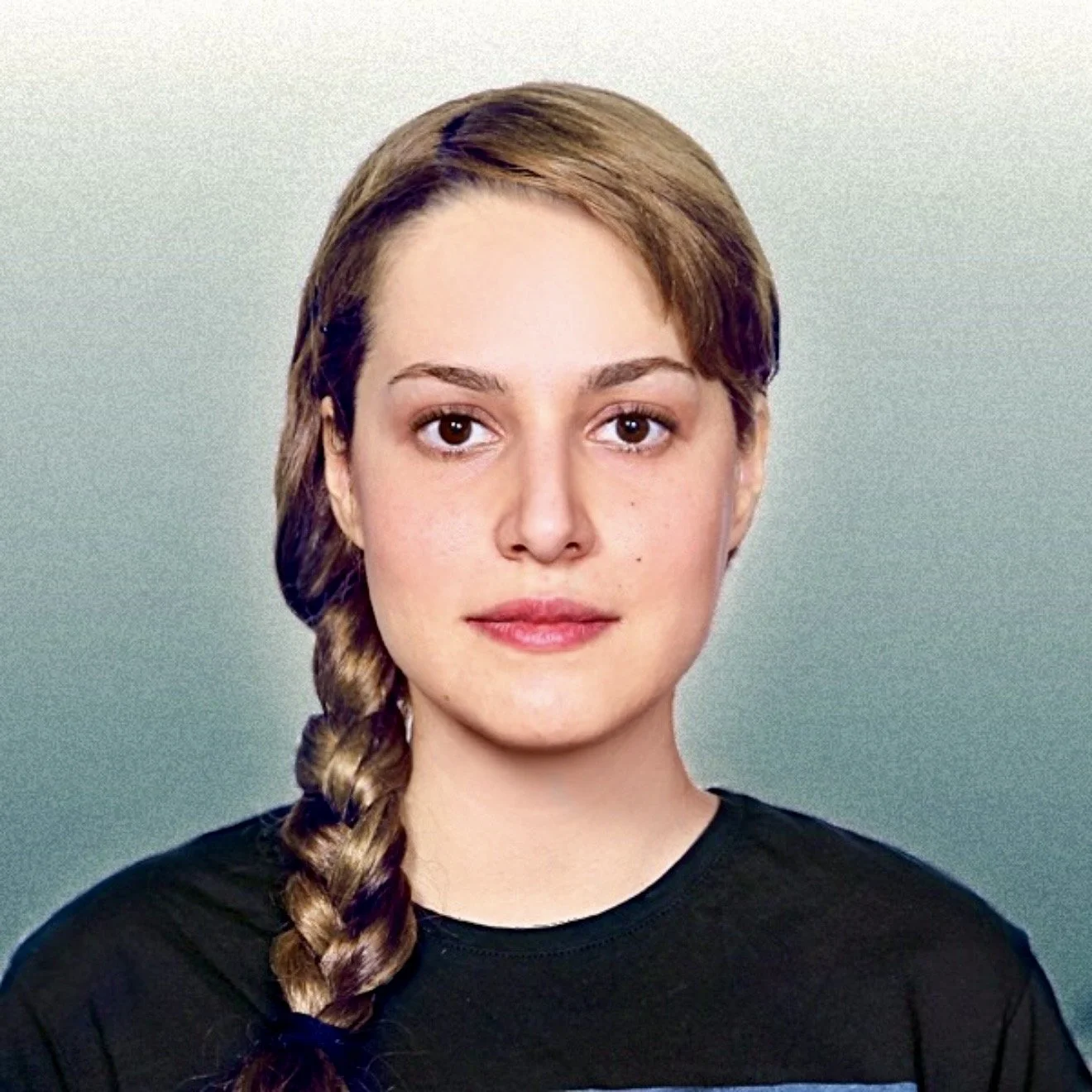
Mahshid Gorjian - Portrait
ARTIST STATEMENT
Mahshid Gorjian’s artistic practice operates at the intersection of fine art, digital visual media, and cultural inquiry. Her work investigates the construction of identity, femininity, and belonging through visually layered compositions that merge traditional artistic sensibilities with contemporary digital processes. Drawing from personal, cultural, and societal narratives, she creates images that function as both poetic expressions and critical reflections on lived experience.
Her practice is shaped by a multidisciplinary background that includes fine arts, creative technologies, and spatial research. This foundation allows her to approach visual production as a form of cultural storytelling, one that is informed by research, material experimentation, and conceptual rigor. Digital tools are not merely technical instruments in her work, but conceptual extensions that enable new modes of representation, abstraction, and emotional resonance.
Central to Gorjian’s work is a commitment to public accessibility and cultural dissemination. She views art as a vehicle for dialogue and education, capable of reaching broad audiences through exhibitions, publications, and digital platforms. By working independently of a single institution or geographic context, her practice emphasizes circulation, visibility, and engagement across national and international spaces.
Ultimately, her work seeks to create visual spaces where personal histories intersect with collective narratives, inviting viewers to reflect on identity, presence, and transformation within contemporary society.
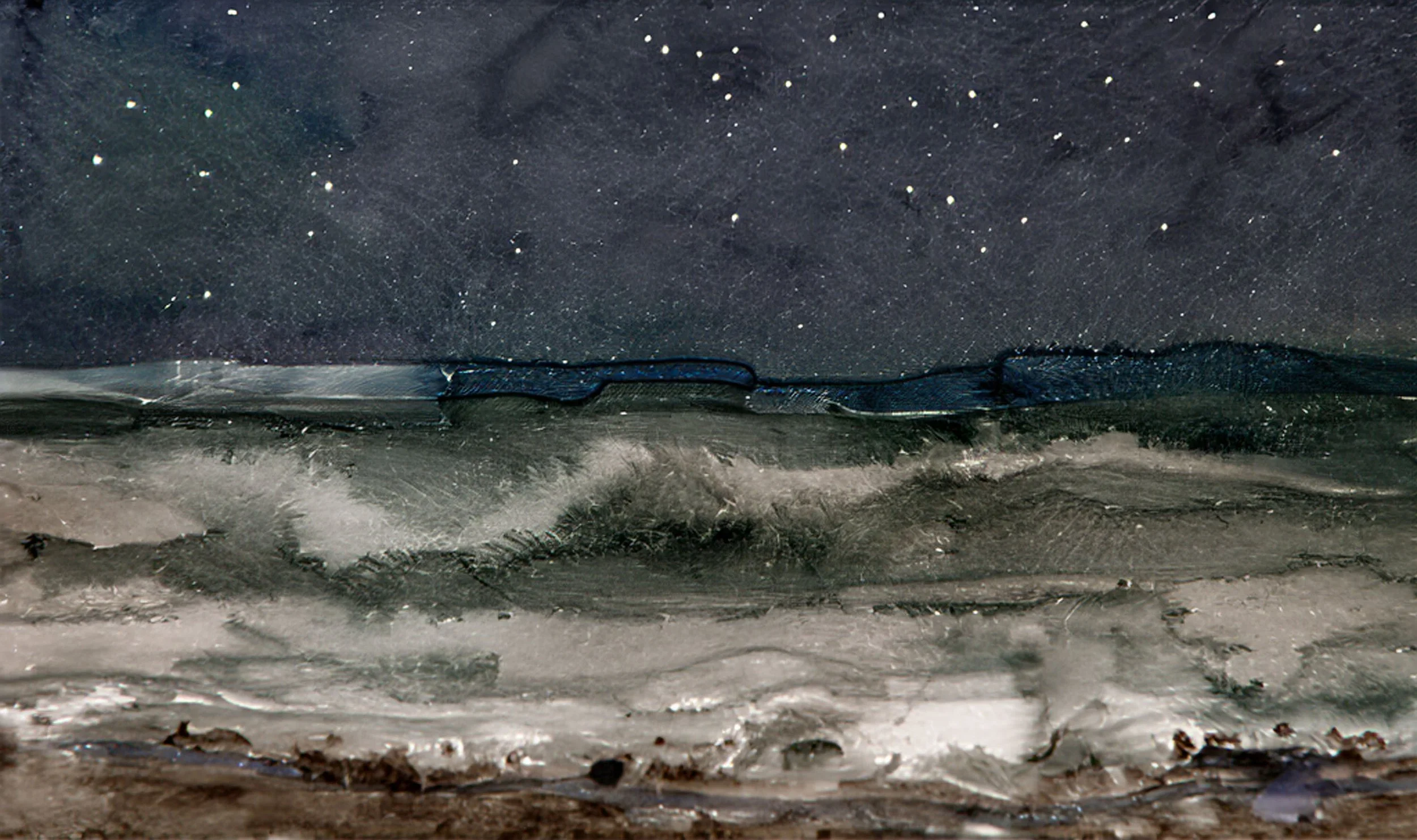
Midnight Tides © Mahshid Gorjian
INTERVIEW
Let’s start from the basics. Can you tell us a bit about your background and how you became a visual artist?
My background is rooted in fine arts, where I began with a strong foundation in drawing, sculpture, and material-based practices during my undergraduate studies in Tehran. From the beginning, I was drawn to visual storytelling and representation as a way to process personal experience and broader cultural realities. Over time, my practice evolved alongside my academic path, expanding into digital visual production and spatial thinking. Becoming a visual artist was not a single decision but a gradual alignment of making, research, and critical inquiry that continues to shape how I work
today.
How did your studies in fine arts and creative technologies shape your artistic practice?
Studying fine arts gave me discipline, material sensitivity, and an understanding of visual language, while my MFA in Creative Technologies introduced me to digital tools, 3D modeling, and experimental production methods. Together, these experiences allowed me to approach art both conceptually and technically. Rather than replacing traditional skills, technology became a way to extend them, enabling me to think across media while maintaining a strong emphasis on form, detail, and conceptual rigor.
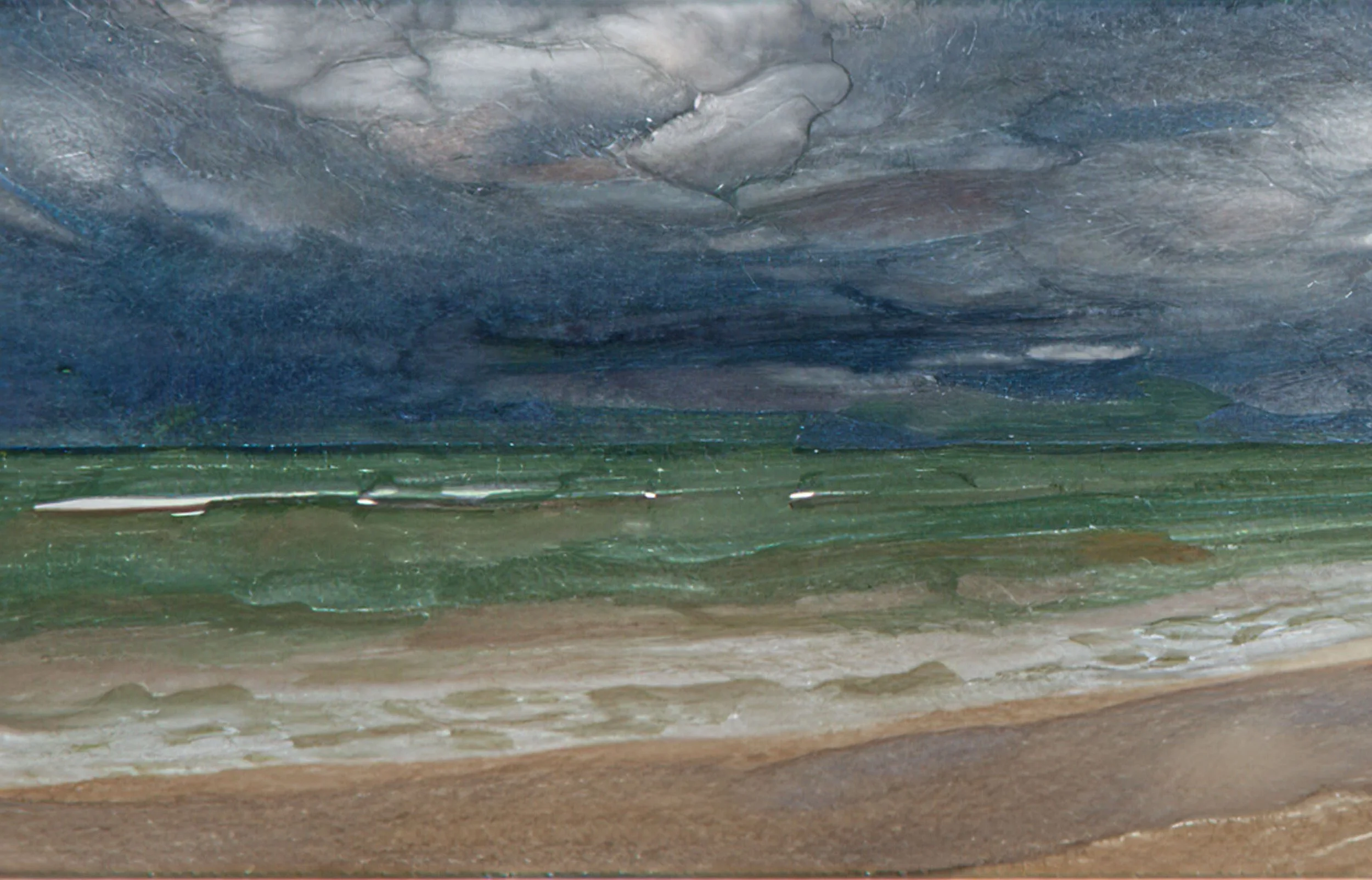
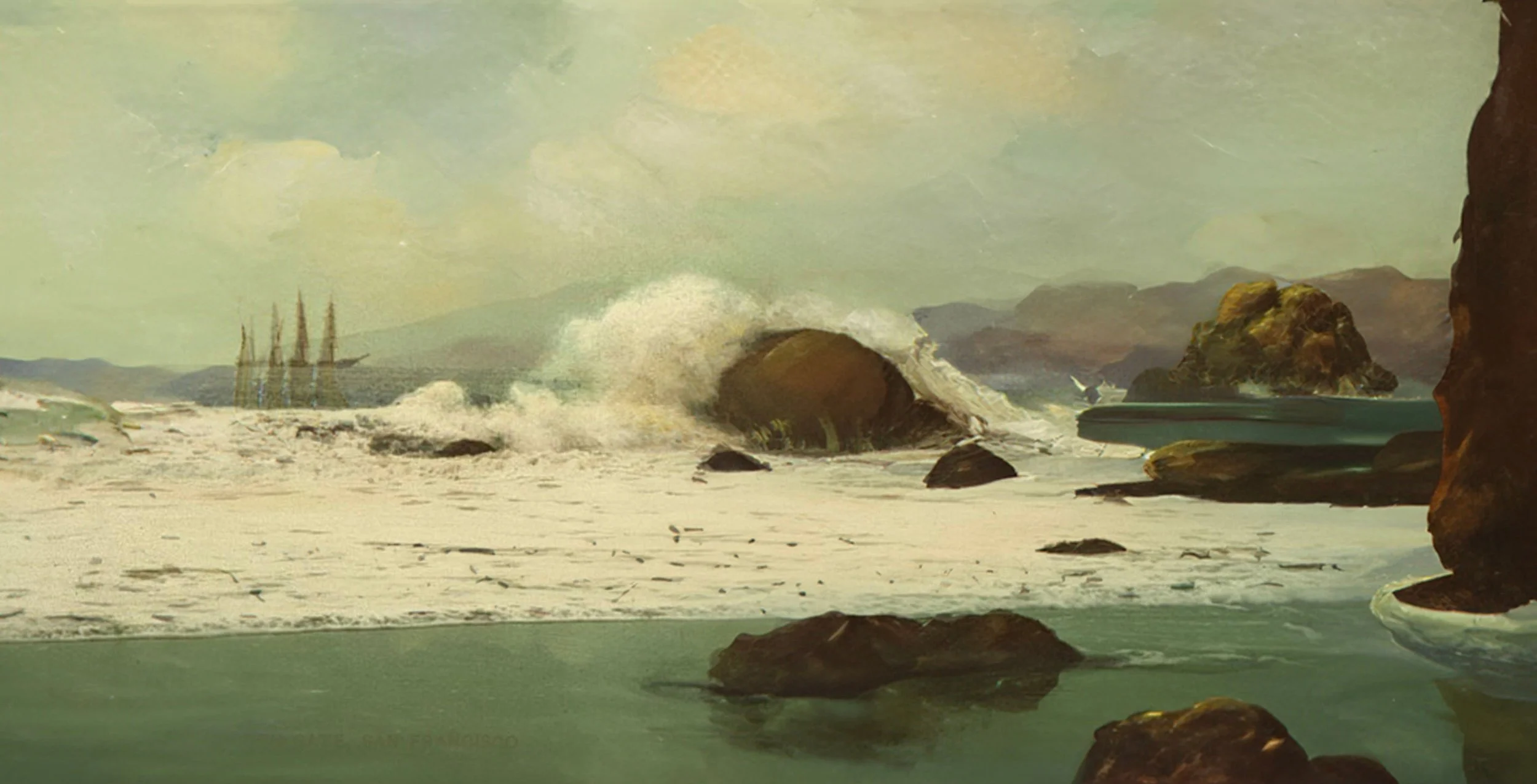
Storm Over the Sea © Mahshid Gorjian
What led you to work across both traditional media and digital visual forms?
I see traditional and digital media as complementary rather than separate. Traditional media grounds my work in physicality, gesture, and material memory, while digital tools allow me to explore precision, repetition, and spatial complexity. Working across both gives me flexibility to choose the most appropriate medium for each idea and to move between intimate, tactile processes and large-scale or highly detailed digital production.
How do personal, cultural, and societal narratives influence the themes in your work?
My work is deeply informed by lived experience, particularly as someone navigating cultural displacement, memory, and identity. Personal narratives often intersect with broader societal structures such as gender roles, migration, and representation. Rather than illustrating specific stories, I aim to create visual spaces where these layered narratives can coexist and resonate with diverse audiences.
Identity, femininity, and cultural memory are central to your art, as you mention in your statement. How do you approach expressing these ideas visually?
I approach these themes through symbolism, atmosphere, and the body, often fragmented, abstracted, or recontextualized. Femininity and identity are not presented as fixed categories but as evolving conditions shaped by history, culture, and space. Cultural memory appears through repetition, texture, and references that are intentionally subtle, allowing viewers to engage emotionally rather than through literal interpretation.
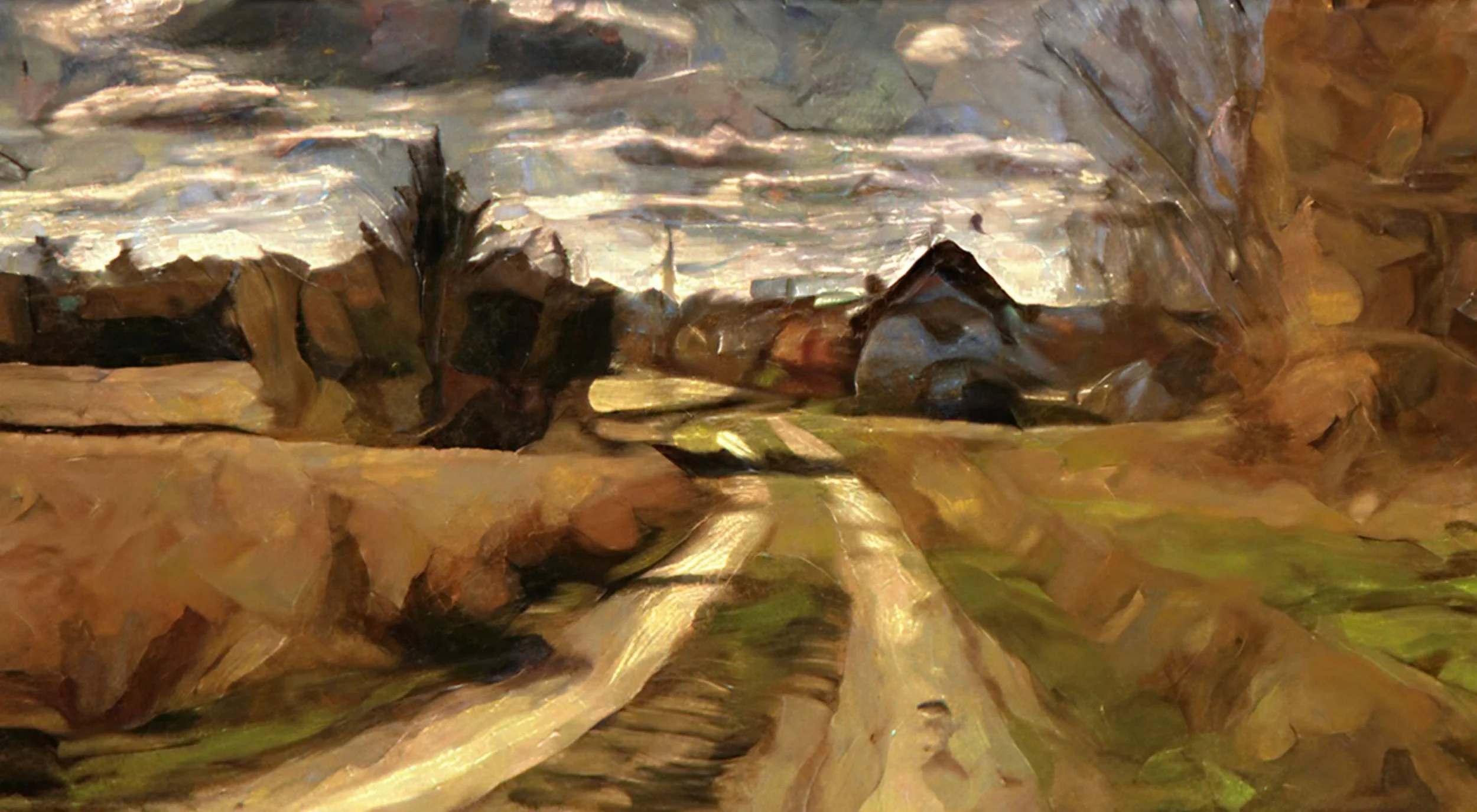
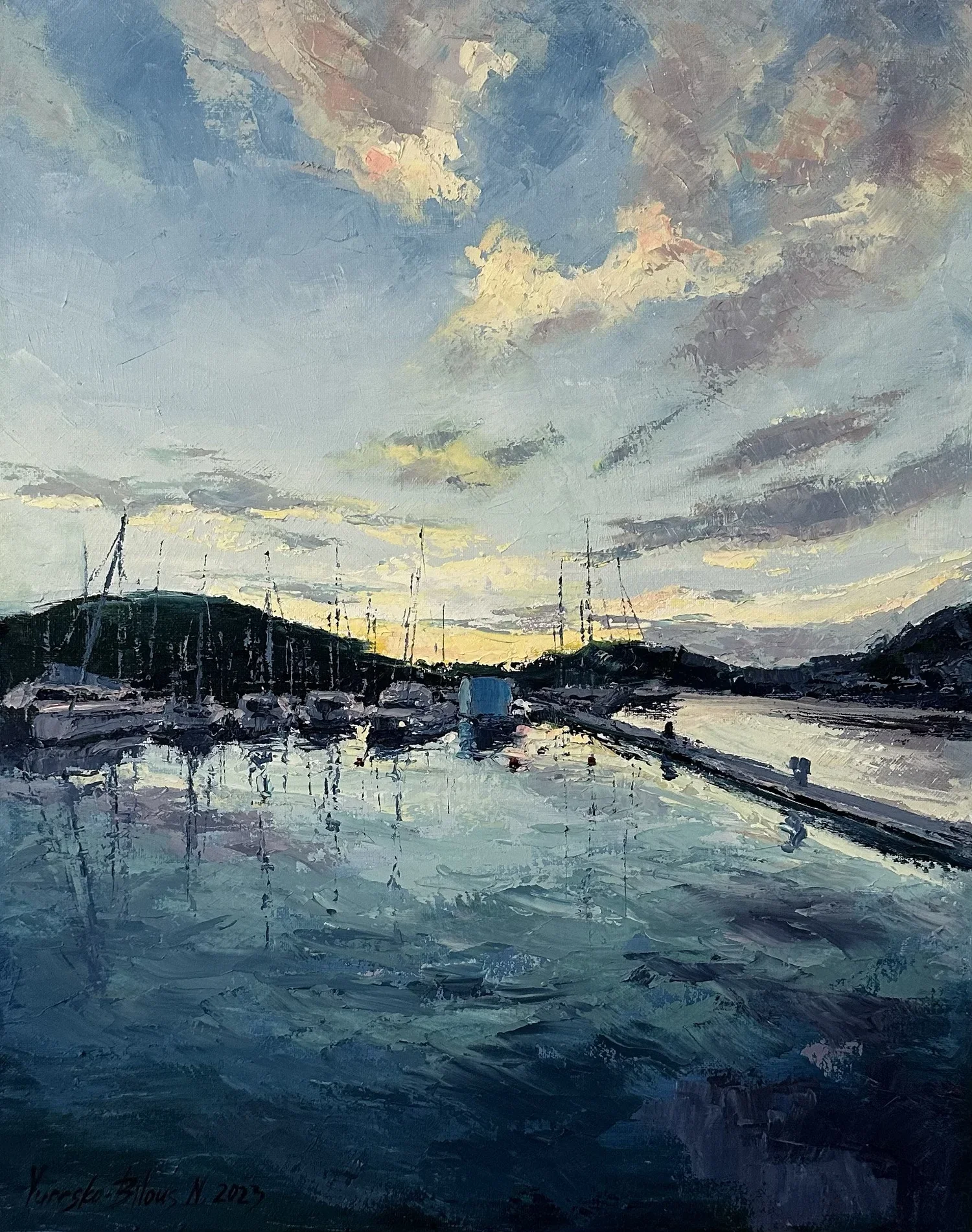
Rustic Pathway Under a Dramatic Sky © Mahshid Gorjian
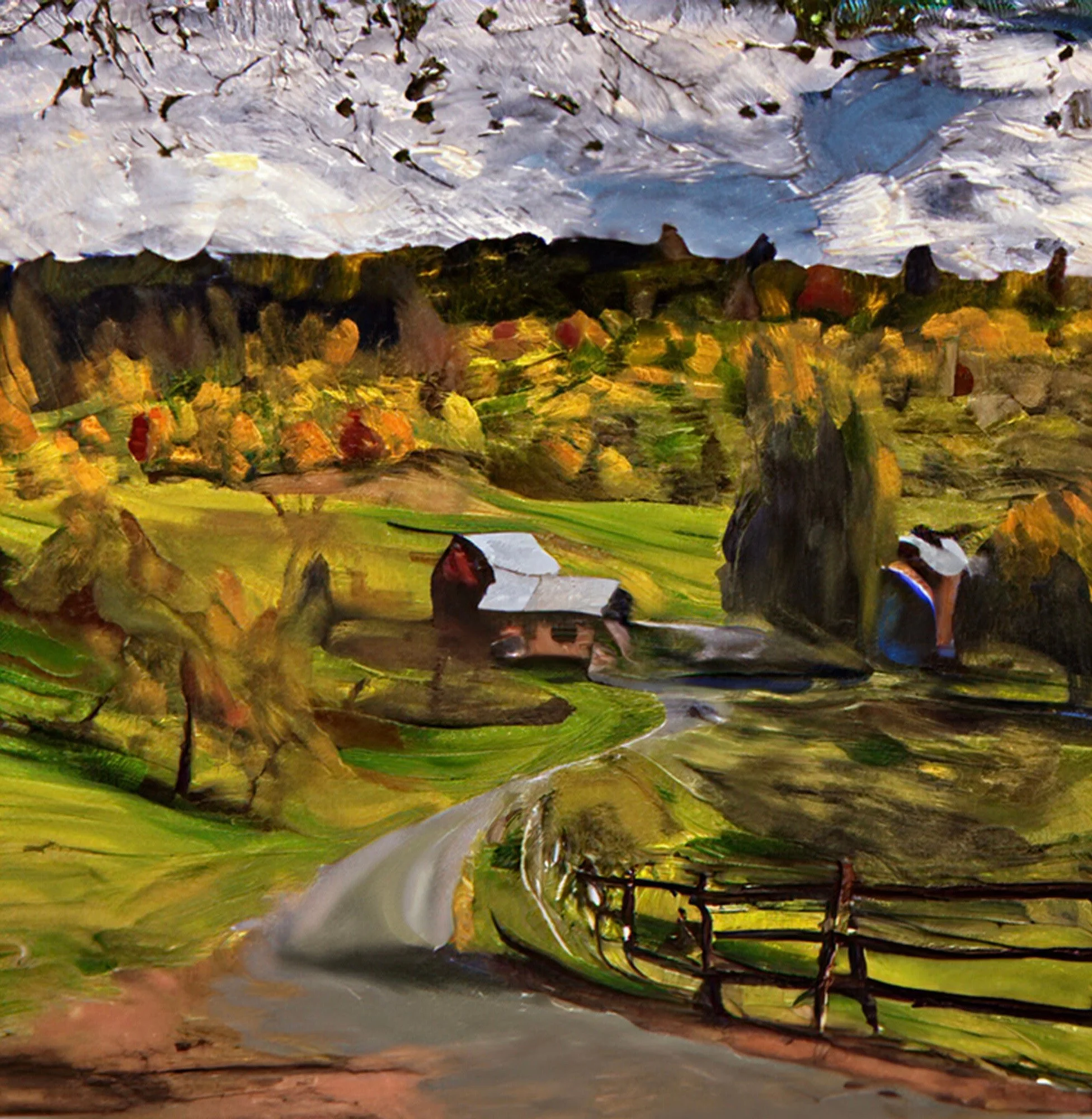
Autumn Serenity © Mahshid Gorjian
Can you describe your creative process, from concept to final artwork?
My process usually begins with research and reflection, writing, sketching, and collecting visual references. From there, I experiment through drawing or digital modeling, allowing the work to develop gradually. I move back and forth between planning and intuition, refining form, composition, and spatial relationships until the work reaches a point of conceptual and visual clarity. The final stage often involves careful technical refinement, especially in digital works.
How do digital tools help you expand the possibilities of your artistic expression?
Digital tools allow me to work with scale, precision, and complexity that would be difficult to achieve otherwise. They support layered storytelling, spatial experimentation, and the creation of immersive or highly detailed imagery. Importantly, they also enable wider dissemination, allowing my work to reach audiences beyond physical exhibition spaces.
Public engagement and accessibility seem important in your practice. How do you reach audiences through your work?
I prioritize public access by sharing my work through juried exhibitions, international publications, and digital platforms. This approach allows the work to circulate across different cultural and geographic contexts. I am also interested in formats such as interviews, collaborative projects, and educational dissemination, which help situate the work within broader conversations rather than isolated art spaces.
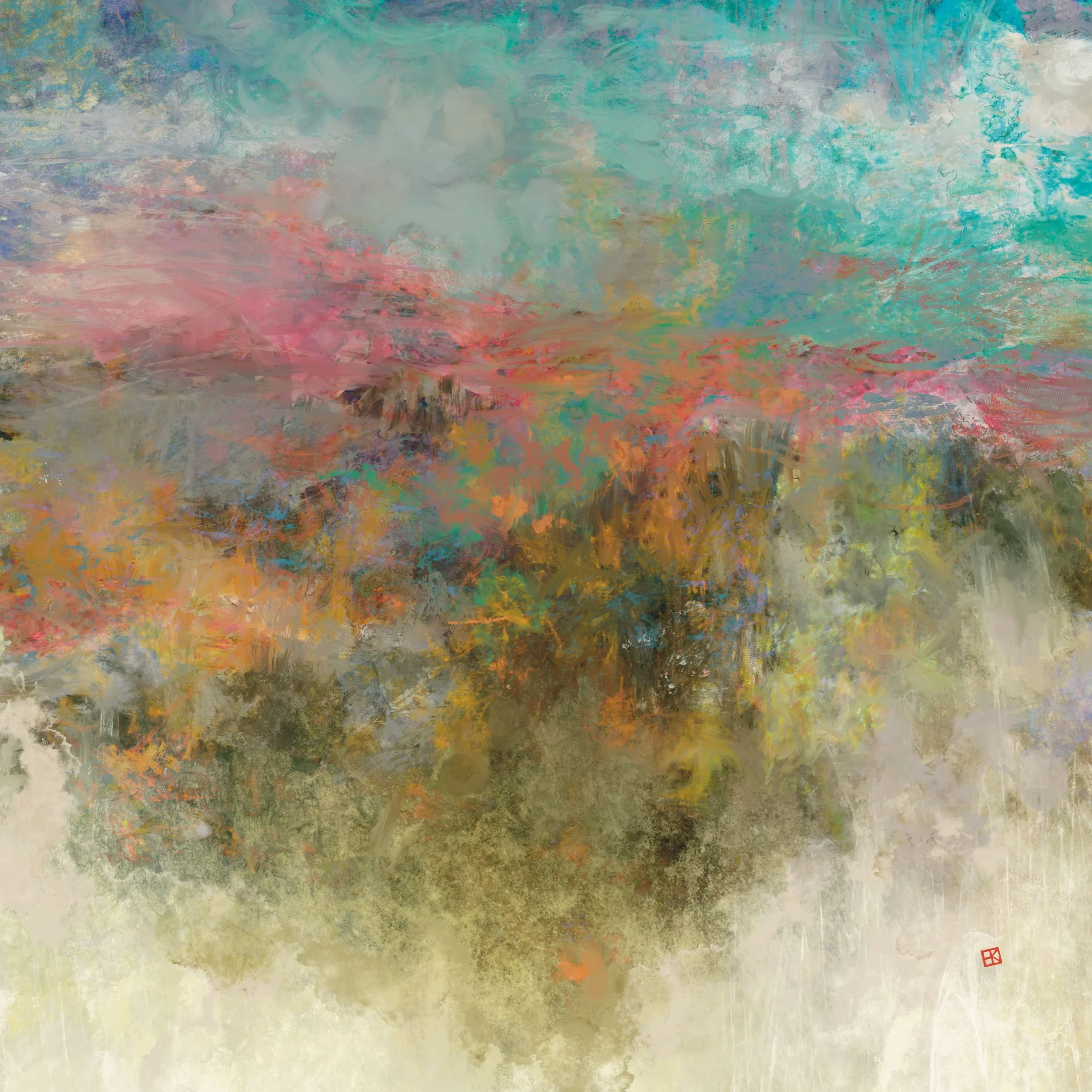
Echoes of the Sea © Mahshid Gorjian
How does your academic research influence the way you create and think about space in your art?
My doctoral research in spatial analysis and urban studies has significantly shaped how I think about space, structure, and visual organization. It has heightened my awareness of how environments, both physical and symbolic, shape experience and perception. This influence appears in my attention to spatial composition, layering, and the relationship between bodies, environments, and systems within my artwork.
And finally, are there any upcoming projects, exhibitions, or collaborations that you are particularly excited about?
I am currently focused on continuing my independent artistic production alongside academic research, with several works in development for upcoming juried exhibitions and publications. I am particularly excited about opportunities that involve cross-disciplinary collaboration and public-facing platforms, where art can engage directly with cultural dialogue and reach wider audiences.
Artist’s Talk
Al-Tiba9 Interviews is a promotional platform for artists to articulate their vision and engage them with our diverse readership through a published art dialogue. The artists are interviewed by Mohamed Benhadj, the founder & curator of Al-Tiba9, to highlight their artistic careers and introduce them to the international contemporary art scene across our vast network of museums, galleries, art professionals, art dealers, collectors, and art lovers across the globe.



David Moješčík - MojDa is a Czech sculptor. His work is centred on figurative sculpture, the human body, and the female figure. Modelling in clay and with digital tools, he ultimately prioritises manual engagement with materials. . He draws inspiration from yoga philosophy with the concepts of non-violence and human-centeredness, as well as from Egyptian, ancient, and European classical sculpture.