
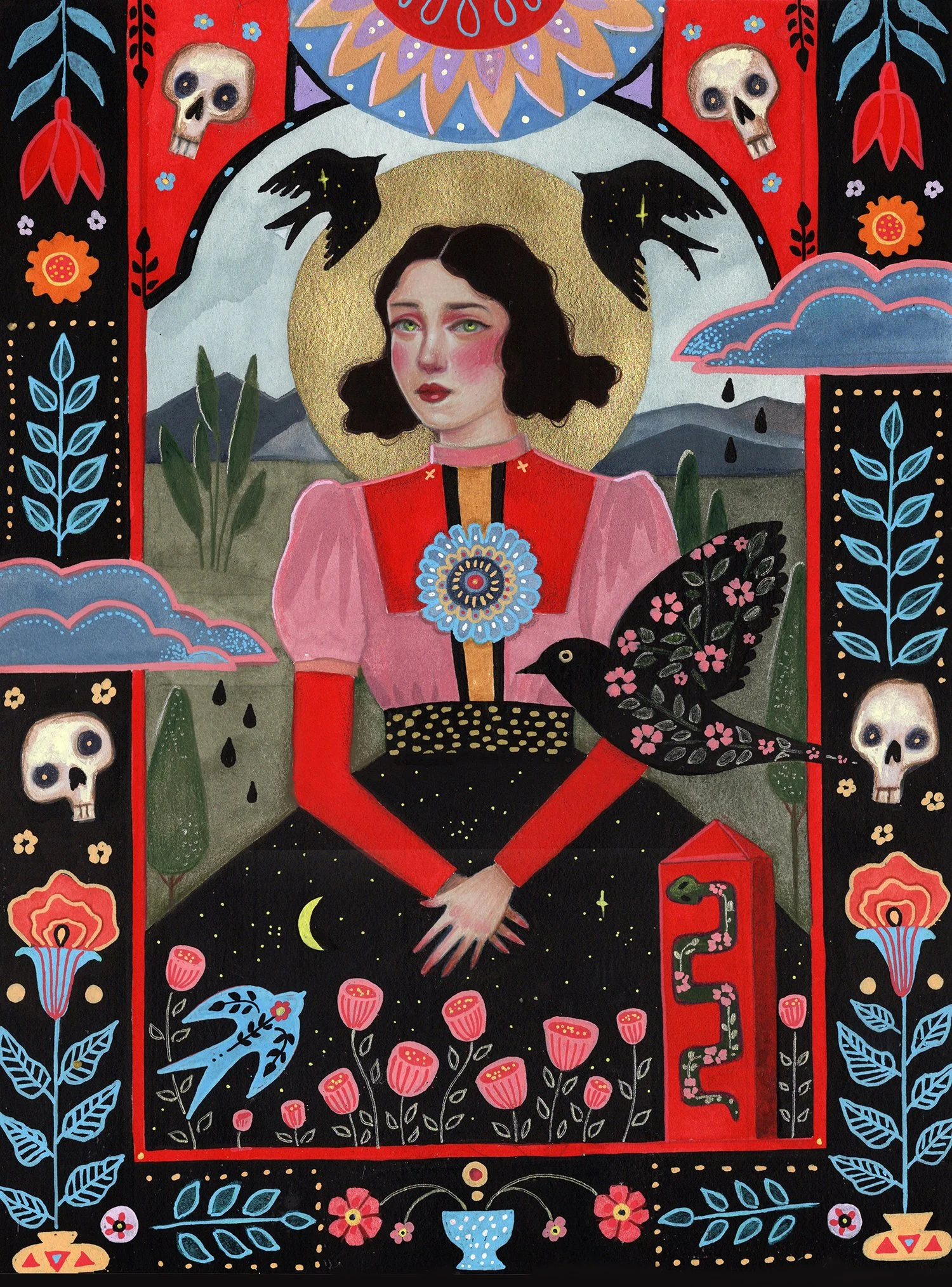
10 Questions with Aunia Kahn
Aunia Kahn is a contemporary artist and curator working across gouache, acrylic, colored pencil, and dimensional mixed media, creating layered compositions that weave personal narrative with rich cultural symbolism.
Recognised as the originator of Contemporary Symbolist Folk, a lineage rooted in symbolic depth and personal mythos, Kahn draws from French Canadian, German, Polish and Scandinavian folk traditions, Pre-Raphaelite and Surrealist lineages, and the natural world to create a visual language entirely her own. Her paintings explore sanctuary, transformation, and the threshold between life and death, articulated through a recurring iconography of women, animals, and nature, rendered in a saturated palette and dense ornamentation evocative of folk textile and decorative traditions. Having lived through years of life-threatening illness, Kahn approaches this liminal space not as abstraction but as personal terrain, giving her work a rare emotional authority.
Her work has been exhibited at the San Diego Art Institute, St. Louis Art Museum, Contemporary Art Museum St. Louis, Thinkspace Projects, Modern Eden Gallery, and Harman Projects, among others across 10 countries. She has curated national and international exhibitions and has been featured in Create! Magazine, Beautiful Bizarre Magazine, and Prevention Magazine, as well as various online platforms including My Modern Met, Colossal, Booooooom, Yahoo, and Authority Magazine.
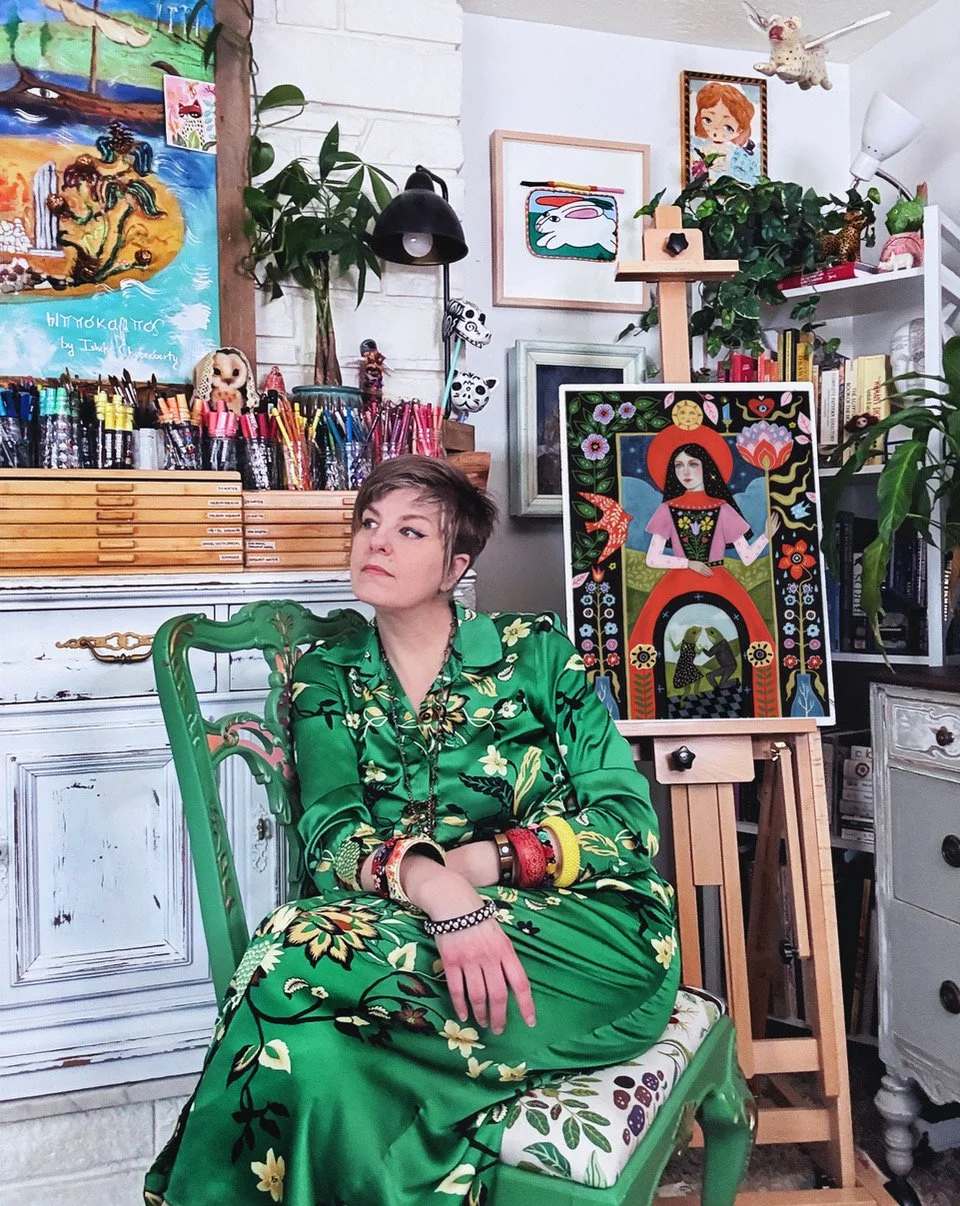
Aunia Kahn - Portrait in her studio
INTERVIEW
First of all, could you tell us a little about your background and how you first found your way into art?
Becoming a professional artist was an accident. Like most kids, I loved to create. I painted, built things, wrote songs, but I never thought of it as a career. It honestly never occurred to me that creative fields were even an option.
When I first thought about what I wanted to do with my life, I wanted to be a surgeon or a therapist. I wanted to help people who were sick or struggling. I grew up in an unsupportive, often cruel home, and my instinct was always to figure out how to help someone else live a better life.
In college, I got very sick and had to drop out. Art became my salvation. It was private and dark, a kind of visual journal, a way to process what I was going through as my health kept declining. Traditional mediums made me sick and risked life-threatening allergic reactions, so for almost two decades I worked exclusively as a digital artist. I was so grateful to have a way to keep creating through all of it.
Then my friend Roger suggested I try entering art exhibitions. It was terrifying, but I figured why not, because I felt I had nothing to lose. I started getting accepted and winning local and regional awards. My work ran darker than what some audiences wanted, and I got backlash for it. Some pretty harsh things were said, and at times I overheard them because I was in the vicinity, and people did not know who I was at the time. That pushed me to look at galleries outside my state, not for growth exactly, but for places that would actually accept the work. That decision led to a 20-year career showing in galleries and museums across North America, Europe, and Asia.
Beloved Ghosts in the Sanctuary of Memory, Gouache, 9x12 in, 2025 © Aunia Kahn
Your work draws from French Canadian, German, Polish, and Scandinavian folk traditions, as well as Pre-Raphaelite and Surrealist art. How have these different influences shaped your visual language?
For the majority of my career, my art was focused on survival and a visual language that did not integrate culture. Part of the reason I avoided culture growing up was because of the strange and intense childhood I had. I spent a lot of time distancing myself from my cultural roots. I have, however, always been inclined toward the Surrealists and the Pre-Raphaelites, which can be seen in my art across those two decades.
However, a few years ago I finally got a diagnosis and medications to support my illness and was able to move away from digital art into gentler mediums like watercolor, gouache, and colored pencil. In that, I started to try to recreate my digital work in traditional mediums, and it was just terrible. It just felt like I was trying to mold myself into what everyone knew, when really, being able to work with traditional mediums helped me push into new territory and explore my desire to play and experiment. But I had built a career with collectors, galleries, and fans that I was concerned about alienating.
I went back and forth for a few years, doing what I was known for and getting support, and then going way out in left field and losing collectors, galleries, and fans in large amounts. It was quite destabilizing to my career, and after two years of this behavior, I decided it was time to make a choice. Either go all in and explore and enjoy my life as an artist, or forget it altogether and do what people expected of me.
My choice was joy. I did not want to do what people knew me for; I wanted to explore what I loved! My life is filled with color, my home is filled with art and colorful things, like a small personal art gallery. My husband and I love to collect art from artists and odd things, yet my work was pretty much portraiture with not a lot of the narrative elements I was drawn to. Then one day I started to ponder where all this was coming from, where my love for pattern, colors, art, dolls, and fiber art came from, and I realized it grew from grandparents who embraced their culture. The grandparents that most impacted my visual language were the ones who were German and Polish.
It's funny because family members would make fun of their eccentric home, but it was like the most magical thing to me. Once I started to explore that, I realized that I needed to put everything I love into one type of art. I could not be fragmented anymore, and that is how my Contemporary Symbolist Folk style was born, out of exploring roots, taking back what I lost, and letting everything I love come to life through visual art, and more than anything, joy. I had lost the joy in art making for so many, too many years.
You work with gouache, acrylic, colored pencil, and dimensional mixed media. What attracts you to these materials, and how do you decide which ones to use for a particular work?
The attraction comes from safety. Because I am highly allergic to most mediums, as well as 90% of foods and other things, my choices for mediums are limited. However, I have always been a fan of the mediums I can now work in. I love the flatness of gouache. As for acrylic, it is only a small part of my work because it is more dangerous than water-based mediums. Colored pencils have been my love since I was a kid. As for dimensional mediums, I love the tactile ability to create 3D sculpture or add dimension to my work. I think I am drawn to them as an artist and collector because of having to work as a creator behind a computer screen for so long. That makes things very flat, and you lose some of the feeling, which I love so much.

Where Dreams Touch The Waking World, Gouache, 8×10 in, 2025 © Aunia Kahn

Between Earth and Ether Rain Becomes Stars, Gouache, 11×14 in, 2026 © Aunia Kahn
Your paintings are highly layered and detailed. Could you walk us through your creative process, from the first idea to the finished piece?
I work from intuition. I don't start with an idea at all. I just start with a form, a human or animal character or both. Then I start building worlds around it. Of course, the border is a large part, and I love to have the symbolism moving in and out of the depth of the work, meaning that sometimes the border pieces stay in the border, and other times they move into the central figure's world. I love the idea of thresholds and two or more worlds unfolding into one another, like a dream.
Women, animals, and elements of nature appear frequently in your work. What do these recurring figures and symbols represent for you?
Often, women just signify the human body, the existence of life. One of my biggest inspirations is birds. They are so free. I was housebound and locked in for many, many years of my life, so the freedom of birds is so important to me, as well as other animals. They have been a place of safety and security because they don't judge you; they just love you for who you are. Nature has always been a place of safety as well for me. I spent a lot of time playing outside and would stay outside as long as I could until I was forced to come home for dinner. I loved making tree forts, climbing trees, and making mud soup. I loved collecting rocks, and also loved growing up in Michigan because I was always on the lakes, picking up Petoskey stones and shells.
You describe your practice as Contemporary Symbolist Folk. What does this term mean to you, and why was it important to define your work in this way?
Contemporary Symbolist Folk breaks down into three parts, and each one means something specific in how I work. The "contemporary" part is important because it separates what I do from traditional folk art. I'm not working within an inherited cultural practice passed down through community and craft; I'm authoring my own symbols as a working artist today, choosing and layering them myself rather than continuing a tradition someone handed to me. However, I am still pulling from my own culture; it's just filtered through my own invented symbolism rather than reproduced as it was passed down to me.
And the "symbolist" part is what that visual language is doing underneath the surface. It's dreamlike and mythic rather than literal; I'm not illustrating a scene, I'm building a world where each element, a bird, a border pattern, a threshold between two worlds, carries its own weight of meaning. Birds represent freedom because I spent so much of my life housebound. Borders and thresholds represent the movement between worlds, safety and exposure, the seen and the hidden. Together, the folk vocabulary and the symbolist meaning let me build images that feel both familiar, like folklore, and deeply personal, like a dream.
I did not feel it was important to define the work; the strange thing is it just happened. Someone asked me to explain it, and then it came together as one visual language. Similar to my clothing, home, world and art. It just felt right.

The Impossible Physics of Staying Whole, Gouache, 9x12 in, 2025 © Aunia Kahn

The Holy Act of Refusing to Be Only One Thing, Gouache, 11×14 in, 2026 © Aunia Kahn

The Passage Between What Was and What Will Be, Gouache, 9x12 in, 2025 © Aunia Kahn

She Wore the Earthquake Like a Crown, Gouache, 9x12 in, 2025 © Aunia Kahn
Themes of sanctuary and transformation are central to your practice. What does the idea of sanctuary mean to you, and how does it appear in your paintings?
I think it's because I grew up in a challenging home, and then got sick for the majority of my life. I'm still working through it, although fairly stable now, and that's why I am always so focused on sanctuary. A place to feel calm, a place to rest, a place to work through the challenges, a place to be free and open to the ups and downs of life. We all have to deal with the good and the bad, and having a place or person(s) that feels like sanctuary is so important.
Your experience with serious illness has influenced the way you approach themes of life, death, and transformation. How has this personal experience changed the way you understand and make art?
It is interesting because as much as I don't want to talk about illness and wish that it would not be a part of my story, I have realized over the last few years that it just is a part of the story. It has been part of my life for as long as I can remember, in some capacity. I think people make art for many reasons, and even now, also with the internet, there is an even bigger desire to do art, or anything really, that gets you likes and gets you seen. For me, it came from a place of needing to escape. When I make art, the world goes away, and I am sucked into a place of forgetting how I am feeling when I am not feeling good. Art again was salvation, and over the years there was a lot of pressure that took away from that.
A lot of my work became shaped by the audience and their response, and that is why, once I was finally able to work in traditional mediums after all those years, exploring the root of my art-making became a big part of my process. If I was unhappy making art and felt pressure, it lost meaning for me in totality and was not worth it. So I gave it up, did a 180 to focus on joy and exploration, and it led me down the road I wish I had travelled 20 years ago. Hindsight is 20/20, but I am so glad to return to a place that I am happy with, even if no one ever saw my work again.
You also work as a curator and have organized exhibitions in different contexts. How does curating influence the way you think about your own practice and the wider art world?
I curate our home, exhibitions, and book projects, which is so much fun. When people visit our home, they always ask if they can just walk around and look at everything. For others, it might be a lot, but for us, it is little pieces of artists' souls and historical items that we just love to surround ourselves with. I started about 20 years ago, really becoming a serious collector, partially because I love art, but also being locked in my home so much I needed to make it beautiful. My first art purchase was when I was 8 years old at a local craft shop, it was a little clay dog. I still have it.
I got into curating exhibitions, which started locally where I was living, because I wanted to do a show that was powerful and had meaning. So I curated Darkest Dreams, A Lighted Way (2008) at Fort Gondo, St. Louis, MO. The exhibition focused on deeply personal, emotional themes, specifically showcasing artists who used their work to process trauma, survival, and abuse to help and inspire others. I pulled in local and national artists, and after that event, it only pushed me further into my love of curating when it came to working with artists.
As an artist myself, it is such a great honor and pleasure to see the magic artists create when curating a show or book project. As each piece comes in, it really does just feel like magic. There are no words to describe the feeling of watching a show come together and seeing all the artists putting their soul and talents into pieces. For me, when being invited to a show someone else is curating, I know the energy it takes to put on a show, come up with ideas, and get it all orchestrated into a solid project, and to then present it to the world cogently.
So for me, I am always very intent on meeting deadlines and following all the protocol, so as not to create more complexities for them, because there are a lot of pieces and parts and people to balance to make things come to life.
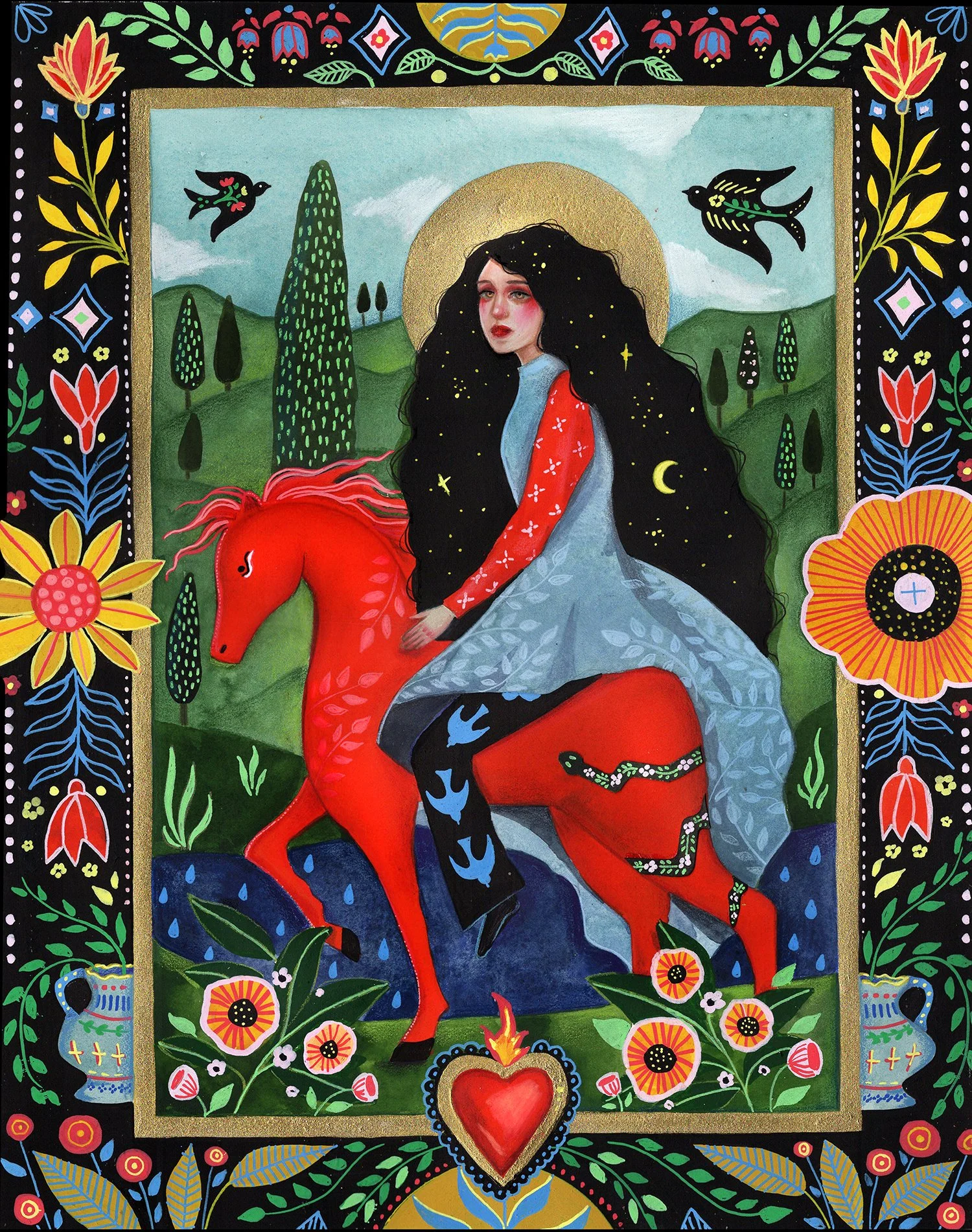
Historical Altar Of One’s Own Becoming, Gouache, 11×14 in, 2025 © Aunia Kahn
Lastly, looking ahead, what new ideas, themes, or directions would you like to explore in your upcoming work?
With this newer work, the last year for me has been filled with more ideas than I could ever get down on paper. Before that, I had to work so hard to come up with ideas. It was painful, but now the inspiration runs wild. I think with my home and way of life and everything I love finally being in one place, it is endless. You asking me this just makes my head spin with paragraphs upon paragraphs of things I would love to do, but I won't bore you.
Right now I am working towards my solo at Thinkspace Projects, and that is an exciting focus because it will be the biggest solo show of my career and the first with this new body of work. I can't wait. I have such immense excitement with my work, and I am so grateful for all the opportunities coming to me right now. I also had a small handful of other really exciting things that I can’t mention yet, but they are coming soon.
Artist’s Talk
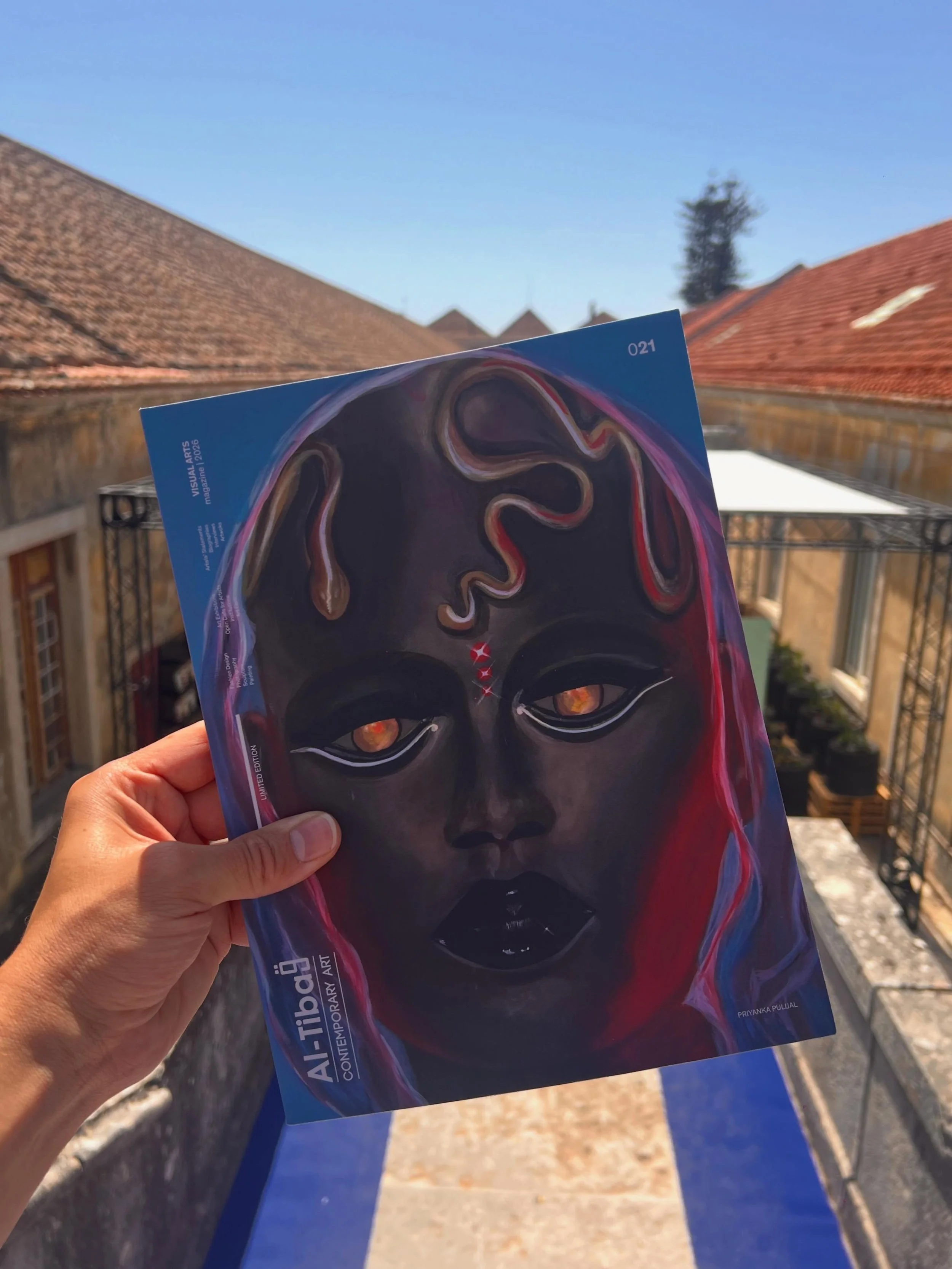
Al-Tiba9 Interviews is a curated promotional platform that offers artists the opportunity to articulate their vision and engage with our diverse international readership through insightful, published dialogues. Conducted by Mohamed Benhadj, founder and curator of Al-Tiba9, these interviews spotlight the artists’ creative journeys and introduce their work to the global contemporary art scene.
Through our extensive network of museums, galleries, art professionals, collectors, and art enthusiasts worldwide, Al-Tiba9 Interviews provides a meaningful stage for artists to expand their reach and strengthen their presence in the international art discourse.


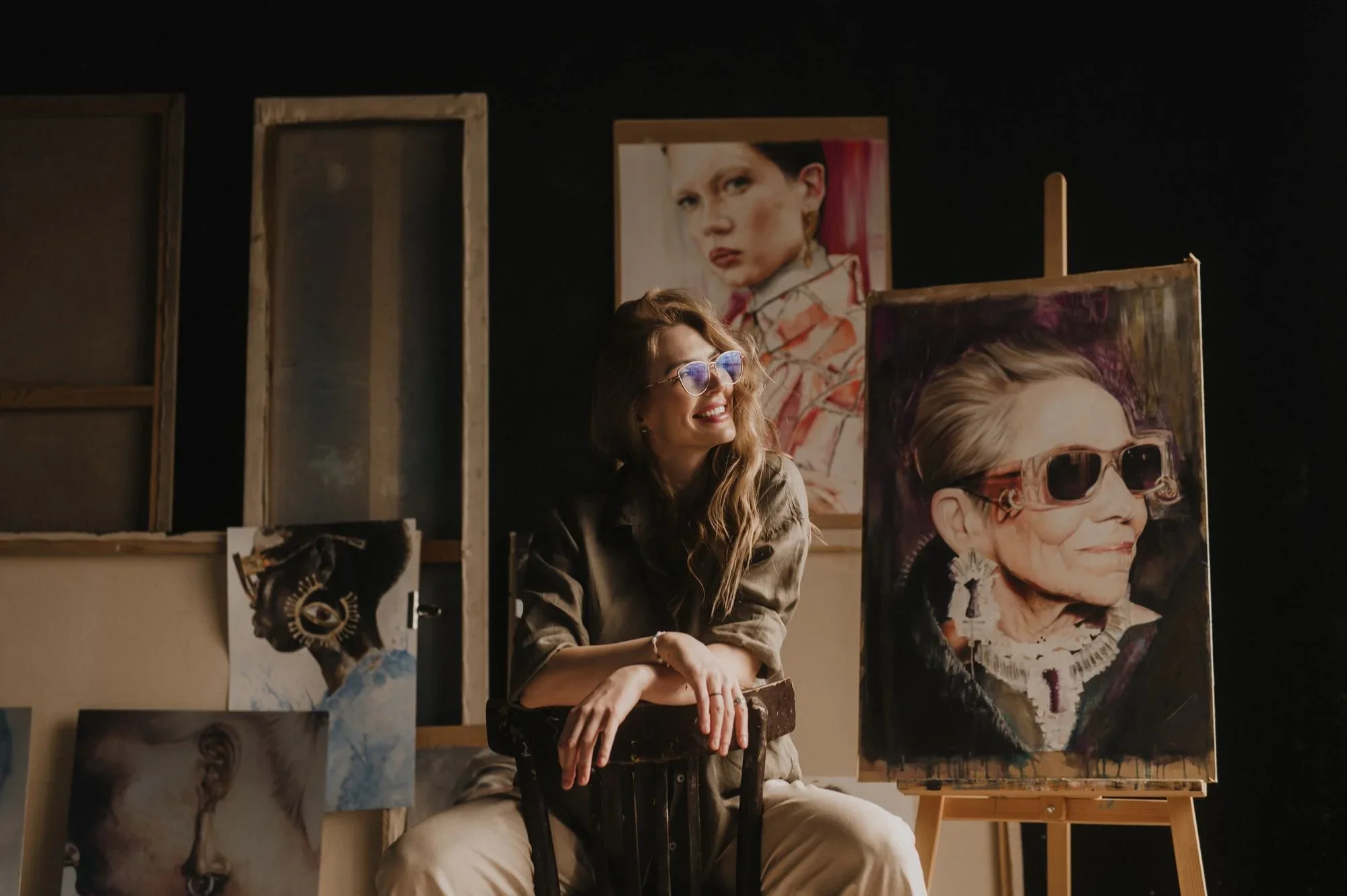

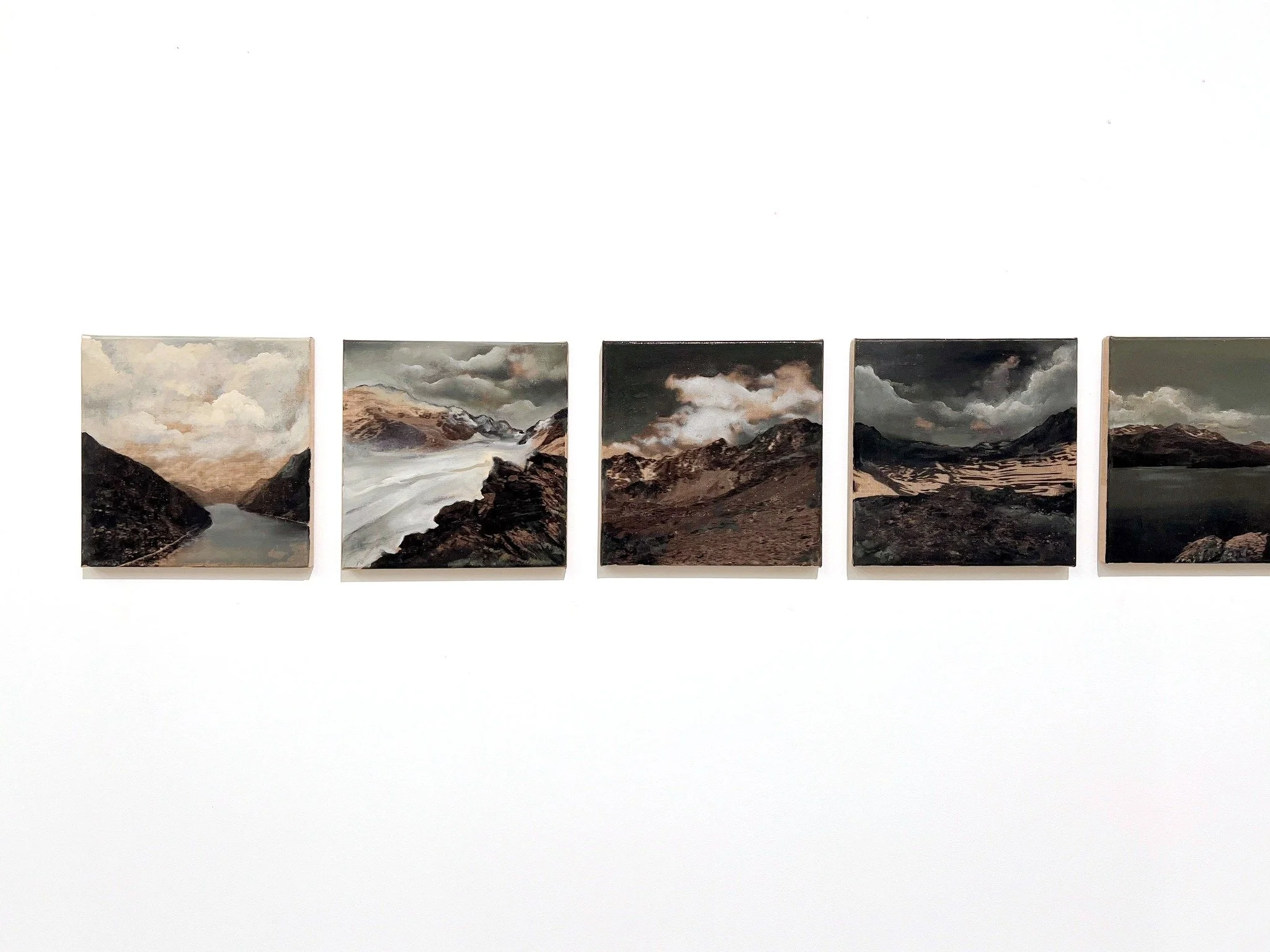
Raya Mansoor is a contemporary artist from the Maldives whose practice moves between abstraction and expressionism, shaped by island life, personal memory, and observation. Working primarily with acrylic and oil on canvas, she builds layered compositions through colour, gesture, and forms drawn from the natural and everyday world around her.