
10 Questions with Zhen Wei
Zhen Wei is an artist living and working between Los Angeles and Xiamen. She received her MFA in Fine Arts from Claremont Graduate University in 2023. Working primarily with oil and cold wax on paper, alongside acrylic, photography, and installation, she translates fleeting urban scenes, skies, clouds, reflections, and in-between views into images that hover between observation and daydream. Her dense, wax-laden surfaces compress time, holding traces of blurred motion and the soft afterglow of city light. Rather than grand narratives, Wei dwells on ambiguous, easily overlooked pauses in everyday life, moments when attention slips and the world feels distant yet strangely present.
Her work has been presented at Peggy Phelps & East Gallery, the Sasse Museum of Art, Verum Ultimum Art Gallery, A60 Contemporary Art Space, and AMACI in Milan, as well as in BOOKS, il festival dedicato ai libri d’arte e d’artista at MAMbo – Museo d’Arte Moderna di Bologna, organized by A60 International Art. Wei received the President’s Art Award from Claremont Graduate University in 2023 and has been recognized in several international juried competitions, including a Finalist Award in TERAVARNA’s 2025 International Juried Art Competition Water, a Special Merit Award in Light Space & Time Online Art Gallery’s 7th Primary Colors Art Exhibition, and an Honorable Mention in Grey Cube Gallery’s Blue Art Show. Her work was also featured in Annuario d’Arte Contemporanea Cina–Italia 2022 and its related artist-book program.

Zhen Wei - Portrait
ARTIST STATEMENT
Flight Mode emerged from the visual fragments Zhen Wei repeatedly captures while in transit: passing views outside a bus window, fogged glass surfaces, shifting lights, traffic signals, and clouds seen from an airplane. These images are often incomplete and unstable, suspended in a state of blur, drift, and uncertainty. It is precisely this sense of indeterminacy that continues to draw her in.
These works extend her ongoing interest in “in-between moments.” In daily life, people are constantly propelled forward by one task after another; time is divided, attention is repeatedly called upon, and pressure quietly accumulates beneath the surface of routine. Yet during transit, the body is already in motion, already being carried from one place to another. In that interval, there is a brief suspension from the immediate demands of the outside world. It becomes a transitional space between departure and arrival, and a temporary gap in the order of everyday life.
For Wei, Flight Mode refers not only to a physical state of travel, but also to a permitted disconnection. Much like switching a phone to flight mode on an airplane, it offers a legitimate reason to cut off contact with the outside world for a moment and return inward. In these moments, she finds what feels like a temporary safe house: the body remains in transit, while consciousness quietly withdraws into a more private and interior space. There, one does not need to receive, respond, or process, but can simply remain alone with oneself.
While this series shares a certain drifting perceptual quality with her earlier Daydream Bubbles works, Flight Mode is more specific and more closely tied to her present experience. Rather than depicting a fixed place, these works hold onto pauses that occur in motion, moments when external reality has not fully arrived, and the inner self has already begun to recede. They do not attempt to prescribe a single interpretation, but instead leave space for viewers to enter through their own experience.
Wei continues to work with oil and cold wax on paper because these materials carry qualities deeply connected to time, ambiguity, and accumulation. Wax can conceal, build up, and be scraped away; it also compresses over time and gradually becomes more transparent. Its viscosity, softness, and shifting surface allow her to approach the slowed, suspended, and not-yet-nameable sensations contained in these fleeting moments.
Window 01, Oil on paper and cold wax, 12.5x16 in, 2022 © Zhen Wei
INTERVIEW
First of all, you live and work between Los Angeles and Xiamen. How do these two environments shape the way you see and paint the city?
For me, Xiamen is a city whose transformation has unfolded alongside my own life. Its development and urbanization allowed me to witness, very directly, how human traces gradually reshape what we call everyday space. In this sense, the city is not something opposed to nature. It becomes the default landscape, an environment that is simply always there, almost like air. In addition, Chinese cities often grow vertically, and that density and momentum have shaped my basic experience of the urban environment.
In Los Angeles, because of my cultural background, I look at my surroundings with a slight outsider’s perspective. That distance allows me to notice small but meaningful details that might otherwise slip by. When I am not constantly propelled forward by familiar social networks and tightly packed schedules, I can step back and observe the overlooked parts of the city more clearly.
Moving between these two places has also made me realize that the similarities between cities are often greater than their differences. Viewers frequently read my paintings through their own familiarity and sometimes feel sure that what I painted is a specific place they know, even when the work is not tied to one exact location. For me, this has been an important discovery. Contemporary urban life often shares a common structure of seeing and experiencing, which allows these images to resonate across different contexts.
You completed your MFA at Claremont Graduate University in 2023. How did that experience influence your current practice?
I grew up in the city, and for me, the urban environment is like air. It is always present, always surrounding us. Precisely because of that, when schedules, pressure, and tasks keep pushing a person forward, I can easily feel compressed by the momentum of daily life. I often long for a moment that allows me to step out, even briefly, from that forced forward motion.
The quiet, easily overlooked scenes I pay attention to are often the entry points of that “escape.” It is not a physical escape, nor a dramatic refusal of responsibilities, but a more internal and psychological withdrawal. I record these moments because the image becomes a kind of anchor. It holds an afterimage in my consciousness, and it allows me to return to that brief state of withdrawal and keep a connection to that inner experience.
At the same time, these scenes are also widely shared. They are ordinary, part of the everyday city experience that most people recognize, and for that reason, they can resonate across different lives. That overlap between a private withdrawal and a collective familiarity is what keeps drawing me back to these moments.

Wing, Oil on paper and cold wax, 19x24 in, 2022 © Zhen Wei
Your work often focuses on fleeting urban moments. What draws you to these quiet, easily overlooked scenes?
In daily life, I take many photographs. These images are not meant to document facts, but to capture the moment when I feel that inward shift and distance from the immediate world. After photographing, I usually do not go straight back to the studio and paint immediately. I leave the images for a while, after a pause, and then return to them.
That interval matters to me. It feels like moving from a first-person state into a more third-person position, so I can revisit what happened with more distance. I ask myself again: why was I drawn to that moment, what was I withdrawing from, and what kind of feeling do I want to hold onto?
When I begin painting, I first decide on the scale and structure of the composition, and consider what size best fits that inner state. As I move forward, I keep adjusting how the image should be carried. Which parts need to remain smoother and flatter, closer to a photographic surface, and which parts require a stronger physical presence through material and touch. Many of these decisions are not made in advance. They emerge through repeated attempts to return to the feeling itself.
Can you describe your process when translating a real-life observation into a painting?
Oil paint feels delicate to me. It can move between clarity and ambiguity, and sometimes it even carries a film-like quality: something that feels real, but never fully fixed. That suits what I want to preserve, because the moments I paint often sit between being present and drifting away.
I often paint on paper because paper carries a sense of temporality and lightness. Unlike canvas, it does not insist on permanence in the same way. It feels closer to a trace that briefly lands within everyday life, and that fits the kind of momentary sensation I am trying to hold.
Cold wax adds another layer that matters deeply to me. It is viscous and ambiguous. It can conceal and accumulate, and it can also be scraped back. Over time, it gradually hardens, thins, and becomes more transparent. Its changing relationship with time feels aligned with my own process: I photograph, I leave the image, and I return to it later with a different distance. The way wax shifts over time mirrors that transformation of memory and attention.
Oil and cold wax create very dense surfaces. What does this material allow you to express that other mediums might not?
For me, clarity and blur are not fixed stylistic choices. They are decisions that come from returning to the moment itself. What becomes clearer depends on what functions as the main point of connection for me. If a certain element, a streetlight or a signal, for example, brings me immediately back into the state of that moment, I may render it with more detail and definition.
Other parts of the image may be simplified, faded, or even left blank if they feel unimportant, unclear, or outside the emotional range of that moment. Blur and blankness are not “missing information” for me. They reflect how attention actually behaves in that state of withdrawal: what remains, and what naturally recedes into the background.

Fog, Oil on paper and cold wax, 24x19 in, 2023 © Zhen Wei
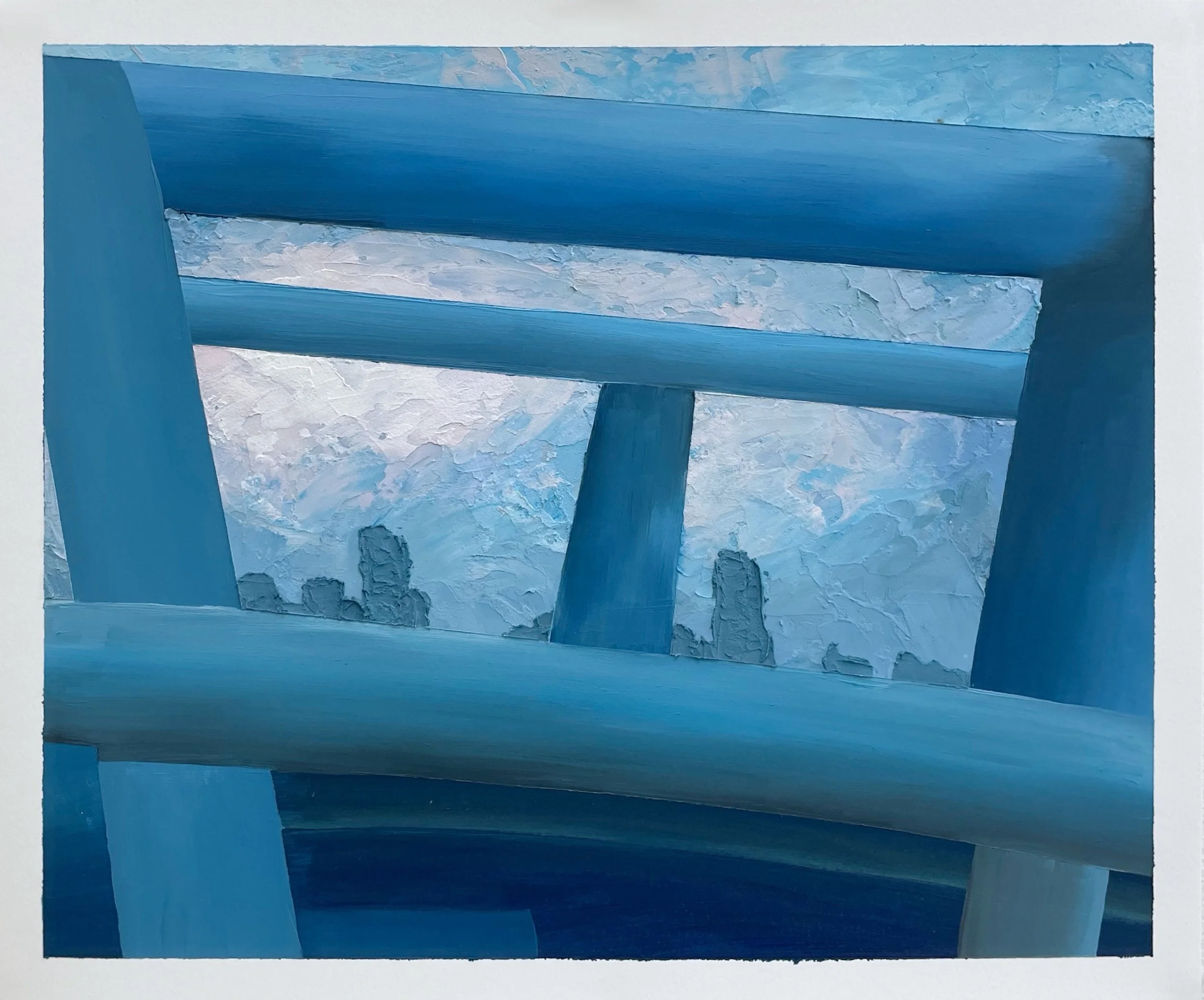
Window 02, Oil on paper and cold wax, 12.5x16 in, 2022 © Zhen Wei
Your images sit between clarity and blur. How do you decide what to reveal and what to obscure?
I am not always consciously trying to “construct” the feeling of compressed or suspended time. It often emerges naturally, because the moments I am trying to hold are already shaped by a slowing of time and a suspension of attention. When those moments enter the work, their sense of time tends to appear on its own.
I am happy that you noticed this, because it suggests that the core feeling is being received. For me, that suspended time is both visual and psychological. It corresponds to a brief pause and a temporary withdrawal, a moment when the outside world loosens its grip.
Time feels compressed in your work, almost suspended. Is this something you consciously construct, or does it emerge through the process?
At the moment, my practice is primarily centered on painting and photography. Photography is one way I capture moments, and it often becomes the starting point for a work. But I do not treat photography only as a source archive. Some moments are already expressed with enough precision through photography, and they do not necessarily need to be translated into painting.
Painting, in turn, shapes how I see and photograph. Through painting, I become clearer about the kinds of moments, relationships, and structures I am truly trying to hold, and that awareness feeds back into how I pay attention in daily life.
As for installation, I have explored it in the past, but not fully within this current thematic line. Looking ahead, I see installation as a direction I may develop further, because certain experiences may not be fully conveyed by a flat image alone. I am still thinking about how installation can connect more organically to the questions I continue to return to.
You work across painting, photography, and installation. How do these different media inform one another in your practice?
I have noticed that audiences with different backgrounds enter the work in different ways, but one shared and interesting response often comes up. Many viewers will confidently tell me, “I have seen this place, it is exactly here,” naming a specific location that feels familiar to them, even though the painting is not meant to correspond to one exact site.
I appreciate that kind of “misrecognition,” because it shows that viewers are not primarily searching for accurate geography. Instead, they are entering the work through their own memory and lived experience. The image triggers familiarity, a moment they have personally known. At the same time, some viewers focus more on technique and material, the layers, textures, scraping, and shifts of transparency, while others speak more about what they feel psychologically or emotionally in front of the painting.
Overall, the differences are not extreme, but this range of entry points makes me more confident that the work touches something widely shared in everyday urban life.

Traffic Light, Oil on canvas, 24x18 in, 2023 © Zhen Wei
Your work has been shown in different contexts, including the Sasse Museum of Art and MAMbo – Museo d’Arte Moderna di Bologna. Have you noticed different ways audiences engage with your work?
The questions that continue to guide my practice are rooted in those moments in everyday life when consciousness briefly withdraws. On the surface, these moments are ordinary and small, but they can carry an unexpectedly large inner weight. For me, the threshold between clarity and blur, and between being present and receding inward, remains central to how I think about image, attention, and memory.
In terms of form, I don’t see the work as limited to oil and cold wax on paper. I am interested in more varied ways of carrying out the same inquiry, including the possibility of extending the work into installation. In other words, the theme remains consistent, while the form can open into different spatial and material conditions.
Artist’s Talk
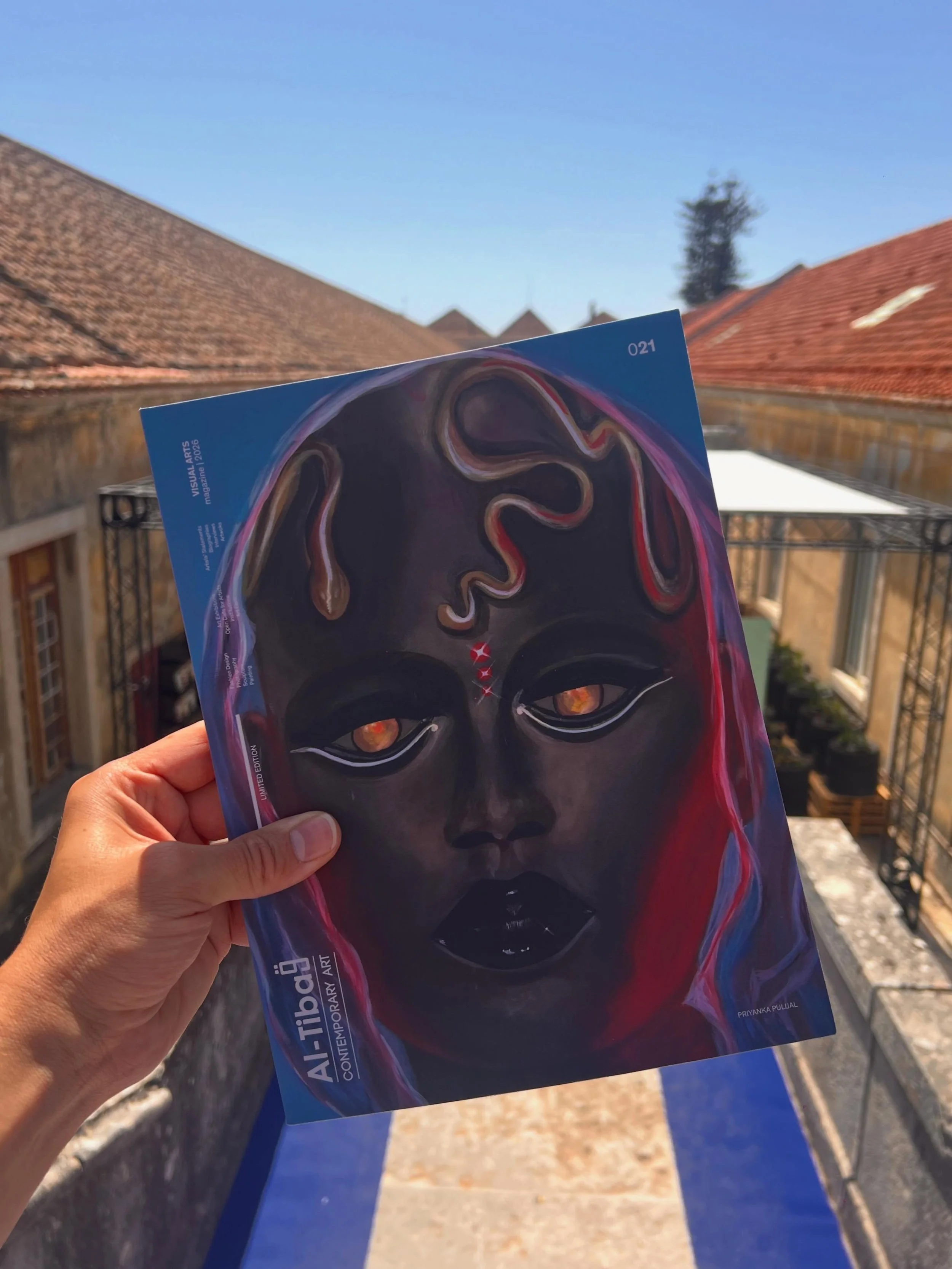
Al-Tiba9 Interviews is a promotional platform for artists to articulate their vision and engage them with our diverse readership through a published art dialogue. The artists are interviewed by Mohamed Benhadj, the founder & curator of Al-Tiba9, to highlight their artistic careers and introduce them to the international contemporary art scene across our vast network of museums, galleries, art professionals, art dealers, collectors, and art lovers across the globe.



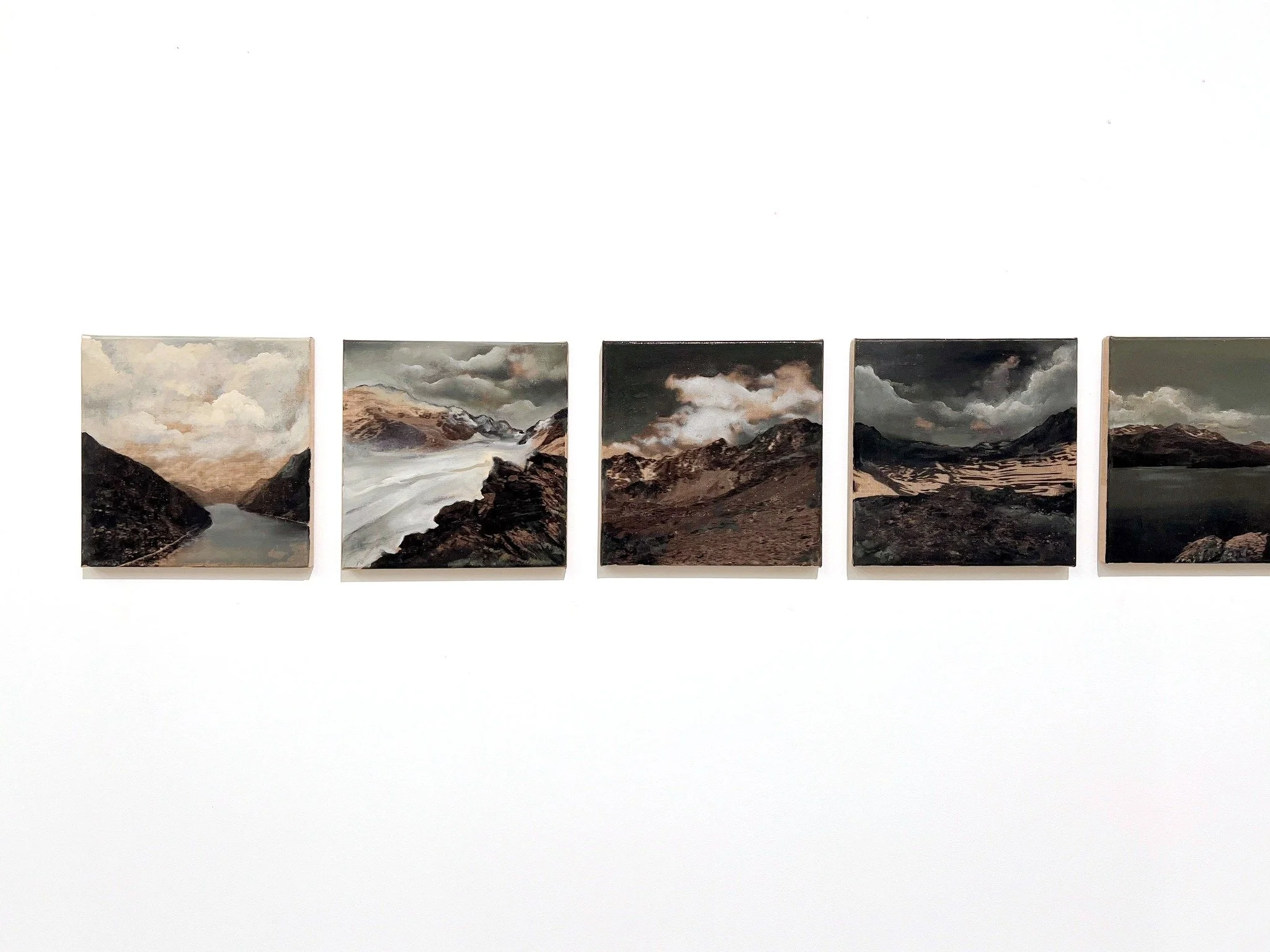
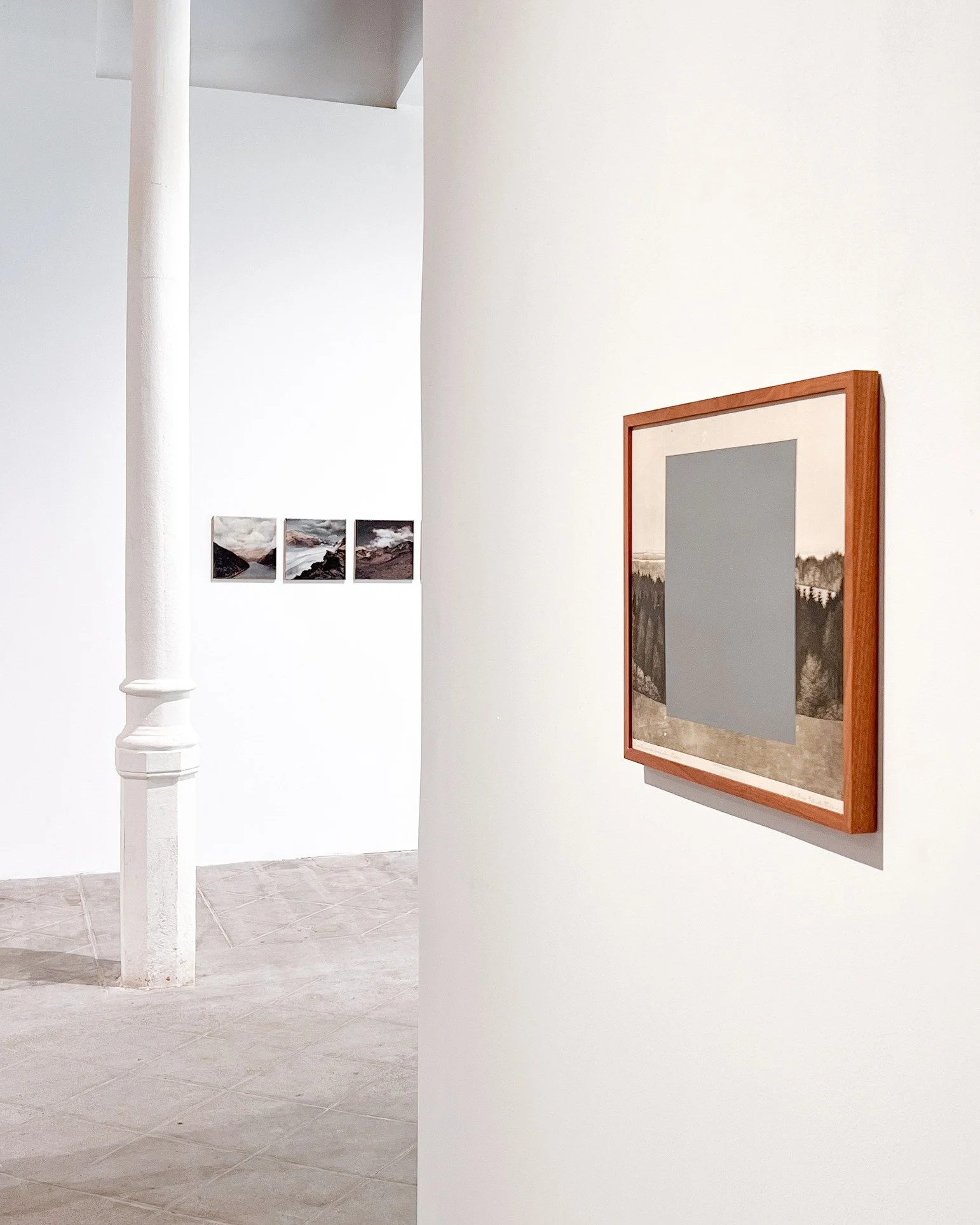
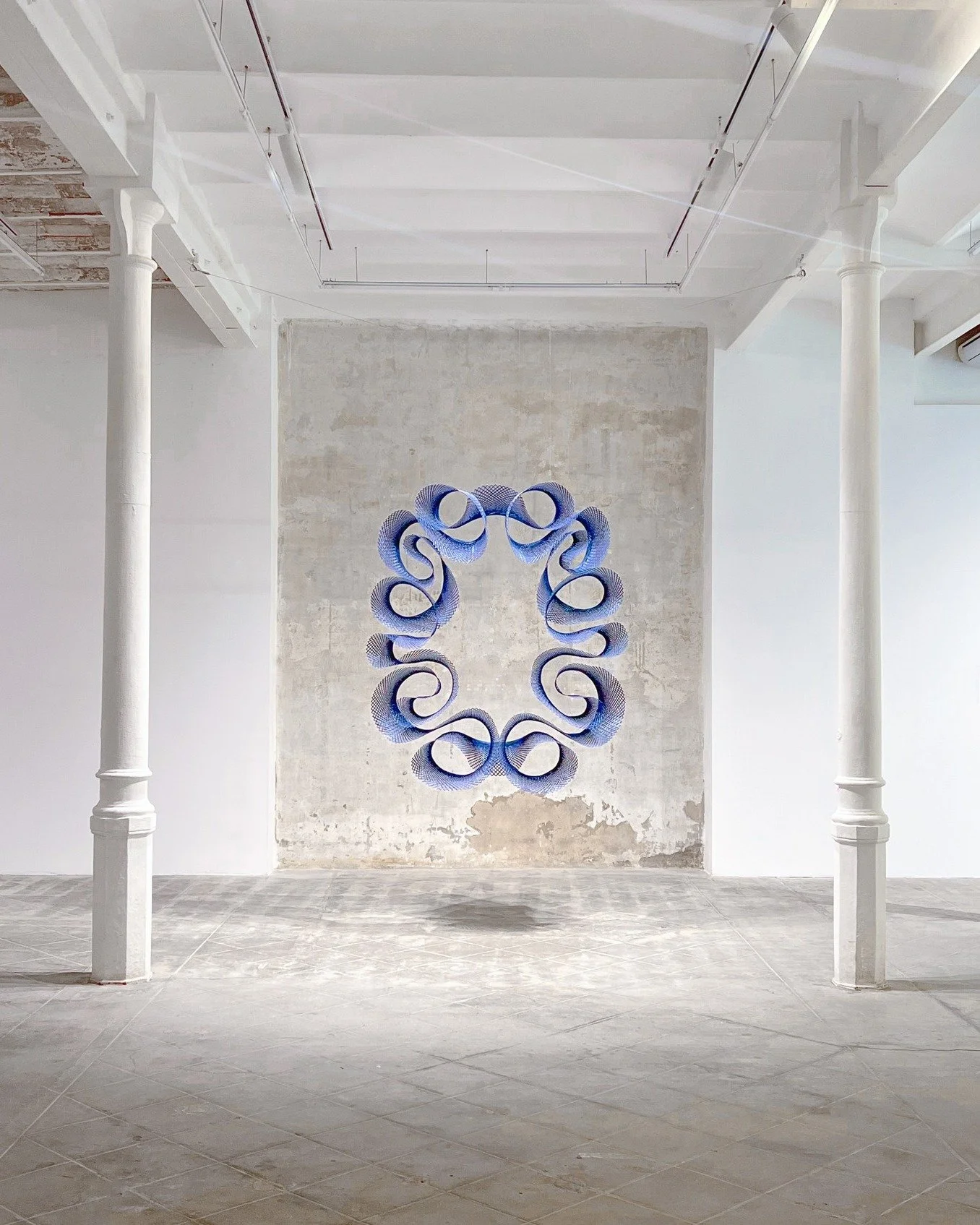
Nataraj von Allmen is a painter based in Switzerland. Often taking photographic material as a starting point, he weaves together landscapes, mythological archetypes, Christian symbolism, and contemporary socio-political themes into complex paintings. Oscillating between figuration and abstraction, his work investigates transformation, collective memory, and the human condition.