

10 Questions with Sia Bourke
Sia Bourke is a Ukrainian artist and architect whose work explores absence, displacement, and the physical imprint of memory. Born in Ukraine and currently based in Dublin, Ireland, her practice is shaped by the lived experience of migration and a sustained reflection on belonging and loss.
Through sculptural textile relief, Bourke creates surfaces that suggest presence through what remains. Her works do not illustrate narrative scenes. Instead, they hold subtle traces, shifts, and disturbances that imply the body without showing it. Absence in her practice is not void but residue, something that lingers and occupies space.
Her background across art and architecture allows her to approach material as both surface and structure. Bourke holds a Master of Architecture from Yale University and a Bachelor of Fine Arts from St. Edward’s University, graduating summa cum laude. Her work moves between disciplines, examining how memory can be embedded within material form.
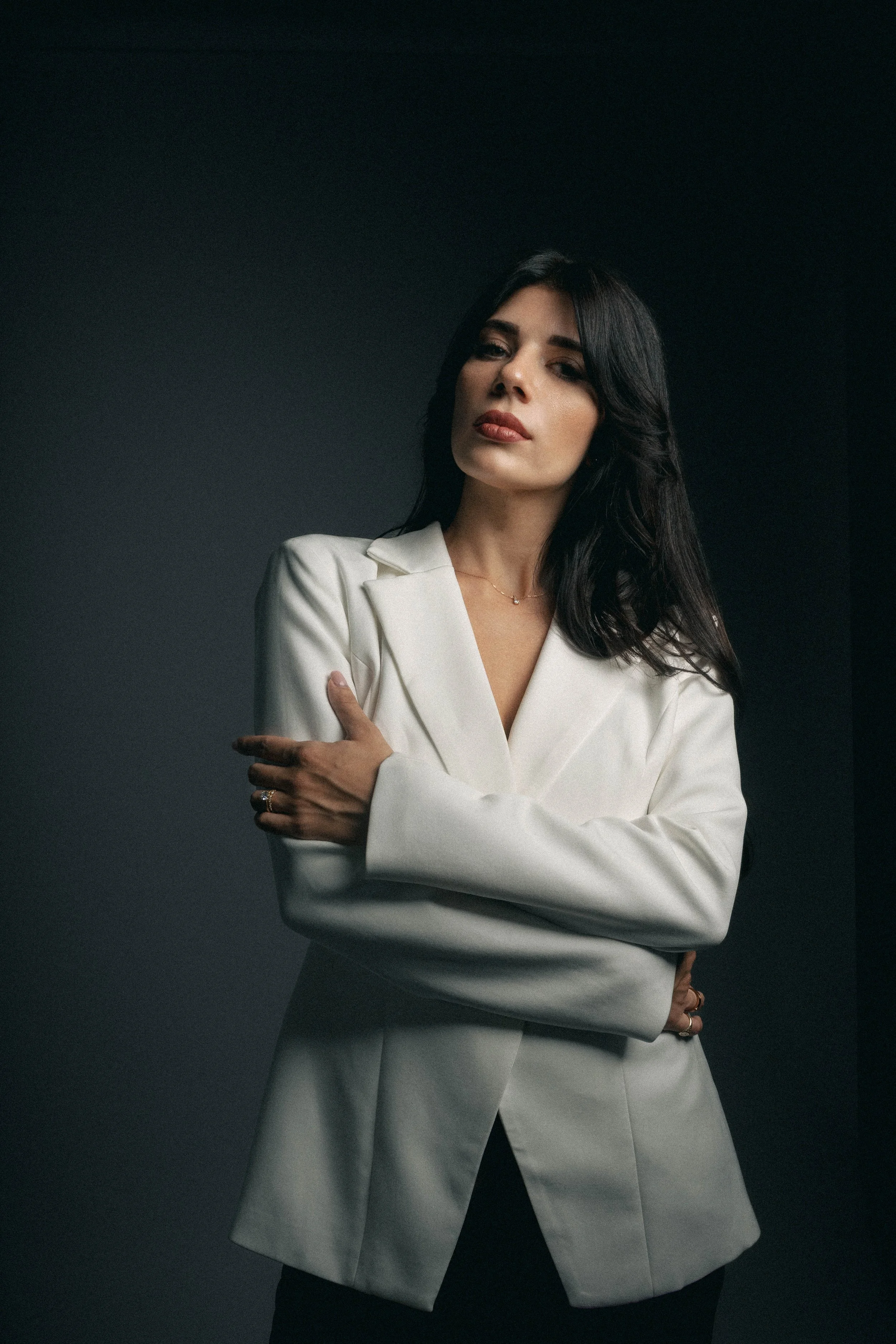
Sia Bourke - Portrait
ARTIST STATEMENT
Sia Bourke’s work explores how trauma leaves a physical residue. Her sculptural textile reliefs do not attempt to depict traumatic events directly. Instead, they examine the silent aftermath, the altered surface that remains once something has been disrupted or removed.
Working with textile as a responsive ground, Bourke creates forms that suggest imprint without image. The material appears shifted, gathered, or unsettled, as if marked by a presence that is no longer there. These traces are subtle, but they carry weight. Memory in her work is not narrative but embedded, registered through surface.
In the series Absent Presence, she reflects on displacement and survival through material restraint. The works hold evidence of rupture without dramatization. Absence becomes tangible, not as emptiness, but as a condition shaped by experience. Through controlled intervention, Bourke allows trauma to exist quietly within form, where it can be witnessed rather than illustrated.
A Memorys Grip, Textile Relief, 24x36 in, 2023 © Sia Bourke
INTERVIEW
How does your experience of migration shape the themes you explore in your work?
Migration has shaped how I understand space as something fragmented and constantly shifting. Leaving home, especially under pressure, creates a disconnect between physical location and emotional belonging. Memory does not remain fixed, it travels, overlaps, and sometimes stays behind. My work reflects this condition. It explores displacement not only as movement across geography, but as a state where attachment, loss, and identity coexist.
You often speak about absence as something that still occupies space. How do you translate this idea into material form?
I understand absence as something that leaves a physical and emotional residue. In my work, plaster and fabric act as recording surfaces. They capture imprint and tension, allowing traces to remain visible even after the originating force is gone.
The use of fabric is intentional. It carries a familiar scale and texture, something closely tied to the body and everyday life. It holds memory, age, and emotion. I often think about moments of sudden displacement, when someone has to leave quickly. Everything else is left behind, yet the presence of what was there does not fully disappear.
By stretching, compressing, or restraining fabric and fixing it in plaster, I preserve these moments of memory. The work does not represent absence directly, but allows it to exist through what remains.

Aftermath, Textile Relief, 24x36 in, 2023 © Sia Bourke
Why did you choose textiles as your primary medium for expressing memory and trauma?
Textile allows me to work through force rather than representation. It responds to pulling, folding, and compression in a way that reflects physical and emotional states of the environment without becoming descriptive. At the same time, it maintains a quiet familiarity, as it is inherently connected to the body, even when the body is not visible.
When combined with plaster, the material shifts from something flexible and temporary into something fixed. This transformation is important to me. It captures a fleeting condition and holds it in place, allowing something unstable to become visible and lasting.
Your works suggest the body without showing it directly. What interests you about this indirect presence?
I am interested in the body as a trace rather than as an image. By avoiding direct representation, the work resists becoming illustrative. Instead, presence is suggested through pressure, tension, and deformation of the material.
This indirect approach keeps the work open to interpretation. The viewer does not encounter a defined figure, but a condition that implies one, allowing space for personal reflection and projection.
How does your background in architecture influence the way you approach structure and surface in your artworks?
My background in architecture influences how I see structure and surface through material. I am less interested in structure as something designed in advance, and more in how it forms through the behavior of the material itself. In my work, structure is not constructed in a traditional way. It develops through the way fabric is pulled, held, or compressed. The material determines where tension occurs and how it becomes fixed. Surface emerges from the same process. It is not something simply added, but something that forms as a result of these actions. What you see is a trace of how the material has been shaped by its environment.

Intersection of Differences, Textile Relief, 24x36 in, 2023 © Sia Bourke

Reluctance to Relocation, Textile Relief, 24x36 in, 2023 © Sia Bourke

Nesting in Chaos, Textile Relief, 24x36 in, 2023 © Sia Bourke

Resistance, Textile Relief, 24x36 in, 2023 © Sia Bourke
In the series Absent Presence, what emotional or conceptual starting point guided the project?
The project began as a response to displacement and the emotional weight of leaving. I was born in Kharkiv, Ukraine, and my home and family were directly affected by the war. Shortly after the invasion, the building where I grew up was struck, while my family was sheltering in the basement.
These experiences shaped the work at a fundamental level. Rather than focusing on a single moment, each piece reflects a different condition, shaped by specific situations, environments, and emotional states such as hesitation, resistance, release, or aftermath. Together, the works do not form a sequence, but a set of reflections on different traces of trauma and memory.
Your work avoids direct narration. What role do you want the viewer’s imagination to play when encountering your pieces? And what do you hope remains with the viewer after experiencing your work?
I intentionally leave space for interpretation. The work does not aim to communicate a fixed message, but to create a condition that the viewer can enter and respond to.
I hope the viewer engages with the material on a sensory level, noticing tension, weight, and stillness. What remains is not a clear story, but a feeling, something unresolved that stays with them.
How do you balance control and spontaneity when working with materials that appear shifted or unsettled?
There is a constant negotiation between control and unpredictability. I begin with an intention, but the material responds in ways that cannot be fully controlled. Fabric folds, resists, and collapses according to its own properties.
Allowing this unpredictability is essential. It keeps the work from becoming overly fixed and allows it to retain a sense of tension and immediacy.

Serenity in Compression, Textile Relief, 24x36 in, 2023 © Sia Bourke
Do you see your practice as a form of personal reflection, collective memory, or both?
It begins as a personal reflection, but it extends into something collective. Experiences of displacement, loss, and instability are shared across many contexts. The work becomes a space where individual memory connects to broader human experience.
Lastly, how do you see your work evolving in the future? Do you have any new projects or themes you would like to explore?
I am currently continuing this work through a new series that builds directly on what I have been developing. I am not looking to shift direction, but to understand the material more precisely.
What interests me is how small changes in the way the material is formed can alter what it holds, how it carries trace, and how it communicates something that is not directly visible.
The themes remain rooted in memory and absence, but the work is becoming more focused. It is less about adding complexity and more about refining how much can be expressed through very minimal means. I am also interested in how these subtle differences can shift the perception of the work, how something quiet can still carry a strong presence.
Artist’s Talk
Al-Tiba9 Interviews is a promotional platform for artists to articulate their vision and engage them with our diverse readership through a published art dialogue. The artists are interviewed by Mohamed Benhadj, the founder & curator of Al-Tiba9, to highlight their artistic careers and introduce them to the international contemporary art scene across our vast network of museums, galleries, art professionals, art dealers, collectors, and art lovers across the globe.



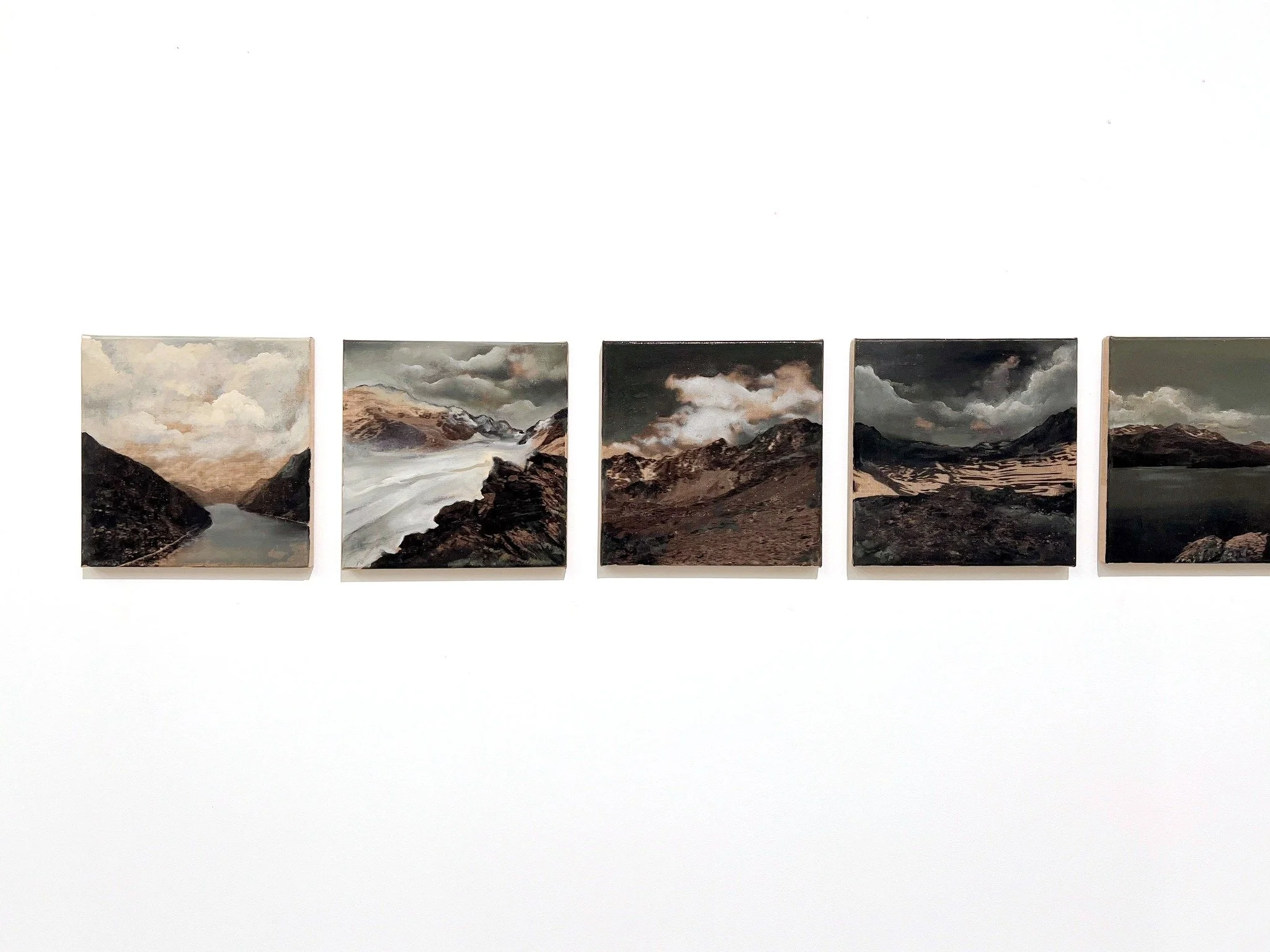
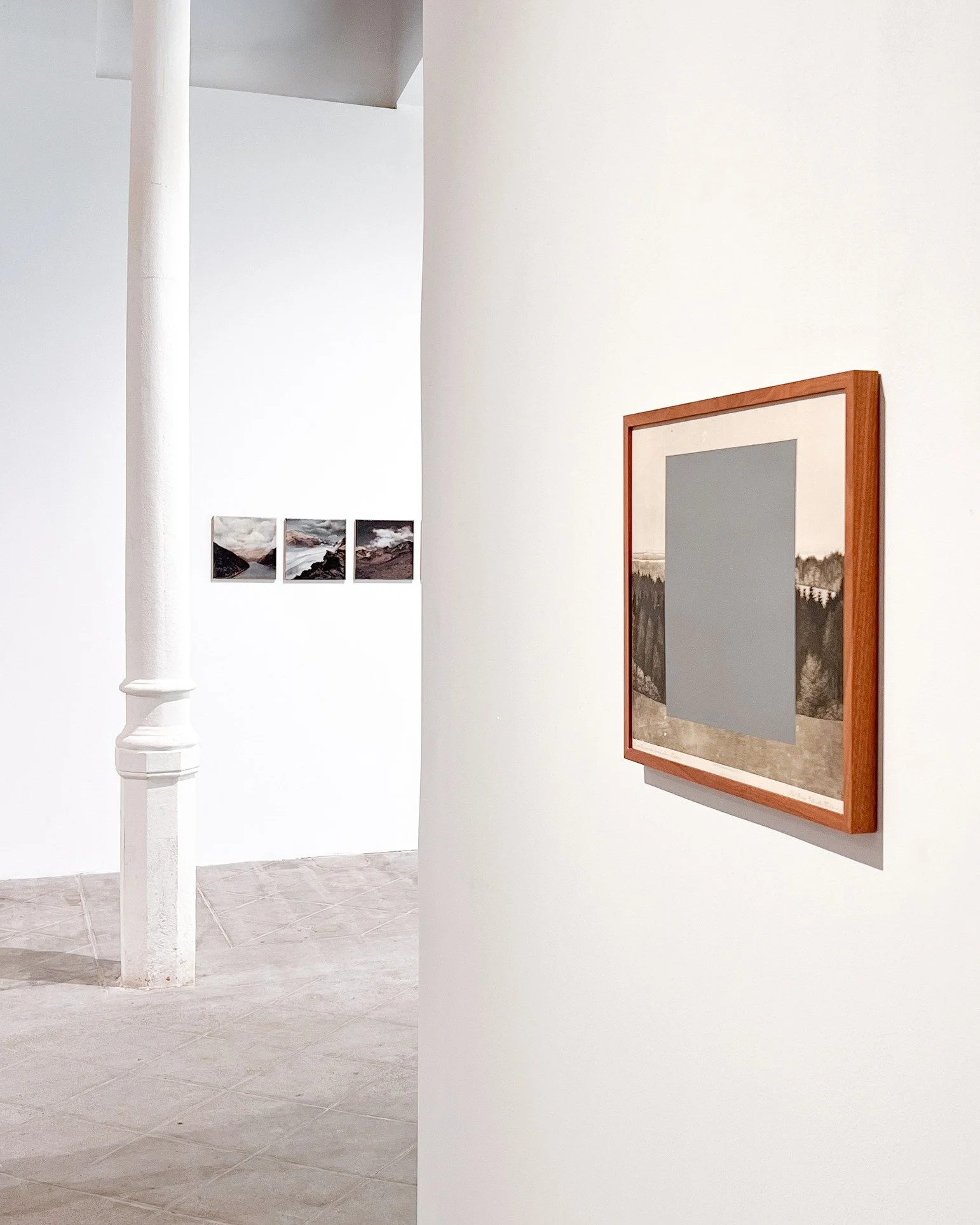
Nataraj von Allmen is a painter based in Switzerland. Often taking photographic material as a starting point, he weaves together landscapes, mythological archetypes, Christian symbolism, and contemporary socio-political themes into complex paintings. Oscillating between figuration and abstraction, his work investigates transformation, collective memory, and the human condition.