
10 Questions with Sona Lee
Sona Lee is a Korean artist currently living and working in New York City. She primarily works in painting and drawing, reconstructing surreal spaces where fragments of memories, dreams and reality intertwine to create multi-layered visual narratives. Her layered imagery reflects a deep interest in psychological space, often blurring the boundary between the real and unreal. Lee received her Bachelor of Fine Arts from Konkuk University in 2021 and her Master of Fine Arts from Parsons School of Design in 2025. In 2023 and 2024, she was awarded the Lin Wang Endowed Scholarship Fund. Lee was selected as a Fall 2025 artist-in-residence for the Long Meadow Art Residency. Selected exhibitions include solo and group presentations at SPACS ART(2026), Detour Gallery (2026), C24 Gallery (2025), The Blanc (2025), On the Fringe NYC (2024), and 25 East Gallery (2023) in New York City; Paris Koh Fine Arts (2024) in New Jersey; and Raum Art Center (2023), Gallery LVS (2022), and Gallery Imazoo (2021) in Seoul.
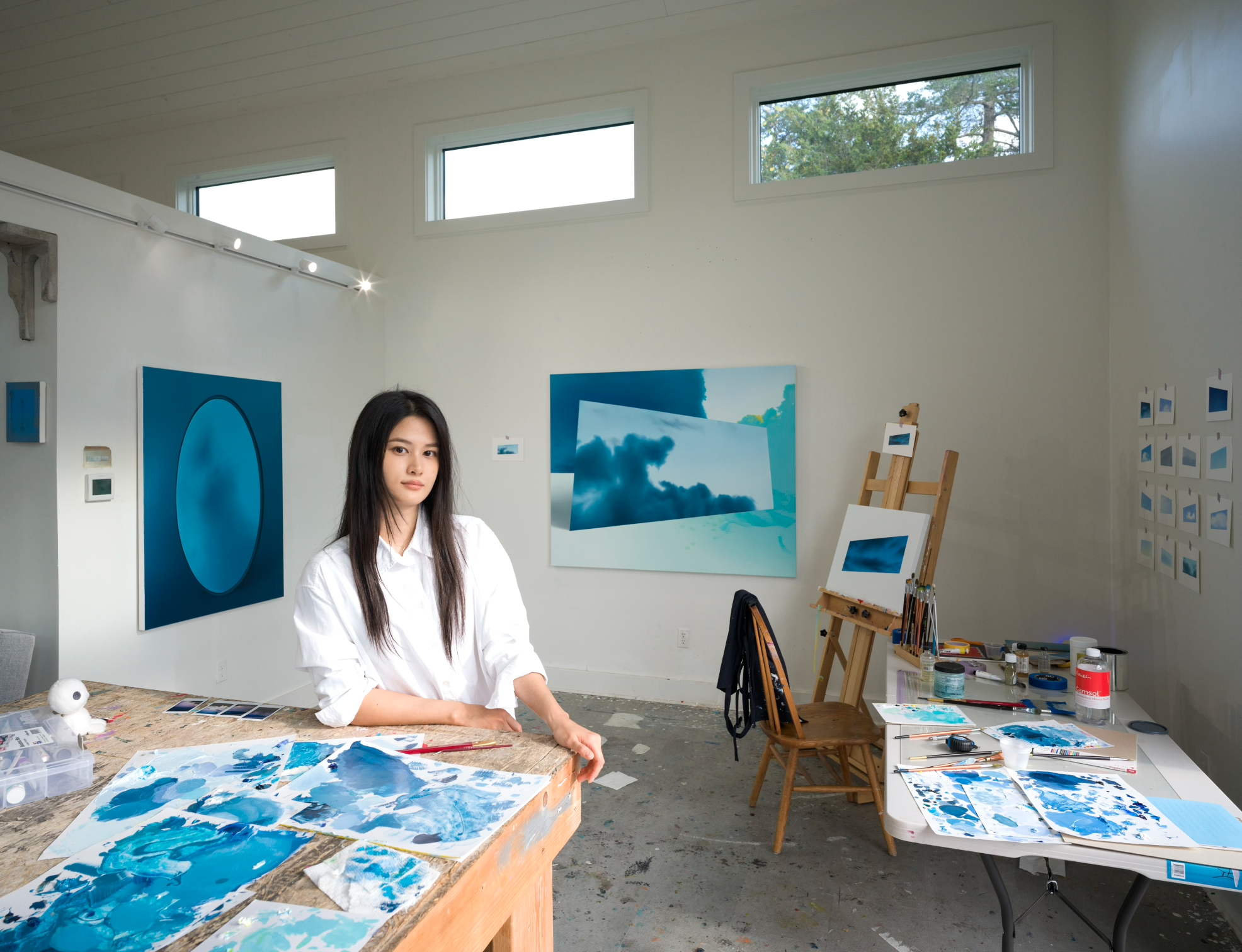
Sona Lee - Portrait
ARTIST STATEMENT
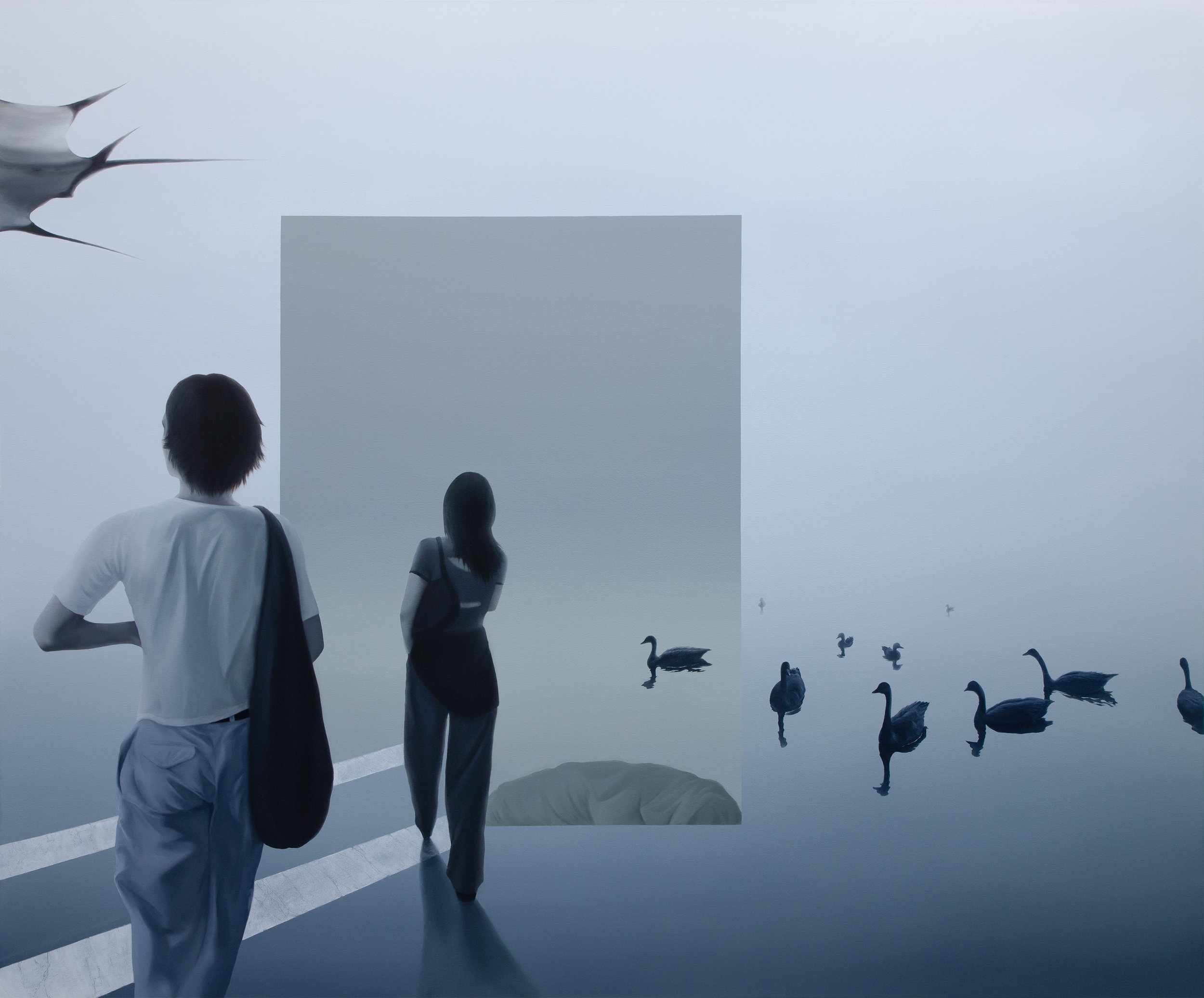
Sona Lee’s work visualises spaces where dreams, imagination, and memory intersect. Grounded in philosophical reflection and personal narrative, she constructs liminal environments that evoke scenes of the unconscious. Drawing on fragments of memory collected from multiple places and moments, she assembles disparate images within a single pictorial space, blurring distinctions between inner and outer realities. Her work also explores what fades and what persists in the process of recalling memory.
She is drawn to liminal spaces where serenity and unease coexist, transitional realms in which emotions, time, and memory converge and briefly unfold. She seeks to capture moments that feel familiar and calm, yet carry an inexplicable tension, where stability and fracture exist simultaneously. Her compositions often juxtapose intimate domestic scenes with subtle distortions, creating atmospheres charged with both stillness and tension.
Influenced by Minimalism and the aesthetic of emptiness in traditional Korean painting, she carefully considers the placement of backgrounds and objects, using negative space to heighten the expressive power of absence. Through this interplay, she reflects on escapism, emotional voids, and the fragile structures that shape contemporary relationships.
A Midsummer Night’s Dream, oil on canvas, 60x72 in, 2024 © Sona Lee
INTERVIEW
Let’s start with your background. You studied in Seoul and later in New York. How did your academic experiences at Konkuk University and Parsons School of Design shape the way you think about painting today?
Both Konkuk University and Parsons School of Design were not strictly focused on painting as a single medium. Instead, they emphasised working across a variety of media and expanding one’s way of thinking.
Although I had been primarily focused on painting, my time at Konkuk University allowed me to experiment with different media such as sculpture, installation, VR, and new media. Through these experiences, I learned how to approach a single theme from multiple perspectives. Toward the end of my undergraduate studies, I became increasingly interested in animation, web-based work, and painting, and I developed my graduation work by combining these approaches.
After graduation, I returned to focusing on painting, but when I came to Parsons, I was once again surrounded by peers working across diverse media. Engaging with their approaches and ways of thinking had a strong influence on my own practice. It also led me to more deeply question why I chose painting as my primary medium, ultimately strengthening my commitment to it.
At the same time, these experiences helped me move beyond the conventional boundaries of the canvas and think about painting in a more expanded and flexible way. Moving forward, I plan to explore installation-based painting and works that combine painting with other media, in order to further expand its physical and spatial possibilities.

A Soft Trace #2, oil on canvas, 8x8in, 2025 © Sona Lee
What motivated your move to New York, and how has the city influenced your artistic language or daily practice?
After having my first solo exhibition in Seoul, I became very aware of my own limitations. I felt that there were aspects of my work that lacked depth, and I wanted to develop a more honest and sincere approach to my practice. At the same time, I realised how much I still had to learn, which led me to pursue graduate studies.
New York felt like the right place for that next step. As one of the centres of the global art world, where many artists live and exhibit, I believe that studying and working in this environment would allow me to expand my perspective and challenge myself further.
Since moving to New York, I’ve been exposed to a wide range of artistic approaches and visual languages, and I’ve learned new ways of understanding and interpreting different works. Experiencing this diversity firsthand has expanded my perspective and pushed me to think more critically about both my own practice and the work of others. This environment has given me the courage to take on new challenges and has become a strong source of motivation.
One of the greatest advantages of being here is the constant opportunity to meet people and learn from different practices. At the same time, the intensity of the city can make it easy to feel left behind, as everyone seems to be constantly moving toward their goals. Because of this, I am also learning how to maintain my own pace and balance while continuing to develop my work.
You work primarily with painting and drawing. What does this combination allow you to express that another medium might not?
I believe painting and drawing allow me to experience image-making as both an act and a trace at the same time. Unlike media such as installation, sculpture, or video, the act of applying paint onto the canvas remains inseparable from the final image.
By physically engaging with the material, feeling the texture of the paint and controlling the pressure and movement of my hand through the brush, I experience something that feels unique to this medium. As the paint blends and separates, there is a tactile and sensory dimension that is difficult to replicate in other forms.
While I am painting, I am not only constructing an image, but also recording gestures, decisions, and moments of hesitation. Drawing allows for a more immediate and intuitive response, while painting introduces layers of time, accumulation, and revision. The combination of the two creates a tension between control and spontaneity.
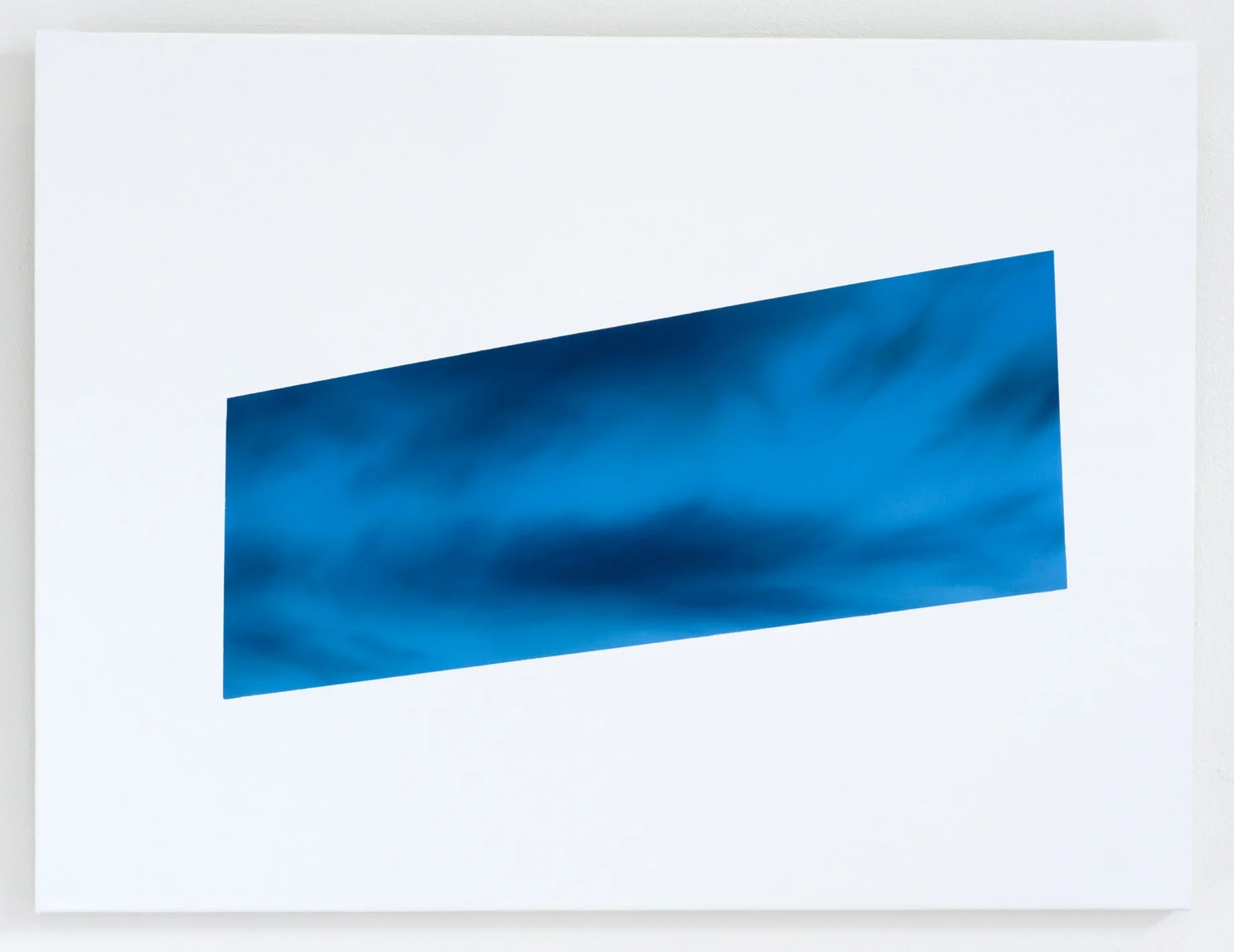
Blue Silence, oil on canvas, 18x24in, 2025 © Sona Lee
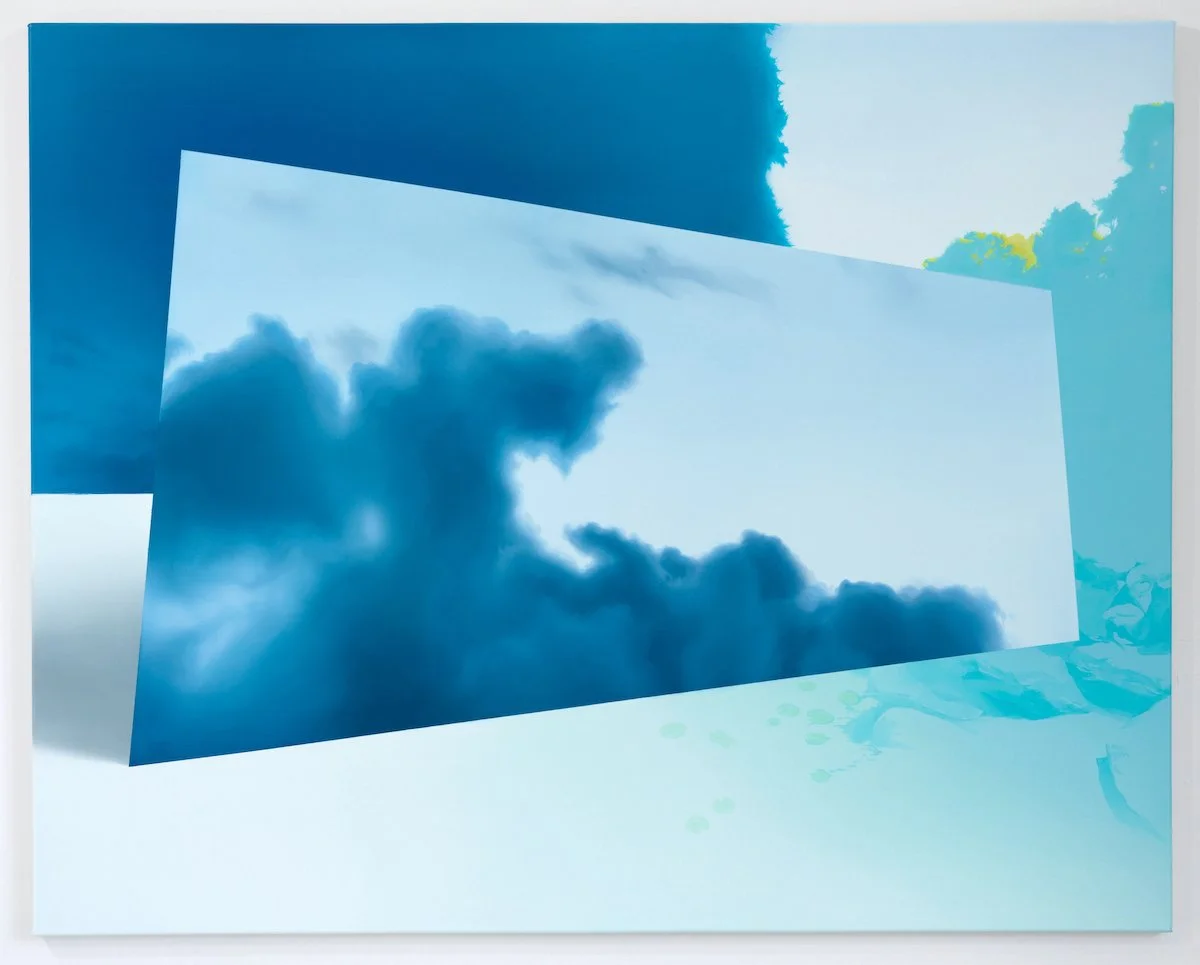
Paint it blue, oil on canvas, 48x60in, 2025 © Sona Lee
Your works often merge memory, dreams, and reality. How do you begin constructing these layered spaces? From intuition, images, or specific memories?
The starting point of each work varies. Sometimes it begins with a specific scene, other times with a memory, or even a fragment from my dream journal. Rather than having a fixed method, each work emerges through a different entry point.
When a particular image from reality lingers in my mind, I tend to record it and return to it later. From there, I begin to imagine narratives around it, bringing in other images that resonate with the emotions I felt at the time or that align with the emerging stories. Through this process, I gradually build layers within the composition.
When certain memories resurface or when there is an emotion I want to further explore, I also refer to archived materials, images of similar spaces, or fragments drawn from personal memory. I gather these elements and construct collage-like compositions, reorganising and experimenting with the structure of the image in relation to the theme of each work.
Through this process, memory, dreams, and reality become intertwined rather than separate. I am less interested in distinguishing between them, and more drawn to how they overlap, distort, and reconstruct one another, ultimately forming images that feel both familiar and ambiguous.
Can you describe your creative process from the first idea to the finished work? At what moment do you feel a piece is complete?
I tend to overthink, which often makes it difficult for me to begin painting right away. Because of that, I usually start with a small sketch when I feel a moment of inspiration, and then gradually develop the idea through associations.
When I don’t have a clear idea, I try to place myself in a state where inspiration can emerge. I watch films, listen to music, revisit images I’ve taken in the past, or go back to notes where I’ve written down fragments of thoughts. Sometimes I reapproach older ideas from my current perspective and expand them into something new.
Once I find an image I want to pursue, I begin by making quick sketches on my iPad. I experiment with colour, bring in references, and often create collage-like compositions to build a preliminary image. When the composition feels resolved to a certain degree, I translate it onto canvas.
However, the image always changes in the process of painting. Colours shift, forms evolve, and unexpected elements emerge. For me, the final work is not a fixed execution of the initial idea, but something that develops through negotiation between control and unpredictability.
There isn’t a single moment that defines completion. It varies from piece to piece. Sometimes I stop when the painting feels close to or even beyond the initial image I had in mind. Other times, I stop when I sense that it should remain as it is. Even after a work feels finished, I occasionally return to it later and make further changes.

The silent call, oil on canvas, 48x36in, 2026 © Sona Lee

Trace of wind, oil on canvas, 24x20in, 2026 © Sona Lee
Colour plays a subtle but powerful role in your compositions. How do you develop your colour palette, and what emotional qualities are you seeking through it?
Colour plays a significant role in my work, but it is not determined through a single method. My palette develops through a combination of influences, including colours observed in real life, those found in images, and those constructed digitally.
In my process, I usually begin by establishing a general sense of colour through sketches. From there, I use oil paint to create studies on paper, gradually refining and specifying the palette. Because there is often a gap between digitally generated colour, physically mixed colour, and emotionally perceived colour, I tend to test and adjust these variations through material experimentation.
When building colour, I rarely use pure hues. Instead, I mix multiple colours to create more nuanced and layered tones. I tend to avoid highly saturated, striking colours and instead prefer softer saturation. However, I also try not to let the palette become too dark or muted, often incorporating white or grey to maintain a sense of balance and softness.
Emotionally, I am less interested in using colour to directly communicate a single, defined feeling. I use colour both to directly convey certain emotions and to express subtle emotional states that are difficult to articulate.
Your work explores liminal and psychological spaces where calmness and tension coexist. Are these environments drawn from personal experiences or imagined emotional states?
The spaces in my work are formed through a combination of personal experience and imagined emotional states. While some works begin with specific memories or moments I have experienced, they are not reproduced as they are. Instead, they are transformed and reconstructed through layers of emotion and perception.
I tend to focus less on the physical reality of a place and more on the emotional state attached to it. As a result, the environments in my work often exist somewhere between reality and unreality that are difficult to define as a fixed or literal space.
The coexistence of calmness and tension also emerges naturally from this process. I am interested in moments where contrasting emotions overlap, where a sense of calm contains a subtle unease, or where tension exists alongside stillness.
Ultimately, the spaces in my work are not purely real or entirely imagined, but rather psychological landscapes that originate from personal experience and are reshaped through emotional interpretation.
Negative space and absence appear central to your visual language. How does the influence of Minimalism and traditional Korean painting inform these decisions?
I was exposed to traditional Korean painting from a young age, and I was particularly drawn to the techniques of ink wash painting. I was fascinated by how ink or pigment seeps into the paper, slowly spreading and dissolving boundaries, creating soft transitions and moments of ambiguity.
The concept of “empty space,” or yeobaek, in traditional Korean painting has been especially influential. In an art historical context, yeobaek is not understood as mere emptiness, but as an active and generative space. It functions as a site of potential, inviting the viewer’s perception, imagination, and emotional engagement to complete what is not explicitly depicted. This idea is closely tied to East Asian aesthetics and philosophies that value balance, relationality, and the presence of absence.
This sensibility also connects to my interest in Minimalism. However, I am less interested in its formal reduction and more drawn to its ability to create tension through restraint. In my work, negative space is not simply a compositional decision, but a way of holding distance, silence, and psychological gaps.
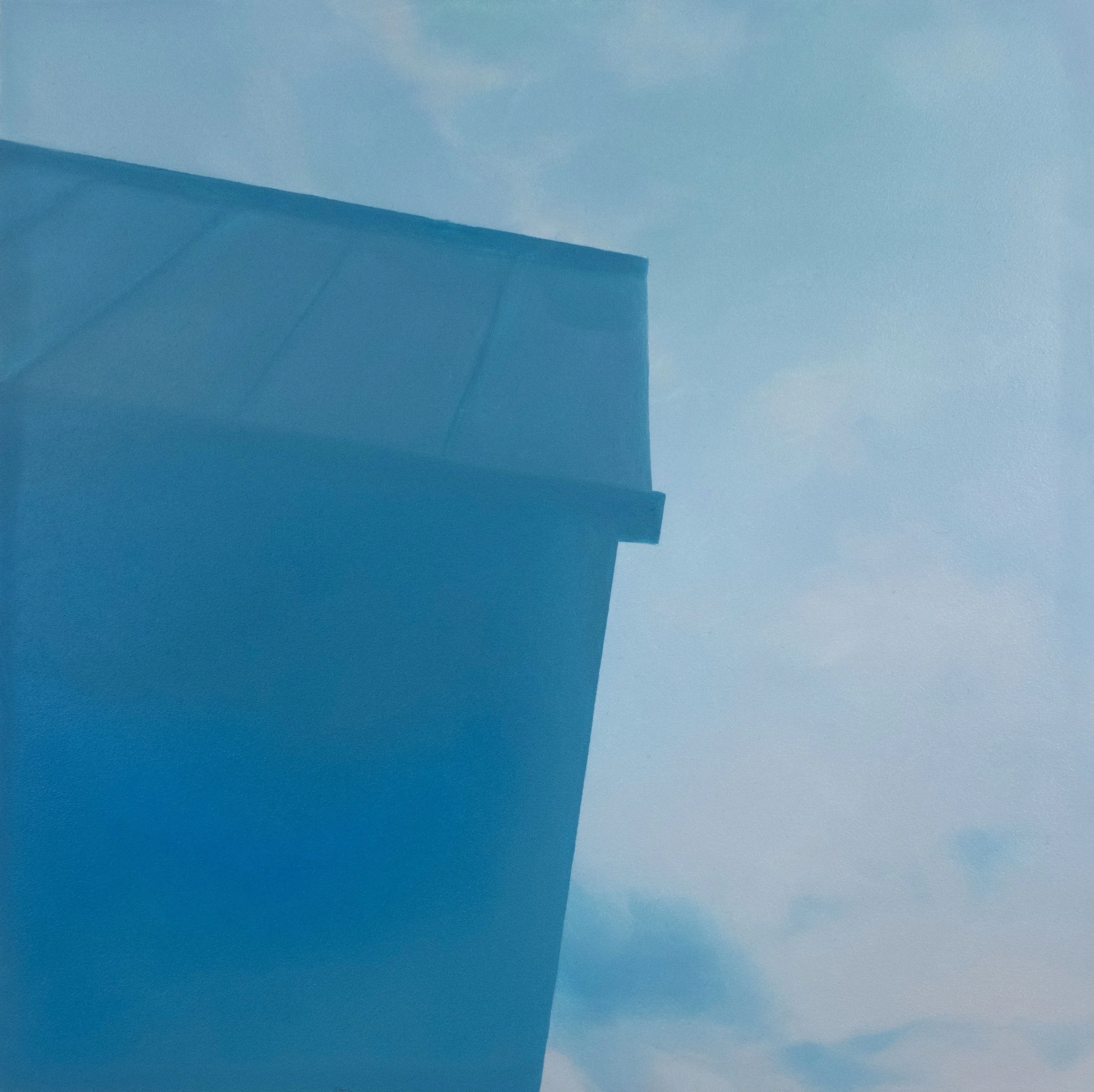
A Soft Trace #3, oil on canvas, 10x10in, 2026 © Sona Lee
How have audiences in New York and elsewhere responded to your work? Has any reaction surprised you?
When I had my first solo exhibition in Korea, I remember a middle-aged man looking at one of my works featuring the back of a child figure. He told me that it reminded him of his own childhood and became very nostalgic while viewing it. That moment stayed with me for a long time. It was more than just a casual comment, it felt like my work had triggered a personal memory in someone else. That experience was very moving for me, and it also helped affirm and shape the direction of my practice.
In New York as well, I’ve noticed a similar type of response. Viewers often project their own memories and emotions onto the imagery and atmosphere of the work. Some describe feelings of calmness or a dreamlike state, while others connect it to more personal or emotional associations. I find it meaningful that the work is not read in a fixed way, but instead opens up space for individual interpretation and experience.
Looking ahead, what questions or directions are you currently exploring, and what can we expect from your upcoming projects or residency experience?
At a pivotal turning point in my practice, I am currently expanding my work through the theme of “External + Internal Landscapes.” Following my experience at Long Meadow Art Residency, which was set in a nature-oriented environment, I began to explore the relationship between organic and artificial elements more closely. Investigating how natural forms and materials coexist, collide, and are reinterpreted within human-constructed environments has become a significant shift in my practice.
To further develop this inquiry, I am focusing on lived experiences within high-density urban environments such as New York. Within these artificial cityscapes defined by concrete and glass, I am particularly interested in the paradoxical presence of organic elements such as the colour of the sky, the fluid movement of clouds, and the sense of infinite space beyond them, which offer a critical ground for exploring the sensibilities I pursue.
At the same time, I am increasingly interested in expanding the physical and spatial possibilities of painting. Moving beyond the traditional canvas, I am exploring large-scale works and installation-based approaches that allow viewers to become more physically immersed in the work. This is not simply about increasing scale, but about translating the psychological density and emotional weight of the work into a spatial experience.
Through upcoming exhibitions as well as continued engagement with residency programs, I aim to further develop these investigations into a more expanded visual language. By engaging with diverse environments and contexts, I hope to build a cohesive yet layered body of work, ultimately advancing my practice in spatial, conceptual, and emotional depth.
Artist’s Talk
Al-Tiba9 Interviews is a curated promotional platform that offers artists the opportunity to articulate their vision and engage with our diverse international readership through insightful, published dialogues. Conducted by Mohamed Benhadj, founder and curator of Al-Tiba9, these interviews spotlight the artists’ creative journeys and introduce their work to the global contemporary art scene.
Through our extensive network of museums, galleries, art professionals, collectors, and art enthusiasts worldwide, Al-Tiba9 Interviews provides a meaningful stage for artists to expand their reach and strengthen their presence in the international art discourse.



Brooklyn-Born Allan Gorman is a contemporary fine artist based in Jersey City, NJ, with a unique artistic vision cultivated by a distinguished commercial career that helped refine a sense of aesthetics and unwavering commitment to excellence that continues to define his artistic process to this day. His latest series of paintings is titled Imaginary Spaces.