
10 Questions with Yotvat Rieder Aviram
Yotvat Rieder Aviram is a visual artist working in acrylic and ink on repurposed materials. In 2020, she developed ReLiving, an artistic practice in which abandoned artworks shared by members of her community are transformed into new layered paintings, carrying selected elements of the original into what comes next.
Her work explores transformation, memory, and the layered nature of belonging, tracing an emotional arc of displacement, reconstruction, and growth across four interconnected stages: Storm, Fragility & Resilience, Belong, and Bloom.
Since 2025, Rieder Aviram has exhibited internationally, with exhibitions in Philadelphia, New York, Tel Aviv, and Haifa. Her works are held in private collections across the United States, Denmark, Spain, and Israel.
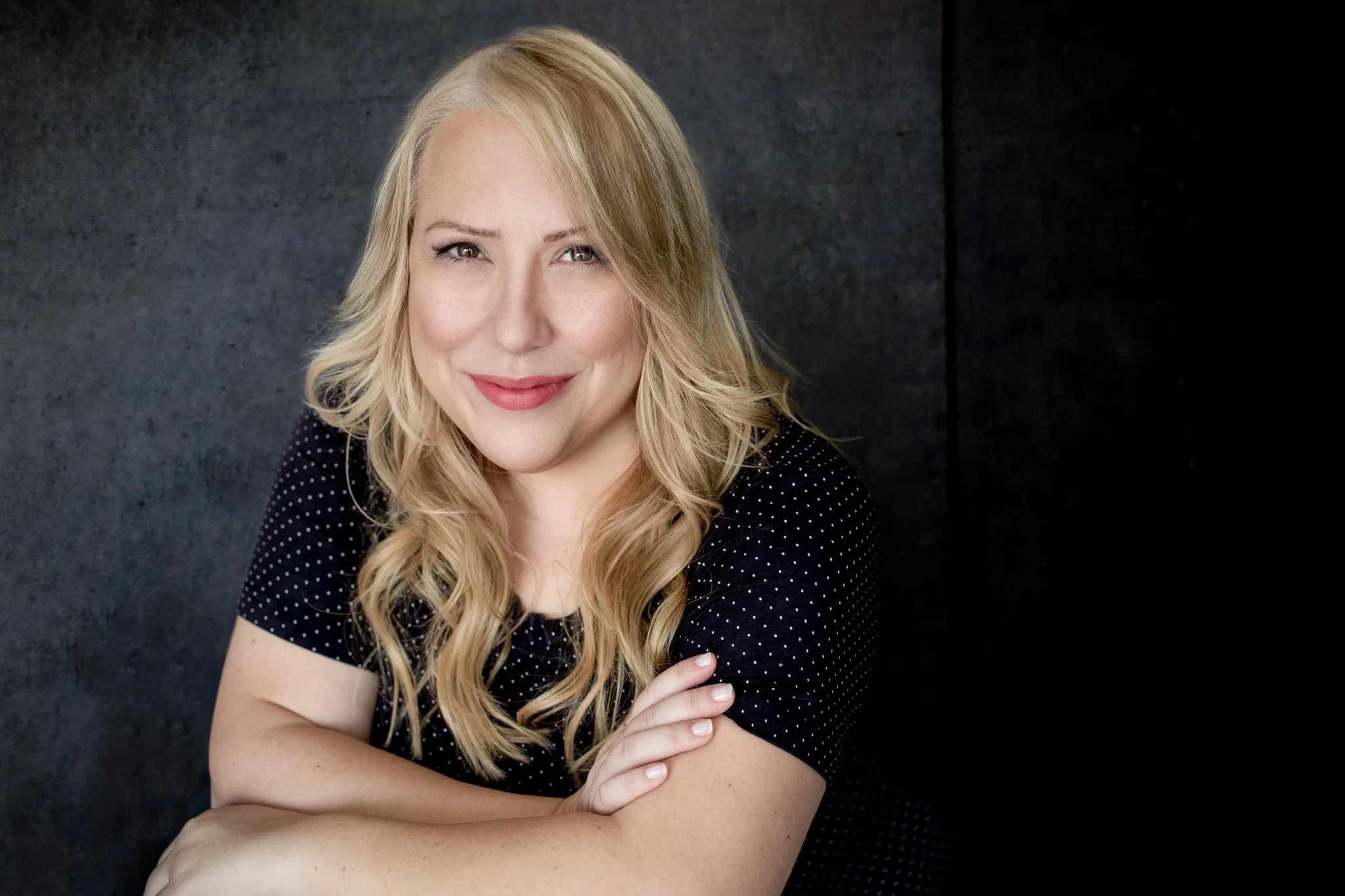
Yotvat Rieder Aviram - Portrait
ARTIST STATEMENT
Rieder Aviram’s practice unfolds through four interconnected stages, each marking a shift in emotional and visual terrain. Storm maps the disorientation of rupture. Fragility & Resilience finds structure within fragmentation. Belong searches for an emotional home without erasing the layers that came before. Bloom traces what becomes possible when that ground grows stable enough to hold something new.
These stages are not linear. They circle back, overlap, and resurface, much like identity itself. The name ReLiving holds this double meaning: the material act of giving abandoned artworks a new life, and the psychological process of reconstructing a self from accumulated experience without discarding what preceded it. Across this body of work, painting becomes a way of holding contradiction - tenderness and strength, memory and reinvention, instability and growth.
Her current exploration extends this inquiry into digital space, using AI as a tool for layered visual interpretation and transformation. It asks whether memory, change, and the logic of the repurposed can continue to operate across both physical and digital surfaces.
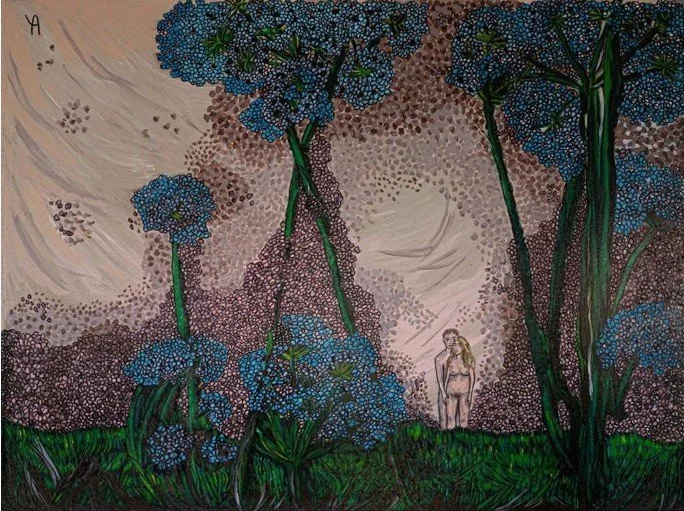
Garden of Eden, Acrylic & ink on repurposed canvas, 120x90 © Yotvat Rieder Aviram
INTERVIEW
Can you tell us a bit about your background and how you first came to visual art?
I’ve been capturing my inner world through line and color since early childhood. Before becoming a full-time visual artist, I held executive roles, leading communications and organizational communities in Fortune 500 companies, while living and creating across Copenhagen, Seattle, New York, Boston, Tel Aviv, and Haifa. These lived experiences shaped how I think about shared meaning, storytelling, identity, and the emotional connections between personal and collective narratives.
You’ve lived in several countries. How have these cross-cultural experiences influenced your artistic perspective?
Living across countries and regions shaped how I experience identity as layered rather than fixed. Each move added another emotional and cultural stratum to who I am. Migration rocks our core, but it does not replace it. New landscapes of identity build over time, expanding who we are, even when they bring chaos.
My artistic perspective grows from this reality. Through my ReLiving practice, I echo the idea that the past is not erased, but carried into what comes next, and that growth can emerge from fragmentation and layering.

Mediterranean Bloom, Acrylic & ink on repurposed canvas, 100x100 cm © Yotvat Rieder Aviram
What inspired you to create your project, ReLiving?
ReLiving is my artistic practice of creating new paintings on abandoned artworks, combining material repurposing with conceptual renewal. I work on the original surfaces while allowing visual and emotional traces of the original work to shape what comes next. For me, this is about continuity, transformation, and respect for what already exists.
I grew up with sustainability as a way of life. My parents practiced it naturally in everyday choices. My grandparents arrived as immigrants with almost nothing, and they repaired, reused, and worked with what was available. Nothing was disposable. Objects were adapted, reshaped, and given extended life. That mindset shaped how I see materials, memory, and change. ReLiving grows directly from that inheritance.
Why is working with recycled canvases and abandoned artworks important to you?
Many of these artworks once hung in people’s homes for decades. They carry stories, memories, and emotional residue, even when their relevance has shifted. Often, they come to me directly from members of my community who no longer feel connected to them, yet still recognize their value. In some cases, people commission the transformation of their former artworks through my ReLiving process, allowing them to become part of something new while still carrying what came before. There is trust in that exchange. That gesture becomes part of the work’s next chapter.
Rather than discarding them, I treat them as vessels of meaning. This mirrors how identity works: what came before continues to shape us, becoming the ground from which new stories emerge.
Can you describe your creative process when you transform an old piece into something new?
The process always begins with close observation of the original painting and what it inspires in me. Sometimes I respond to a color palette, like the copper and orange tones that unsettled me and later shaped the artworks “Vulnerability” and “Resilience”. Other times, it is a detail or gesture, such as the cascading tablecloth that became stormy waves or the still-life flowers in a vase that became the flourishing form in Rosy Immigration. The original artwork disappears visually but continues to live on through homage and inspiration.

Intimacy, Acrylic & ink on repurposed paper, 35x50 cm © Yotvat Rieder Aviram

Vulnerability, Acrylic & ink on repurposed canvas, 60x45 cm © Yotvat Rieder Aviram
Your work often explores identity, migration, and belonging. What draws you to these themes?
These themes are deeply personal to me. My experience is that migration reshapes identity layer by layer, creating both rupture and resilience. Belonging is tender and provisional, an ongoing, volatile process. Through my ReLiving practice, I explore how identities are reconstructed over time and how fragmentation can become a source of strength, rather than something to resist or hide. It’s about accepting vulnerability in order to grow.
How does becoming a mother influence your art or your way of seeing the world?
Motherhood expanded my sense of time, responsibility, community, and care. It heightened my awareness of what we inherit, reshape, and pass forward, both materially and emotionally. I think more intentionally now about the emotional environments we create for the next generation.
Becoming a mother to a son sharpened my sensitivity to how vulnerability is often restricted, especially for boys and men. I reflect more on the emotional space we allow them, and on how strength and openness grow through one another. This has made me more attentive to vulnerability as openness and to the ongoing work of repair in relationships and within ourselves.
It has also deepened my commitment to repair in my practice. I am drawn to the idea that fracture is not an ending but a turning point, and that what breaks can be reimagined into renewed meaning and strength.
Your palette and layered textures feel very intentional. How do you approach color and composition in your work?
Working in acrylic and ink, I build a layered visual language that reflects the identity of a migrant formed over time. Black contours anchor the composition, holding the tension between foreignness and belonging. Mosaic-like textures evoke fragmented memory, while swirling forms convey the emotional movement of change.
Color begins with instinct. It carries atmosphere and lived experience. Often sparked by a tone or contrast within the original artwork, it becomes the starting point from which balance and rhythm emerge. I work toward a surface that holds both movement and cohesion. I also simply enjoy the tactile experience of building up the surface over time.

Resilience, Acrylic and ink on repurposed pressed cardboard, 40x50 cm © Yotvat Rieder Aviram
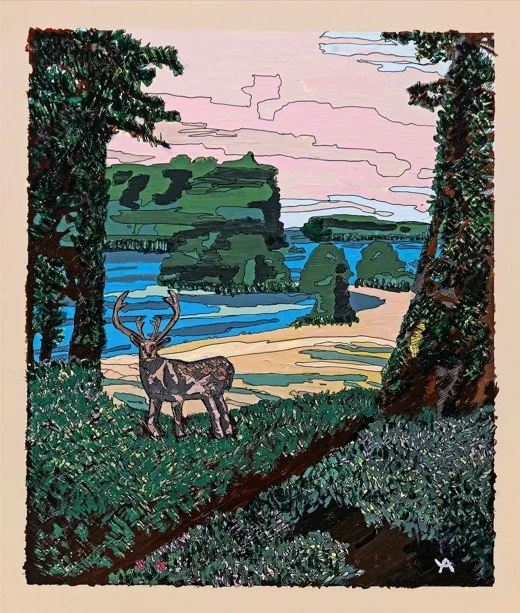
A Walk in the Forest, Acrylic & ink on repurposed kappa, 45x55 cm © Yotvat Rieder Aviram
You’ve shown your work in different cities and countries. How do audiences respond to your themes of fragility and reconstruction?
What moves me is the depth and universality of the response. Across cultures, viewers recognize their own experiences of transition, rebuilding, endurance, and renewal within the artwork. Conversations often unfold around personal histories, migration, family memory, or moments of profound change.
There is also a physical response. Some of the more tactile works draw people closer; many instinctively reach out to touch the layered surfaces. What varies
across cultures is how quickly they stop themselves. That shared impulse to connect, and the awareness that follows, humbles me. It creates a space for direct human encounter.
What projects or ideas are you excited to explore next?
I’m interested in expanding ReLiving into broader narrative formats, including installations, publications, and collaborative community-based projects that allow the stories behind the works to surface more visibly.
I’m also exploring the dialogue between tactile painting and digital storytelling, including the use of AI as a tool for layered interpretation and visual transformation. This exploration extends my ongoing interest in memory, movement, and change across both physical and digital spaces.
Artist’s Talk
Al-Tiba9 Interviews is a promotional platform for artists to articulate their vision and engage them with our diverse readership through a published art dialogue. The artists are interviewed by Mohamed Benhadj, the founder & curator of Al-Tiba9, to highlight their artistic careers and introduce them to the international contemporary art scene across our vast network of museums, galleries, art professionals, art dealers, collectors, and art lovers across the globe.


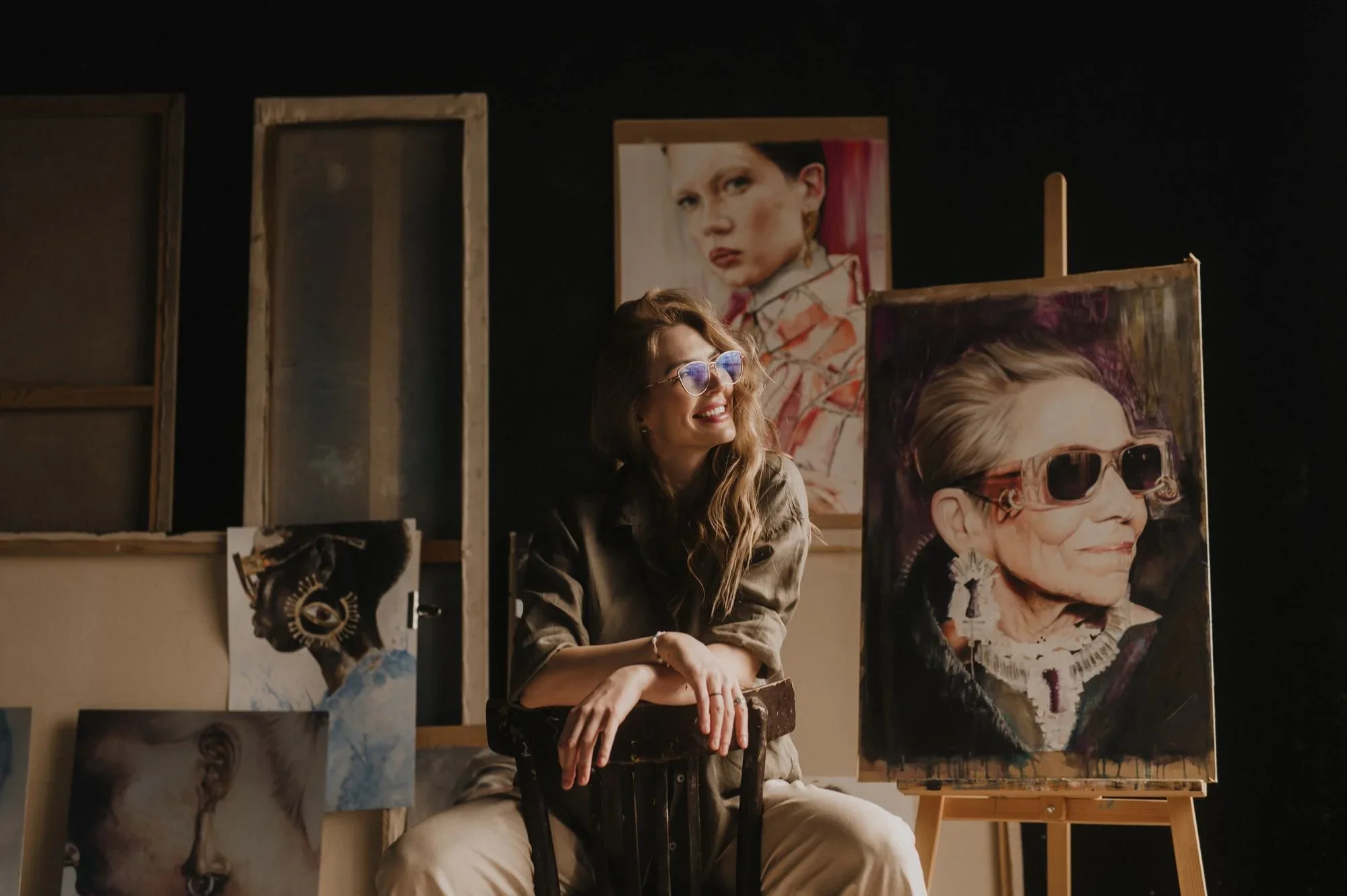

Brooklyn-Born Allan Gorman is a contemporary fine artist based in Jersey City, NJ, with a unique artistic vision cultivated by a distinguished commercial career that helped refine a sense of aesthetics and unwavering commitment to excellence that continues to define his artistic process to this day. His latest series of paintings is titled Imaginary Spaces.