
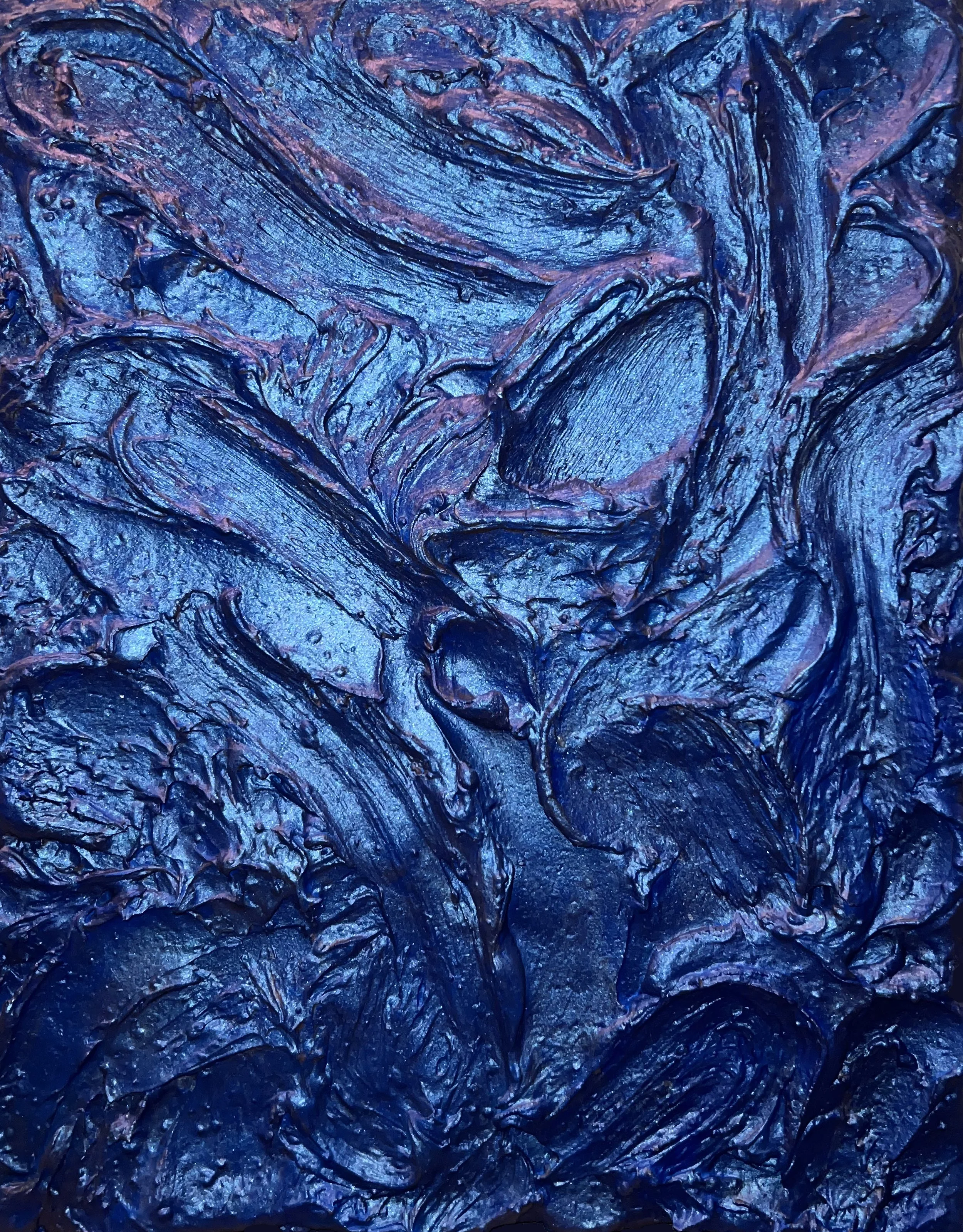
10 Questions with Nano Nasty
Nano Nasty (Anastasia R., b. 1994, Moscow) is a multidisciplinary artist and founder of the creative brand Nano Nasty. Currently based in Spain, she is known for her expressive, intuitive, and enigmatic works that span painting, sculpture, installation, and participatory art projects. Her practice explores themes of sensuality, material experimentation, and artistic alchemy, often inviting audience interaction and participation.
Nano Nasty holds an MFA in Fine Arts from the San Francisco Art Institute and a BA (Hons) in Art Direction and Styling from Istituto Marangoni, London, as well as a background in Environmental Design from Stroganov State University, Moscow. Her work has been exhibited internationally in cities such as Berlin, Madrid, Hamburg, Vienna, Los Angeles, and London.
She is the creator of projects like the Nano Nasty Box, a cyanotype art kit and online project, and maintains a personal online gallery and art boutique focusing on commissioned paintings and sculptural works. Since 2026, she has been represented on ARTSPER and is a resident at Kordallery, Berlin, and Bizar, an online gallery platform based in Moscow.
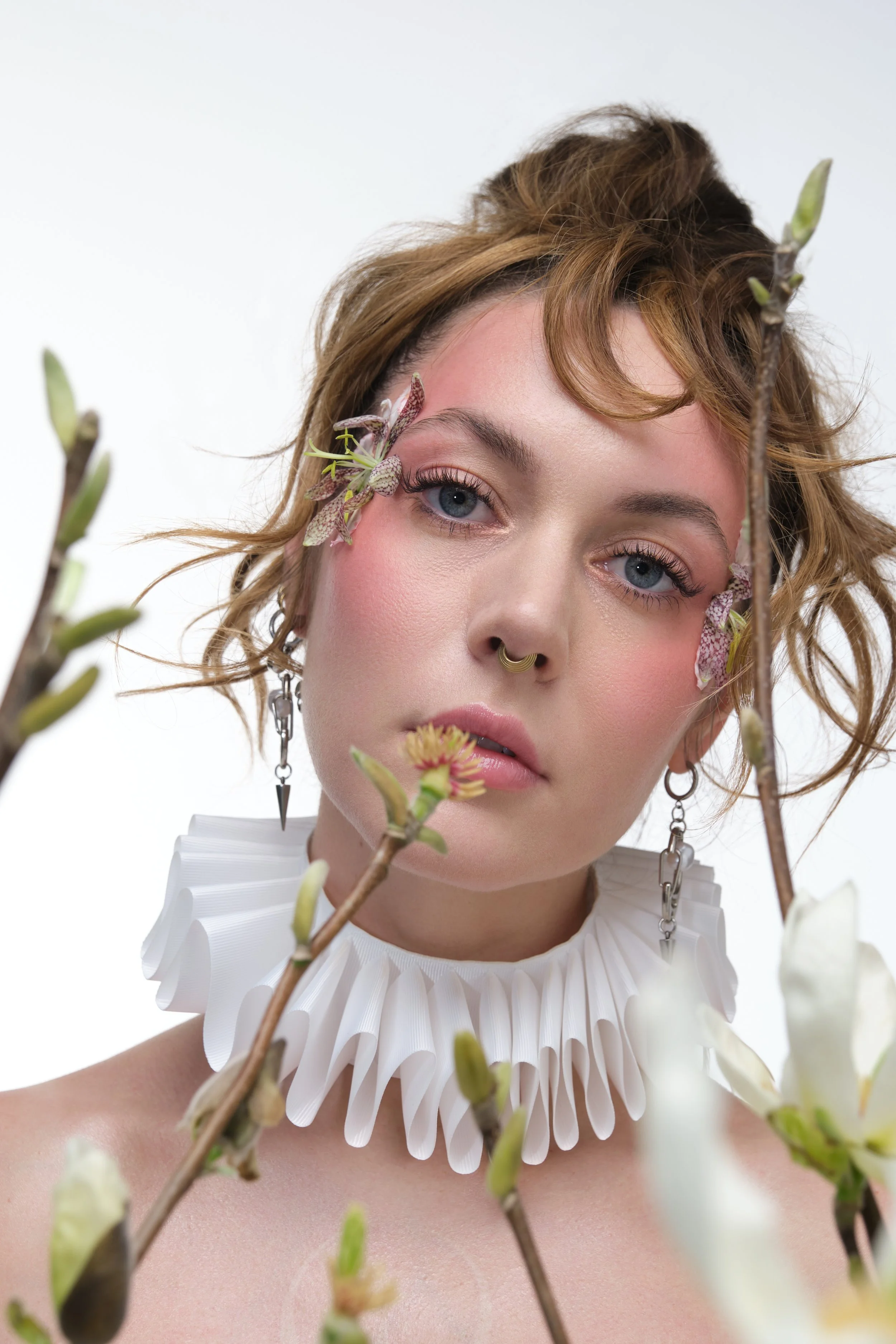
Nano Nasty - Portrait
ARTIST STATEMENT
Nano Nasty is a multidisciplinary artist working across visual media. Her practice is shaped by a self-developed visual vocabulary organised around red and blue, informed by Freudian psychoanalysis and by how desire, memory and the unconscious can structure inner experience.
Drawing on surreal and absurdist traditions, her work attends to liminal emotional states and moments of transition. Through tactile processes and recurring motifs such as waves, cracks and porous textures, she considers the relationship between body, memory and material. She works primarily with raw materials, plaster, sand, cement, clay, pigments and stone, mixed by hand, with an emphasis on physical process, intuition and the agency of materials.
Since 2015, her work has engaged with imposed femininity, the gaze, body politics and social codes. Sustainability informs her process, with an effort towards minimal waste and a focus on materials in their simplest form. The work sits at the threshold between fragility and force, structure and instinct.
Chameleon, 45x30cm, 2024 © Nano Nasty
INTERVIEW
To start, when did you first become interested in art, and what experiences led you to pursue it as a career?
became interested in art very early in childhood. I was a hyperactive child, and it was hard for me to stay focused for long, uninterrupted periods of time. Painting and sculpting with Play-Doh were among the few things that could truly absorb me. My parents noticed that quickly and started enrolling me in every art and craft class they could find in our neighbourhood on the outskirts of Moscow. It was a way to channel my energy into something creative and safe.
I grew up in a family that was completely disconnected from the art world, so becoming an artist didn’t feel like an obvious or realistic career path. The artistic professions I could actually see around me were very limited: selling paintings at the Sunday flea market in the park, or working as a costume designer in the theatre, and theatre felt close to me because I danced in a children’s ballet troupe. Those were the only tangible examples of what an “art career” could look like at the time, and both felt fragile as a long-term direction.
My perception began to change later, when I discovered how many different ways there are to build a professional life in the arts. I enrolled at the Stroganov Moscow State Academy of Arts and Industry to study environmental design, and that expanded my understanding of art as both a discipline and a profession. Through academic training and exposure to different practices, I realised art could be a serious long-term path, something that can hold both passion and structure.
Although art has always been central to my life, I began pursuing it full-time about three years ago, when I consciously decided to dedicate myself professionally to painting, sculpting, and working with materials.

Baby pink, 30x30 cm, 2026 © Nano Nasty
You studied at Stroganov State University of Art and Industry, Istituto Marangoni, and San Francisco Art Institute. How did these different educational environments shape your artistic approach?
Studying in three very different institutions had a strong impact on how I approach my work. At the Stroganov Moscow State Academy of Arts and Industry, the education system was strict and skill-oriented. The focus was on discipline, technical precision, and strong academic foundations. That environment trained me to respect craftsmanship and develop solid technical control over materials and form.
My experience at Istituto Marangoni in London was much more open in terms of research methods and conceptual development. It taught me how to study independently, how to research a topic deeply, build my own structure, and apply different methodologies in a way that supports the work. For my degree, I researched fetish fashion and underground BDSM scenes, looking at how those aesthetics gradually move into the mainstream. That experience sharpened my analytical thinking and strengthened the conceptual side of my practice.
During my MFA at the San Francisco Art Institute, the program was studio-centred and very focused on professional development. We had mandatory courses such as critical theory and art history, and a flexible curriculum that allowed me to choose classes supporting my studio work. Weekly peer critiques and one-on-one mentoring sessions with invited artists and faculty created an intense feedback environment and helped me develop clarity around my decisions.
I focused on installation and sculpture, exploring metalworking, woodworking, mould-making, and ceramic casting, processes I hadn’t had access to before. It was exciting to discover new ways of translating ideas into physical form, and to understand more clearly how materials, scale, and structure influence the final meaning of the work.
Overall, each institution offered a different kind of training: rigorous technique, independent conceptual research, and professional studio practice. Together they taught me versatility, quick problem-solving, and the ability to analyse what works best for each project, conceptually and materially, and how to translate research into tangible form. They also supported my current direction: expanding beyond the studio into spatial, modular, and context-responsive presentations.
How did the creative brand Nano Nasty begin, and how does it relate to your personal artistic identity?
Nano Nasty began as a joke. I have a very long first and last name, which is often difficult for English speakers to pronounce, so I started playing with a word that phonetically echoed the short version of my name, Nastia, and turned it into a pseudonym. What started as something humorous gradually became the name I used to sign much of my work.
Over time, Nano Nasty became more than a nickname. It gave me freedom to experiment with identity and to explore different facets of my character. It helped me bring forward a more charismatic, witty, and playful side of my personality, and to treat that side as a real part of my artistic voice.
I still hesitate to call it a “brand.” It feels more like an alter ego, with its own name and online presence. On a psychological level, it gave me a clear frame to separate roles: the private person, the studio worker, and the public-facing artist. That separation is useful because the work itself often deals with desire, self-control, and the way people perform their roles in everyday life.
It also became a practical bridge for international contexts. It’s easy to pronounce, easy to remember, and it helps me move between different scenes while keeping continuity. It affects how I present the work publicly as well, especially in fair settings, where presentation becomes a staged situation and the first physical impression matters. That direction connects naturally to spatial and modular ways of showing work, and it also opens doors for collaborations outside the classic exhibition format, with design contexts, spatial projects, and brands that respond to tactility and material language. It became a space where I could construct an artistic persona on its own terms, something independent, fluid, and alive.

Blue Velvet, 40x40 cm, 2024 © Nano Nasty

Velvet, 40x40 cm, 2024 © Nano Nasty
What motivated you to launch Nano Nasty Box, and what role does participation play in this project?
Nano Nasty Box emerged during a period when my art sales had slowed down for several months. It pushed me to rethink sustainability and the formats I could work with, something that could live beyond my physical presence in the studio and still feel connected to my practice. I started thinking about prints, merchandise, functional objects, and small design pieces, and I realised I was looking for a format that still carries process, tactility, and a sense of discovery.
While reflecting on what truly excites me, I remembered how fascinated I once was by cyanotype printing. It brought back a childhood dream of becoming a scientist or biologist. Cyanotype sits between art and science in a very natural way, technical and poetic at the same time, structured yet unpredictable. That balance felt authentic to me.
Participation became central because it gives the project its energy. Instead of producing a finished object, I provide a starting point: a kit with pre-mixed cyanotype solutions, a canvas bag, selected flowers suitable for printing, and a short instructional video. I explain the basics of the process, and the final composition is created by the participant.
In this sense, I work as a facilitator and a designer of conditions. The participant brings intention, intuition, and personal meaning into the piece. I’m very interested in what happens psychologically in that moment: when people trust their own taste, allow themselves to follow a desire, and accept that the outcome can be surprising. It becomes a small, intimate exercise in attention and permission.
The project allows people to create their own artwork without formal training, while engaging in a process that feels experimental and personal. At the same time, it opens a direction that I’m curious about for the future: design-adjacent formats, educational contexts, and collaborations where art can function as an experience, not only as an object. Nano Nasty Box is less about selling a product and more about activating creativity in others.
You work with raw materials such as plaster, cement, sand, and pigments. What attracts you to these tactile mediums?
I’m drawn to raw materials because they feel alive. Plaster, cement, sand, and pigments all have their own physical logic, their own way of behaving, reacting, cracking, drying, settling, and changing over time. I like that they don’t stay decorative for long. They carry weight, dust, temperature, and friction. Even before colour, there is touch.
Tactile abstraction is where my thinking feels the most natural. I’m interested in surfaces that activate the body first and the interpretation second. When someone stands in front of the work, I want them to feel something very physical: the urge to come closer, to follow a texture with their eyes, to imagine the pressure of a palm on the surface, to sense where it is smooth and where it would resist. People often describe it in simple sensory words, “it looks soft,” “it looks sharp,” “it looks cold,” “it looks like skin,” “it looks like concrete.” I like this moment, because it shows how quickly the body recognises material language.
In the studio, the process is a constant experiment. I mix plaster with pigments, add sand, change proportions, test how fast it sets, how it cracks, how it holds a mark, how it absorbs colour. I pay attention to small shifts: a thicker layer creating a different tension, a different grain size changing the way light sits on the surface, a faster drying time producing fractures that look almost drawn. Sometimes I build a surface slowly in layers; sometimes I let it happen quickly and accept the risk. I treat it like working with weather: you can prepare, you can guide, and then you have to respond.
I usually begin with a clear idea of what I want to create, but once the material enters the process, it introduces its own decisions. Certain mixtures react unpredictably; textures shift, surfaces collapse or transform. That unpredictability is part of the attraction for me. It brings a sense of event into the work, something is happening, something is being negotiated in real time. That dialogue between intention and material resistance is what excites me. It keeps the work honest and dynamic. Instead of locking the work into a fixed plan, I stay in conversation with it: I adjust, I respond, I let the material push back, and I follow what the surface is asking for. In the end, the final form becomes a co-authored result, my decision-making meeting the material’s behaviour, and tactile abstraction becoming a record of that encounter.

Grace 1, 20x20 cm, 2023 © Nano Nasty
Red and blue form a recurring system in your work. How did this visual language develop?
I don’t have one clean origin story for red and blue, because it didn’t start as a planned decision. I noticed it later, looking back at the work and seeing that these two colours kept returning. They began to feel like a recurring pair that my practice reaches for instinctively, before I even try to explain it.
Part of it is associative. Red and blue are colours that carry strong cultural and bodily signals, and those signals are closely connected to the themes I’m deeply interested in. Red can hold desire, heat, exposure, urgency, the moment when something moves closer. Blue can hold distance, restraint, calm, protection, the moment when something pulls back, cools down, or becomes controlled. Together they create the kind of tension I work with: attraction and restriction, impulse and regulation, intimacy and defence.
That also connects to imposed femininity and the unconscious. I’m interested in how people learn to perform their roles, how they edit themselves, and how desire gets shaped into acceptable forms. Red and blue help me build that psychological space without turning the work into an illustration. They function more like a behavioural cue or a temperature change: they affect how the viewer stands in front of the surface, how close they want to come, what kind of touch they imagine, and how long they stay with the work.
In the studio, the colour often arrives fast and intuitively, and the meaning becomes visible later. I see these choices as part of the same process: the work records an internal movement before it becomes a story. Red and blue return because they let me hold contradictions at once, and that’s where my subject matter lives.
Themes like desire, imposed femininity, and the unconscious are central in your practice. When did these concerns become important for you?
I’m one of those people who cannot separate themselves from the work they are doing. These themes didn’t “appear” in a certain year; they were already there as a background pressure since childhood and early adulthood. At first, I experienced them privately, almost wordlessly: attraction, shame, curiosity, the urge to take space, the reflex to shrink. Later, I started recognising the same mechanics in other people, in posture, in jokes, in what gets performed automatically, in what gets corrected mid-sentence.
Desire became important to me because it’s a very practical force: it shows how a person learns to manage themselves. Not in a dramatic way, more in everyday micro-decisions, what gets expressed, what gets delayed, what gets disguised to stay “appropriate.” Imposed femininity sits inside this very clearly. It works like a set of instructions that can feel invisible while you follow them: how to appear, how to be liked, how to be “easy,” when to soften, when to hold back, when to pretend you don’t want something too much. I’m interested in that choreography because it shapes behaviour long before it becomes an opinion.
The unconscious, for me, is where those rules and wishes start leaking through the surface. Sometimes it’s a slip, sometimes it’s a contradiction, sometimes it’s an emotion that arrives faster than language. This is where the studio becomes essential: materials allow me to work with pressure without explaining it away. I often think of what Donald Winnicott wrote: “It is in playing and only in playing that the individual… is able to be creative.” In my case, painting and tactile abstraction create that “playing” space, a serious one, where internal states can turn into texture, density, colour, and rhythm, and where what usually stays private gets a surface that can be looked at directly.
Your work often creates tension between attraction and restriction, especially the desire to touch. How do viewers typically react?
What I notice most is a shift in physical behaviour. People change their distance. They lean in. They tilt their head slightly. Their eyes move more slowly across the surface, following texture instead of image. Sometimes they step closer, then step back, then come closer again. It’s subtle, but very visible. The desire to touch is usually expressed indirectly. A viewer might raise a hand and then lower it. Someone might clasp their hands behind their back. Someone else might hover their fingers a few centimetres from the surface without making contact. These gestures are small, but they reveal something immediate: curiosity mixed with self-regulation.
I’m interested in that negotiation. Not as a provocation, and not as a trick. The work doesn’t “forbid” anything, but the context of exhibition spaces carries its own behavioural codes. So the viewer is navigating two things at once, a sensory impulse and a learned rule about how to behave around art. That friction becomes visible through posture, movement, hesitation, and repetition. For me, the work itself is always a record of a state, the state of the material, the pace of making, the degree of pressure or control during the process. Viewers respond to that state physically before they articulate it verbally. They may describe it later as tension, softness, density, or discomfort, but first it appears as movement: distance, proximity, restraint, return. That is the kind of response I find most meaningful.

Nano worlds 1, 150x100 cm, 2025 © Nano Nasty

Nano worlds 2, 150x100 cm, 2025 © Nano Nasty
Sustainability and minimal waste inform your process. Is this an ethical decision, a conceptual one, or both?
It’s both. It started as an ethical decision: I work with heavy, particulate materials, and I’m very aware of what it means to open a new bag, mix more than I need, and throw the remainder away. In practice, “minimal waste” for me is very concrete: I mix in small batches, I keep a palette of test samples, I reuse leftover plaster/cement mixes as underlayers or texture grounds, and I treat fragments and breaks as material that can return into the next surface. It changes the rhythm of the studio, slower, more attentive, more precise, and it keeps the work physically honest.
During my MFA, that studio discipline started to read as a conceptual framework as well. I began to think of waste as a design problem: what happens to a material after a decision, after an image, after a finished object. This is close to the circular economy approach, where waste is seen as something that can be prevented at the level of design and process, and where the goal is to keep materials in circulation at their highest value.
That thinking also connects to my interest in psychology: in the studio, states don’t disappear, they transform. A “leftover” becomes a new layer; a break becomes structure; a test becomes a future surface. The construction field talks about this very directly: construction and demolition waste makes up a large share of total waste in Europe, and a lot of it gets downcycled rather than truly reused, which is exactly the kind of loss a circular approach tries to prevent.
Lastly, what are you currently working on, and what directions would you like to explore in the coming years?
Right now, I’m refining my personal visual language and building a clearer structure around how the work is produced and presented. I’m developing bodies of work that are consistent in materials and surface logic, and at the same time, I’m preparing them to function outside the studio, in settings where the context is faster, the audience is broader, and presentation becomes part of the statement.
I also treat planning as a real part of the practice. Any art career includes strategy: understanding how the market works, how narratives circulate, what collectors and galleries are responding to in a given moment, and where my work sits inside that landscape. Knowing brands, knowing the ecosystem, and having a realistic sense of positioning make my planning grounded and confident; it turns ambition into steps, timelines, and clear targets.
A key focus for me is fair visibility and international presentation. I’m looking closely at Paper Positions Berlin, which takes place as a parallel to Berlin Art Week. I see it as a strong context for my material approach, especially where tactility and works on/with paper can be presented with precision. Another major point of attention is Frieze London, happening 14 – 18 October 2026 in The Regent’s Park. These aren’t abstract dreams for me; they are concrete frameworks where I want to build the right collaborations and the right type of presentation.
In the coming years, I want to expand into larger-scale and spatial projects, moving toward a clearer spatial artist position. That includes modular, staged installations and presentation formats, and it also includes design-adjacent collaborations where tactile abstraction can translate into functional or interior contexts. I’m interested in working with both mid-size and major galleries that build long-term trajectories, and in parallel, I’m open to collaborations with interior and furniture brands, for example, Vitra, Knoll, Fritz Hansen, Cassina, Ligne Roset, Moroso, as well as with design and architecture studios on spatial solutions. Alongside that market-facing direction, I’m also drawn to educational and non-profit formats, where participation and process can become part of the work’s life in a very real way.
Artist’s Talk
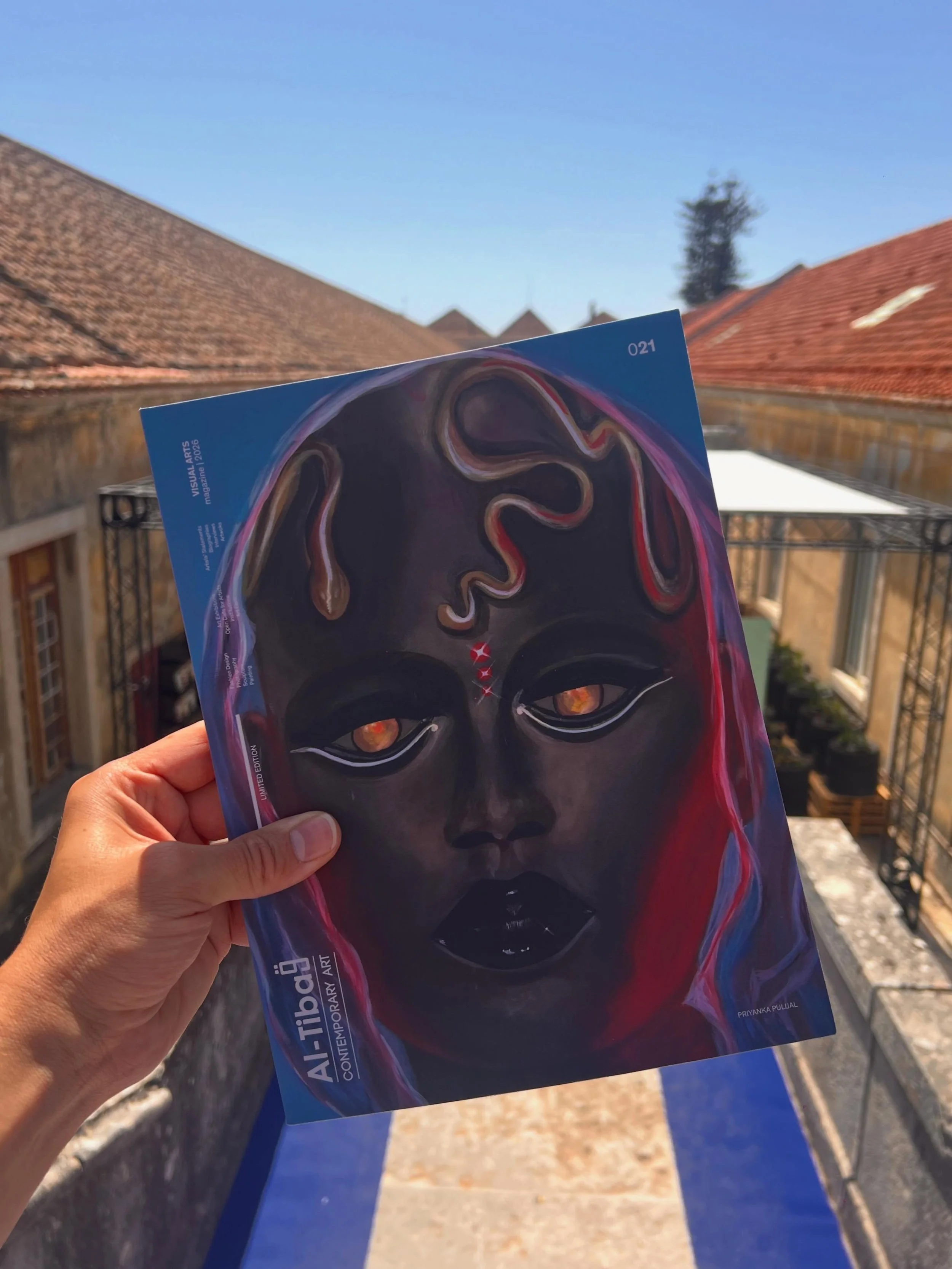
Al-Tiba9 Interviews is a promotional platform for artists to articulate their vision and engage them with our diverse readership through a published art dialogue. The artists are interviewed by Mohamed Benhadj, the founder & curator of Al-Tiba9, to highlight their artistic careers and introduce them to the international contemporary art scene across our vast network of museums, galleries, art professionals, art dealers, collectors, and art lovers across the globe.


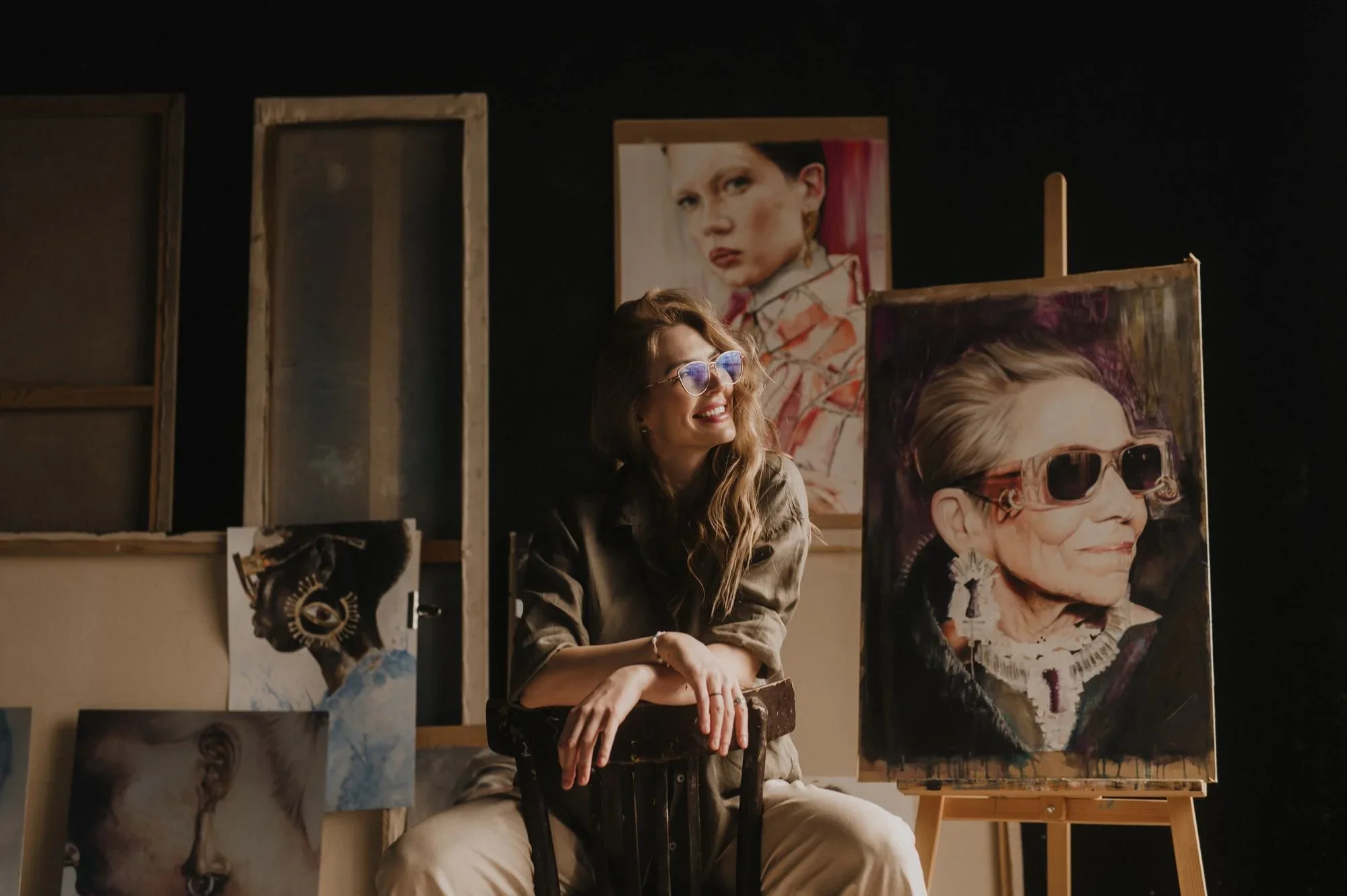
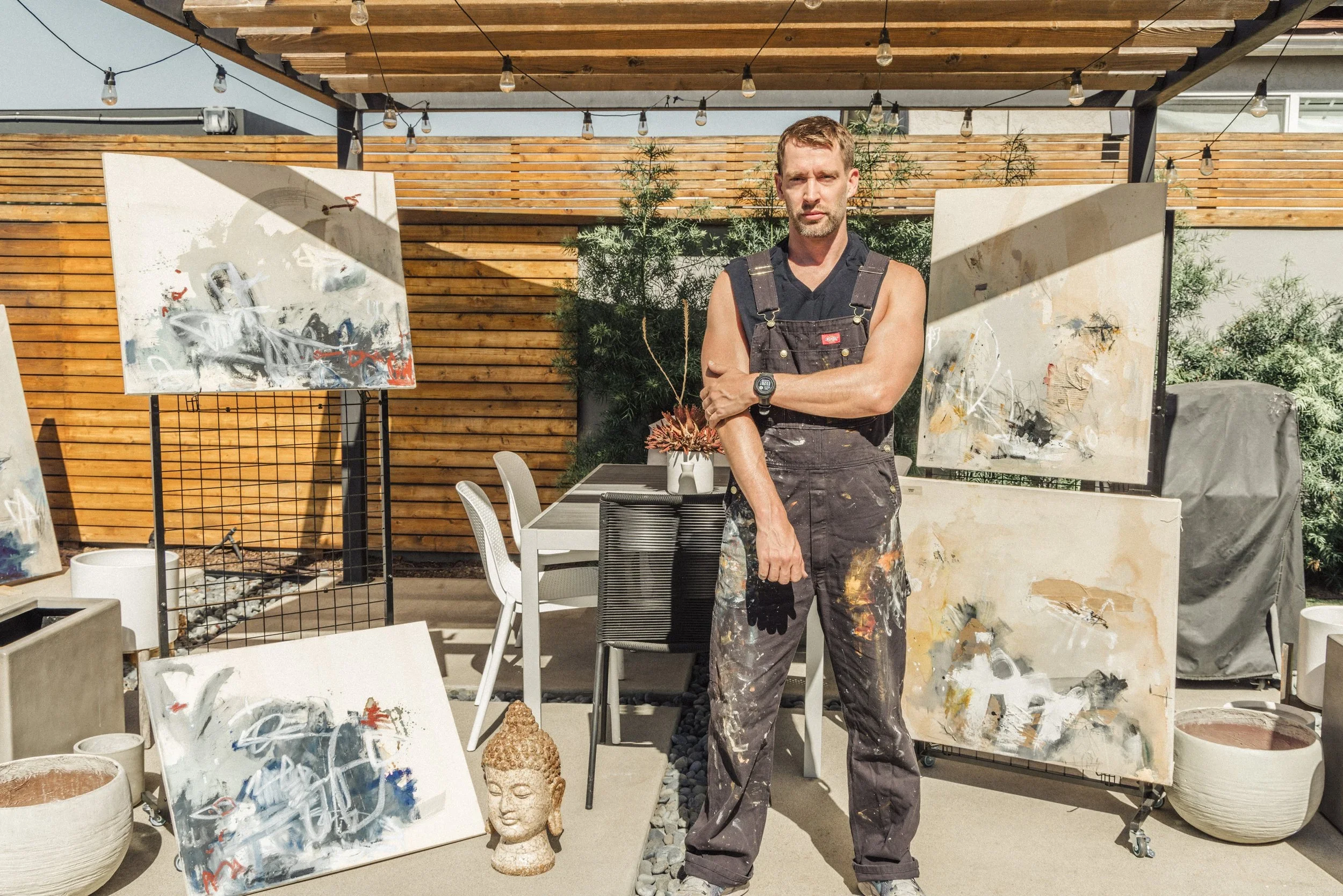

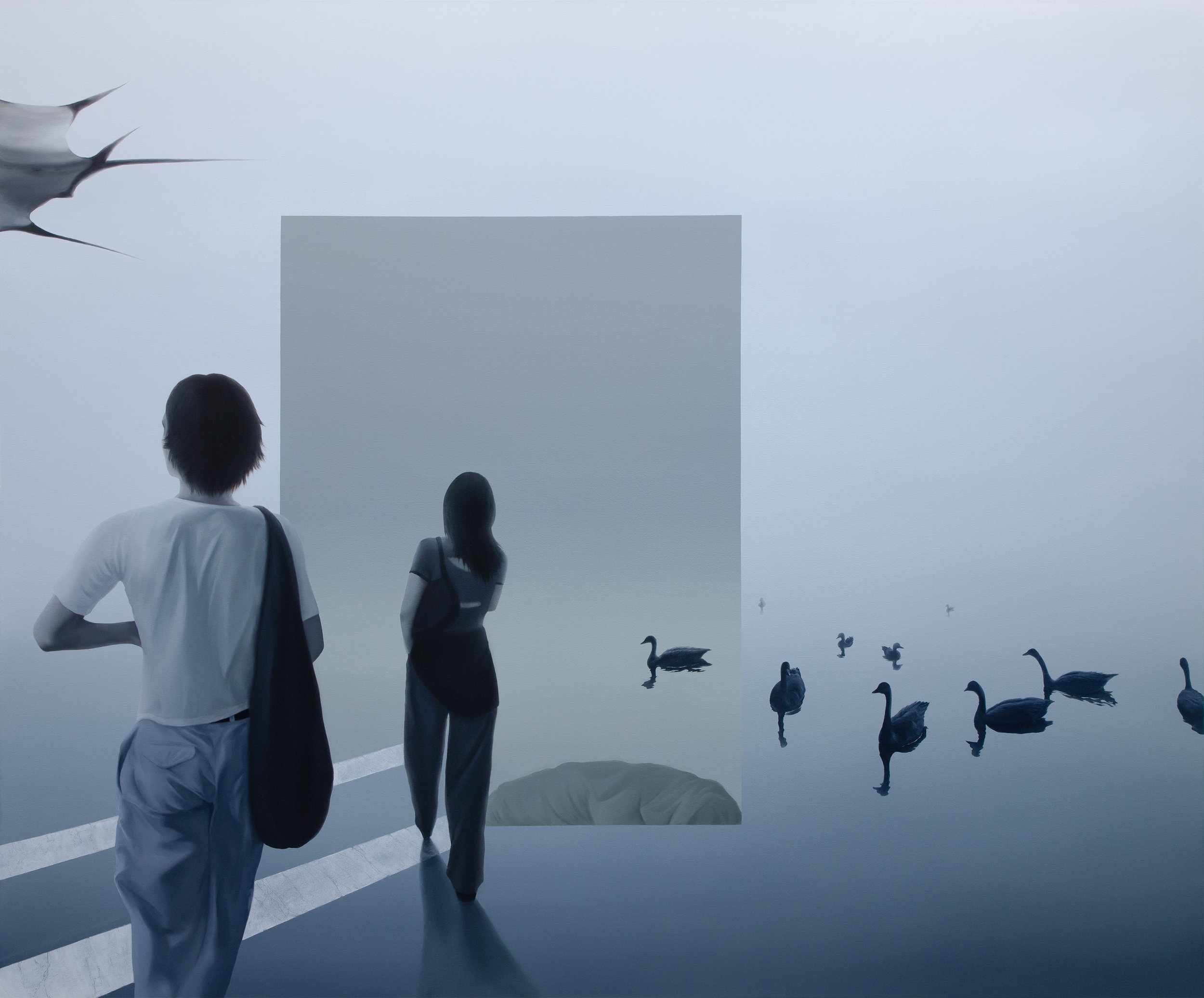
Brooklyn-Born Allan Gorman is a contemporary fine artist based in Jersey City, NJ, with a unique artistic vision cultivated by a distinguished commercial career that helped refine a sense of aesthetics and unwavering commitment to excellence that continues to define his artistic process to this day. His latest series of paintings is titled Imaginary Spaces.