
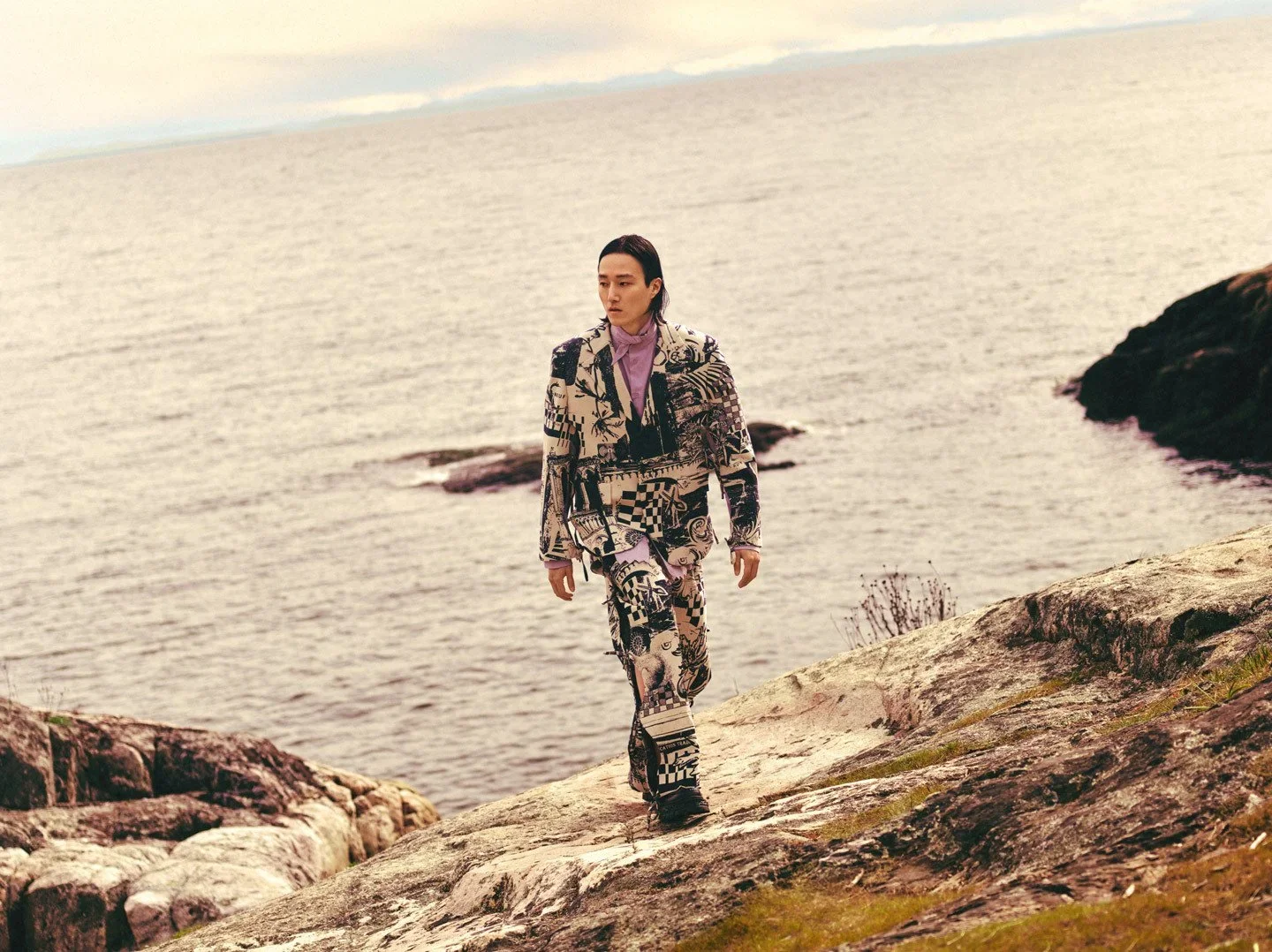
10 Questions with Donoh Lee
Donoh Lee (born. 1995) is a Canadian/South Korean Painter emerging on a World-Class scale for his abstract and metaphysically driven paintings. Having graduated from his Master of Fine Arts program from Emily Carr University of Art + Design in 2025, he continues his research that embodies abstract experimentation, transporting the supernatural forms of memory, emotion, and the spirit to excavate and extract moments from within, circulating in his internal landscape. He was granted the President's Research Fund in 2025 and continues to develop his paintings as an emerging Artist. Heading to Italy, where he will reside as a painter, developing his visual language.
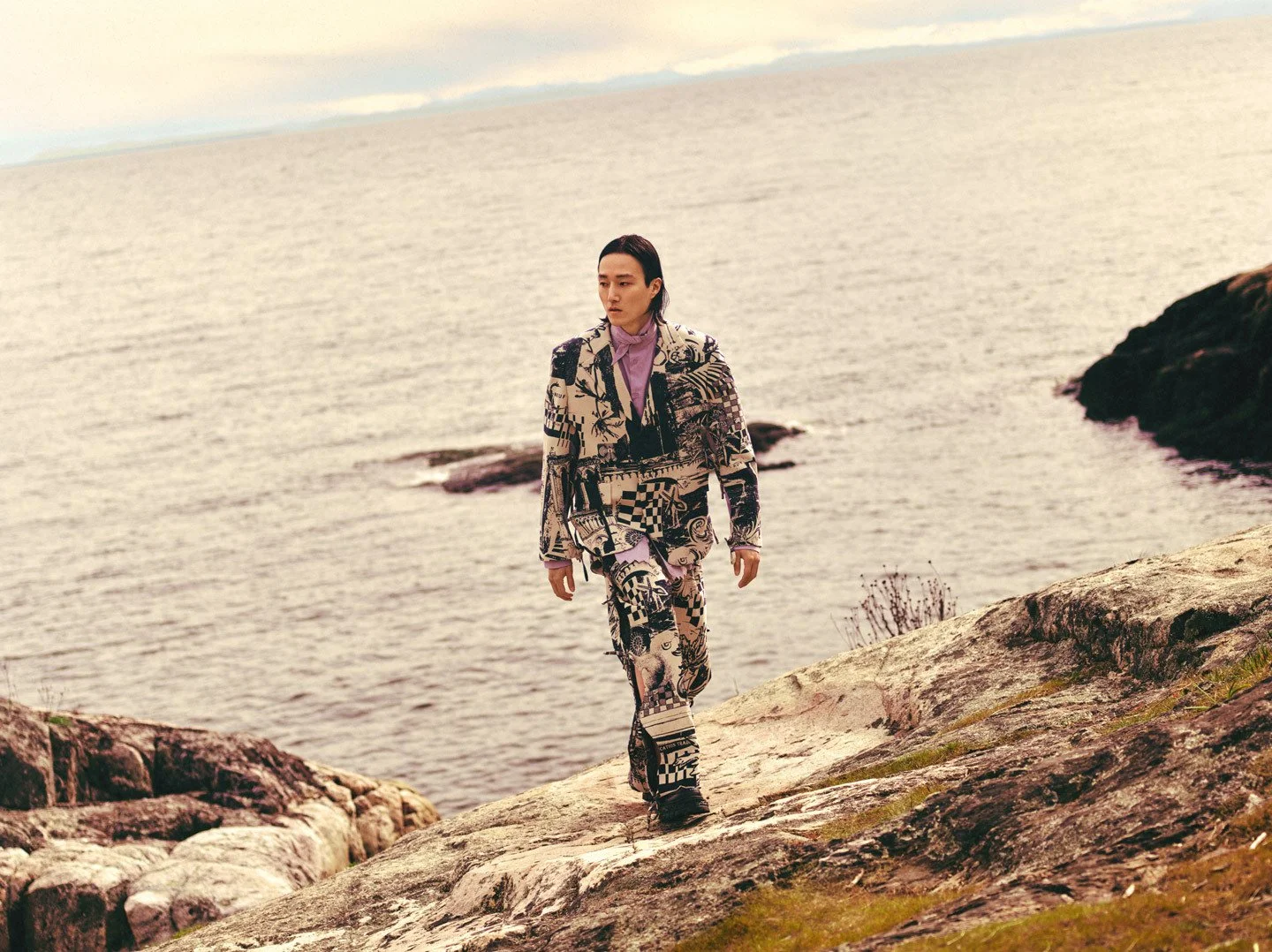
Donoh Lee - Portrait
ARTIST STATEMENT
From the age of 4 years old, Donoh Lee has had a deep love for Art, drawing and painting since he was a child. His drawings and paintings embody a unique resonance that is indescribably spiritual. When he works, a natural flow state emerges, where, through experimentation, he alchemically draws out his emotional state, memories, trauma, and an energetic release that transforms the visual idiosyncrasies being made onto the canvas. His work has developed into carrying these supernatural qualities that possess a luminosity and transfiguration that permeate into an abstractive language. Uniquely of his own, Donoh is deeply invested in the metaphysical, where his paintings open into other dimensions and harbour symbiotic relationships spiritually depicting guardian angels, warfare and veils beyond the physical reality.

Crystalization, Oil, 28x35 in, 2026 © Donoh Lee
INTERVIEW
You’ve been drawing and painting since the age of four. When did you realise that art would become more than a passion, something central to your life?
Painting in terms of a creative outlet is a heavy process, despite keeping it as pure as possible for myself. I really try to go for it when I am making the work, even though that may not always show clearly in the labour. I process the paint emotionally, spiritually, mentally, as much as it gives back that magic. I suppose when I was a child I made from a place of naivety and innocence which I also think aren’t bad places to be making from, I keep that passion of how as a child it brought out a wonder and miraculous engagement with the materiality, overtime developed and evolved it as I got deeply invested and serious. As I got older, the central component is the very necessity that I need to process and adapt my understanding to the ways in which I engage myself with life and the world around me. Painting is very cathartic spiritually, so that outpour is something that keeps me alive in a strange way. Putting your heart and mind all into it, magic really does happen.

Hovering Angel, Oil, 28x35 in, 2026 © Donoh Lee
You recently completed your MFA at Emily Carr University of Art + Design. How did your time there challenge or expand your abstract language?
I studied under very admirable professors who really know their stuff when it comes to Painting. It was a very humbling process as painting does to you, my Master’s program was extremely foundational, looking at where I am headed, building my future as a legitimate Painter. It got me out of my comfort zone, challenging the work through literacy relationships of other scholars, novels, authors and speaking with my mentor, I found systems and ideas that I was not familiar with prior. It deeply opened the mind for sure, and you learn to adapt to the difficulties that present themselves. I painted like a psycho, making over ten paintings a month, for 2 years. It felt like my brain was on fire. If you may ask why, it was because I engaged the paintings differently than the expectation of what abstraction could be or came through in my supervisor’s direction. My gesture and intuitive work ethic developed more towards spaces that exist between myself and the physical canvas. For instance, figurative abstraction like bodies, and memories of time and space were carried from a more obscure emotional release into perhaps developing my vocabulary into non-singular spaces or dominant shapes and symbols that hold multiplicities of time and altered personal memory. Hence, the metaphysical literature and flow-state helped me achieve these frames and branches of scholarship, building these relationships to my paintings. I really appreciated my time studying in my Master’s, it was challenging but worth it.
Your paintings are described as metaphysical and spiritually driven. What does the “metaphysical” mean to you in practical terms when you are in front of the canvas?
That’s a great question. Simply put, I perceive metaphysical as the “places that exist which are immaterial and non-physical.” Therefore, painting is not a procedure where the physical body or state moves the paint making and shifting colours on the canvas, I think that the language of what is spiritual, like (co-creating with God, drawing out memories, emotionally clinging unto a strong hold of emotions, utility of production from the heart-space, circumventing trauma, by transforming the layers that exist in-between the work) these could be a gesture or an underplate of paint, and by approaching it with example I used a cloth instead of the brush recently, or metal scrapper literally picking out the layers scraping out the paint, metaphysically I experience the spirit syncing, being excavated and drawn toward and out by this kind of gesture. Painting for me is emotionally processed, through my method of production, I think the physical state flips itself inside out, of the canvas beyond the surface, where invisible cracks and walls bear fruit, transgressing the inner state and are blossomed or brought out in one tangible angle or another.
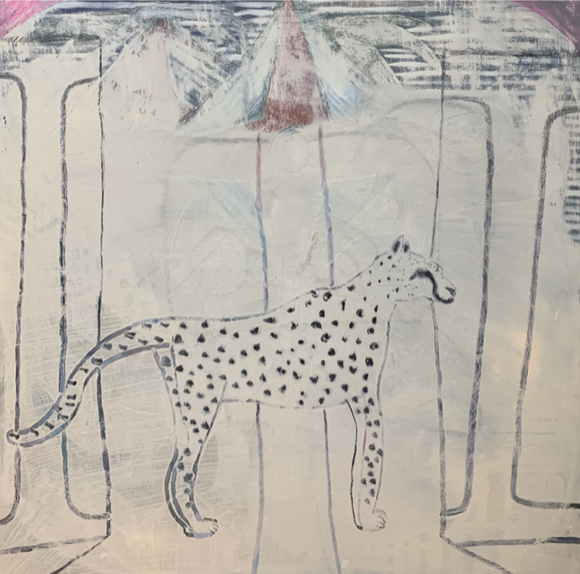
836 II, Oil Painting, 36x38 in, 2025 © Donoh Lee
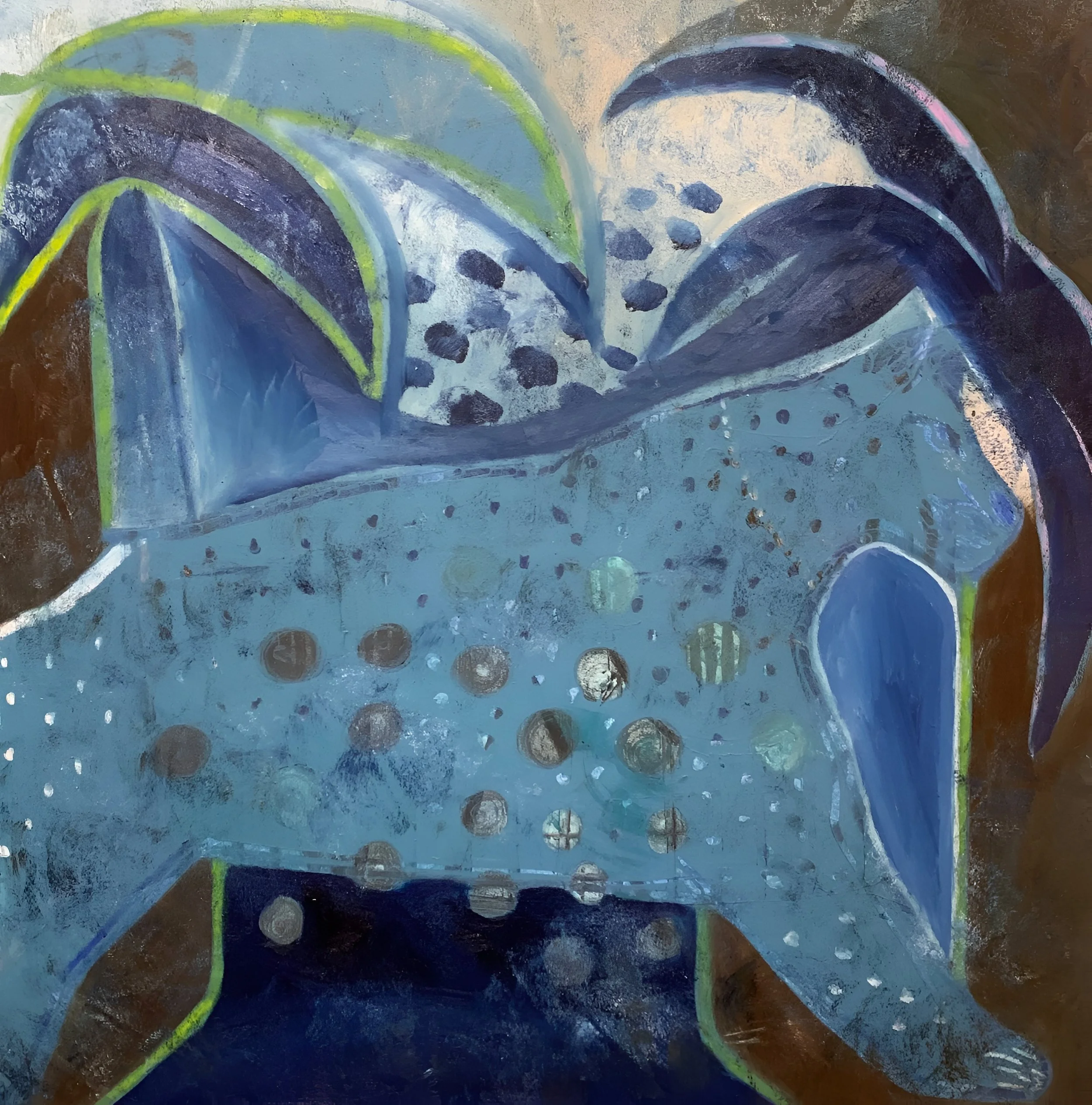
836 III, Oil Painting, 36x38 in, 2025 © Donoh Lee
You often speak about working in a flow state. How do you enter that state, and what happens when it doesn’t come naturally?
Flow State is conscious actions which become intuitively unconscious through the play and experimentation that occurs in the moment. It’s not my intent that I work according to Flow, but I suppose I step in and out of this state. I do notice it like a lightbulb that turns on and off through production. Working in a flow state is really blissful, because things are happening despite not having a clear end result, the faith aspect is grounded and always there, and when it turns off, dilemmas aren’t such an issue anymore. When you’re in the thick of painting, you just let your intuition happen, guiding you. Vice versa, it can be extremely humbling and frustrating when flow is absent, in my opinion, because it feels like you’re lugging each gesture or action being met with a brick wall metaphorically. When it doesn’t happen, I try different approaches and angles that feel unfamiliar, to circumvent the painting, because it’s the end result that people will have a relationship with. I’m a big feeler, with my emotions that drive the paintings a lot of the time. I try to embrace that gut feeling when it works, but when it doesn’t, I let the painting sit for a bit before I make another move. Time to reflect is really important and underappreciated.
Memory, emotion, and trauma seem to circulate in your internal landscape. How do you transform something so personal into an abstract visual form?
When I am really in the thick of painting, it’s unfortunately a traumatic response for me. What I mean by this is, emotions come up to the surface, and the memories do not dissipate mentally, so I am wrestling double-time, not just physically, but also emotionally, with these turmoils that come up to the bodily state. Personally, it happens and makes the work great, but it also falls short at times. That is really the only way I know and process the paint is from turmoil, that I think through the attempted gesture, it is then extracted or purified. It could sound like an intangible thing, but in the ways that I work the colour, create impressions, and build the spaces, I am shifting and changing my memories, relationship to time, and places that turn into fragments or windows of circumventing chaos, and splitting time. I draw out my work from using my imagination and also co-creating from a spiritually inclined “well”, locking in with a higher being. I am a believer in God, believe that my painting brings out these transformative opportunities where, alchemically, the (shifting and changing) actions with the brush, altering the layers, are reciprocated internally. I have dealt with mental health problems such as suicide for a large part of my adulthood, painting truthfully circumvents that brings out the raw, gut, instincts where although I am met with spiritual warfare I strongly feel when I am painting, this is my destiny, and therefore I paint “through” the layers, it’s not additively transformed, it is penetrated and altered by entering the previous marks.
Your work suggests luminosity and supernatural presence. Is light something you consciously construct, or does it emerge through the process?
I imagine the memories of shedding your skin as a child or the pain associated with growing bones, how there is inner resistance before the old will fall out. When your knees would hurt, as a child before growing taller, I remember at least two times a week when my knees would hurt so much because of how the cells in the body would transform. I say this to bring that idea of light emerging from constraint and restraint as a necessary part of luminosity. The labour behind the paintings and drawings isn’t very pleasant; it can feel like a purge or outpour that is just about letting out the emotion for the sake of holding in a lot. Then once it’s out, I think the light is plucked from within my consciousness, like how when you crack a rock open, the inside shines in multiple directions unintentionally. Previously, I have attempted to construct ‘light’ pastels or bright colours portraying luminous features, but in most cases, I am unconsciously developing this aspect emotionally and intuitively. It is successful personally when I am not conscious of how the light will make its way in a strange way. By being in the middle and dark, making myself solely present in the moment, doors do open, keys are granted only if I am willing to embrace the transgression and willing to open them.

Zero, Oil Pastel, 5x6 in, 2024 © Donoh Lee
You mention guardian angels, warfare, and veils beyond physical reality. Are these symbolic elements, spiritual beliefs, or intuitive images that arise during painting?
I am a believer that I am making and drawing out symbols or synchronistic gestures from within my Holy Spirit, and as a process and this kind of co-creation. I imagine that these spirits are present with me when I paint, perhaps in the studio or room in which I draw out the metaphysical aspect, it’s quite broad even for me. The work itself for this body of work was about my personal challenges in facing heavy warfare in my dreams, since growing closer to God. It is my spiritual belief carried through the work where I am drawing out these personal experiences, through the gestures, lines, and compositional changes, serendipitous happenstance are met. They’re made from an intuitive place, but I also think that these realms and spaces are breathing present according to when I am processing the work physically and mentally. The outcome is never projected or made known until I lean into that faith and trust myself to meet it where it needs aid, painting is like re-patching, and stitching, repairing the ground to start and see what could happen beyond for instance releasing heavy emotions, I surprise myself a lot and ask “how did that happen?” or “That’s never going to happen again.” It’s true, that kind of magic is needed and apparent. It presents itself when I need it.
Abstraction can sometimes feel distant to viewers. How do you hope audiences emotionally connect with your work?
Accessibility is something that I think, on one hand, is really fundamental, making the work with dignity and care. Not to impress or where there is no distinction, favouring a class or making it to smooch up to a certain gatekeeper of the art hierarchy, that’s not what I seek. It’s difficult, I’ve had this discussion a lot with my contemporaries and although I don’t have a good answer, first thing is that I try to honor the painting in giving my best when I am making the work, what comes after once it’s hung on the wall respectfully is like having a child and letting them grow up and blossom, out into the world. So the feedback, or perhaps not having a certain reciprocity, is not something that fixates my mind, respectfully. I understand the importance of context and space, having that dialogue with possibilities of abstraction that exist, but as a Painter in 2026, not that I am apathic, quite the opposite, because I am very empathetic, I have come into a quiet confidence and place where I have to honour my work and myself, and the results will speak for themselves. Some people will gravitate toward the painting, others won’t appreciate it, that’s alright. I hope that people will take away a kind of wonder and keep their mind toward magic and curiosity toward life stable and not jaded, hopefully some of my work could spark these ideals or pathways within them.
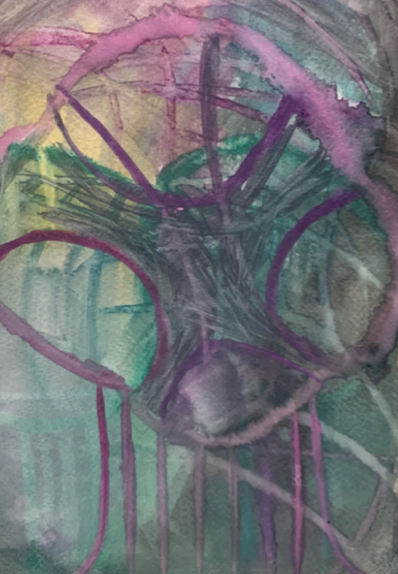
Three, Watercolor, 5x8 in, 2024 © Donoh Lee
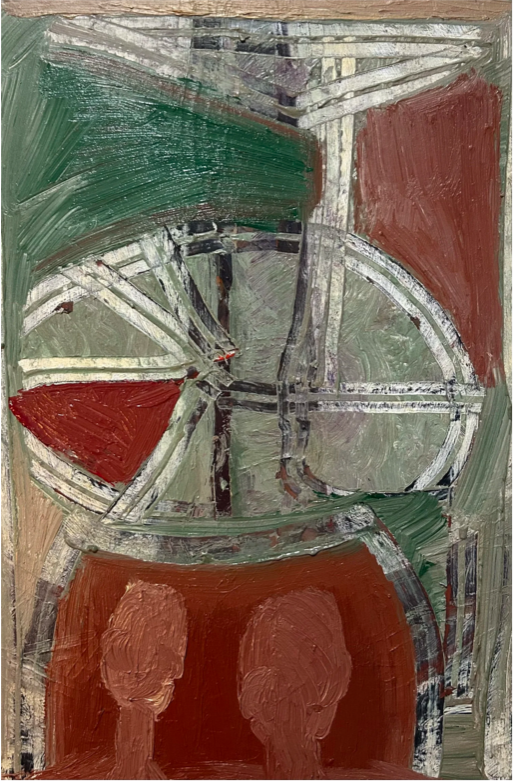
The Dining Hall, Oil, 20x33 in, 2026 © Donoh Lee
Receiving the President's Research Fund in 2025 marks an important milestone. How has this support influenced your confidence or direction as an emerging artist?
I was very happy to receive the Award. I think that I am quite a modest person, so to have received something like this was deeply appreciated. It gave me a boost in supporting my practice and building the research; otherwise, it would not have been possible if I weren’t attending university. I think that my life path would have been very different. As an emerging painter, it really helped me build a healthy relationship with myself and keep pursuing the work that interested me. I can’t advocate enough how funding and artistic research are underappreciated, despite the competition. I really encourage artists out there to find your way, and know it’s possible.
As you prepare to move to Italy and continue developing your visual language, what are you hoping this new environment will unlock in your practice?
Yeah, the first time I went to Milan was incredible. I think that community in art is everything, seeking the right context to situate my practice with the history and philosophy developing the artist in my heart and keeping that dream since I was child to be a Painter, that I will become great. I gave my life to painting early on. So, I said to myself, why not truly go for it all the way, in the environment that pushes, challenges and inspires me the most. In my chapter of life right now, Italy is a really special place for me. I think that I was very fortunate to have built up my character early on, learning how to adapt to challenging circumstances, deal with heartache, face difficulty head-on in my personal life and artistic development, and overcome them. I realised my potential is not capped. By finally moving, I think that is my authentic next chapter and place to honour my work. Thank you for the interview; it was truly an honour and a privilege.
Artist’s Talk
Al-Tiba9 Interviews is a promotional platform for artists to articulate their vision and engage them with our diverse readership through a published art dialogue. The artists are interviewed by Mohamed Benhadj, the founder & curator of Al-Tiba9, to highlight their artistic careers and introduce them to the international contemporary art scene across our vast network of museums, galleries, art professionals, art dealers, collectors, and art lovers across the globe.



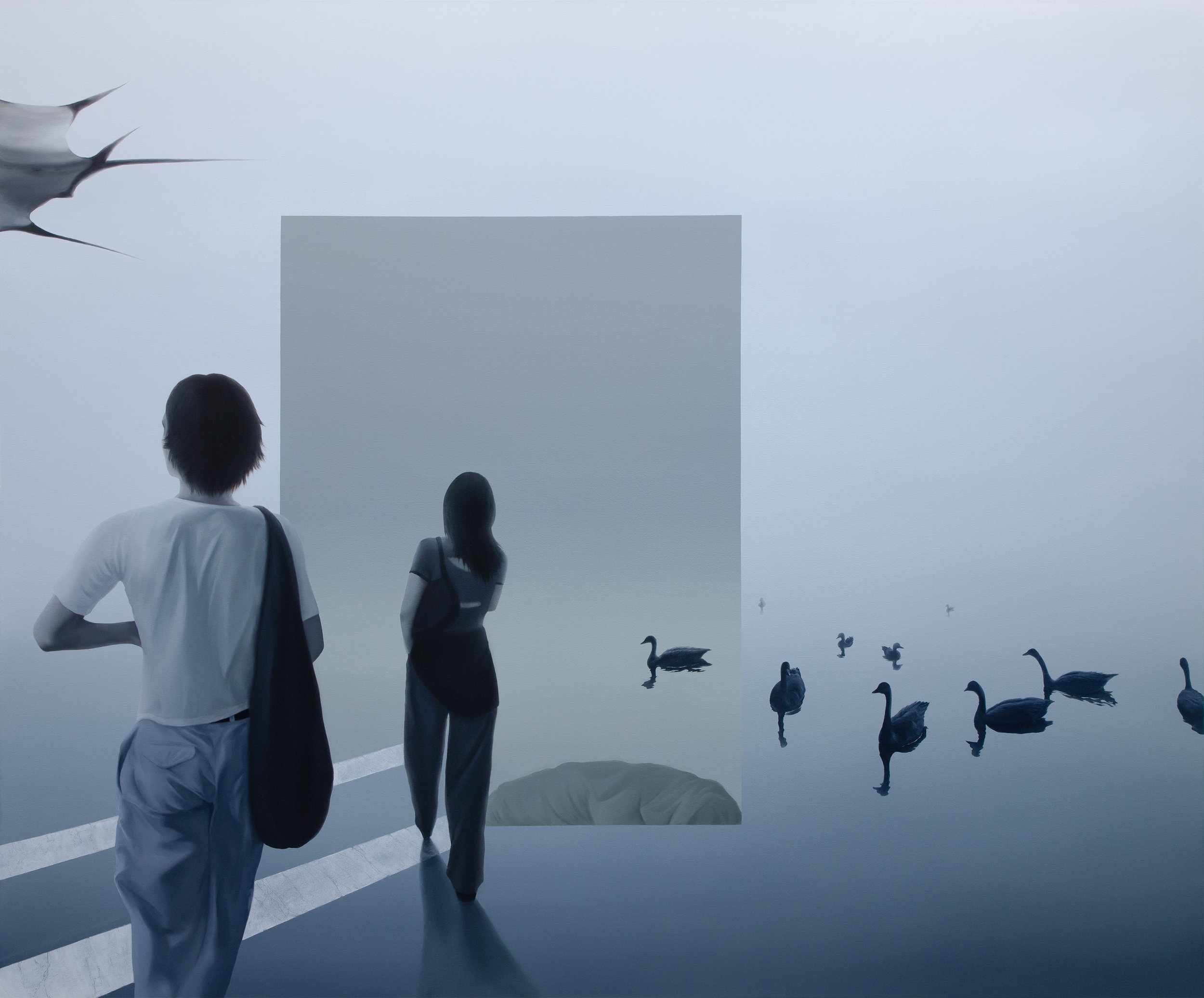
Brooklyn-Born Allan Gorman is a contemporary fine artist based in Jersey City, NJ, with a unique artistic vision cultivated by a distinguished commercial career that helped refine a sense of aesthetics and unwavering commitment to excellence that continues to define his artistic process to this day. His latest series of paintings is titled Imaginary Spaces.