

10 Questions with Misha Nicholas
AL-TIBA9 ART MAGAZINE ISSUE21 | FEATURED ARTIST
Misha Nicholas is a contemporary artist whose practice encompasses digital collage, photography, and illustration. Her artistic journey began to flourish around 2017; since then, she has focused on exploring universal experiences and the ways in which the world shifts consciousness.
Nicholas’s work is deeply informed by her advocacy and her background in the humanitarian sector. Recognized globally, she has received several prestigious honors, including the Premier Artist Prize (2024, 2025), the Future of Art Global Masterpiece Award, and the Harmony for Humanity: Global Consciousness Art Prize. Her work has been featured in international group exhibitions, including Contemporary Art Station and the Urban Photo Awards at Trieste Photo Days.

Misha Nicholas - Portrait
ARTIST STATEMENT
Misha Nicholas blends style and vision to reflect world experiences while examining diverse identities. Through her digital collages, photography, and illustrations, she explores these themes with the primary aim of sparking dialogue and fostering connection.
Her creative process is rooted in an emotional standpoint, a "base" idea that she builds upon to bring an image to life. As an introvert, she often channels themes of peaceful isolation, reflection, and the "wallflower effect."
Nicholas approaches her subjects with an "expect the unexpected" philosophy, focusing on overlooked angles and striving to visualize narratives that connect us to the natural world. Driven by her unique perspective, she uses art as an allegory to tell stories and invite introspection on topics ranging from mental health to the delicate coexistence of nature and humanity.

The Battle With the Sun, Digital GIF, 960 x 640 px, 2023 © Misha Nicholas
AL-TIBA9 ART MAGAZINE ISSUE21

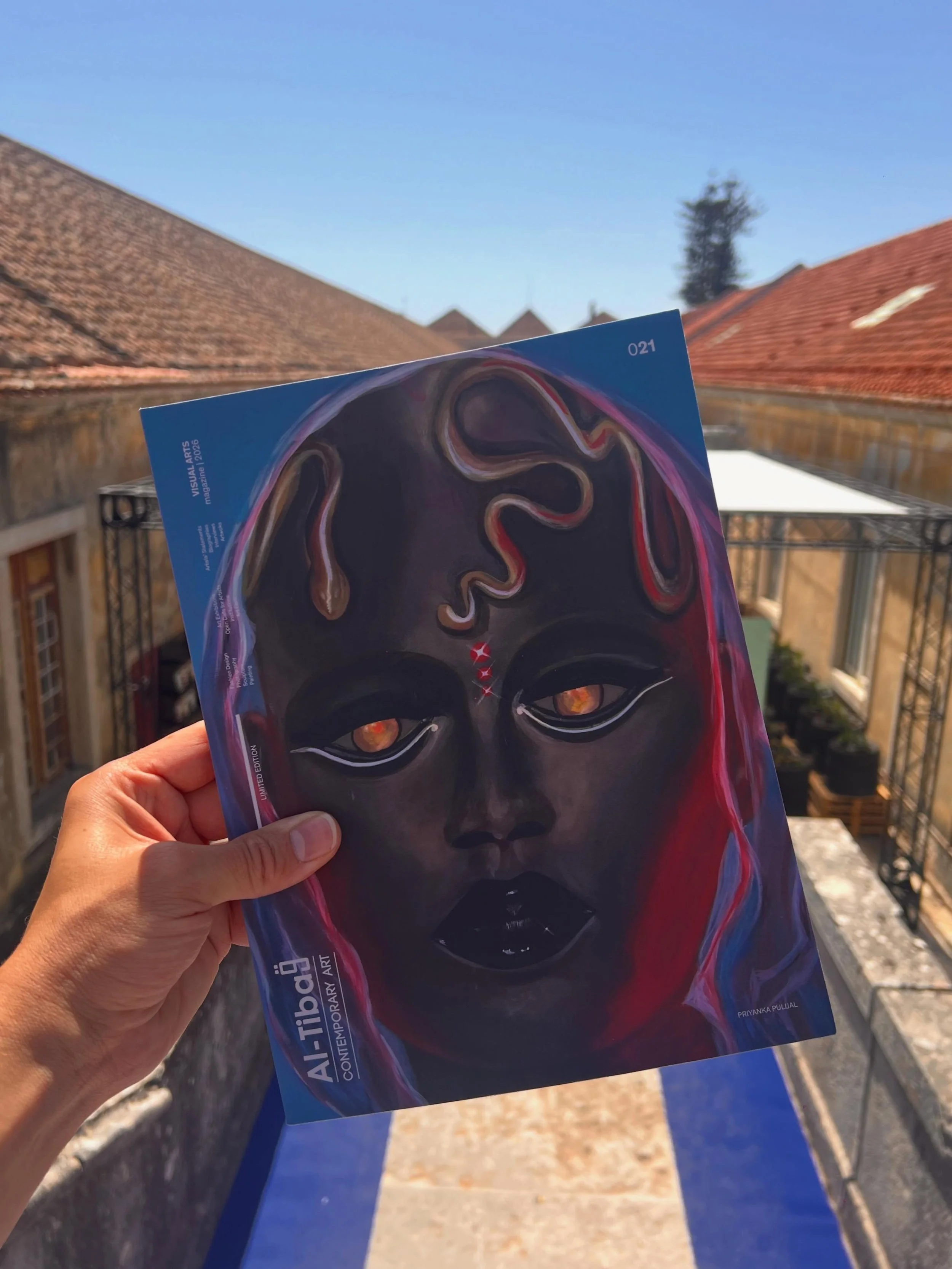
DISCOVER THE INTERNATIONAL ART SCENE WITH AL-TIBA9
LIMITED EDITION | Shipping worldwide.
Premium museum art paper.
Printed in London.
Grab 3 or more prints and get your FREE digital magazine.

Digital Magazine - Available SOON…
INTERVIEW
First of all, your artistic journey began around 2017. What first pushed you to take your practice seriously and develop it further?
Following a hibernation from my practice, a push from my sister broke my slumber from photography and served as a wake-up call. I felt like someone who received a knock on my empty store door while I was trying to get the store taken care of.
My sis reminded me of my calling, and that is to make art that captures how my soul depicts scenes in a highly televised world. Since then, my work has been a story of my progression to move past the prettiness and explore the deeper, often overlooked connections between people, nature, and public infrastructure.
You work across digital collage, photography, and illustration. How do you choose which medium best serves a particular idea?
My process is guided by intuition; when it's not, you can tell. I move to the beat of my own drum when my body feels like a story needs to be told. Whether it's the sudden urge to grab my camera or having an inkling to remix a frame with some recycled illustrations, I follow that instinct. Since my college years, I’ve loved to take photos, capturing an environment's heartbeat.
The magic happens when I build upon those cinematic moments, layering them until they come together as an original image of my emotion being communicated through the art piece.

Pigeons Who Have the World, Digital Photo, 1,920 x 1,280 px, 2025 © Misha Nicholas
Your background in the humanitarian sector plays an important role in your work. How has that experience shaped the themes you explore?
My work in the humanitarian sector has exposed the power dynamic of the voices for change vs. the voiceless. Having witnessed the side of the humanitarian sector where the exploitation of vulnerable moments is often used as a tool for visual communication, I have dedicated my practice to a more ethical approach.
My work explores the spectrum between exposure and preservation, and I want to be an advocate for human rights without overly exposing the identity of those in the frame. Now, I am trying my best to make sure I weigh the ethical risks of identity exposure in my photography.
In my piece, “Making Money off of People’s Misery is a Business,” I examine the fine line between documenting society's failure and profiting from the essence of suffering. My goal is to expose what society ignores, not to always make a profit on someone's struggle.
Many of your works reflect on identity and global consciousness. What draws you to these universal yet deeply personal subjects?
I don't find beauty in superficiality. I get hypnotized by the stories that shape our dreams and nightmares, not by how much a Chanel purse costs, sorry, not sorry. Having experienced injustice myself, I’ve committed my work to exposing the systemic forces that are often ignored.
However, while my subjects are chosen, my philosophy is rooted in the “Death of the Author.” I don’t want to tell you how you should feel about my work. Instead, I want to present the narrative and then step aside to let the audience find their own truth within the art.
You describe starting from an emotional “base” idea. Can you walk us through your creative process from that first feeling to the finished image?
Post-processing is where my photos come to life. I carefully select a photo frame that offers the most unique perspective and then use color and tone to amplify its voice. I view my upcoming work as a series of puzzles.
I’m experimenting with collage, fitting patterns and textures together to see how they can transform a single moment into a complex narrative. It's about finding the perfect fit between the raw image and the artistic vision.
Simultaneously Moving While Being Anonymous, Digital Photo, 1,849 x 1,238 px, 2024 © Misha Nicholas
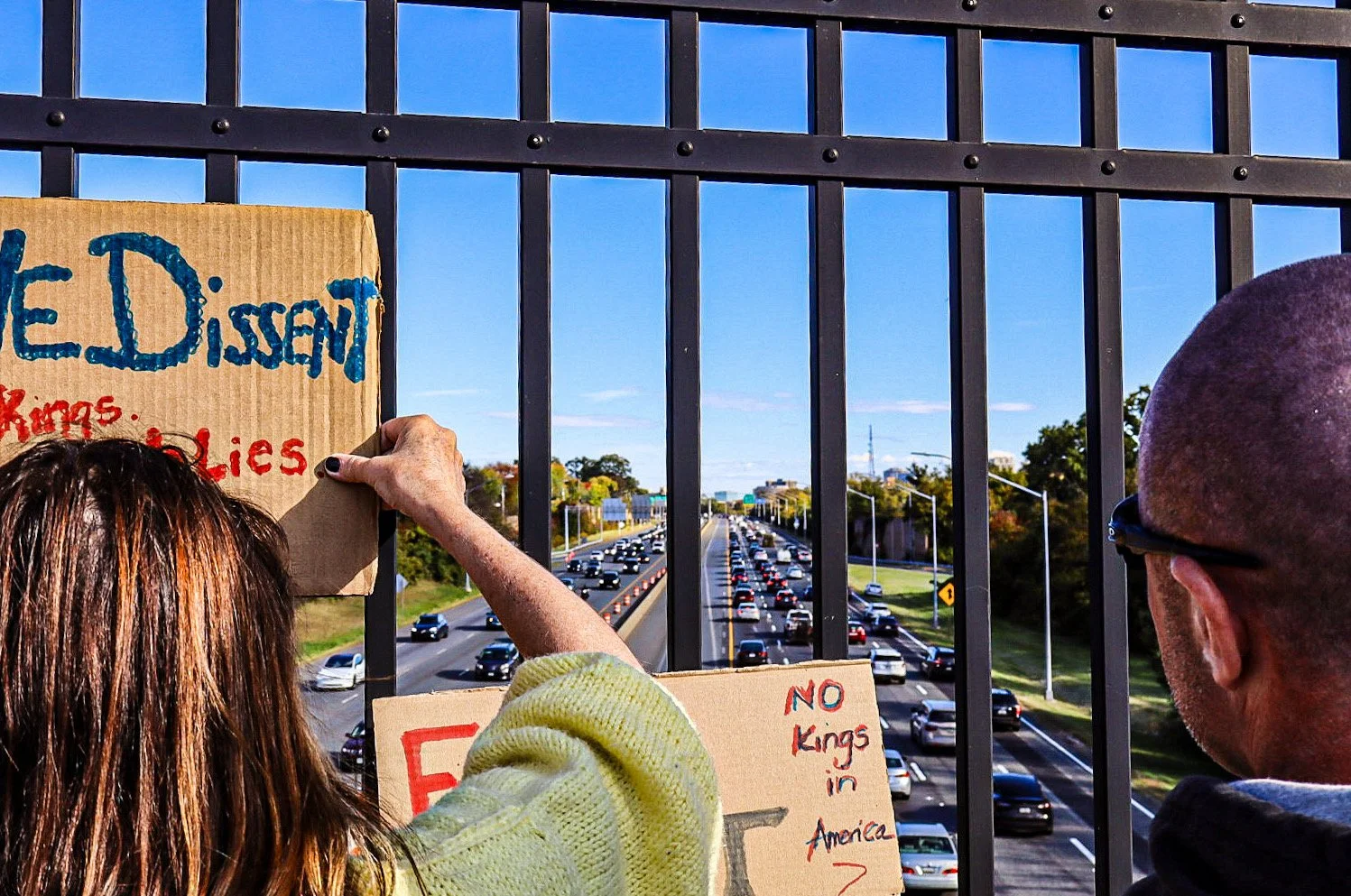
Us vs. Them, Digital Photo, 1,497 x 993 px, 2025 © Misha Nicholas
As someone who identifies as an introvert, how does the idea of peaceful isolation or the “wallflower effect” influence your visual language?
If you look at my photography, you'll notice a theme: one person or very few people are in a scene. This is intentional. Pieces like “The Museum of Modern Distraction” reflect our collective experience of feeling "alone together" in a digital world, despite being surrounded by historical fragments of time.
This is a shoutout to the introverts and the loners. I’ve always believed that being alone is a skill, not a sadness; it’s a space for recharging and deep reflection, and I want my work to honor that quiet strength.
Nature and humanity often appear intertwined in your work. What does this relationship represent for you?
Architecture is a mirror. To me, our relationship with the environment reveals our true feelings toward Mother Nature. I often ask: Do you treat nature with the same regard, or lack thereof, as you treat women? In "Walking in on Bees," I document the interaction between a simple park bench and the life that inhabits it, questioning the fine line between human infrastructure and natural sanctuary. My art aims to expose these hidden dynamics, pushing the audience to rethink their place in the ecosystem.
Your philosophy includes “expect the unexpected.” How do you challenge yourself to see from overlooked or unconventional angles?
I see the world in patterns and rhythmic beats. Because of my neurodivergence, I don't just “take” photos; I recognize movie scenes that play out in real time.
I have seconds to carve the image out of the surrounding noise before the moment vanishes. My 2026 shot “Coming Soon” is the perfect result of this instinct: a car passing a sign in a town square, the exact moment the messaging and the car are aligned. I saw the angle at the stoplight, and within the blink of an eye, the story was captured.

The Watchful Witness, Digital Photo, 5,212 x 3,876 px, 2026 © Misha Nicholas
You’ve received international recognition and awards. How has this reception impacted your confidence or direction as an artist?
I view professional recognition and awards not as the destination, but as a compass pointing toward the "North Star" of my dreams and aspirations. I don’t create for the awards; I create for the opportunity to share my perspective and, in the spirit of the “Death of the Author,” give my audience the space to find their own. For me, the true achievement isn't the accolade; it’s the moment a viewer sees the world differently.
Lastly, looking ahead, are there new themes, techniques, or projects you’re excited to explore in the near future?
My latest project takes me across a couple of states in the United States during this uniquely turbulent time. My mission is to document the pulse of the country through the lens of the overlooked, capturing the stories that remain hidden from the view of our digital media. I am seeking the unique, the quiet, the grunge, and the profound. Stay tuned, the features from this cross-country journey will be, and have been, appearing in publications soon.
Artist’s Talk
Al-Tiba9 Interviews is a promotional platform for artists to articulate their vision and engage them with our diverse readership through a published art dialogue. The artists are interviewed by Mohamed Benhadj, the founder & curator of Al-Tiba9, to highlight their artistic careers and introduce them to the international contemporary art scene across our vast network of museums, galleries, art professionals, art dealers, collectors, and art lovers across the globe.



Shingo Ohta is a Japanese photographic artist based in Toyooka, Hyogo, near the Sea of Japan. After a long career in business and regional revitalization, he turned to photography as a primary artistic practice, developing an ongoing body of work centered on the sea as a living, volatile, and almost sacred force. His images transform waves, spray, light, and weather into abstract forms.