
10 Questions with Micha Tsifroni
Micha Tsifroni is an artist working across sculpture, painting, and photography. He grew up in the northern Israeli kibbutz Ayelet HaShahar, where landscape, material, and nature shaped his early world, and continue to anchor his artistic practice today. His work moves along the meeting points between body, space, and matter, searching for the subtle transitions between the internal and the organic. Tsifroni’s creative process emerges from deep layers of the subconscious, often sparked by dream imagery, fleeting visions, or an instinctive bodily sensation. He frequently begins with a physical gesture or a vivid mental picture, and from that moment, he follows an intuitive path of constructing, undoing, and re-forming. The way he positions himself in front of the canvas, the first gestures toward the blank surface, and the act of listening to the body all serve as thresholds between instinct and thought.
He works with a wide range of materials: wood, plaster, metal, acrylic paint, pastel chalks, and digital photography. His work is saturated with natural color palettes, especially turquoise, orange, yellow, and green, tying each image back to the material world it comes from. Much of his practice centers on the human body, often the female body, explored as a form open to interpretation. His lines can be raw and direct, yet from a minimal amount of mark-making emerges an image that feels layered, detailed, and alive. Tsifroni’s work grows out of a balance between intuition and reflection: between an impulsive, subconscious point of departure and a philosophical inquiry into the relationship between human beings and nature, and between the individual and contemporary, specifically Israeli, reality.
Alongside his studio practice, Tsifroni is active in arts education, integrating his artistic approach into pedagogical work. He teaches photography to children and develops creative spaces where art and learning inform one another. He has exhibited in selected student exhibitions at the Bezalel Academy of Arts and Design, where he is currently completing his BFA in the Fine Arts Department. Tsifroni lives and works in Jerusalem, continually deepening his exploration of image, material, consciousness, and embodied movement

Micha Tsifroni - Portrait
ARTIST STATEMENT
Tsifroni creates from instinct, from an image that rises suddenly, a gesture his body makes before he fully understands it. His work begins in the quiet space between the subconscious and the physical, where a vision appears and pulls him toward material, form, or light. For him, photography is a way of listening. It lets him catch the moment before it becomes language: a contour, a shadow, a body shifting its weight. This instinct resonates with the way he approaches sculpting or drawing. He thinks in fragments, in layers, and in the tension between what is revealed and what stays hidden. His works remain open, inviting questions rather than providing answers or imposing a fixed interpretation. He is drawn to the human body, often the female body, as a site of transformation. A single line or shape can feel raw, yet within it, he looks for sensitivity, the detail that appears when very little is done. Color and texture guide him, but the emotional weight usually comes from the gesture itself: the first movement, the first response. What interests him most is the meeting point between the internal and the external, where a dream-image becomes a physical mark, where a sensation becomes a frame. Through different materials and through the camera’s eye, his work explores this threshold again and again.
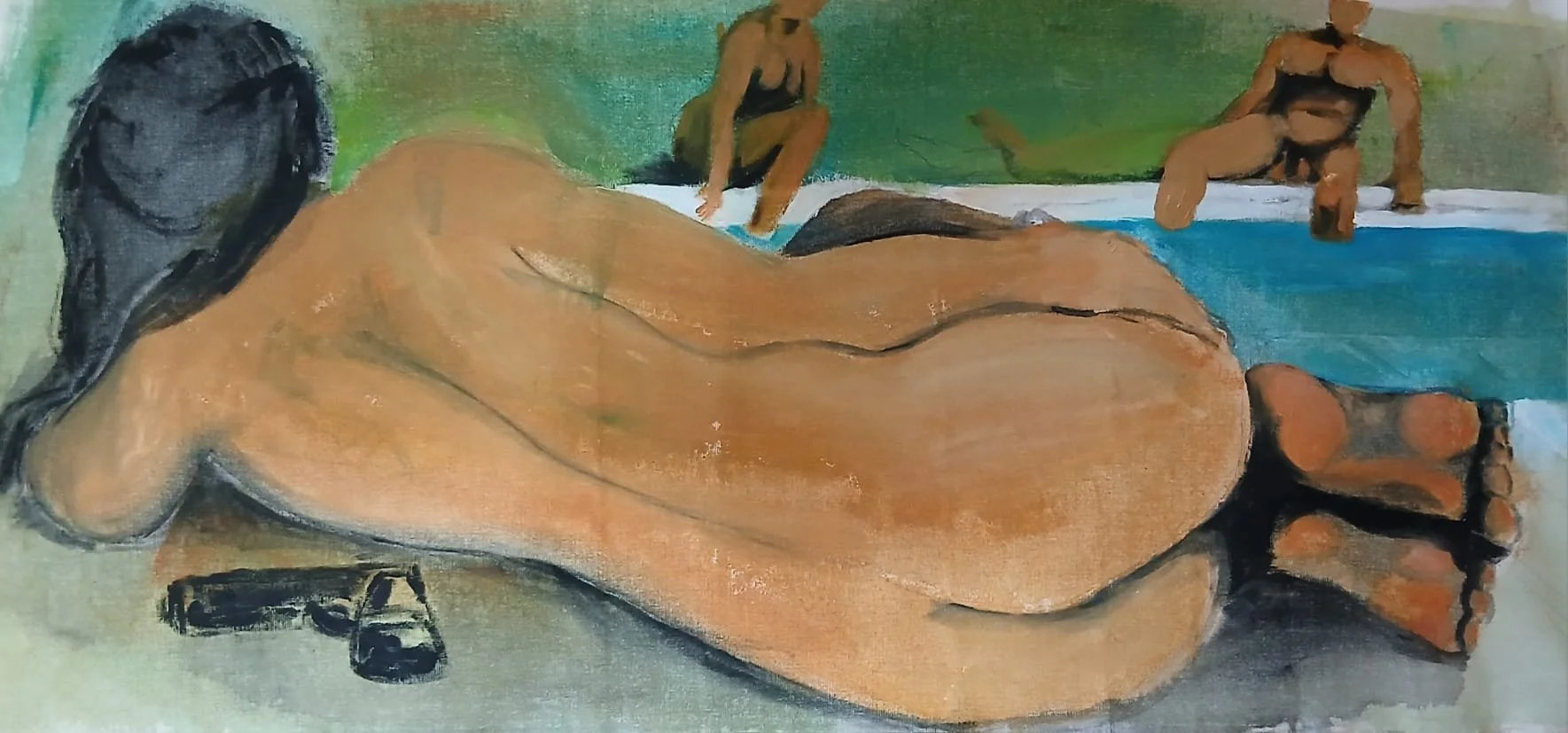
A gun, acrylic on canvas, 110x40 cm, 2026 © Micha Tsifroni
INTERVIEW
Let’s start with your background. You grew up in a kibbutz, how did that environment shape your relationship to nature and materials?
Growing up on a kibbutz meant living in constant dialogue with nature. I spent most of my childhood and youth outdoors, wandering through fields and along the streams and springs nearby. Those years were defined by a deep sense of observation: the textures, sounds, and visions that surrounded me. The materials I often work with today are deeply rooted in those sensory experiences. Engaging with these materials allows me to maintain a tactile connection to nature and to my own body. Strolling freely along the kibbutz paths as a child, I felt that the opportunities to create were truly endless. This mindset, which resonates deeply with my childhood, continues to set my imagination free, fostering a space for experimentation that has been with me from a very young age.
Your work often begins with instinct or a bodily sensation, as you mention in your statement. How do you recognize when an idea is worth following?
It varies. Often, I begin with rapid, intuitive action, testing to see if a movement or a material 'grabs' me. If it doesn’t resonate, I stop and pivot, repeating the process until I feel a sense of flow, where the body instinctively knows where to lead. Other times, a specific image enters my mind that I simply cannot forget. It might stem from a mental process that lingers for a short while or even a long period, until everything clicks and a definitive image forms. Once that happens, I feel a sense of urgency. My body won't let me rest until I’ve translated that internal vision into a physical reality.

Dance, oil and acrylic on canvas, 70x50 cm, 2025 © Micha Tsifroni
You move between sculpture, painting, and photography. How do you decide which medium fits a particular idea?
It’s actually hard to pin down a single rule. I really enjoy the way different disciplines enrich each other, they don’t exist in isolation but rather flow into one another. Often, a question I’m grappling with in one medium finds its answer through the practice of another. This interplay allows me to discover new layers of meaning and keeps my perspective fresh, whether I’m working on a single piece or exploring the same image across different forms.
Dreams and subconscious imagery play a role in your process. Do you try to control these images, or simply respond to them?
I believe there is a certain degree of control involved, almost like 'wiring' the mind toward a specific direction through the subconscious. For me, control also exists within the act of letting go. It’s about the skill of knowing when to maintain a firm grip on an idea and when to release it, allowing the subconscious to take over so that deeper images can surface.
The human body is central to your work. What continues to draw you to it as a subject? I see the human body as our primary vessel; it is the medium through which we navigate every moment of our existence. For me, the body acts as a bridge between the spiritual and the physical, it houses our inner essence while simultaneously serving as the gateway to the external world. It hosts this constant dialogue between the internal and the external, which I find endlessly fascinating.

Hide, oil pastels on paper, 100x70 cm, 2026 © Micha Tsifroni
Your mark-making can be very minimal. How do you know when a work is complete?
I don’t have a formulaic answer to this. It’s a purely intuitive process; I simply feel it.
Colour seems closely tied to nature in your practice. How do you choose your palette for each piece?
I view color as a vital tool for conveying specific emotions. While my work often gravitates toward natural tones, I make a conscious effort to challenge my own aesthetic habits and avoid falling into a stylistic fixation. I don't want to be bound to a single palette or a predictable set of emotions; instead, I aim for a process of continual exploration. This allows me to push my boundaries and ensures that my practice remains fluid and resistant to stagnation.
There is a balance between intuition and reflection in your work. At what point does thinking enter your process?
There is a constant integration between intuition and reflection, they aren’t separate stages. Reflection can happen in the split second a hand responds to a visceral impulse, a voice from the gut. But beyond the studio, for me, it’s important to challenge the romanticized image of the tormented artist isolated in a dark room. The studio is a living space that is inherently linked to life outside its walls. Reflection happens through community, artistic discourse, and meeting people. It is the experience of living itself that fuels my thinking process.
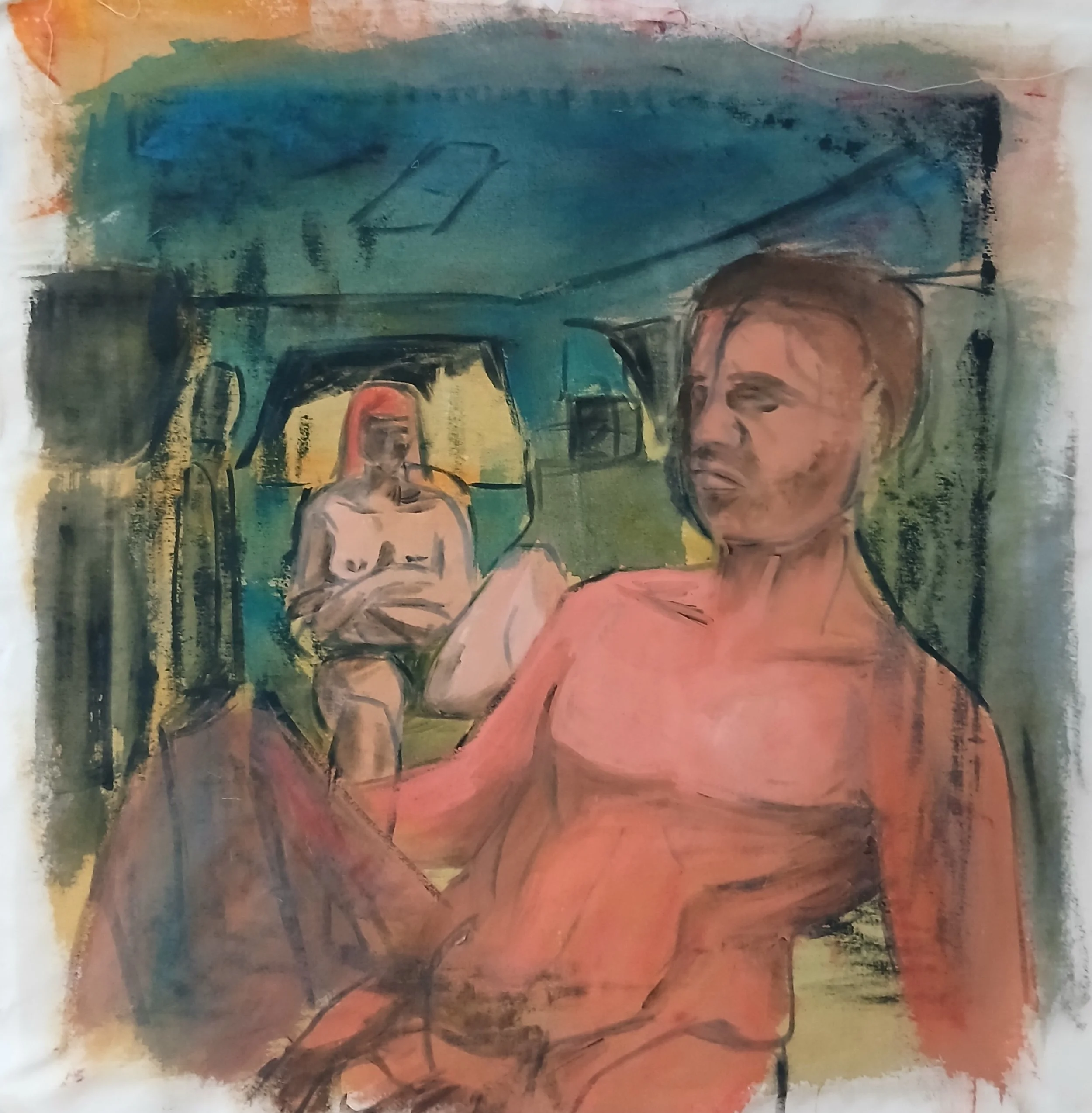
Somewhere in some car, acryilic on canvas, 80x80 cm, 2025 © Micha Tsifroni
You also work in arts education. How does teaching influence your own artistic practice?
Working with children is a profound experience because their minds operate with such unique, unfiltered freedom. Their imagination is truly boundless, they often conceive of possibilities that I could never even imagine. It reinforces the importance of maintaining that same mental elasticity in my own practice. For me, art education is a great privilege; it is a way to share knowledge while staying connected to that raw, creative spark, and it is something I am deeply committed to integrating into my life and career.
What are you currently exploring in your work, and where would you like your practice to develop next?
Looking ahead, I want to keep challenging myself while maintaining a vital balance, staying deeply connected to my intuition and a sense of experimental play. My goal is to continue expanding my material vocabulary and exploring how different media can give shape to these ideas. For me, it's about staying in a constant state of learning, tackling complex subjects and letting my concepts evolve into whatever form they need to take.
Artist’s Talk
Al-Tiba9 Interviews is a promotional platform for artists to articulate their vision and engage them with our diverse readership through a published art dialogue. The artists are interviewed by Mohamed Benhadj, the founder & curator of Al-Tiba9, to highlight their artistic careers and introduce them to the international contemporary art scene across our vast network of museums, galleries, art professionals, art dealers, collectors, and art lovers across the globe.


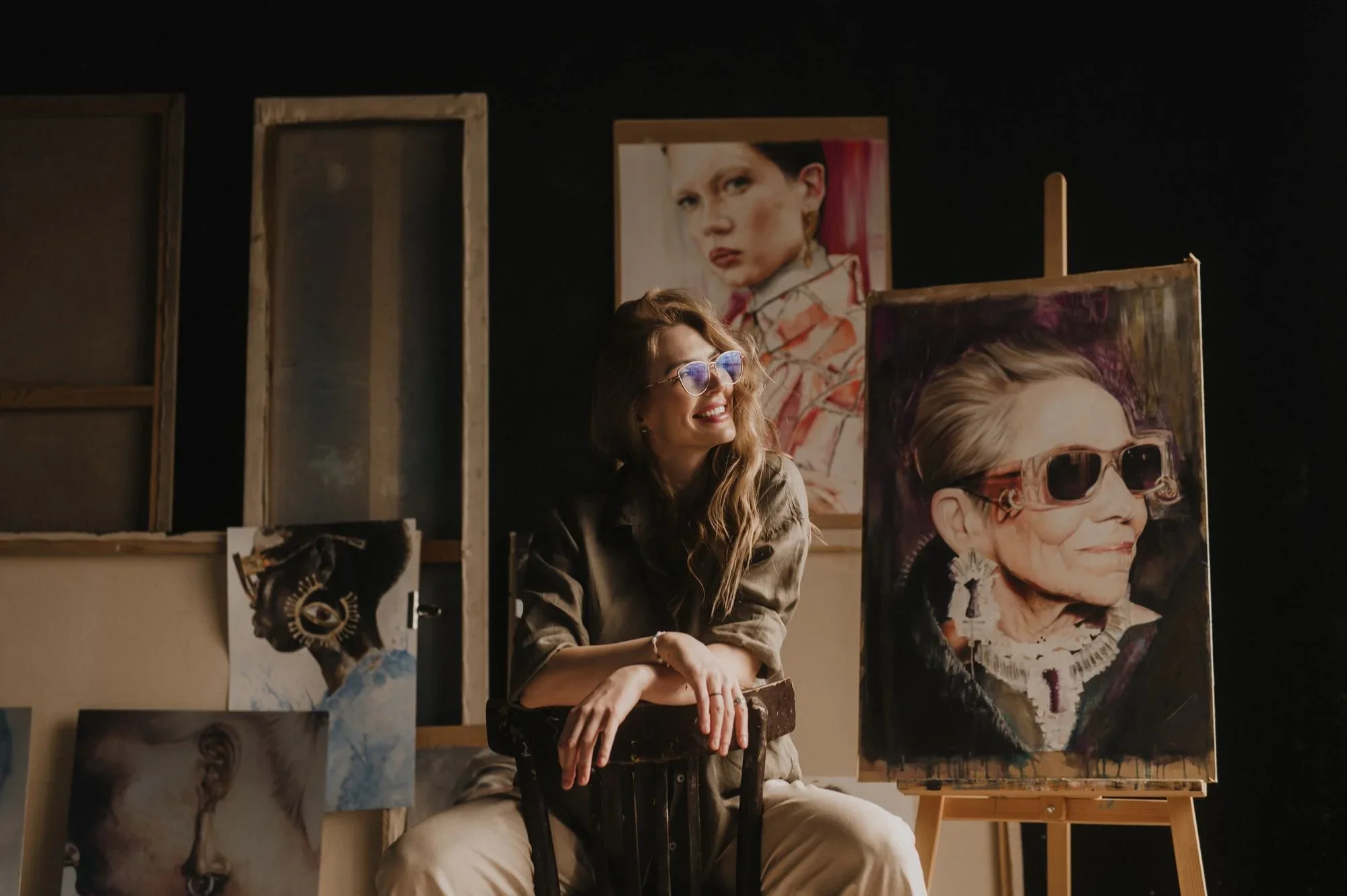
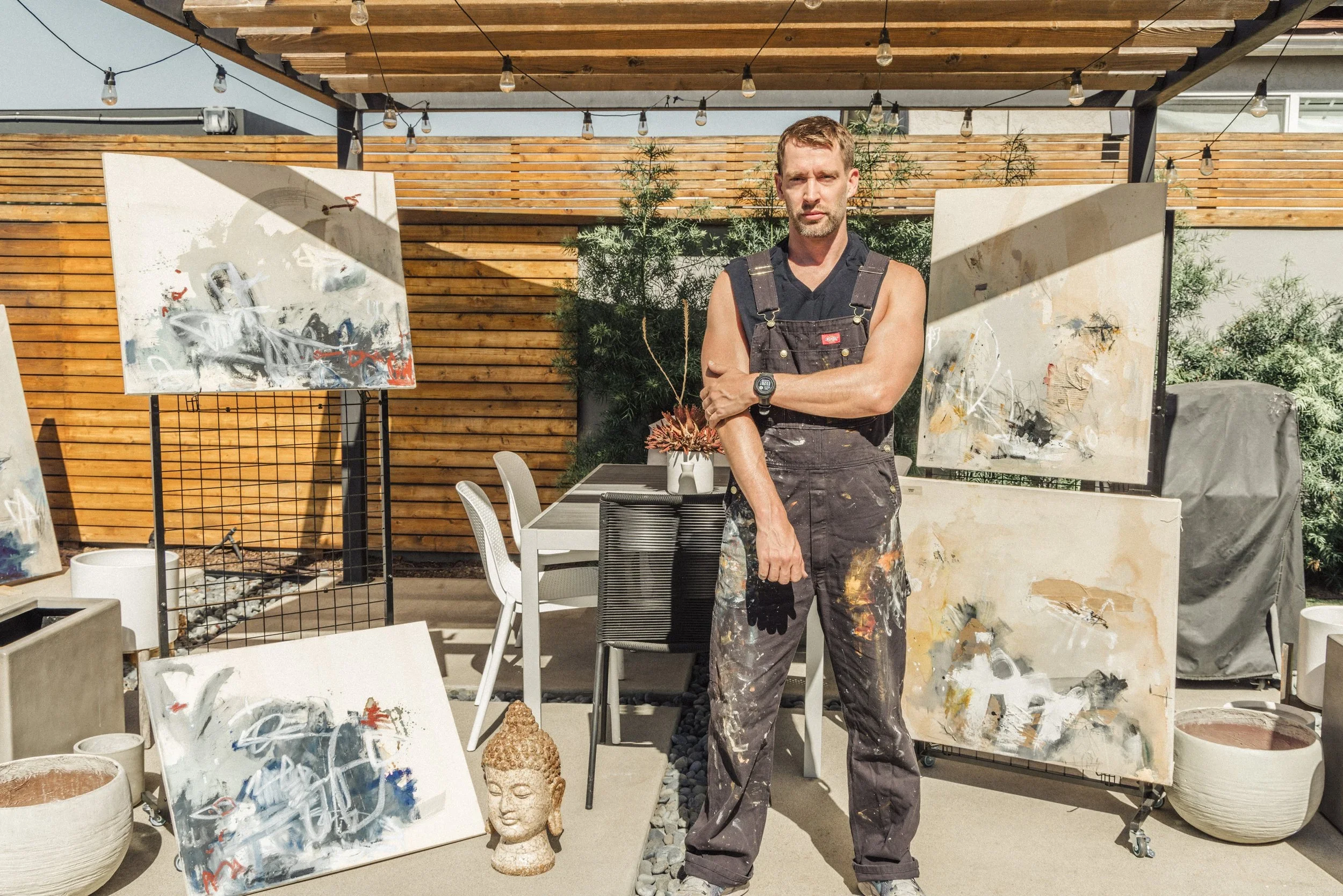

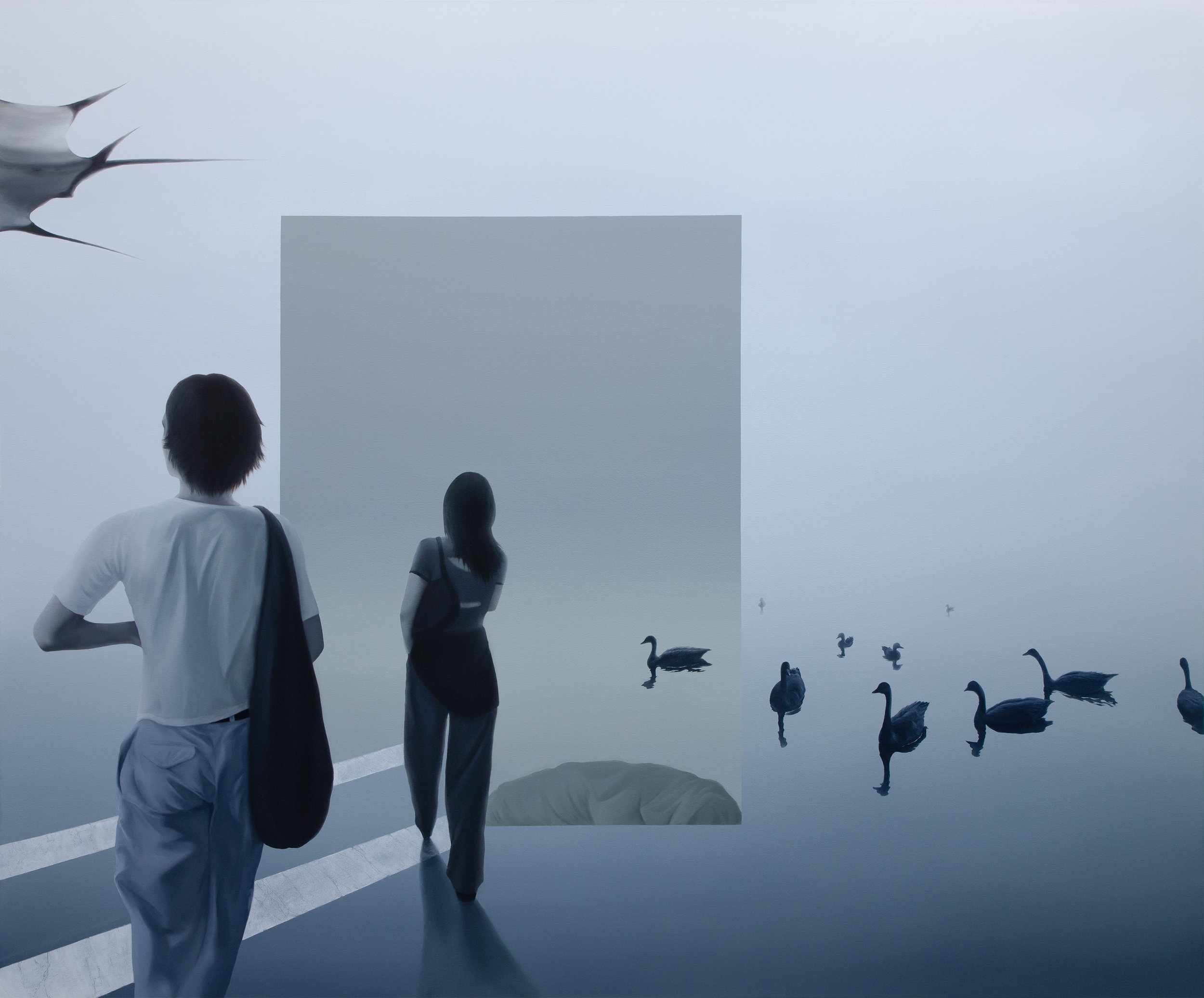
Brooklyn-Born Allan Gorman is a contemporary fine artist based in Jersey City, NJ, with a unique artistic vision cultivated by a distinguished commercial career that helped refine a sense of aesthetics and unwavering commitment to excellence that continues to define his artistic process to this day. His latest series of paintings is titled Imaginary Spaces.