
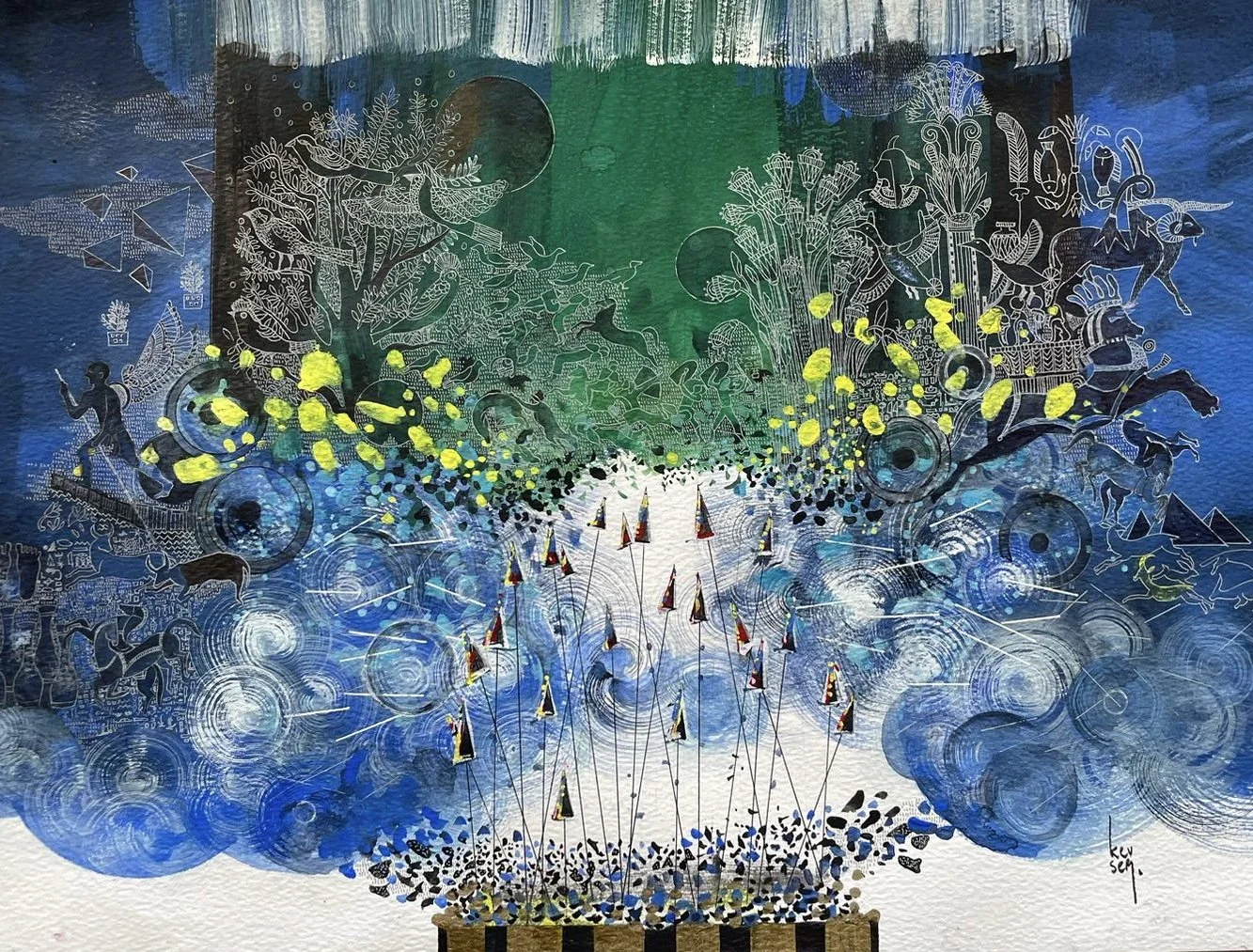
10 Questions with Kevser Ugurlu
Kevser Ugurlu is a Tokyo and Sydney-based contemporary visual artist whose practice is shaped by long-term engagement with drawing and painting. Raised in Turkey, she began developing her BFA in her hometown.
By the experience of living across three different countries- Ankara, Sydney, Tokyo- her practice is driven by the persistent question of “Where is home/homeland?”
Inspired by the story of “Exodus / Crossing the Red Sea,” which draws from narratives of common stories, exploring themes of migration, displacement, and resilience, it still has a powerful message that resonates as a universal one today.
This ongoing inquiry informs her work, positioning it between movement and settlement, memory and place. Grounded in a search for freedom and shaped by the desire to break away from systems of control and authoritarian structures, her work takes a critical view of social, political, and cultural realities. Pushing the boundaries of visual storytelling, drawing from history, mythology, and lived experience to create pieces that invite contemplation and dialogue through the fluidity of the medium.
Working primarily with watercolour, gouache, and ink on paper, Ugurlu creates semi-abstract works characterised by fluid forms, layered surfaces, and intuitive mark-making. The compositions often feature rhythmic movement, layered textures, and intricate details, striking a delicate balance between the figurative and the abstract. Together, these elements evoke a sense of both chaos and transcendence, reflecting the emotional depth and complexity within each story. During research and production, new areas of interest arise and lead to the creation of the next body of work.
Her works have been featured in juried exhibitions in Japan and Australia, including selected group exhibitions and art prizes, and public projects.
She facilitates art workshops in both group and private settings, emphasising process-based learning and accessibility.
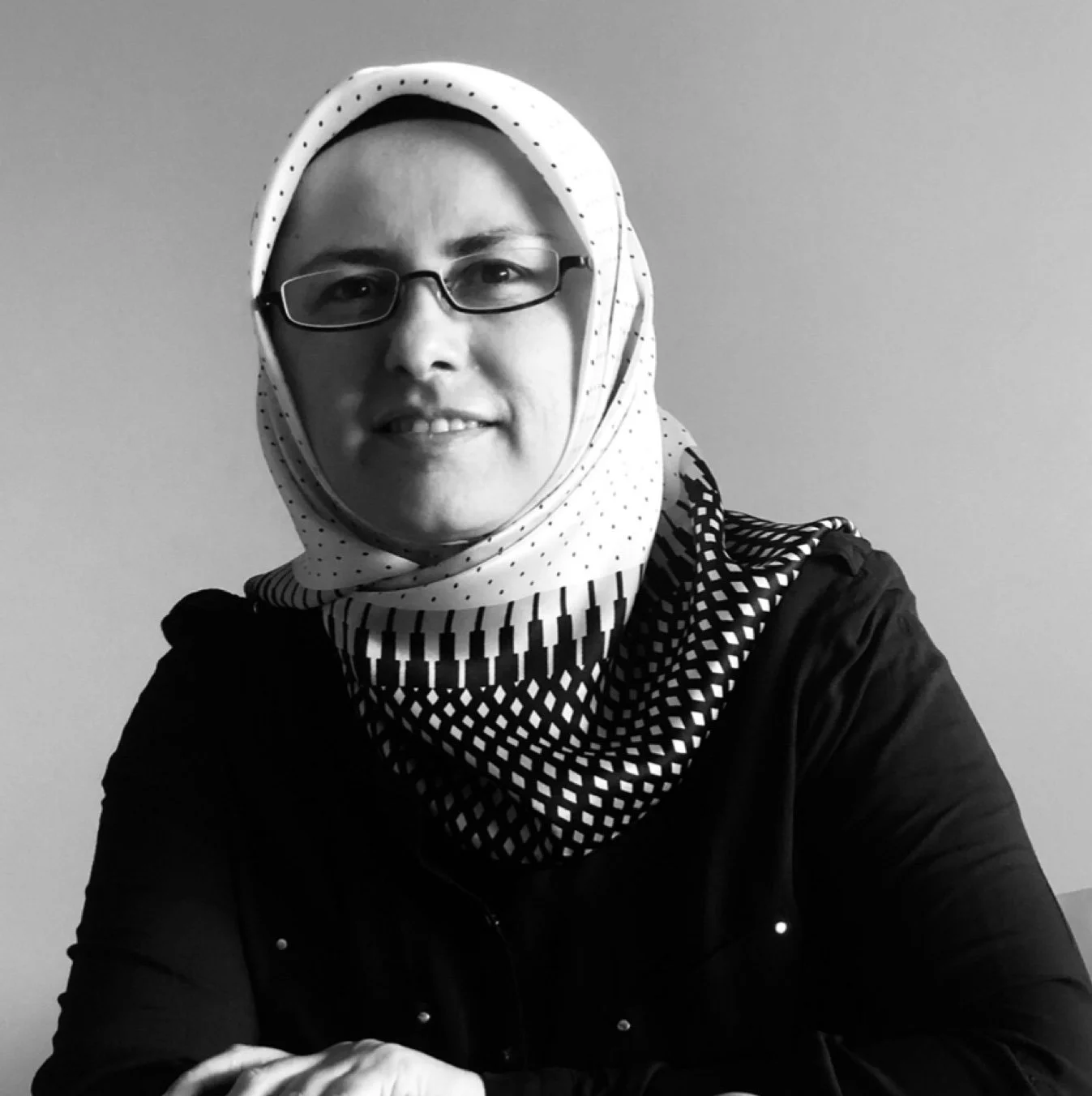
Kevser Ugurlu - Portrait
Exodus / Crossing the Red Sea | Project Description
Inspired by the stories her grandfather shared, particularly “Exodus / Crossing the Red Sea,” which draws from narratives of Moses, explore themes of migration, displacement, and resilience that remain deeply relevant today. Through these stories, she believes it still has a powerful message that resonates as a universal one today. Countless individuals are displaced or leaving their homelands, and the dynamics of hopelessness and powerlessness amidst challenging conditions are of great impact on all of humanity. The question is whether each individual undergoing experiences of “migration”, and “displacement” can become their own Moses, navigating through the seas of challenges that confront them.
In a contemporary context, her works also reflect on how authoritarianism has transformed into a more insidious, algorithmic force, threatening individuality and autonomy.
Kevser responds to the stories while crafting a visual harmony and sense of balance among the figures and employing ancient elements and symbols. These stories, rich with symbolism and ancient wisdom, have profoundly influenced her artistic practice. Her experiences interacting with a diverse audience, providing information, answering queries, and enhancing the overall visitor experience.
She continues to push the boundaries of storytelling in visual form, drawing from history, mythology, and lived experiences to create pieces that invite contemplation and dialogue. Her works are not merely representations of the past but active engagements with the present, urging viewers to consider the ongoing relevance of these struggles and the resilience required to overcome them.
Painted in watercolour and gouache, ink pen- on A3-sized paper (29.7 x 42.0 cm), the body of work is a semi-abstract style, concerned primarily with playful colours, forms and ancient Egypt elements as an expression of this story. Compositions often feature rhythmic movements, layered textures with intricate details and a balance between figurative and abstract elements, evoking both the chaos and transcendence within the stories.
Moses in A3 (Exodus - Crossing the Red Sea), watercolour, ink pen on paper, 29.7 x 42 cm, 2023 © Kevser Ugurlu
INTERVIEW
Can you tell us about your background and how you first became interested in art?
I am Kevser Ugurlu, a Turkish-born woman, contemporary artist currently living in Tokyo, with another part of my artistic life rooted in Sydney.
From a very young age, I found immense joy in drawing and painting. During my middle school years, I received several national awards, which strengthened my commitment to art. Those achievements encouraged me to choose a high school dedicated to art education, a formative step that made my artistic path feel tangible and intentional.
But I was unable to have art education in academic level in my country, which I deeply desired due to personal and social constraints. Instead, I studied and worked in a different field at university. After graduating, I moved to Japan, where I worked mainly in graphic design, producing logos and posters alongside other jobs.
You have lived in Ankara, Sydney, and Tokyo. How has moving between these places shaped your idea of “home”?
Living in big, different metropoles has profoundly reshaped my understanding of “home.” Moving between those cities has made me realise that home is no longer a single geography. It exists in memories, in language, in relationships, and even in the act of creating with my roots.
My hometown is where my roots are, where my earliest memories, family stories, and cultural foundations were formed, which are my origin and my memories. Sydney is where my professional painting career began; on the other hand, it expanded my perspective. It was a place where I felt a sense of openness and possibility, diversity, where nature and light deeply influenced my emotional expression.
After six years in Australia, returning to Tokyo felt very different. This time, I can say that Sydney contributed in a completely new way to my professional art practice, which I had resumed there after many years of pause. Tokyo has taught me resilience, discipline, and subtlety. Living here for many years has shaped my sensitivity to detail, space, and silence.

The bloody Nile, Watercolour, acrylic gouache, pen on paper, 29.7 x 42.0 cm, 2023 © Kevser Ugurlu
When did the question of “Where is home?” become central to your work? And how has your answer to this question changed over time?
Over time, the question “Where is home?” did not emerge in my work all at once; it grew quietly over time. For me, home, or homeland, is truly a place where your basic needs are met, where you feel seen, understood, and accepted. But more importantly, where you can build sincere relationships to feel like you belong. It is a social space where you are seen and acknowledged, where you can ask for help and receive support, and where friendships can sometimes become even closer than family ties and connections.
Migration and displacement are recurring themes in your practice. Why are these subjects important to you personally?
My own story did not begin as a forced migration. I came by choice. However, over the years, as life unfolded with its opportunities and unexpected turns, I found myself living for a long time as an “immigrant”. In that process, I experienced both the voluntary and the involuntary aspects of migration and how they continuously reshape one’s sense of belonging.
If we leave knowing that we may never return, the uncertainty makes it much more difficult to accept the new place as “home,” especially when there are emotional, social, or personal costs involved. On the other hand, when living somewhere is temporary and time-bound, it can be easier to appreciate the experience. The awareness that the stay is limited sometimes allows you to enjoy the place more fully and with less emotional burden.
Leaving one country, adapting to another, learning new languages, and constantly negotiating identity create both visible and invisible transformations. At the same time, migration has also given me expansion, perspective, and resilience. It is both loss and growth. In my practice, migration is not only about geography. It is about inner movement, about shifting identities, fragmented memories, and the search for stability within change. Exploring these subjects allows me to transform vulnerability into visual language and to create spaces where fragility and strength coexist.
Your work draws from history and mythology, including the story of Exodus. How do you connect these narratives to contemporary realities?
The story of Exodus is also connected to the stories my grandfather shared with me when I was little- within its own narrative, it is not only a story of migration but also a profound search for freedom. It tells of escaping an authority that seemed impossible to overcome and rebuilding life from the beginning in pursuit of liberation.
For me, Exodus is not merely a historical or religious narrative. It is a timeless metaphor for breaking away from oppression and imagining a new, freer existence. However, in our contemporary world, authority has transformed. It has become increasingly digital, more subtle, more pervasive, and constantly present. The forms of control may have changed, but the human desire for freedom remains the same.
Migration today is still very active, driven by many reasons, such as wars, declining living conditions, unemployment, or harsh geographical circumstances. It directly or indirectly affects both those who migrate and the societies that receive them. Along with it, complex social and political challenges, and the policies and decisions made by authorities, inevitably intervene in our lives.
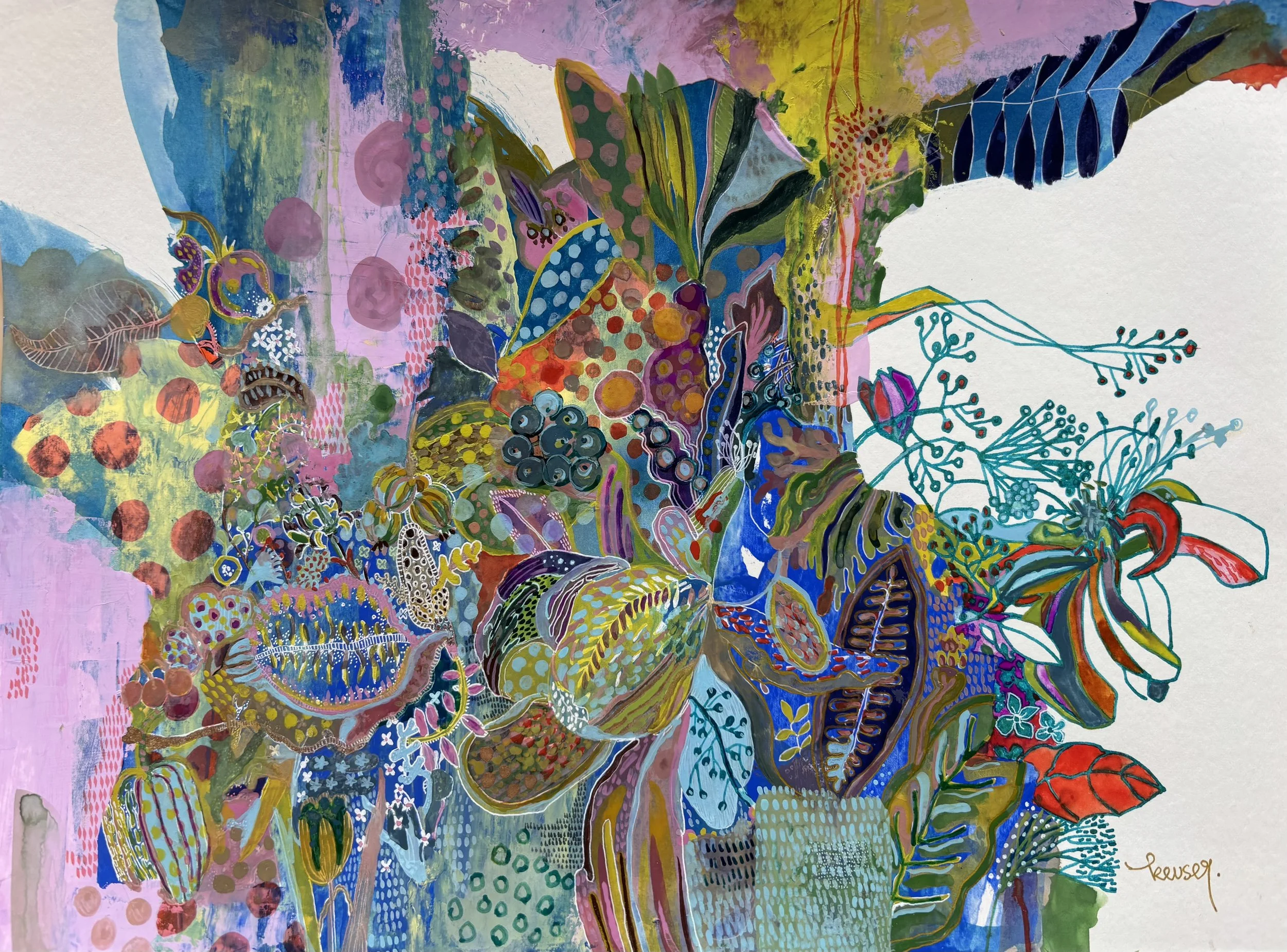
Spring, Acrylic Gouache, ink on paper, 42.0 x 29.7 cm, 2025 © Kevser Ugurlu
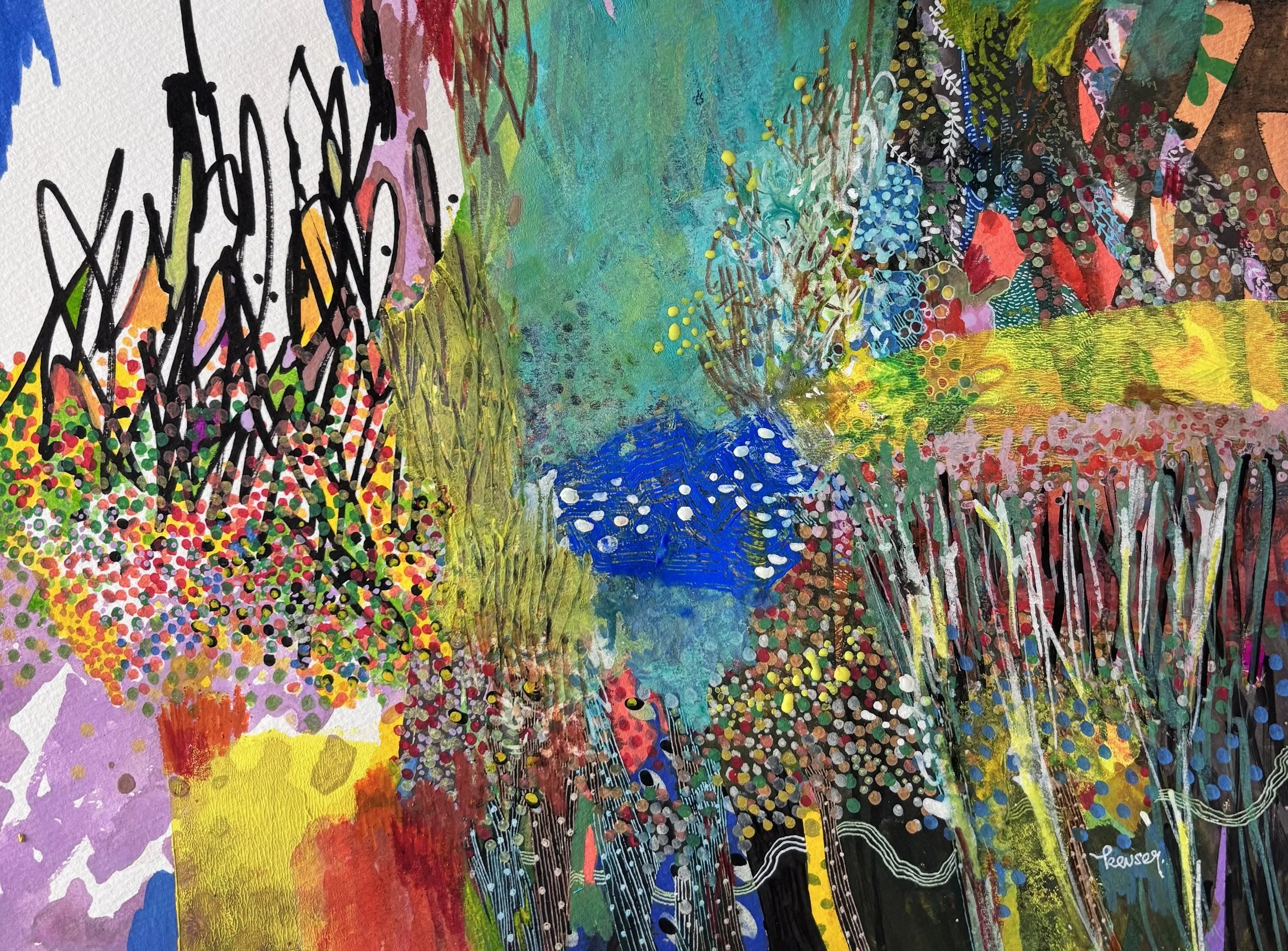
The Land, Watercolour, Acrylic Gouache, Ink on paper, 29.7 x 42.0 cm © Kevser Ugurlu
Your work balances abstraction and figuration. How do you decide when a form should remain abstract or become more defined?
The balance between abstraction and figuration is intuitive rather than predetermined. I rarely begin a work with a fixed decision about how defined a form should be. Instead, I allow the painting itself to guide me.
Usually, I begin with loose gestures, fluid layers, and spontaneous marks, considering the background forms. At this stage, abstraction allows emotion to lead the composition. Abstraction gives me space for emotion, ambiguity, and openness. It allows the viewer to enter the work freely, to project their own memories and experiences. Figuration anchors the composition. It offers a point of recognition, something that gently holds the viewer within the narrative. I also enjoy scattering subtle details throughout the painting. Especially when I am developing a series around a particular theme, I often repeat or distribute similar figures across different works to create a sense of cohesion within the series. These recurring elements function like visual threads, connecting each piece while allowing them to stand independently.
What role does research play in the development of each new body of work?
It does not always begin in a strictly academic way; often it starts with a personal question, an image, a memory, or a feeling that lingers. Then I begin researching through reading and observation, assembling visual and conceptual references. Sketching becomes the space where ideas first start to crystallise.
As someone who also facilitates workshops, how does teaching influence your own artistic practice?
When I explain composition, rhythm, or the emotional weight of colour, I become more aware of my own decisions as an artist. Listening to participants’ perspectives, stories, and interpretations broadens my understanding of how images communicate. It nourishes and keeps my practice alive, responsive, and open to continuous learning.
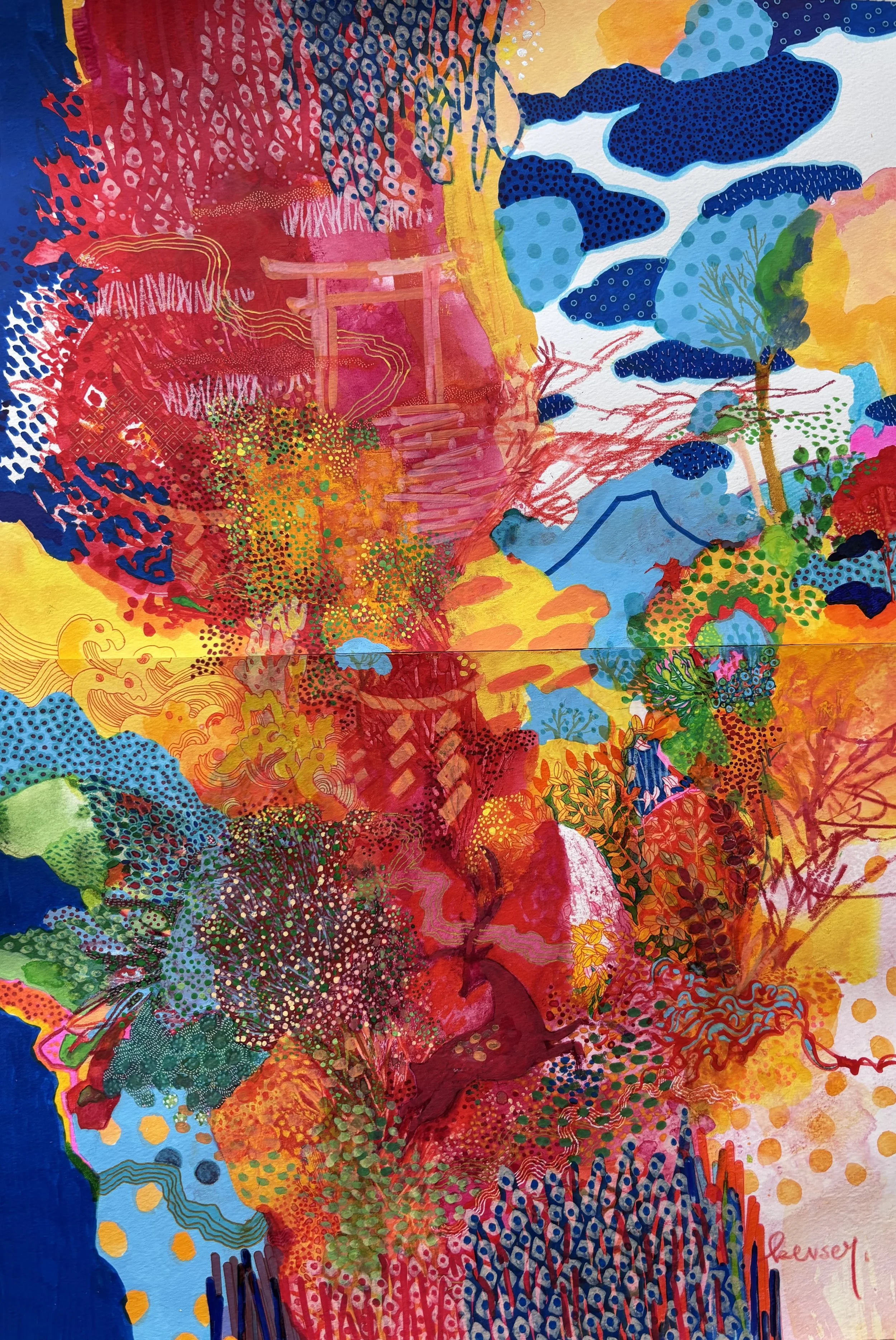
Autumn in Kyoto, Acrylic gouache, watercolour, ink pen on paper, 29.7 x 42.0 cm, 2025 © Kevser Ugurlu
Are there any new themes or directions you are currently exploring?
Now, I am exploring how to enrich my visual language. Alongside my main theme (Exodus), I have been working on landscapes, seasons, and other subjects that allow me to expand beyond a single narrative framework.
I am also increasingly interested in themes such as the erosion of reality in our contemporary age, censorship, and the relationship between humans and the city. These concerns reflect and open new conceptual directions within my practice.
And lastly, what future projects or exhibitions are you currently working toward?
Currently, I am focusing on developing a new body of larger-scale works that expand both technically and conceptually on my recent practice. I am continuing to explore the expressive possibilities of watercolour and acrylic gouache, mediums that play a central role in shaping the emotional expression of my work. At the same time, I am preparing proposals for upcoming exhibitions, art prizes and residency opportunities, both locally and internationally. As an emerging mid-career artist, I hope for my work to connect with and be meaningfully understood by wider audiences.
Artist’s Talk
Al-Tiba9 Interviews is a promotional platform for artists to articulate their vision and engage them with our diverse readership through a published art dialogue. The artists are interviewed by Mohamed Benhadj, the founder & curator of Al-Tiba9, to highlight their artistic careers and introduce them to the international contemporary art scene across our vast network of museums, galleries, art professionals, art dealers, collectors, and art lovers across the globe.


Kathy (Kaixi) Yu is a Los Angeles-based motion designer and digital artist working across motion graphics, 3D design, and visual storytelling. Her practice uses composition, materials, lighting, and animation to translate experiences of creative pressure, time, and imagination into stylized characters and digital environments.