
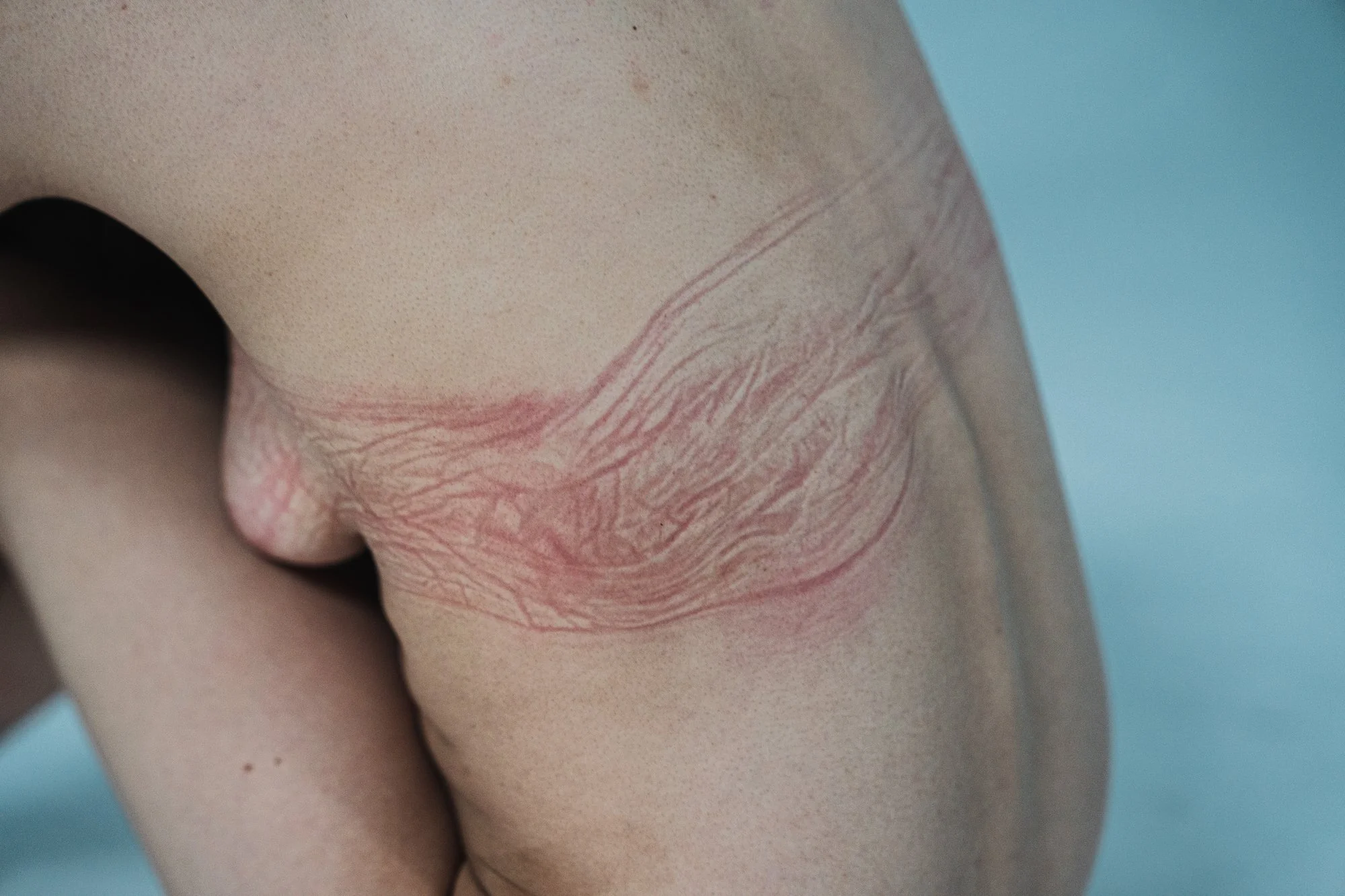
10 Questions with Chu Ling-Jung
Chu Ling-Jung, born in Taiwan in 2000, is an artist whose practice centres on feminism and the exploration of consciousness. Since the age of five, she has undergone long-term physical training, integrating Eastern martial arts and Middle Eastern dance practices while drawing from diverse Western dance experiences, thereby establishing a solid bodily foundation. By the age of ten, she was already performing on stage as a professional dancer. From the age of fifteen onward, she received training in product design and visual arts, further expanding her creative language and artistic forms through design methodologies. Her works have also been presented in international exhibitions and performance art platforms, Performance in Flux, reflecting a cross-cultural artistic vision.
Chu Ling-Jung’s practice centres on the shaping of the female body under patriarchy and the unease surrounding gender perception. Through deliberate bodily transformation, she addresses these themes across media, including performance, video, and found objects. Among her works, Defiance in Nude, created at the age of twenty-four, led to her selection as a finalist in the Performance Art category of the 20th Arte Laguna Prize in 2025, highlighting her ongoing exploration and practice in the field of contemporary performance art.
Through bodily performance and transformation, she reflects on her own condition of being othered, while creating a resonance of lived experience with viewers that allows for sensory interaction between both sides. Chu Ling-Jung believes that the interweaving of thought and the overlapping of life experiences together shape her imagination and ideals of the art world.
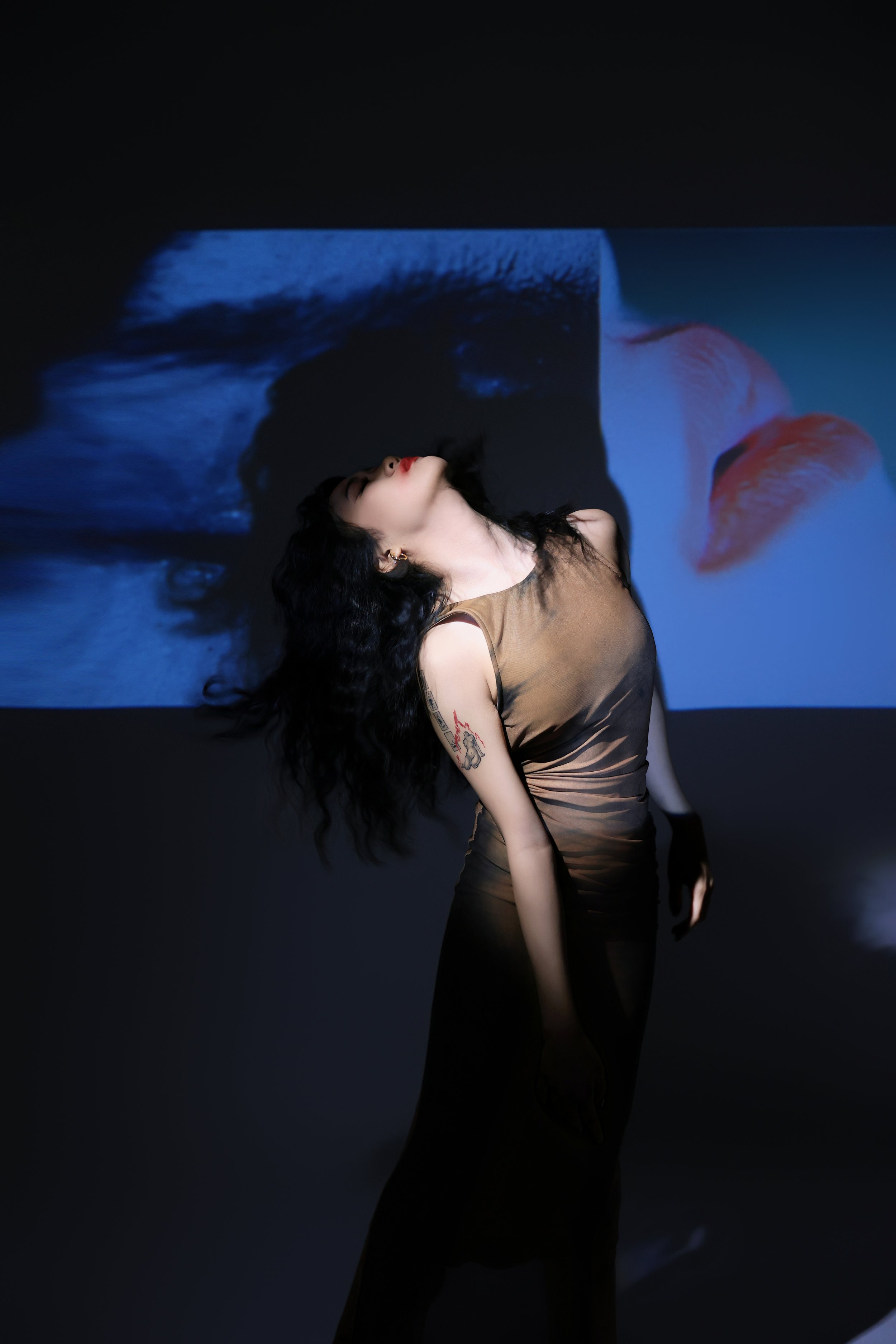
Chu Ling-Jung - Portrait
ARTIST STATEMENT
In Chu Ling-Jung’s artistic statement, her line of thought often emerges from an exploration and extension of core concerns, with writing serving as the foundation of her thinking. On this basis, her practice consistently revolves around how an artwork may further expand her own conceptual framework. For her, art is a way of extracting thought from language and transforming it into a concrete form that can be interpreted through the senses.
She takes her own writing as the conceptual point of departure for her works, integrating her practice through the logic of design methodology while also bringing theatrical thinking into performance art. She presents her works through the dramatic concept of “chapters,” using it as a way to dramatise predetermined events within her own life. By structuring each segment of the performance in chapters and linking them together, she creates a performative work with a strong sense of theatricality.
Throughout this process, she builds up the narrative through transformations in bodily appearance and adjustments in performative form, further extending the work’s dramaturgy through the articulation of action itself. Through the use of different objects and tools, she causes the body to undergo various transformations, thereby engaging with and asserting control over the essential physiological phenomena of the female body as well as its resistance.
Detachment from Essence, Performance Record, 1h 34’ 40’’, 2024 © Chu Ling-Jung
INTERVIEW
Welcome back to Al-Tiba9. What have you been working on over the past few months, and how has your practice evolved since we last featured you?
Recently, I revisited the particular logic of thought that shaped my earlier creative practice, while also undertaking a dialectical deconstruction of the body through my own written texts. As these texts come to serve as the primary subject of artistic expression, I have begun to ask whether the way a medium is employed might alter the essential nature of the symbolic qualities originally embedded within it?
The key to this line of thought, which may lead to a transformation in the symbolic function of the medium, lies in the intention presented through the surface appearance of the original informational media. In other words, can such an intention alter the symbolic meaning originally carried by the medium itself? At the same time, can this mode of thought, generated through the expression of purely linguistic information, further blur the boundary between physical art exhibitions and online exhibitions?
I believe that the intervention of artificial intelligence operates precisely by using existing media information to alter the logic of its original pathways. When I use my earlier writings to generate new ways of thinking, the original medium through which the work was produced also seems capable of reconstructing the work’s understanding of its own creative intention.
Yet this intention does not arise directly from the author’s act of organising the text. Rather, it resembles a kind of confession made by the text about itself.

Clearing the Text, Short Film, 11’ 27’’, 2024 © Chu Ling-Jung
You’ve recently explored video, short films, and performance. What do these formats offer that live performance alone does not? Are you considering expanding into longer cinematic works or installation-based pieces?
When I document my immediate physiological state through different forms, and deliberately arrange elements related to my own perception and present actions, engaging with the accidental triggering of life-based behavior, the structuring of bodily movement, and the documentary nature of a predesigned script-like framework, I believe that these archive-based forms of creation differ from live performance in the “blankness” that exists within thought.
In live performance, thought shifts continuously with the present moment, making it impossible to carry out an editorial operation upon that state of “blankness” within time as it is unfolding. By contrast, when working through documentary archives, one can deliberately manipulate the body’s immediate condition in order to shape how others perceive the body in past time, while also using repetitive rituals from everyday life to produce a kind of temporal condensation or synthesis of structured thought.
As for my future creative direction, if feature-length film becomes a way of extending performance-based thinking, I hope to interweave the realities of everyday life with the performative qualities of constructed scripts, moving between fiction and reality. In this context, the temporal or spatial condition of installation art within the archive may be understood as a further exploration and transformation of the “blankness” that exists between documentation and performance in life.
Your performances, such as Construction of the Event and Detachment from Essence, blur the line between choreography and chance. How do you view the role of spontaneity in your work?
If Construction of the Event and Detachment from Essence are regarded as works that embody a choreographic mode of thinking on the body and the rituals of daily life, then the documentation of bodily form can be further transformed into choreography, becoming a dance that recurs throughout everyday life and is understood through a retrospective reflection on life.
The body, as a temporary form of “blankness” within choreography, or as an effect triggered by specifically ordered actions, may be understood as a kind of mental editing through which I respond to the physiological conflicts that may arise within my daily perception of the body.

Construction of the Event, Performance Record, 14 days, 2024 © Chu Ling-Jung

Construction of the Event, Performance Record, 14 days, 2024 © Chu Ling-Jung
Endurance and repetition are recurring elements in your performances. What draws you to these actions? Do you see them as forms of resistance, ritual, transformation, or all three?
When considering the key elements of performance, I see lived practice as the core that I bring into it. Whether it is the unpredictability of physiological states or the way bodily changes interact with objects and spatial thinking in the present moment, all of these form an essential part of my performance-based inquiry. Repetitive actions, meanwhile, are the means through which I condense life and present time, while reflecting on their cyclical transformations.
The repetitiveness of everyday life may be understood as a form of “resistance” against the body’s physiologically programmed condition. Cyclical planning, on the other hand, can be seen as a “ritual” act that systematises changes in one’s original physiological state and transforms them into a mode of cognitive reflection. In the very moment when bodily form is placed between repetition and endurance as a site of inquiry and debate, thought itself may become a kind of “transformation” occurring within that process.
You’ve spoken about dramatising personal life events through your work. Has there ever been a moment when the emotional intensity of a performance blurred the boundary between art and lived experience?
When discussing the dramatisation of life events within a work, I believe that the mind’s repeated rumination on emotion during the act of performance is what triggers past life experiences. When the body becomes an act of “re-presenting” one’s past life, the reinterpretation offered by art is able to enter the relationship between past experience and the condition of the present moment. This kind of “blur,” perhaps, is a hybrid state in which past cognition, present events, and the deconstructed layers of emotion and thought become interwoven.

Performance Illusion & the Preset Between Photo-Text, Short Film, 11’ 03’’, 2025 © Chu Ling-Jung
In Defiance in Nude, you structure the performance through chapters. How do you approach storytelling within your work? Do you foresee your practice evolving more towards cinematic or literary forms?
In Defiance in Nude, I structured the work in chapters through changes in the body’s outward form, as well as the distortions produced by the attachment of contrasting materials to the body. Within this framework, I repeatedly contemplate the relationship between bodily phenomena and objects through the dimension of time. At the same time, I bring preexisting states of everyday perception into the performance, using the concept of life’s cyclical transformations to define the relationship between the viewer and the surrounding space.
As for future transformations in my creative practice, documentary filmmaking is a direction I hope to explore further. In addition, regarding literary forms of creation, I see still images as a kind of mirrored reflection on the self. Through fragmented insertions and jumps between image and text, it may be possible to extend this into a dynamic mode of presentation, ultimately forming a kind of bodily literature structured through archival arrangement.
Your performances often invite discomfort and deep introspection. How do you mentally and physically prepare for work that demands such vulnerability and endurance?
For me, the most important part of performance preparation is to create an immediate reflective feedback between my own writing and the emotions drawn from past life experiences. The body is brought into a space shaped by linguistic logic, and in responding to spatial perception, I integrate meditation into everyday movement, the rhythm of breathing, and the body’s awareness of “blankness.” I deliberately guide my thoughts into a state of stillness while seeking balance between bodily breath, mental coordination, and the dissection of emotion.
The concept of "essence" appears frequently in your recent pieces. Has your understanding of gender or personal essence shifted through performance? If so, how?
I believe that a concept such as “essence” is, in fact, understood differently according to distinct historical and cultural contexts, as well as the shifts in individual perception shaped by the manipulation of information in contemporary life. In this sense, the word “essence” may be regarded as an original physiological state one returns to after being detached from the input of informational media. For modern people, the presentation of one’s physiological condition may already have become the visible form of a psychological state after its fluctuations have been translated into data. To some extent, perhaps what we are doing is treating the inner thoughts driven by bodily states and cognitive knowledge as a kind of live performance through which we construct the script of our own lives.

Defiance in Nude, On-Site performance, 18’41’’, 2024 © Chu Ling-Jung

Detachment from Essence, Performance Record, 1h 34’ 40’’, 2024 © Chu Ling-Jung
You’ve described the viewer’s sensory interpretation as a form of enlightenment. What role does the audience play in your process? How have reactions, online or in person, influenced your recent work?
The viewer, the senses, the shifts in immediate thought, and the responses that arise after cognitive reflection all lead me to approach performance in a more dynamic way. The key lies in how deeply one can enter the path through which emotion is deliberately intensified in the moment of performance.
As for the psychological and cognitive responses of human beings, before I compose the sequence of bodily movements, I usually begin with a kind of simulation prior to the ritual itself. When viewers witness the state of my performance as it is being emotionally charged in the moment, that experience becomes a form of real-time improvisational co-performance. Meanwhile, the point of entry between a live audience and online viewing can also be understood as a play within a play, forming a viewing situation that emerges after “re-presentation.” This process also allows me to sense how the body thinks through the reconstruction of ritual.
The emotional feedback and different points of entry brought by each viewer have also led me to reflect on whether live performance might, in the future, be further integrated into an alternative form of documentary experimental moving image.
Looking ahead, are there new themes, materials, or performative methods you’re eager to explore? How do you imagine your practice evolving in the coming years?
In my future creative explorations, I hope to examine more deeply the relationship between the individual and illness, as well as that between the individual and the collective. At the same time, I aim to explore how people, situated between social structures and bodily experience, develop metaphorical ways of thinking about these phenomena.
Text, documentary performance-based moving images, and painting are the media I hope to explore more deeply in the future. I seek to transform everyday breathing, emotion, the body’s intervention in spatial form, and immediate perception into a kind of bodily record shaped by a medicalised mode of self-diagnosis and deconstruction, as a way of integrating my future conceptual framework with bodily awareness.
Artist’s Talk
Al-Tiba9 Interviews is a curated promotional platform that offers artists the opportunity to articulate their vision and engage with our diverse international readership through insightful, published dialogues. Conducted by Mohamed Benhadj, founder and curator of Al-Tiba9, these interviews spotlight the artists’ creative journeys and introduce their work to the global contemporary art scene.
Through our extensive network of museums, galleries, art professionals, collectors, and art enthusiasts worldwide, Al-Tiba9 Interviews provides a meaningful stage for artists to expand their reach and strengthen their presence in the international art discourse.

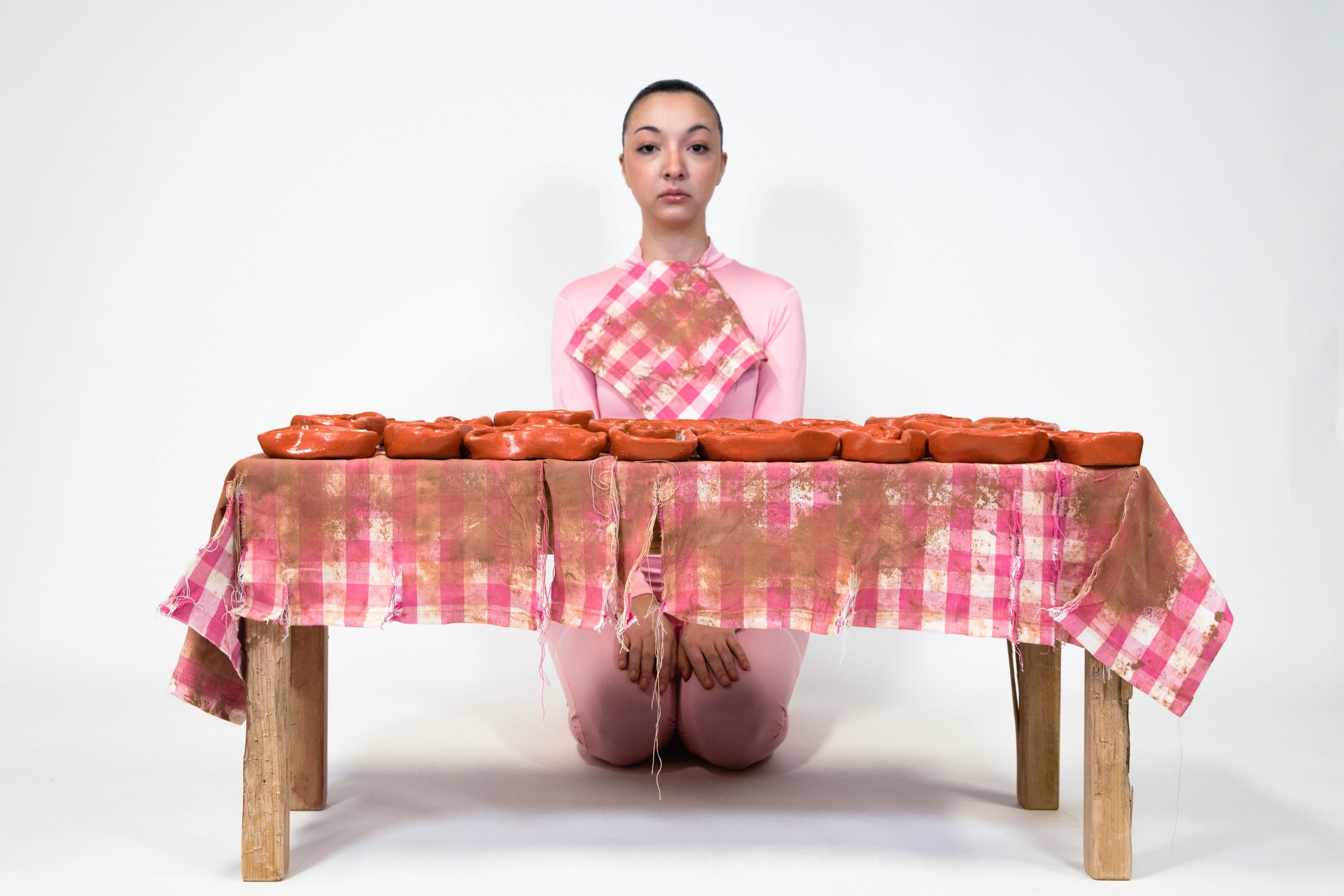
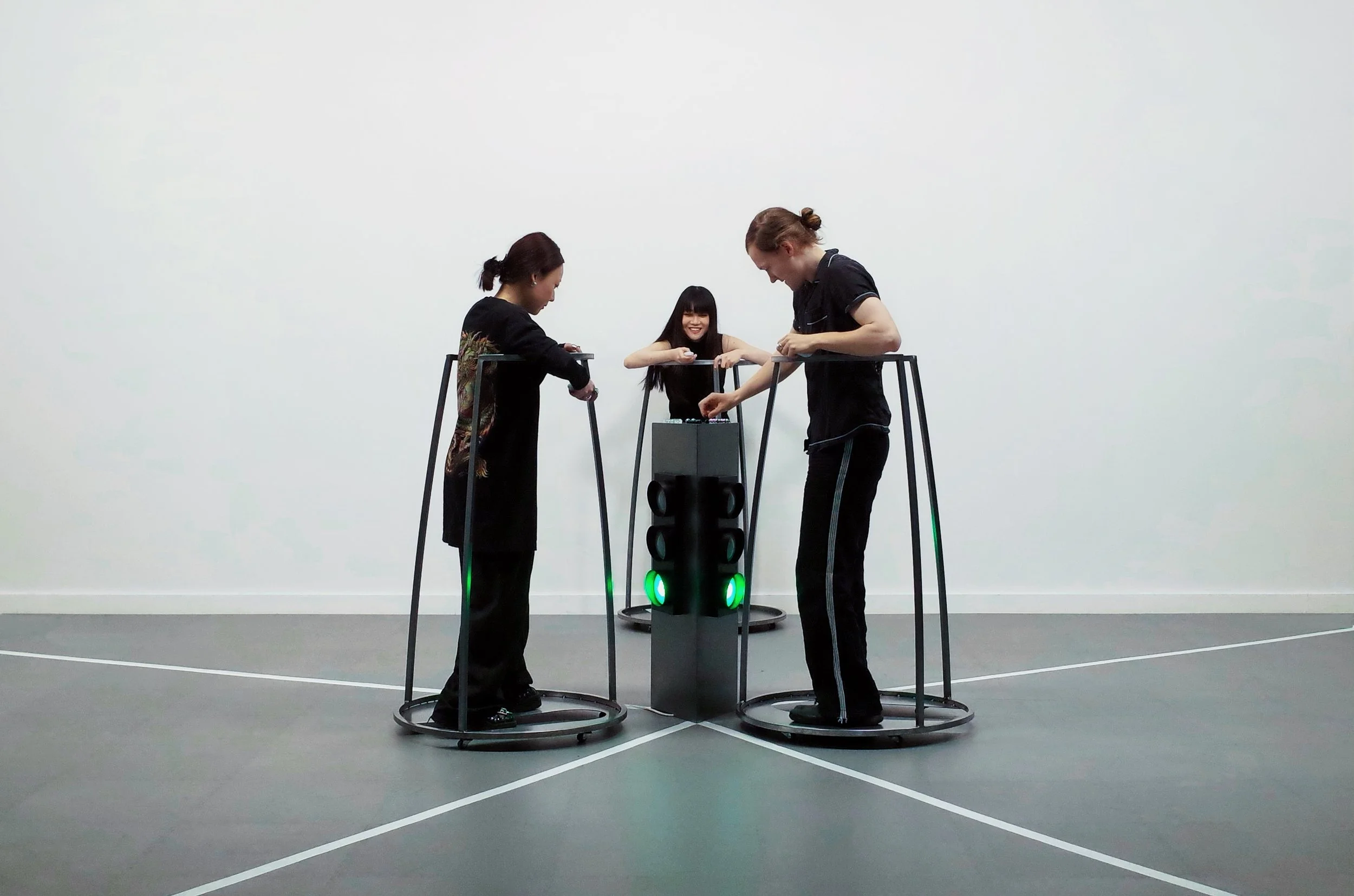


Ekaterina Shcherbakova is a Paris-based artist working across performance, installation, and painting. She develops work at the intersection of feminism, body politics, new materialism, and radical intimacies, combining performance and material research to explore the body as a site where personal experience and political structures converge.