

10 Questions with Svetlana Bakhareva
Svetlana Bakhareva is a visionary visual artist and performer. She was born in 1986 in Yuzhno-Sakhalinsk, Russia. Bakhareva holds a Master of Fine Arts degree from the HSE University Art and Design School (2019–2021), where she studied under Vladimir Dubossarsky. She also completed professional programs at Sotheby’s Institute of Art and Central Saint Martins.
Since 2019, she has participated in numerous exhibitions across Russia and Europe. Her work has been shown at HSE Art Gallery, White Room Foundation, the New Wing Museum at the Gogol House, 25th Frame Gallery, CCI Fabrika, the ZIL Cultural Center, as well as in the special project of the 6th Ural Industrial Biennial of Contemporary Art.
She has taken part in the Rhizome Residency by MaxArt Foundation (2021–2022) and in the artist-run collective 22 (2020–2021), where she developed a practice that combines painting, performative approaches, and spatial objects. Her works are included in the Copelouzos Family Art Museum collection (Athens) as part of the 35×35 project, as well as in the MaxArt Foundation collection.
Bakhareva lives and works in Barcelona.
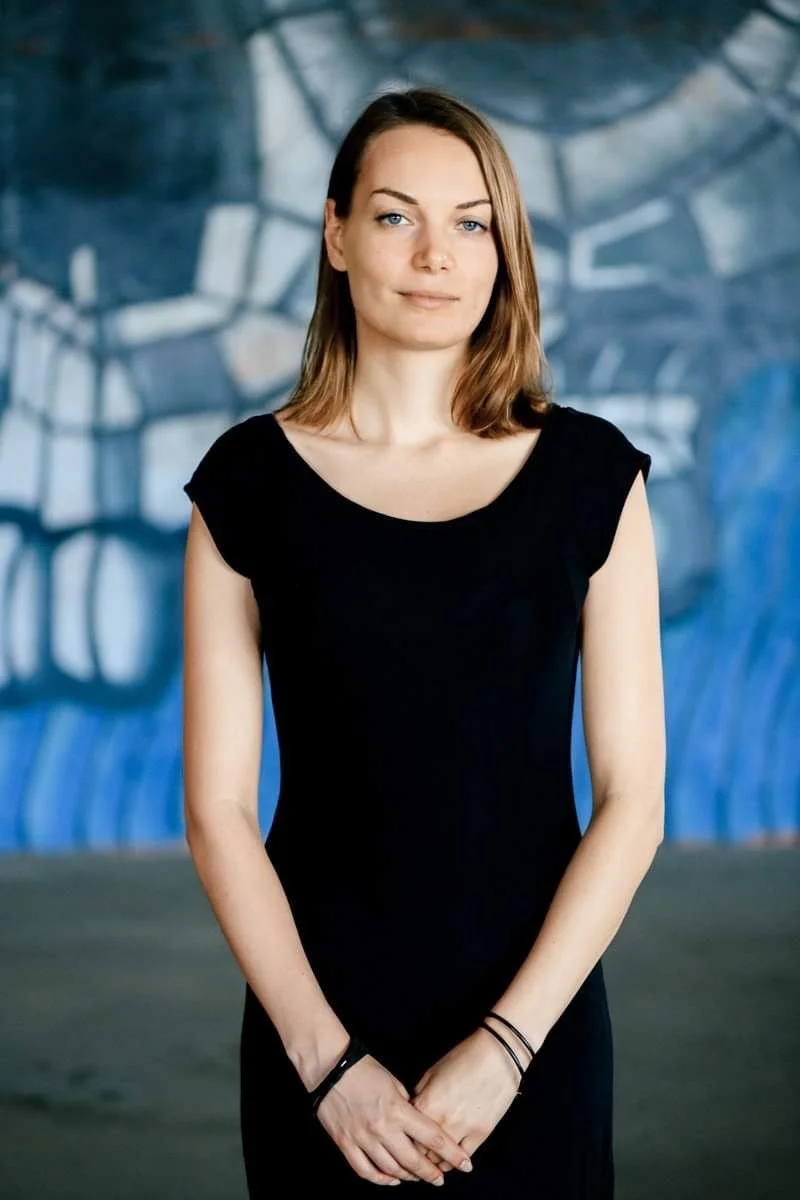
Svetlana Bakhareva - Portrait
ARTIST STATEMENT
Bakhareva’s artistic practice is centred on working with spatial environments that take the form of “capsules of experience,” assembled in physical or digital space. She uses hybrid media, painting in the expanded field, video, objects, performative elements, and character-based approaches, as components of an environment that functions as an entry point for the viewer and creates a situation of interaction. Whether material or digital, the format allows for immersion into a state and an experience that emerges through direct engagement with the work.
Each project begins with intuitive work with an embodied process involving direct interaction with material, images and states. From this process, a character emerges, which Bakhareva inhabits both physically and emotionally. Through this embodied engagement, the environment gradually takes shape as an autonomous world with its own system of images, rhythm, and internal tension. Each work becomes a material or spatial fixation of an experience that arises through interaction with these images and states.
Key directions in her practice include embodied experience, the perception of environment as a living space, and engagement with the more-than-human. These vectors are unified through an exploration of experiences that extend beyond purely material perception. Rather than analysing themes directly, her works delineate a territory of encounter with another order of reality and knowledge, within which the viewer can re-situate themselves in relation to the world and their place within it.
Womb of the earth, double-channel video, 12’ 39’’, 2026 © Svetlana Bakhareva
INTERVIEW
First off, you work across painting, performance, video, and spatial installation. How did your artistic path begin, and when did you first understand that your practice would extend beyond a single medium?
My artistic practice began with painting, but quite early, I felt that the image could not remain confined to a flat surface. I started to approach painting as an expanded field. Each work felt as if it were trying to extend beyond the canvas and become a more complete experience.
Painting began to behave more like a threshold or a portal than a finished object. It opened something, but did not fully contain the experience it initiated. The work itself began to demand space, time, and the presence of the body. This led me to move further, into creating spatial environments and what I call “capsules of experience,” using hybrid media such as installation, video, and performance.
At that point, I understood that the core of my practice is the construction of conditions in which the viewer’s perception shifts out of its automatic mode.
My works are fixed traces of processes that introduce a specific state and open a space for experience. What matters to me is what happens within it: the encounter and the shift in perception that the work enables.

Womb of the earth, double-channel video, 12’ 39’’, 2026 © Svetlana Bakhareva
You often describe your projects as “capsules of experience.” When did this idea first emerge, and what does a capsule allow you to do with your art?
The idea of “capsules of experience” emerged precisely from this need, to give a form to these conditions. I began to think of my works not as representations, but as containers, spaces structured to hold a specific kind of encounter. More precisely, I see them as containers for encounters with what I refer to as the “more-than-human”.
In my practice, this “more-than-human” refers to something that does not belong to a fixed human identity, not as a technological or artificial construct, but as something that emerges at thresholds: between material and immaterial, between body and environment, and in relation to transformation and transition, including the idea of death as a passage rather than an end. These encounters are lived and embodied; I pass them through my own perception and body, and the work emerges as a trace of that experience.
The capsule allows me to construct a situation where this can be transmitted, where the viewer can enter a specific state and come into direct contact with the experience itself.
Growing up in Yuzhno-Sakhalinsk and now living in Barcelona, how have different environments influenced the way you think about space and experience in your work?
Growing up in Yuzhno-Sakhalinsk, I was surrounded by a strong sense of raw environment, nature that is not decorative, but active and unpredictable. That formed an early sensitivity to space as something alive rather than neutral. Living in Barcelona introduced a completely different condition, a constructed, cultural, and architectural environment, where space is designed and mediated. My work exists somewhere between these two experiences: the wild, uncontrollable presence of nature and the constructed, intentional framing of space.
Your process begins with intuition and embodied interaction with materials, as you mention in your statement. What does the very first stage of creating a new project usually look or feel like for you?
The idea of “capsules of experience” emerged from the need to give form to a very specific process.
In my practice, the work often begins with a sensation that does not originate from me in a conventional sense. It feels as if something “more-than-human” is pressing toward visibility, asking to be translated into form.
I enter into contact with this state through the body, by staying with it, allowing it to intensify and become more precise. This process is not initiated or controlled in a fully intentional way; rather, I position myself as a conduit through which it can take shape. What emerges is then translated into material, spatial, and visual form.
The “capsule” is the structure that allows this to exist. I construct it as a liminal container, a threshold work, where this encounter can be experienced by the viewer.

Mother moist earth, single-channel video, 7’ 11’’, 2022 © Svetlana Bakhareva
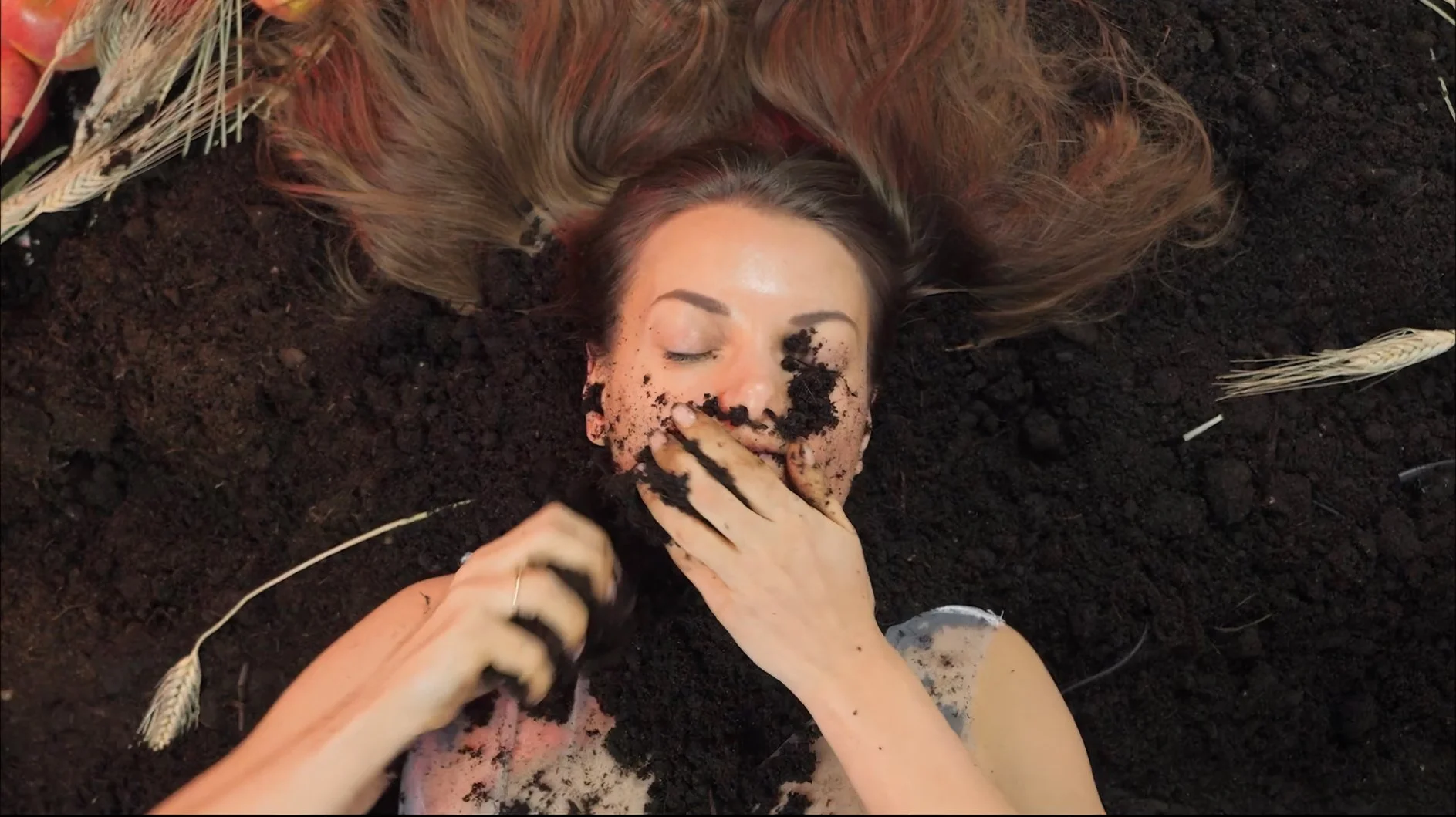
Mother moist earth, single-channel video, 7’ 11’’, 2022 © Svetlana Bakhareva
A recurring element in your practice is the emergence of a character that you inhabit. How do these characters develop, and what role do they play in shaping the final work?
The characters emerge as a natural extension of the state I am working with. At a certain point, the state becomes embodied; it requires a figure through which it can be experienced. I inhabit these characters physically and emotionally, which allows the work to develop from within rather than being externally designed.
From these figures, entire environments begin to unfold. They are the points of entry into broader worlds with their own internal logic, atmosphere, and symbolic structure. In this sense, I am working with a form of personal mythology, not as a narrative system, but as something that emerges through repeated encounters and gradually takes shape across different works and spaces.
You treat the environment as a living space rather than a backdrop. How do you want viewers to move, feel, or behave once they enter one of your installations?
I do not prescribe a specific way of behaving within the installation. The viewer is free to move, stay, or engage with the space in their own way.
What matters to me is not controlled interaction, but the possibility of a perceptual and bodily shift. Ideally, the viewer begins to sense the work rather than being an observer, to experience it through the body, on a somatic level.
I construct the work as a container that activates a dialogue between the space and the viewer’s body. Through this dialogue, perception can shift out of its automatic mode, allowing a different state to emerge.
The work is successful when the viewer is no longer positioned outside, observing, but is instead inside the experience, encountering it directly rather than interpreting it.
Your work often engages with what you describe as the “more-than-human.” How do you approach translating such intangible experiences into material or spatial form?
I translate these experiences by working with elements that affect perception on a bodily level, such as light, sound, density, colour, and scale. These elements are not chosen arbitrarily. They emerge through the process itself, as part of the encounter. I pass this through my own perception and body, and in doing so, the work becomes a trace of that encounter. The process is guided as if the work already carries its own logic before it becomes visible, and I follow it, allowing it to take shape through artistic decisions and instruments. My art then acts as a form that holds the possibility of encountering this more-than-human presence, not as an image, but as an experience.

Mother moist earth, single-channel video, 7’ 11’’, 2022 © Svetlana Bakhareva
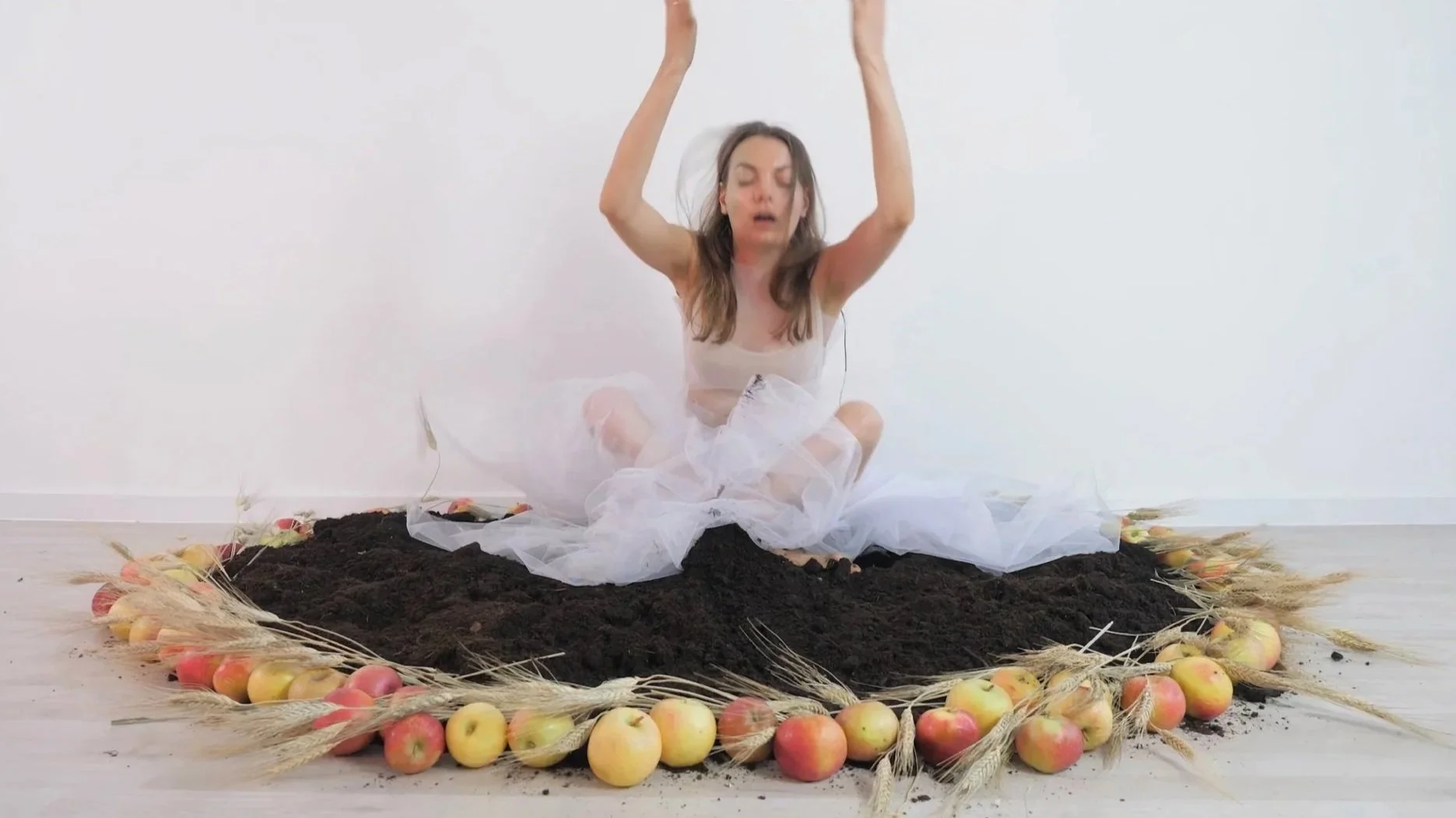
Mother moist earth, single-channel video, 7’ 11’’, 2022 © Svetlana Bakhareva
Because your projects rely on interaction and immersion, audience presence becomes essential. How has viewer reception or participation surprised you over time?
What has surprised me most is how differently people respond to the same environment. Some viewers immediately enter a slowed, immersive state, while others resist it and remain on the surface. This variability is important; it shows that the work does not impose a single experience but opens a field of possibilities.
At the same time, I am particularly interested in moments of perceptual disruption, when something does not fully align with expectation. This can create a sense of tension, or even a subtle discomfort, which often becomes the entry point into a different mode of perception.
I have often observed a very physical reaction: the viewer is drawn in, and then suddenly pulls back, as if encountering something they were not fully prepared for. For me, this is a meaningful moment; it indicates that the work has shifted perception, even if only briefly.
In earlier exhibitions in Russia, I also became aware of how strongly cultural context shapes the reception of the work. Themes such as transformation and death are often difficult to engage with directly, and in some cases, institutional frameworks tended to present the work primarily on a visual level, while its experiential or conceptual dimension remained less visible.
These situations revealed how strongly perception is shaped by cultural and psychological boundaries, and how the work can expose these limits.
Your practice combines emotional, physical, and conceptual layers. How do you balance control and openness while allowing the work to evolve organically?
There is a clear structure in my work, but this structure does not come first. The process begins with a state that I experience as something more-than-human insisting on becoming perceptible. I do not try to control it at this stage. Instead, I enter into contact with it through my body and perception, allowing it to unfold and pass through me as fully as possible. My role here is to receive it, to let it take form through my body and awareness before it becomes material. Then I begin to give it a form. At this point, I take a more active role, defining spatial, material, and temporal conditions. This is where control appears, but it is applied to something that has already been lived and experienced.
“Capsules of experience”, as the result of this process, hold and transmit a specific state, and they can affect perception on a bodily level, shifting it out of its automatic mode and opening a space for a different kind of experience to emerge. For me, the balance is not between control and openness at the same time, but between two distinct phases: full receptivity, followed by giving a precise form to what has already been lived.
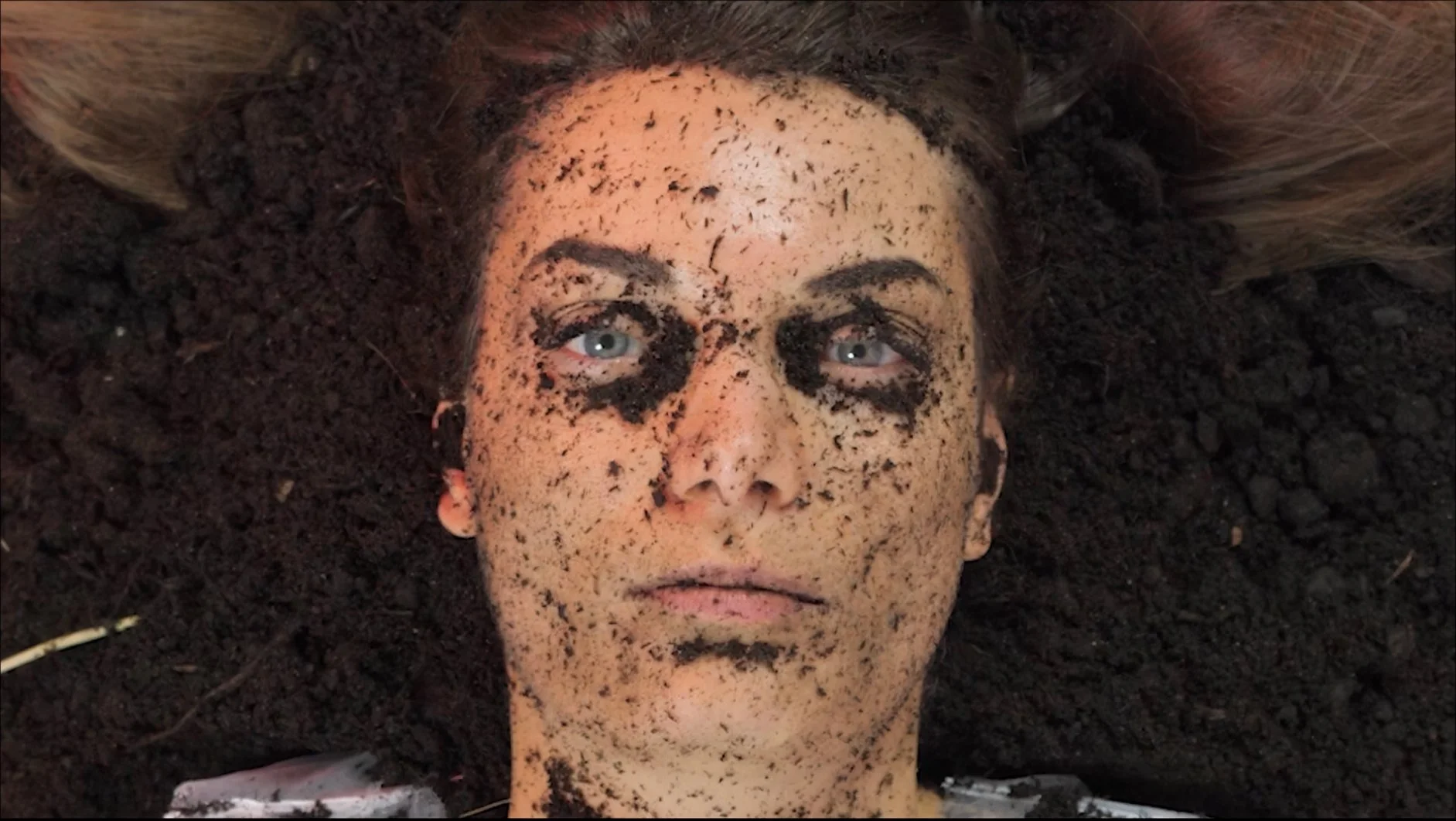
Mother moist earth, single-channel video, 7’ 11’’, 2022 © Svetlana Bakhareva
Looking forward, what new directions or formats are you interested in exploring, and how do you see your environments evolving in future projects?
Looking forward, I am interested in continuing to develop environments that operate as somatic, immersive containers, using hybrid forms where different media intersect as a way to find the most precise form for what is being transmitted through me. I am interested in creating conditions where the viewer can enter the work physically and perceptually, not to observe it, but to experience it. I see contemporary art as increasingly shifting from the object toward experience, toward forms that directly engage and transform perception. And my art practice will shift more toward working with perception on multiple levels. My role in this process is simply to build the container.
Artist’s Talk
Al-Tiba9 Interviews is a curated promotional platform that offers artists the opportunity to articulate their vision and engage with our diverse international readership through insightful, published dialogues. Conducted by Mohamed Benhadj, founder and curator of Al-Tiba9, these interviews spotlight the artists’ creative journeys and introduce their work to the global contemporary art scene.
Through our extensive network of museums, galleries, art professionals, collectors, and art enthusiasts worldwide, Al-Tiba9 Interviews provides a meaningful stage for artists to expand their reach and strengthen their presence in the international art discourse.
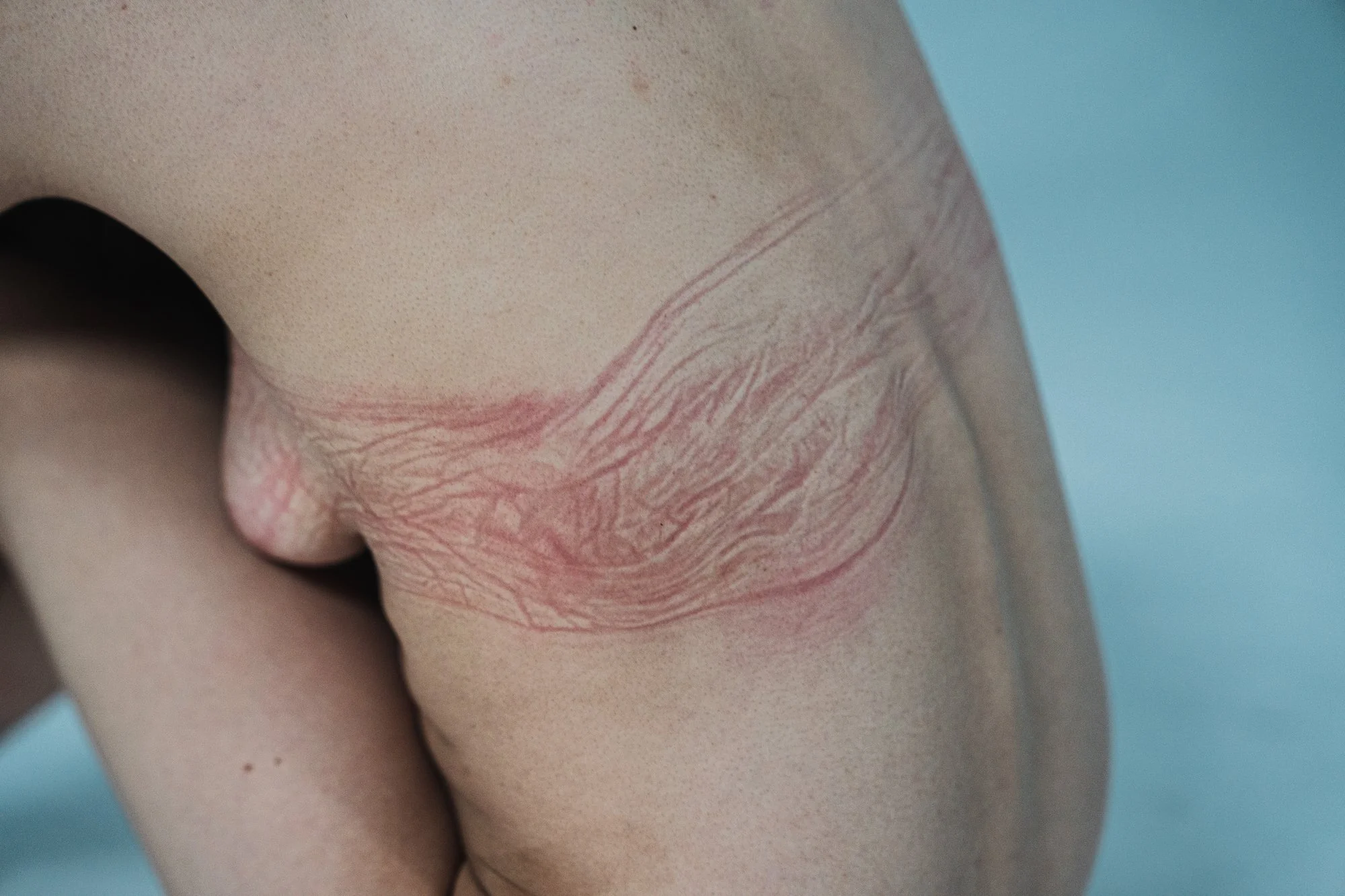
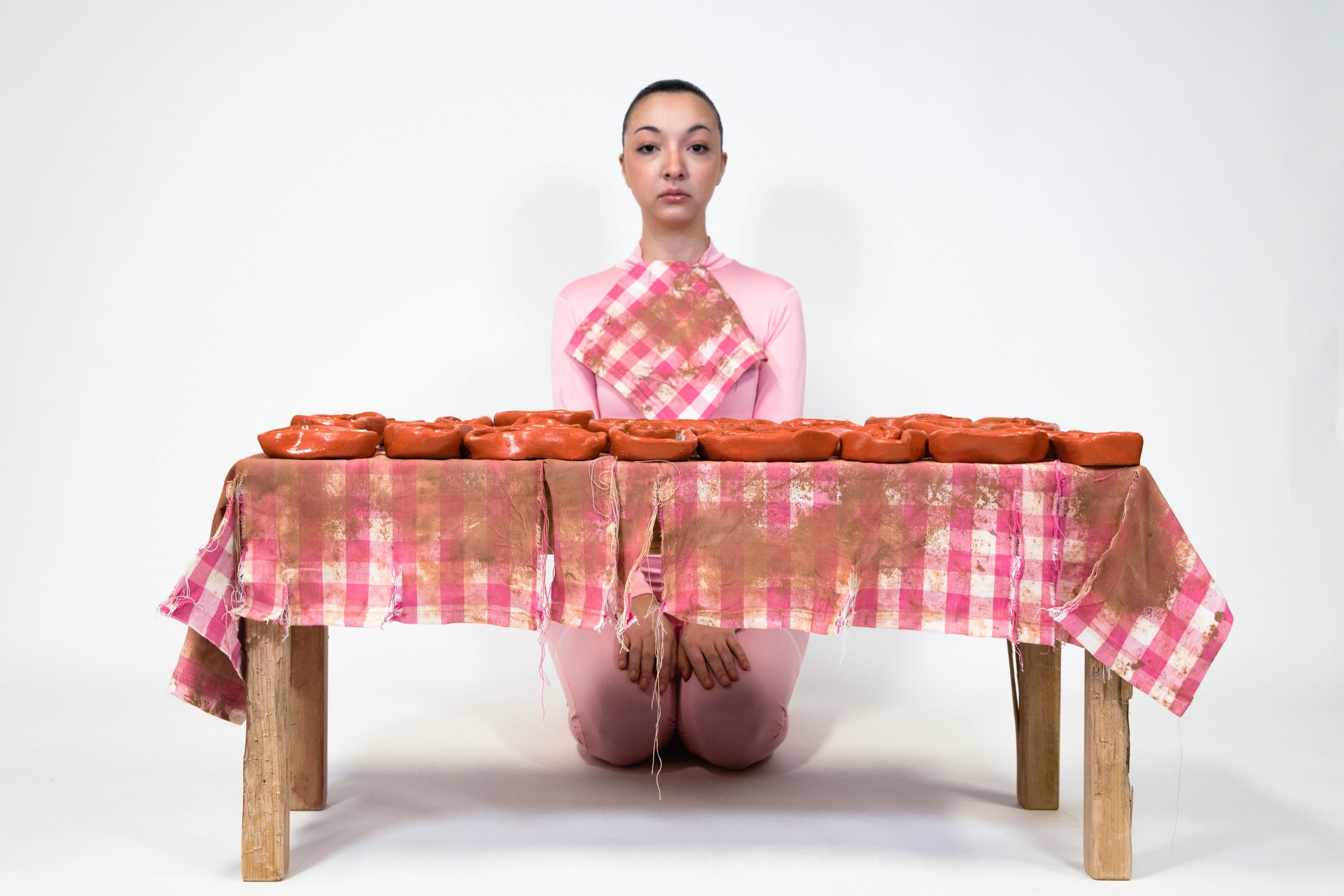
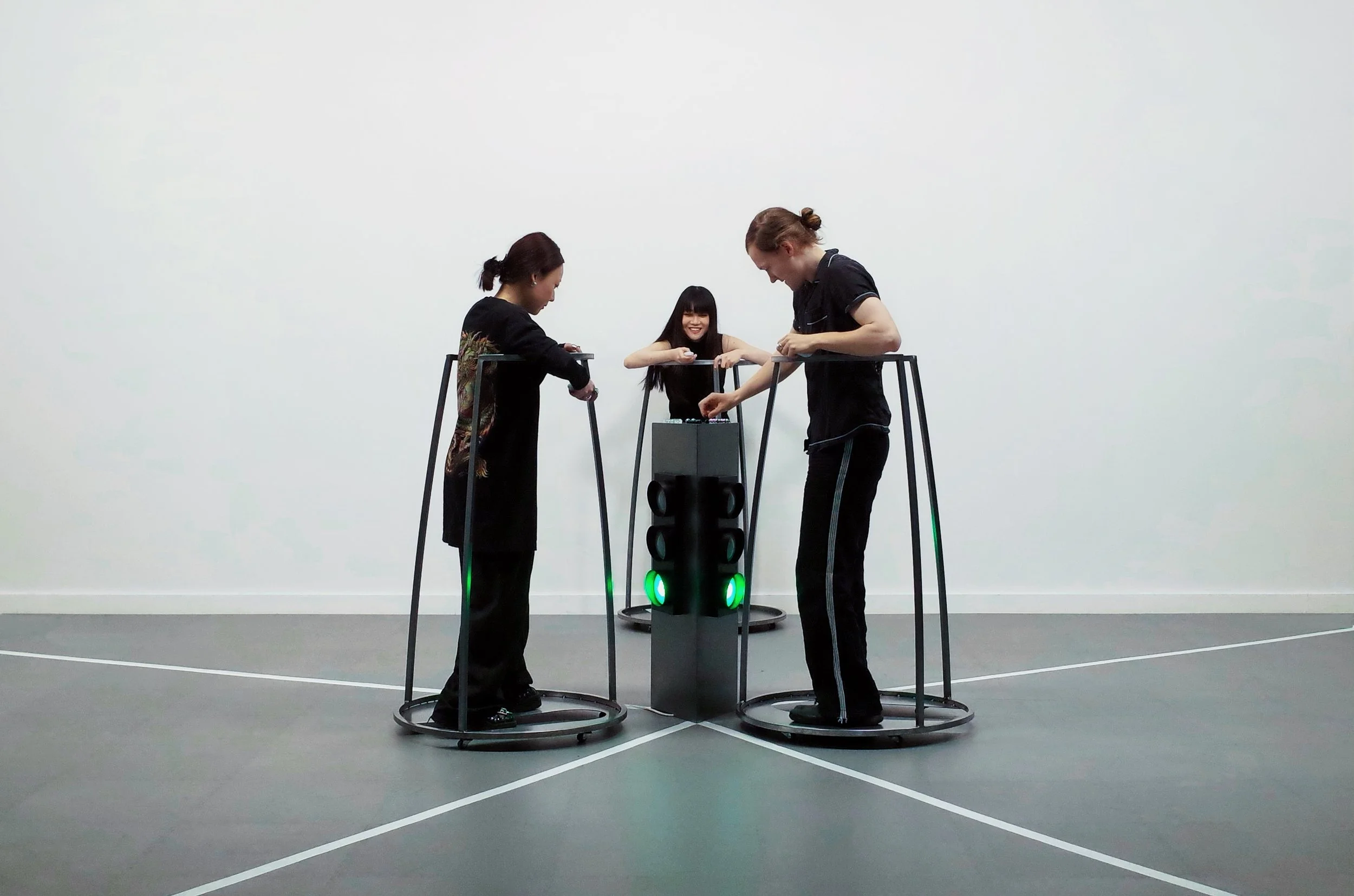


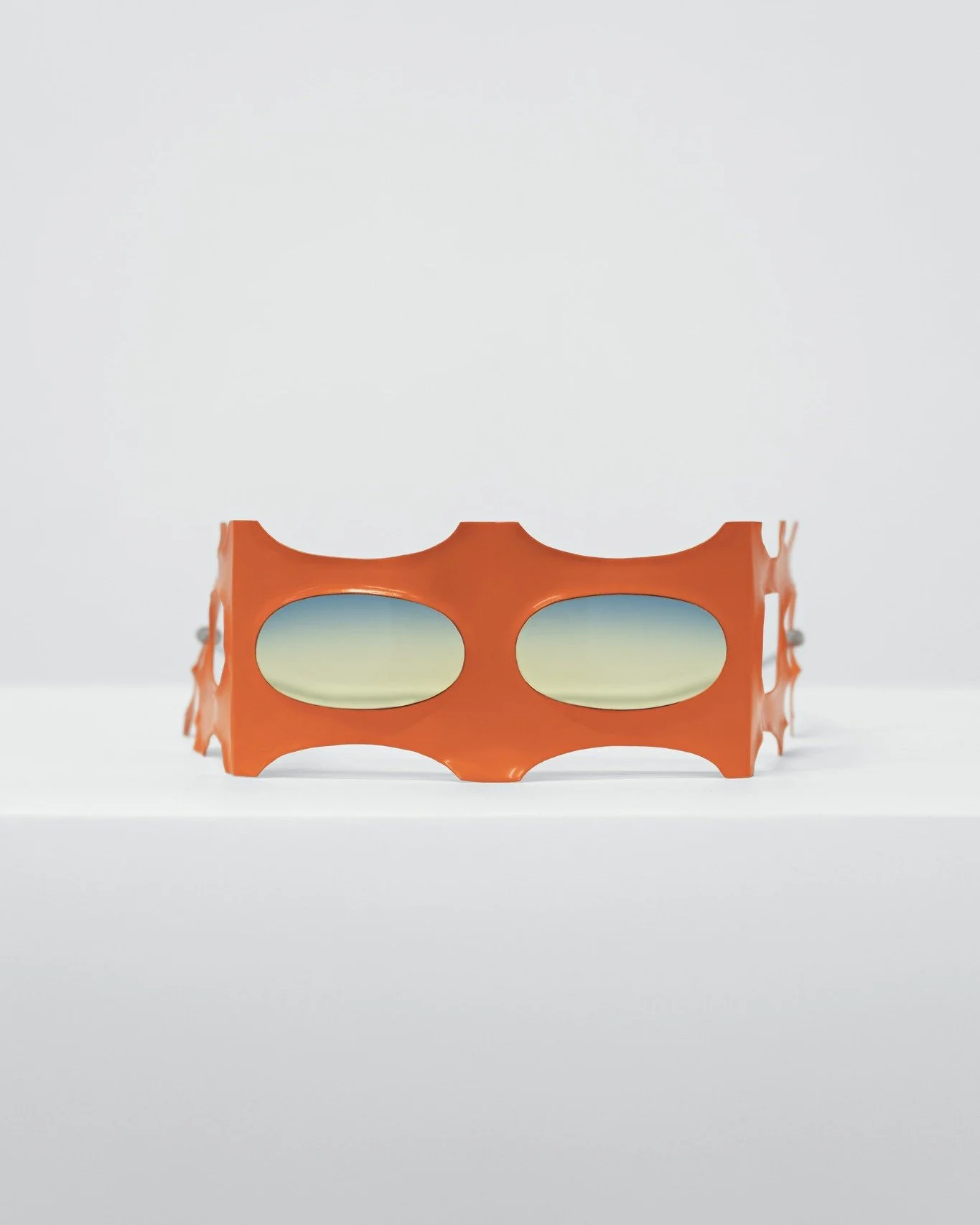
Ekaterina Shcherbakova is a Paris-based artist working across performance, installation, and painting. She develops work at the intersection of feminism, body politics, new materialism, and radical intimacies, combining performance and material research to explore the body as a site where personal experience and political structures converge.