

10 Questions with Laurent Guez
Laurent Guez is a Canadian-French artist whose practice bridges design, architecture, and ceramics. He first explored his interest in construction and spatial thinking as a child, building intricate imaginary cities. This early inclination led him to study Industrial Design at the École Nationale des Arts Appliqués et des Métiers d’Arts in Paris, where he developed a strong foundation in both aesthetics and engineering.
He began his career in Paris as a designer and art director before moving to Montréal in 2000, where he founded Guez Communication & Design. In 2010, he co-founded Tux Creative Agency, where he served as partner and led large-scale international projects, primarily in the retail, cosmetics, and experiential design sectors.
In 2022, Laurent shifted his focus to a full-time artistic practice, seeking greater creative freedom beyond the constraints of commercial work. He now works primarily with clay and porcelain, creating sculptural and functional pieces that reflect his background as a builder and problem solver.
His work has been exhibited in Canada and internationally, and he has participated in several residencies, notably at the Faenza Ceramic Centre in Italy. In 2026, he was awarded the Special Prize – NY20+ at the Arte Laguna Prize, granting him a residency in China.
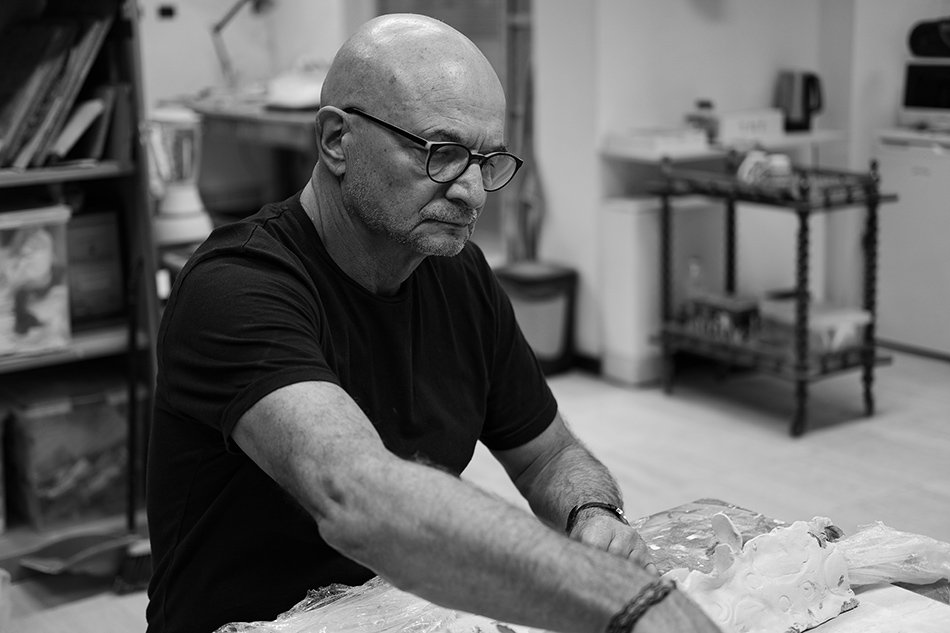
Laurent Guez - Portrait
ARTIST STATEMENT
Laurent Guez’s work explores the tension between structure and organic growth, control and unpredictability. Working primarily with clay and porcelain, he approaches ceramics as both a material and a system, one that resists, transforms, and ultimately reveals its own logic.
Drawing from his background in design and architecture, Laurent constructs complex forms that often evoke natural organisms, architectural fragments, or imagined landscapes. His process combines traditional ceramic techniques with experimental methods, including mould-making, casting, and the integration of materials such as wood, paper, and metal.
At the core of his practice is an interest in balance: between fragility and strength, rational construction and intuitive gesture. His works embody a constant negotiation between these forces, reflecting broader questions about resilience, transformation, and the human condition.
Through his ceramic pieces and furniture, Laurent seeks to push the boundaries of the medium, moving beyond functionality toward a more expressive and sculptural language.
Sagaro Side Table 1, Porcelain, Cherry Wood, 19x16x19 in, 2025 © Laurent Guez
INTERVIEW
Let’s start from the beginning. You often describe yourself as a builder at heart. Do you remember the moment when making things shifted from childhood play into a conscious artistic impulse?
I first imagined myself becoming an architect. It felt like a natural extension of those early inner landscapes I was constantly building. But I was gently discouraged from that path, and instead I turned toward industrial design, a discipline that, at the time, was still emerging. It offered a different kind of architecture: one where imagination meets structure, where intuition is shaped by systems. In many ways, it was the moment when play began to take form, when instinct started to organise itself into intention.
Your early fascination with constructing imaginary cities seems closely tied to architecture and spatial thinking. How do those early experiences still shape the way you approach art making today?
I still build, in a way. But instead of cities, I construct processes. Ceramics demands a choreography of gestures, a sequence of decisions where each step conditions the next. What remains from those early experiences is this desire to create coherent worlds, spaces where logic and imagination coexist. My work is always a negotiation between precision and intuition, between what is planned and what is allowed to happen. Ceramics is not a single act; it is a succession of transformations. Each step carries the memory of the previous one. What remains from those early days is the desire for coherence, a world where intuition and logic do not oppose each other, but lean into one another, quietly.

Sagaro Side Table 2, Porcelain, Cherry Wood, 20x20x43 in, 2025 © Laurent Guez
You trained in industrial design before moving into art direction and creative agencies. What aspects of that professional background still inform your artistic decisions, and what did you feel you needed to leave behind?
I quickly moved away from traditional industrial design structures, which felt too restrictive for me. I was drawn instead to the intensity of creative industries, particularly within the world of cosmetics, a universe where aesthetics, performance, and narrative are inseparable. It is a demanding environment where ideas must materialise with clarity and impact. That rigour stayed with me. It taught me discipline, precision, and the importance of execution. But over time, I felt the need to step away from the logic of response, from creating for others, and return to a space of exploration, where uncertainty is not only accepted, but necessary.
In 2022, you transitioned to a full-time artistic practice. Was there a specific turning point that made you realise it was time to move beyond commercial design?
There wasn’t a single rupture, but rather a slow realignment. Leading teams, building structures, delegating creation, these experiences gradually distanced me from the act of making itself. After decades devoted to meeting external expectations, I felt the need to return to a more intimate dialogue with creation. Ceramics entered my life earlier, in 2014, almost quietly. It began as a learning process, then became a necessity. At some point, it was no longer a transition. It was simply where I needed to be.
You work across furniture and ceramics, two fields that sit between function and sculpture. What draws you to these media specifically, and how do they allow you to express ideas differently?
I have always been drawn to the threshold between function and presence. Furniture and ceramics occupy that fragile space where an object can be both used and contemplated. At the core of my work lies the idea of resilience, the silent force that allows life to persist, to adapt, to transform. The cactus emerged naturally as a symbol: a form of resistance, but also of quiet beauty. Nature, in its intelligence, has always inspired functional forms. In that sense, Gaudí’s work resonates deeply with me. I try to create pieces that carry this duality, objects that exist both as singular presences and as elements within a living environment.

Sagaro Side Table 1 (detail), Porcelain, Cherry Wood, 19x16x19 in, 2025 © Laurent Guez

Sagaro Side Table 2 (detail), Porcelain, Cherry Wood, 20x20x43 in, 2025 © Laurent Guez
Clay and porcelain both carry a strong element of unpredictability. How do you negotiate control and chance during your creative process?
Unpredictability is not something I try to eliminate; it is something I invite. Each stage holds the possibility of transformation, sometimes even rupture. I move forward with a certain structure, but I leave space for deviation. The material speaks, reacts, resists. What matters is not controlling everything, but learning to read what emerges, and allowing it to become part of the work.
Your works often evoke architectural fragments or organic growth. Do you begin with a precise structural idea, or does the form emerge through dialogue with the material?
I begin with drawings, traces of intention. They give direction, a kind of internal architecture. But very quickly, the material introduces its own logic. The process becomes a conversation, sometimes even a negotiation. Forms shift, expand, collapse, and regenerate. What interests me is precisely that moment when the initial idea loosens, and something more organic begins to take shape.

CACTUS SERIES TOTEM 4 SAGARO, Stoneware, Mirror, 12x9x8 in, 2025 © Laurent Guez
Many of your pieces seem to balance fragility and strength. Is this tension primarily material, emotional, or conceptual for you?
It is all of these at once. Porcelain embodies this paradox; it appears fragile, almost vulnerable, yet it holds a remarkable strength. This duality echoes something deeply human. I am drawn to that tension, to the idea that what seems delicate may in fact be resilient, and that strength often reveals itself through vulnerability.
How have audiences and collectors responded to works that move between design object and sculptural artwork? Has this reception influenced your practice in any way?
There is a growing sensitivity toward hybrid practices, toward objects that do not fit neatly into predefined categories. Collectors seem to respond to this ambiguity, to the freedom it offers. It reassures me in my approach, but it does not define it. I try to remain attentive without becoming reactive, to continue exploring this in-between space on my own terms.

CACTUS SERIES TOTEM 4 SAGARO (detail), Stoneware, Mirror, 12x9x8 in, 2025 © Laurent Guez

CACTUS SERIES TOTEM 4 SAGARO (detail), Stoneware, Mirror, 12x9x8 in, 2025 © Laurent Guez
Lastly, with your upcoming residency in China and recent international recognition, what directions or questions are you hoping to explore next in your practice?
This residency feels like an opening, both technically and culturally. China carries a profound history of ceramics, and engaging with that lineage is both humbling and stimulating. I want to push further the possibilities of porcelain, its scale, its construction, its limits. But beyond technique, I am interested in how the idea of resilience can evolve through different cultural perspectives. Perhaps the next step is not to define answers, but to refine the questions, and allow the work to move closer to something essential.
Artist’s Talk
Al-Tiba9 Interviews is a curated promotional platform that offers artists the opportunity to articulate their vision and engage with our diverse international readership through insightful, published dialogues. Conducted by Mohamed Benhadj, founder and curator of Al-Tiba9, these interviews spotlight the artists’ creative journeys and introduce their work to the global contemporary art scene.
Through our extensive network of museums, galleries, art professionals, collectors, and art enthusiasts worldwide, Al-Tiba9 Interviews provides a meaningful stage for artists to expand their reach and strengthen their presence in the international art discourse.


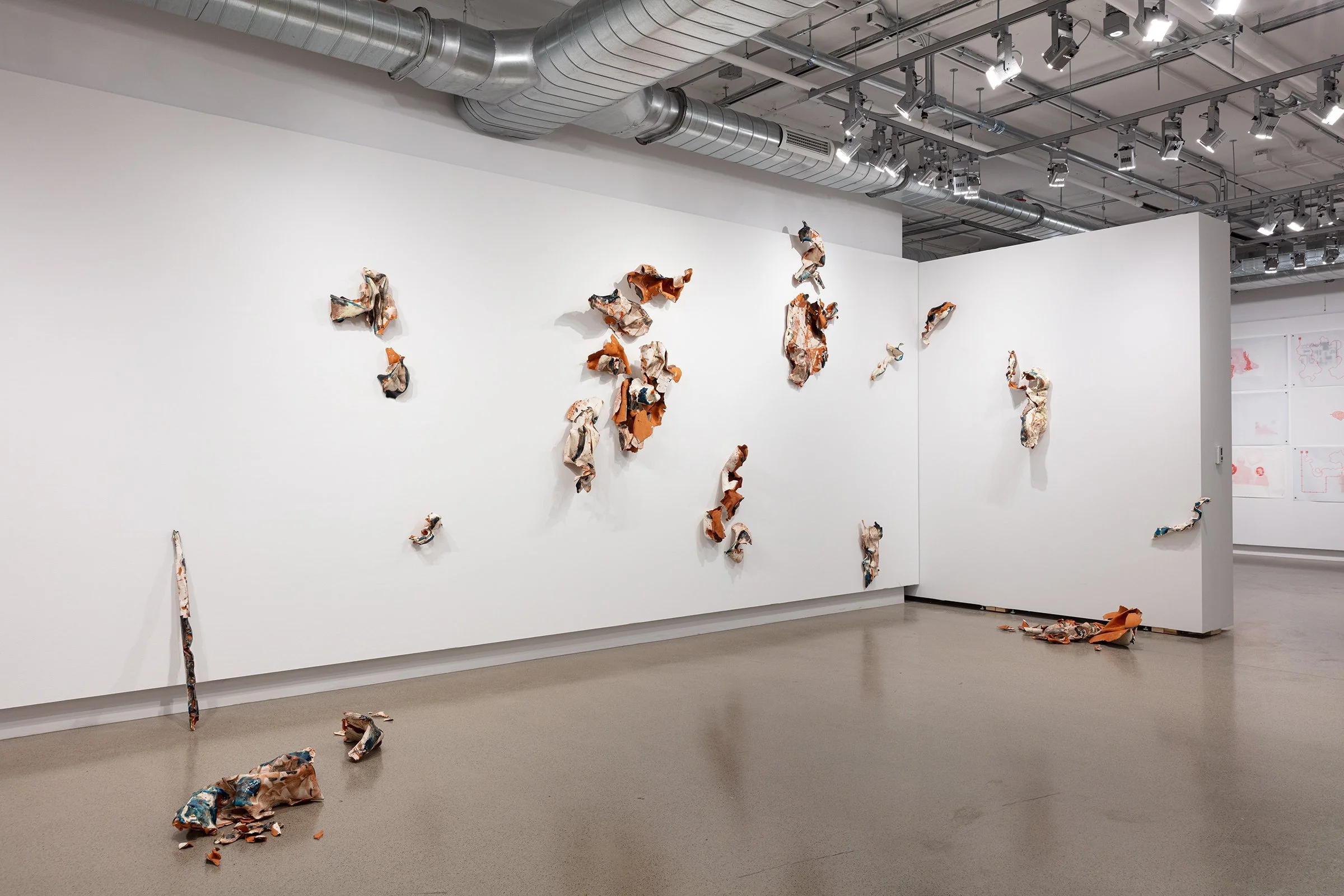
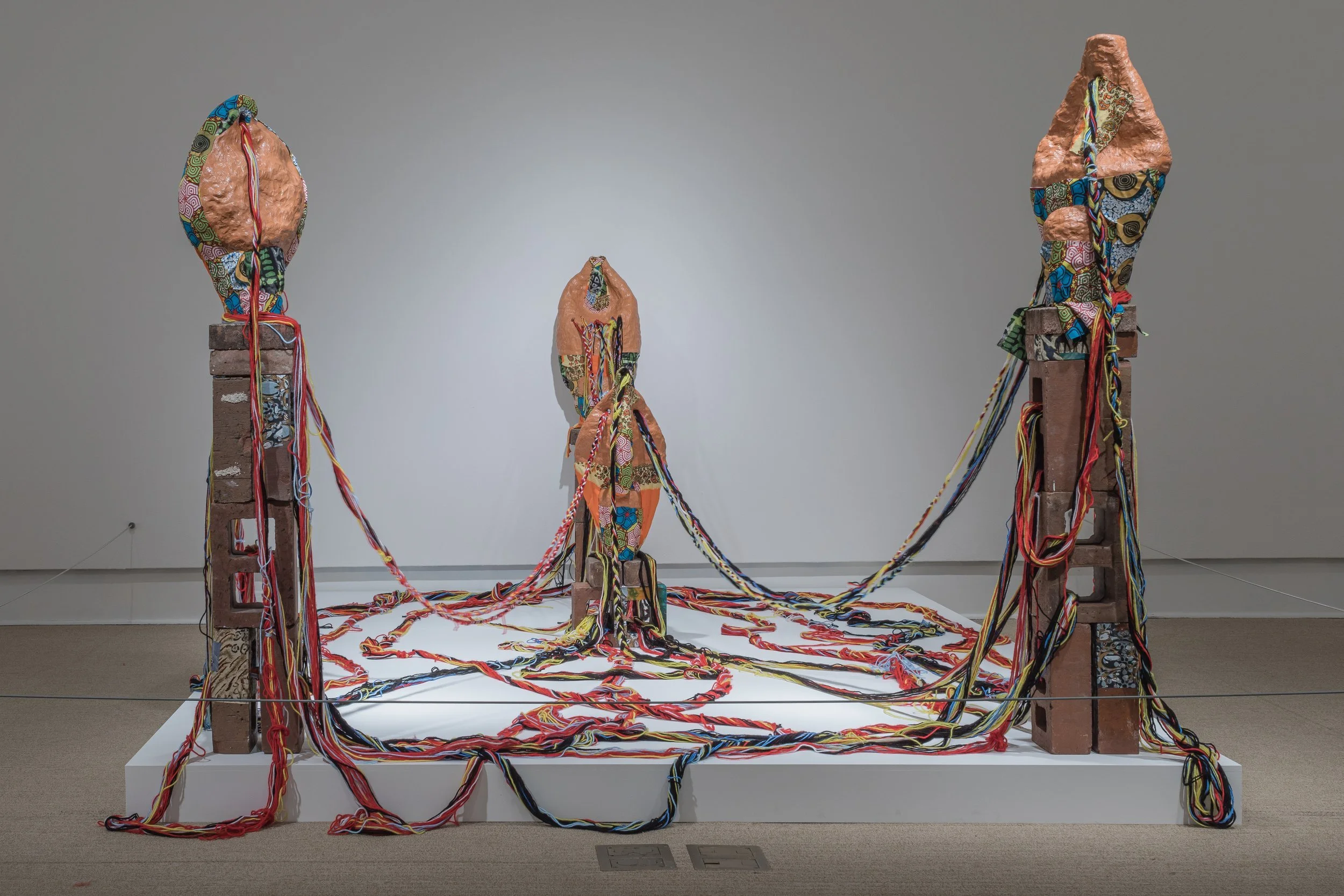

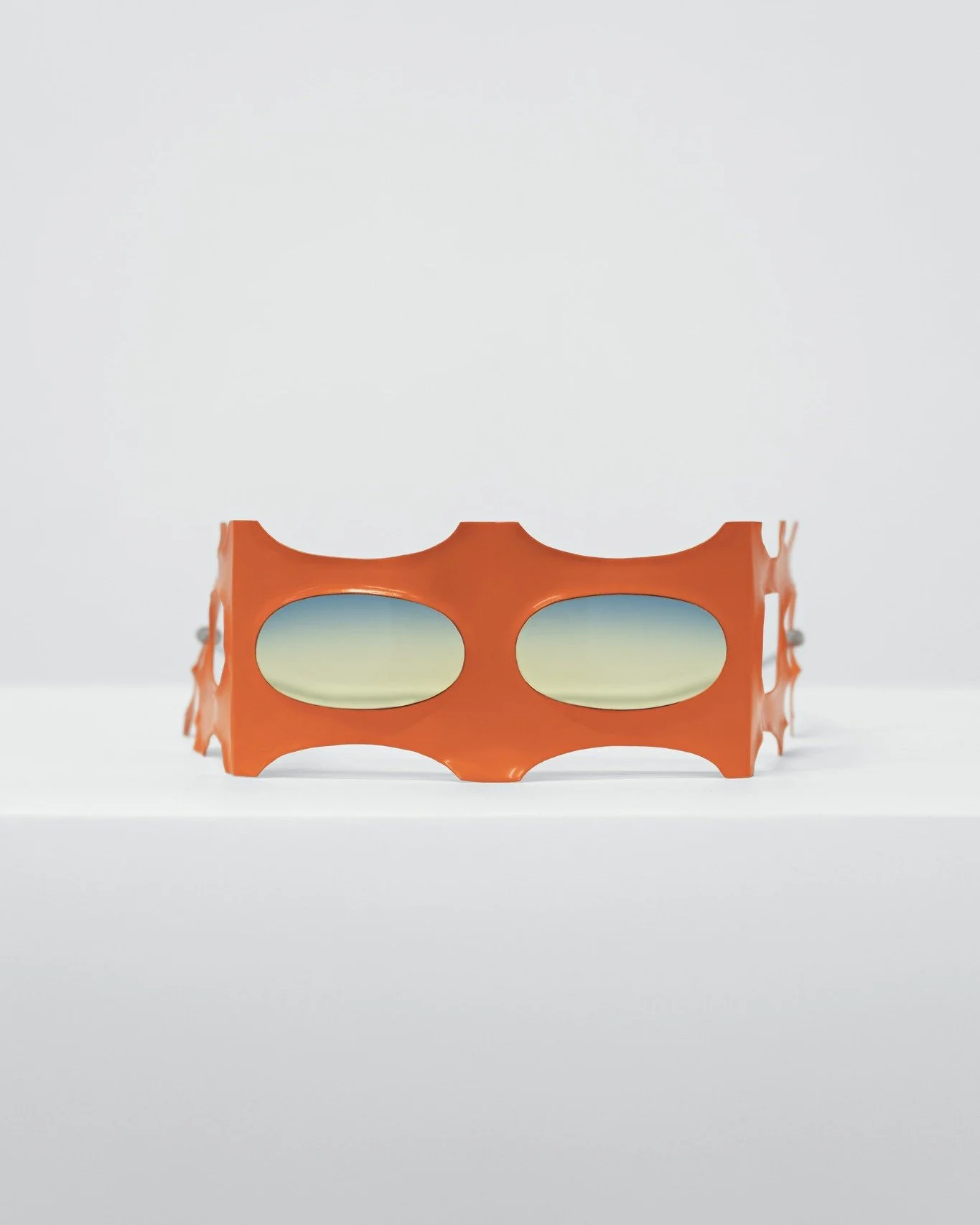
Gauri Gandhi is a conceptual artist whose work often features simple, toylike forms that deliver critical commentary with a touch of humour. Her ongoing body of work, The Stranger, centres on ceramic heads cast from a single mould, serving as a metaphor for humanity’s shared origin.states.