
10 Questions with Arseniy Valter
Arseniy Valter is an architect, audiovisual artist, and creative director based between Madrid and Barcelona, Spain. Originally from Russia and now living in exile, he positions his practice in opposition to the war in Ukraine and works across moving image, 3D motion, digital art, sound, scenography, and spatial design. Trained in architecture, Valter has developed a multidisciplinary practice between cinema, fashion, advertising, and ephemeral architecture. He has worked across creative and art direction for projects connected to YSL, BMW, Xiaomi, Cirque du Soleil, Samsung, Spotify, Comme des Garçons, and Jean Paul Gaultier. His work treats the image as a psychological space built through rhythm, texture, light, and emotional residue. Through filmic compositions and digital environments, Valter explores memory, estrangement, intimacy, and the fragile border between the inner world and the built one.
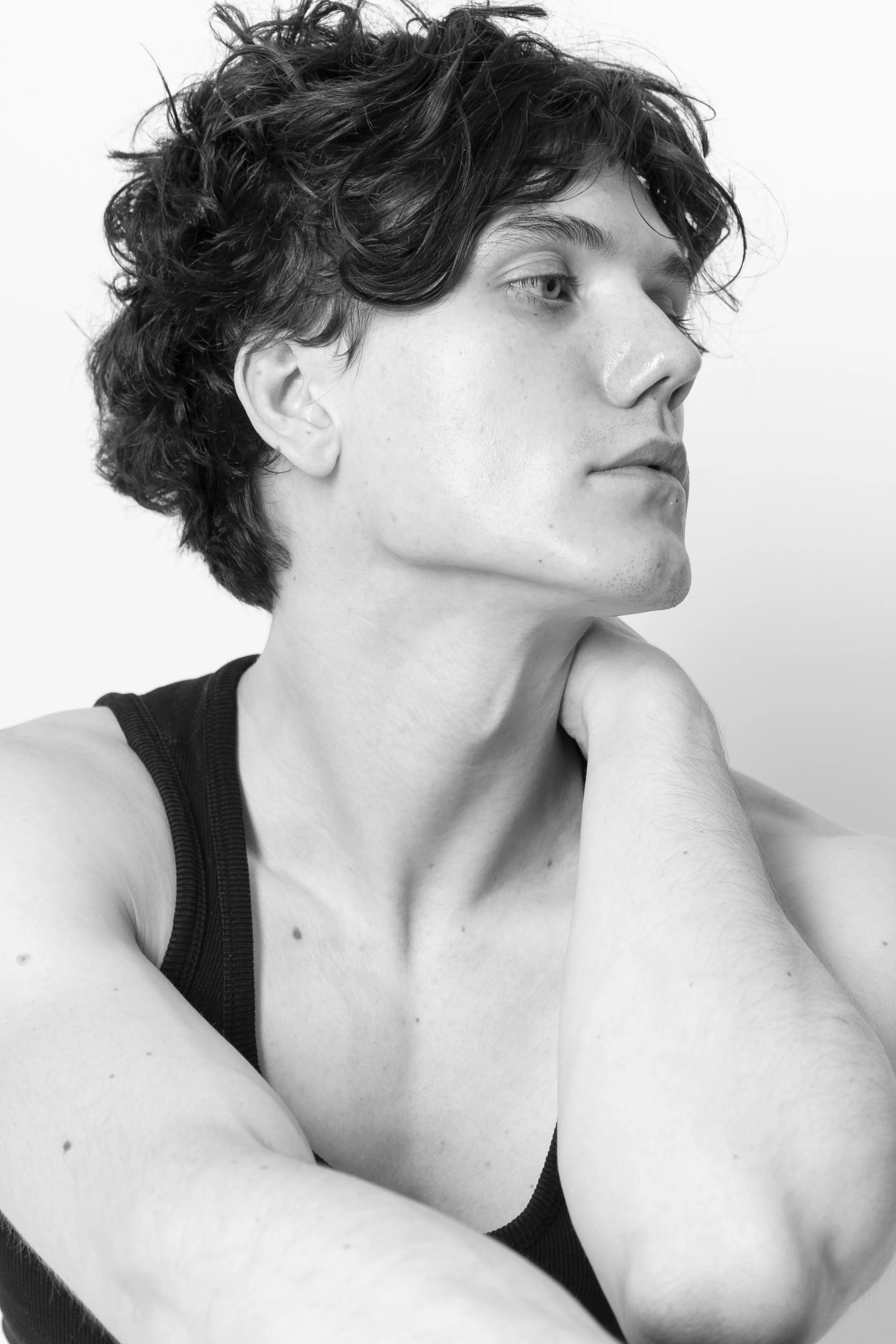
Arseniy Valter - Portrait
ARTIST STATEMENT
Arseniy Valter’s practice moves through moving image, animation, digital composition, sculpture, and spatial thinking. His works unfold as intimate constructed worlds, shaped by memory, exile, loneliness, sexuality, masculinity, and the fragile search beyond binary identity. Working between traditional sculptural language and digital transformation, Valter often uses 3D scans of his own body as raw material, morphing the self into hybrid figures, cinematic landscapes, and psychological architectures. His short films and audiovisual environments are less concerned with narrative closure than with emotional atmosphere - how an image can hold longing, rupture, silence, or desire. Through sound, rhythm, texture, and light, he searches for forms that do not simply illustrate feeling, but make it spatial, visible, and almost touchable.
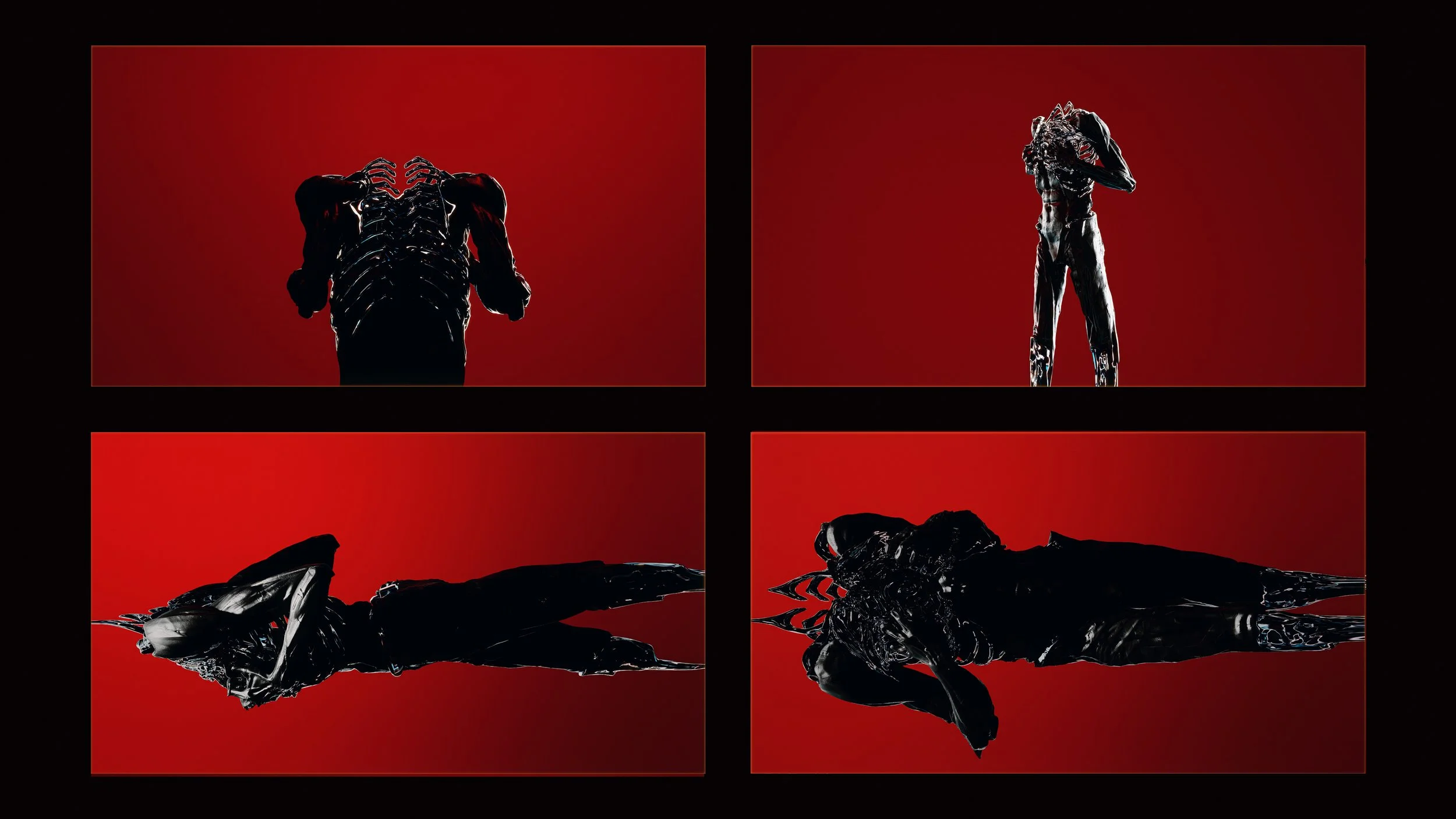
CLICK II - FOLD, Audiovisual digital sculpture, 3D animation, sound, 4K video, 2 min 03 sec, 2026 © Arseniy Valter
CLICK II - FOLD is the second work in the CLICK series, developed from 3D scans of the artist’s own body through distortion, tension, and transformation. The work turns inward, showing the figure in a state between protection and collapse. Reshaped into an abstract digital form, the body becomes both self-portrait and artifact - a vessel of pressure, memory, and restraint. The piece reflects on the body as data, emotion, and material, capturing not the violence of impact, but the quieter aftermath: the moment when the body absorbs, folds, and remains.
INTERVIEW
First of all, can you tell us about your background and how you first moved from architecture into audiovisual and digital art?
Art has always been around me since childhood. My father is a theatre director, playwright, and actor, and my mother is a painter and physiologist, so I grew up surrounded by existential conversations, visual culture, and this constant sense that life had to be felt, questioned, and translated into something more than we can comprehend.
From an early age, I started sculpting with clay and studying traditional painting. At the same time, I was gaining a kind of emotional education through the “right” films and literature - the ones that leave a mark under your skin for years. Later, I started taking cinematography and music more seriously, at one point even dreaming of becoming a neoclassical composer. It is difficult to explain, but every time I listen to music, I see vivid, almost living images. I enter this daydreaming flow state where sound becomes visual.
That is when 3D came into my life. It gave me the ability to create fully immersive worlds, a mix of absolute expression and cinematic beauty. Almost like an audiovisual performance frozen into a brief animated or still-rendered moment.
Gradually, that passion grew into a deeper interest in the environments around us and how they affect us: theatre scenography, dwellings, spatial atmospheres, and the principles of architecture. During my architecture studies, I continued developing my visual language, experimenting with both new technologies and forgotten older media, always searching for ways to transpose the imaginary worlds that excite me into audiovisual pieces.

CLICK II - FOLD, Audiovisual digital sculpture, 3D animation, sound, 4K video, 2 min 03 sec, 2026 © Arseniy Valter
How has living in Spain and your experience of exile influenced your artistic practice?
It is a very fragile topic for me. Leaving my home and my past behind by choice was already not easy. At first, it came from a desire for new horizons, for different cultures, for movement. But all of a sudden, that choice turned into exile, and the ground under your feet disappears. Faces begin to feel strange. Even your own memories start to feel like they belong to someone else. There is a deep grief in that, and also a strange subconscious embarrassment since the war started, as if you are carrying a wound you never fully agreed to show.
Only with time do you learn that you have to leave the past where it is and accept that it will never be the same. It is a painfully obvious truth, but accepting it helped me move forward without constantly constructing illusions about some imaginary future. After that, you become, in a way, a person of the world. Everywhere and nowhere feels like home at the same time.
I cannot return home because of my strong position against the war in Ukraine. Maybe there is some naive maximalism in it, but it is something I cannot give up, the idea that I cannot simply enjoy peace there while knowing that people are dying for it elsewhere.
Barcelona, however, has felt truly welcoming. It is an international hub of people from everywhere, with this beautiful eclectic mix of cuisine, architecture, creative energy, and people constantly searching for something. It gives me both movement and peace. It definitely affected my practice and the themes I explore in my work: estrangement, loneliness, memory, and the constant search for belonging.
You work across film, sound, 3D motion, sculpture, and spatial design. How do you decide which medium fits a project best?
In the ideal future I imagine, all of these media exist together inside one project: immersive audiovisual installations where time almost disappears, and for a brief moment the viewer surrenders to the universe I am trying to depict.
Most of the time, a project starts with music. I listen for something that aligns with the emotional atmosphere of the idea, then begin imagining visuals through trial and error, trying to understand what can best translate the feeling. Sometimes it becomes a film, sometimes a 3D motion, sometimes a sculpture, sound, or spatial design. The medium usually reveals itself through the emotional logic of the project.
3D is especially useful because it allows me to build prototypes of fictional worlds and test ideas quickly. At this point, it feels as essential to me as sketching on paper. It is not just a technical tool; it is a way of thinking.
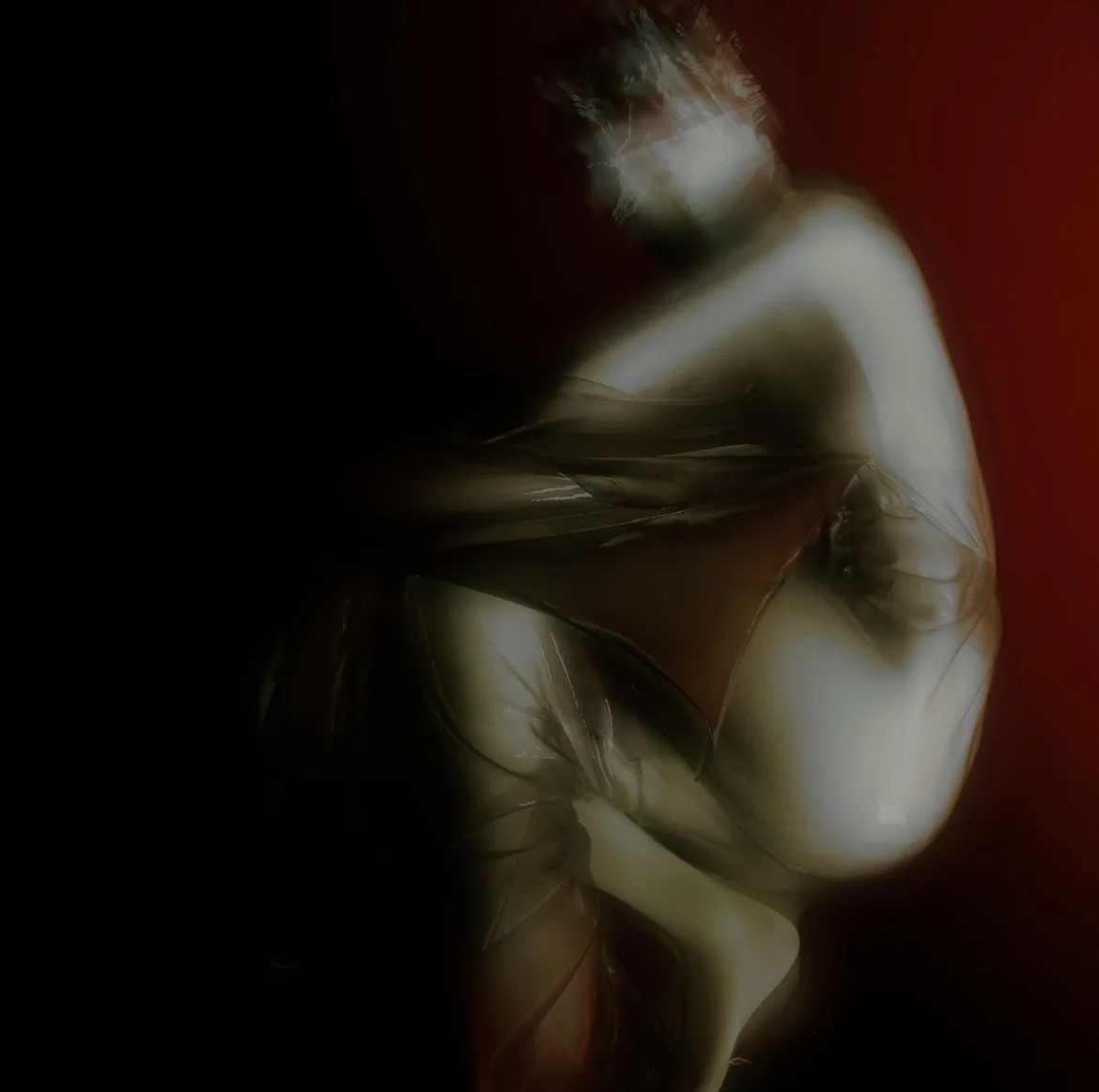
metamorphose.01, Digital sculpture, Pompeian Red Collection, 2022 © Arseniy Valter
metamorphose.01 is part of the Pompeian Red Collection, a series of digital sculptures exploring color, transformation, and the body as an unstable visual presence. Built around Pompeian red and its surrounding tonal relationships, the work uses light, shadow, and soft gradients to dissolve the figure into a state of suspended metamorphosis. The piece reflects on form as something fragile and atmospheric - appearing, shifting, and almost disappearing inside the color field.
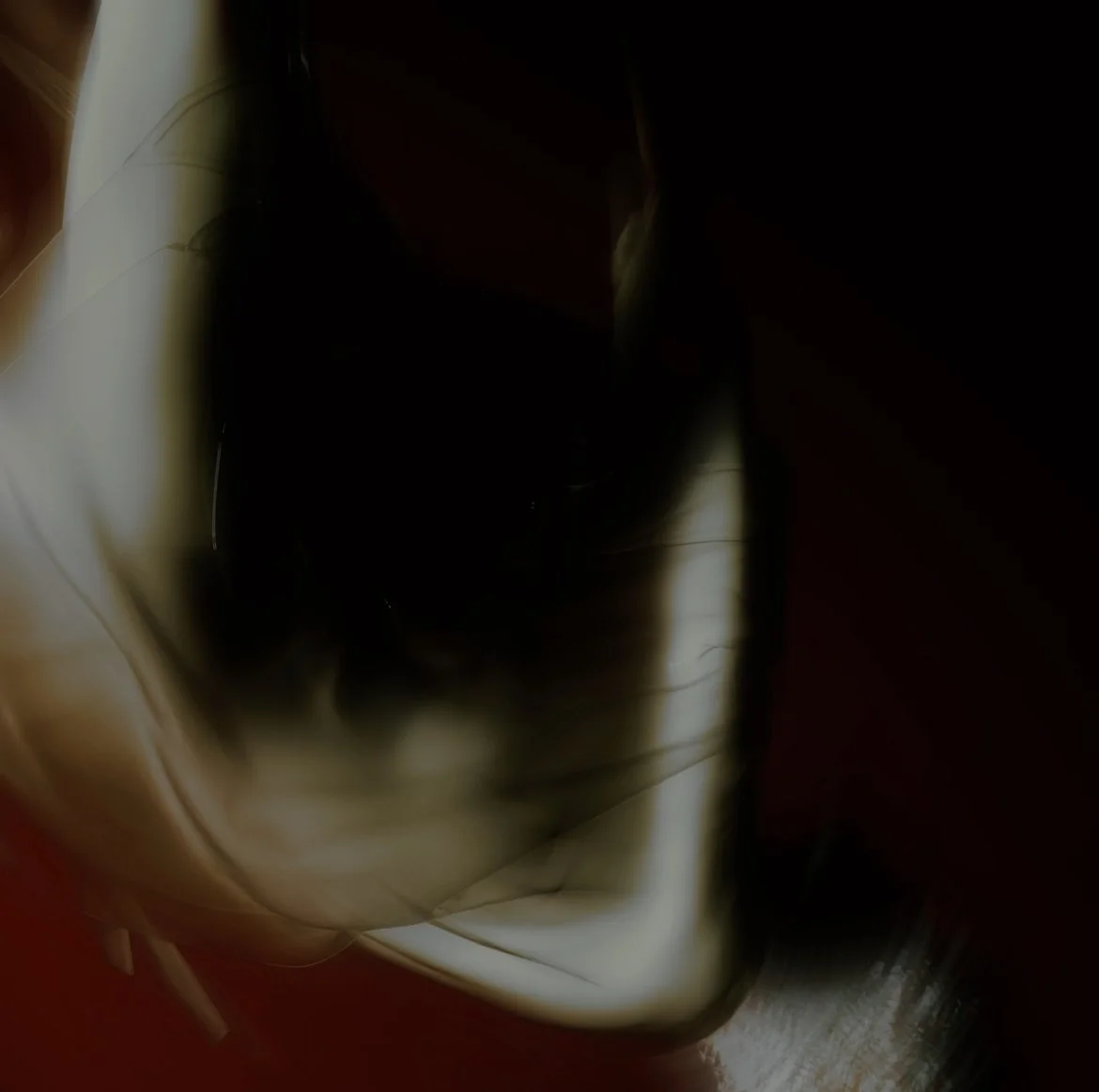
metamorphose.02, Digital sculpture, Pompeian Red Collection, 2022 © Arseniy Valter
Your work often feels very emotional and cinematic. What does your creative process usually look like from the first idea to the final piece?
Usually, it starts with a brief feeling or a visual that appears in my head. Sometimes it is a topic that bothers me, sometimes a triggering event, sometimes just an atmosphere I cannot shake off. Slowly, that feeling begins to push me into exploring the depth and potential of a future piece.
Unfortunately, I am a perfectionist, which does not always help creative practice. I need to map out sequences, rewrite scripts for weeks or sometimes months, until it “feels right.” It is a broad term, but for me, it is similar to the moment when all the pieces of a puzzle finally align, and I can imagine the final image as a whole.
But once I enter the execution stage, I love to improvise. When I get into a ‘flow state’, I start adjusting and adapting the piece based on instinct. I add or erase sequences, change colours, reshape the script, or completely shift direction. There is something very liberating in getting off track, getting lost in experimentation, research, and trial. It is probably one of the most fascinating parts of the process for me.
Memory, loneliness, identity, and intimacy appear frequently in your work. Why are these themes important to you?
War and exile affected this a lot; they drastically changed me, my personality, my inner rhythm, and the way I perceive the world. There is something soothing in depicting inner pain, whether it appears as estrangement, loneliness, or a memory of the past. Letting it go onto a digital canvas and then seeing someone in the audience resonate with it helps me live through those feelings.
Maybe it also comes from my family, where we rarely spoke directly about emotions. It was almost as if feelings had to be suppressed, as if becoming vulnerable in front of others, even your own family, was one of the biggest fears one could have. It took me years to become more expressive and emotionally open. Still, this subject continues to bother me, and I feel the need to speak about it through my art.
Memory and identity fascinate me as well. It is strange how the brain preserves certain parts of the past while distorting others. In the end, you are left with a by-product of reality, filtered through trauma, philosophy, longing, and whatever version of yourself you are carrying at that moment. That distorted memory quietly shapes identity and the way you perceive yourself.
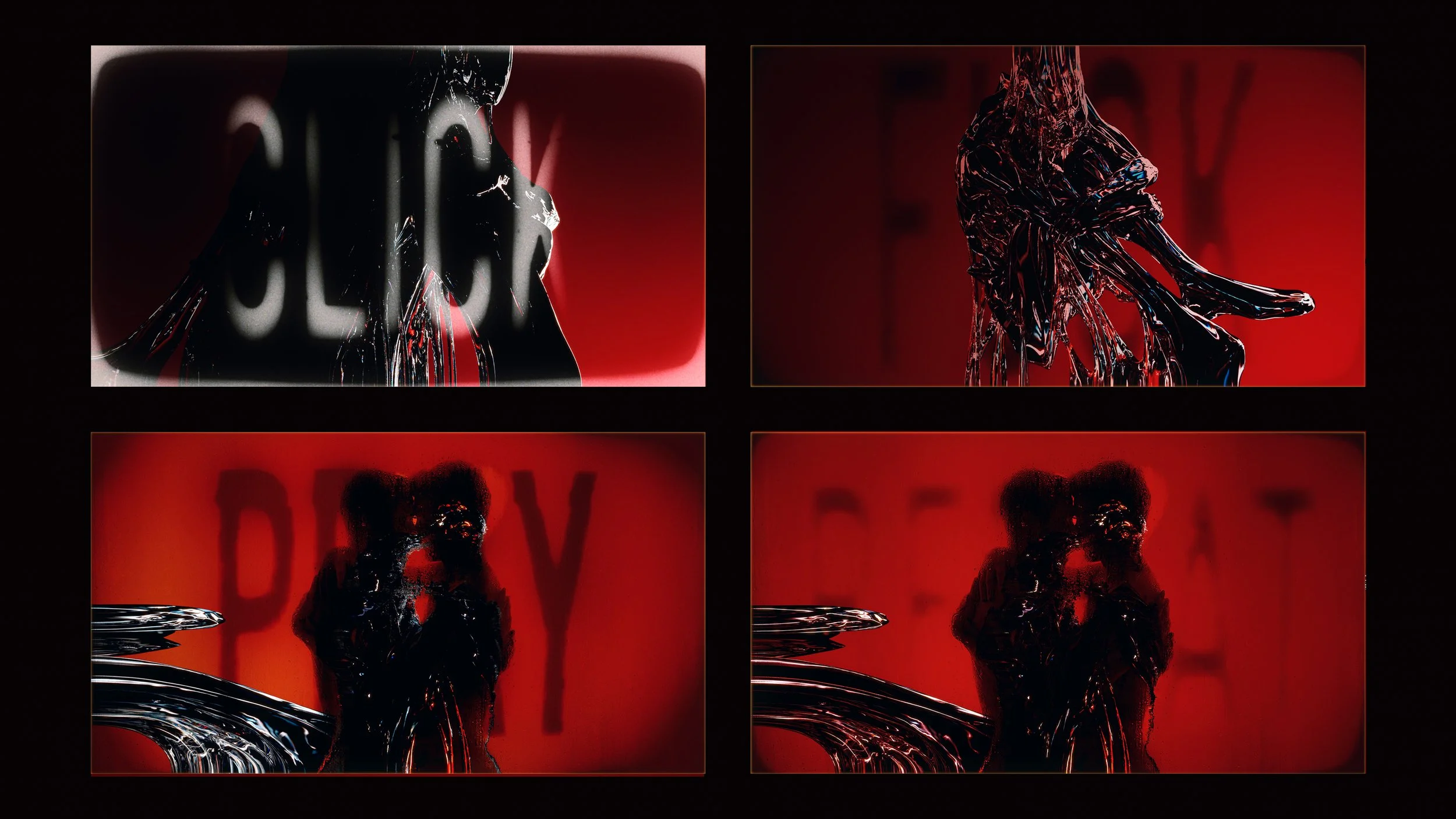
CLICK, Audiovisual digital sculpture, 3D animation, sound, 4K video, 1 min 34 sec, 2026 © Arseniy Valter
CLICK is the first work in the CLICK series, developed from 3D scans of the artist’s own body through distortion, tension, and transformation. The work captures a body in a state of rupture, extension, and release, suspended between resistance and surrender. Built from scanned anatomy and reshaped into an abstract digital form, the figure becomes both self-portrait and artifact. The piece explores the human body as data, emotion, and unstable material, tracing the moment when containment breaks and form begins to shift.
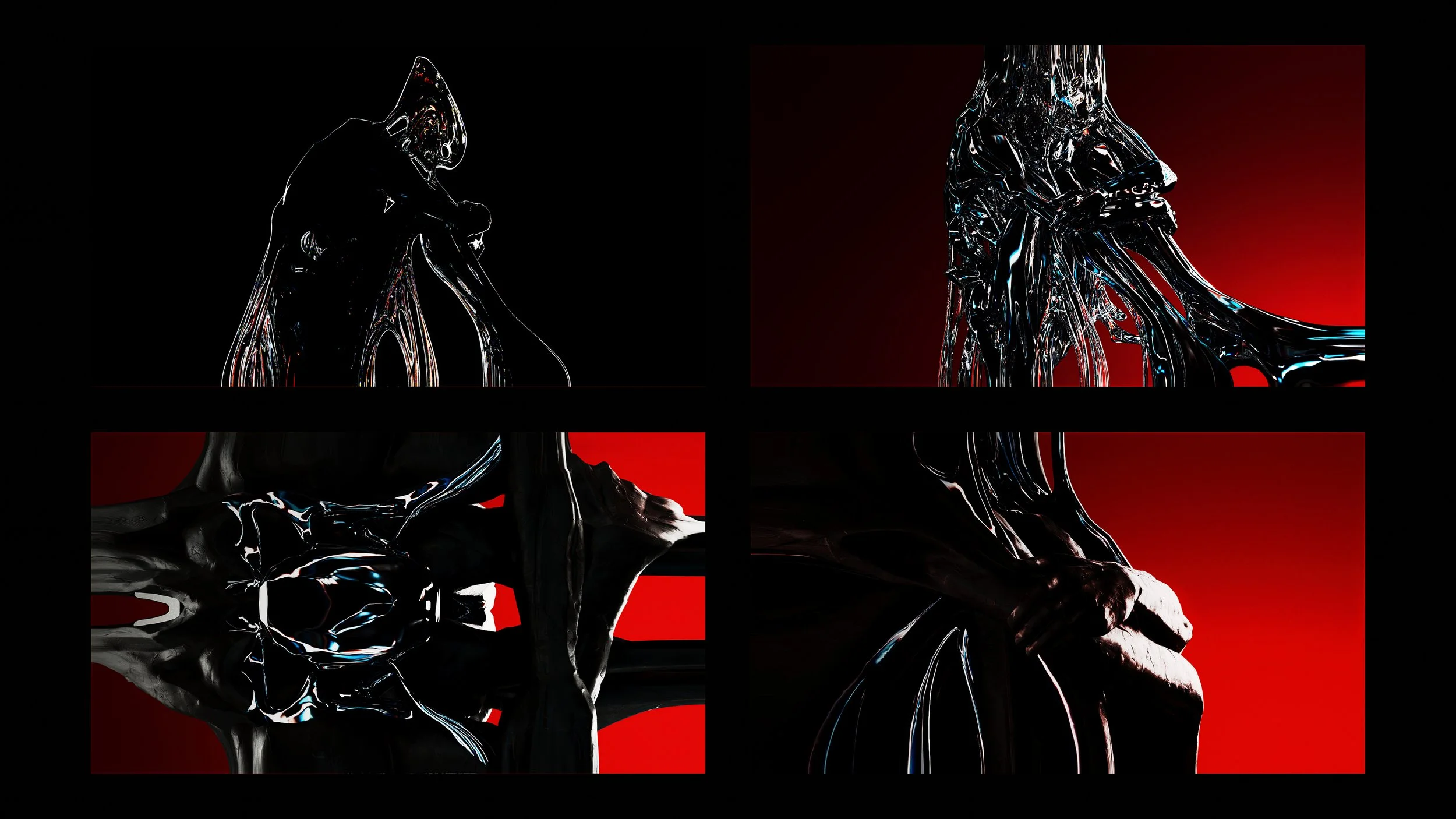
CLICK, Audiovisual digital sculpture, 3D animation, sound, 4K video, 1 min 34 sec, 2026 © Arseniy Valter
You often use 3D scans of your own body in your projects. What attracts you to using yourself as material within the work?
I am intrigued by the digitised era we are living in now, an era where everything seems tied to its digital copy. We have digital identities, branded versions of ourselves existing online, separated from our real physical bodies.
I feel the paradox of society’s constant desire for transformation and technological progress, but also the fatigue that comes with it. At some point, our phones begin to feel like extensions of our bodies, and the boundary between self and device becomes blurry.
By scanning my own body, I turn my physical self into data - into zeros and ones. I digitise something deeply intimate. It becomes a bridge between what is digital and what is real. It allows me to transform the self into abstract speculative sculptures, almost as if I am trying to visualise how I perceive myself, or how others might perceive me over time.
Sometimes these works become surreal portraits of certain periods and processes I am going through, things that are not always visible from the outside.
Your projects balance digital experimentation with a strong emotional atmosphere. How do you create that sense of tension and vulnerability?
I think it comes from my craving for intimacy and connection, while also at times struggling with it in real life. In artistic expression, I can be fearless; I can expose vulnerability without the immediate fear of judgment, even if that judgment may come later from people seeing the work.
Life itself carries anxiety and tension. It is an inevitable part of existence - this constant search for truth, meaning, and the essence of life. Nothing is static. Everything moves, even when it feels frozen. I try to translate that feeling through the heat of passion inside the short one or two minutes I usually have within a work.
Maybe it also has to do with attention span. Generationally, we are losing our ability to stay with one thing at a speed we have never seen before, and I feel that in myself, too. I struggle to sit still. I need stimulation, discovery, tension, doubt, existential questioning. So I try to make the viewer feel that intensity in the short time I have their attention.
At other times, I do the opposite and build tension through slower sequences. My recent series, CLICK, probably shows this contrast best. One piece overwhelms the viewer through rapid cuts, subliminal flashes, and constant changes of scenery, while the second is slow, almost ultra-slow, building tension through contrast with what our eyes are used to consuming.
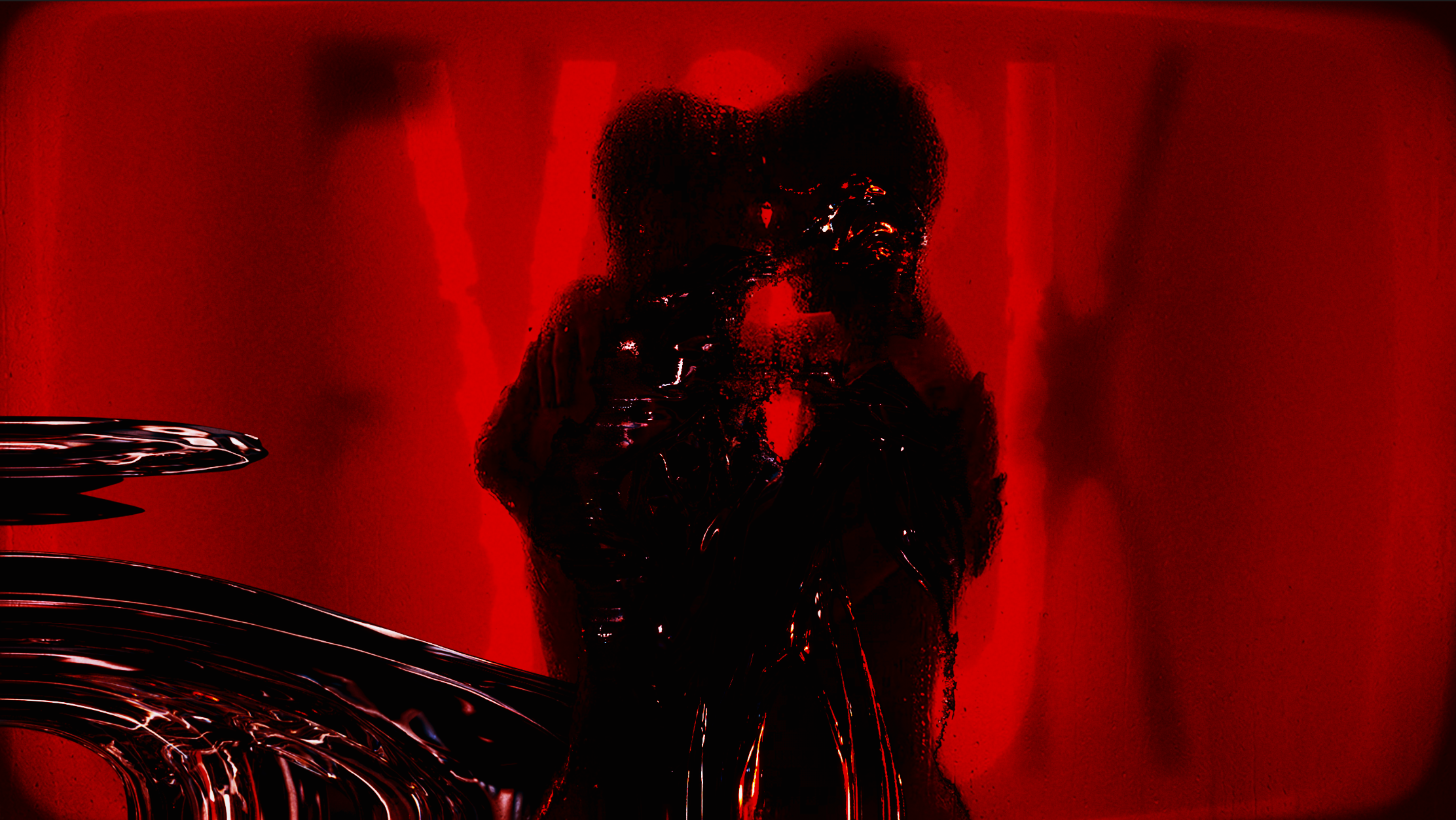
CLICK, Audiovisual digital sculpture, 3D animation, sound, 4K video, 1 min 34 sec, 2026 © Arseniy Valter
You have worked on projects connected to major brands such as BMW, Samsung, and Spotify. How do commercial collaborations influence or challenge your artistic vision?
It is always challenging to find the middle ground between artistic expression and commercial needs. Sometimes simple commercial projects can feel stagnant because a large corporation does not always need to risk its reputation in search of experimentation or new value when a clean, simple idea will work just fine.
But I do believe that part of our responsibility as creatives is to explain how collaboration with artists can diversify and widen the value of a brand, while still respecting the principles of commercial work. It is a negotiation between vision and function.
Sometimes a client comes with a blank canvas and gives you full creative freedom to express your feelings toward their product. It is rare, but when it happens, it feels like finding a hidden gem.
Most of the time, though, brands come with a very specific idea in mind, strictly following their guidelines. Honestly, I think it can be tricky for some brands to work with me because I naturally push toward my own aesthetics, which are often quite dark, minimal, and emotionally charged. That does not always align with the brighter and cleaner language of the commercial world.
How have audiences and clients responded to the more personal and psychological aspects of your work?
Honestly, the response has been incredible. The audience has been very supportive when it comes to my more personal explorations, whether that is my outer image, the way I dress and express myself, or the art itself, which I see as a direct consequence of my inner world.
Clients also seem intrigued by the variety of tools and approaches I bring into a project. Still, at times I do notice a dissonance in people’s responses to my artistic expression, and even sometimes in commercial work. Maybe it does not always align with a brand’s values, or with people’s perception of what is “right” and how things are supposed to be.
It would be a lie to say it does not bother me at all. But with time and maturity, I have gained enough acceptance to understand that if you state a basic truth for yourself, it will create resonance. Some people will love it. Some people will hate it. That is part of the process.
I also feel blessed to have friends and loved ones around me who support my explorations unconditionally and encourage me to keep pushing the boundaries further, toward whatever strange beauty this world still has to offer.
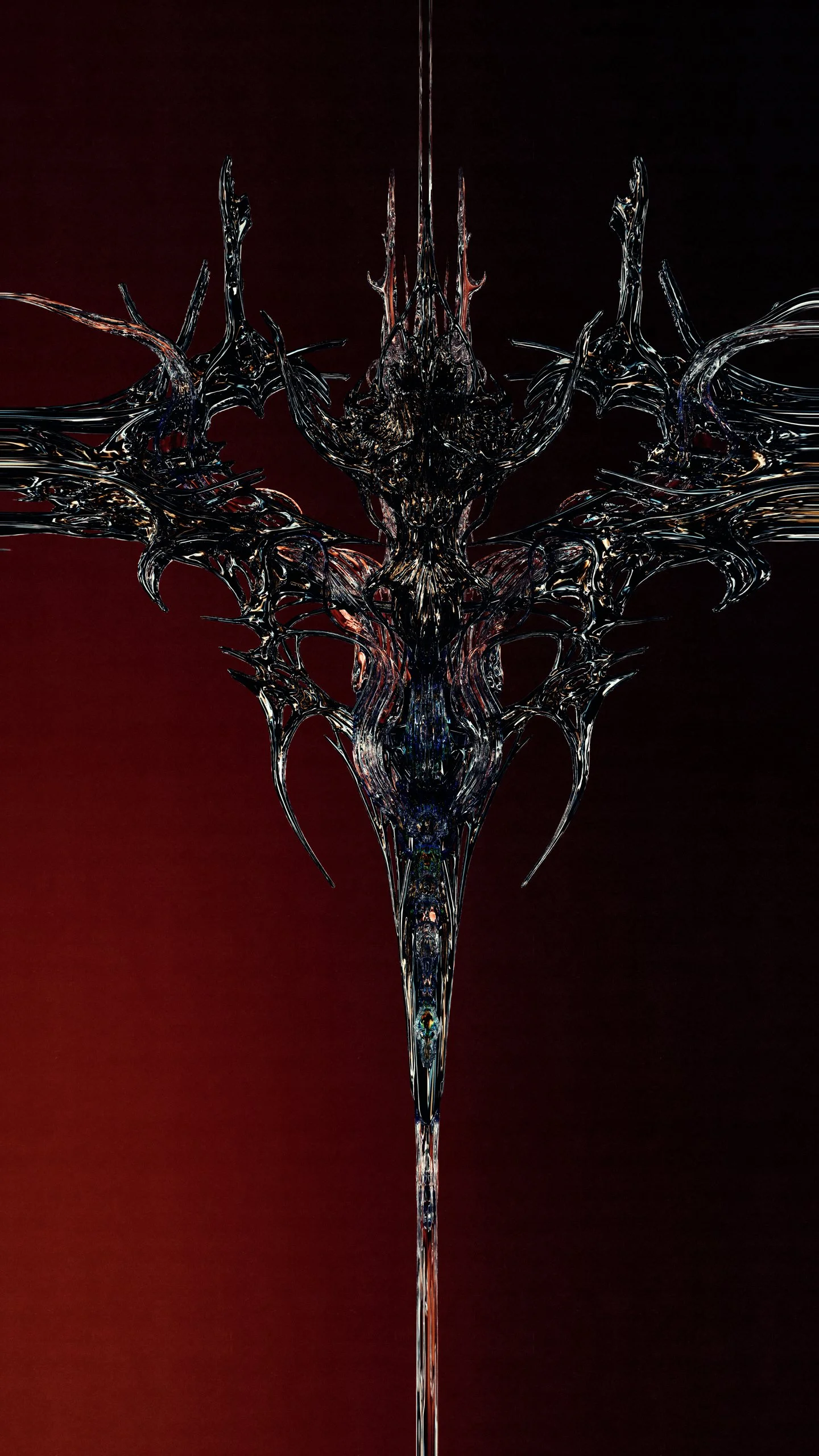
Organ, Physical and digital sculpture, 1 m tall, 2026 © Arseniy Valter
Organ is a physical and digital sculpture developed through biomimicry, anatomical research, and the abstraction of bodily form. The work transforms organic references - bone structures, wings, exoskeletons, and internal anatomy - into a symmetrical, almost ritualistic body. Suspended between organism, artifact, and mechanical relic, the sculpture reflects on the body as a mutable architecture: fragile, defensive, and constantly in the process of becoming something other than itself.
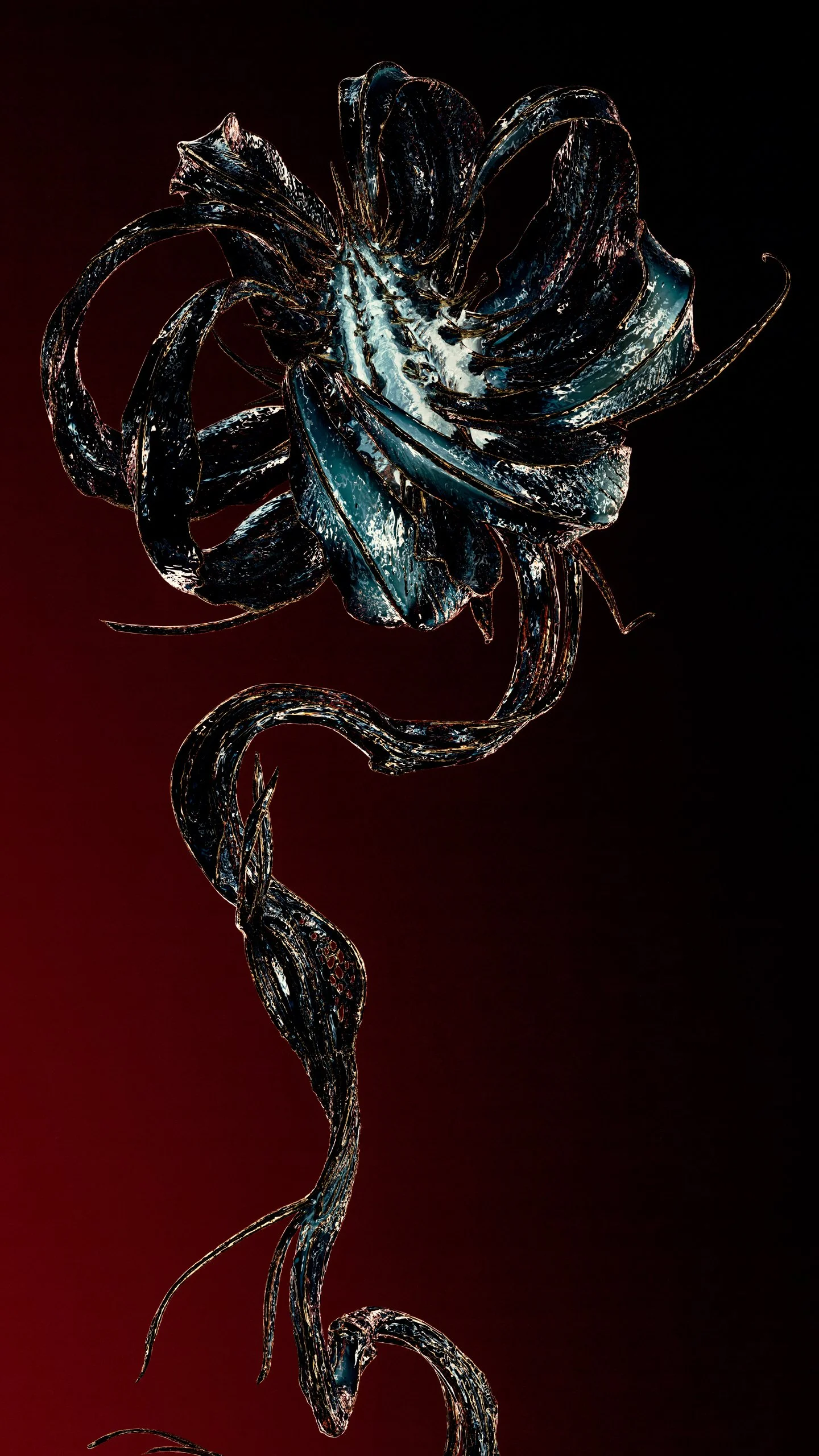
Untitled, Physical and digital sculpture, 1 m tall, 2026 © Arseniy Valter
Untitled is a physical and digital sculpture developed through flower biomimicry and the study of fragile organic systems. The work translates botanical forms into a digitized sculptural body, suspended between nature, artifact, and synthetic growth. Its sharp petals, reflective surfaces, and unstable structure explore the tension between delicacy and resistance - where the flower becomes less a symbol of beauty than a living architecture of survival, mutation, and inner pressure.
Lastly, what projects or ideas are you currently developing, and what directions would you like to explore in the future?
For the past five years, I have been searching for a way to merge digital and physical art in a form that truly makes sense - both for the work itself and for the viewer. There have been moments of success, but it has never felt fully there yet.
This year, I am focusing more on physical work - sculptures and immersive installation spaces. I want to bring this vision to life in London this November through an exhibition that merges physical and digital art.
In my commercial practice, I am shifting more and more toward digital directing - full-circle production and execution of ideas for brands through short cinematic commercial projects, ephemeral architecture, and scenography.
Another direction I want to explore more deeply is the world of cinema and theatre. After seeing several astonishing performances, including Kirill Serebrennikov’s interpretation of Hamlet and Salome by Yaël Farber and Maxim Didenko, I feel a strong desire to use my architectural background as a way into theatre scenography. It feels like a natural continuation - space, body, image, sound, and emotion finally meeting in one room.
Artist’s Talk
Al-Tiba9 Interviews is a promotional platform for artists to articulate their vision and engage them with our diverse readership through a published art dialogue. The artists are interviewed by Mr. Mohamed Benhadj, the founder & curator of Al-Tiba9 Contemporary, to highlight their artistic careers and introduce them to the international contemporary art scene across our vast network of museums, galleries, art professionals, art dealers, collectors, and art lovers across the globe.


Lumi Liu is a New York–based designer and visual artist working at the intersection of art, medical visualisation, and public expression. Her practice explores consciousness, hidden biological systems, and the multiple dimensions of life that exist beyond human awareness. Lumi transforms these invisible biological architectures into poetic artistic experiences.