

10 Questions with Lumaya
Egle (Lumaya) is a Lithuanian digital artist exploring the relationship between human consciousness, emotional memory, and visual structure. Her practice combines a background in information systems engineering with more than three decades of work in meditation and energy-based practices focused on human perception and transformation. Through symbolic visual systems created with digital and AI-assisted tools, she investigates how invisible inner processes can be translated into structured visual environments.
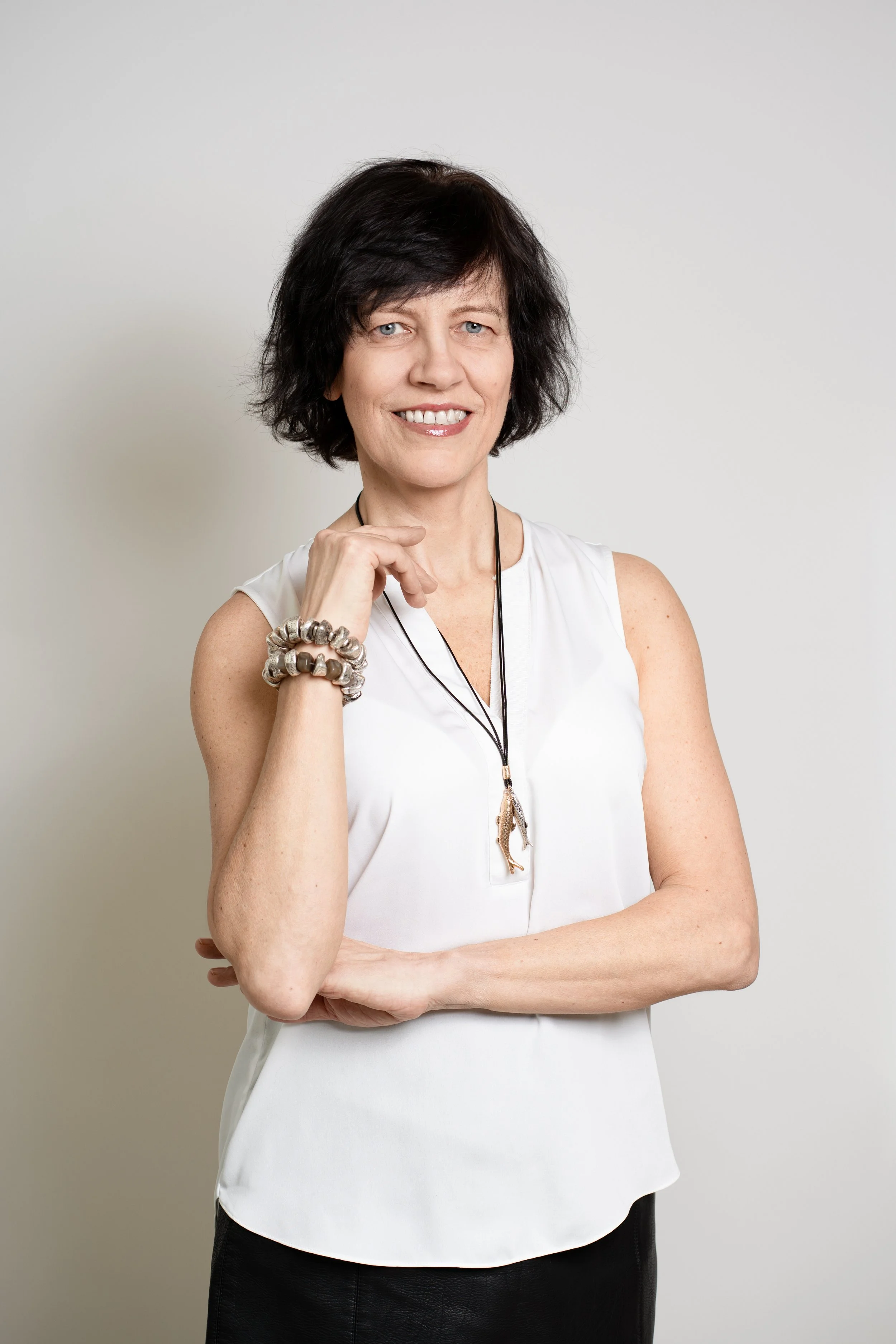
Lumaya - Portrait
ARTIST STATEMENT
Lumaya’s artistic practice explores how invisible dimensions of human experience, including memory, emotion, perception, and consciousness, can be translated into visual form. Her work grows from many years of professional engagement with practices centred on awareness, meditation, and the observation of subtle psychological and energetic processes within human experience. Through long-term work with individuals seeking emotional and personal transformation, she became increasingly interested in how lived experiences leave structural imprints within the human system.
This inquiry gradually led to the development of a visual language in which the human being is understood as a complex informational structure shaped by memory, emotional experience, environment, and inherited patterns. Within this framework, visual art becomes a medium capable of revealing structures that normally remain unseen. Lumaya’s works are conceived not simply as images but as perceptual environments, visual fields designed to evoke reflection and inner response in the viewer. Her compositions often incorporate luminous geometries, symbolic architectural forms, and layered spatial structures that echo the complexity of human inner experience.
In the series The Longing: Body of Memory, Lumaya explores how emotional experiences remain embedded within the body and continue to influence perception and identity. The project Destiny – Temporal Architecture examines the structural dimension of human life and focuses on the relationship between time, decision, and the patterns through which personal trajectories unfold.
Digital and AI-assisted visual tools function in her practice primarily as instruments that allow the construction of complex visual systems and symbolic architectures. The conceptual foundation of the work emerges from long-term observation of human consciousness and lived experience. Through this practice, Lumaya seeks visual forms capable of touching deeper layers of human awareness and opening spaces where recognition, reflection, and transformation may begin.
Frozen Grief, Digital, 3072x3072 px, 2025 © Lumaya
INTERVIEW
To start, can you recall when you first felt the need to express your ideas through art, and how that moment shaped your path as an artist?
My path toward art did not begin from a single dramatic moment but rather developed gradually through different areas of my life and professional experience. I explore the hidden architecture of human experience and the ways consciousness can transform it. For many years, I worked with people in practices related to meditation, awareness, and emotional integration. Through this work, I became deeply interested in how human experiences leave traces within perception, behaviour, and life direction. Over time, I felt an increasing need to translate these invisible processes into visual form. Art gradually became the language through which I could explore and communicate these observations. Instead of describing human experience only through words or guidance, visual structures allowed me to express complex inner dynamics in a more intuitive and symbolic way.
How did your background in information systems engineering influence your transition into digital art?
My background in information systems engineering strongly shaped the way I approach artistic creation. Engineering trains the mind to think in terms of systems, structures, relationships, and hidden patterns. When I later began working with visual media, I naturally started perceiving human experience in a similar way, as a complex informational system influenced by memory, emotions, environment, and inherited patterns. Over time, I began to understand the human being as a living informational architecture in which memory, emotions, inherited patterns, and relationships continuously shape the structure of experience. In this sense, my artistic work gradually became a visual exploration of how these structures form human life trajectories and how awareness can transform them. Digital media offered a natural environment for exploring these ideas. It allows me to construct layered visual structures and symbolic spatial systems that reflect the complexity of these processes.

Armor of the Heart, Digital, 3072x3072 px, 2025 © Lumaya
What led you to choose digital and AI-assisted tools as your primary medium of expression?
Digital tools allow me to construct complex visual environments that would be very difficult to achieve through traditional techniques. They make it possible to work with layered structures, luminous geometries, spatial depth, and symbolic systems that mirror the complexity of human experience. AI-assisted tools function in my practice primarily as instruments within a broader conceptual process. They allow me to explore variations, structures, and spatial relationships that help translate abstract ideas into visual form. For me, the technology itself is not the focus. It simply expands the possibilities of visual thinking and allows the creation of symbolic environments that reflect the multidimensional nature of human perception.
Your work explores consciousness and emotional memory. What initially drew you to these themes?
My interest in these themes developed through many years of working with people in practices related to meditation, awareness, and emotional integration. Through this work, I repeatedly observed how deeply past experiences and emotional patterns influence perception, decision-making, and life direction. These influences often remain invisible to the person experiencing them, yet they shape many aspects of life. Over time, I began to understand the human being as a living informational architecture in which memory, emotions, inherited patterns, and relationships continuously shape the structure of experience. In this sense, my artistic work gradually became a visual exploration of how these structures form human life trajectories and how awareness can transform them. Visual art became a natural way to explore these dynamics because images can communicate complex emotional and structural realities in a direct and intuitive manner.

Inherited, Pain, Digital, 3072x3072 px, 2025 © Lumaya
How do your decades of meditation and energy-based practices inform your artistic vision today?
Decades of meditation and awareness-based practices have shaped the way I observe human experience. They taught me to pay attention not only to visible actions but also to subtle internal processes such as emotional reactions, perception patterns, and shifts in awareness. Through this long engagement, I became increasingly interested in the relationship between inner states and the structures they create in human life. These observations gradually entered my artistic practice. Many of my works explore the relationship between inner perception, emotional memory, and the larger structures that shape human experience. In this sense, my art is closely connected to long-term observation of consciousness and the dynamics through which human experience unfolds.
Can you describe your creative process when developing a new symbolic visual system or series?
My creative process usually begins with a question that arises from observation of human experience. For example, the collection Destiny – Temporal Architecture was inspired by a conversation with a woman who came to me seeking advice. She felt that no matter what she attempted in her life, nothing seemed to succeed. She repeatedly said that perhaps it was simply fate and that some things could not be changed. While speaking with her, I began to recognise several underlying patterns in the way she perceived her situation and the decisions she made. These patterns appeared not as mystical forces but as structural dynamics shaping the direction of her experiences. After that meeting, I spent a long time reflecting on the idea of destiny not as something predetermined but as a kind of architecture of life, a structure formed through perception, decisions, emotional responses, and circumstances. This reflection eventually led me to explore how such structures could be expressed visually. The series became an attempt to translate these invisible dynamics into spatial visual environments.
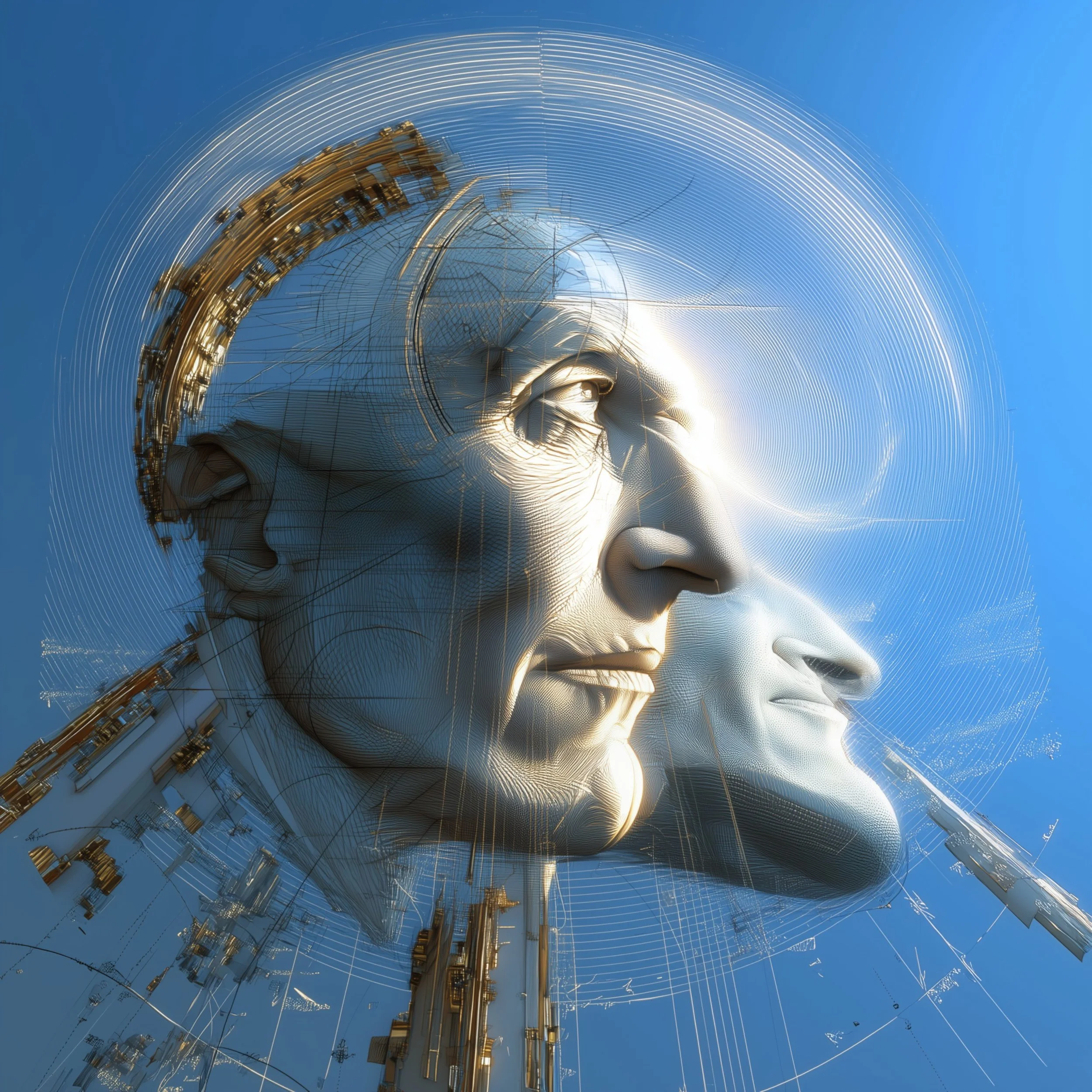
Expanding Awareness, Digital, 3072x3072 px, 2026 © Lumaya

Inner Alignment, Digital, 3072x3072 px, 2026 © Lumaya
How do you balance intuition and technological structure when working with generative or AI-based tools?
For me, this balance comes quite naturally because both elements have been present in my life for a long time. My father was an architect, and during my childhood I often watched him designing buildings and spatial structures. I remember observing how many layers, sketches, and structural relationships were involved in developing a single project. I enjoyed imagining the final form of a structure that at first existed only as lines and fragments on paper. Perhaps because of this early exposure, I learned to perceive systems in layers and to think about how different elements influence one another. At the same time, intuition has always played an important role in my decisions. It helps me sense which forms, structures, or visual elements resonate harmoniously and which create imbalance. When working with generative or AI-assisted tools, technological structure provides the framework, while intuition guides the selection, refinement, and final composition of the work.
Your works often function as perceptual environments rather than images. How do you hope viewers experience them?
I hope that viewers allow themselves to remain with the image long enough for an internal dialogue to begin. Often, a person initially reacts to a visual structure intuitively. Certain elements may attract attention, create tension, or evoke recognition. Through these reactions, viewers sometimes begin reflecting on their own experiences or inner states. In some cases, they may identify with a visual structure, direction, or form within the image. In other cases, they may feel the need to distance themselves from what they perceive. Both reactions can open a space for reflection. If the viewer stays with the work for a longer moment, personal insights may gradually emerge. The image becomes less of an object and more of a perceptual environment in which the viewer begins observing their own responses and interpretations.
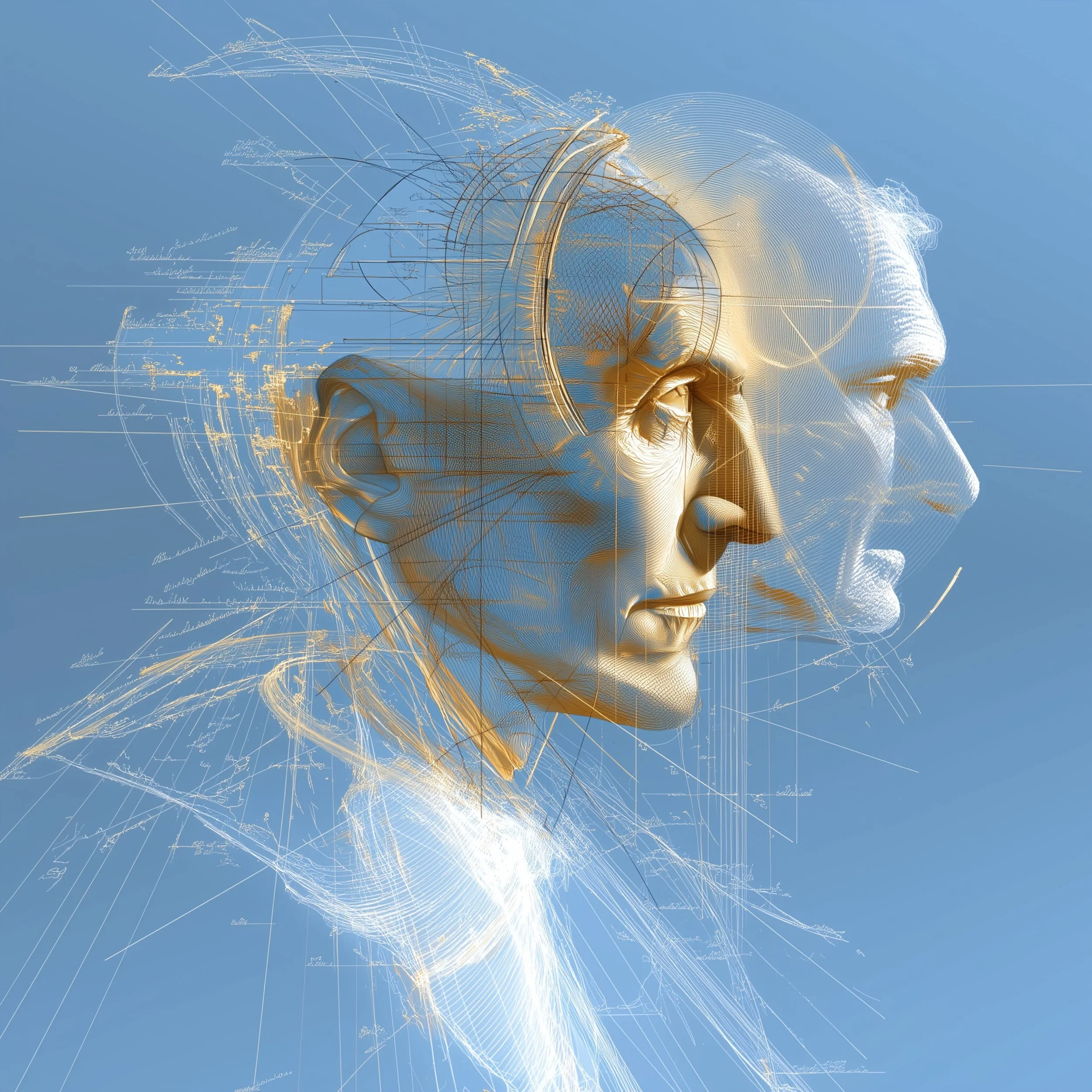
Mirror of Decisions, Digital, 3072x3072 px, 2026 © Lumaya
Are there new ideas, themes, or projects you are currently developing or planning to explore?
Recently, I have been reflecting on the theme of awareness and the complex role of the human ego. In many spiritual traditions, the ego is often described as something that should be suppressed or overcome. Yet in human life, the ego also plays a role in creativity, ambition, and the desire to express one's potential. This duality interests me greatly. The ego can both limit human development and enable personal expression depending on how it is understood and integrated. I am currently thinking about how this tension between self-expression and self-awareness could be translated into a visual series exploring the dynamics between identity, perception, and consciousness.
Lastly, what direction or goal would you like your artistic practice to reach in the coming years?
In the coming years, I would like to deepen both the visual and conceptual aspects of my work. I am interested in continuing to refine the visual languages through which complex human experiences can be expressed. At the same time, I would like to better understand how viewers respond to these works and how they resonate with personal experiences and reflections. I hope to build a community where people can share their experiences of the interaction between art and inner perception. I also hope to develop stronger connections with curators, researchers, and artists who are interested in exploring the relationship between art, perception, and human consciousness. Such dialogue often leads to new ideas and directions. Contemporary art is currently undergoing a significant transformation as new tools and conceptual frameworks emerge, and I am interested in continuing to explore how these changes can expand the possibilities of artistic expression.
Artist’s Talk
Al-Tiba9 Interviews is a promotional platform for artists to articulate their vision and engage them with our diverse readership through a published art dialogue. The artists are interviewed by Mohamed Benhadj, the founder & curator of Al-Tiba9, to highlight their artistic careers and introduce them to the international contemporary art scene across our vast network of museums, galleries, art professionals, art dealers, collectors, and art lovers across the globe.


Lumi Liu is a New York–based designer and visual artist working at the intersection of art, medical visualisation, and public expression. Her practice explores consciousness, hidden biological systems, and the multiple dimensions of life that exist beyond human awareness. Lumi transforms these invisible biological architectures into poetic artistic experiences.