
10 Questions with Steit Slings
Steit Slings is an artist with a passion for art, music, food, travel, and life. From an early age, he dreamed of becoming an architect, drawn to the idea of building and shaping the world through design. At the age of ten, he bought a Sinclair ZX81 with 16Kb of memory together with his brother. That modest machine, with less capacity than a modern fridge, sparked a lifelong fascination with technology.
His education took him through architecture and art before leading into IT, where he focused on building digital architecture. Yet his love for architecture and art never disappeared. In late 2019, he decided to devote more time to what inspires him most: creating and making art.
Born in an era when computers and digital media were still experimental, Steit explored the connection between art and technology at the Art Academy. His graduation projects included computer-driven installations and on-screen works alongside more traditional art forms. Today, he continues to experiment with digital media, image processing, paint, 3D printing, clay, wood, and metal. Each material is chosen for its ability to serve the story he wants to tell.

Steit Slings - Portrait | Gallery Albir, Lets Spring Together Exhibition
ARTIST STATEMENT
Steit’s work begins with a fascination for how we experience the world, not only through sight, sound, and touch but also through the meanings we assign to what we perceive. His practice is conceptual in nature, where the idea takes precedence over the visual aspect, resulting in works that are less decorative yet more engaging. Rather than producing beautiful images, Steit creates conversation starters that invite dialogue with others and with oneself.
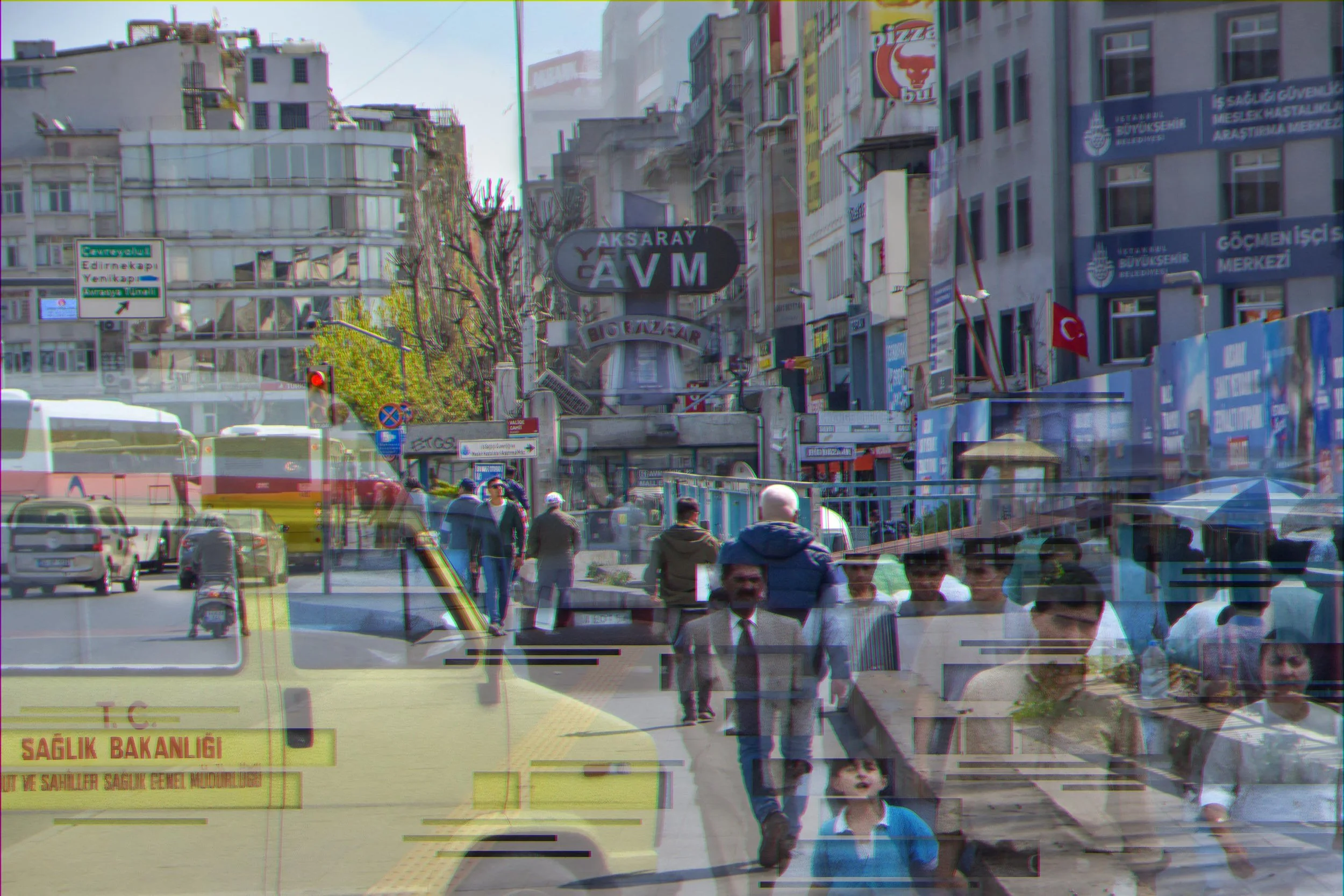
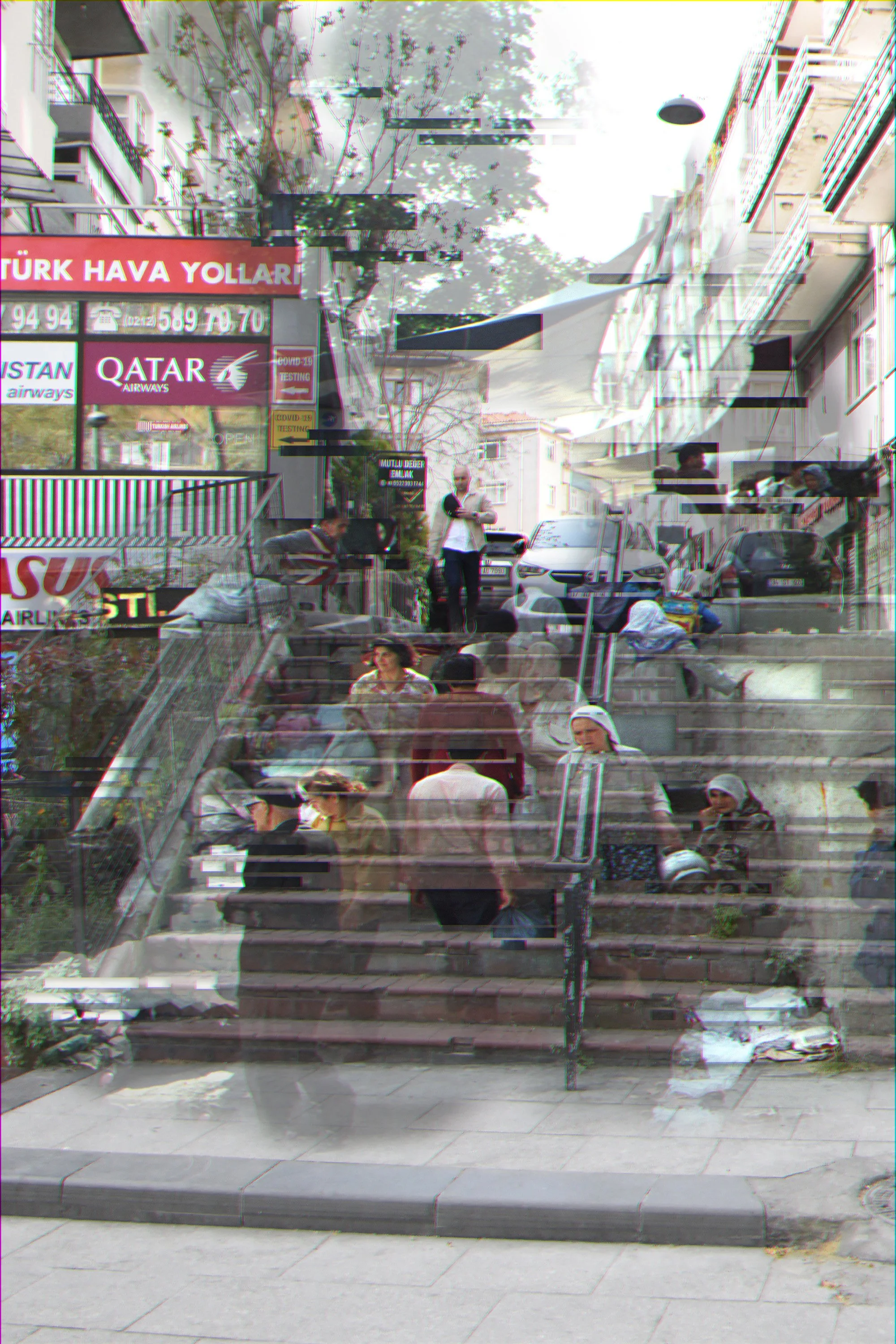
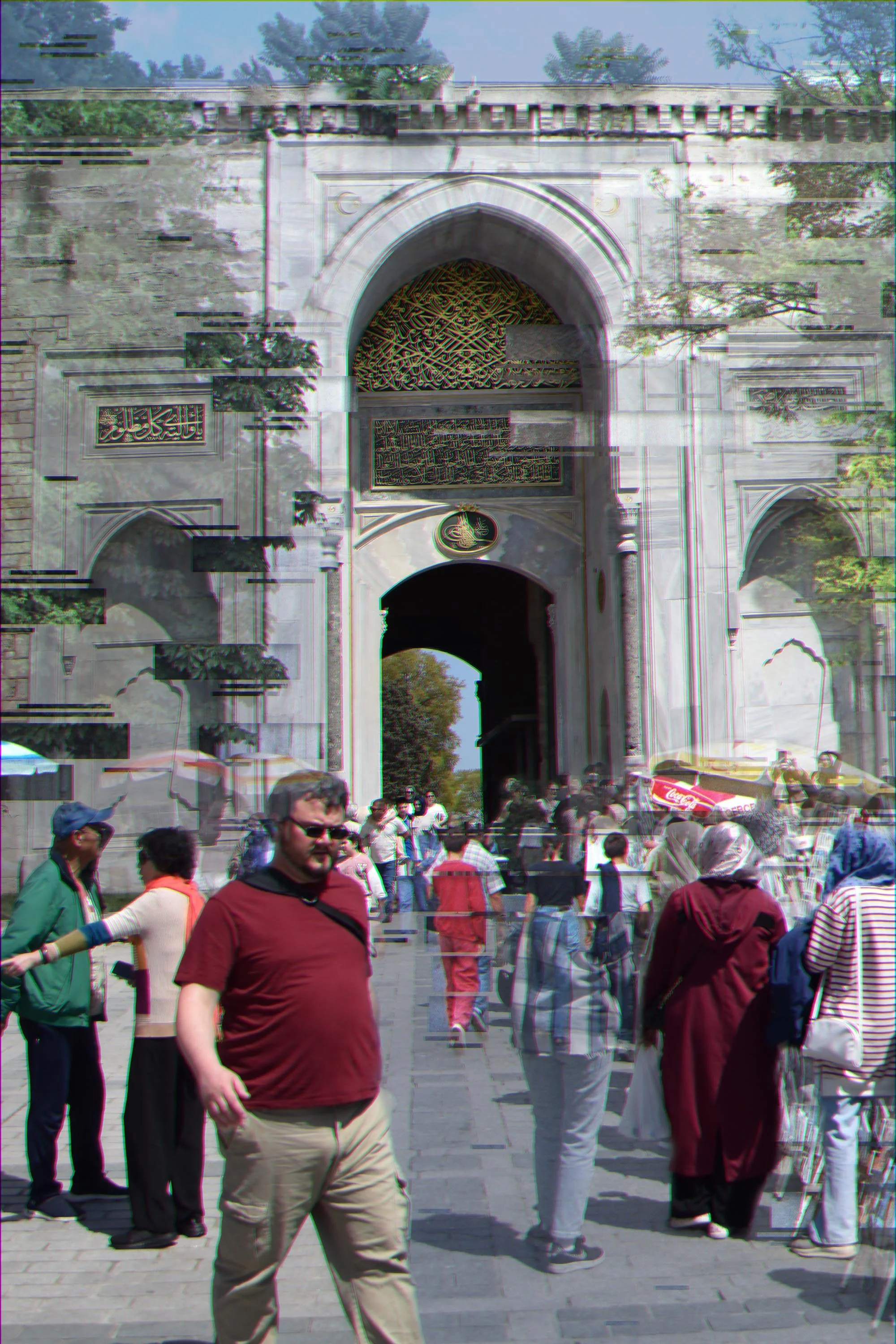
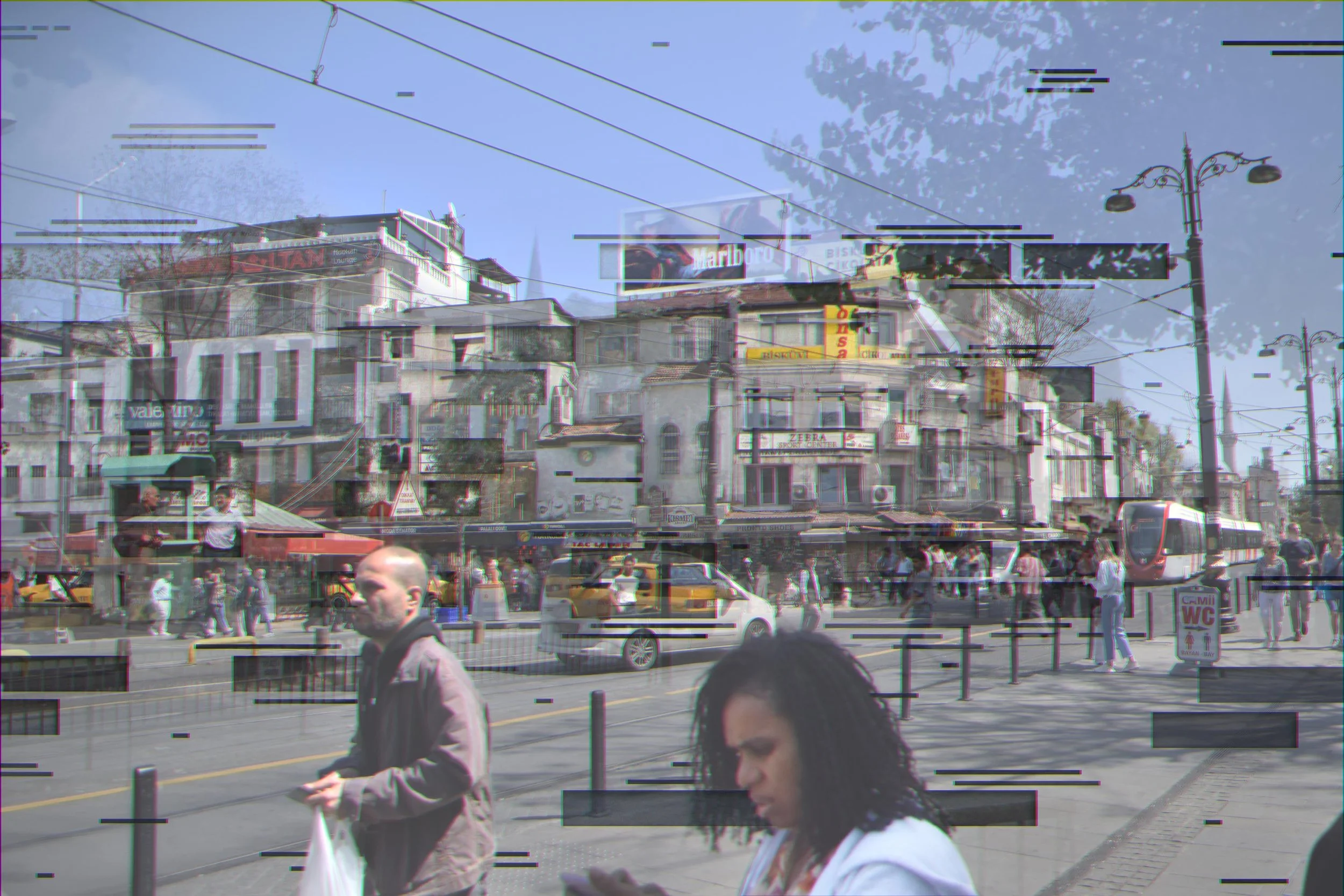
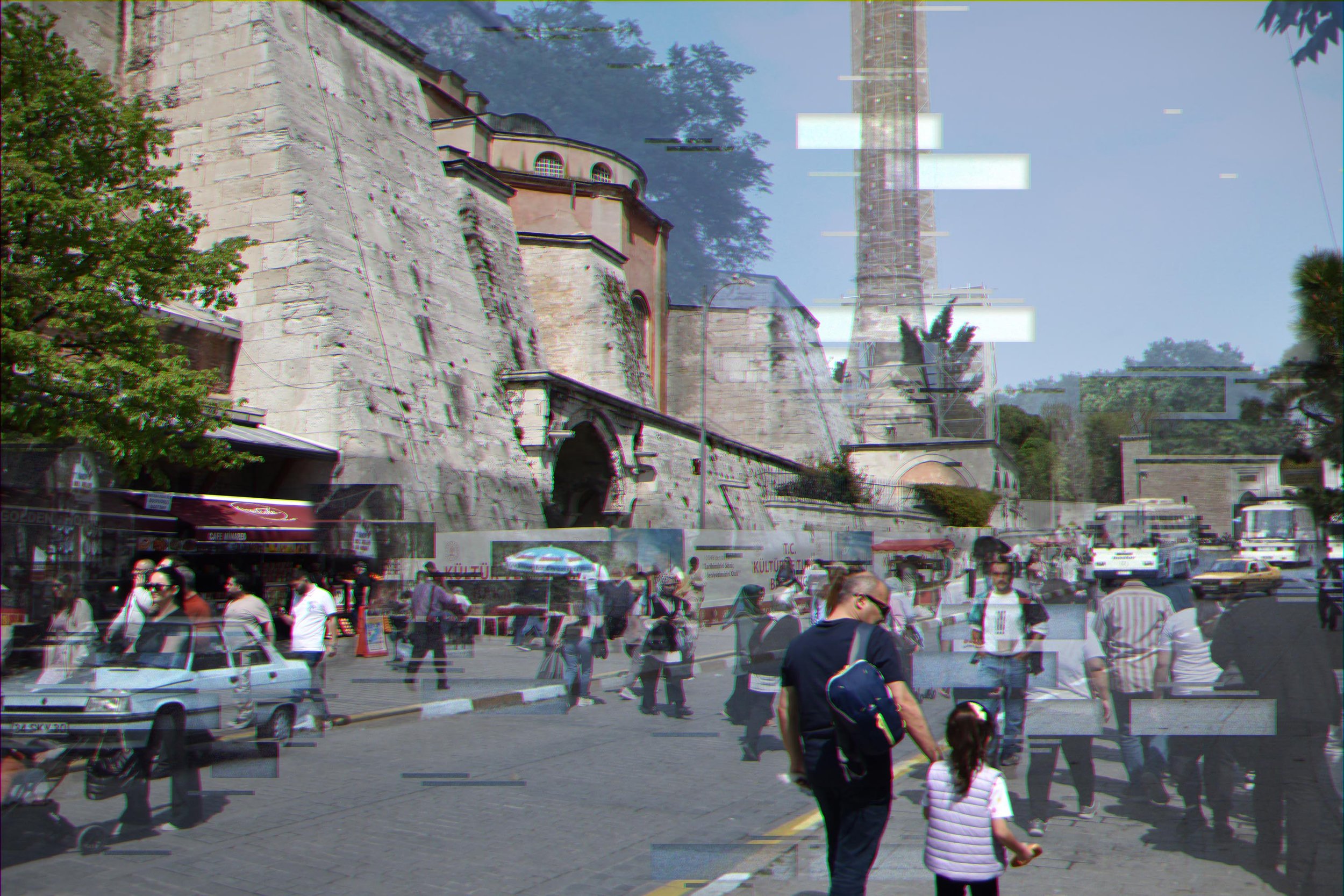
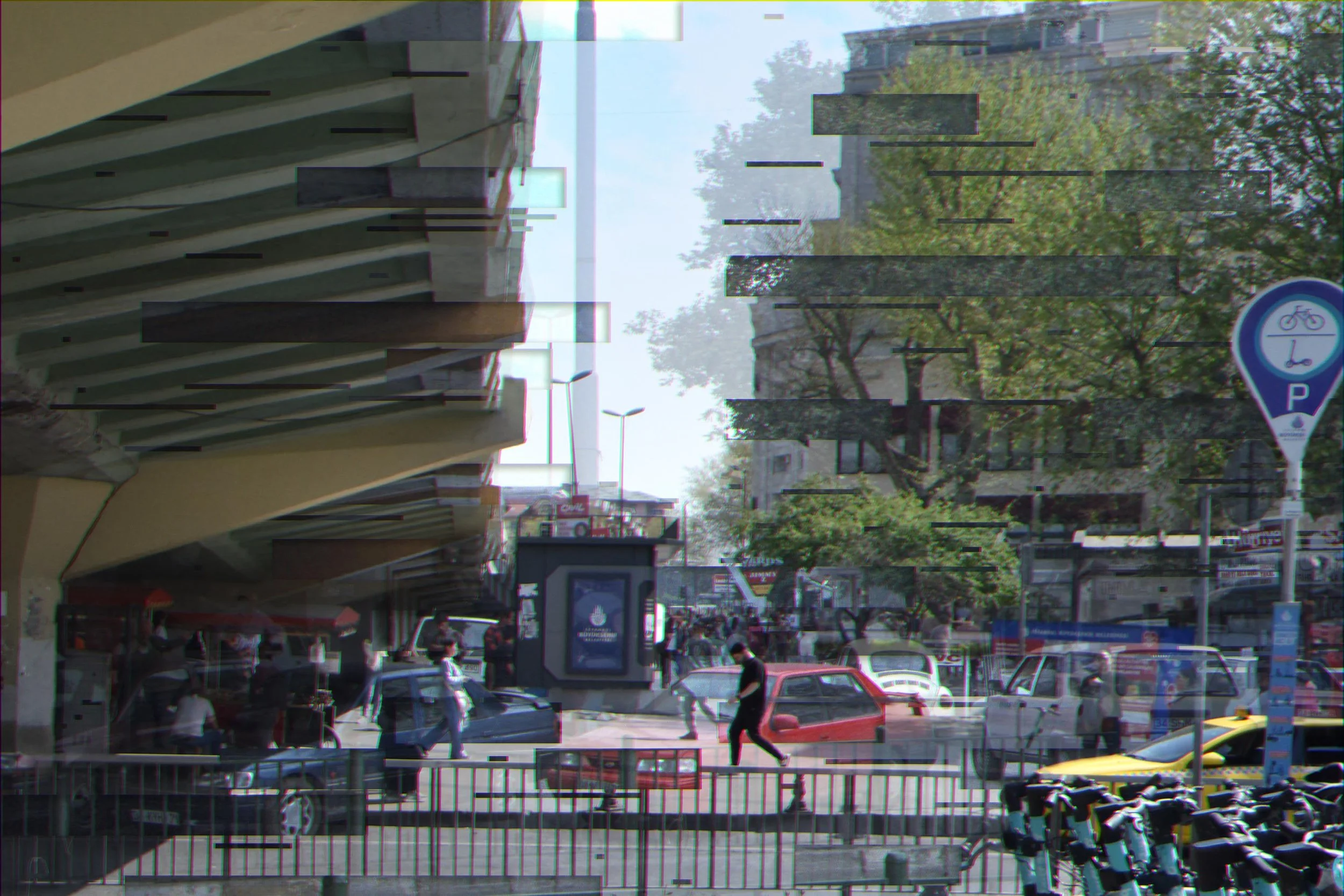
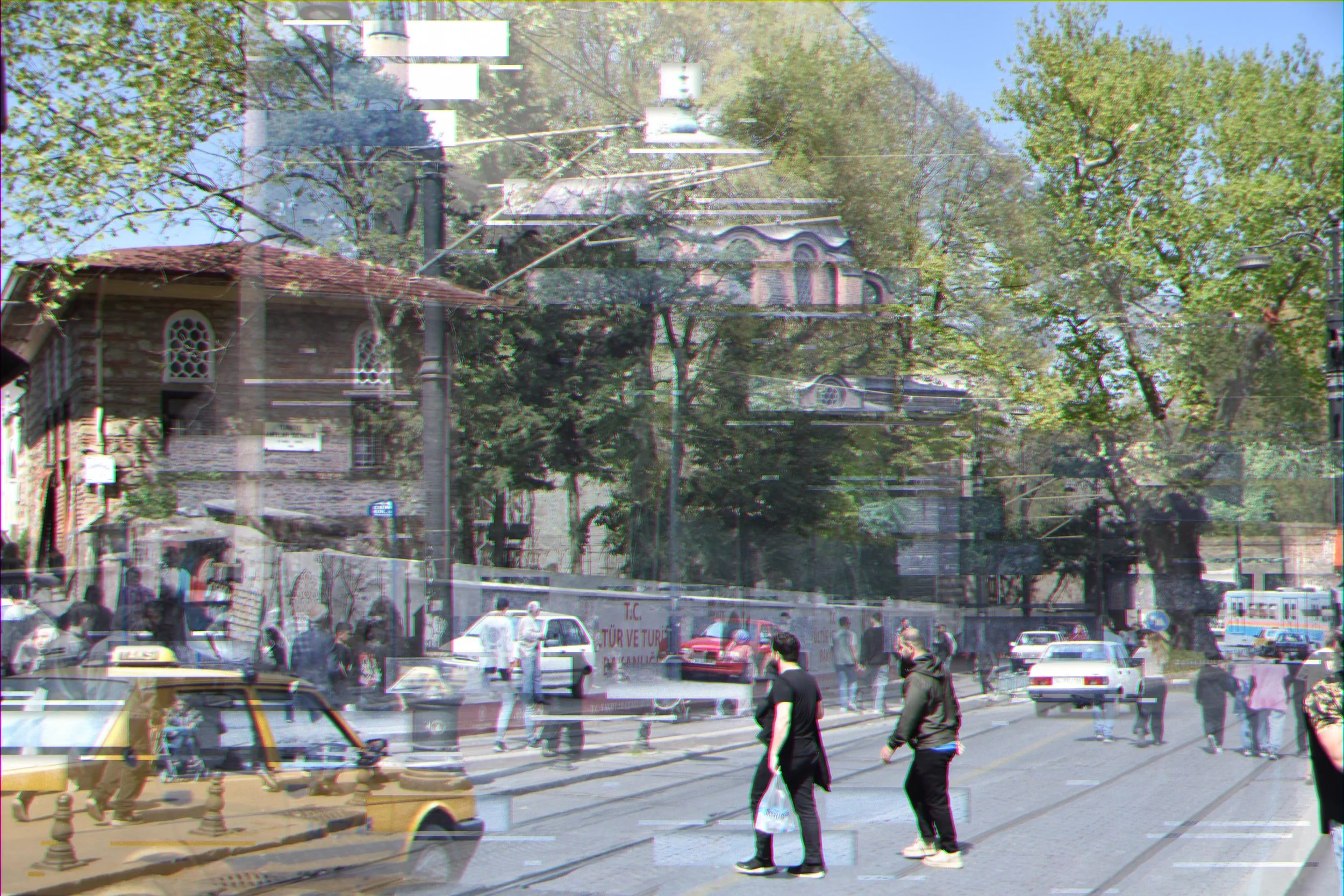
His practice centres on two ongoing projects. Virtual Journeys began in 1992 with a photo story in Tokyo and has since explored places such as Berlin’s former wall, Shibuya station, and London’s dragon-guarded gates. Each journey is translated into layered visual collages presented as graphical novels. Built from processed photo fragments, they evoke the memory of a place rather than its realism. These are not travel guides but impressions that momentarily transport the viewer into the rhythm of a city.
The Senses Project uses six senses, sight, sound, smell, taste, touch, and learn, to prompt self-reflection. By linking senses with cultural subjects, Steit provokes recurring questions that shift meaning in new contexts.
© Steit Slings
INTERVIEW
Let’s start from the basics. You originally dreamed of becoming an architect. How did that early interest in building and design influence the way you approach art today?
Looking back, I think it started at a young age, playing with Lego, not following the build manual but creating structures of my own. The earliest design drawings I have, made when I was nine years old, are very technical. I studied architecture and construction first, which also has a technical edge. Next to that, I have a deep interest in technology and science. I like to know how stuff works. I was the kind of kid who took apart the alarm clock and put it back together with fewer pieces, still working. This is something that is very present in my artwork. I tend to make graphical, technical-oriented pieces. I think a lot about how to technically produce a piece.
Your path took you through architecture, art, and IT. How have these different fields shaped your way of thinking and creating?
The common ground in all three is that they are not about the product itself. Architecture is not about the structure; it is about space for people. IT is not about the computer, it is about structures and procedures. Art, at least for me, is not about a beautiful picture. Art is about stories. Architecture and IT learned me to be creative within a fixed set of parameters. Ask questions. Find solutions. To solve problems. I love problems. A problem forces you to look at all possible solutions to find an answer. You start asking questions to define the problem, you need to investigate, look deeper, and discover. I do this in everything I do, always ask questions. As children, we ask questions to learn about the world, as adults, we tend to think that we already know the world and stop asking questions. I think we will never know the world; we need to keep asking questions, we need to keep learning.
© Steit Slings
© Steit Slings
You studied at the Art Academy in Rotterdam and graduated with the project World Communication. What were the main ideas behind that work, and how do they continue to influence your current projects?
In the 1st or 2nd year at the Academy, the first Gulf War broke out, and I made a protest piece called ‘The Desert Storm Oil Cooperation’. On a screen, it showed the fictional relation between the lives lost and profit made as time went on. I started to question why conflicts and wars are happening. My simple conviction is that as long as we are communicating, we’re not killing each other. I wanted to create artworks that promote the idea of global communication to connect people rather than divide them. For me, this was a product to ‘sell’, and I chose to do so in a corporate setting. The artwork was the running of an art business, the product items to promote. Today, I still use the theme of connection in my Virtual Journeys.
You work with a wide range of materials, from digital media and image processing to clay, wood, and metal. How do you decide which medium best fits a particular idea?
I experiment a lot with different materials, try new formats or create small objects to see how they work. For instance, the Mythologies series I initially started with the 3D printed texts, just as objects with no idea how to use them. In a conversation with a painter who has been creating artworks based on the Odyssey for over 20 years, I made a link between mythologies and the senses. I wanted to use old stories, the myths, and bring them into today. By using traditional paint for the story and showing the typical 3D Print layering, I’m doing that. Creating a relation between our own experience and the old stories. There are a lot of experimental objects in my storage that one day may lead to new works or combinations. It is a continuous, ongoing process.
© Steit Slings
In your Virtual Journeys project, you translate urban routes into layered visual collages. Can you tell us how this project began and what you hope viewers take away from it?
The idea for a ‘Virtual Journey’ was from a project/sculpture I created for an assignment. Here, the Virtual Journey represents that brief moment when you think of a place far away and transfer yourself there in your mind. Like reading the destination shields in an airport and imagining yourself to be in Istanbul, Tokyo or any other place. At a later stage, I combined this with the idea of global communication. By showing people in far away places doing exactly the same things as we all are doing, I want to show that we are similar. As humans, we all do the same things and have the same desires. We are one species, we are one people, we are one.
The Senses Project invites viewers to reflect on perception and meaning. How do you want people to engage with these works?
As previously mentioned, I think we should keep asking ourselves questions in order to grow. In case of the senses artworks where I push this big, often bright coloured, text in the face of the viewer, I would like the first reaction to be “what am I looking at?”. From there, a whole bunch of other questions, and hopefully answers, will follow. And even if there is no answer, then that is the answer. The realisation of the fact that you have no answer is an outcome too. There are no wrong answers. And if you only find it visually pleasing to look at, well, that is a start. You may even hate the piece, but then please tell me why, start the conversation. The only thing that would disappoint me is when people ignore the work.
© Steit Slings
© Steit Slings
Your art often focuses on ideas rather than decoration. What role do you think beauty plays in your work, if any?
Making something beautiful is indeed not my outset, but this does not mean I make purposefully ugly things. I also think beauty is not just about being visually pleasing. A sad song can be really beautiful, and some artworks are quite disturbing and still beautiful. I prefer to use the term visually pleasing and no, my artwork does not need to be that. At the same time, I sometimes use that. I love the use of simple primary and secondary colours, which are often seen as bright and happy. Both my Black&White and Gold&Silver series are shiny, pretty, and glistering to attract attention. Beauty is a tool, not a goal.
You’ve mentioned that art, for you, is about storytelling and connection. How do you balance personal expression with the goal of engaging others in dialogue?
My personal expression is in the way I select and tell the stories, how I select subjects, how I select the materials and in the final form. I see myself more as a narrator of these stories, not the creator. Although the final artwork is mine, it’s my vision or version of the story. I will try to keep away from showing my opinion, not because I don’t have one, but because I think it’s more interesting for the viewer to engage and find their own.
© Steit Slings
How have audiences responded to your projects so far? Has any reaction particularly surprised or inspired you?
The responses I get from interacting with viewers are very positive. Some who are initially prone to visually pleasing art like the explanation of the reasons behind my artworks. May found a new perspective on art. Others really identify with the concepts and like my work for that reason. Some are surprised by the amount of background some works have. The message of connection is a theme that is appreciated by all. There is not one particular reaction that stands out, but what I do notice is that once we start talking about the stories, they start sharing their stories and connecting them to the artwork. My work usually does need some explanation.
Looking ahead, what new directions or projects are you most excited to explore in your artistic practice?
Expanding the Virtual Journeys with more places is something I’m always excited about because it’s a personal enrichment to explore these places. I have some ideas on converging both the Virtual Journeys and the Sense in a series of sculptures, going back to creating objects, Something I have not done for a long time. And there is another (sub) project of the Senses I’m excited about. A collaboration with ceramic artists from around the world. This is still a very early stage, and I am looking forward to working together with many different cultures. I have more ideas than time.
Artist’s Talk
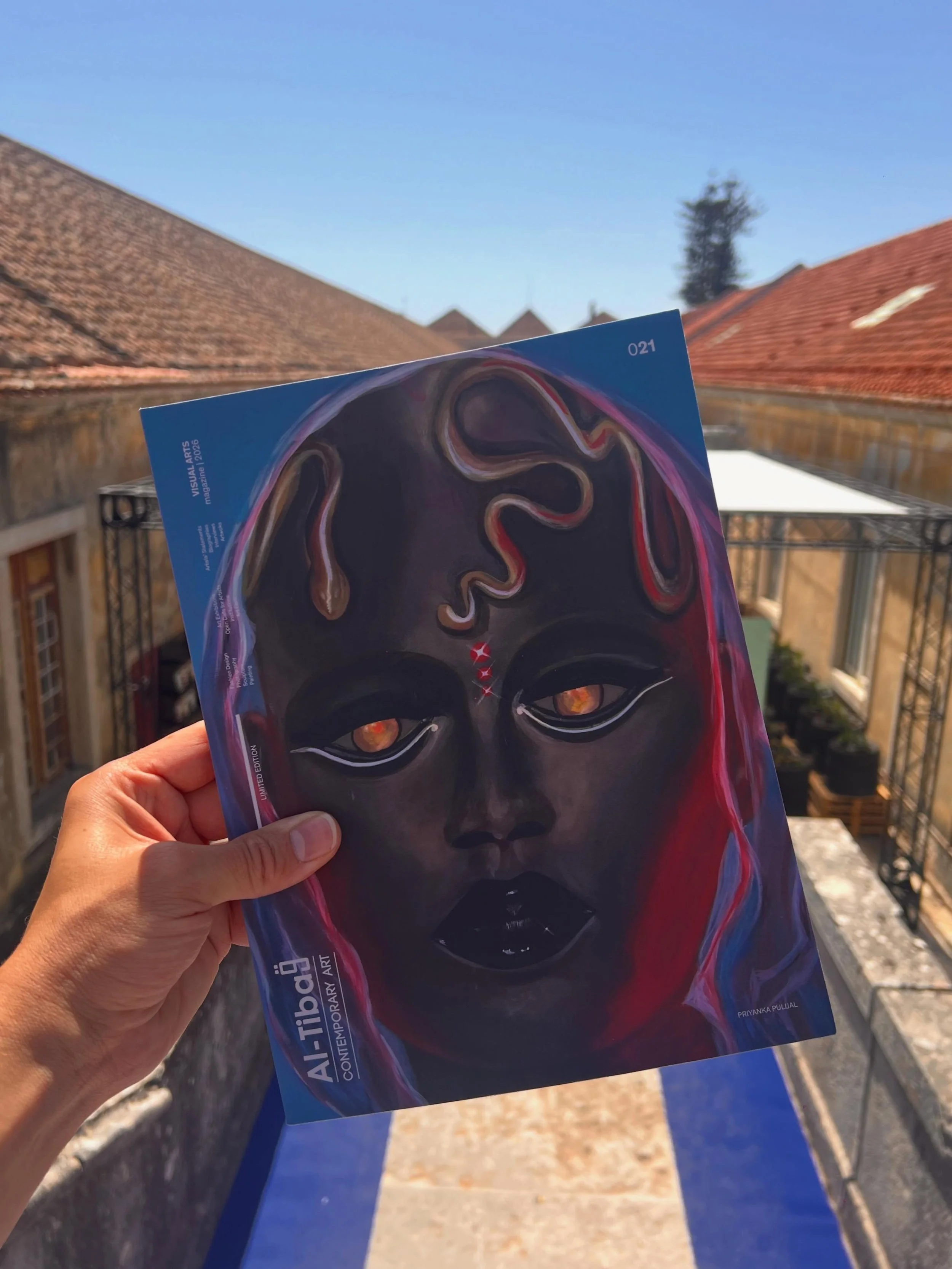
Al-Tiba9 Interviews is a promotional platform for artists to articulate their vision and engage them with our diverse readership through a published art dialogue. The artists are interviewed by Mohamed Benhadj, the founder & curator of Al-Tiba9, to highlight their artistic careers and introduce them to the international contemporary art scene across our vast network of museums, galleries, art professionals, art dealers, collectors, and art lovers across the globe.



Shingo Ohta is a Japanese photographic artist based in Toyooka, Hyogo, near the Sea of Japan. After a long career in business and regional revitalization, he turned to photography as a primary artistic practice, developing an ongoing body of work centered on the sea as a living, volatile, and almost sacred force. His images transform waves, spray, light, and weather into abstract forms.