

10 Questions with Allan Gorman
Brooklyn-Born Allan Gorman is a contemporary fine artist based in Jersey City, NJ, with a unique artistic vision cultivated by a distinguished commercial career that helped refine a sense of aesthetics and unwavering commitment to excellence that continues to define his artistic process to this day.
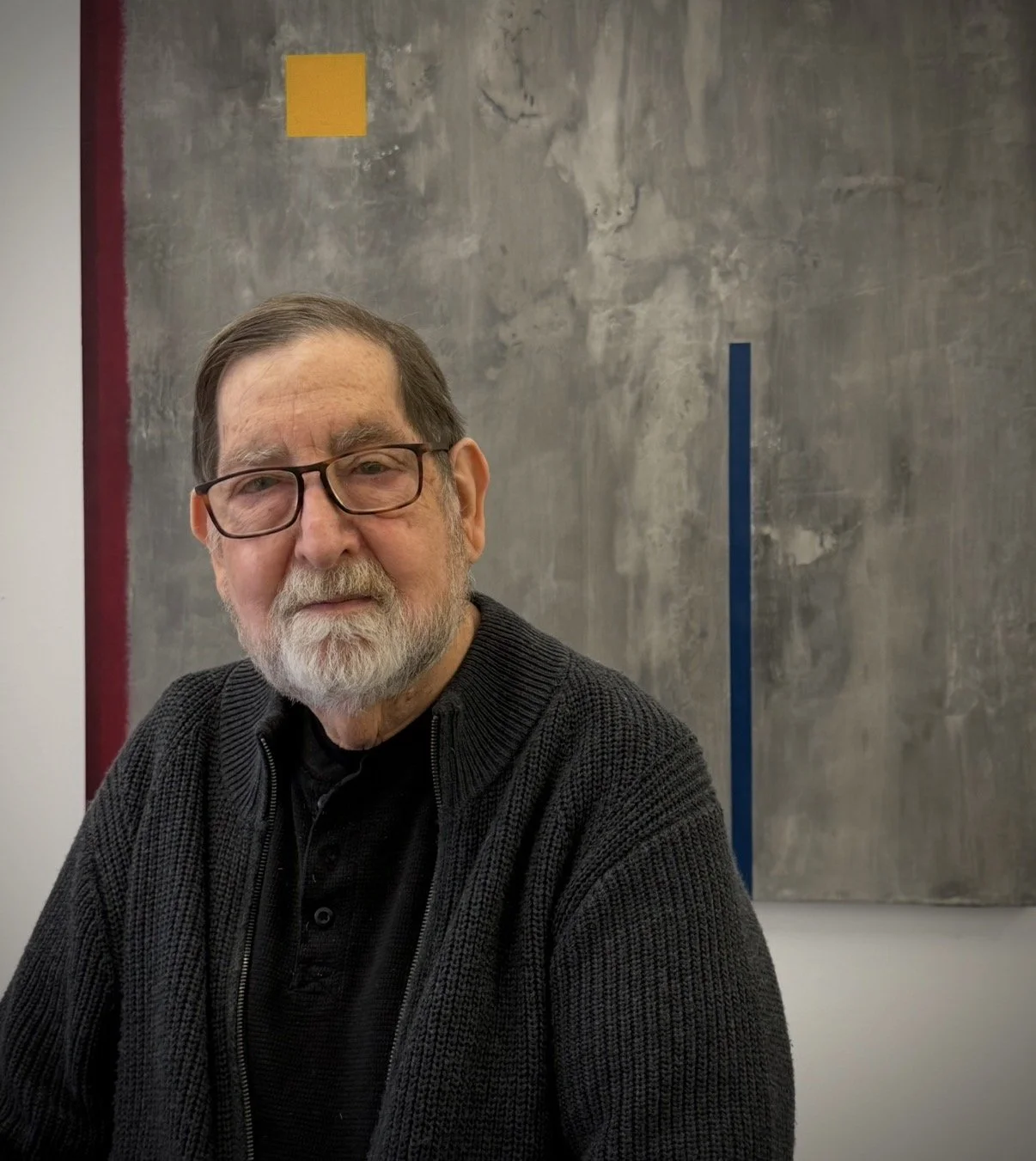
Allan Gorman - Portrait
Gorman’s artworks have been exhibited in numerous museums, such as The Arnot Art Museum, Springfield Museum of Art, Lyman Allyn Art Museum, Albany Museum of Art, and the State Museum of New Jersey; and in commercial galleries, including Anthony Brunelli Fine Arts, Rehs Contemporary, Nicole Longnecker, CK Contemporary, and LIC Gallery in Seattle, Washington. A number of his paintings were included in “LUSTER,” a multi-venue museum exhibition touring fine art museums throughout the USA at institutions like The Daytona Museum of Arts and Sciences, Museum of the Rockies, Deusenberg Museum, Morris Museum of Art, Art Museum of South Texas, and The Haggin Museum of Art. He was recently included in “URBES: Contemporary Landscapes,” an Invitational Exhibition at the MEAM Museum in Barcelona, Spain.
Allan is a 2026 recipient of a year-long grant from the fortheArtists organization; a two-time recipient of fellowship awards from The New Jersey State Council on the Arts; resident scholarships at the Vermont Studio Center and ESKFF at Mana Contemporary; Architectural Artist of the Year from ADC Gallery’s “Art Comes Alive!, The Salmagundi Award from The American Artist’s Professional League, and the Pioneer of Realism award from the International Guild of Realism. Notable press includes articles in The Huffington Post, Manifest’s International Arts Annual, American Art Collector, ArtSeen, Poets/Artists Magazine, Steadfast Arte Magazine, ArtHabens Review, The Huts Magazine, and dozens of other print and electronic publications. His work is part of the permanent collections of the Museum of South Texas, Louis A. D’Amour Museum of Art, Savoy Museum, Belskie Museum of Art, Galeria Arte Libre Collection, Copelouzos Family Art Museum in Athens, Greece, and many corporate and private collections.

City of Glass, Oil on Cradled Panel, 36 x 48 in, 2026 © Allan Gorman
INTERVIEW
Before focusing on your fine art practice, you had a successful commercial career. How has that experience influenced the way you approach painting today?
While in High School, I became attracted to TV and print advertisements, and set my mind to creating those as a career. I became an adman, first in creative departments of some of the world’s biggest agencies, and then running my own smaller firm for another 25 years. My job was to solve communications problems, which not only required the creativity of coming up with ideas, but also the ability to visualise the designs, sell them to the clients, and then complete the projects on time and within a budget. And also learning to direct and collaborate with other talented folks, photographers, illustrators, directors, musicians, writers, editors, etc., who could help bring the projects together with excellence.
Can you tell us about your journey into art? What first inspired you to become an artist?
My journey as a fine artist began after taking an introductory oil painting class while I was teaching at The School of Visual Arts back in the 1980s. I liked it and dabbled for a bit, but life got in the way, and my main focus was running my business and tending to my family obligations. I always had the bug to paint though, and started again in 2008. This time I got hooked and decided to make fine art my full-time job in 2013. Now I love what I do every day, and haven’t looked back since.

Mystery Under a Blood Moon, Oil on Cradled Panel, 71 x 61 cm, 2026 © Allan Gorman
Your work is known for its careful observation and striking realism. What draws you to painting, and what keeps you inspired by this medium?
When I started painting in the early 1980s, photorealism was quite popular. Artists would attempt to replicate the precise details found in photographs. Several peers I admired were doing that, and I learned to paint that way too. I would use my camera as a sketchbook, looking for subject matter that excited me, and then try to render it as best I could. I made a lot of paintings that way and built up a good reputation. Things changed a couple of years ago when I realized I could make the work more fun for myself by freeing myself from the restraints of just copying my photos.
Could you walk us through your creative process? How does one of your paintings typically develop from the initial idea to the finished work?
Nowadays, I don’t adhere to any hard and fast rules, and I get excited about making art that’s new to me, not derivative or reminiscent of anything I’ve seen before. I find my inspiration in what I observe when taking a walk or visiting a museum, from attending a theater or music performance, from making doodles; and I think about using new and unusual materials that I can manipulate and turn into designs that excite me. Then I research and source the materials I’m going to need and go to work in the studio, often adapting and making changes until the ideas become physical objects I can be proud of. I’m having a lot more fun and making what I think is better and more unique work.
Your paintings often transform familiar architectural and urban subjects into quiet, contemplative spaces. What themes or ideas are you most interested in exploring through these environments?
I instinctively use my memories and attachment to growing up in the city to inform my design choices. My art tends to be dramatic, using color, contrasts, formal shapes, and surface textures to evoke suggestions of familiar, yet abstract stories.

The Van der Rohes Back Yard, Oil onCradled Panel, 51 x 51 cm, 2025 © Allan Gorman
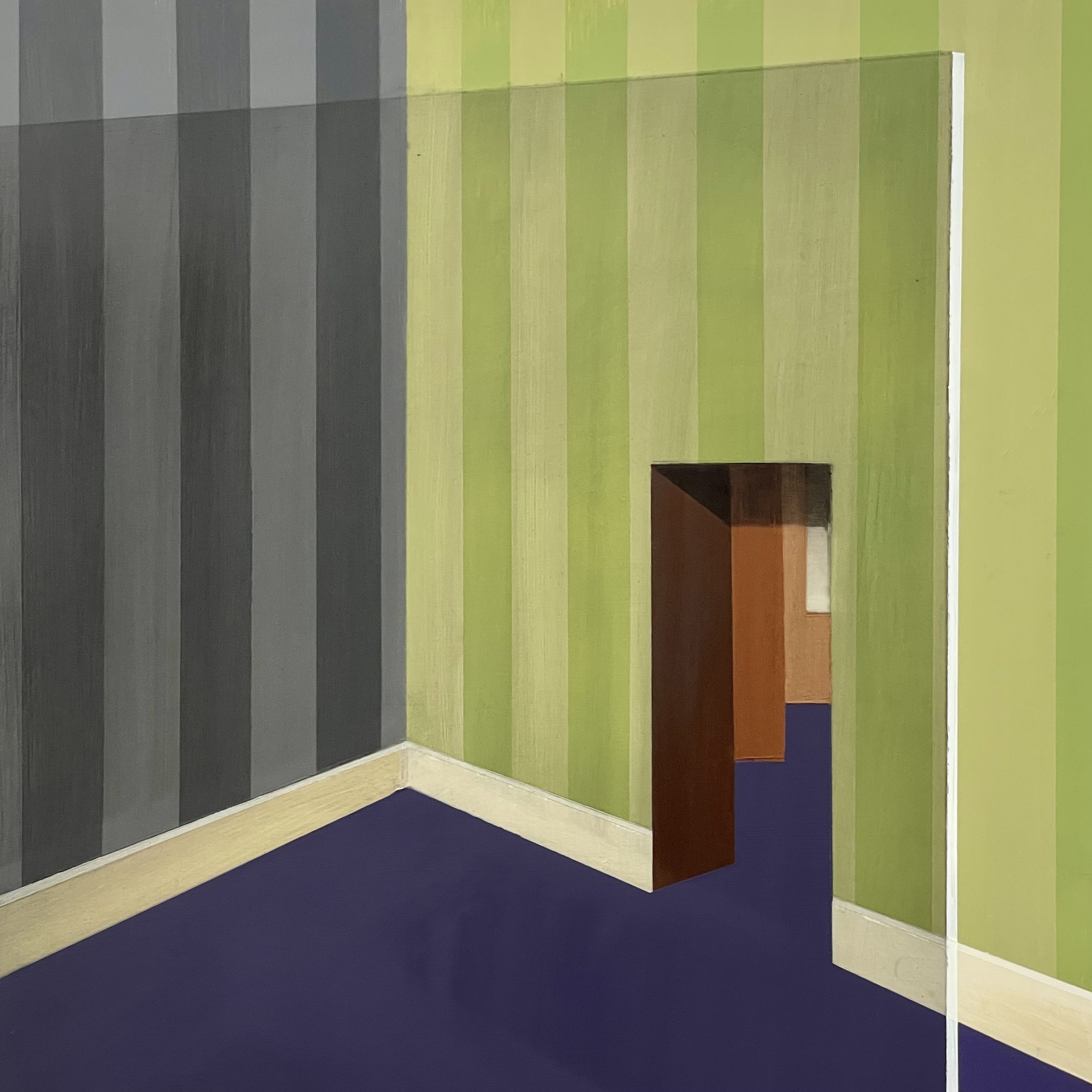
The Secrets Of The Back Room, Oil on Cradled Panel, 41 x 41 cm, 2024 © Allan Gorman

Hacienda, Oil on Cradled Panel, 77 x77 cm, 2024 © Allan Gorman
Your series Imaginary Spaces presents architectural forms that feel both familiar and mysterious. How did this series begin, and what inspired its central concept?
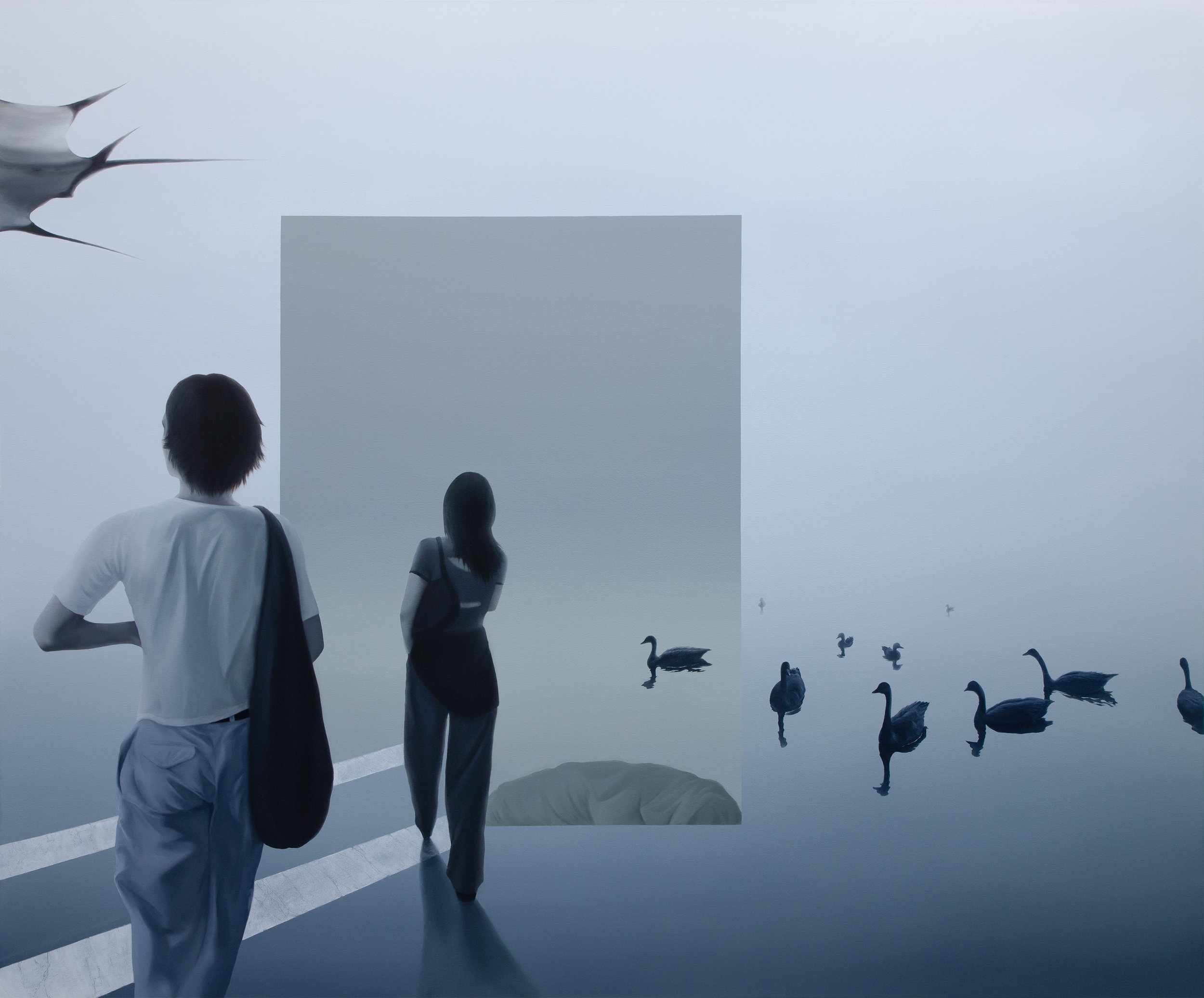
A few years ago, while visiting a museum, I saw a sculptural installation made of large stacked panes of glass. Some of the panes were sand -blasted, and some were transparent, and the individual sheets were quite thick. The multiple layers had the effect of blurring out the scene behind them, turning the objects into unidentifiable abstract shapes. This excited me, and so I took a bunch of photos and decided to make a series of paintings, using the pictures as reference, changing the colour palette of each painting so they weren’t all the same. While working on one of the paintings, I had an epiphany: “Wait a minute. I don’t have to use photographs. I can just make this stuff up!” That led to exploring translucency and shapes to create “Imaginary Spaces”. Some more literal, and some completely abstract.
Although Imaginary Spaces is rooted in architecture, the works seem to invite emotional or psychological interpretations. What do you hope viewers discover as they spend time with these paintings?
Exploring the shapes and colours often brings up emotional feelings for me. I title the works based on the memories and suggested stories they evoke and invite viewers to share and enjoy what I feel.
Your work has been exhibited in museums and galleries across the United States and internationally. How has audience reception influenced your perspective on your own practice, if at all?
Significant exhibits, kudos, and sales are nice ego boosts and good for the resume, but I try not to let any of that influence what I do in the studio. There, I shut the world out and focus on making something that will excite me and building it as best I can. I’m learning that the real joy of making art is in the making, not the fame, and certainly not the money.

You Want Us to Climb Up THERE !!!, Oil on Cradled Panel, 61 x 71 cm, 2026 © Allan Gorman
After many years of exhibiting and receiving recognition for your work, what continues to challenge or motivate you as an artist?
What’s next? Where is this gonna lead me? What can I do that’s going to make me smile?
Lastly, looking ahead, are there any new series, ideas, or projects that you are particularly excited to explore?
The other day, I was walking on a path made from granite paving stones with rows that weren’t quite even. I’ve been exploring some new materials to use to recreate suggestions of the interesting design I saw. I love surface textures and maybe the idea of combining soft materials to create the grid, mounted on a hard substrate to suggest the mortar could be interesting. Then, could that idea be reinterpreted into forms other than just a 2-dimensional wall piece? We’ll see where this leads, but the idea of making things I’ve never tried before excites me. I look forward to playing and having a good time, and would encourage everyone to do that too.
Artist’s Talk
Al-Tiba9 Interviews is a curated promotional platform that offers artists the opportunity to articulate their vision and engage with our diverse international readership through insightful, published dialogues. Conducted by Mohamed Benhadj, founder and curator of Al-Tiba9, these interviews spotlight the artists’ creative journeys and introduce their work to the global contemporary art scene.
Through our extensive network of museums, galleries, art professionals, collectors, and art enthusiasts worldwide, Al-Tiba9 Interviews provides a meaningful stage for artists to expand their reach and strengthen their presence in the international art discourse.



Brooklyn-Born Allan Gorman is a contemporary fine artist based in Jersey City, NJ, with a unique artistic vision cultivated by a distinguished commercial career that helped refine a sense of aesthetics and unwavering commitment to excellence that continues to define his artistic process to this day. His latest series of paintings is titled Imaginary Spaces.