

10 Questions with Samah El Hage
Samah El Hage is a Lebanese-Swedish artist working in bold, abstracted, and cubist-inspired figurative painting. Her work explores identity, connection, and emotion through rhythmic compositions and layered colour, often centring on the human face and form as a visual language of feeling and memory.
She has exhibited internationally for over a decade, with solo and group shows in the United States and Europe, including exhibitions at Art Palm Beach, SPECTRUM and Scope Art Basel in Miami, the Eurostars Museum in Portugal, and a digital photography feature at the Louvre Museum in Paris. Her work has been included in international art publications and featured in design-forward collections linking visual art with sustainable fashion and home decor.
In 2025, her work lit up Times Square as part of Twice Seen, a curated public art exhibition presented by Art Innovation Gallery on monumental digital billboards located in Times Square, New York City.
Samah’s approach to painting reflects her experience as a cultural explorer and multidisciplinary creative. Her current series uses bold geometry and expressive distortion to reimagine the human spirit in fractured, vibrant forms.
She currently lives and works in Sweden.
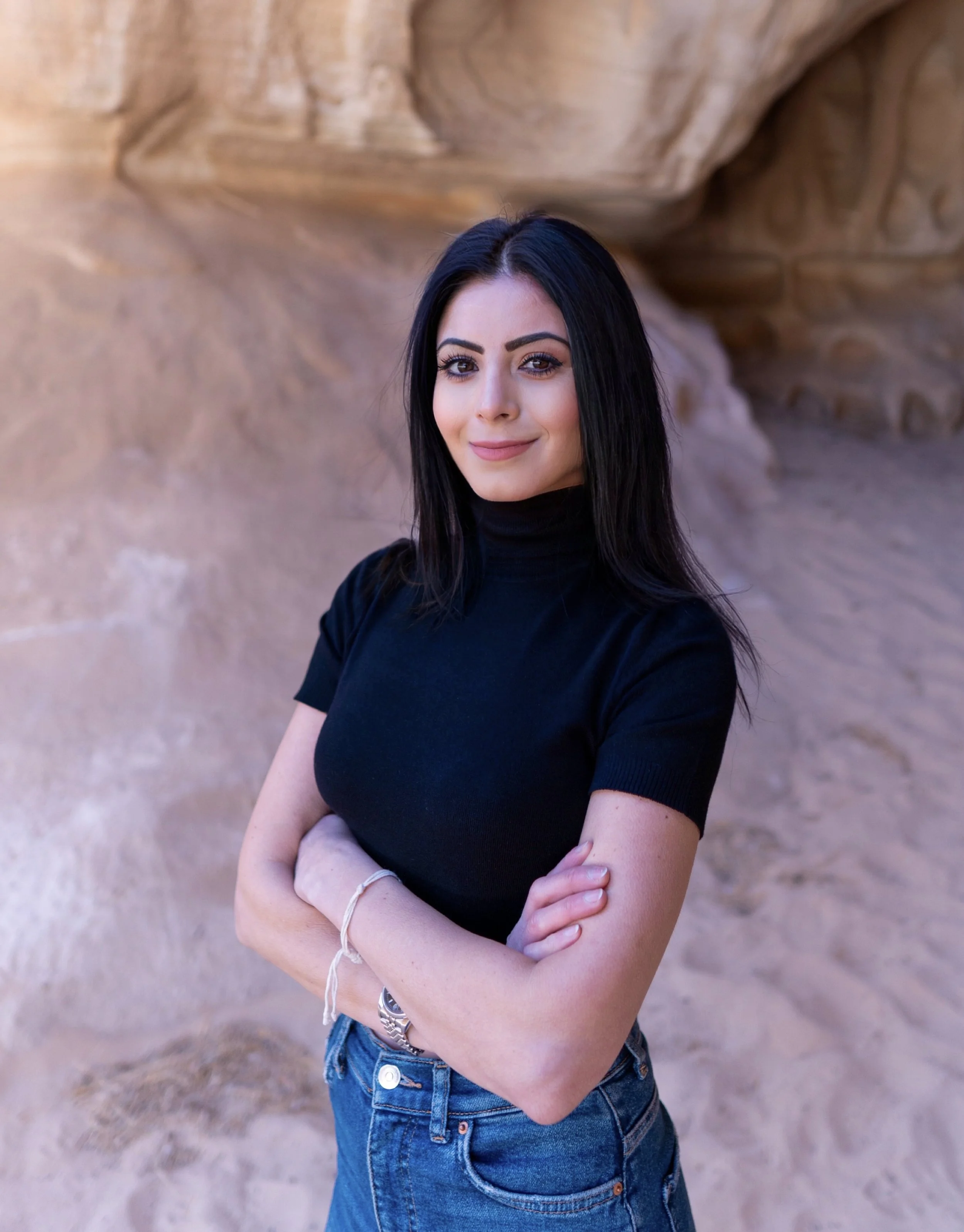
Samah El Hage - Portrait
ARTIST STATEMENT
Samah El Hage’s work explores identity, connection, and emotion through abstract and cubist-inspired forms. Her practice centres on the human face and figure, not as literal portraits, but as vessels for colour, rhythm, and structure. Each piece begins as an intuitive response to emotion, memory, or place, and evolves through layered shapes and saturated hues.
Rather than adhering to a single technique, she approaches each canvas as an open field for exploration, navigating contrasts between calm and chaos, past and future, and what is seen versus what is felt. The resulting faces and forms emerge as fragments of lived experience, inviting viewers to find echoes of their own emotions and stories within the work.
ECHOES, Acrylic on Canvas, 100x100 cm, 2023 © Samah El Hage
INTERVIEW
First, could you tell us about your background and artistic training, and how it shaped your practice?
My path into art wasn’t traditional or academic in a strict sense. It grew through life, movement, and experience. I’ve lived between cultures, worked across disciplines, and exhibited internationally for many years. That shaped my practice more than any single training could. I learned by watching people, by observing how emotions show up in the body and the face, and by trusting repetition. Over time, painting became the place where everything I had seen and lived could settle.
When did you first become interested in art, and what initially drew you to painting?
I was drawn to art very early as a way to understand people. I was especially attentive to faces and eyes, because they reveal emotion even when nothing is said. Painting became my language because it allows silence. On a canvas, I can stay with a feeling and build it slowly through colour and form, letting it exist without forcing it into a conclusion. That freedom is what made painting essential to me. It became a place where emotion could exist honestly, without explanation.

DUALITY, Acrylic on Canvas, 80x100 cm, 2023 © Samah El Hage
How has your Lebanese-Swedish background influenced your visual language and themes?
Lebanon taught me resilience. I grew up with chaos, intensity, emotion, and the experience of war and instability. Life there is loud, layered, and always in motion. Sweden gave me something very different. Calm, structure, order, and space to breathe. My paintings live between those two worlds. You can see it in the contrast between bold colours and strong geometry. The tension between movement and control. The warmth and the restraint. Both cultures are present in the same canvas, just as they are present in me.
Why do you often focus on the human face and figure, rather than traditional portraiture?
The face holds everything. Joy, fear, memory, longing, strength. I’m not interested in capturing how someone looks, but in what they carry. I break the face apart because emotion is never clean or symmetrical. The eyes are especially important to me. A single gaze can reveal vulnerability, resistance, calm, or chaos without saying a word.
What mediums do you mainly work with, and how do you decide which approach suits a specific work?
I mainly work with acrylic on canvas because it matches the way I think and feel. It dries quickly, so it captures instinct, but it also allows me to layer, cut into forms, and rebuild a face until it feels true. I decide the approach by listening to what the painting is asking for. If the emotion is intense, I use a bolder colour and sharper structure. If the feeling is quieter, I let more air in, more space, fewer answers. Scale matters because emotion behaves differently on a large surface. A large canvas can carry presence. A smaller canvas carries intimacy. And sometimes the size is determined by how much room the feeling takes up.
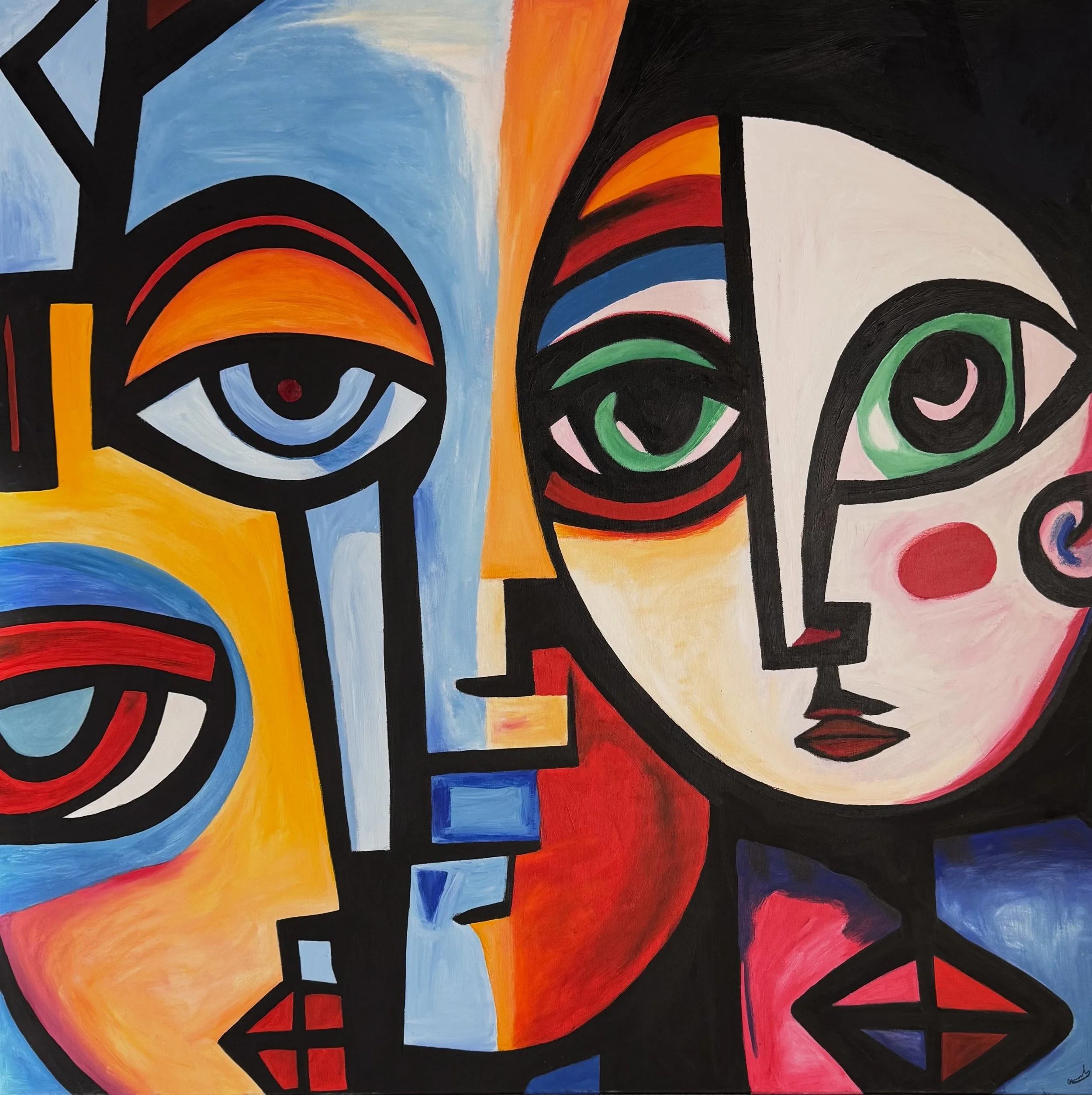
KINDRED, Acrylic on Canvas, 100x100 cm, 2023 © Samah El Hage

THRESHOLD, Acrylic on Canvas, 100x100 cm, 2025 © Samah El Hage
Can you describe your creative process, from the first emotional impulse to the finished painting?
Most paintings begin with a feeling I can’t fully explain yet. I sit with it, then I start sketching to find the structure, where the tension is, where the face needs to break, and where it needs to stay calm. The sketches give me a framework, but I don’t treat them as a fixed plan. On the canvas, I work in layers. I block in bold colour first, then build geometry and adjust proportions again and again until the image feels honest. The eyes are often the moment everything comes together. If they aren’t right, the painting doesn’t move forward. When they are, the rest becomes clear. At times, I step away, sometimes for weeks or months, until I can return with clarity. I know a painting is finished when nothing feels forced, and the work can stand on its own.
Your work balances abstraction and figuration. How do you navigate this tension in your practice?
I start with the face because it is the fastest way to reach the viewer. A face creates connection. But I don't want to paint a realistic portrait. I want to paint what is going on inside. That's where abstraction comes in. I use bold colour and strong shapes to carry emotion. The geometry gives structure. The colour brings intensity. I often build order inside intensity, because that is how my world has always felt. I let the face break apart and come back together because that feels honest to me. We aren't one clean version of ourselves. We are many pieces at once. The eyes are where I place the truth, because one gaze can hold softness and strength at the same time. I keep both the human and the abstract because that's where the painting feels real.
How have audiences and collectors responded to your work across different cultural contexts?
What stays consistent is that people respond before they analyse. They often mention the eyes first. They feel watched, held, confronted, or understood. Even when the face is broken into shapes and colour blocks, the emotion still comes through, and that creates a connection across cultures. Collectors tend to respond to two things at the same time. The work is bold and structured, so it has presence in a space. But it’s also vulnerable, because the faces aren’t perfect and not finished. They feel like real inner states. A repeated comment I hear is that this contrast is the strength of the work. It can be visually powerful from a distance and emotionally intimate up close. It meets people where they are, and it leaves room for them to bring their own story into it. In the end, the paintings don’t ask to be decoded. They ask to be felt.

NOVA, Acrylic on Canvas, 50x70 cm, 2025 © Samah El Hage

QUBIT, Acrylic on Canvas, 50x70 cm, 2024 © Samah El Hage
Are there any recent or ongoing projects that feel particularly important to you right now?
Two recent paintings are especially important to me. The first is titled Dejan. I met Dejan 18 years ago at a mutual friend’s wedding. Nothing happened then, but somehow we stayed in the back of each other’s minds. 18 years later, he reached out, and we reconnected. What surprised us was how much our lives had mirrored each other, even passing through the same places at the same time without knowing it. In the painting, two faces meet with recognition, curiosity, and emotional intensity that has been carried for a long time. The keyhole stands for what was once hidden and is now beginning to open, something deeply felt and still unfolding. The second painting is titled Visit Me in My Dreams. It’s about healing. I started it a while ago but couldn’t find the energy or clarity to finish it, until the day I got a call that my aunt in Lebanon had passed away. When I spoke to my mother, she was crying and said, “Please visit me in my dreams”. That sentence stayed with me. Even though the painting is full of colour and movement, it carries the weight of memory and the spirit of someone who lit up every room. Finishing it became a way to hold space for grief, and a quiet call to meet again in dreams.
Lastly, looking ahead, what directions or projects are you hoping to explore in the near future?
I want to deepen the work rather than simply expand it. I’m interested in developing my series more intentionally, where each painting stands on its own but also speaks to the others through gaze, colour, and structure. I want to push my use of bold colour and geometry further, and explore how far I can take breaking and rebuilding the face while still keeping the work emotionally clear and human. At the same time, I want the work to live outside the studio and outside traditional white walls. I’m drawn to contexts where people meet the paintings unexpectedly, and where the emotional impact comes first, before any explanation. More than anything, I want the next body of work to feel like a step forward, not a variation.
Artist’s Talk
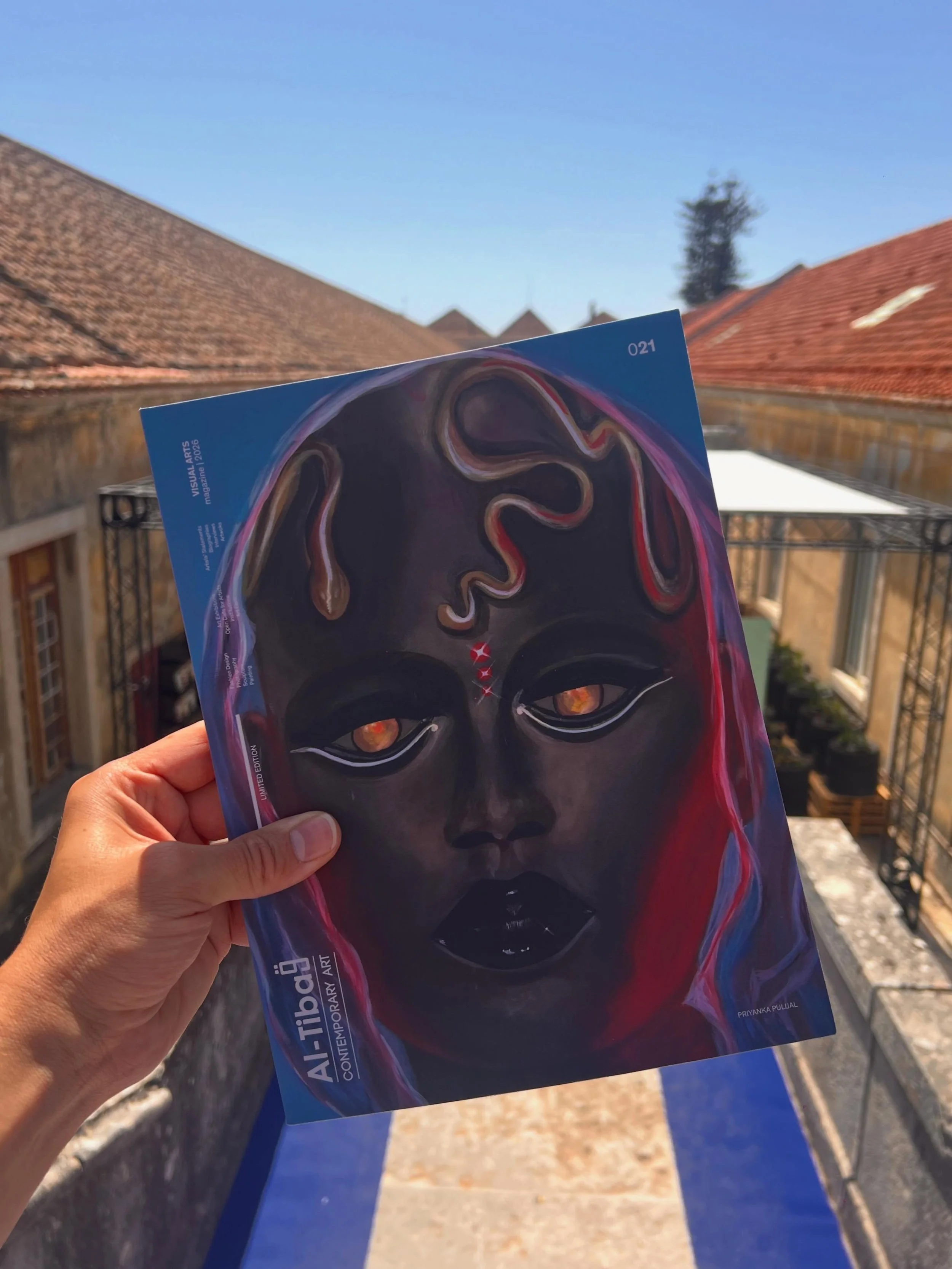
Al-Tiba9 Interviews is a promotional platform for artists to articulate their vision and engage them with our diverse readership through a published art dialogue. The artists are interviewed by Mohamed Benhadj, the founder & curator of Al-Tiba9, to highlight their artistic careers and introduce them to the international contemporary art scene across our vast network of museums, galleries, art professionals, art dealers, collectors, and art lovers across the globe.



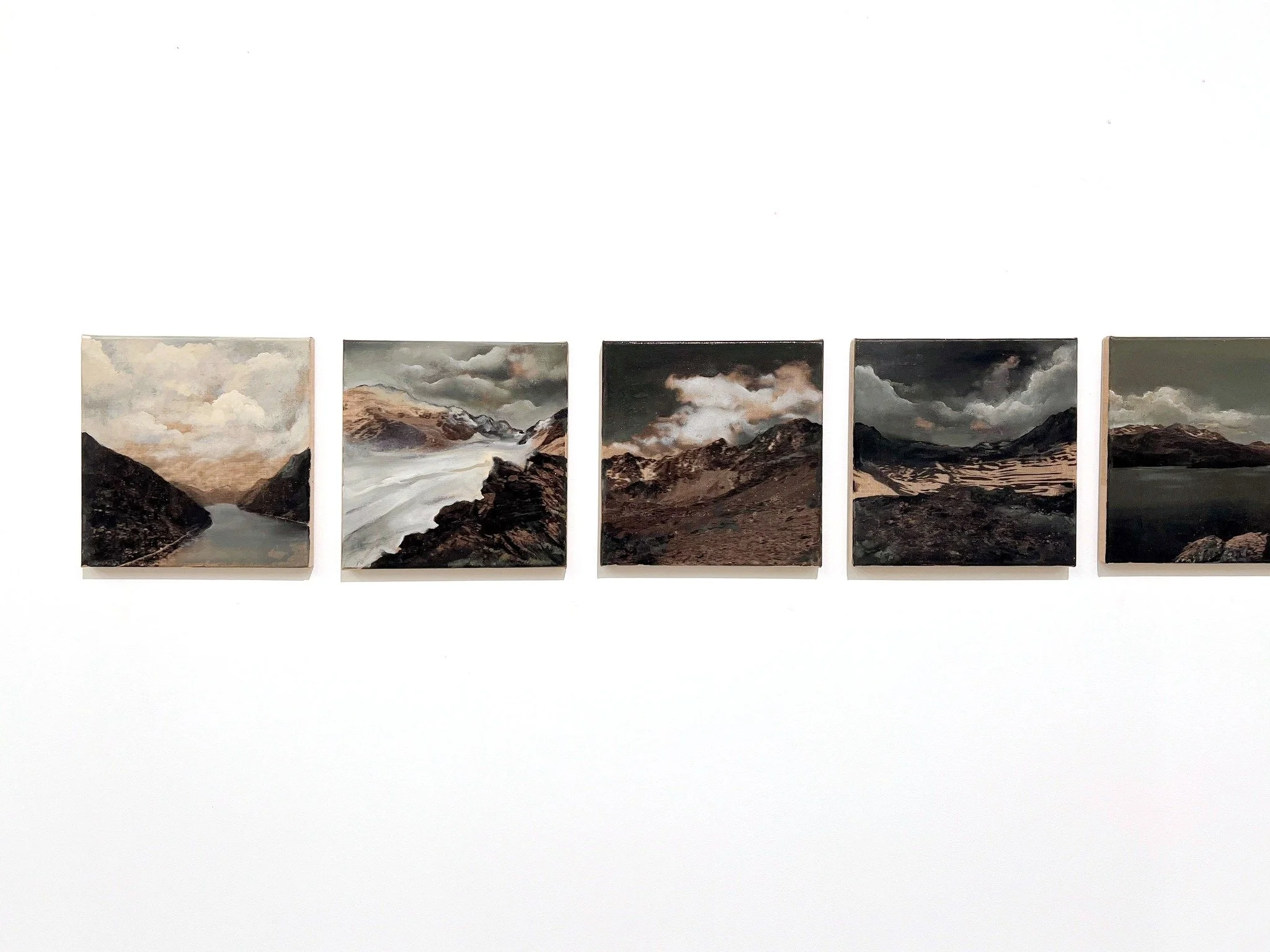
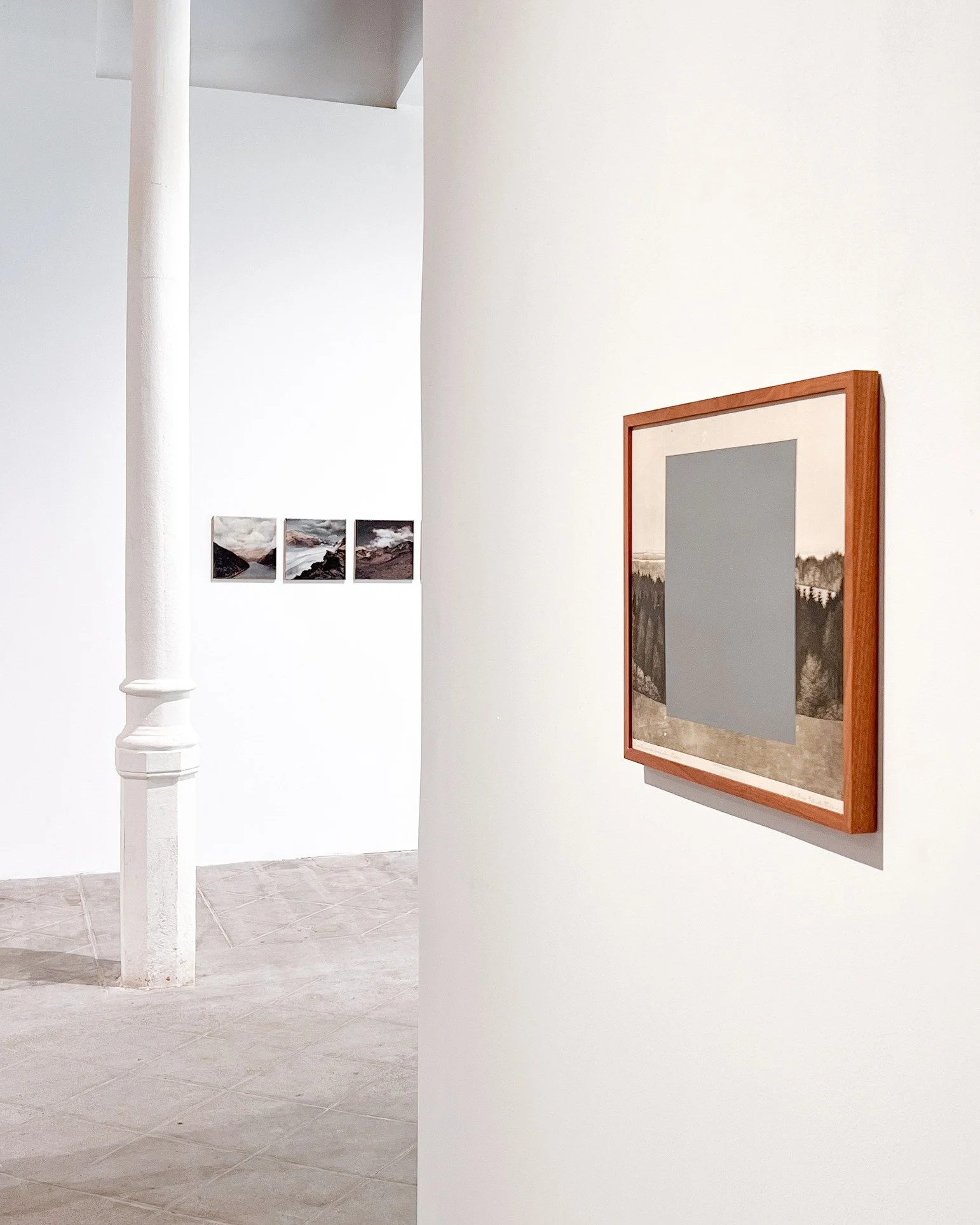
Nataraj von Allmen is a painter based in Switzerland. Often taking photographic material as a starting point, he weaves together landscapes, mythological archetypes, Christian symbolism, and contemporary socio-political themes into complex paintings. Oscillating between figuration and abstraction, his work investigates transformation, collective memory, and the human condition.