
10 Questions with Marcelo Guimarães Lima
Marcelo Guimarães Lima, PhD, MFA (b. Rio de Janeiro, 1952) is a visual artist, researcher and writer. His artworks have been exhibited in Brazil, the USA, Australia, France, Portugal, Romania, and the UAE. He taught History of Art and Studio Art in the USA (University of Illinois, School of the Art Institute of Chicago, Goddard College) and the UAE (American University of Dubai) and, as guest lecturer/ visiting scholar, in Spain (Universidad de Salamanca, Universidad Internacional de Andalucia).
He directed community-based art projects in Brazil and the USA. He is the author of "Heterochronia and Vanishing Viewpoints" (Metasenta, Melbourne, 2012) and of essays, papers and articles on the History of Art, Philosophy, Art Criticism, Psychology of Art and related subjects.
He is presently the Independent Studies and Dissertation Director at the Institute for Doctoral Studies in the Visual Arts -IDSVA.edu. He directs in São Paulo the Núcleo de Artes (arts division) of the Centro de Estudos e Pesquisas Armando de Oliveira Souza- CEPAOS.

Marcelo Guimarães Lima - Selfportrait
Bestiary Series | Project Description
The representation of animals is as old as art, as old as the painted images of prehistoric art in caves and rock surfaces around the world. As factual records and as symbolic representations, these images have stated our material and ideological proximity and distance in relation to the animal world. In our time of ecological awareness, the artistic representation of nature and natural creatures highlights our common conditions and the solidarity of all life in the planet that it is our common home and heritage to be cared and preserved.
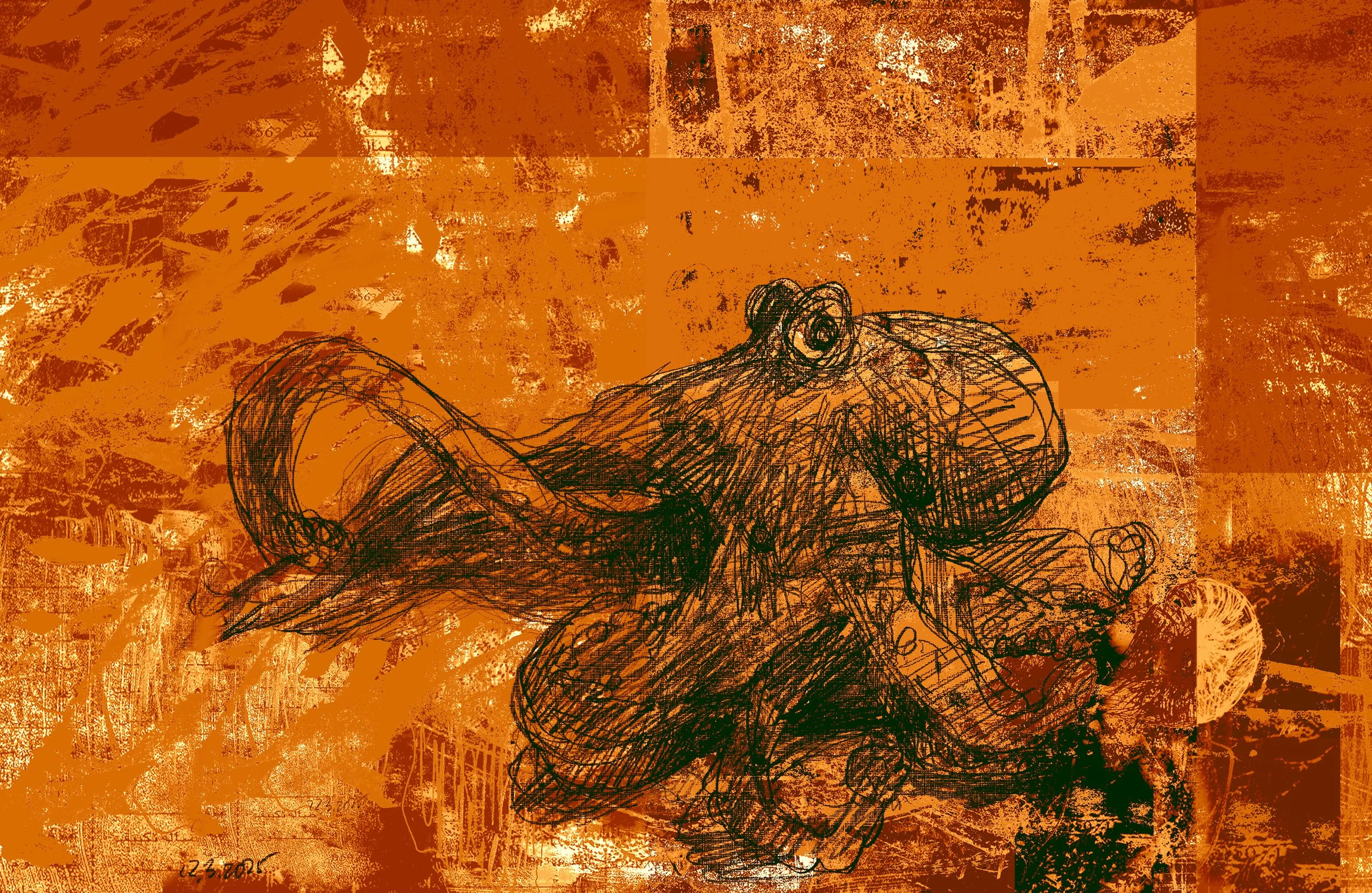
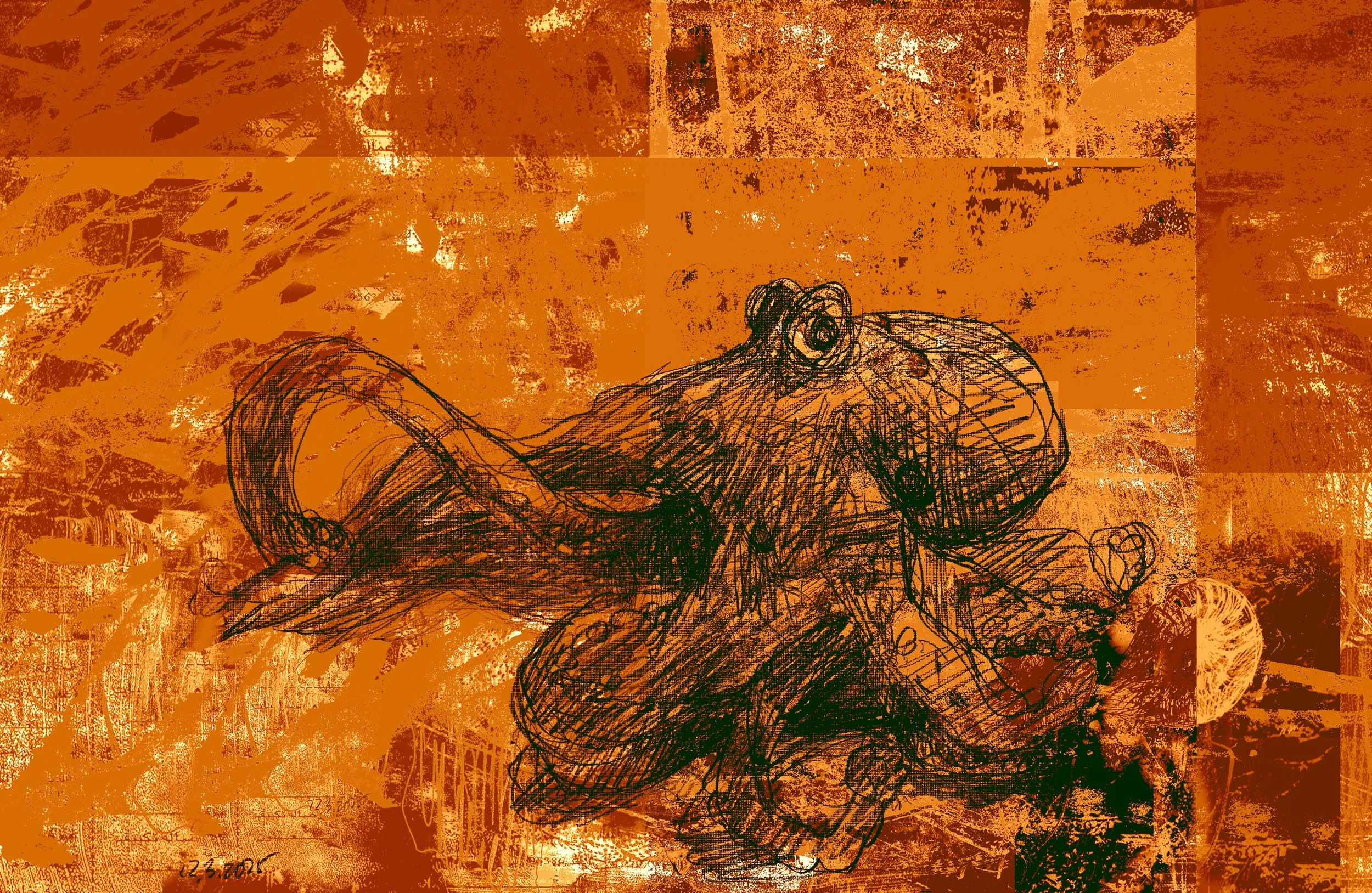
OCTOPUS INSULARIS, Digital painting, 50x70 cm, 2025 © Marcelo Guimarães Lima
INTERVIEW
First of all, could you briefly describe your artistic background and how it shaped your path as an artist?
Drawing is something that comes naturally to children, is part of their motor development, their intellectual and emotional development. In my case, I had an uncle who was a professional designer and artist. He collected and praised my very early drawings. His interest was a great incentive. I was in awe of his drawings and paintings, and I wanted to emulate his work with my pencils, crayons, gouache, etc. So, it was a receptive context, the example of my uncle and my passion to fill sheets of paper with what I believed were meaningful and interesting images that gave me an impulse that persisted after childhood. In my neighbourhood lived a sympathetic old couple from Spain, the husband was a professional artist. So, around 7 years old, I started lessons with him. In my youth, I went briefly to different workshops, but I didn’t think of art as a profession at that time; it was more a personal activity, an important one among other interests I had. As a young man, I went to the university to study Philosophy, and the passion for ideas was also important. Meanwhile, I continued to draw and paint until finally art became more central. After I finished my undergraduate degree in Philosophy, I went to Paris and continued with drawing, painting and printmaking in different workshops. Returning to Brazil as a young artist, I got a grant to study art in the USA. And also in the USA, I started my career as an art teacher.
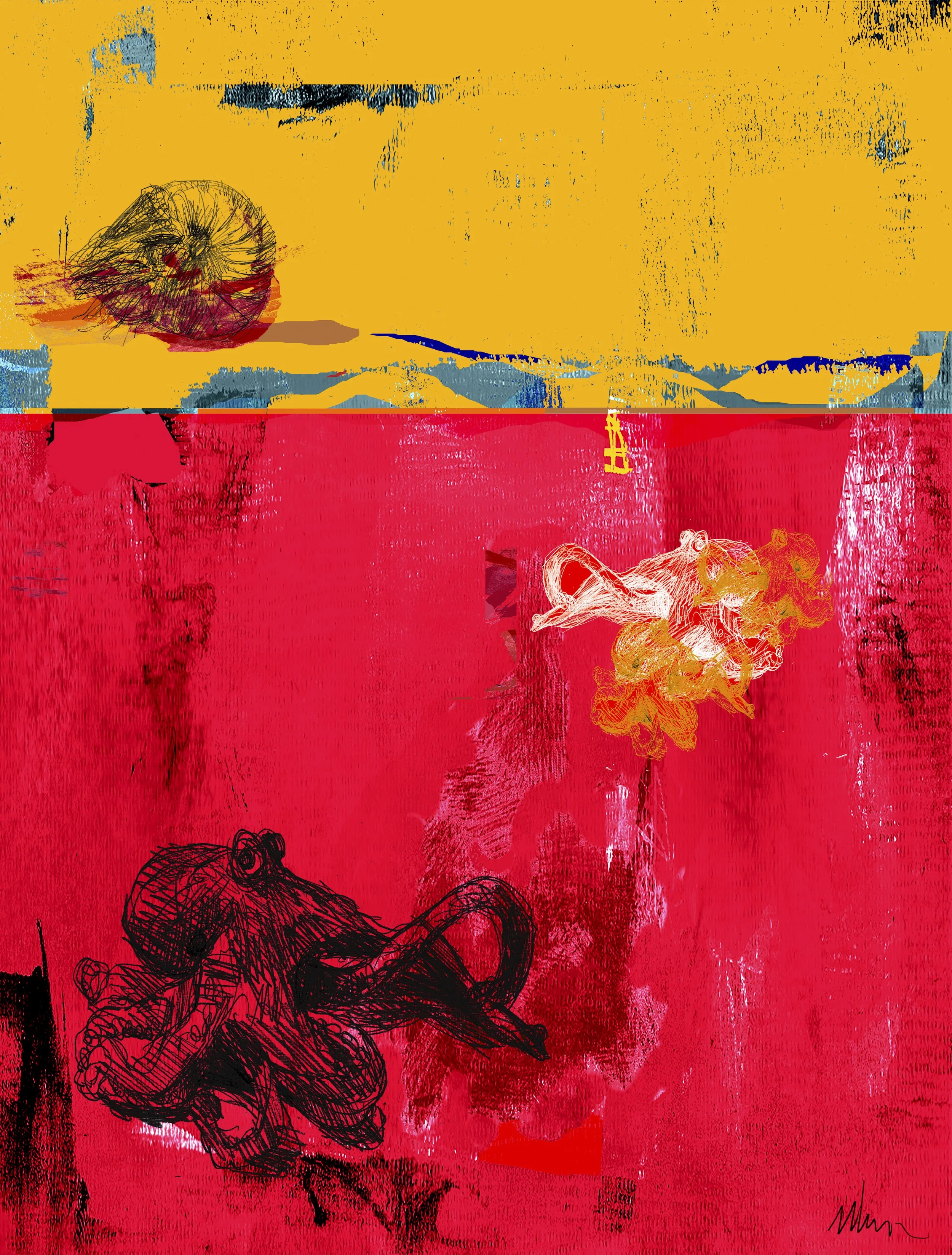
AGUA VIVA, digital painting, A2 size, 2025 © Marcelo Guimarães Lima
Which artists, thinkers, or experiences have most influenced your practice over the years?
At different times, I had different interests, always related to painting, drawing and printmaking, painters who were also graphic artists, artists such as Goya, Rembrandt, Munch, Picasso, Giacometti, among many others. I researched their historical and artistic contexts, their lives and works. Living in France, travelling to Spain and Italy, I had the chance to see “in person” art by these and other great artists. I can say that I was always guided by personal interests, personal preferences that can be called “subjective”, but complemented by research trying to understand the historical, artistic, and intellectual contexts of the works these artists produced. In this sense, I can say I tried to understand, to contextualise, to “justify”, so to speak, my preferences going beyond the “I like” this or that. My interest in ideas led me from Philosophy to the History of Art. After completing my Master of Fine Arts, I got a PhD in Art History.
You have worked as both an artist and an educator. How has teaching influenced your artistic research and studio work?
Yes, indeed, in the sense that having to guide young, aspiring artists, I had the chance to examine the different strategies, aspirations, and the unique sensibilities that different people bring to artistic activities, and to help the development of their capacities. Above all, to emphasise the very personal commitment that art requires, both in subjective and in objective terms, given that the position of the artist in society is in many senses a “precarious” one. In general terms, society´s ambivalence is the lot of the artist in the public sphere. We can read that already in Plato, for instance! The teacher's role is both to support and to challenge the students. In itself, this is also a challenge for the educator. The difference is the experience, professional and personal, that as a teacher you bring to the classroom. And the classroom experience can help to enlarge your understanding of the creative process.

LASCAUX BLUE, digital painting, A3 size, 2022 © Marcelo Guimarães Lima
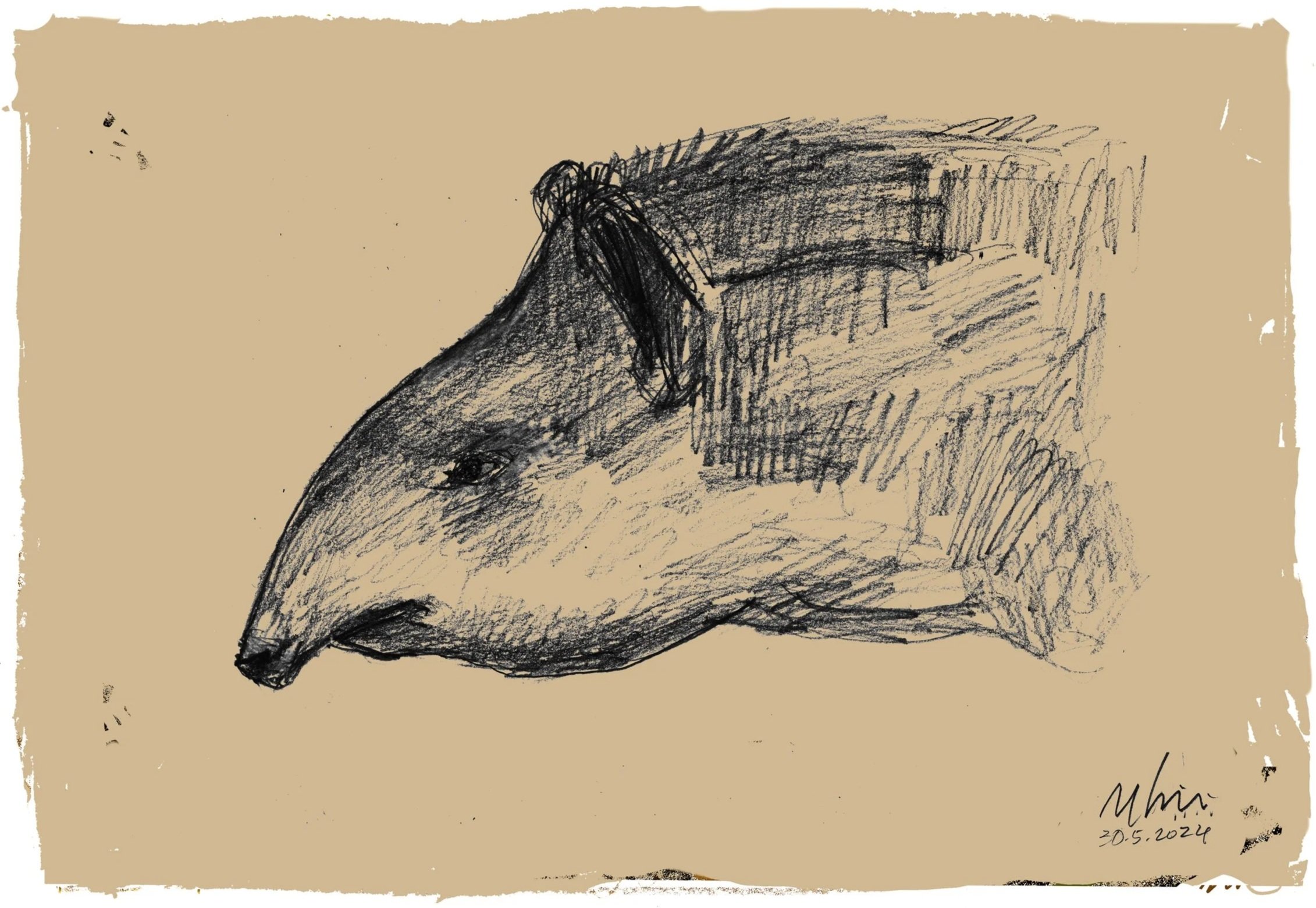
TAPIR, digital drawing, 40x30 cm, 2024 © Marcelo Guimarães Lima
Animals and nature appear as recurring elements in your work. When did this interest begin, and why does it remain central to your practice?
My stepfather had a small horse breeding farm. As a young guy, I rode horses, fed them and also tried to draw them with various degrees of success, to put it gently. In high school, I was very much interested in biology. Later, also given my early interest in literature, I gravitated towards the disciplines of history, sociology and philosophy. An interest in our present historical condition is, in many ways, something that I can say informs my artistic ideas. The present condition of humanity, the ecological dangers to life that we see today as a result of the present organisation of society, is reflected in the current Zeitgeist. I can state that it has imposed itself on me and is reflected in some or many of my works. I don´t think that artists choose their themes; subjects will choose artists.
How do you choose the media you work with, and what role does material experimentation play in your process?
I must say it again: it is the medium that chooses the artist. And that in the sense that the development of the artist in different aspects, including the options for different media, is a “natural”, “spontaneous” one, not the result of a priori, calculated decisions, it is a process of inner growth, almost “plant-like”. It is natural in the sense that comes from experience, experience informed and transformed by knowledge. The medium offers the artist possibilities attuned to his or her artistic vision and goals. Drawing, painting, and printmaking are also physical activities, a transformation of matter in the image of alchemy, “matter informed by spirit”, to put it in the form of an “immemorial” poetic image. In the genesis of the material artwork, there is a struggle and reconciliation with matter. Now, apparently, our digital era dematerialises reality and human actions. Art may serve to remind us of our material roots and corporeal reality.
Can you describe your creative process, from initial research or idea to the final artwork?
It starts with the action of mark making, with drawing, a notation of things seen or imagined, or both seen and imagined, a form, a feeling, a note that, like a seed (again a plant-like image), demands care. These early marks will be developed to a final stage as a drawing, a painting or a print. Different ideas and feelings will coalesce in the finished artwork in ways that are difficult to separate into initial components. Born from the experience of the artist, the impact of the artwork will be a result of its elaboration and reflection of the viewer´s specific experiences. The domain of art is inter-subjective, trans-subjective, a collective experience, at the same time unique and shared.
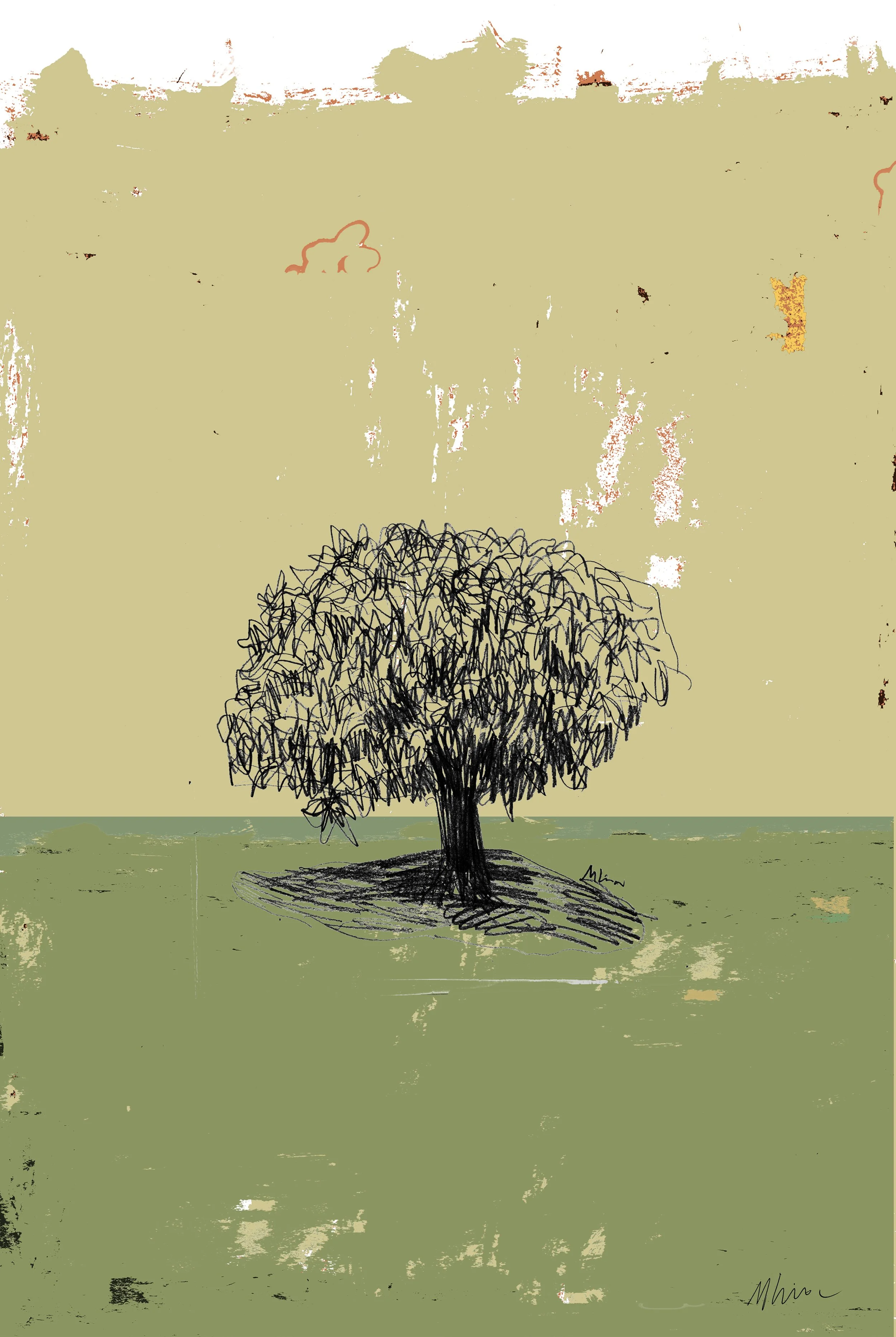
EDEN, digital painting, 70x35 cm,2020 © Marcelo Guimarães Lima
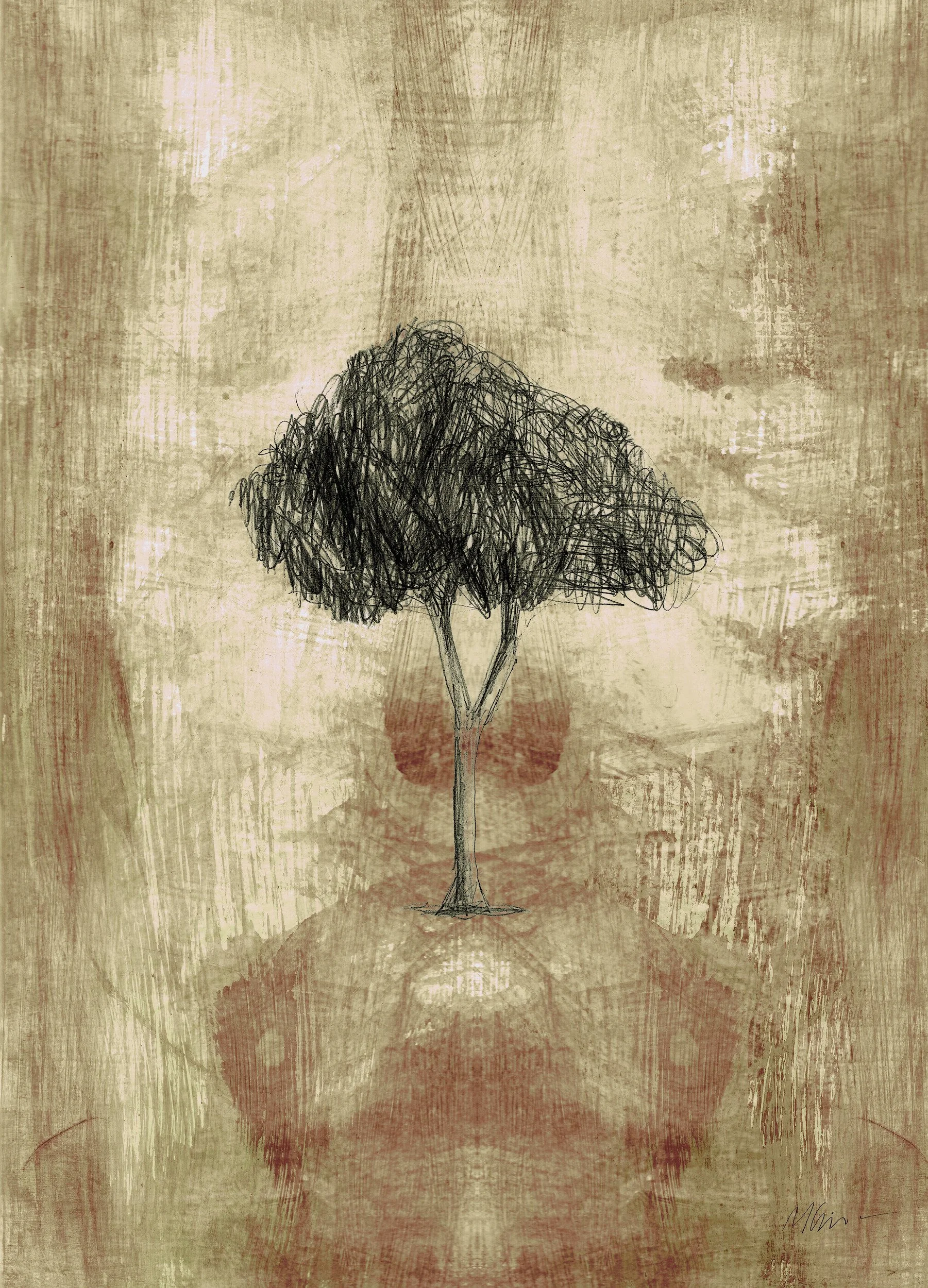
PARADISE REMEMBERED, digital painting, 50x70 cm, 2012 © Marcelo Guimarães Lima
Your work often reflects on humanity’s relationship with the natural world. What themes are you most concerned with today?
Humanity’s relationship with the natural world is conditioned and mediated by humanity's relationship to itself. This is to me the core of the urgent questions of our time.
How do you see artistic representation contributing to ecological awareness and care for our shared environment?
By pointing out, by showing that to transform our relationship to nature requires that we transform at the same time society's relationship to itself. We live in a society divided between power and powerlessness, wealth for the few and poverty for the many, between exploiters and the exploited, between the perpetrators of violence, the promoters of wars and genocide and their victims. The stated “divide between man and nature” is in essential ways a reflection of the fundamental division within humanity. Against an abstract, reified “ecological consciousness” that serves to deviate from the hard questions of surmounting social hierarchies of wealth and power, hierarchies that are responsible for the degradation of living conditions everywhere, artistic representation can play the important role of what I call a counter-ideology, a liberation from restrictive, stale, moribund images and degenerated stagnant cultural representations that confound our understanding and obstruct our necessary actions.
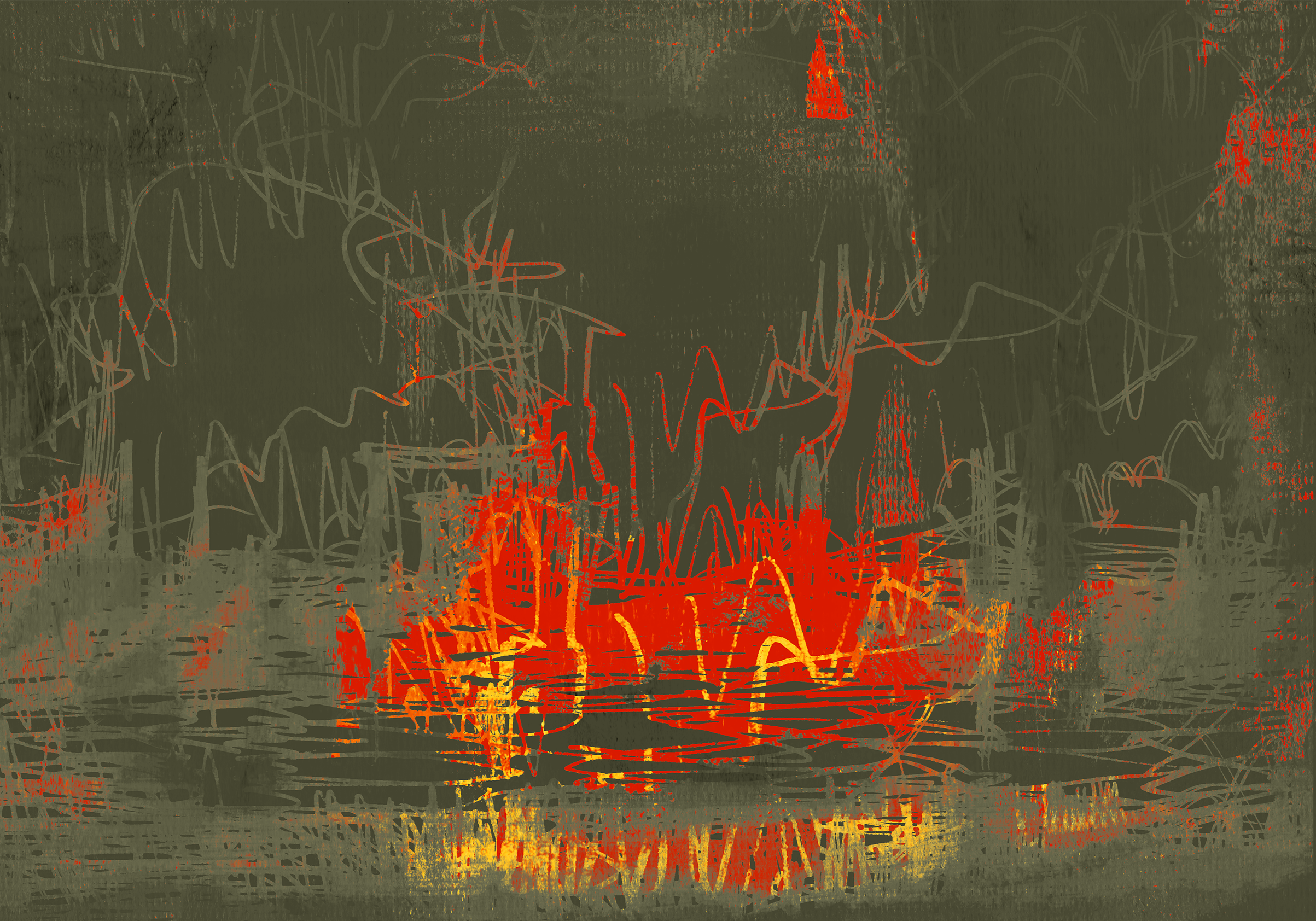
FUKUSHIMA, THE IMAGINAT, ONOF DISASTER series, digital painting, 50x70 cm, 2011 © Marcelo Guimarães Lima
What current or upcoming projects are you working on or developing, at the moment?
I have a project of a book about my artworks that is being discussed with a publisher at this time.
Looking ahead, what are your artistic goals and research directions for 2026?
My goal is to improve my art and ideas. Ars longa, vita brevis, the ancient Romans used to say. Life is short, Art takes time. And Hokusai, the celebrated Japanese master, who called himself “the old man mad about drawing”, wrote that in his 70s, after many years of making art, he was just starting to improve and planned to attain complete mastery at 120 years old. I certainly can´t think that much ahead.
Artist’s Talk
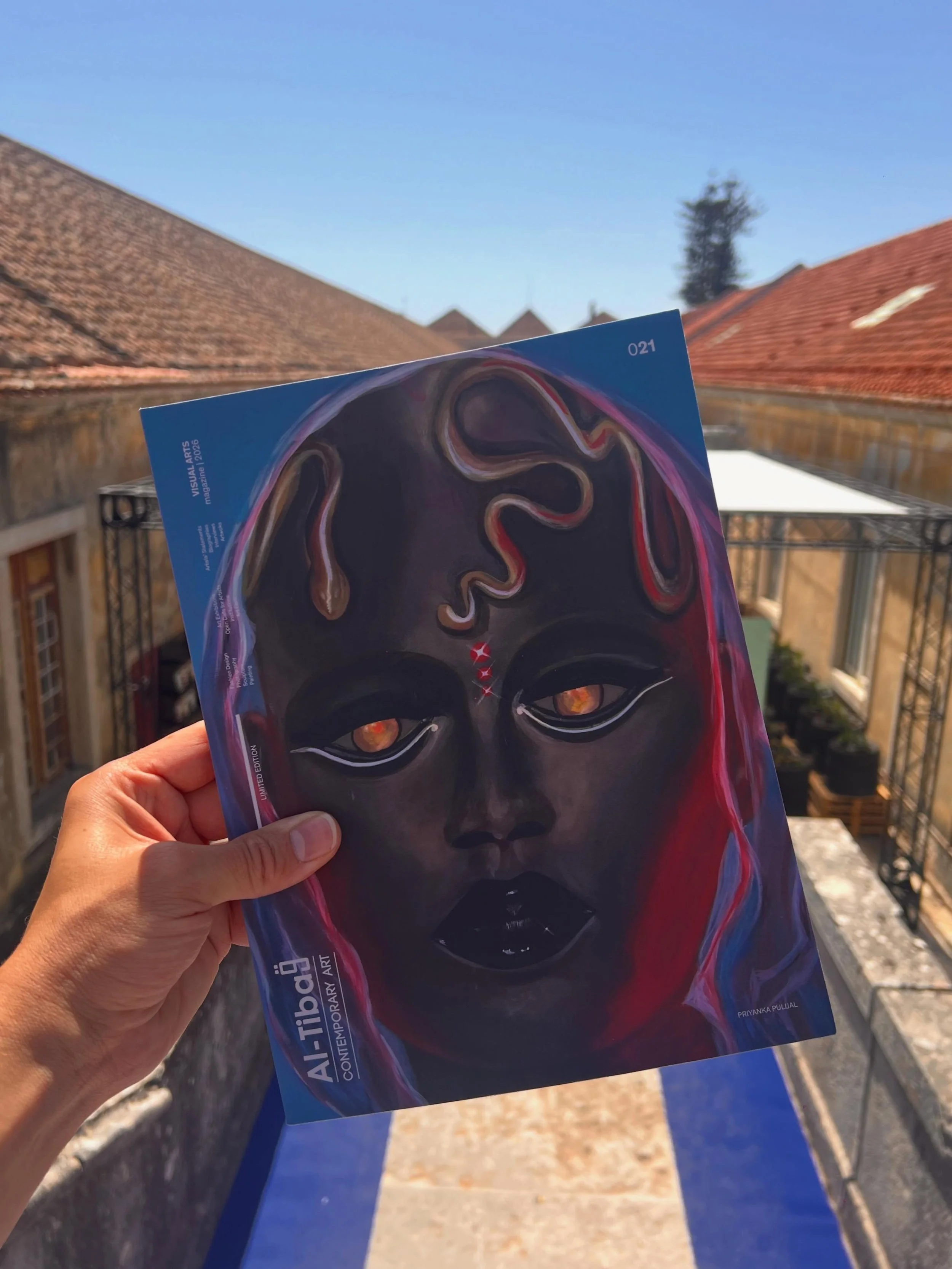
Al-Tiba9 Interviews is a promotional platform for artists to articulate their vision and engage them with our diverse readership through a published art dialogue. The artists are interviewed by Mohamed Benhadj, the founder & curator of Al-Tiba9, to highlight their artistic careers and introduce them to the international contemporary art scene across our vast network of museums, galleries, art professionals, art dealers, collectors, and art lovers across the globe.


Lumi Liu is a New York–based designer and visual artist working at the intersection of art, medical visualisation, and public expression. Her practice explores consciousness, hidden biological systems, and the multiple dimensions of life that exist beyond human awareness. Lumi transforms these invisible biological architectures into poetic artistic experiences.