10 Questions with Rui Yang
Rui Yang is a multidisciplinary artist and CG generalist based in New York. Born and raised in Kunming, China, he began his academic path in engineering before shifting toward creative practice, driven by a deep interest in expression, storytelling, and critical thinking.
As a full-time CG artist at a top-notch VFX studio, Rui has contributed to major Netflix productions and high-profile commercial campaigns. In parallel, he has recently emerged as a distinct voice in the new media art scene. His work explores post-digital identity, cultural hybridity, contemporary events, and the reimagining of contemporary mythologies. With a practice in both industry and fine art, Rui’s expertise allows him to work fluidly across tools and platforms, creating artworks that blur the boundaries between media and narrative.
His latest work was selected for exhibition at the 2025 Digital Graffiti Festival in Alys Beach, Florida.
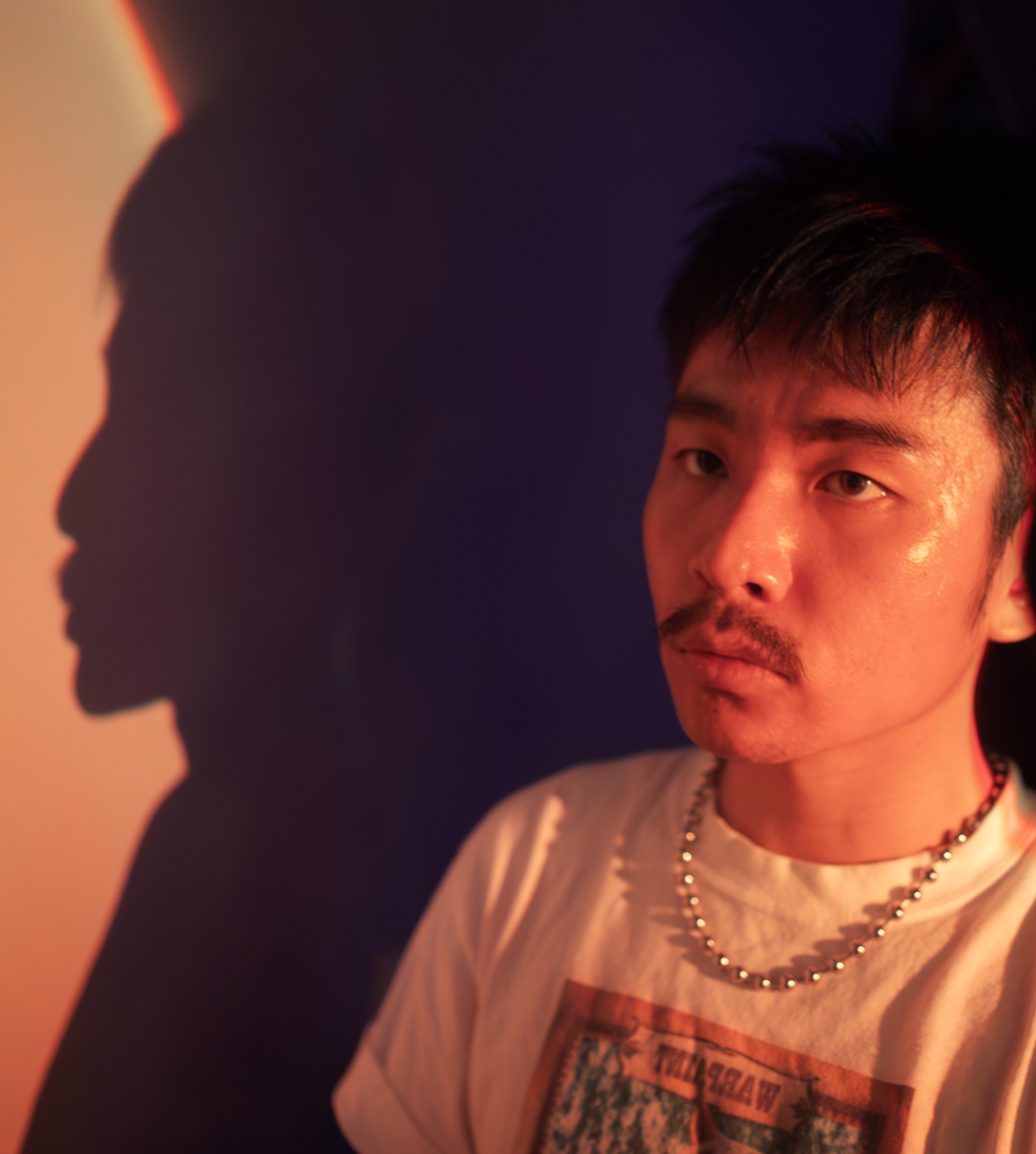
Rui Yang - Portrait
ARTIST STATEMENT
“We live in a world oversaturated with information, yet constantly lacking in meaning.”
As part of the generation shaped by the rise of technology, digital media, and internet culture, Rui Yang (b. Yunnan, China) is acutely aware of how our perception of these forces has shifted: what was once seen as innovative, revolutionary, and novel has become overused, outdated, and repetitive. Humanity is at a historical peak of producing and consuming information on a daily basis, but this abundance does not translate into deeper meaning. On the contrary, it often results in absurdity, detachment, and skepticism.
Rui’s work responds to this post-digital condition with a critical yet playful sensibility. He pulls from personal anecdotes, cultural mythology, pop culture, and current events, appropriating and twisting them with wit and intention, and repurposing them into something distinctly his own. Through the remixture of diverse media and cultural references, Rui seeks to recontextualize the familiar and open new pathways for meaning.
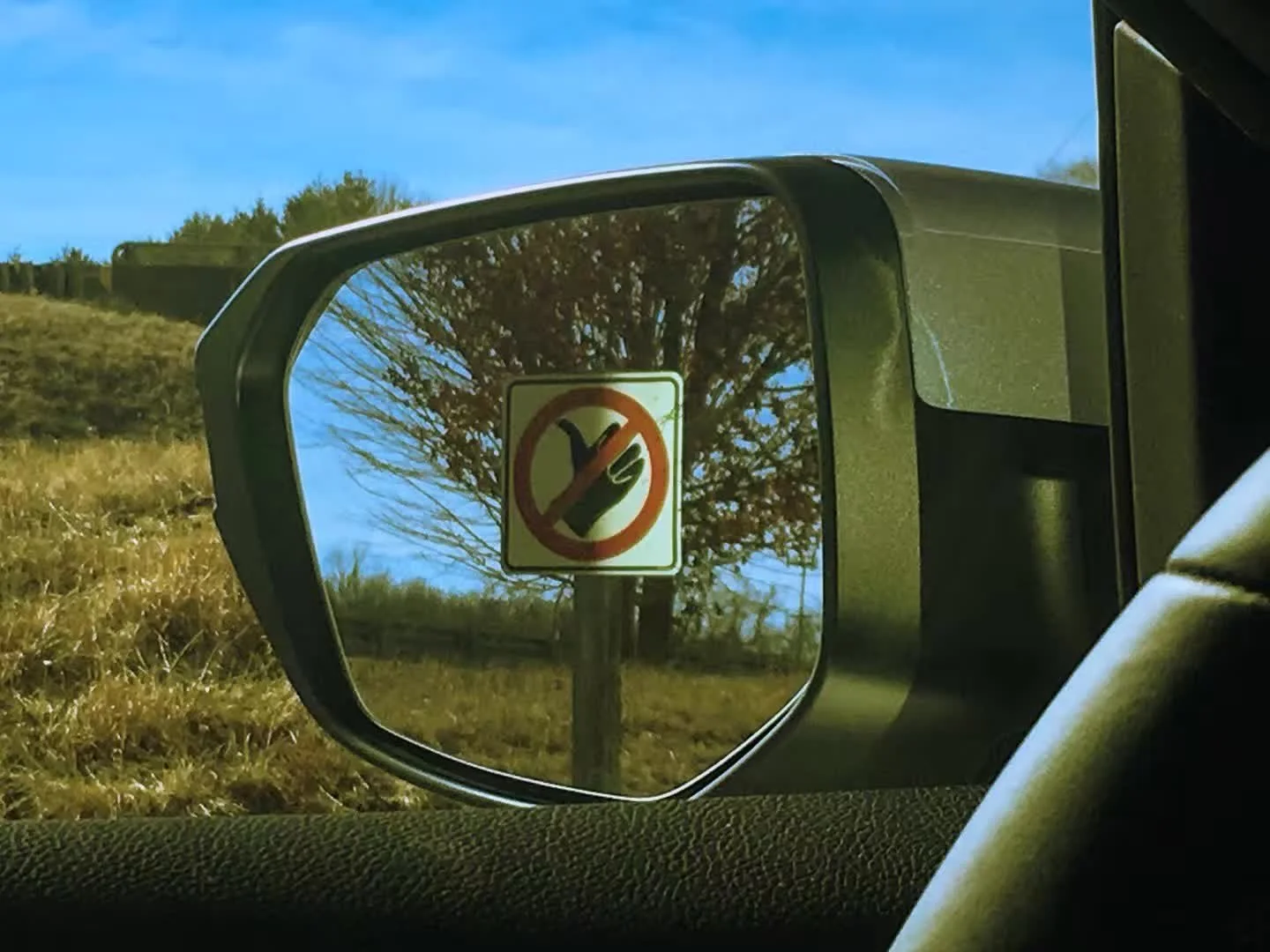
No Liking, Digital Photography, 1440x1080 px, 2020 © Rui Yang
INTERVIEW
Let's talk about you first. Can you share what motivated your shift from engineering to creative practice?
When I was a kid, I never felt there was a big gap between science/ engineering and the arts. I loved painting graffiti on my Auldey toy car while customizing its electric motor based on basic physics to make it run faster. It was just me as a kid, full of curiosity, exploring the world through different lenses. As I grew older, though, I began to lean more into art and creative expression. However, growing up in an environment where pragmatism was highly praised, I had to prioritize safety and stability over pursuing my art passion. Pursuing a career in art wasn’t encouraged; academic performance, measured by test scores, was the only way to be seen as valuable. So when it came to choosing a university to study abroad in the US, the only way my parents would support me was if I attended a tech school studying engineering, which I did. My first year at the tech school was difficult. I had no passion for what I was studying and felt like I was wasting my time staying at the engineering department. Not in a religious way, but at the time, I felt I heard my calling to become an artist. I changed my major to art in my sophomore year and have been in the creative field since then.
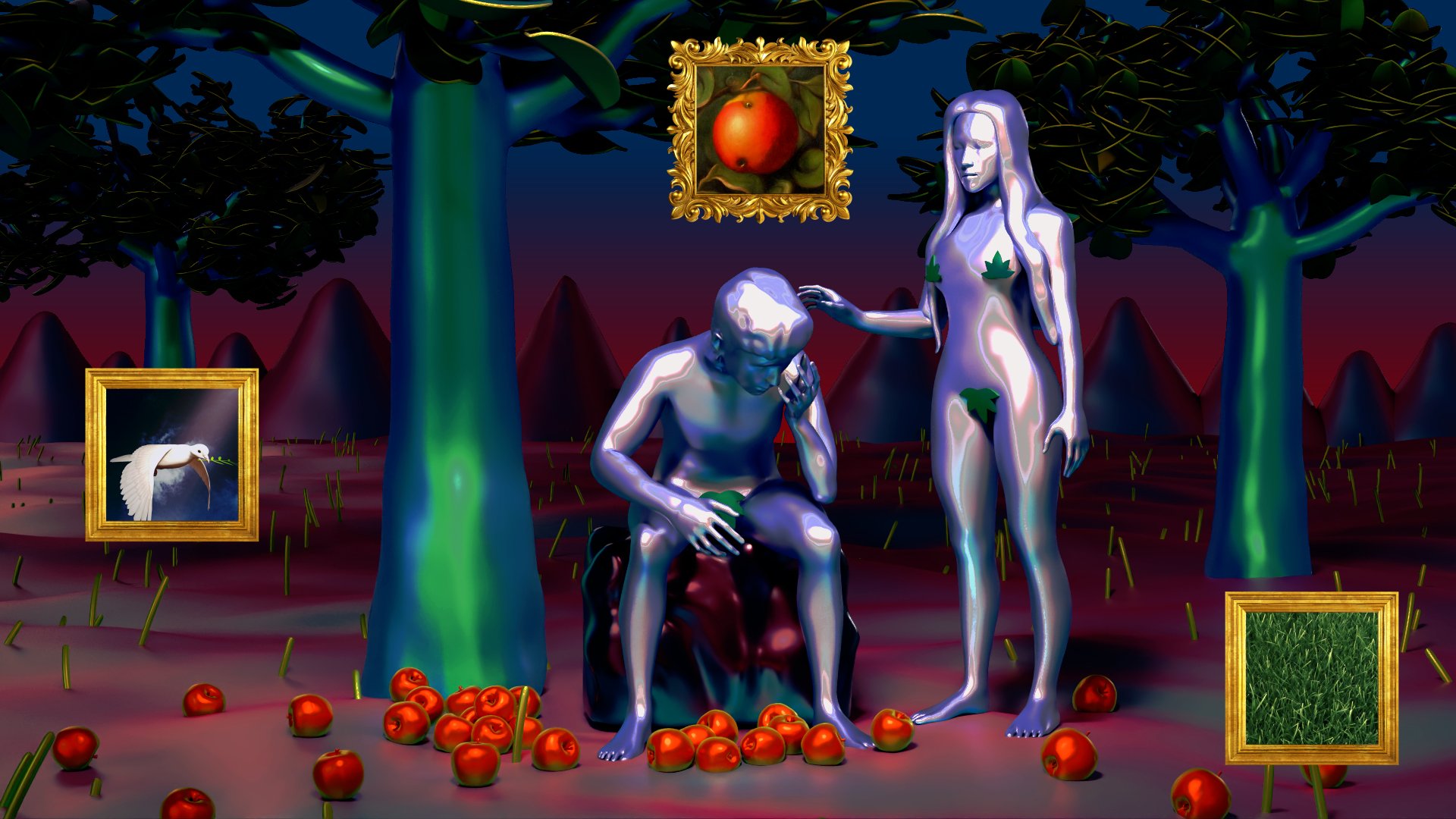
Picky Eden, mixed media, 1920x1080 px, 2025 © Rui Yang
How does your background in both the entertainment industry and fine art shape your approach to creating?
Working in both the media entertainment industry and fine art gives me a very comprehensive and nuanced view of visual culture. I initially chose a visual effects career because I was amazed by how the technologies and tools allow artists to actualize plausibly infinite possibilities and turn them into realities. It was magical to me because throughout history, humanity has been searching to restore and recreate realities: from painting to photography, then to videography. Visual effects felt like an ultimate destination to me because it enabled us to manipulate or create realities literally from scratch in the virtual 3D space.
However, as my experience has grown in both industry and personal practice, I started to think more critically about this “reality.” I came to realize that the assumption of visual effects recreating reality is not exactly true: the high-quality imagery I participate in making is a digital presentation of designed hyperreality that serves a certain narrative. It is not a magic trick simply done with a snap, but an apparatus with specific preferences, aesthetics, and logic baked in. What’s often overlooked are the politics, power, labor, and capitalist reality embedded in these spectacles. The booming of AI in recent years has also pushed me to think more about the operational aspects of digital imagery.
Overall, I feel very lucky to be able to work in both industry and art. My work in visual effects keeps me updated with the technical aspects of digital visual culture, while also pushing me to think critically and thoroughly about the broader system behind it, which in turn sharpens my art.
What draws you to explore themes like post-digital identity and cultural hybridity in your work?
My personal experience significantly shapes my interest in those themes. As someone born between the millennial and Gen Z generations and raised in a southwestern city in China, social media wasn’t introduced into my life until the later years of elementary school. It was never a “default setting” for me growing up, so I’ve held a somewhat skeptical stance toward it. I’ve lived in the “good old days” when human interaction was primarily face-to-face, before I witnessed the early-stage popularization of online social media in China, then moved to the U.S., where I’ve spent my adulthood. Social media definitely helped me understand American culture and connect with communities where I felt a sense of belonging, but it also exposed me to an overwhelming flood of information. The more I dig, the more elusive any singular “truth” becomes, only more fragmented narratives and spectacles. All of these experiences shaped who I am. Looking back, I realize that my entire transformation over the past decade, from a Chinese engineering student to a computer graphics 3D artist in the video production industry, to a multidisciplinary artist navigating multiple cultural spheres, has been deeply rooted in digital culture. I find the fluidity of identity extremely intriguing.

Picky Eden, mixed media, 1920x1080 px, 2025 © Rui Yang

Picky Eden, mixed media, 1920x1080 px, 2025 © Rui Yang
In your view, how has our relationship with technology and digital media changed over time?
I believe technology and digital media are taking control of our lives, but not in a dystopian cyberpunk way. In fact, the idea that a dystopian future AI and advanced tech will simply extinguish humanity feels more like a sci-fi trope to me. It’s interesting to see this recursive cycle repeating itself, but the reality is much more complicated and layered. We are the consumers and the creators at the same time, so our perception and action around those subjects are unconsciously and constantly shaping future trends. I have noticed a shift in people’s opinion on the digital self. When I was younger, the digital self was often seen as “unserious” or “unauthentic”, but now people tend to assume it represents a degree of realism about its user.
I do believe, though, that we should keep educating ourselves on the objective and operational aspects of digital media, that the speculative digital reality we are seeing and experiencing is rooted in algorithms, machines, data, and infrastructure, and they can be channeled and interfered with as intended. Overall, I’m cautiously optimistic about the future if we can use those tools knowingly and ethically.
How do you decide which medium to use for a particular project?
It depends on what I want to examine in the work and how symbolism works in the context. Digital media structurally promotes perfectionism. There are infinite undos, and you can push to version 89, not like it, and return to version 30 in two minutes. Rather than just using those tools only to produce hyper-polished frames, I’m also interested in exploring the operational logic of the medium. I believe new media artists should be aware of the existence of the medium as an active layer, not just a neutral container. For me, the choice of medium often comes down to which layer I want to foreground: am I telling a story using the medium, or telling a story with the medium. I like it when it’s not exactly one way or another but more in a mingled fashion. In my practice, I keep asking myself questions like “Do I want to just make moving images to illustrate? Or do I want the media to expose themselves? Am I the sole author of this work, or is it co-authored with machines?”

Picky Eden, mixed media, 1920x1080 px, 2025 © Rui Yang
Can you describe your process of remixing personal anecdotes, mythology, and pop culture into your art?
Pop culture references and mythology function as a kind of shared symbolic vocabulary, as they are learned and discussed throughout people’s upbringing and daily life. By contrast, personal anecdotes and the perception of current events are highly situated, as each individual has different experiences and perspectives. My interest is to blend those two together and build a visually loaded world where familiar cultural icons and fragmentary personal scenes mingle together, so that viewers are pushed to renegotiate what these symbols mean for them now. Although my anecdotes are subjective, they still point back to broader social and cultural realities that shape how we experience the present.
What does "creating new pathways for meaning" mean to you on a personal level?
For me, creating new pathways for meaning is about making fresh connections between concepts, perceptions, ideas, and personal experiences. I started recontextualizing difficult situations from my tough upbringing. Initially, it was for self-protection. When I could give something heavy a new and lighthearted layer of meaning and sometimes make my peers laugh or nod in recognition, the tension dissolved. That habit never left. Now with all the tools and knowledge learnt, I can create in a more intentional and overall free way.
I also think content doesn’t always equal meaning. We live in an era where the content is oversaturated, all the social media keep feeding us new trends and information, but we don’t always experience them as meaningful. Why certain content feels meaningful while other content doesn’t is what I’m interested in exploring.
How do you balance a playful sensibility with the critical themes you explore?
I think humor is a powerful weapon. I like the sophisticated and layered kind of humor over the “monkeying around” kind of humor. Sometimes it reads as dry, but that sensibility fits my work well. I prefer to show what I try to say rather than lecture or be overly didactic, as my work is not meant to function as a well-written essay. I always research the topics I want to explore and try to maintain a certain rigor, but I focus on recontextualizing that material and making the work more intriguing and relatable than the theory itself. I want the work to be critical in a slightly sarcastic way. Ideally, viewers can enjoy the piece, ask questions, and then delve into the more complex and broader contexts behind it.

The Bouncing Eye, single channel video, 1920x1080 px, 2025 © Rui Yang

Runner, Single Channel Video, 2048x2048 px, 2024 © Rui Yang
What was your experience like preparing for the 2025 Digital Graffiti Festival, and what can audiences expect from your exhibited work?
My work, The Bouncing Eye, was exhibited at the 2025 Digital Graffiti Festival. The piece took around ten months to complete. It’s a mixed media work that references the iconic bouncing DVD logo from the early 2000s. I wanted it to feel familiar yet strange, so I experimented with a lot of different media and eventually settled on 3D animation and live footage. The final piece is a single-channel video, but at the festival, it was projection-mapped onto a bridge on the Alys Beach property. The viewers experienced the work both as a projection on the bridge and as a reflection in the water beneath it.
Where do you see your practice evolving in the next few years, both creatively and professionally?
I will continue working primarily with digital media, while also exploring more possibilities in mixed media and seeking a synthesis between digital and analog realms. I’m moving toward storytelling and world-building, as I’ve been developing scripts that focus on contemporary topics such as identity and intercultural dialogue.
Artist’s Talk
Al-Tiba9 Interviews is a promotional platform for artists to articulate their vision and engage them with our diverse readership through a published art dialogue. The artists are interviewed by Mohamed Benhadj, the founder & curator of Al-Tiba9, to highlight their artistic careers and introduce them to the international contemporary art scene across our vast network of museums, galleries, art professionals, art dealers, collectors, and art lovers across the globe.


Lumi Liu is a New York–based designer and visual artist working at the intersection of art, medical visualisation, and public expression. Her practice explores consciousness, hidden biological systems, and the multiple dimensions of life that exist beyond human awareness. Lumi transforms these invisible biological architectures into poetic artistic experiences.