
10 Questions with Olivia Hicolaou
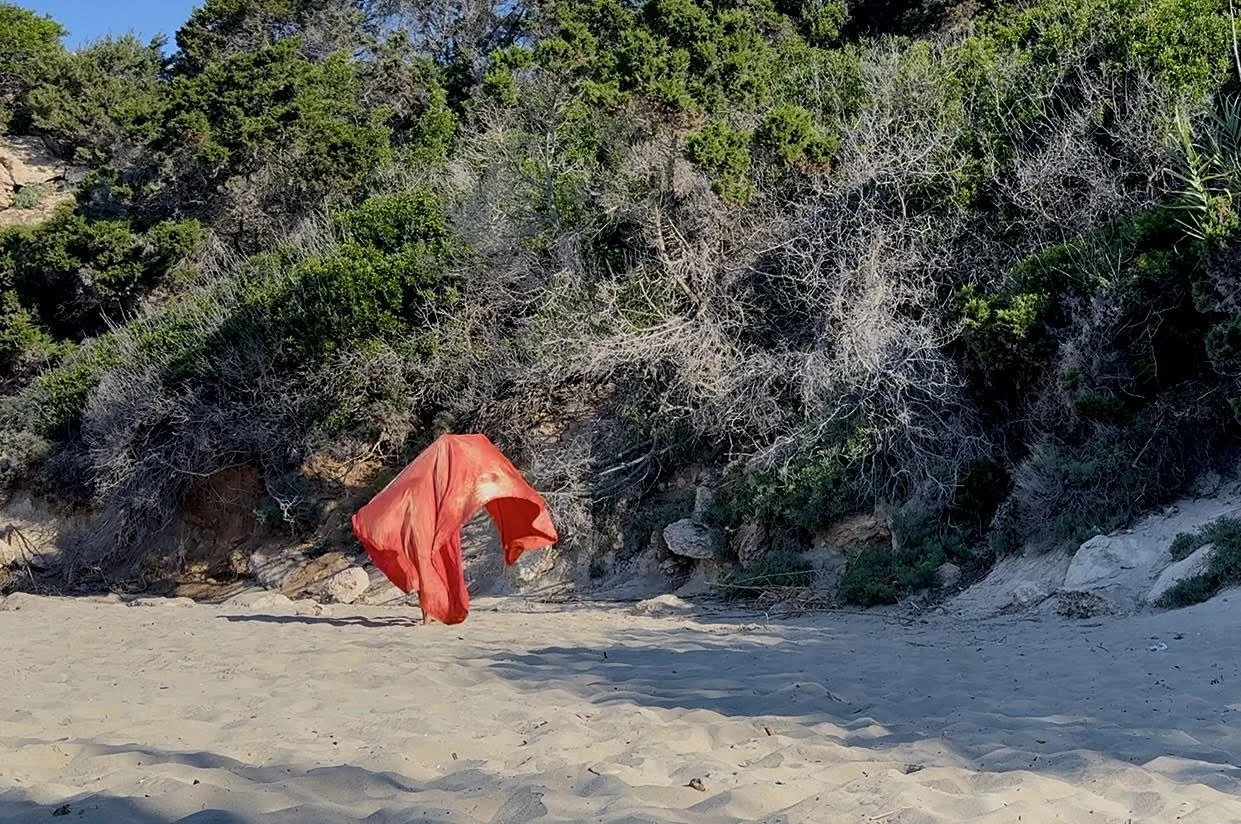
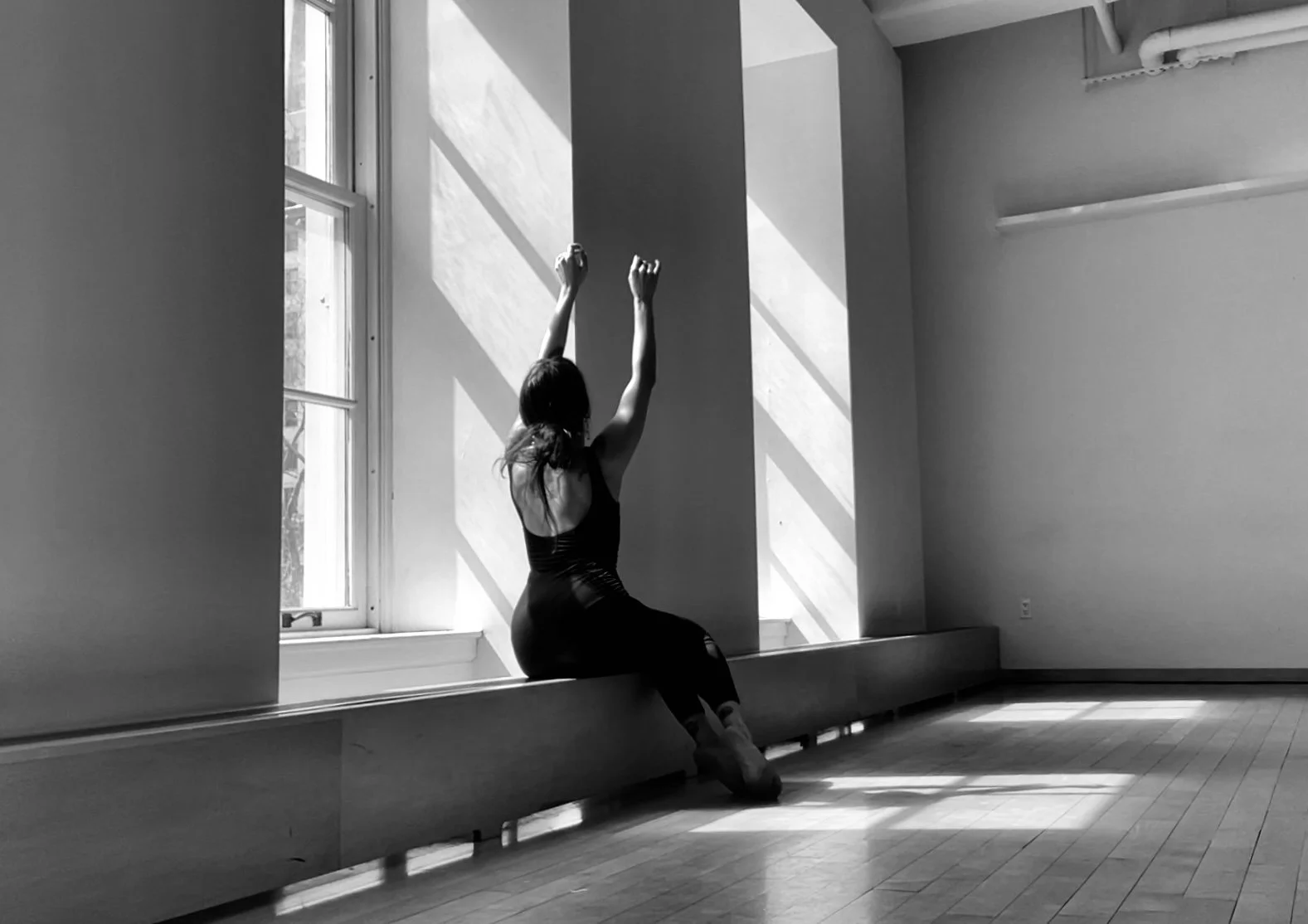
Olivia Hicolaou (b. 1995) is an American dancer, filmmaker, ephemeral sculptor, and friend to the wind and the sea. Her practice is less the work of an artist as an individual, and more a collaboration between the conscious being and the ecological world. Utilizing what can possibly be described as "sculpting fabrics," a dancer sets foot in an ecological landscape and enters into communion with the wind. As the wind blows, the dancer with her fabrics becomes a non-self, a floating illegible entity. Through momentary loss of human form, sculptures emerge. The dancer, through entering a state of active receptivity, becomes both a passive recipient of the wind’s wishes and active participant in the transfiguration that occurs. Through this paradoxical dance-prayer, she becomes neither willful dancer nor object thrown about by a natural force, but embodied sculpting material for the divine.
Olivia Hicolaou - Portrait
ARTIST STATEMENT
Derived from a wholehearted quest for spiritual transfiguration, Olivia Hicolaou makes ephemeral sculpture. Working in a cultural climate where visibility is currency, her work is a celebration of the virtue of being concealed. Wholly unconcerned with her own identity, the dancer becomes a vessel for an ancient mystical and ecological force. In communing with the wind, she is in service to something that transcends the self. The wind sees the dancer and her fabrics and kneads them to pliancy and abstraction. Equal parts self-abnegation and attunement, the dancer enters into a state of active receptivity. To be receptive to what is not us is to depart from the self and enter into the other. This un-selfing is the essence of all humility, compassion, and virtue. Her work is a celebration of a profoundly attentive and spiritual way of being that can be applied infinitely outwards in service to a more interconnected world.
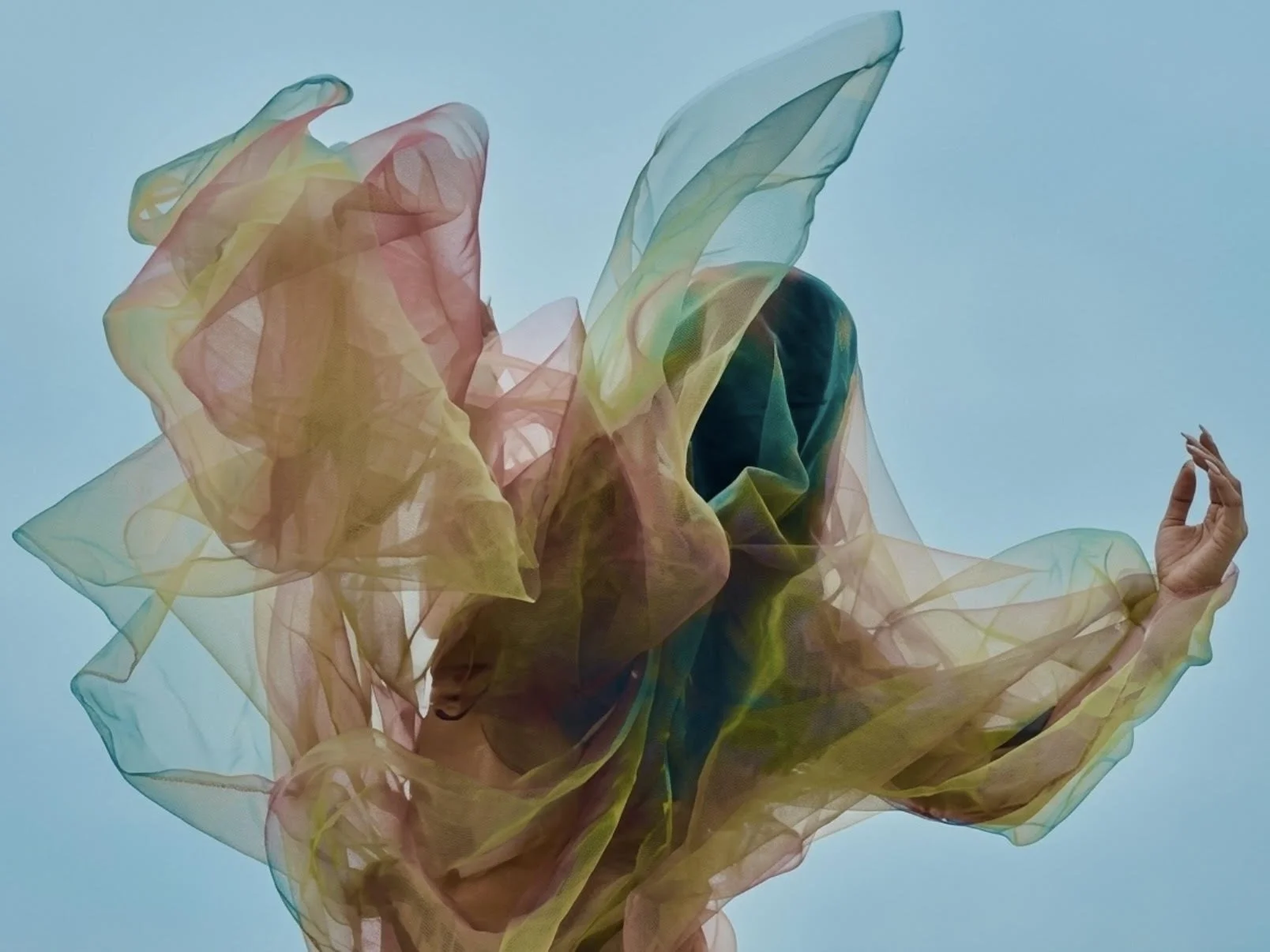
O V, Rockaway Series, I, performance, 2025 © Olivia Hicolaou
INTERVIEW
First of all, can you tell us a little about your background and how you first became interested in combining dance, film, and ephemeral sculpture?
Yes, of course. Because the sculpture is ephemeral, its sculptural qualities exist only for a moment before vanishing. So filmmaking allows me to target these brief, visually striking moments and spend time with them. Frame by frame, the sculpture is evolving ever so slightly with the movement of the wind and the dancer. Both photography and filmmaking offer an opportunity for sustained contemplation of the creative act that live performance does not. I have done a fair share of live performance throughout my life. I worked as a dancer for many years. But I was curious about what would happen to dance if the dancer was not in such an exposed state for the benefit of the audience… what if the dancer suddenly became secondary to her environment, or to her costume, or to fabrics in general. I started performing with handheld folding fans that trailed long lightweight fabric from the ends. And when I received the performance photos a few weeks later, I remember being most struck by the shots in which I lost all human characteristics and became somewhat of a floating white orb in the red and purple lights of the moody event space off St. Marks Avenue. In an age marked by a compulsion to construct, to define, and to crystallize the self, a loss of self is far more interesting to me.
O VII, Cala Tarida series, II, performance, 2026 © Olivia Hicolaou
Your work brings together movement, fabric, wind, and landscape. How did you develop this unique artistic practice?
Soon after being drawn to this practice, I learned that there is a long lineage of artists who have experimented with the same components. From Loie Fuller performing her famous serpentine dance in 1892, to Leni Riefenstahl becoming momentarily obscured by her dancing fabrics in Arnold Fanck’s 1926 film Holy Mountain, to Mary Binney Montgomery traversing a rocky California coastline covered in a long white fabric in Emlen Etting’s 1933 experimental short film Oramunde… using ethereal fabrics to obscure the figure is nothing new. But beyond being aesthetically arresting, I wanted to discover a way to situate these components in a more spiritual and ecological context, which is where the wind comes in.
Why is the wind such an important collaborator in your work, and what have you learned from working with it?
I have no desire for complete control over my creative practice. I think that what comes from outside of me and acts upon me has far more creative value than something that comes only from within me. I came to the wind seeking to be transformed because I think true transformation comes from active receptivity to an external force. For instance, one cannot mandate form on the wind as if it were an inert material. Instead, the dancer must attune herself to the rhythm and force of the wind, allowing it to shape and complete the gesture. This tiptoeing between effort and surrender becomes almost a spiritual exercise. Much like the early Christian mystics describe the Holy Spirit, the wind itself is invisible, powerful, able to bring about dramatic change. Just as one cannot see the wind but can feel it, so too in Christian theology, the Spirit, a mysterious and unseen dispenser of God’s grace, can be felt in the transformation of the heart. In fact, πνεῦμα is an ancient Greek word for “wind” or "breath" or “spirit." It represents the immaterial essence animating a physical being. When I become a butterfly or a lily or a flame or a sail, I do so because an immaterial essence has animated my being.
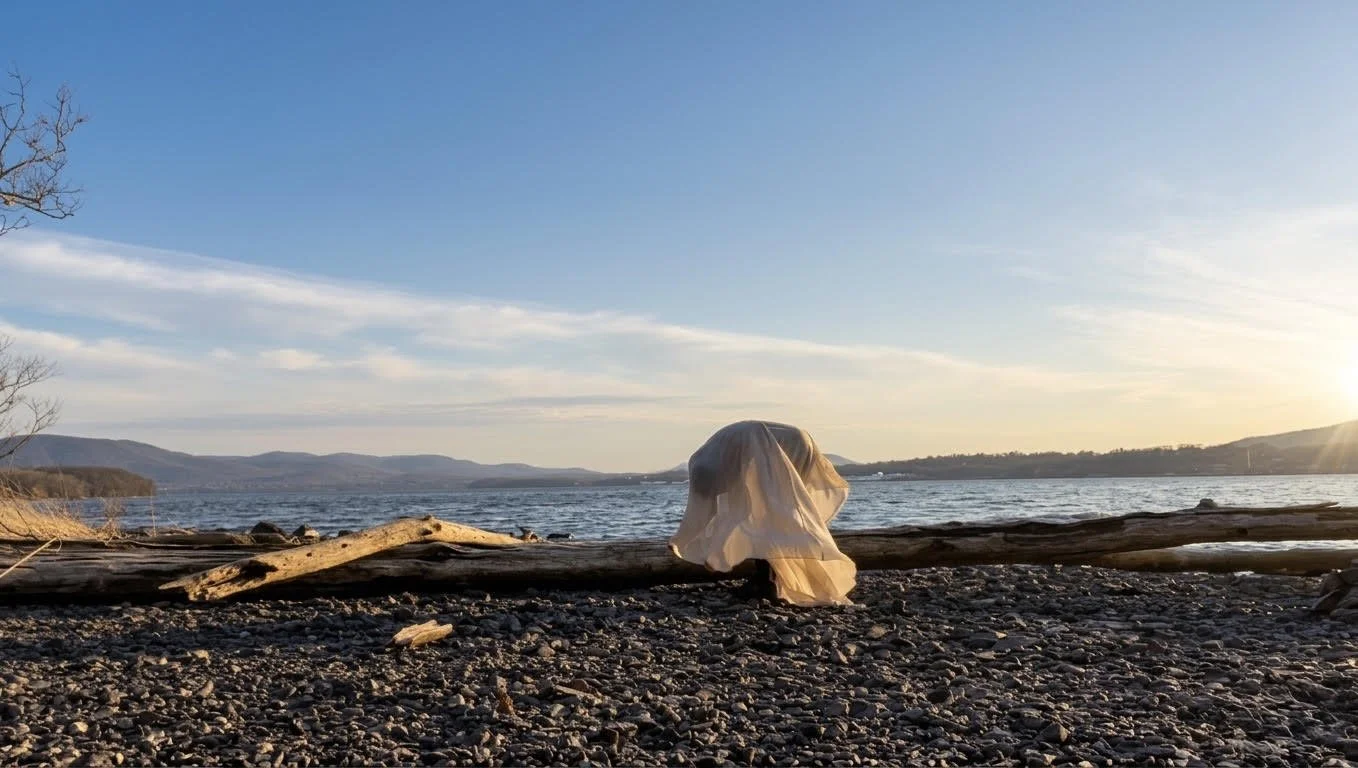
O I, Hudson River series, II, performance, 2023 © Olivia Hicolaou
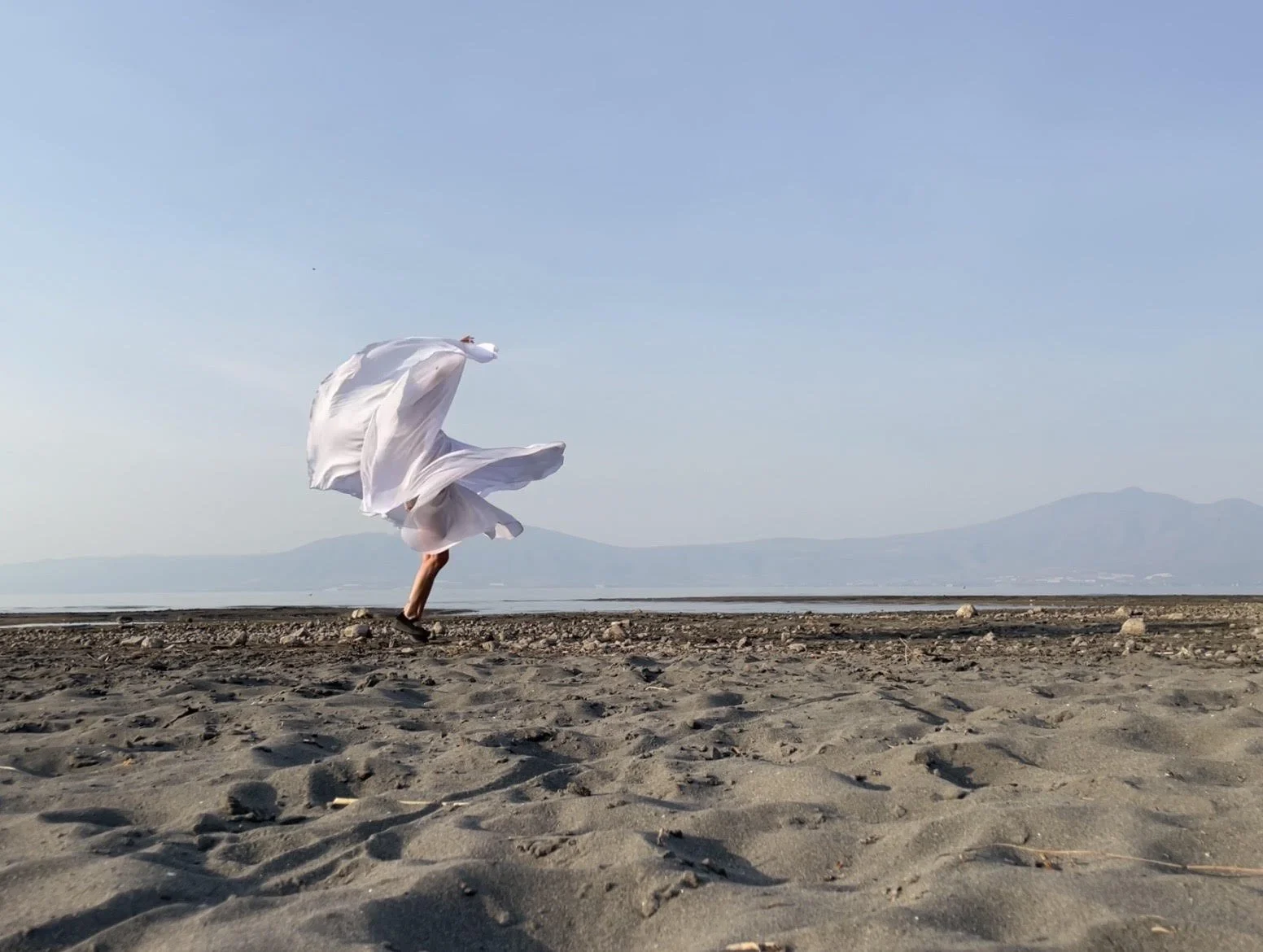
O II, Playa Los Agaves series, IV, performance, 2024 © Olivia Hicolaou
Could you describe your creative process from the initial idea to the final performance or film?
My sculpting fabrics are hanging on a curtain rod in my bedroom. And when one calls my name, I take it out to play.
Your project, O V, Rockaway Series, I, explores the relationship between the body and the natural world. What inspired this series?
When I began searching for the strongest winds, I was soon led over the South Channel Bridge and to the Rockaway Peninsula. The Rockaways have some of the strongest winds in New York. It’s like a racetrack for them. There are no hills, forests, or large land obstacles to slow down the air as it moves over the water. The flat, open sandy beaches and low-rise layouts offer very little surface friction, allowing high-speed wind gusts to slam directly onto the shore without losing momentum. Sometimes the seagulls don’t even fly; they just hover, wings out, suspended midair.
Your work often transforms the human figure into an abstract form. What does this transformation represent for you?
In short, freedom. I am interested in alternative forms of freedom. There’s a freedom in surrendering yourself to a divine uncontrollable force, like the 13th-century Sufi mystics, the whirling dervishes, who in an effort to experience oneness with God, spun around in circles with long skirts to mimic the movements of the planets in the solar system. There’s a freedom in being concealed, like the Tapadas Limeñas in 16th century Peru who concealed their entire bodies with fabric (except for one eye) as a way to walk alone and socialize as women under Spanish colonialism. And allowing the wind and the fabrics to sculpt me into abstraction touches on a similar freedom.
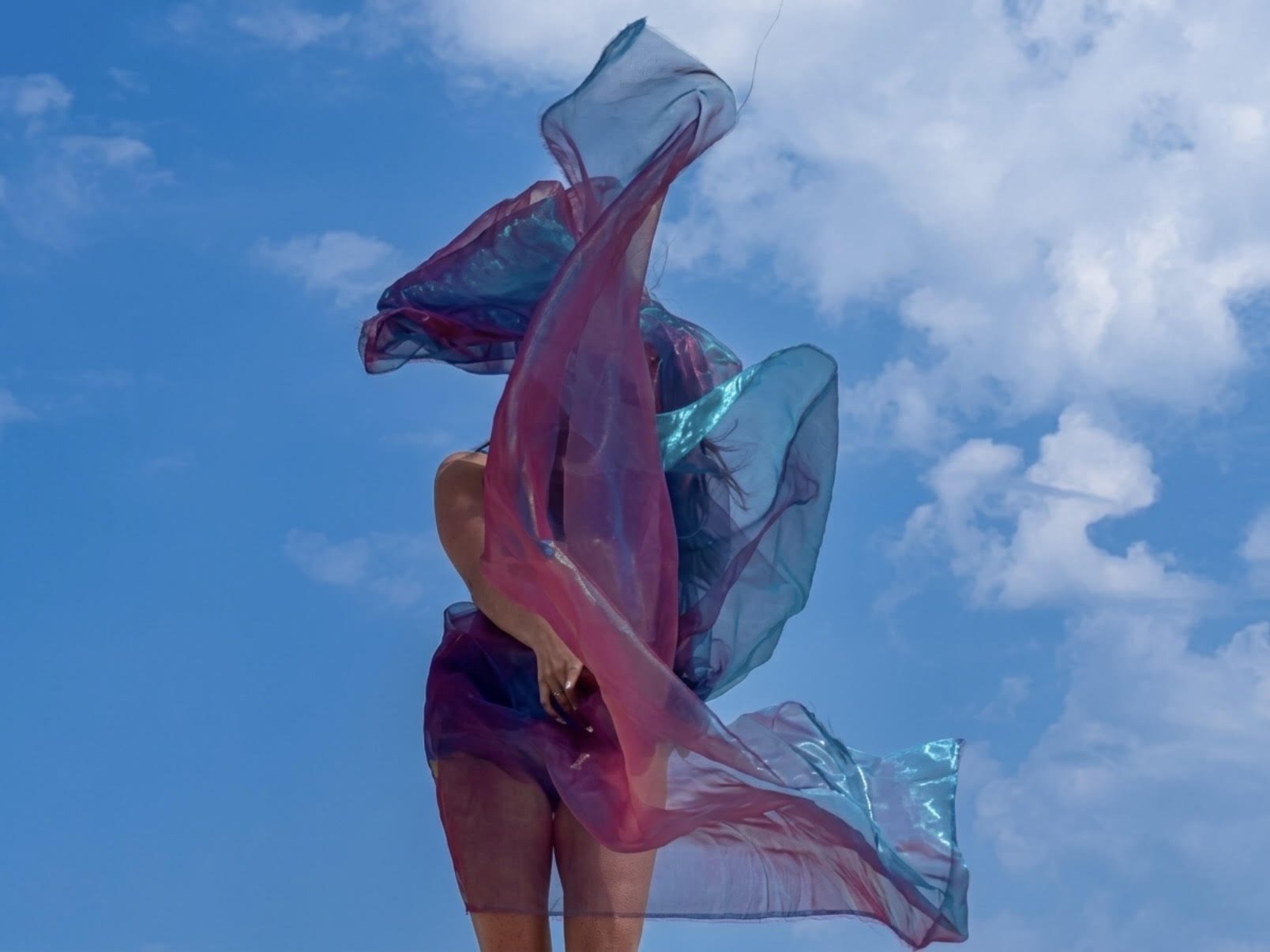
O IV, Hart Street series, II, performance, 2024 © Olivia Hicolaou
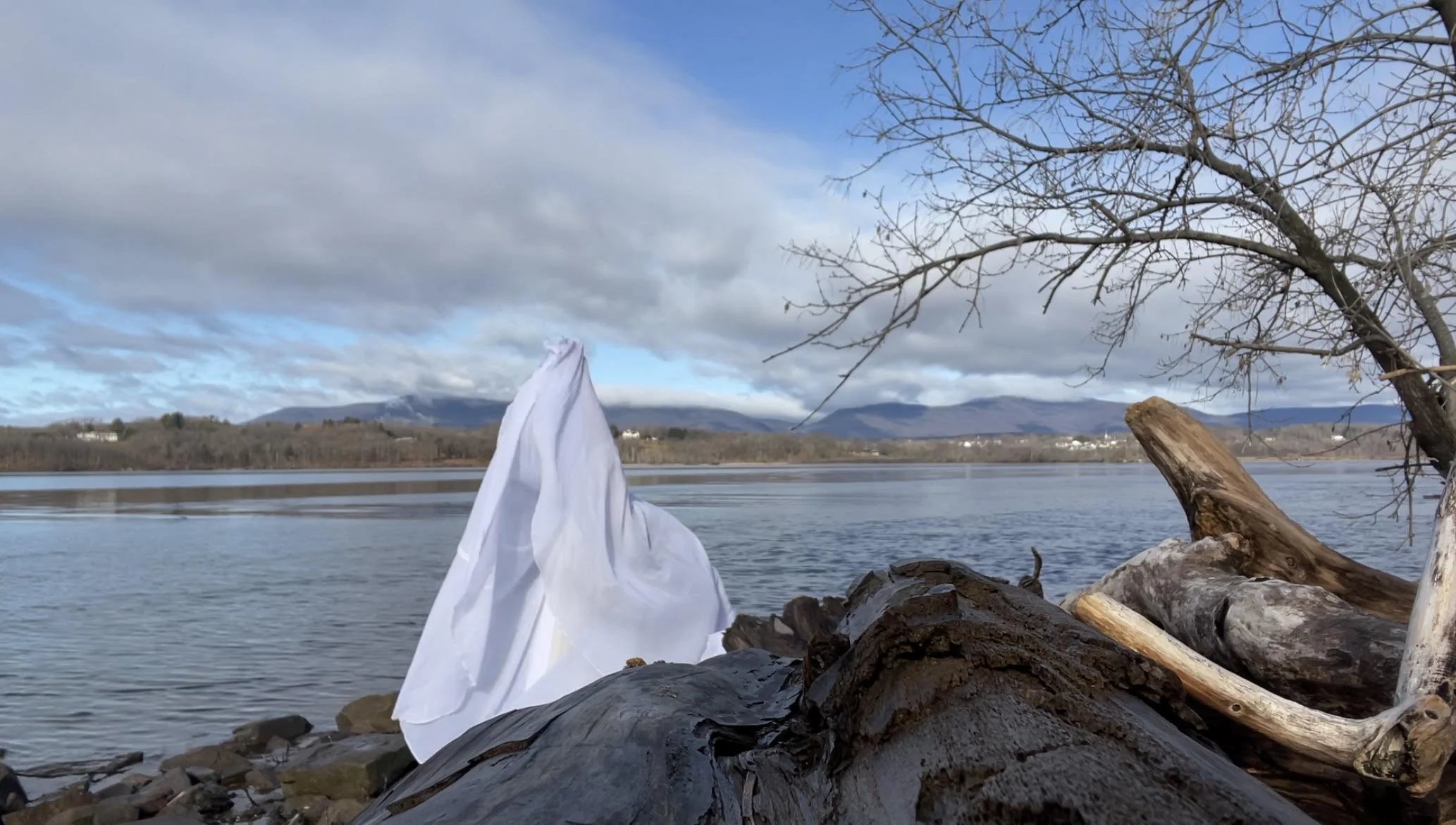
O III, Hudson River series, IV, performance, 2024 © Olivia Hicolaou
Themes such as spirituality, ecology, and humility are central to your practice. How do these ideas influence the way you create?
Spirituality, ecology, and humility all point toward a similar way of relating to the world. Austrian existentialist Martin Buber describes two modes of encounter: I-It, where we treat the world as something to control or categorise, and I-Thou, where we meet it as a living presence. My practice is an attempt to work in that second mode. Rather than imposing my will on the wind, the landscape, or the materials, I try to commune with them, allowing them to shape the work alongside me. This requires a kind of decentering of the self, a willingness to surrender control and be transformed by what lies outside of me.
Because your sculptures exist only for a brief moment, documentation becomes very important. How do film and photography shape the way audiences experience your work?
Because the sculptures exist only momentarily, film and photography both preserve them and also transform them into objects of contemplation. The camera slows the encounter, giving the viewer time to dwell with forms that resist immediate understanding. I’ve also recently become very interested in whether (or how) the viewer's own experience of abstraction could potentially become a training ground for virtue. Images that are not immediately decipherable demand patience and attention. Rather than consuming them, we must meet them on their own terms. That movement away from the self and toward a state of sustained attention has long been understood within the contemplative tradition as a spiritual discipline.
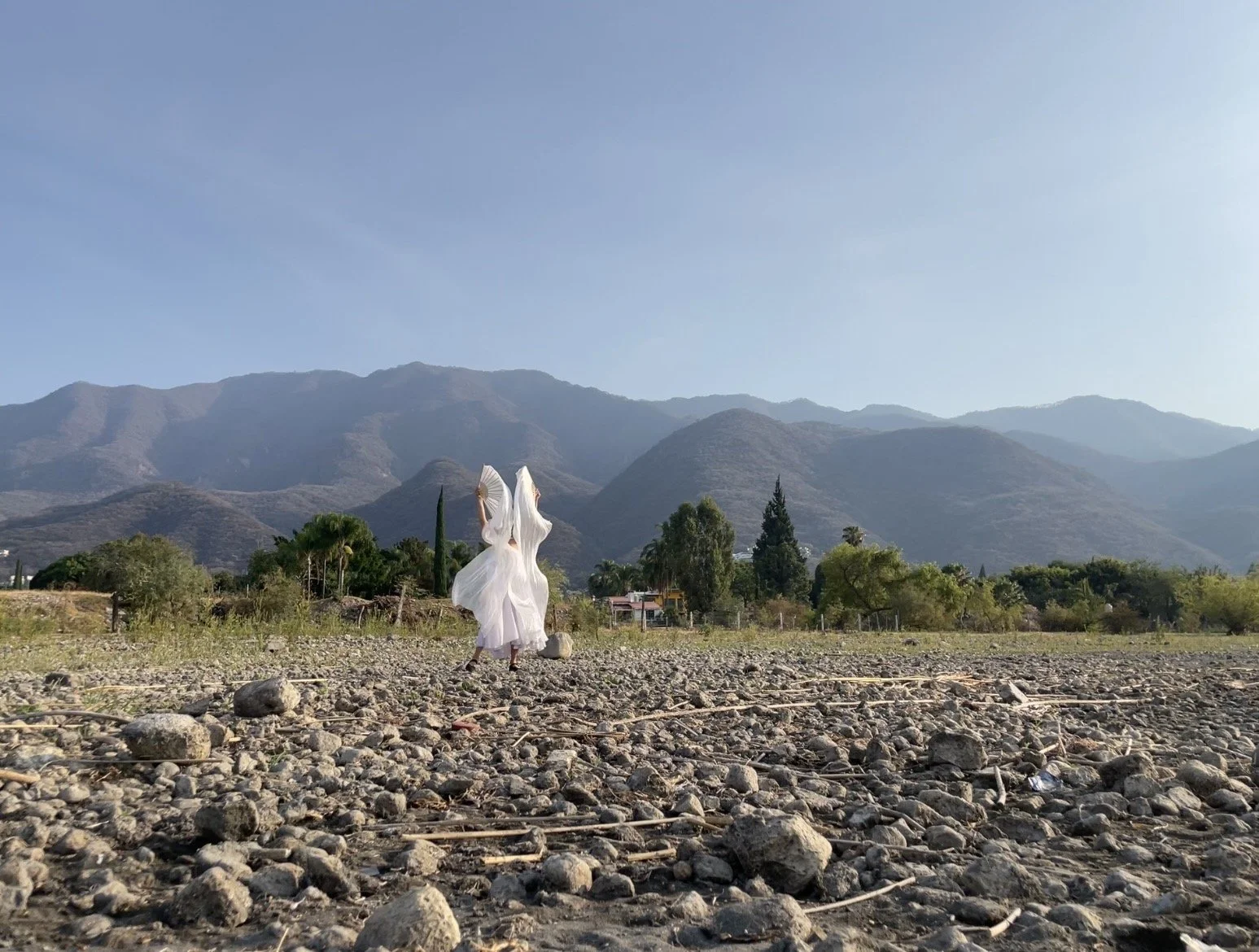
SQ I, Ajijic series, III, performance, 2024 © Olivia Hicolaou
What are you currently working on, and are there any new ideas or directions you are excited to explore?
Right now, I am working on a series of writings about the colors. I have kept almost seven years of very meticulous and excessive notes, so if I search “red” in my notebook, I am confronted with all the times I wrote down something I wanted to remember about the color red. Like a red-tailed blackbird, or about the sea lions poisoned by the red tide, or about a red-pilled deacon at an unfamiliar church or about a young trombone player whose face turned bright red when I said: “the music was so beautiful it brought a tear to my eye.” There’s a brief mention of Boris Akunin’s Sister Pelagia and the Red Cockerel, and the line in Yoko Tawada’s Paul Celan and the Trans-Tibetan Angel that says “his lips grow redder and eyelashes longer when he reads.” Of course there are also mentions of the red onion on my grocery list or starts of words like redemption, redefine, reductionist. Or my most recent note about red… Big Red Boat II being broken down in the Alang ship-breaking yard. It’s fascinating what happens to ships at the end of their life.
Looking ahead, what are your goals for the future, and is there a dream project or collaboration you would love to realize?
Well, I suppose speaking of ships and fabrics and the wind, I would really like to learn to sail.
Artist’s Talk
Al-Tiba9 Interviews is a promotional platform for artists to articulate their vision and engage them with our diverse readership through a published art dialogue. The artists are interviewed by Mr. Mohamed Benhadj, the founder & curator of Al-Tiba9 Contemporary, to highlight their artistic careers and introduce them to the international contemporary art scene across our vast network of museums, galleries, art professionals, art dealers, collectors, and art lovers across the globe.



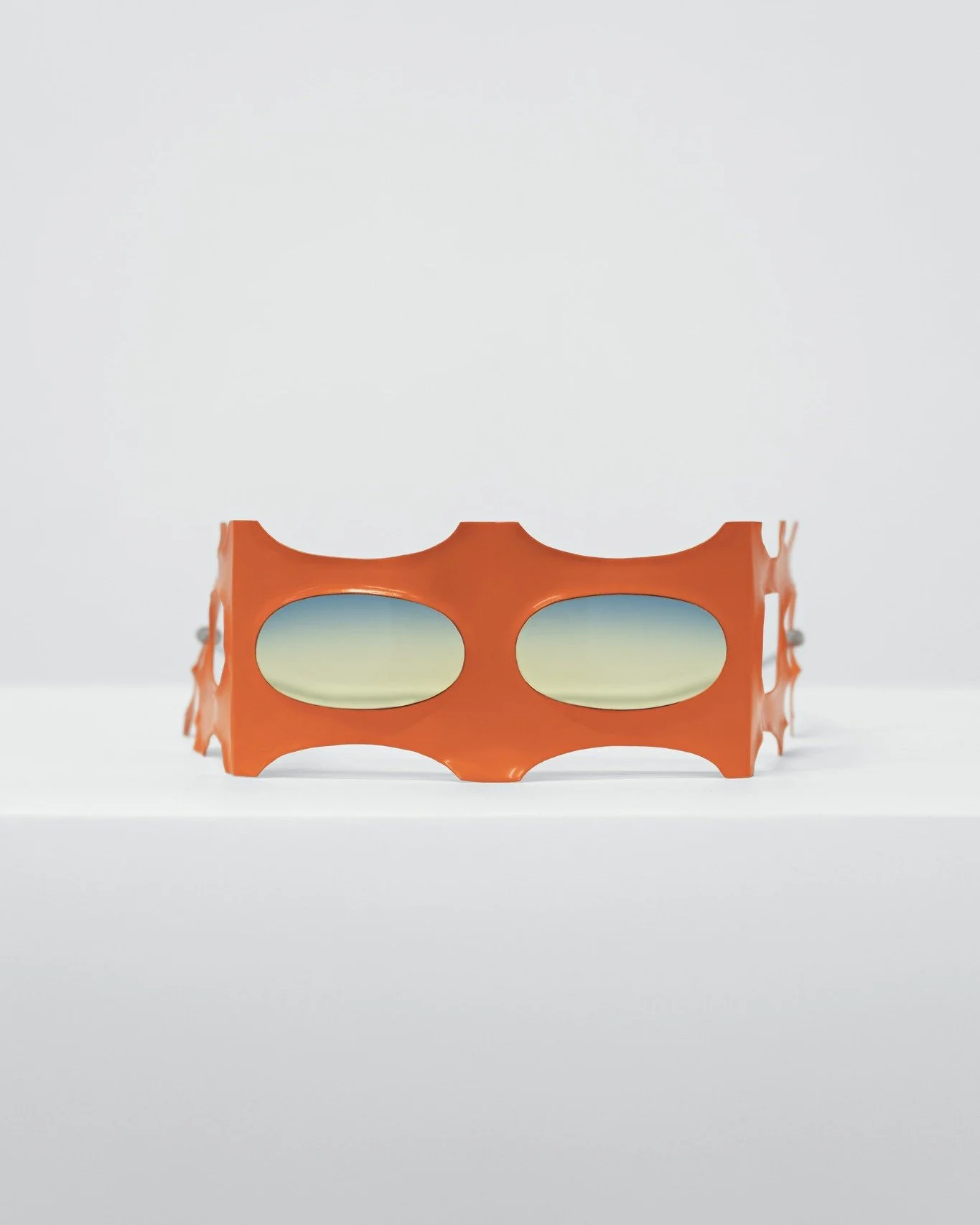
Kfir Galatia-Azulay Darash is an architect, engineer, multidisciplinary designer, and artist. In his practice, architecture defines the framework, scale, rhythm, and light; interior design addresses the body and the human experience; product design approaches detail, material, and physical contact; and art allows an idea to move beyond function and become emotion, memory, and interpretation.