
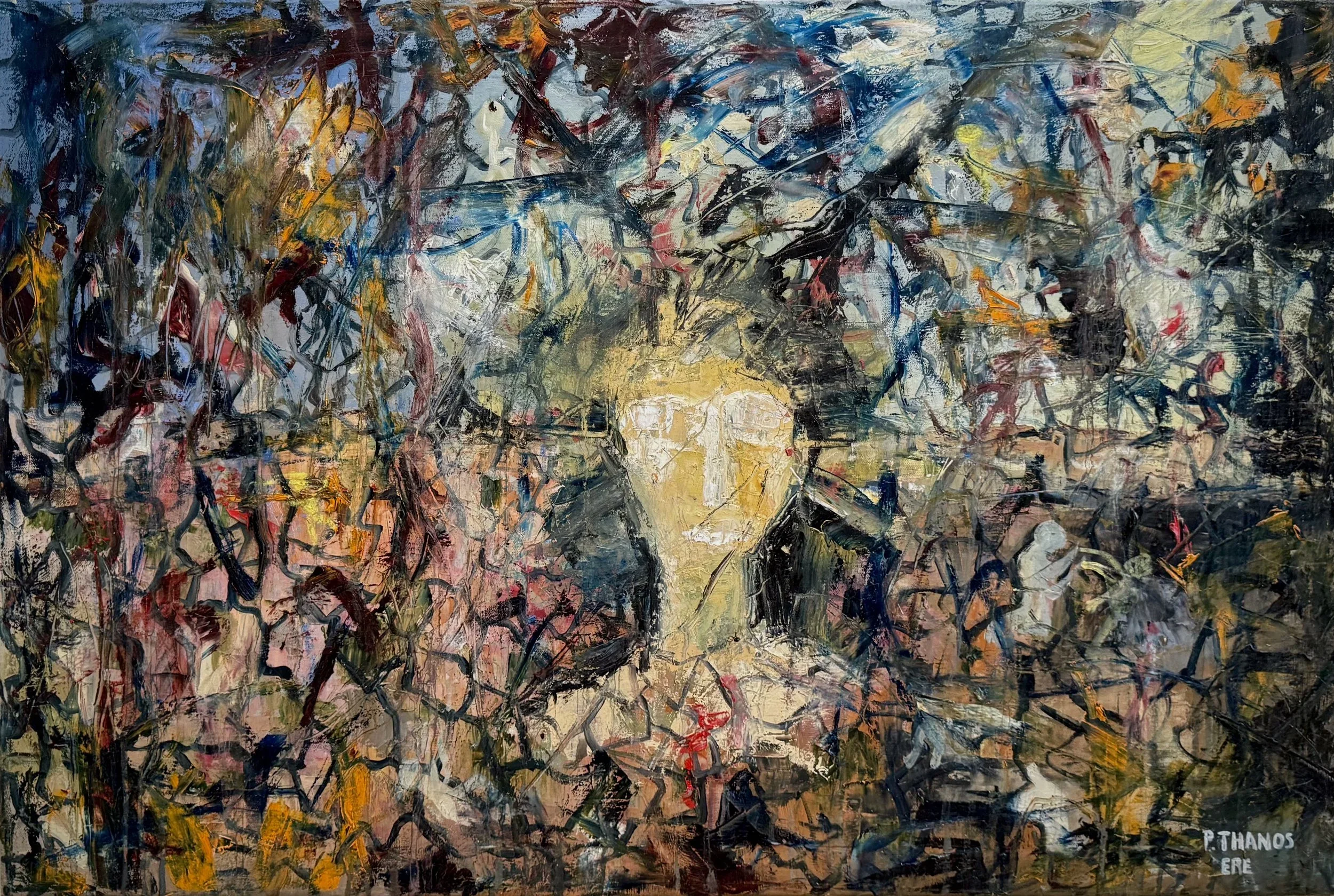
10 Questions with Petros Thanos
Petros Thanos, MD, PhD, is a Greek visual artist and Urologic Surgeon based in Thessaloniki, Greece. Painting since the age of thirteen, he is a self-taught artist with more than four decades of continuous studio practice, developing his visual language alongside a parallel career in Surgery, two vocations he regards as one and the same calling: healing the human being and giving form to human expression. Educated at Anatolia College in Thessaloniki, he was encouraged at a young age to pursue Fine Arts studies in New York and Paris, but deliberately chose an independent artistic path, allowing his painting to mature outside academic frameworks.
Thanos is the founder of Emotional Realist Expressionism (ERE), a movement defined by his manifesto “The Indivisible Triad”: every work must simultaneously hold real human presence, authentic emotional charge, and expressionist freedom, with none of the three ever dominating. The founding manifesto is published and citable. In his work, the visual language is built on veils of dripped colour, incised linear networks, and fields of layered pigment, through which the human form transforms but never disappears. His works are held in private collections, and he has contributed paintings to hospitals, charitable causes, and foundation initiatives.
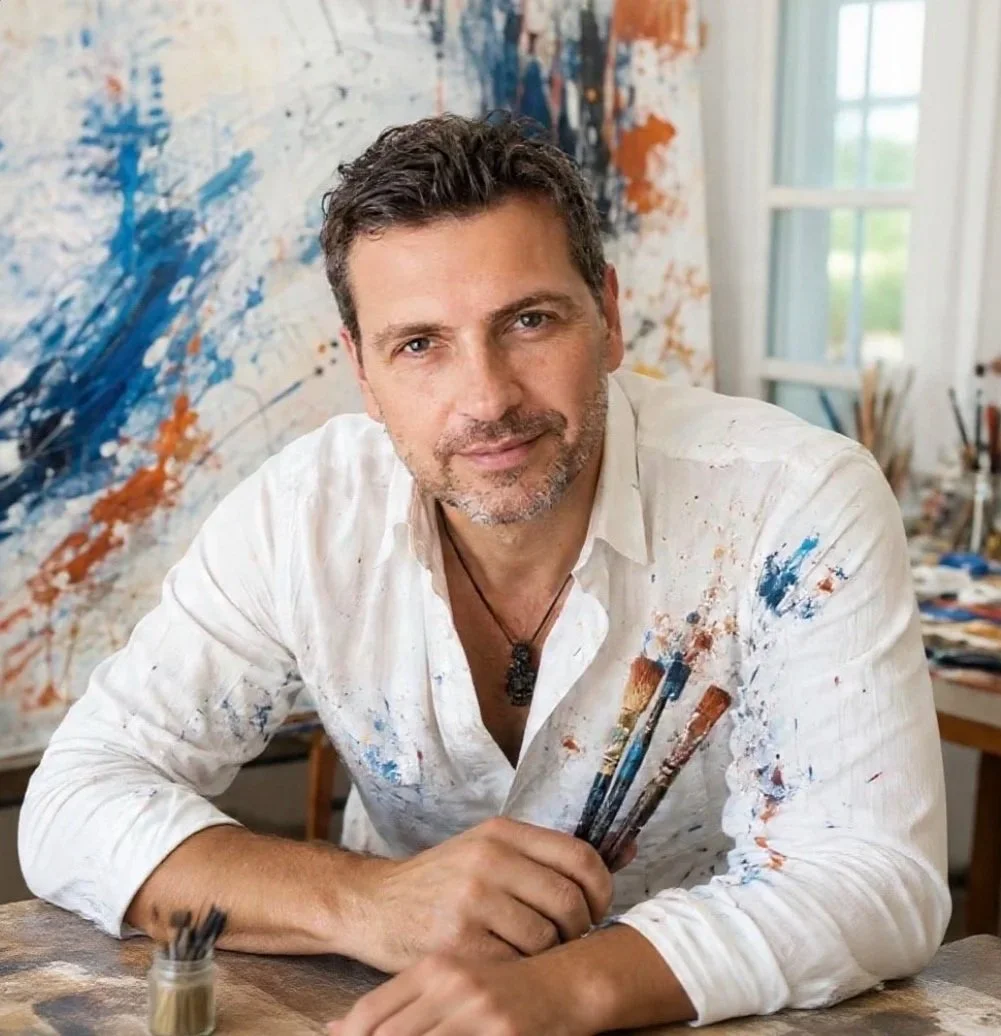
Petros Thanos - Portrait
ARTIST STATEMENT
Petros Thanos paints the human being who can no longer speak and everything around them that speaks on their behalf. In his work, the face becomes a featureless mask, veiled behind curtains of dripping colour, yet it never disappears: presence remains, transformed. The emotion is not depicted; it is produced by the collision of gold and black, by reds pulsing beneath the surface like a working heart, by hidden geometric order beneath the chaos of gesture.
This is the essence of Emotional Realist Expressionism and its Indivisible Triad: real human presence, authentic emotional charge, and expressionist freedom, held in permanent equilibrium. When the three are balanced, the painting does not show a feeling, it makes the viewer feel it. That, for him, is the anonymous sacredness of the human being: even the most erased figure still carries light, blood, and weight.
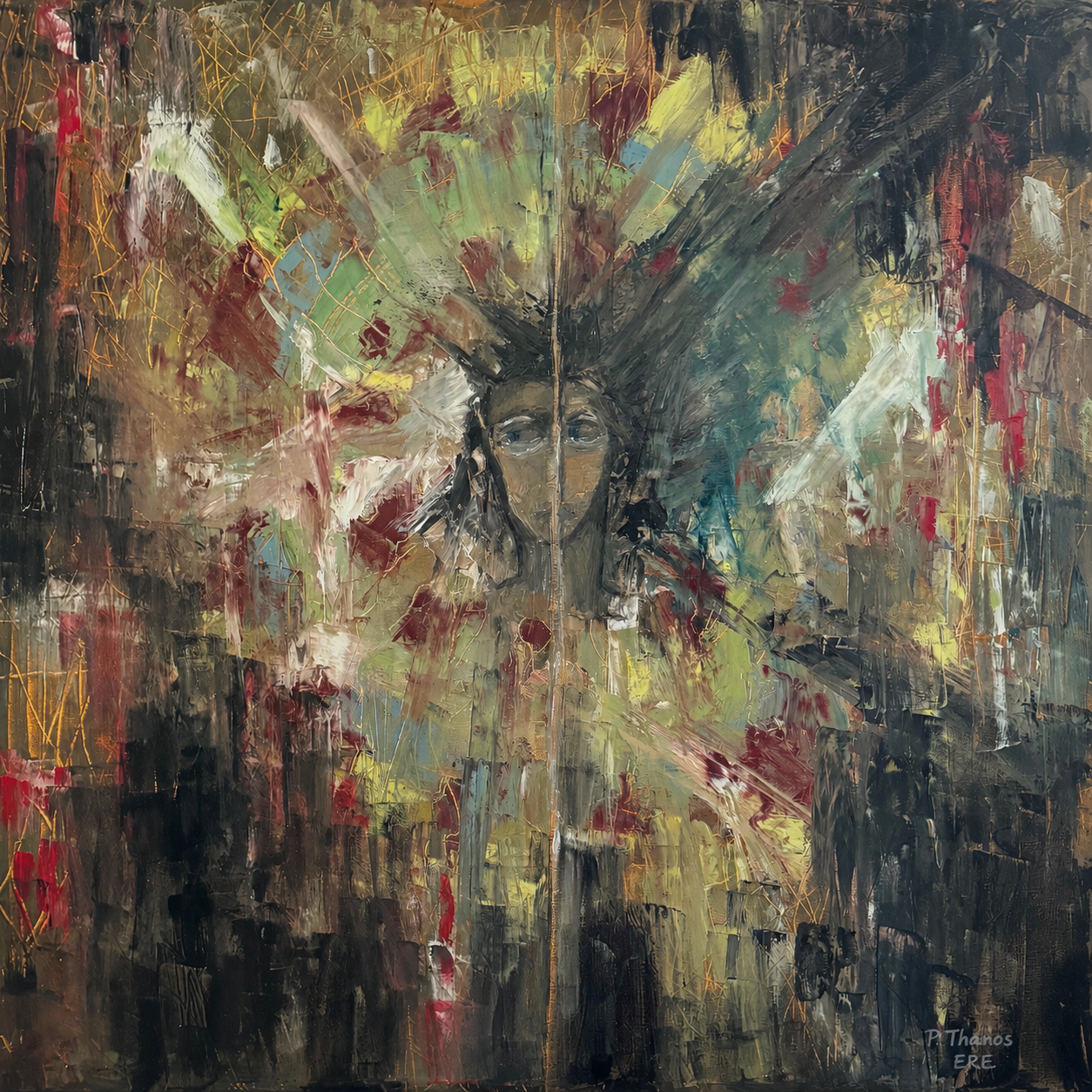
Echo of Silence, Oil on Canvas, 70 × 90 cm, 2026 © Petros Thanos
INTERVIEW
You have been painting since you were thirteen. What first inspired you to become an artist?
I never decided to become an artist. I was thirteen, walking home from school hand in hand with my father, when I saw an old man at a street corner, bent over, poor, crying. He was not sobbing aloud. He wept silently, with no sound and no movement at all. I did not have the words for it then, but I understood something I have never stopped believing: that this is the heaviest weeping the soul is capable of. Grief that makes noise is still asking for an answer. Grief that makes none has stopped expecting one. I could not look away, and I could not speak about it. Everything I have felt as a painter since came out of that street corner. It is the reason my emotions found their way out through painting rather than through anything else.
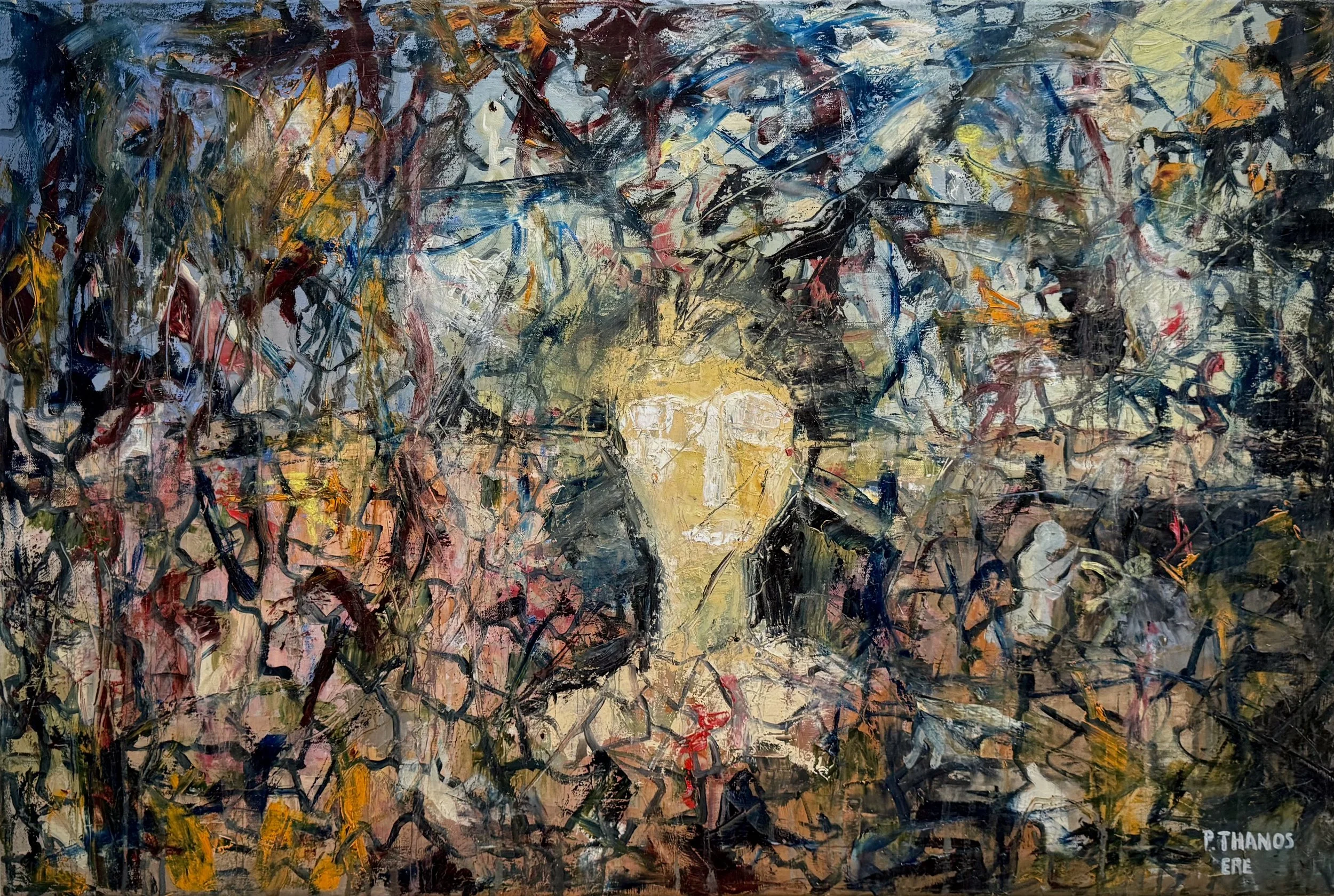
Emergence, Oil on canvas, 70 × 90 cm, 2026 © Petros Thanos
You chose to remain a self-taught painter despite having opportunities to study fine arts. How has that decision shaped your artistic journey?
It cost me time, and it gave me freedom. Without a school, there is no one to tell you that something cannot be done, but equally, no one to spare you ten years spent on the wrong road. I spent those years. What I received in exchange is that nothing in my work is borrowed. Every technique I use today came from a need, not from a lesson: the drips, the incisions, the layering, I found them because I was looking for something, not because I was taught them. An academic training would have brought me to a style much faster. I am not at all convinced it would have been mine.
As both a urologic surgeon and an artist, how does your medical practice influence the way you see and represent the human body?
A surgeon sees the body from the inside. He knows that beneath the skin there is blood, weight and structure, and that all of it is extraordinarily fragile. That knowledge did not turn me into an anatomist in painting; it did the opposite. I have seen enough bodies opened to lose all interest in rendering them accurately. What interests me is what is never visible in the surgical field: the patient’s fear before going in, the relief afterwards, the dignity a person keeps while completely exposed. This is why red works beneath the surface in my paintings rather than on it. It is the blood I know is there, not the blood I show.

Buried Presence, Oil on Canvas, 100 × 120 cm, 2026 © Petros Thanos
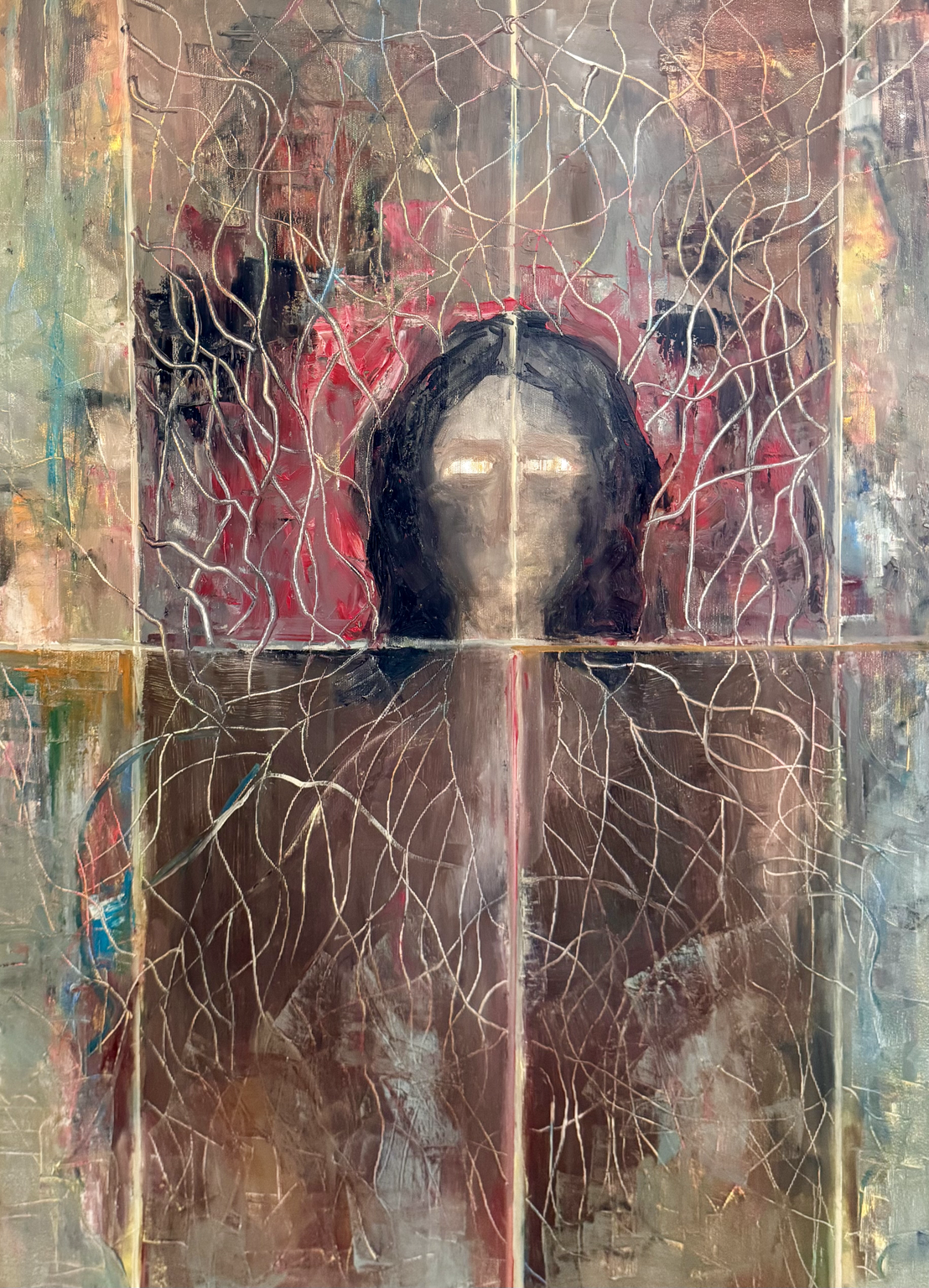
The Net, Oil on canvas, 100 × 120 cm. 2026 © Petros Thanos
You describe medicine and art as two expressions of the same calling. How do these two professions complement each other in your life?
I consider two things in life to be great: healing a human being, and giving form to human expression. Both begin at the same moment, the moment you stand in front of someone who is suffering and do not turn your eyes away. Medicine intervenes in the body, painting intervenes in memory. One taught me composure; the other allows me not to be composed. In the operating room you are not permitted to be moved. In the studio you are not permitted to remain unmoved. I need both in order to be a whole person.
Your work combines dripped paint, layered pigments, and incised lines. What draws you to these techniques and materials?
Each of them does something the brush cannot. The drip falls on its own; it introduces into the work a force I do not control, the way I do not control time or illness. It behaves as a veil: it covers the face without erasing it. The incision is the opposite; it is violence, it is a wound, a line that opens the surface instead of being added to it. And the layers are time: beneath what you see there are five other paintings you will never see, but which you feel as depth. Together, the three give me what I want, a surface that has a past.
Can you describe your creative process? How does a painting usually develop from the first idea to the finished work?
I almost never begin from an idea. I begin from a presence, a figure that appears and demands space. The painting is then built in layers, and each layer destroys part of the one before it. I rarely work on the figure alone; I intervene around it and underneath it, because a form floating in an empty background does not convince me; a human being never exists in a void. Picasso said something I believe absolutely: the painter gives the work life, and it grows for as long as you keep working on it; when you stop, it dies. That is why finishing is not an aesthetic decision. It is the moment I realise that anything more I do will kill it.
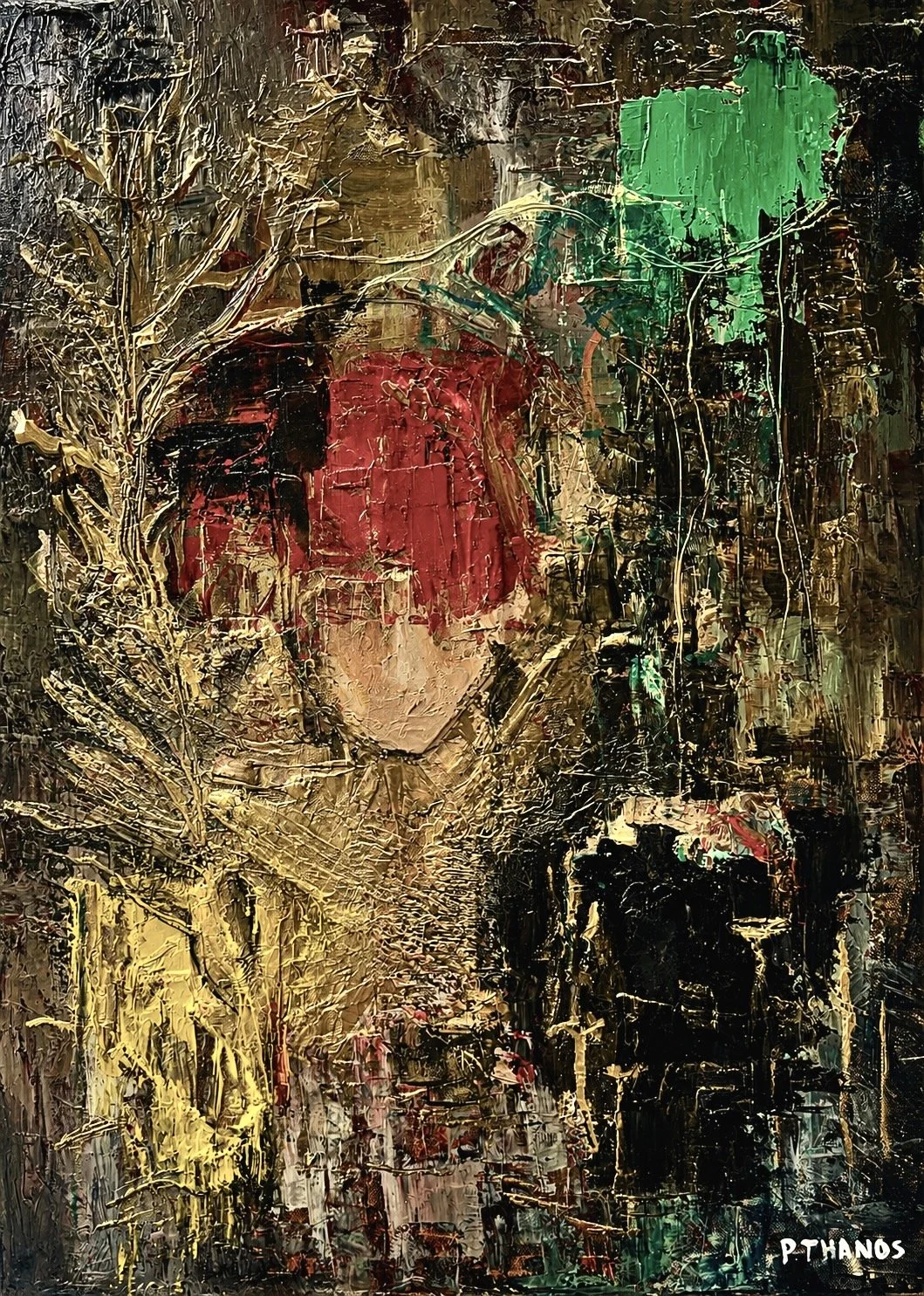
Golden Presence, Oil on canvas, 50 × 70 cm, 2026 © Petros Thanos
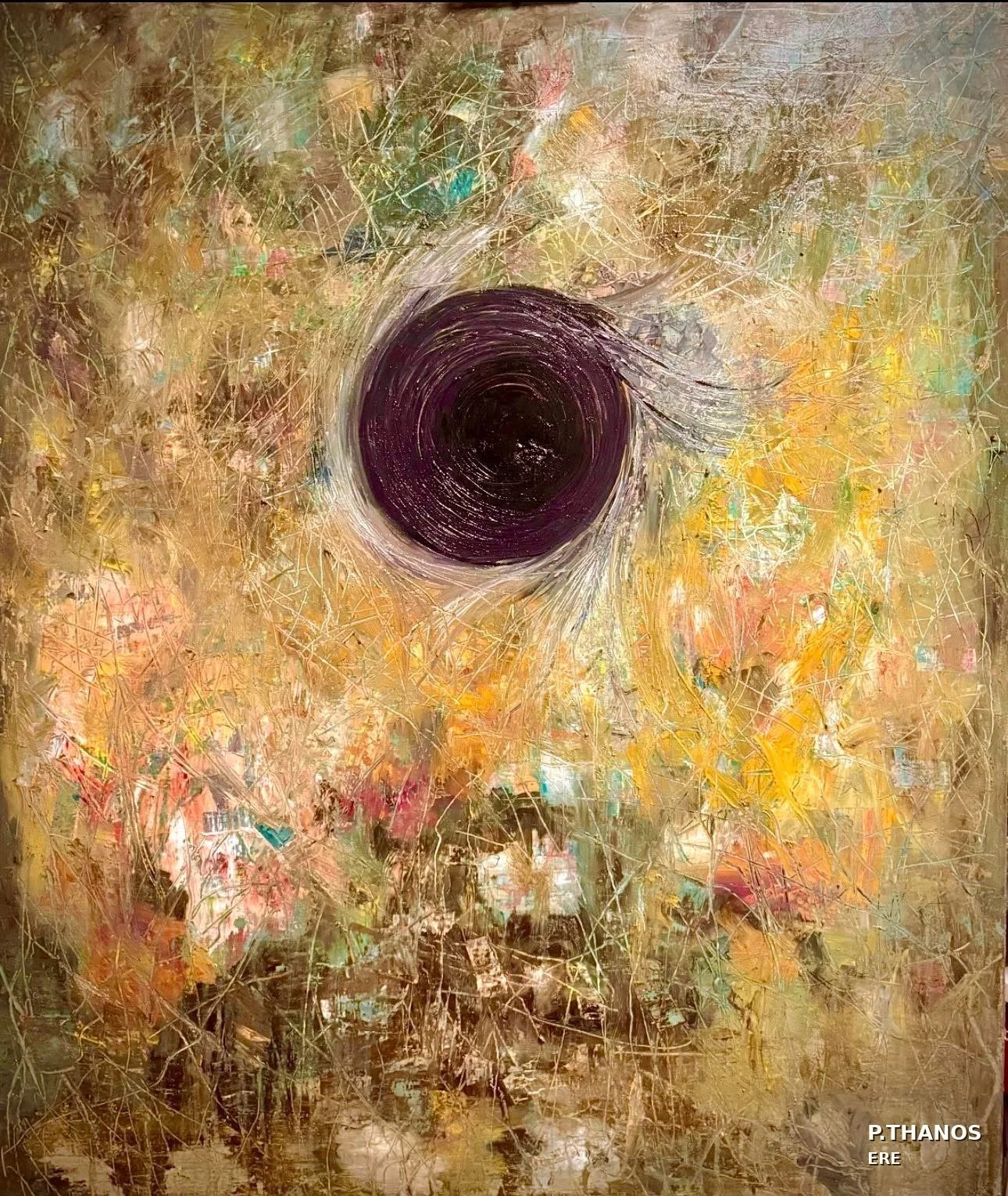
The Vortex (outside the Triad — counterpoint), Oil on canvas, 100 × 120 cm © Petros Thanos
You founded Emotional Realist Expressionism (ERE). What inspired you to create this movement, and what do you hope it offers to contemporary art?
It did not begin as theory. It began as a diagnosis of my own failures. Over four decades, I noticed that whenever a painting of mine did not work, the reason was always the same: one of three things had taken over and crushed the other two. Sometimes the likeness dominated, and the emotion suffocated. Sometimes the emotion dominated, and the work became sentimental. Sometimes the freedom of the gesture dominated and the human being vanished from the canvas. The rule proved consistent for years, across very different paintings, and at some point I understood that what I had was not a personal habit but a principle, and that it needed a name and a written form. That is how the manifesto of the Indivisible Triad came about. What I hope it offers contemporary art is not another look, but something to think with.
Your paintings often feature figures whose faces are partially hidden or transformed. What themes or ideas are you exploring through these anonymous human presences?
The anonymous sacredness of the human being. In hospitals, I see people every day who have lost their names; they have become a diagnosis, a bed, a number. They have lost nothing of their worth. That is what I paint: the face that fades behind veils of colour and nevertheless does not disappear. The presence remains, transformed. If I gave it features, the viewer would see one particular person and would feel compassion for him. Without features, there is nothing for the viewer to hold on to, and then he sees himself. Even the most erased figure still carries light, blood and weight.
Your artist statement suggests that a painting should make the viewer feel rather than simply depict emotion. What kind of experience do you hope visitors have when they encounter your work?
I want them to stand there longer than they intended and not know why. Emotion is not illustrated; it is produced by the structure of the work itself, by the collision of gold and black, by the red pulsing beneath the surface, by the hidden geometric order behind the chaos of gesture. A painting that depicts sorrow asks you to recognise it. A painting that produces sorrow makes you feel it before you have had time to think about it. I am not particularly interested in whether the visitor understands the work. I am interested in whether he carries it out of the room with him.
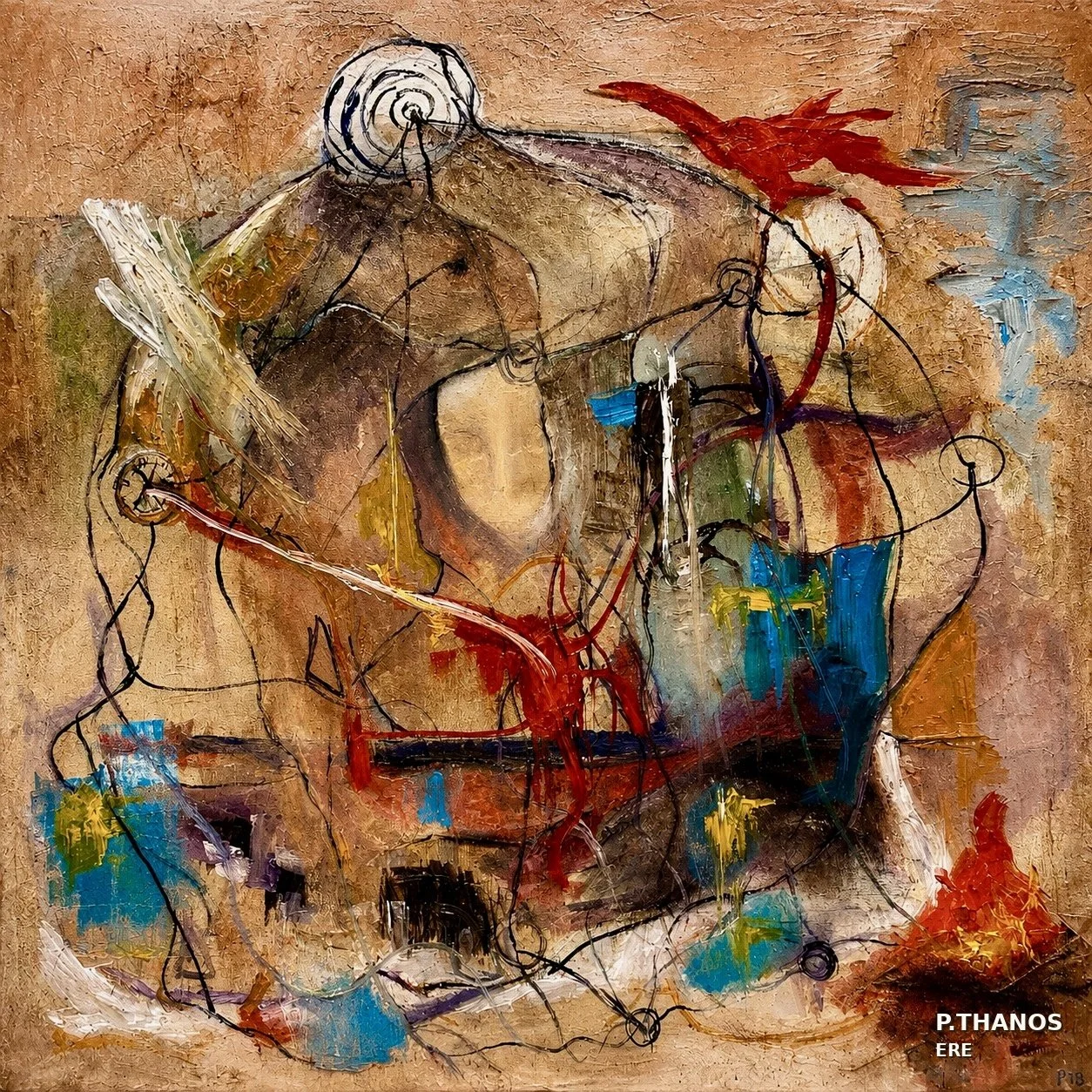
The Vigil, Oil on canvas, 100 × 100 cm, 2026 © Petros Thanos
Lastly, looking ahead, what projects or goals are you most excited about, and how do you hope your artistic practice will continue to evolve?
Everything ahead of me is a single project: the Indivisible Triad.
Emotional Realist Expressionism (ERE) was born as an objection. Painting today tends to fail in two opposite directions. On one side, technical mastery with nothing alive inside it, surfaces that are correct and dead. On the other, gesture without a subject, a freedom that costs nothing because it risks nothing. Both are sincere efforts, and both leave the human being outside the picture.
The Triad states one rule: a work must hold real human presence, authentic emotional charge and expressionist freedom simultaneously, and none of the three may dominate. This is not a preference of taste. It is a load-bearing structure, and it can be tested on any canvas, including mine. Remove presence, and the work becomes decoration, attractive, weightless, forgotten by the time you reach the next room. Remove emotional charge, and it becomes exercise, skill demonstrating itself to other people who possess skill. Remove freedom, and it becomes reproduction, a photograph made slowly, by hand. Each of the three is worth nothing on its own. Any two of them without the third collapse. Only all three together stand up.
This is why I insist that ERE offers art a criterion rather than a style. A style is an answer, and answers age. A criterion is a question you can put to a painting, including a painting made a hundred years from now, by someone who has never heard my name. Movements that offered a look were exhausted within one generation. The ones that offered a standard outlived their founders.
So my goal is not an exhibition or a series. It is to keep testing the Triad against my own work until it either proves indestructible or breaks, and to leave behind a body of paintings and writings solid enough for others to test it after me. There is a sentence I hold to, and it explains why I have no doubt this will continue: I do not make paintings; I am painting. A man can stop practising a profession. No one can stop being what he is.
Artist’s Talk
Al-Tiba9 Interviews is a promotional platform for artists to articulate their vision and engage them with our diverse readership through a published art dialogue. The artists are interviewed by Mr. Mohamed Benhadj, the founder & curator of Al-Tiba9 Contemporary, to highlight their artistic careers and introduce them to the international contemporary art scene across our vast network of museums, galleries, art professionals, art dealers, collectors, and art lovers across the globe.



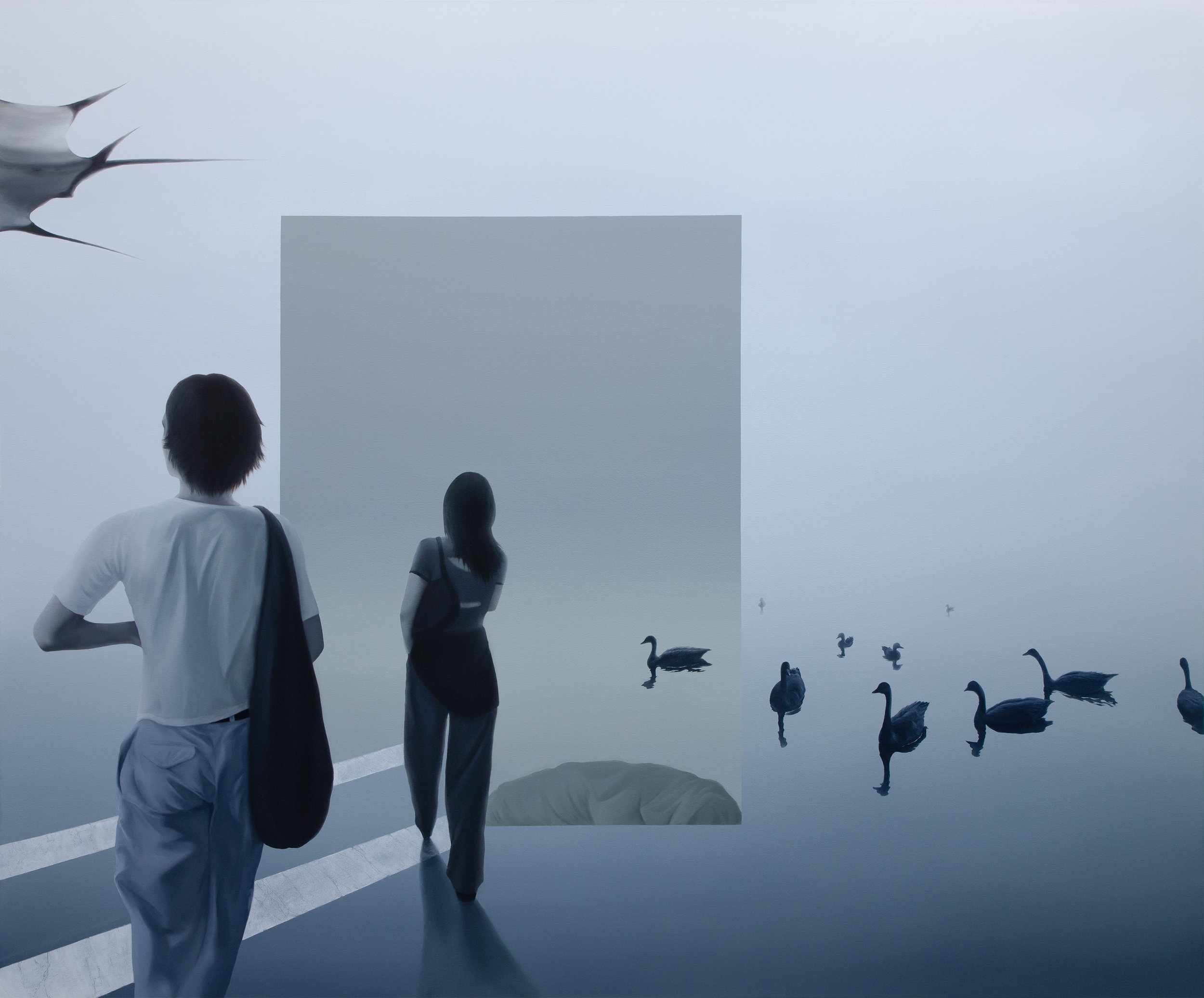
Brooklyn-Born Allan Gorman is a contemporary fine artist based in Jersey City, NJ, with a unique artistic vision cultivated by a distinguished commercial career that helped refine a sense of aesthetics and unwavering commitment to excellence that continues to define his artistic process to this day. His latest series of paintings is titled Imaginary Spaces.